
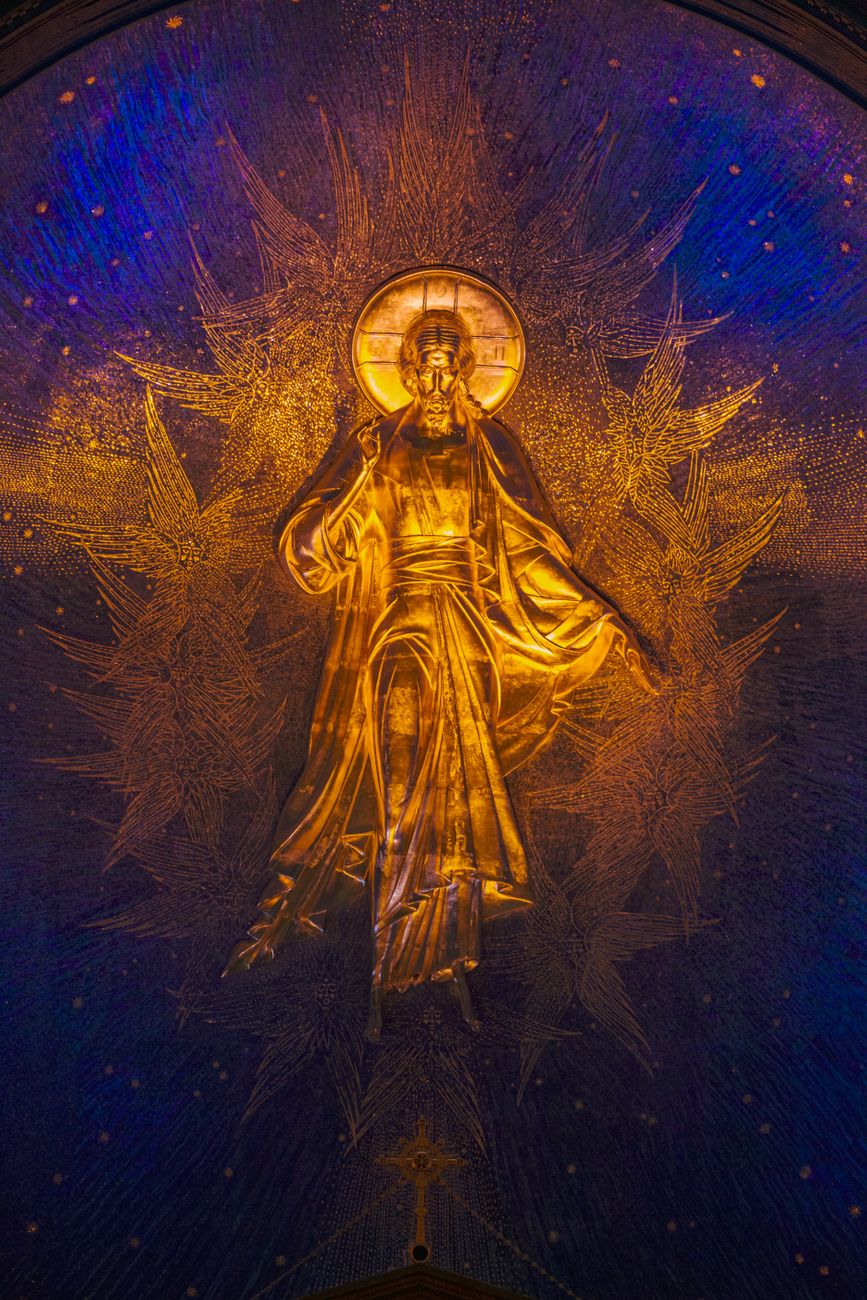
Son of God and Son of Man
This is something God brought to my attention while I was sitting with John 1. John uses both “Son of God” and “Son of Man” in the first chapter, and I do not think that is accidental. He does not ease us slowly into the mystery. He places it before us from the beginning. Jesus is both Son of God and Son of Man.
I was once told that although “Son of God” sounds like a divine title and “Son of Man” sounds like a human title, in a counterintuitive way, it was reversed. “Son of God” can carry a strong claim about Jesus’ messianic humanity, while “Son of Man” can carry a strong claim about His heavenly authority and divine mission. But as I have sat with the text, read a number of commentaries, and I came to the conclusion that the two titles are best treated as a simple swap, as though “Son of God” means only humanity and “Son of Man” means only divinity. It is much richer and deeper than that.
“Son of God” in John 1 carries at least two strong meanings. First, it speaks of Jesus’ unique relationship to the Father. The Word is with God and is God, and the Son is the one-and-only Son who makes the Father known. Second, in Nathanael’s confession, “Son of God” is also messianic and royal, joined to “King of Israel.” Nathanael may not yet be expressing a fully developed Nicene doctrine in that moment, but he is certainly confessing Jesus as the promised King and chosen Son. So the title carries both divine and messianic weight.
“Son of Man” is just as rich. On the surface, yes, it sounds like a title of humanity. It does speak of Jesus’ earthly mission and His sharing in our condition. But it also points beyond that. It reaches back to Daniel 7, where “one like a son of man” is a human figure who is also heavenly, exalted, and central to God’s kingdom purposes. In John 1:51, it also seems to echo Jacob’s ladder in Genesis 28. Jesus, as Son of Man, becomes the place where heaven and earth meet. He is the true Bethel, the house of God, the one on whom the angels of God ascend and descend. So “Son of Man” includes true humanity, but it is not a merely low or ordinary title. It is charged with mystery, heavenly authority, and mediation.
Jesus is introduced as the one who is both from above and with us. He is the unique Son, the revealer of the Father, and the Messianic King. He is truly human, yet also the Daniel 7 figure and the meeting place of heaven and earth. John front-load both titles. He gives us a complex and beautiful picture of Jesus, rich with meaning. Jesus is not merely above us, and He is not merely beside us. He is both the one who truly knows the Father and the one who truly shares our humanity. He is near enough to understand us from within, and high enough to save us. That is one reason His love is so compelling.
He does not save us from a distance. He comes among us, into flesh, into weariness, into misunderstanding, into tears, into suffering. Yet He is not trapped there as one more victim of the darkness. He comes as Light, as Life, and as the one who can actually bring us home.
As I have been thinking about this, it has connected with what James Gifford calls perichoretic salvation, that participatory reality of Christ in me and me in Christ. But here I want to be careful. In classical theology, the more precise term for Christ being fully God and fully man in one person is the hypostatic union. That is unique to Him. It is not the same thing as our participation in Christ.
C. S. Lewis famously pressed the issue by arguing that Jesus cannot be safely reduced to a wise moral teacher. John makes the same move from the beginning. The Jesus of John 1 is not merely inspiring, insightful, or spiritually advanced. He is the Word made flesh, the Son who reveals the Father, and the Son of Man in whom heaven and earth meet.
His divine-human union is singular and unrepeatable. Still, it is precisely because He is the fully God and fully man that our participation in Him is real and not imaginary. He is the living bridge of communion. He can bring us into union with God because He is fully God and fully man. He belongs wholly to the Father, and He has truly entered our condition. He reaches us from God, and He brings us to God.
That helps me understand agape love (ἀγάπη) more deeply. Divine love is not mere sentiment, and it is not raw power. It is holy love that stoops, enters, bears, reveals, heals, and lifts.
John’s Gospel is deeply rich. The light does reveal. It does expose. But the purpose is not destruction for its own sake. It is rescue, revelation, new creation, adoption, and abiding. The Son of God becomes Son of Man not to break us down into despair, but to bring us into life. Even when He unmasks darkness, He does so as the one who has come close in love. That is why His light can be frightening and still be trustworthy.
There is something beautiful here that has stayed with me. If Jesus were only God in the sense of untouchable transcendence, I might admire Him and still fear that He could not understand me. If He were only human in the sense of solidarity without transcendence, He might understand me but not be able to save me. John gives us neither reduction. He gives us the one who understands from within and saves from above.
That is why He can call for surrender without cruelty. He knows what He is asking of us because He has come all the way down into our condition, yet without sin. This also helps me see that glory and love belong together. Jesus is glorious, but His glory takes flesh. As human He is lowly, but His lowliness is the path of divine self-giving. John will keep unfolding this through the whole Gospel. The one who comes from the Father is also the one who walks among us. The one who bears heavenly authority is also the one who bears human sorrow. The one who reveals God is also the one who shares our dust.
That is not a small thing to contemplate. It changes how I picture Jesus turning toward my weakness, my confusion, and even my sin. He is not bare holiness without compassion. He is not bare compassion without holiness. He is the God-man, and in Him holiness and mercy meet without contradiction.
So as I sit with these titles, I am invited to see Jesus more truly. Not smaller. Not flattened. Not reduced to what is easiest for me to understand. Son of God. Son of Man. The one from above. The one who comes near. The one who knows the Father. The one who knows our weakness. The one in whom heaven and earth meet.
And perhaps this is part of the journey John is inviting us to take. We do not merely collect titles for Jesus as theological facts. We let the titles become windows. We look through them and see more of who He is. Then, seeing Him more truly, we learn to trust Him more deeply.
Prayer
Lord Jesus Christ, Son of God and Son of Man, teach me to know You more truly.
Deepen my understanding of who You are, not only in thought, but in worship, trust, and obedience. Keep me from reducing You to something smaller than You are.
When I need mercy, remind me that You have come near in love. When I need rescue, remind me that You are mighty to save.
Form my heart in the light of Your holy agape, that I may trust the One who understands me from within and yet stands above me in glory.
Draw me deeper into communion with You, and teach me what it means to live in the life You have opened to us.
Amen.
Reflection
When you picture Jesus turning toward your weakness or sin, do you imagine bare divinity, bare humanity, or the God-man whose holiness and compassion are perfectly joined?
How might that change the way you let Him meet you?
Excerpt
John 1 presents Jesus as both Son of God and Son of Man: the One from above who comes near. He understands our weakness from within, yet stands above us in glory, bringing heaven and earth together in holy, saving love.
Distinction Without Division


Leave a Reply