
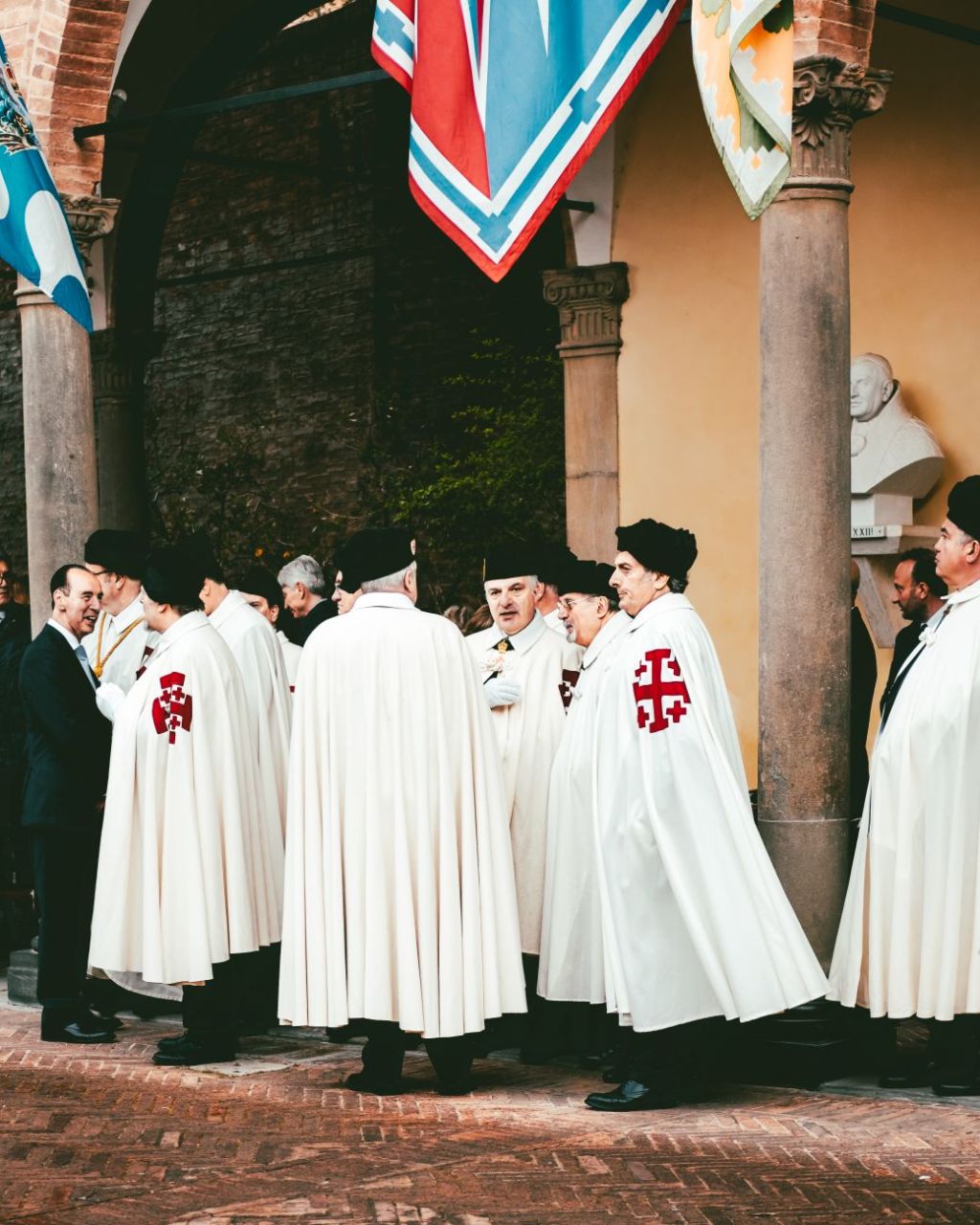
We Live in an Age of Information Slop
I know this is a difficult topic, but bear with me.
There is a lot of information coming at us every day. Television documentaries, YouTube videos, blogs, podcasts, social media posts, short clips, memes, news commentary, dramatic “history” programs, and algorithm-fed opinions all compete for our attention. Some of it is thoughtful. Some of it is careless. Some of it is openly biased. Some of it is designed to report. Some of it is designed to influence. Some of it is designed to entertain. Some of it is designed to provoke an emotional reaction before we have time to think. And some of it is just slop.
That may sound harsh, but I think we need an honest word for it. I am talking about the kind of content that presents speculation as discovery, opinion as fact, insinuation as evidence, and entertainment as revelation. It is the kind of content that does not really teach us how to think. It gives us something to react to. It hands us a villain, a secret, a scandal, or a forbidden truth and then invites us to feel enlightened because we have been let in on the story.
This drives me crazy, not because I think people should avoid hard questions, but because many people consume this material without really thinking about it critically. They watch the show, hear the claim, absorb the mood, and move on. Then, weeks or months later, the idea shows up in conversation as if it were something “everybody knows.” They may not know the sources. They may not know the scholarly debate. They may not know that serious historians, theologians, scientists, or researchers see the issue very differently. But the impression has already settled in.
That is how weak claims enter the social imaginary. By “social imaginary,” I mean the shared background picture people carry about how the world works: who can be trusted, who is hiding something, which institutions are corrupt, where truth is supposed to be found, and who counts as an authority. Once an idea enters that shared imagination, it can become difficult to remove. It gets repeated, simplified, exaggerated, blended with other claims, and eventually treated as part of the furniture of reality.
This is especially dangerous when people know nothing of the actual scholarship behind a topic. They may not know that there is a serious field of study. They may not know there are different views within that field. They may not know the difference between a scholar carefully working through primary sources and a television personality connecting dots under dramatic lighting. So when the sensational version sounds more exciting than the careful version, the careful version begins to look boring, evasive, or even suspicious.
That is one reason mainstream scholarship has lost credibility with many people. It is not always because mainstream scholarship has failed. Sometimes it is because good scholarship requires nuance, and nuance requires cognitive load. It asks us to slow down. It asks us to compare claims. It asks us to weigh evidence. It asks us to admit uncertainty. It asks us to think.
Sensationalism asks much less of us. It arrives prepackaged. It gives us a story with momentum. It offers heroes, villains, secrets, cover-ups, and the thrill of hidden knowledge. It makes us feel as if we have seen behind the curtain. And once we feel that, it becomes very hard to return to the slower, more careful work of asking whether the curtain was ever hiding what we were told it was hiding.
This post is not an attack on curiosity. Good scholarship often begins with curiosity. Someone asks an unusual question. Someone notices an overlooked detail. Someone wonders whether the standard explanation needs to be refined. That is not the problem, I often think I am in that category. The problem is when speculation is presented as discovery, when fringe theories are treated as settled fact, and when dramatic claims are given more weight than the evidence can carry.
The Knights Templar provide a useful case study because they sit at the crossroads of history, religion, warfare, secrecy, tragedy, myth, and pop culture. That makes them fascinating. It also makes them vulnerable to sensationalism. Their real history is already dramatic enough: crusades, vows, wealth, politics, accusations, trials, suppression, and martyrdom. But for some writers and television programs, that is not enough. The Templars must also become the guardians of hidden bloodlines, secret doctrines, buried treasure, occult wisdom, or whatever else can keep the viewer from changing the channel.
The danger comes when entertainment dresses itself up as revelation. So before looking at specific claims about the Knights Templar, I want to step back and ask a more basic question: how do we tell the difference between responsible scholarship and sensationalism?
That question matters far beyond the Templars. It matters for history. It matters for theology. It matters for politics. It matters for conspiracy theories. It matters for how we navigate a world where information is everywhere, but wisdom is not.
The difference between good scholarship and bad scholarship is not merely credentials, popularity, book sales, or whether the conclusion is mainstream. The difference is method. How are claims made? How is evidence handled? Are opposing views treated fairly? Does the writer distinguish clearly between fact, inference, possibility, and speculation? Are we being invited to think carefully, or are we being emotionally rushed toward a conclusion?
Truth does not require us to be boring. But it does require us to be honest. And truth deserves better than theatrics.
The Knights Templar as a Case Study
The Knights Templar are almost perfectly designed for sensationalism. They were a medieval military religious order, which already sounds strange to the modern ear. They were monks, but they carried swords. They took vows of poverty, but the order became extraordinarily wealthy. They began as protectors of pilgrims, but over time they became a major military, financial, and political force across Europe and the Holy Land. They were directly connected to the Crusades, the papacy, kings, castles, relics, banking, sacred geography, and the city of Jerusalem itself. In other words, they already have all the ingredients of a compelling story.
Then comes the dramatic fall. The Templars were arrested, interrogated, accused of heresy, pressured into confessions, tortured, politically cornered, and eventually suppressed. Their trial involved royal debt, papal authority, institutional crisis, church politics, coerced testimony, and the interests of King Philip IV of France. That is not boring history. It is a tragedy with enough ambition, fear, greed, courage, betrayal, and institutional failure to fill a dozen novels.
But that is not enough for some people.
For some writers, television producers, and conspiracy theorists, the Templars cannot simply be what the evidence suggests they were: a powerful and controversial medieval military religious order that rose in response to the Crusades, accumulated wealth and privileges, became politically vulnerable, and was destroyed in a moment of royal opportunism and ecclesiastical crisis. No, the story must become bigger. The Templars must be guardians of secret bloodlines, hidden doctrines, lost treasure, occult wisdom, suppressed gospels, Masonic master plans, ancient mysteries, or whatever else can keep the viewer from changing the channel.
This is where the missing documents become important. Dorsey Armstrong notes that the surviving records of the Templars are incomplete. Some documents connected to the order were moved as Christian forces lost territory in the Holy Land, eventually making their way to Cyprus. After the order was suppressed, much of the Templar property was merged with that of the Knights Hospitaller. Later, when the Hospitallers moved on to Rhodes and then Malta, they preserved what was relevant to their own order, while many Templar materials appear to have been left behind or lost. It is believed that much of what remained was destroyed when the Ottoman Turks conquered Cyprus in the late sixteenth century.
For the responsible historian, missing records create caution. They limit what we can say. They force us to work carefully with surviving papal bulls, trial records, chronicles, rules, letters, property documents, and later testimony. They remind us that the historical record is fragmentary. We do not possess everything we would like to possess. There are gaps.
For the conspiracy theorist, however, gaps are not limits. They are opportunities. A missing document becomes a hidden document. A lost archive becomes a suppressed archive. An absence becomes a clue. A destroyed record becomes evidence that someone had something to hide. And once that move is made, the door swings wide open. If there is no documentation left to disprove the speculation, then the speculation can expand almost without restraint.
That is the problem. A gap in the evidence should make us more careful, not more confident. Of course, mystery is part of the appeal. I understand that. The Templars are fascinating because they stand at the intersection of history, religion, war, secrecy, tragedy, myth, and pop culture. Their symbols are striking. Their rise was unusual. Their wealth was controversial. Their fall was shocking. Their surviving records are incomplete. Their name still carries an aura of danger and sacred mystery.
But we should not confuse aura with evidence. Maybe one day someone will drill one more borehole on Oak Island and finally find the great Templar secret. Maybe the next shaft, the next scan, the next strange stone, or the next muddy fragment will prove that the order carried some hidden treasure, lost knowledge, or sacred mystery across the sea. It is possible. History has surprised us before. But until that day comes, possibility is not proof. Mystery should make us curious, not careless. The absence of evidence should make us cautious, not wildly confident. One more borehole may someday change the conversation, but until then, the responsible posture is disciplined patience, not dramatic speculation.
The actual history is already interesting. It does not need secret bloodlines. It does not need hidden temples beneath every stone. It does not need ancient aliens, occult master plans, or every suspicious symbol turned into proof of a conspiracy. The real story is more than enough if we have the patience to listen to it.
And perhaps that is the deeper issue. Sensationalism often assumes that the truth is too ordinary to hold our attention. But the Templars remind us that reality does not need our embellishment. It only needs our attention.
The larger lesson, then, is not merely about the Knights Templar. It is about how we move from information to knowledge, and from knowledge toward wisdom. Mere information gives us facts, claims, rumors, images, symbols, and stories. Knowledge begins when we organize those things responsibly. Wisdom asks the deeper question: how should I judge this? That means learning to notice the warning signs of poor scholarship before we step on the land mines: overconfidence, selective sources, dramatic leaps, missing context, conspiracy thinking, and speculation disguised as certainty. So before we compare sensational writers with more careful historians, we need to ask what good scholarship actually looks like—and what habits should make us slow down.
The First Warning Sign: Confidence Beyond the Evidence
One of the first warning signs I look for is confidence beyond the evidence.
Perhaps you have seen the kind of Knights Templar documentary I am talking about. The program brings out a train of “experts,” places them in front of an old wall, a candlelit room, a ruin, or some suspicious-looking stone, and then lets them ask questions in a way that already tells you the answer they want you to believe. The tone is confident. The music is ominous. The camera angle is serious. The body language says, “We know what really happened.”
And people buy it.
In spoken form, confidence can do a lot of work. A raised eyebrow, a long pause, a knowing smile, or a dramatic question can imply certainty without actually proving anything. In writing, the same move is usually accomplished differently. The author may use strong verbs, loaded phrases, suggestive questions, selective quotations, or a steady drumbeat of insinuation. Either way, the effect is similar: confidence starts to feel like evidence.
But confidence is not evidence. That is one of the great traps. We tend to trust people who sound certain, especially when they are telling a story that feels exciting, forbidden, or emotionally satisfying. The problem is that certainty can be performed. It can be staged. It can be edited into a documentary. It can be written into a blog post. It can be projected by someone who has fully bought into their own theory. But the strength of a claim is not measured by how forcefully someone presents it. It is measured by the evidence that supports it.
Serious scholarship usually sounds different. Good historians, researchers, lawyers, scientists, and other careful professionals tend to qualify their claims because reality is rarely simple. The evidence is often incomplete. Sources conflict. Context matters. The record may be damaged, late, biased, fragmentary, or filtered through hostile witnesses. New evidence may appear later and force us to revise our conclusions.
That kind of caution is not weakness. It is honesty. Good scholars often say things like, “the evidence suggests,” “it is possible,” “the sources are late,” “the record is incomplete,” “this interpretation is debated,” or “we cannot know with certainty.” That may sound less exciting than a documentary narrator declaring that everything you were taught is wrong, but it is usually much closer to the actual work of truth-seeking.
Poor scholarship often sounds more absolute. It says, “this proves,” “the evidence is undeniable,” “historians have hidden,” “the truth they do not want you to know,” or “the mainstream view has been shattered.” Sometimes that kind of language may be justified, but usually it should make us slow down. When a writer or speaker claims certainty on a matter where the evidence is incomplete or disputed, the reader should become cautious.
Everyone is entitled to an opinion. Believe what you want. But there is a difference between having an opinion and seeking truth. If the goal is truth, then we should hold our conclusions with the proper degree of humility. We should make the best case we can, but we should also be fair with the data, honest about uncertainty, and willing to address the strongest opposing views.
This is something I have written about before in “Atypical Christian – Hold Things Tentatively.” I am rarely, if ever, 100% certain about most things. That does not mean I believe nothing. It means I try to hold my confidence in proportion to the evidence. Some things deserve strong confidence. Some things deserve moderate confidence. Some things should be held as possibilities. Some things should be rejected unless better evidence appears. That principle applies to theology, history, politics, science, and almost everything else we care about.
I call this fluctuating probability or Spectrum of Certainty. Our confidence should rise or fall according to the quality, quantity, and relevance of the evidence. If the evidence is strong, direct, varied, and well-supported, then confidence may rightly be high. If the evidence is thin, indirect, speculative, or dependent on a narrow set of sources, then confidence should be lower. If the claim is fringe, sensational, or contrary to the majority of qualified scholars in the field, then the burden of proof is higher, not lower.
That does not mean the majority is always right. It is not. Minority views matter. Sometimes the outsider sees something the field has missed. Sometimes the accepted view needs correction. History is full of cases where new evidence or better arguments forced people to rethink what they thought they knew. But if you hold a fringe position with 100% confidence while refusing to seriously engage the majority view, you do not come across as brave. You come across as reckless. This should be a red flag for anyone reading or watching something.
A loud claim is not a strong claim. A dramatic theory is not a proven theory. A confident speaker is not necessarily a reliable guide. And a person who says, “This proves everything,” may sound impressive, but the person who says, “The evidence suggests, though there are limits,” is often the one taking truth more seriously.
That is where discernment begins. Before asking whether a claim is exciting, ask whether it is careful. Before asking whether it confirms what you already suspected, ask whether it has earned its confidence. Before following the trail into secret histories and hidden meanings, ask whether the guide knows the difference between evidence and speculation. Because certainty is not scholarship. And confidence, no matter how dramatic, does not make a claim true.
Before I am tarred and feathered. To be clear, confidence itself is not the problem. You can and should have confidence in your position when you have done the work. No one writes a dissertation, publishes a book, or puts their name and reputation behind an argument unless they believe the argument is worth making. Scholarship requires conviction. But it also requires humility. The scholar says, “Here is the best case I can make from the evidence we have,” not “This can never be questioned again.” That distinction is important, especially in history, where new documents, new archaeological discoveries, better translations, and sharper methods can change the conversation. More than one confident person has found himself on the wrong side of history, not because confidence is wrong, but because confidence without humility becomes blindness.
Two Different Streams: Sensational Writers and Historical Scholars
This brings us to a distinction I think every reader should learn to notice. When it comes to the Knights Templar, there are at least two very different streams of writing and commentary. I am not saying every person in one stream is wrong about everything, or every person in the other stream is right about everything. That would be too easy, and frankly, it would violate the very principle I am arguing for. The issue is not whether someone is interesting, popular, credentialed, or entertaining. The issue is method.
On one side, we have what I would call the popular, speculative, or sensational stream. This includes writers and commentators such as David Childress, Lynn Picknett, Clive Prince, Andrew Sinclair, Michael Baigent, Richard Leigh, Tim Wallace-Murphy, Christopher Knight, and Robert Lomas. These are writers often associated with alternative history, hidden-history claims, esoteric speculation, secret societies, bloodline theories, Masonic or Templar connections, and popular conspiracy narratives.
Group A. The Popular / Speculative / Sensational Stream
- David Childress
- Lynn Picknett
- Clive Prince
- Andrew Sinclair
- Michael Baigent
- Richard Leigh
- Tim Wallace-Murphy
- Christopher Knight
- Robert Lomas
Now, to be fair, writers in this stream often ask provocative questions. Sometimes they notice interesting cultural patterns. Sometimes they bring attention to symbols, legends, or traditions that are worth examining. Curiosity is not the problem. The problem is what happens next. Too often, the argument moves too quickly from possibility to probability, and from probability to certainty. “Could this be connected?” quietly becomes “this is connected.” “Might this symbol mean something?” becomes “this symbol proves the hidden truth.” The reader is carried along before the evidence has done the work.
On the other side, we have the more scholarly and historically grounded stream. Here I would place figures such as Helen Nicholson, Jonathan Riley-Smith, Rodney Stark, Dan Jones, Dorsey Armstrong, and Malcolm Barber. These writers and scholars tend to work more carefully with medieval sources, crusading history, military religious orders, papal politics, institutional history, trial records, and the wider context of the Middle Ages. They do not all write in the same way. They do not all have the same audience. Some are more academic, some more popular. But their work is generally disciplined by historical method.
Group B. The Scholarly / Historical Stream
Examples to call out:
- Helen Nicholson
- Jonathan Riley-Smith
- Rodney Stark
- Dan Jones
- Dorsey Armstrong
- Malcolm Barber
Note: These lists are not exhaustive, and I am not pretending that every writer or scholar on the Knights Templar fits neatly into one of these two categories. The names are samples, not complete inventories. But I do think they are representative of two very different classes of “experts” often brought into Templar discussions.
The difference is not that one group asks questions and the other group refuses to ask them. The difference is what each group does with the questions.
One group tends to ask, “What if this symbol means something hidden?” The other asks, “What does the evidence actually show?” One group often connects dots across centuries with great confidence. The other asks whether the dots belong together at all. One group is tempted to treat ambiguity as a doorway into secret knowledge. The other treats ambiguity as a reason for caution.
“The first principle is that you must not fool yourself—and you are the easiest person to fool.”
That is the danger in all of this. We can fool ourselves by mistaking fascination for evidence. We can fool ourselves by confusing a powerful story with a well-supported argument. We can fool ourselves by assuming that because something feels meaningful, it must be historically true.
This is why source selection matters so much. If a television program, documentary, article, or blog post spends a great deal of time with the speculative stream but never seriously acknowledges the historically grounded stream, that should immediately raise a warning flag. If someone is making strong claims about the Knights Templar but does not engage Helen Nicholson, Malcolm Barber, Jonathan Riley-Smith, Dorsey Armstrong, or other serious scholars of the Crusades, military orders, and medieval religious history, then the reader should ask why.
There are only a few possibilities.
Perhaps the writer does not know the scholarship exists. In that case, why should I trust the piece as serious research? It may be an interesting opinion, but it is not responsible historical inquiry. Or perhaps the writer does know the scholarship exists but leaves it out because it complicates the desired conclusion. In that case, the goal is not truth. The goal is persuasion. Or perhaps the producer of the program knows exactly what responsible historians would say, but that version of the story will not sell books, attract advertisers, or keep viewers watching through the commercial break. In all those cases, my response is the same: why should I give it my trust?
I do not mind reading speculative work. I do not mind watching a show that explores legends, mysteries, or strange historical possibilities. I even enjoy some of it. I will admit that I like watching shows about Oak Island, although I probably complain through half the episode. You can ask my wife. I will point out at least five problems in a single episode: an unsupported leap here, a dramatic overstatement there, a “could this be?” doing far more work than the evidence allows. But watching critically is very different from absorbing uncritically. And that, I think, is what many people do when they watch a video, follow a program, or read an article—especially when the claim already fits their existing beliefs or biases. If you already believe the Knights Templar were a secret order circumventing the Catholic Church and shaping history from the shadows, then confirmation will appear everywhere. Every symbol becomes a clue. Every gap becomes a cover-up. Every coincidence becomes part of the pattern.
If Oak Island one day produces solid evidence that the Knights Templar were there, I would be excited. I really would. I try to hold things tentatively. I learned from a wise teacher once that certainty should be handled carefully. New evidence can change the conversation. But until that evidence appears, I am not going to treat speculation as fact merely because the music swells and someone looks meaningfully at a muddy artifact.
The point is not that speculative writers should never be read or watched. The point is that they should not be mistaken for the whole field. They should not be presented as though they represent the best historical scholarship. And they certainly should not be used to support sweeping conclusions while the stronger, more careful scholarship is ignored.
If a claim is true, it should be able to survive contact with the best opposing evidence. If a theory only works when careful historians are left out of the room, then perhaps the problem is not with the historians. Perhaps the problem is with the theory.
The Difference Is Not Credentials Alone; It Is Method
The difference between good scholarship and poor scholarship is not credentials alone. Credentials matter. Training matters. Years spent studying languages, sources, historical context, archaeology, theology, or medieval institutions matter. I do not want to pretend otherwise. Expertise is real, and it should not be dismissed simply because someone on the internet has a more exciting theory.
But credentials are not magic. A person can have impressive credentials and still reason badly. On a different topic, Richard Dawkins is a favorite example of mine. A person can have degrees and still cherry-pick evidence, overstate conclusions, ignore contrary data, or become too attached to a favored theory. At the same time, a person can lack formal credentials and still ask useful questions. Sometimes outsiders notice things insiders miss. Sometimes a non-specialist raises an issue worth exploring. So the question is not simply, “Does this person have letters after their name?” The better question is, “How are they handling the evidence?”
Good scholarship has recognizable habits. It works from primary sources when possible. It places evidence in historical context. It explains uncertainty instead of hiding it. It engages opposing views fairly rather than caricaturing them. It distinguishes fact from inference, inference from probability, and probability from speculation. It avoids cherry-picking. It uses sources from across the field, not just a narrow circle of sympathetic voices. And when better evidence appears, it is willing to correct itself.
Poor scholarship has recognizable habits too. It leans heavily on speculation. It treats coincidence as proof. It treats symbols as secret codes without clear rules for interpretation. It ignores mainstream scholarship or dismisses it as corrupt, blind, or afraid. It quotes only people who already agree with the conclusion. It uses dramatic language to compensate for weak evidence. It treats missing evidence as evidence of concealment. And perhaps most dangerously, it frames criticism as proof that “they” are hiding the truth.
That last move is especially dangerous because it makes the theory almost impossible to challenge. If evidence supports the theory, the theory is true. If evidence is missing, that proves the cover-up. If scholars object, that proves the scholars are part of the system. If no documents exist, that proves the documents were destroyed. This is not research. It is a trapdoor. Every objection gets pulled back into the theory.
“Test all things; hold fast what is good.”
That is a good rule for more than theology. It is a rule for life in an age of information overload. My dear friend, we have to learn to discern the difference. Do not believe something merely because it is dramatic. Do not believe something merely because it confirms what you already suspected. Do not believe something merely because the person saying it sounds confident or wears a lab coat. Test it. Weigh it. Ask what kind of evidence would be needed. Ask whether contrary evidence has been addressed. Ask whether the claim has earned the level of confidence being placed upon it.
Better to be a skeptic than a fool. But even that needs qualification. Skepticism can become its own kind of foolishness if it turns into cynicism. We cannot live as if nothing is true, nothing is trustworthy, and every claim is manipulation. Human life requires some working certainties. We drive over bridges because we trust engineers. We take medicine because we trust tested science. We enter relationships because we trust people, though imperfectly. We cannot function if every belief remains permanently suspended in midair.
So the goal is not to become skeptical of everything in the same way. The goal is to become properly calibrated. Hold things with the confidence they deserve. Be firm where the evidence is strong. Be cautious where the evidence is weak. Be open where the question remains unsettled. And be flexible enough to change your mind when better evidence appears. This is not weakness, it’s maturity.
When it comes to the Knights Templar, the stakes may seem relatively low. In one sense, it may not matter much whether someone believes a strange theory about hidden treasure, secret rituals, or mysterious symbols. Most people are not going to make life-altering decisions based on what they believe about a medieval military order.
But some people do build larger conclusions from these claims. Some use Templar conspiracy theories to question organized religion in general, or the Catholic Church in particular. Some use them to suggest that mainstream Christianity suppressed the “real” truth. Others treat them as one brick in a much larger wall of suspicion toward institutions, scholarship, history, and authority itself. That is where the issue becomes more serious, because weak claims do not merely misinform us; they can shape our imagination, influence our judgment, and make it harder for us to recognize the truth.
The Templars may be the example, but the habit is the real concern. If we train ourselves to accept dramatic claims without careful testing in one area, we become more vulnerable to the same pattern elsewhere. If we learn to confuse speculation with evidence, we will not only do it with medieval history. We will do it with religion, politics, science, medicine, culture, and every other place where truth matters.
So yes, enjoy the mystery. Ask unusual questions. Watch the documentary if you want. Read the strange theory if you must. But do not hand over your judgment at the door.
“Seek Truth and Pursue It”
The “Connect-the-Dots” Problem
Another warning sign is what I call the connect-the-dots problem. Sensational historical claims often work by placing scattered details next to one another and implying that proximity equals relationship. Think of Dan Brown’s novels. The dots may be real. That is part of what makes the argument persuasive. The Templars really did exist. They really were accused of secret rituals. Freemasonry really did use temple imagery later. Some medieval churches really do have unusual carvings. Grail legends really are mysterious. There really are gaps in the historical record.
But real dots do not automatically belong to the same picture. That is where the trouble begins. A writer or television program gathers a collection of details, arranges them in a suggestive order, adds a dramatic narration, and suddenly the viewer is staring at what looks like a hidden pattern. The performance can be impressive. Sometimes it is almost Oscar-worthy. A symbol here, a rumor there, a strange coincidence over there, a missing document somewhere else—and before long we are told that the Templars preserved a secret religion, guarded a hidden bloodline, carried occult knowledge, founded Freemasonry, shaped world events from the shadows, or buried something world-changing on Oak Island.
Well, maybe. But maybe not. This is fertile ground for conspiracy theories because people love patterns, especially when the pattern casts suspicion on someone or something they already dislike. Government. The Church. The rich. The powerful. A religious institution. A political movement. A people group. Once we already suspect the villain, we become far more willing to accept the storyline. The dots start lining up because we want them to line up.
And there is money to be made in that. There are books to sell, shows to produce, ads to run, subscriptions to gain, and clicks to harvest. A careful historical conclusion may be more responsible, but it is often less profitable. “The evidence is complicated and does not support that conclusion” does not sell as well as “The secret they buried for centuries has finally been revealed.” If I did not care about truth, I could see the temptation. There is a market for dramatic certainty. There is a market for spurious claims wrapped in mystery.
But truth is not served by giving people the most entertaining explanation. Truth is served by giving people the best-supported one. I wrote about this in “We Need a Conspiracy Probability Theorem.” The basic point is that possibility is not enough. A claim may be possible and still not be reasonable to believe. We need to ask better questions. How many people would have needed to be involved? What evidence should we expect to find if the claim were true? Are there simpler explanations? Are the sources independent, or are they repeating one another? Does the argument depend on actual evidence, or does it survive by treating every missing piece as proof of a cover-up?
That last move is especially important. In conspiracy thinking, missing evidence often becomes evidence. If there is no document, it must have been destroyed. If there is no testimony, the witnesses must have been silenced. If historians object, they must be protecting the official story. If the archive is incomplete, then the missing material must have contained the real truth. At that point, the theory is no longer being tested by evidence. It has become a closed loop, absorbing every objection into itself and turning every challenge into confirmation. That is not scholarship. It is a self-referential, self-serving system that protects the theory from correction.
A responsible historian handles the dots differently. One group says, “Look at all these dots.” The better historian asks, “Do these dots actually belong together?” That question is not boring. It is essential. The issue is not whether symbols matter. Symbols do matter. The issue is not whether historical connections exist. They do. The issue is whether the connection being claimed can actually be demonstrated. Correlation is not evidence of causation! Similarity is not dependence. Symbolic resemblance is not historical transmission.
A round church does not automatically prove Templar involvement. A carving does not automatically reveal a secret doctrine. A later Masonic image does not automatically prove medieval Templar continuity. A rumor from a hostile source does not automatically reveal what the Templars really believed. A missing record does not automatically prove suppression. These things may raise questions, but questions are not conclusions.
For good intellectual discipline we need controls, context, chronology, and source criticism. We need to ask whether the same symbol appeared elsewhere for ordinary reasons. We need to ask whether the supposed connection crosses centuries without evidence. We need to ask whether a simpler explanation accounts for the data. We need to ask whether the pattern exists in the sources or only in the imagination of the interpreter.
The human mind is very good at finding patterns. That ability helps us survive, learn, and make sense of the world. But it can also mislead us. Sometimes we are not discovering a hidden design. Sometimes we are drawing lines between stars and naming the constellation ourselves.
The Templars do not need that kind of help. Their actual history is already complicated enough. Their rise, wealth, military role, religious identity, banking network, political vulnerability, trial, suppression, and afterlife in legend provide plenty to study without forcing every dot into a secret map. So yes, look at the dots. But do not assume they belong together. And never mistake a cleverly drawn line for evidence.
The Echo Chamber Problem
Another warning sign is the echo chamber problem. Do not be fooled merely because something has footnotes, endnotes, or a bibliography. To be clear, I look for those things. I want to know where a claim came from. Did this come out of the author’s head, or did they consult people who have actually studied the subject? A writer who gives sources is already doing something better than the writer who makes bold claims and provides no trail at all.
But sources still have to be evaluated. Footnotes do not automatically make an argument scholarly; they only show us where the argument is getting its oxygen.
That means we have to ask better questions. Are these primary sources? Are they serious secondary sources? Are they peer-reviewed? Are they respected within the field? Do they represent a wide range of scholarship, or do they all come from the same small circle of people repeating one another? A bibliography can look impressive and still be deeply biased. A claim can sound well-supported if every cited source agrees, but agreement inside a narrow circle is not the same thing as evidence.
This happens in social media all the time. Someone posts a claim. Their followers already share many of the same assumptions, frustrations, suspicions, or beliefs. The followers like it, share it, praise it, and soon the person begins to think, “I must really be onto something.” Maybe they are. But maybe they are only hearing their own voice amplified back to them. That is not confirmation. That is an echo chamber. And echo chambers are dangerous for clear thinking.
The same thing can happen in research. If you only read authors who already agree with your conclusion, you may feel like the case is overwhelming. But what you may actually have is a closed conversation. You are not engaging the field. You are engaging a faction. You are not testing your view against the strongest opposing evidence. You are surrounding your view with sympathetic voices and calling the result scholarship.
That is not enough. The question is not only, “Are there sources?” The better question is, “What kind of sources are these, and what part of the field do they represent?” Do they show the full spectrum of serious opinion on the subject? Do they interact with major scholars who disagree? Do they address the best counterarguments? Or do they create the impression that everyone who matters agrees, simply by leaving out the people who do not?
This matters with the Knights Templar. If someone writes about the Templars and depends heavily on writers such as Lynn Picknett, Clive Prince, Michael Baigent, Richard Leigh, Tim Wallace-Murphy, Christopher Knight, Robert Lomas, or similar authors, while ignoring Helen Nicholson, Malcolm Barber, Jonathan Riley-Smith, Dorsey Armstrong, and other major historians of the Crusades and military orders, then the reader is not being shown the field. The reader is being shown a selected slice of it. That selected slice may be interesting. It may raise questions. It may even contain occasional insights worth considering. But it should not be mistaken for the whole conversation.
A serious researcher should be willing to sit at the table with people who complicate the argument. In fact, that is often where truth is refined. The best opposing views force us to sharpen our thinking. They expose weak assumptions. They reveal missing context. They show where our evidence is thinner than we thought. If our conclusion cannot survive that process, then perhaps it should not survive.
The echo chamber protects us from that discomfort. It gives us the pleasure of agreement without the discipline of correction. It lets us feel informed without forcing us to become careful. It replaces the hard work of inquiry with the warm glow of belonging. But truth is rarely served by surrounding ourselves only with voices that say yes.
So when you see a bibliography, do not merely count the sources. Interrogate them. Ask what kind of sources they are. Ask who is missing. Ask whether the author has dealt fairly with the strongest scholarship on the other side. Ask whether the argument has been tested against the field, or merely rehearsed inside a friendly room. Because an echo can sound powerful. But it is still only an echo.
The Burden of Proof Is Higher for Fringe Claims
Minority views are not automatically false. That needs to be said clearly. Sometimes the minority is right. Sometimes the outsider notices something the field has missed. Sometimes the accepted view becomes too comfortable, too protected, or too slow to adjust when new evidence appears. History gives us enough examples of overturned assumptions that we should not treat the mainstream as infallible.
A fringe theory does not become serious merely because it is unpopular. It becomes serious only when it carries the evidentiary weight required to justify its confidence. If someone wants to overturn the standard interpretation of the Knights Templar, early Christianity, archaeology, medicine, politics, or anything else, then the claim has to do more work, not less.
“The more extraordinary a fact, the more it needs to be supported by strong proofs.”
That principle is associated with Pierre-Simon Laplace, and Carl Sagan later popularized a version of the idea in the phrase now often called the Sagan Standard: “Extraordinary claims require extraordinary evidence.” I do not think that phrase should be used lazily. Sometimes people use it as a way to dismiss a claim before examining it. That is not fair. What counts as “extraordinary” is not always obvious, and some discoveries that later became accepted once sounded strange.
Still, the basic principle is right: the more extreme the claim, the more rigorous the proof needs to be. If someone claims that the Knights Templar were a medieval military religious order that became wealthy, powerful, politically vulnerable, and eventually suppressed under pressure from King Philip IV of France, that claim fits broadly within the known historical record. It still needs evidence, of course, but it is not trying to overturn the entire field.
But if someone claims that the Templars secretly preserved an alternative Christianity, guarded the bloodline of Jesus, founded modern Freemasonry, hid ancient occult knowledge, manipulated world events from the shadows, or buried world-changing treasure across the ocean, then the burden of proof rises dramatically. That kind of claim is not a minor adjustment. It is a reconstruction of history. It must be supported by more than suggestive symbols, missing documents, later legends, or a chain of “what if” reasoning.
A serious challenge to the mainstream should explain the existing evidence better than the mainstream view. It should address the strongest objections. It should account for contrary data. It should show why the standard interpretation fails. It should be able to say, “Here is what the current view cannot explain, and here is why this alternative explains the evidence more completely.” That is how serious revision works.
But that is often not what sensational history does. Sensational history often relies on gaps, insinuation, rhetorical questions, symbolic resemblance, and selective source use. It does not so much defeat the mainstream view as sidestep it. Instead of carrying the evidentiary burden, it creates the mood of suspicion. Instead of showing why the standard view fails, it hints that the standard view must be hiding something. Instead of building a stronger explanation, it builds a more exciting one.
That may sell books but it does not establish truth. A serious minority position welcomes pressure. It expects difficult questions. It knows that if it is going to challenge the field, it must be able to survive the field’s scrutiny. It cannot simply say, “Historians are wrong.” It must show where they are wrong, why they are wrong, what evidence they mishandled, what evidence they ignored, and why the alternative better accounts for the whole picture.
This is where the burden of proof comes in. Without it, every possibility can parade around as a discovery. Every rumor can become a revelation. Every coincidence can become a clue. Every gap can become a hiding place for whatever theory we already wanted to believe.
If the claim is modest, ordinary evidence may be enough. If the claim is large, disruptive, and contrary to the best work in the field, then the evidence must be strong enough to carry that weight. Not because the mainstream must always be protected, but because reality should not be rewritten on weak evidence.
“Evidence is relevant if: (a) it has any tendency to make a fact more or less probable than it would be without the evidence; and (b) the fact is of consequence in determining the action.” – Federal Rule of Evidence 401
This is where John Warwick Montgomery has helped me think more clearly. Proof is rarely about absolute certainty. Most of the time, proof is about probability. Evidence is something that makes a relevant fact more or less probable than it would be without that evidence. But not every possibility counts as evidence, and not every piece of information carries the same weight.
Legal reasoning gives us a useful analogy here. In some cases, the standard is high: beyond a reasonable doubt. That does not mean beyond all possible doubt, but it does mean that other reasonable explanations must be excluded. The evidence must account for the relevant data in a way that is strong, coherent, and compelling. In other cases, the standard is lower: a preponderance of the evidence. There we ask which side is more likely true after all the evidence has been weighed.
Historical claims work in a similar way. If someone wants to make a modest claim, the burden may be modest. But if someone wants to overturn the field and claim that the Knights Templar secretly preserved an alternative religion, guarded a holy bloodline, founded modern Freemasonry, or shaped history from the shadows, then the standard rises. That kind of claim must account for the full range of historical evidence, exclude more ordinary explanations, and show why the mainstream interpretation fails.
Most sensational Templar claims do not meet that standard. In fact, much of what gets offered would barely enter the courtroom of serious historical inquiry. Suggestive symbols, dramatic questions, missing documents, later legends, and “could it be?” speculation may create atmosphere, but they do not necessarily qualify as evidence. They may make a story feel possible, but possibility is not enough. The question is whether the claim has been proven to the level of confidence it demands.
So yes, listen to minority views. But make them carry their burden of proof.
Mainstream Scholarship Is Not Infallible Either
Now, to be fair, mainstream scholarship is not infallible either. That needs to be said clearly because the argument I am making is not, “Trust the experts blindly.” That would simply replace one kind of poor thinking with another. Scholars are human. Institutions are human. Academic fields develop habits, assumptions, rivalries, blind spots, and status quo bias. Sometimes the majority view is wrong. Sometimes a field becomes too comfortable with its own assumptions. Sometimes new evidence forces everyone to rethink what they thought they knew.
Thomas Kuhn helped us think about this in his influential work The Structure of Scientific Revolutions. Kuhn argued that scholars often work within paradigms: shared frameworks that shape how a field sees its subject. A paradigm influences which questions seem important, which methods seem legitimate, which explanations seem plausible, and which anomalies seem worth pursuing. Most scholars do not work from nowhere. They work within inherited frameworks, and those frameworks can both clarify and limit what they are able to see.
That is not necessarily a bad thing. Paradigms make serious research possible. They give scholars a shared language, a shared set of problems, and a shared method for testing claims. Without some framework, inquiry becomes chaos. But frameworks can also become protective walls. A paradigm develops a certain amount of inertia, making it difficult for a field of inquiry to change direction quickly. It can make certain questions seem foolish before they have been fairly considered. It can make new evidence appear less significant than it really is because the field has already learned to see the subject in a particular way. So yes, mainstream scholarship can have a status quo bias.
Of course Kuhn is not giving us permission to believe every fringe claim. The fact that consensus can be wrong does not mean every alternative is equally credible. The fact that scholars work within paradigms does not mean evidence no longer matters. The fact that institutions have blind spots does not mean every conspiracy theory is now on equal footing with disciplined research. That is the mistake many people make.
They learn that experts can be wrong, and then they act as though expertise no longer counts for anything. They learn that institutions can be biased, and then they assume every outsider must be more trustworthy. They learn that consensus can shift, and then they treat every minority theory as if it is the next scientific or historical revolution waiting to be vindicated. But most fringe claims do not become revolutions. Most simply remain fringe because they fail to explain the evidence better than the view they are trying to replace.
A genuine challenge to the mainstream has to do the hard work. It must explain the existing evidence. It must account for contrary data. It must engage the strongest objections. It must show why the current framework fails and why the alternative framework does better. It cannot merely point to the fact that scholars have been wrong before. That is not an argument. That is a slogan.
The humble position, then, is neither blind trust in the mainstream nor blind rebellion against it. The humble position is proportional confidence. We should give serious scholarship real weight, especially when it represents careful work across a field. We should also remain open to correction, because no scholar, no institution, and no consensus is beyond error. We should be willing to revise our views when better evidence appears. But we should not confuse openness with gullibility. Holding things tentatively does not mean holding all things equally.
When it comes to the Knights Templar, that means I am willing to listen to unusual claims. I am willing to consider minority views. I am willing to admit that future discoveries could change the conversation. But until the evidence is strong enough, I am not obligated to treat speculation as history simply because it is exciting or anti-establishment.
The Motive Problem: Do Not Pretend to See Inside Dead People’s Heads
Another warning sign of poor scholarship is when a writer claims too much about hidden motives, secret intentions, or psychological states. This happens often in sensational history. Someone will say, “The Templars secretly believed this,” or “The Church knew the truth,” or “The king only wanted their money,” or “The pope’s real motive was to cover it up.” These claims may sound powerful, but they often go beyond what the evidence can actually show.
To be clear, historians can and should discuss motives. People do not act in a vacuum. Kings, popes, bishops, knights, merchants, and institutions all operate within pressures, incentives, fears, ambitions, loyalties, and constraints. We can look at documents, political context, financial relationships, public statements, private letters, legal records, and the sequence of events. From those things, we may infer possible motives. But inference is not mind reading.
There is a difference between saying, “The evidence suggests that Philip IV’s debt to the Templars may have been one factor,” and saying, “Philip IV only did this because he wanted their money.” There is a difference between saying, “The papal politics of the period make this interpretation plausible,” and saying, “The pope knew the charges were false and was deliberately covering up the truth.” There is a difference between identifying a possible motive and claiming direct access to someone’s inner world.
Historians may infer motives, but they should not pretend they have climbed inside the dead man’s mind. This is especially important when the evidence is indirect, hostile, incomplete, or contested. The Templar trial involved royal power, church politics, accusations of heresy, forced confessions, institutional pressure, and a king with significant financial and political interests. We can and should discuss those things. Philip IV’s debt matters. His conflict with the papacy matters. The vulnerable position of the Templars matters. The use of coercive interrogation matters. The broader political context matters.
But motives are often mixed and complex. A ruler may act from greed and fear. A pope may act from political pressure and institutional preservation. A witness may speak from conviction, coercion, resentment, self-protection, or confusion. An institution may act from sincere belief and self-interest at the same time. Human beings are rarely simple, and historical actors do not become simpler just because they are dead.
Poor scholarship often reduces complex motives to one dramatic explanation. It gives us a clean villain, a hidden plot, and a single key that supposedly unlocks the whole mystery. But real history is usually messier than that. People act from tangled motives, under conditions they do not fully control, with information we may no longer possess.
Better scholarship uses more careful language. It says, “The evidence may suggest,” “One possible motive was,” “The political context makes this plausible,” “The sources do not allow certainty,” or “This remains debated.” That kind of language may feel less dramatic, but it is more honest.
This does not mean we can never make judgments. We can. Sometimes the evidence is strong enough to say that a motive is likely. Sometimes patterns are clear. Sometimes documents reveal intention. Sometimes the simplest explanation is also the strongest one. But even then, we should resist claiming more than the evidence permits.
The moment a writer starts confidently telling us what everyone “really” believed, what the Church “really” knew, what the king “only” wanted, or what the pope was “secretly” trying to hide, we should slow down. Maybe the claim is right. But it needs evidence, not theatrical certainty.
History gives us access to traces: documents, actions, consequences, context, testimony, patterns, and silence. It does not give us unfiltered access to the private chambers of the human heart. We can reason from the traces. We can build responsible interpretations. We can weigh motives as more or less likely. But we should not confuse interpretation with omniscience.
The Templar confessions are a good example of this balance. We do not have to pretend we know every private motive involved in the trial, but we can still make responsible judgments from the record. We know that torture was used. We know that some confessions were later retracted. We also know, from ordinary human experience and from what we understand about coercion, that people in extreme pain may say what their interrogators want to hear simply to make the pain stop. So while I would still avoid saying we know with absolute certainty that every confession was false, the preponderance of the evidence points strongly in that direction. The confessions were coerced, and coerced confessions are deeply unreliable. That is not wild speculation. That is a careful conclusion drawn from the nature of the evidence itself.
Why Sensationalism Works
So why does sensationalism work? The answer is not that people are stupid. That is too easy, too arrogant, and usually untrue. The problem is that human beings are story-making creatures, and a dramatic falsehood often feels more satisfying than a complicated truth.
Mystery is exciting. Hidden knowledge is exciting. The idea that you have seen behind the curtain, uncovered the secret, or discovered what “they” did not want you to know can be deeply appealing. It gives the reader or viewer the feeling of being an insider. You are no longer one of the ordinary people who accepted the official story. You are awake. You are informed. You are in possession of the map.
And sometimes we want the map to reveal a secret chamber beneath every X. But not every X marks the spot.
Conspiracy claims also offer simple explanations for complex events. History is messy. Institutions are complicated. People act from mixed motives. Sources are incomplete. Political decisions may involve fear, money, ambition, piety, pride, insecurity, and survival all at once. That kind of complexity requires patience. It requires us to live with tension. It requires us to say, “This is probably true,” or “This is possible but not proven,” or “We do not have enough evidence to know.”
Sensationalism relieves us of that burden. It says, “Here is the real reason.” The king wanted the money. The Church hid the truth. The order had a secret doctrine. The scholars are protecting the official story. The missing records prove the cover-up. Suddenly the tangled mess of history becomes a clean narrative with villains, victims, secrets, and heroes.
That is emotionally powerful and also very marketable. Television rewards drama. Publishers reward controversy. Social media rewards certainty and outrage. A careful historian saying, “The evidence is incomplete, and the sources must be handled with caution,” is doing responsible work. But that sentence does not usually keep viewers through the commercial break. “The secret history of the Templars finally revealed” does. The boring truth is often harder to sell.
That does not mean the truth is actually boring. Often the truth is stranger, richer, and more human than the sensational version. But truth usually requires more work from us. It asks us to slow down, distinguish evidence from speculation, consider context, and resist the easy pleasure of certainty. Sensationalism gives us a faster reward. It feeds our curiosity while also feeding our biases.
That is one reason it becomes so persuasive. If someone already distrusts organized religion, then Templar conspiracy theories can feel like one more piece of confirmation. If someone already distrusts the Catholic Church, then claims about suppressed truth may feel plausible before the evidence is even examined. If someone already distrusts government, elites, scholars, universities, or institutions generally, then any theory that casts those institutions in a suspicious light may feel emotionally true.
And what feels true is often harder to question than what merely sounds true. This does not mean distrust is always wrong. Institutions can fail. Governments can lie. Churches can abuse power. Scholars can be biased. Publishers can chase profit. Media companies can manipulate attention. A healthy person should not be naïve about power. But distrust can become a lens that distorts everything we see. Once suspicion becomes our default posture, every ambiguity becomes evidence, every silence becomes concealment, and every correction becomes proof that someone is trying to control the narrative.
That is not discernment. The challenge is to remain curious without becoming gullible, skeptical without becoming cynical, and open-minded without letting our brains fall out. We should be willing to ask difficult questions, but we should also be willing to accept difficult answers. Sometimes the answer is not a secret plot. Sometimes it is politics, money, fear, bad leadership, institutional weakness, human pride, or the ordinary chaos of history.
In other words, sometimes the truth is not hidden. Sometimes it is just complicated. That is why sensationalism works. It gives us drama where truth gives us discipline. It gives us certainty where truth gives us probability. It gives us belonging where truth gives us responsibility. It gives us the thrill of revelation without the burden of careful judgment. But if we really want truth, we have to resist the easy story when the evidence does not support it.
Practical Discernment: What to Look For
So how do we tell the difference? No checklist can make us immune to error, but it can help us slow down. Poor reasoning often works by moving too quickly. It wants us to react before we reflect. It wants the emotional force of the claim to outrun the evidence. A good checklist creates a pause. It gives us a way to ask better questions before we hand over our trust. I am not claiming this to be an exhaustive checklist, but it will get you in the ballpark.
Here are some signs of better scholarship.
- The author qualifies claims. They do not pretend to know more than the evidence allows. They use language like “the evidence suggests,” “this is debated,” “one possible explanation,” or “we cannot know with certainty.”
- The author cites primary sources or responsible secondary scholarship. They do not merely repeat what other popular writers have said. They show awareness of the actual records, the major historians, and the larger field of study.
- The author understands the field. They know the basic context, the major debates, the important sources, and the limits of the evidence. They do not treat the subject as if no one serious has studied it before.
- The author engages major opposing views. They do not build the argument by ignoring the best objections. They deal with serious disagreement fairly and accurately.
- The author distinguishes evidence from speculation. They know the difference between what is known, what is inferred, what is possible, and what is merely imagined.
- The author admits uncertainty. They allow gaps to remain gaps. They do not turn every unknown into proof of a hidden truth.
- The author does not need everything to fit one grand theory. They can live with complexity. They do not force every symbol, rumor, coincidence, or missing document into the same master narrative.
- The author lets the evidence limit the conclusion. That may be the most important habit of all. Good scholarship does not decide where it wants to go and then drag the evidence behind it. It follows the evidence as far as the evidence can responsibly take it, and then it stops.
Now compare that with signs of weak or sensational scholarship.
- The author speaks with certainty beyond the evidence. The tone is stronger than the proof.
- The author relies on a narrow circle of like-minded writers. The sources may look impressive at first, but they are mostly repeating the same viewpoint.
- The author ignores major scholars in the field. If the best historians, archaeologists, theologians, or specialists are missing from the conversation, ask why.
- The author treats coincidence as proof. Similarity becomes dependence. Correlation becomes causation. A symbol becomes a secret code.
- The author uses “just asking questions” to imply conclusions. Questions are framed in a way that quietly tells the reader what to believe, without carrying the burden of proof.
- The author treats lack of evidence as evidence of a cover-up. Missing documents, silence, disagreement, or absence become proof that someone must be hiding the truth.
- The author makes the reader feel like an enlightened insider. The appeal is not only intellectual. It is emotional. You are invited to feel smarter, braver, or more awake than the ordinary people who still believe the “official story.”
- The author turns complexity into a villain story. Instead of wrestling with messy history, mixed motives, incomplete records, and competing explanations, the argument gives us a simple plot with heroes, villains, secrets, and victims.
This checklist is not only for the Knights Templar. It works for documentaries, podcasts, YouTube videos, social media threads, political commentary, religious claims, health claims, and historical arguments. The subject may change, but the habits of discernment remain remarkably similar.
- Ask what is being claimed.
- Ask what evidence is being offered.
- Ask what evidence is missing.
- Ask who is being cited.
- Ask who is being ignored.
- Ask whether the conclusion fits the evidence, or whether the evidence is being forced to fit the conclusion.
That is the work of careful thinking. It is not glamorous. It will not always give us the thrill of secret knowledge. But it will help us avoid being carried away by confidence, drama, and clever storytelling.
Beyond the Knights Templar
The Knights Templar are only one example. They make a useful case study because the subject is dramatic, mysterious, religious, political, and historically complicated. The Templars sit at the intersection of crusading history, medieval Christianity, wealth, warfare, secrecy, persecution, royal power, papal authority, and later legend. That makes them almost perfect for sensational storytelling.
But the habits we have been discussing are not limited to the Knights Templar. The same patterns show up in theology, politics, health claims, social media, conspiracy theories, historical revisionism, and religious debates. We see them in claims about 9/11, vaccines, JFK, UFOs, secret government programs, hidden church histories, suppressed gospels, miracle cures, political plots, and whatever the internet decides to make mysterious next week. You name it, and someone has probably built a grand theory around it.
But this is not only a problem in the most sensational areas. The same habits can appear in quieter places too: academic debates, Galileo, denominational disputes, political commentary, organizational decision-making, scientific controversies, and even ordinary conversations among friends. Anywhere people care deeply about a conclusion, the temptation appears. We want the evidence to fit. We want our side to be right. We want our suspicions confirmed. We want the story to make sense. That is why the real issue is not medieval history. The real issue is how we learn to think.
If we cannot tell the difference between careful scholarship and theatrical certainty when the topic is the Knights Templar, we will struggle to tell the difference when the stakes are much higher. If we allow confidence to replace evidence in a documentary about medieval knights, why would we suddenly become more careful when the subject is public health, war, elections, theology, justice, or human dignity?
Discernment is not something we can turn on only when the topic becomes important. It has to become a habit. We practice it in smaller matters so that we are prepared for larger ones. We learn to ask better questions when the stakes are low so that we do not lose our judgment when the stakes are high.
A person trained by sensationalism becomes easier to manipulate. A person trained by careful thinking becomes harder to deceive. The difference is not intelligence alone. Intelligent people can believe foolish things. Educated people can be captured by a bad story. Sincere people can mistake emotional satisfaction for truth. The difference is often discipline: the willingness to slow down, test claims, examine sources, consider alternatives, and let the evidence speak louder than the storyline.
This is not about becoming cold, cynical, or suspicious of everything. It is about becoming wise. Wisdom does not require us to abandon mystery. It does not require us to stop asking strange or difficult questions. It simply asks us not to confuse mystery with proof, suspicion with insight, or possibility with knowledge. The world does not need more people who are merely entertained by information. It needs people who can discern it.
From the Templars to Paul vs. Jesus
The Knights Templar are only my opening example because they make the problem easy to see. Sensational claims about secret orders, hidden teachings, and suppressed truths often reveal the same pattern: narrow sources, overconfident conclusions, selective engagement with evidence, and a tendency to treat mainstream scholarship as either naïve or complicit. Once we see the pattern clearly in one subject, we are better prepared to recognize it elsewhere.
In the next post, I want to apply these same principles to a different debate: the claim that Paul and Jesus preached fundamentally different messages. That question deserves serious attention. There are real scholarly discussions about Jesus, Paul, Judaism, Torah, grace, kingdom, justification, ethics, and the development of early Christianity. These are not shallow topics, and they should not be dismissed with a wave of the hand. Faithful Christians, historians, theologians, and biblical scholars have wrestled deeply with how Jesus’ proclamation of the kingdom relates to Paul’s preaching of Christ crucified and risen.
But as with the Templars, the issue is not whether minority views may be considered. They may. The issue is whether the argument handles the evidence responsibly, engages the wider field fairly, and speaks with the humility that truth requires.
Recently, I came across two posts by Katheryn Greenleaf that make strong claims about Jesus and Paul: “100 Reasons Christians Should Follow Jesus — Not Paul” and “Investigating Biblical Contradictions, Part 2, No. 5: The Irreconcilable Gospels of Jesus vs Paul.” Since both posts come from the same author and make related arguments, I want to examine them together.
My concern is not that the author asks hard questions. Hard questions are necessary. My concern is that I am beginning to see some of the same warning signs I have outlined here: an echo chamber of similar arguments, a reliance on a narrow group of scholars, sweeping conclusions stated with great confidence, and a noticeable absence of major mainstream voices who have spent their lives studying Jesus, Paul, Second Temple Judaism, and early Christianity.
That does not mean the argument is automatically wrong. But it does mean we should slow down and be discerning. If someone claims that Paul distorted Jesus, invented a different gospel, or led Christianity away from its true foundation, then the burden of proof is high. Such a claim must do more than gather tensions, quote selectively, or cite only scholars who already support the conclusion. It must account for the full range of evidence: the Gospels, Acts, Paul’s letters, the broader New Testament witness, Second Temple Jewish context, early Christian worship, and the best scholarship on both sides of the debate.
So the next post will not be merely about Paul and Jesus. It will also be a practical test case for everything we have discussed here.
- Can we distinguish evidence from speculation?
- Can we recognize when confidence outruns the data?
- Can we identify an echo chamber?
- Can we hold minority views open for consideration without letting them bypass the burden of proof?
- Can we ask hard questions without turning complexity into a villain story?
Those are the habits of discernment this post has been trying to cultivate. The Templars were the training ground. Paul and Jesus will be the next test.
Conclusion: Truth Deserves Better Than Theatrics
The Knights Templar are fascinating enough without turning them into whatever we need them to be. Their real history contains courage, violence, devotion, wealth, politics, betrayal, coercion, institutional failure, and tragedy. That is more than enough mystery for one story. We do not need to force every shadow into a conspiracy or every missing document into a hidden revelation.
Truth does not need to be boring, but it does need to be honest. That is the central point. Good scholarship may not always give us the most dramatic story. It may not always satisfy our desire for secret knowledge, clean villains, or world-changing revelations buried just beneath the surface. But it gives us something better: a clearer view of reality, disciplined by evidence, humbled by uncertainty, and willing to follow truth even when truth refuses to entertain us.
That kind of thinking is not easy. It asks more of us than passive consumption. It asks us to slow down, examine sources, notice confidence beyond the evidence, beware of echo chambers, distinguish speculation from proof, and hold our conclusions with proportional confidence. It asks us to remain curious without becoming gullible, skeptical without becoming cynical, and open-minded without surrendering discernment.
The world is already mysterious enough. We do not need to manufacture mystery by ignoring better explanations. We do not need to dress speculation in academic clothing and call it discovery. We do not need to mistake theatrical certainty for wisdom.
If a claim is true, it can withstand careful examination. If a theory is strong, it can survive contact with opposing evidence. If a conclusion is worth believing, it does not need manipulation, selective sourcing, or dramatic overstatement to carry it. So enjoy the documentaries. Read widely. Ask strange questions. Follow the trail. Wonder about the gaps. Let history remain alive with complexity.
But do not hand your judgment over to the loudest voice in the room. Truth is not always the most entertaining story. But it is the one worth seeking.
References
- American Psychiatric Association. (2016, August 3). The Goldwater Rule: Why breaking it is unethical and irresponsible. https://www.psychiatry.org/news-room/goldwater-rule
- Boote, D. N., & Beile, P. (2005). Scholars before researchers: On the centrality of the dissertation literature review in research preparation. Educational Researcher, 34(6), 3–15. https://doi.org/10.3102/0013189X034006003
- Boutron, I., Page, M. J., Higgins, J. P. T., Altman, D. G., Lundh, A., & Hróbjartsson, A. (2024). Chapter 7: Considering bias and conflicts of interest among the included studies [last updated August 2022]. In J. P. T. Higgins, J. Thomas, J. Chandler, M. Cumpston, T. Li, M. J. Page, et al. (Eds.), Cochrane handbook for systematic reviews of interventions (Version 6.5). Cochrane. https://training.cochrane.org/handbook/current/chapter-07
- Gager, J. G. (1988). Maccoby’s The Mythmaker. The Jewish Quarterly Review, 79(2/3), 248–250. https://www.jstor.org/stable/1454258
- Garrett, P. (2024, September 7). The emperor Caligula in the ancient sources [Review of the book The emperor Caligula in the ancient sources, by A. A. Barrett & J. C. Yardley]. Bryn Mawr Classical Review, 2024.09.07. https://bmcr.brynmawr.edu/2024/2024.09.07/
- Hyland, K. (1998). Hedging in scientific research articles. John Benjamins. https://doi.org/10.1075/pbns.54
- Knopf, J. W. (2006). Doing a literature review. PS: Political Science & Politics, 39(1), 127–132. https://doi.org/10.1017/S1049096506060264
- Kruger, J., & Dunning, D. (1999). Unskilled and unaware of it: How difficulties in recognizing one’s own incompetence lead to inflated self-assessments. Journal of Personality and Social Psychology, 77(6), 1121–1134. https://doi.org/10.1037/0022-3514.77.6.1121
- Kuhn, T. S. (2012). The structure of scientific revolutions (4th ed., 50th anniversary ed.; I. Hacking, Intro.). University of Chicago Press.
- Levin, A. (2016, August 25). Goldwater Rule’s origins based on long-ago controversy. Psychiatric News, 51(17). https://www.psychiatry.org/news-room/goldwater-rule
- Lord, C. G., Ross, L., & Lepper, M. R. (1979). Biased assimilation and attitude polarization: The effects of prior theories on subsequently considered evidence. Journal of Personality and Social Psychology, 37(11), 2098–2109. https://doi.org/10.1037/0022-3514.37.11.2098
- Montgomery, J. W. (2011). How much evidence to justify religious conversion? Philosophia Christi, 13(2), 449–460.
- Miami University Howe Center for Writing Excellence. (n.d.). Literature reviews. Retrieved June 25, 2026, from https://miamioh.edu/howe-center/hwc/writing-resources/handouts/types-of-writing/literature-reviews.html
- Nickerson, R. S. (1998). Confirmation bias: A ubiquitous phenomenon in many guises. Review of General Psychology, 2(2), 175–220. https://doi.org/10.1037/1089-2680.2.2.175
- Page, M. J., Higgins, J. P. T., & Sterne, J. A. C. (2024). Chapter 13: Assessing risk of bias due to missing evidence in a meta-analysis [last updated August 2024]. In J. P. T. Higgins, J. Thomas, J. Chandler, M. Cumpston, T. Li, M. J. Page, et al. (Eds.), Cochrane handbook for systematic reviews of interventions (Version 6.5). Cochrane. https://training.cochrane.org/handbook/current/chapter-13
- Porter, T., Elnakouri, A., Meyers, E. A., Shibayama, T., Jayawickreme, E., & Grossmann, I. (2022). Predictors and consequences of intellectual humility. Nature Reviews Psychology, 1(9), 524–536. https://doi.org/10.1038/s44159-022-00081-9
- van der Bles, A. M., van der Linden, S., Freeman, A. L. J., Mitchell, J., Galvao, A. B., Zaval, L., & Spiegelhalter, D. J. (2019). Communicating uncertainty about facts, numbers and science. Royal Society Open Science, 6(5), Article 181870. https://doi.org/10.1098/rsos.181870
Excerpt
Sensational claims can be exciting, but confidence is not evidence. Using the Knights Templar as a case study, this post explores how to distinguish careful scholarship from theatrical certainty, echo chambers, conspiracy thinking, and speculation disguised as truth.
Quiet Signals for the Attentive


Leave a Reply