
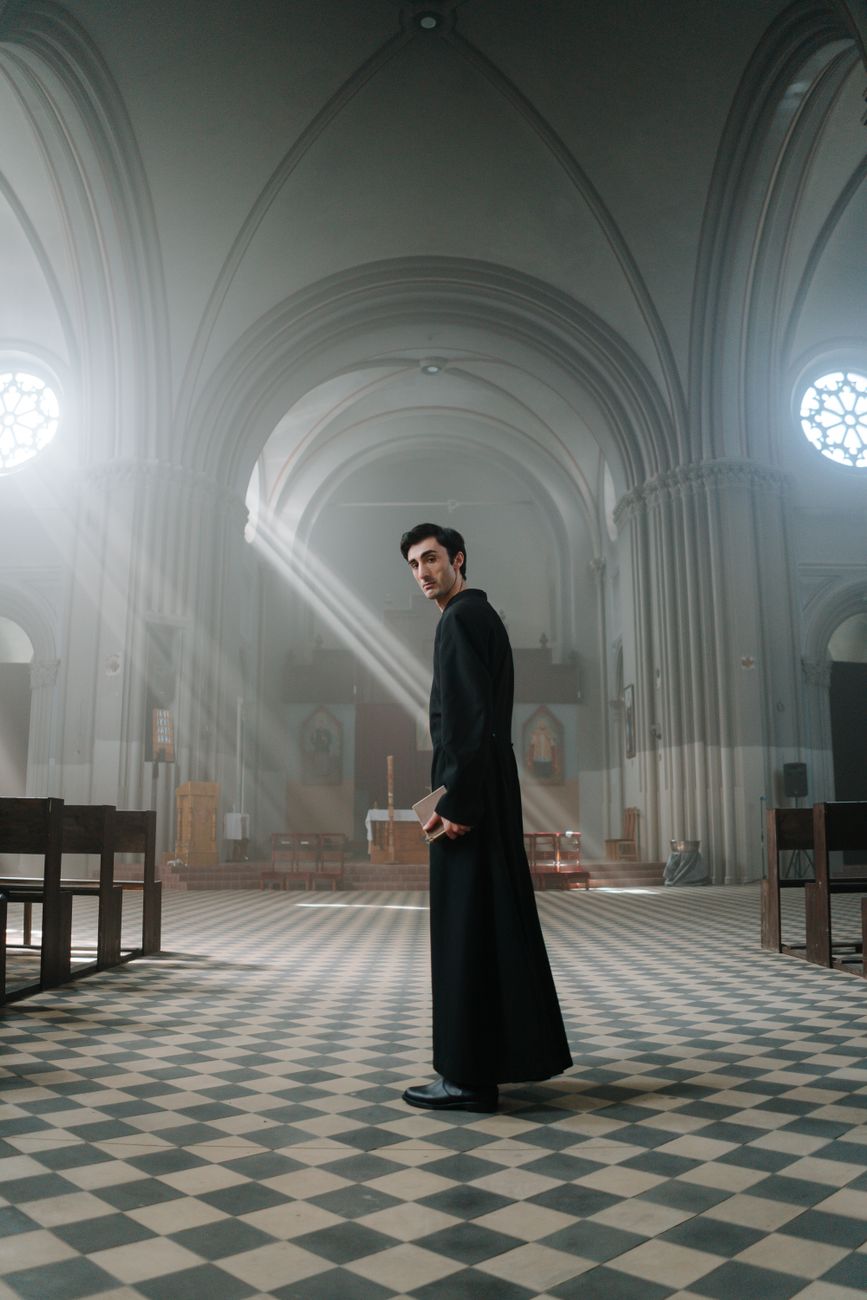
I Think I Am a Christian Mystic… But Let Me Explain
People occasionally ask me what religion I am, what denomination I belong to, or what church tradition best describes me. If you have read much of this blog, you probably already know that I have a problem with the question, or at least with the labels we normally use to answer it.
I am a Christian, certainly, but that word covers an enormous amount of theological territory. Catholic, Orthodox, Lutheran, Baptist, Methodist, Pentecostal, Anglican, Reformed, Anabaptist, nondenominational, and dozens of other traditions all fit beneath that umbrella, often with considerable disagreement among them. Even those categories break into smaller categories once you look closely enough. As I have written before, labels can be useful shorthand, but they can also become boxes into which we place people before we have actually listened to them.
I am also increasingly uncomfortable with the way Christians divide the Kingdom of Christ, the Body of Christ, or the universal Church, the {ἐκκλησία} (ekklēsia, assembly or church), along theological lines that human beings have drawn. Theology matters. Truth matters. Some disagreements are significant. Yet I cannot escape Jesus’ vision of “one shepherd” and “one flock” in John 10:16. Whatever else Christianity is supposed to become, perpetual tribal fragmentation seems difficult to reconcile with that vision.
So what am I?
Sometimes I say, Christian. Sometimes I prefer follower of Christ or child of God, although those expressions create their own assumptions. Say “Christian” and some people immediately load the word with every unpleasant experience they have ever had with Christians. Say “Christ follower” and someone else may wonder whether you have joined an obscure cult. Apparently, there is no label that escapes the human talent for putting people into categories.
I have occasionally thought that I could call myself a trans-traditional Christian, meaning that I draw from the larger Christian tradition rather than locating myself exclusively inside one denominational boundary. At least that would have one advantage: most people would have to ask what I mean before deciding what I believe.
But lately I have considered another answer, one that would probably throw people for an even larger loop. I am, at least in one important sense, a Christian mystic. But please, let me explain.
The Word That Used to Make Me Nervous
I have to admit that the words mystic and mysticism once produced something close to an allergic reaction in me. Growing up within evangelical Christianity, first Lutheran and later Baptist, those were not normally words we used approvingly.
What comes into your mind when you hear mystic?
Perhaps you picture a long-haired hippie surrounded by crystals. Maybe a monk hidden away in a remote monastery. Perhaps someone dancing around a fire in the forest at midnight, or a disheveled person walking down the street murmuring incomprehensible things to invisible companions. My own mental file cabinet contained some combination of those images.
I certainly would not have pictured an academically respected philosopher wearing ordinary clothes, standing in front of a university classroom discussing epistemology, metaphysics, logic, and Edmund Husserl.
Yet that is approximately how this journey began for me.
I encountered Dallas Willard years ago as one of Christianity’s serious intellectual voices. Willard spent decades teaching philosophy at the University of Southern California. He wrote and taught on epistemology, philosophy of mind, logic, phenomenology, spiritual formation, discipleship, and the Kingdom of God. J. P. Moreland, himself a prominent Christian philosopher and one of Willard’s former doctoral students, described Willard as a “first-rate academic philosopher” whose spiritual life and philosophical thought were deeply integrated.
So I was surprised when I encountered people describing Dallas Willard as a Christian mystic.
Mystic? Dallas Willard? That did not fit my category. And that was precisely the problem. The word had triggered the category before I had bothered to investigate what the category meant. There is an old warning about judging books by their covers, but we do the same thing with words. We encounter a term, activate all the associations we have accumulated around it, and imagine that we have understood the thing itself.
I had not understood Christian mysticism. I had understood my stereotype of Christian mysticism. Those are not the same thing.
So What Is a Christian Mystic?
Gary Moon, writing about Willard in Eternal Living, offered a remarkably simple explanation of what he meant when describing Willard as a mystic:
“I simply mean that he believed God is present in a real sense and that when you talk with him a two-way conversation is possible.” – Gary W. Moon
That definition changed the conversation for me. We are not talking about psychedelic experiences, esoteric secrets, altered states of consciousness, or some attempt to dissolve the individual self into an impersonal cosmic consciousness. We are talking about something far more recognizably Christian: God really exists, God really is present, human beings can really know God, and relationship with God can therefore be genuinely interactive.
Willard himself addressed the question directly in his 2006 essay A Christian Mysticism? He rejected the idea that all mysticism reduces to some generic experience of becoming one with an impersonal Absolute. Christian mystical union, as Willard understood it, preserves the distinction between God and the human person. God remains God. I remain me. Union is relational, involving knowing, willing, loving, responding, and acting together. He describes it as a life in which divine presence becomes interwoven with ordinary human existence. That is much closer to what I mean when I talk about Dancing with God.
“The specific ‘color’ of Christian mysticism is devotion to Jesus Christ.” – Dallas Willard
Christian mysticism, understood this way, is not an escape from Christianity into vague spirituality. It is taking Christian claims about God seriously enough to live as though they describe reality.
Before Mysticism Comes Metaphysics
This is where my interest in philosophy becomes important, because underneath this entire discussion is a metaphysical question.
Metaphysics is the branch of philosophy concerned with the fundamental nature of reality. What kinds of things actually exist? Is reality only physical? Are minds real in some way that cannot be reduced entirely to brains? Are moral truths objective? Do abstract entities such as numbers or logical relations exist? Does God exist? Are there spiritual beings? What kind of thing is a human soul?
Different philosophical systems answer those questions differently. Platonists have historically defended a robust reality that includes things not reducible to particular physical objects. Aristotelians also treat universals such as humanity or redness as real, although traditionally they disagree with Platonists about whether universals exist apart from their instances. Idealists place mind or consciousness at the foundation of reality. Materialists or physicalists maintain, in differing forms, that ultimately physical reality is all there is. Various postmodern approaches complicate the discussion further by emphasizing language, interpretation, historical location, and the difficulty of accessing reality independently of our conceptual frameworks.
Dallas Willard was emphatically a metaphysical realist. J. P. Moreland describes Willard’s position as “robust metaphysical realism.” Realism, in this context, means that reality exists independently of what you or I happen to think about it. The tree does not disappear because I stop believing in trees. Truth does not rearrange itself to accommodate my worldview. Reality gets the final vote.
The “robust” part goes further. According to Moreland’s description of Willard, physical objects are not the entirety of reality. Consciousness, the self, values, logical truths, God, spiritual beings, and other nonphysical realities are part of what exists. Moreland pairs this with epistemic realism, the conviction that human beings can genuinely know reality rather than remaining forever trapped inside their own interpretations of it
Now Christian mysticism begins to make sense. If God does not actually exist, prayer may be psychologically useful, but no one is listening. If the Holy Spirit is merely a metaphor for certain religious emotions, then “being led by the Spirit” is ultimately an elaborate way of describing human psychology. If the Kingdom of God is only a religious idea, then discipleship may amount to moral development inspired by an ancient teacher. But if God really exists, if the Holy Spirit is really a Person, if human beings really possess a spiritual dimension, and if the Kingdom of God is an objective reality that surrounds and intersects our lives, then Christianity becomes something much more than believing propositions about God. It becomes participation in reality.
Dallas Willard Ministries summarizes the progression of his thought by beginning with the question, What is real? The answer is God and his Kingdom. His teaching about hearing God follows from that foundation because, for Willard, God is personal, present, and capable of communication. That is why I increasingly think mysticism, properly understood, is not the opposite of intellectual Christianity. It may actually follow from it.
If God Is a Person, Why Would Prayer Be a Monologue?
Most Christians I know pray. We speak to God. We confess. We ask. We thank. We praise. We complain. Sometimes, like the Psalms, we do several of those things in the same prayer. But there is a peculiar assumption that sometimes creeps into Christian practice. We say that God is a Person and that Christianity is a relationship with God, but then we imagine that the relationship consists almost entirely of us talking.
Willard challenges that assumption in Hearing God. The book’s subtitle is Developing a Conversational Relationship with God, and that description is quite deliberate. Prayer is not merely transmitting information upward. The Christian life is supposed to become an increasingly interactive life with God. Yet Willard simultaneously warns against becoming obsessed with obtaining specific guidance about every decision. The goal is not to turn God into a supernatural navigation app telling us whether to turn left or right at every intersection. The larger goal is becoming the kind of person who lives responsively with God as a responsible participant in God’s Kingdom.
That resonates deeply with me and is a bit of a relief as well. Scripture speaks this way surprisingly often when we stop reading familiar passages too quickly. Jesus speaks about abiding in him in John 15. Paul says that Christ lives in him in Galatians 2:20. Second Peter speaks of participating in the divine nature in 2 Peter 1:4. John 14 through 17 repeatedly describes Father, Son, Spirit, and believer in strikingly relational and participatory language.
This connects directly with something I have been exploring elsewhere and have come to call Dancing with God. Eastern Christianity often speaks of theosis, participation in the divine life. Reformed theology has its rich tradition of union with Christ. James D. Gifford Jr. has written about perichoretic salvation. These traditions are not identical, and I do not want to flatten their differences, but each pushes us beyond the idea that salvation is merely receiving the correct legal status or affirming the correct propositions. Christianity is relational and participatory. We are learning to live with God. Maybe even to dance.
“God Speaks” Does Not Mean “Every Thought I Have Came From God”
We human beings are remarkably good at convincing ourselves that what we want to be true is actually true. Christians are certainly not immune to that tendency. We can mistake wishful thinking, intuition, emotion, our own biases, or simply a very strong opinion for the voice of God. Once we attach the words “God told me” to an impression, however, we have elevated an ordinary human thought into something carrying divine authority.
How many times have you been in church and heard someone say, “I have a word from the Lord for you”? Perhaps you have even had someone tell you what God supposedly wanted you to do. Sometimes what they say may prove remarkably insightful. Other times, not so much. That should give us reason for humility. The possibility that God communicates with people does not mean that every person who believes they have heard from God has correctly identified the source of what they experienced.
And here comes the rub. I think a substantial caution is necessary. There is a significant difference between saying I believe God can speak to human beings and saying God told me this particular thing.
The first statement is theological. It is a claim about the nature of God and what God is capable of doing. The second is an epistemological claim, meaning a claim about what I know, how I know it, and how justified I am in believing that my particular experience actually came from God. Those are not equivalent.
If I believe God exists and is personal, there is nothing logically strange about believing God can communicate. Scripture certainly depicts God communicating through prophets, dreams, visions, angels, circumstances, inner promptings, audible speech, Scripture itself, and other people.
But human beings are also extraordinarily good at confusing what we want with what is true. We experience confirmation bias. We misremember. We rationalize. We project. We interpret emotions according to our expectations. We can become persuaded by other people. We sometimes discover elaborate explanations for things that have much simpler causes. Consequently, “I had a strong impression” should not automatically become “God told me.”
Certainly, our intuition speaks to us as well, and sometimes it is remarkably accurate. But intuition arises from within us. It may reflect experience, subconscious pattern recognition, memory, emotion, or other processes we do not immediately recognize. That makes discernment difficult. A strong impression may be meaningful without necessarily being a message from God. So we should be very cautious about making the leap from “I strongly sense this” to “God told me,” and even more cautious about taking the next step to “God told me, therefore you must obey me.” The stronger the claim to divine authority becomes, the more careful our discernment and justification should be.
Moreland’s description of Willard’s epistemology is helpful here because it does not require absolute certainty before we can speak meaningfully about knowledge. We can genuinely know things while still remaining capable of error. Intellectual humility does not require radical skepticism. It requires recognizing the difference between reality itself and our interpretation of our experiences of that reality. That strikes me as exactly the posture Christian mysticism needs: open but not gullible, expectant but not demanding, experiential but not anti-intellectual, confident that God can communicate while remaining humble about my ability to identify every communication correctly.
And perhaps the dance metaphor helps here as well. In any dance, not every movement or every step is flawless. Sometimes we stumble. Sometimes we lose the rhythm. Sometimes we step on someone’s toes. I certainly know that I am no Fred Astaire. If Dancing with God describes something about our participation in the life of God, then discernment is partly about learning the steps, recognizing the rhythm, and admitting when I may have gotten it wrong.
That is especially important when other people are involved. Even if I strongly suspected that God was prompting me to say something to someone, I would be very hesitant to approach them with, “God told me to tell you this.” I would be much more comfortable saying, “Maybe this is none of my business, but can I offer an observation or some wisdom that might be helpful?” That leaves the other person free to consider it, test it, reject it, or perhaps recognize something valuable in it without my placing the weight of divine authority behind my words.
There is also a theological reason for that caution. I do not want to invoke God’s name to give my own thoughts an authority they do not deserve. One important way Christians have understood the commandment against taking the Lord’s name in vain is that we must not misuse God’s name or attach divine authority to something falsely. If I say, “God told me,” when what I really have is an intuition, preference, emotion, or personal judgment, I may be doing something far more serious than simply making a mistake. I may be attributing my own words to God. That possibility alone should make any Christian mystic speak with humility.
What About Voices, Visions, and Dreams?
This brings us to what many people probably thought I meant when I first used the word mystic. Do I believe God can communicate through visions, dreams, angelic appearances, unusual experiences, or even an audible voice? Yes, of course. I see no good biblical reason to say that God cannot do those things.
But I also see no biblical reason to believe dramatic supernatural experiences should become the normal measure of Christian maturity. Scripture records extraordinary events, but it does not portray every faithful person as routinely experiencing visions, audible voices, angelic appearances, or supernatural spectacles.
In fact, the extraordinary events recorded in Scripture often occur across long stretches of otherwise ordinary life. Abraham’s recorded encounters with God span decades. Samuel hears what appears to be a voice and initially mistakes it for Eli. Elijah witnesses dramatic manifestations and later encounters God in a quieter way. Peter’s vision concerning Cornelius occurs at a pivotal moment in the expansion of the early church. Paul’s extraordinary encounters accompany equally extraordinary moments in his calling and ministry.
I would therefore formulate the biblical pattern cautiously: extraordinary divine communication is genuinely biblical, but Scripture does not teach Christians to manufacture it, demand it, or treat dramatic experiences as the normal measure of Christian life. God remains free to be God. My own experience is part of why I leave that door open. I realize some Christians may hear this and assume I am arguing that visions, dreams, or other extraordinary forms of communication ceased with the early Church. That is not what I am saying. I am simply distinguishing between believing such things remain possible and expecting them to be routine.
More than thirty years ago, I had an experience I have never forgotten. I heard what seemed to me to be an audible voice telling me to do something. Phenomenologically, meaning simply as I experienced the event before deciding what caused it, the voice seemed external. It sounded as though it came from the otherwise empty room rather than from my normal inner speech. It was commanding enough that I obeyed without hesitation, and what followed from obeying turned out to be good.
I have never had that experience again. Do I believe God spoke to me? I think so, and in this case I am actually quite confident. I can say with considerable certainty that I experienced what seemed to be an external voice. That describes the experience itself. Saying that God produced the voice is still an interpretation, but I also had what I regard as significant validation afterward. I obeyed the command, and doing so prevented a negative outcome that I had no way of anticipating at the time. I only learned later what likely would have happened had I ignored it. That does not give me mathematical certainty, but it moves this particular experience well beyond a vague impression for me. If I had to put a number on my confidence, I would say it is comfortably above 90 percent.
My Christian worldview gives me reason to consider that interpretation entirely possible, and the content and result of the experience give me additional reason to take it seriously. Still, I see no reason to transform one unusual event more than three decades ago into a grandiose claim about myself. I do not walk around hearing voices. I do not receive daily revelations. God does not dictate my blog posts. And if he did, I suspect the first drafts would require considerably less editing.
From time to time, I have experienced strong impressions or feelings that have influenced my behavior, sometimes in ways that later seemed important. I take those seriously too, but cautiously. Perhaps God was guiding me. Perhaps some were the product of intuition, subconscious pattern recognition, emotion, or circumstances I had not consciously processed. Discernment means leaving those possibilities on the table rather than automatically baptizing every intuition as divine revelation.
Sometimes I find myself smiling and saying, “God, I think I see what you are doing here. All right, I am along for the ride. Let’s do this.” There have been enough occasions when something I have just learned, read, experienced, or been thinking about suddenly becomes useful because I find myself in the right place at the right time. The Greek word kairos is helpful here. Unlike chronos, which refers more generally to chronological time, kairos carries the sense of an opportune or fitting moment. Sometimes it feels as though God has prepared me for a particular kairos, giving me something I can use in that moment to serve another person or contribute, however modestly, to his Kingdom. In those instances I tend to be much more confident that I am participating in something God is doing, precisely because the direction points away from myself and toward the work Christians are already called to do. That, after all, is what I mean by the Dance: not simply waiting around for God to tell me things, but learning to recognize where he may already be at work and joining him there, co-laboring with God in the building of His Kingdom.
Sometimes I Would Like to See
There is another side of this that I find more difficult to explain. Sometimes I wish I could actually see spiritual reality. If God and the Kingdom of God really exist, if angels and other spiritual beings really exist, and if reality includes dimensions that are not ordinarily available to our senses, then I occasionally find myself wondering what I would see if the curtain were pulled aside for a moment. Scripture gives us a few tantalizing glimpses of that possibility, and one of my favorites occurs in 2 Kings 6. Elisha and his servant are surrounded by an enemy army, and from the servant’s perspective the situation is understandably terrifying. Elisha, however, responds that those who are with them are more numerous than those against them. He then prays that the servant’s eyes will be opened, and suddenly the servant sees the mountain filled with horses and chariots of fire.
What fascinates me about that passage is that, within the narrative, the spiritual reality was already there. The army did not suddenly appear because the servant believed strongly enough, nor did Elisha somehow create it through prayer. What changed was the servant’s ability to perceive what was already present. Scripture gives us other glimpses like this as well. Balaam’s donkey perceives the angel before Balaam does. Stephen sees the heavens opened. John describes visionary encounters throughout Revelation. Taken together, these passages at least suggest that what human beings normally perceive may not exhaust everything that is actually present around us.
I confess that part of me would like to see that reality for myself. Yet another part of me wonders whether that would actually be wise. Biblical encounters with extraordinary manifestations of spiritual reality are rarely presented as a kind of supernatural tourism. Daniel loses his strength. John falls down. Others respond with fear, confusion, awe, or even terror. Perhaps seeing more would not necessarily make faith easier. It might actually be overwhelming. And perhaps there is even a kind of mercy in the veil, although I want to be careful here because that is speculation on my part. Scripture does not tell us that God ordinarily conceals spiritual reality because our minds or nervous systems could not handle seeing it. Still, I find the possibility worth considering.
More importantly, though, 2 Kings 6 seems to point toward something deeper. Elisha apparently did not need his servant’s vision in order to know that they were not alone. He was already living in confidence that the reality of God was greater than the visible circumstances in front of him. Perhaps spiritual maturity, then, is not primarily about developing the ability to see the invisible world. Perhaps it is learning to live faithfully in light of that reality whether God ever allows us to see it or not. In that sense, faith is not pretending that unseen things are real. It is learning to trust that reality is larger than what our senses happen to reveal at any particular moment.
The Surprisingly Ordinary Life of a Mystic
This brings me back to where I think Christian mysticism ultimately belongs. The mystical Christian life is probably much less spectacular than the stereotypes suggest.
- It is prayer.
- Silence.
- Solitude.
- Scripture.
- Worship.
- Listening.
- Discernment.
- Community.
- Service.
- Dancing?
Learning to become aware of God’s presence while driving to work, washing dishes, talking with another person, sitting quietly outside, reading Scripture, making a difficult decision, forgiving someone, serving someone who cannot repay you, or simply paying attention. Thankyou Brother Lawrence for that lesson.
Willard’s spiritual disciplines make much more sense to me when understood within this metaphysical framework. Silence, solitude, fasting, prayer, study, worship, service, and Scripture meditation are not magical techniques for producing altered states. They are practices through which we become the kind of people increasingly capable of attending and responding to God.
The test of mysticism, then, is not how strange my experiences become. The test is what kind of person I am becoming.
- Am I becoming more loving?
- More joyful?
- More peaceful?
- More patient?
- More kind?
- More faithful?
- More gentle?
- More self-controlled?
- More Loving?
Am I learning to love God and neighbor more naturally? Am I becoming increasingly capable of responding to difficult people without hatred? Am I becoming less controlled by anger, fear, ego, appetite, status, and resentment? Am I becoming someone through whom the life of Christ becomes increasingly visible?
Someone can have spectacular spiritual experiences and remain a terrible human being. Someone else may never see an angel, never hear an audible voice, never experience a vision, and yet live so deeply in communion with God that love seems to follow them wherever they go. If I have to choose which one looks more like Christian mysticism, I will take the second.
So, Yes, I Think I Am a Christian Mystic
Perhaps the label still sounds strange. Or maybe it sounds kind of cool. I am not entirely sure yet, which is why I intend to hold it tentatively rather than turn it into another rigid identity. Still, that may be part of its usefulness. Sometimes an unfamiliar label interrupts our automatic categories and forces us to ask questions before reaching conclusions. If I tell someone I belong to denomination X, they may immediately assume they already know what I believe. If I say, “I am a Christian mystic,” they may actually have to ask what I mean. Of course, they might also run for the hills, but at least I will have disrupted the stereotype for a moment.
I would be glad if they asked, because then I could explain what I actually mean by the term. I mean that I believe God is real and that His Kingdom is real. I believe human beings are more than biological machines and that the spiritual dimensions of reality are not merely metaphors created by religious communities. I believe God is personal and capable of communicating with human beings, which means prayer can become more than a monologue and communion with God can become something genuinely experienced rather than merely affirmed as doctrine.
I also believe that Scripture, reason, Christian tradition, community, experience, and careful discernment should work together rather than being set against one another. I believe extraordinary spiritual experiences are possible, but I do not believe they should become the goal. Most importantly, I believe the purpose of life with God is transformation into Christlikeness. That is the kind of Christian mysticism I am talking about.
For me, that kind of mysticism does not require abandoning reason. It requires taking reality seriously enough to recognize that reason need not be confined to the physical world. It does not require rejecting theology. It requires allowing theology to describe a world we actually inhabit. It does not require chasing visions, voices, or extraordinary experiences. It requires learning attentiveness. And it does not require certainty about every impression or intuition. It requires discernment, humility, and a willingness to admit when I may have gotten something wrong.
And this is where Christian mysticism meets what I have been calling Dancing with God. Perhaps the deepest Christian life is not primarily about accumulating more information about God, although knowledge matters enormously, nor is it about collecting spectacular experiences of God, although He remains free to give them. It is about learning to live with God: to listen, respond, cooperate, abide, participate, and gradually become the kind of person who can move with Him rather than constantly against Him. Maybe that is what the Dance has been about all along.
So perhaps my prayer should not primarily be, “God, let me see the spiritual world.” Perhaps it should be something more difficult and more important: God, teach me to live as though Your Kingdom is every bit as real as You say it is, whether I can see it or not. If that makes me a Christian mystic, I suppose I can live with the label.
References
- Brother Lawrence. (2015). The practice of the presence of God (S. Sciurba, Trans.; Critical ed.). ICS Publications. (Original work published 1692).
- Moon, G. W. (Ed.). (2015). Eternal living: Reflections on Dallas Willard’s teaching on faith and formation. IVP Books.
- Moreland, J. P. (2015). Reflections on a day with my professor and friend. In G. W. Moon (Ed.), Eternal living: Reflections on Dallas Willard’s teaching on faith and formation (pp. 119–129). IVP Books.
- Willard, D. (1998). The divine conspiracy: Rediscovering our hidden life in God. Harper San Francisco.
- Willard, D. (2002). Renovation of the heart: Putting on the character of Christ. NavPress.
- Willard, D. (2006). A Christian mysticism? Journal of Christian Nursing, 23(3), 34–36.
- Willard, D. (2012). Hearing God: Developing a conversational relationship with God. InterVarsity Press.
Excerpt
What does it mean to call yourself a Christian mystic? For me, it means taking seriously the reality of God, His Kingdom, prayer, discernment, and communion with Him, while resisting sensationalism. The goal is not extraordinary experiences, but learning to live attentively with God and become more like Christ.
The light inside you is brighter.


Leave a Reply