
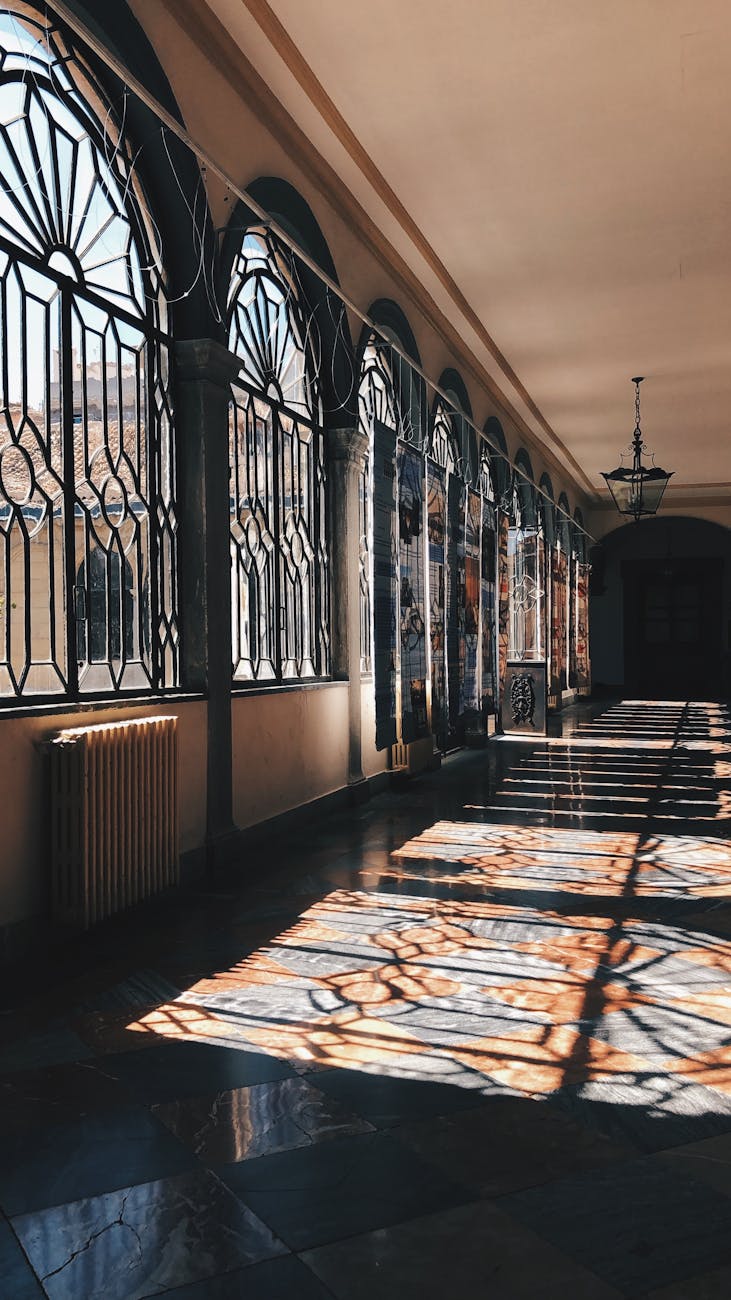
As we continue this slow Lectio Divina journey through John 1, we come now to the image of light shining in darkness. Imagine that our road has led us to an old castle, beautiful but weathered, with rooms long closed and corridors we have avoided. We are not entering alone. Christ, the Light, is already at the center. The question is whether we will let Him open the shutters, cleanse the hidden rooms, and teach us to become what this castle was always meant to be.
The Light
Come sit with me again for a while.
We have been walking through the opening of John’s Gospel, and now we come to the light. That sounds beautiful at first. Light is warm. Light is hopeful. Light helps us see the path. But if we are honest, light can also be frightening. Light does not only reveal what is lovely. It also reveals what we have hidden.
John tells us that “the light shines in the darkness.” I want to be drawn to that line. I am drawn to that line. And yet, if God’s light begins to shine into the dark places of my life, I have to admit that part of me hesitates. Who knows what is lurking there? Nothing good, I suspect. There are rooms I have avoided. There are doors I have learned to walk past. There are parts of the soul where I would rather keep the curtains closed.
That may sound dramatic, but I think most of us understand it. Darkness is not only where evil hides. It is also where we cope. It is where we protect ourselves. It is where we keep old loyalties alive. Sin is rarely hard to release simply because it is bad. It is hard to release because it has attached itself to something we think we need. Comfort. Control. Relief. Self-protection. Vindication. Numbness. Pleasure. A familiar identity. We do not only cling to sin because we love rebellion. Sometimes we cling because some wounded part of us has mistaken it for shelter.
This is where I keep returning to the image of The Interior Castle from St. Teresa of Ávila. She imagines the soul as a castle, and in the center of that castle is the place of deepest communion with God. I picture it almost like a crystal castle, meant to receive and radiate divine light. But if the rooms are neglected, if the windows are stained, if the passages are cluttered, then the light does not shine through as it should.
That image has been working on me. If Christ is seated at the center of the castle, then my task is not to manufacture my own light. I am not the source. He is. The work is learning to consent to His light, to let His presence radiate outward, to let grace reach the rooms that have been closed off. In that sense, this connects with the participatory reality I have been exploring elsewhere: Christ in me, and me in Christ. There is a kind of dance here. He leads. I respond. He shines. I open. He heals. I consent.
But the dance also includes cleaning the castle. That is the part I resist. I want the beauty of union with Christ. I want the light. I want the joy of communion. But I am less eager for the part where the light reveals what needs to be surrendered. Why is it so hard to let go of sin? Why do we defend things that are destroying us? Why do we keep returning to rooms that make us less free, less whole, less alive?
Part of the answer, I think, is that sin becomes woven into habit. It becomes familiar. The false self-bargains for survival. Shame whispers that if everything were brought into the open, we would be rejected. Some sins become strategies for managing pain. Some become ways of staying in control when life feels unsafe. And spiritually speaking, darkness does not quietly surrender territory. It argues. It delays. It tells us that tomorrow will be a better day to open that door.
So the struggle is not necessarily proof that Christ is absent. It may be evidence that His light is already pressing into places that once went unchallenged.
That is important to remember. The center of the castle is not my sin. Christ is. If the center were my corruption, then introspection would become despair. But if the center is Christ, then exposure is not meant for humiliation. It is ordered toward healing. John does not say that darkness is ultimate. He says the light shines in the darkness, and the darkness does not overcome it.
That changes the way I think about confession. Confession is not dragging myself before a cruel examiner. It is opening a locked room to the Physician. It is allowing the One who already knows the truth to enter the places where I am still afraid of being known. The light does not come because Christ wants to shame the castle. The light comes because He loves what the castle was meant to become.
And yet, fear remains real. I do not want to pretend otherwise. Sometimes the most honest prayer is not, “Lord, I am ready.” Sometimes it is, “Lord, I want to be ready, but I am afraid.” Or even, “Lord, I want this room opened, but I am afraid of what You will ask me to release.”
That prayer may be more faithful than pretending courage we do not yet possess.
What gives me hope is this: the desire for the light is already grace. Darkness does not create a longing for Christ. If I am drawn to the light, even while afraid of it, then Christ is already at work. The longing to open the room does not come from the darkness. It comes from the Light drawing me home.
This also keeps the spiritual life from becoming passive. Participation in Christ is not floating along with religious language. It is responsive cooperation. It is not earning salvation, but it is real yielding. It is not self-rescue, but it is consent. Grace does not merely comfort us. Grace trains, corrects, illumines, and heals us. The dance includes confession, renunciation, patience, repeated return, and concrete obedience.
In John’s language, the Word became flesh. So our surrender must also become flesh. It must move from idea into practice. Into speech. Into habits. Into relationships. Into the actual rooms where we live.
So perhaps the invitation today is simple, but not easy. Sit with the light. Do not ask Christ to show you the whole castle at once. Ask Him to name one room. One place where the door has stayed closed too long. One fear. One habit. One wound. One attachment. One place where darkness has been mistaken for shelter.
Prayer
Then pray: “Jesus, I open this to You. Not to shame me, but to heal me.”
And then stay there for a moment.
Do not rush to fix yourself. Do not hurry into self-accusation. Let Him look at you. Let the Light be light. Let the One at the center of the castle begin to shine through what He has always intended to make whole.
Reflection
- What room in the castle of my soul have I kept closed to Christ’s light, and what am I afraid He will ask me to surrender there?
- Where have I mistaken darkness for shelter, clinging to a habit, wound, or sin because it feels familiar rather than because it gives life?
- If Christ is truly at the center, how might His light move from an idea I admire into one concrete act of confession, obedience, or trust today?
Excerpt
John’s light is beautiful, but it also reveals the rooms we have kept closed. This reflection invites us to imagine the soul as a castle where Christ dwells at the center, shining not to shame us, but to cleanse, heal, and make us whole.
The Bended Knee Prevails


Leave a Reply