
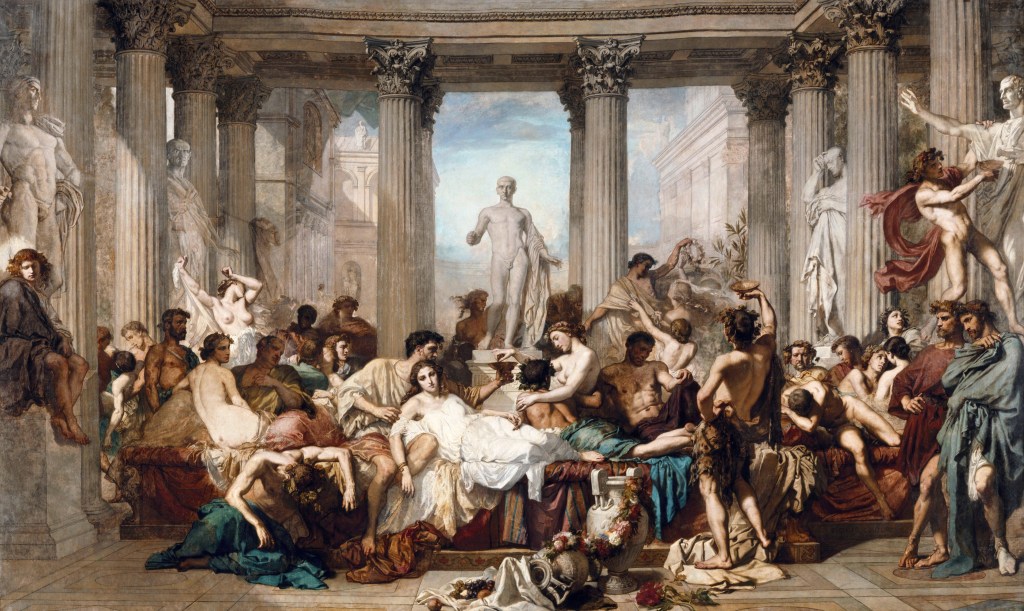
The Dark Enlightenment is a reactionary and anti-democratic answer to real social frustrations, but its cure is worse than the disease: the answer to disordered liberty is not authoritarian rule, but rightly ordered freedom sustained by virtue, constitutional restraint, and citizens formed to defend both.
“We should admit that human beings are dangerous enough to require government, but also that rulers are dangerous enough to require limits.”
Introduction: The Temptation of Dark Answers
Most people have probably never heard of the Dark Enlightenment. That alone is part of why it is worth discussing. Ideas do not need to be popular with the general public before they begin shaping the imagination of a culture. Sometimes they start in obscure essays, online communities, private conversations, podcasts, newsletters, and intellectual circles that seem remote from ordinary life. Then, almost without warning, their assumptions begin showing up in political speech, institutional strategy, and the way people talk about what is possible.
The Dark Enlightenment, often called neo-reaction or NRx, is not simply another complaint about progressive excess, bureaucratic incompetence, or cultural confusion. Those complaints may be worth hearing. Many people can look around and see real disorder. They see institutions losing trust, universities becoming ideological battlegrounds, government agencies appearing distant and unaccountable, families weakening, communities thinning, and public discourse becoming more like trench warfare than deliberation. It is not hard to understand why people become frustrated. But frustration is not wisdom.
The Dark Enlightenment offers a darker diagnosis. It does not merely argue that democracy is unhealthy, badly practiced, or in need of moral renewal. It argues, in various ways, that democracy itself is the problem. It treats the failures of liberal culture as evidence that constitutional self-government has failed. It looks at disorder and concludes that liberty was the mistake. It looks at moral confusion and concludes that equality was the poison. It looks at institutional weakness and concludes that power should be concentrated rather than restrained. That is where I part ways with it.
“If men were angels, no government would be necessary.”
The American constitutional order was not built on sentimental optimism. The Founders did not assume that human beings were naturally virtuous, endlessly rational, or immune to corruption. Quite the opposite. They understood ambition, pride, faction, fear, greed, and the human tendency to misuse power. That is why they did not place all authority in one man, one class, one council, one party, or one priestly caste of experts. They built a system of divided power because they knew human beings are flawed.
That is the great irony. The Dark Enlightenment claims to have a realistic view of humanity, but the Constitution already begins with realism. It does not say, “Trust the people without limits.” It also does not say, “Trust the ruler without limits.” It says power must be checked because no person, party, institution, or movement is righteous enough to hold unchecked authority. Ambition must counteract ambition. Law must restrain rulers as well as citizens. Liberty must be ordered, not abandoned.
This is why the choice before us is not chaos or authoritarianism. That is a false dilemma. The better question is whether we can recover ordered liberty. Ordered liberty is not license. It is not the freedom to do whatever we want, whenever we want, without regard for neighbor, community, duty, or God. Ordered liberty is freedom joined to responsibility. It is liberty disciplined by virtue, protected by law, and sustained by citizens who understand that self-government requires self-command.
The Dark Enlightenment has a dim view of humanity. The pun is almost unavoidable. But the answer to a dim view of man is not to hand the keys of civilization to a stronger master. Human beings are fallen enough that power must be restrained, but not so hopeless that self-government should be surrendered. We are capable of vice, yes. But we are also capable of courage, repentance, reform, sacrifice, and wisdom. History is full of cruelty, but it is not only cruelty. It is also full of abolitionists, reformers, martyrs, soldiers, pastors, statesmen, parents, teachers, and ordinary citizens who chose responsibility when despair would have been easier.
This should be of great consideration especially for Christians. Christians, of all people, should remember that authoritarian regimes rarely remain friendly to an independent church for long; when the state claims too much power, believers often discover that yesterday’s promised protector can quickly become tomorrow’s censor, jailer, or persecutor. The church should also not be naïve about evil. Christianity has never taught that humanity is basically fine if left alone. But neither should Christians become so disillusioned by cultural disorder that we begin admiring the political logic of domination. We are called to bear witness to truth, form consciences, love our neighbors, defend the vulnerable, and speak prophetically to power. We are not called to trade liberty for the illusion of safety.
Concentrated power often promises to clean up the mess. It promises efficiency, order, strength, and clarity. But power without restraint has a way of becoming its own appetite. It rarely remains merely a tool in the hand. It becomes a master. And once people learn to admire domination because it seems useful against their enemies, they should not be surprised when the same logic is eventually turned against them.
So this essay is not a defense of everything currently done in the name of democracy. It is not a denial that liberal societies can decay. It is not an argument that our institutions are healthy, our citizens are well-formed, or our culture is morally stable. In many ways, we need renewal. We need better citizens. We need stronger families and communities. We need wiser churches. We need institutions worthy of trust. We need people who understand the theories of government well enough not to take liberty for granted. But renewal is not surrender.
We do not need to throw out constitutional self-government. We need to remember what it was for. We need to understand the Dark Enlightenment, trace its history, examine its themes, acknowledge why it appeals to frustrated people, and then contend against it with something better. Not naïve optimism. Not lawless freedom. Not bureaucratic progressivism. Not authoritarian reaction. Ordered liberty. That is the path worth defending.
“Remember, democracy never lasts long. It soon wastes, exhausts, and murders itself. There never was a democracy yet that did not commit suicide.” – John Adams
What Is the Dark Enlightenment?
The Dark Enlightenment, also called neo-reaction or NRx, is a reactionary political and philosophical current that rejects many of the assumptions most modern Western people take for granted. It is anti-democratic, anti-egalitarian, and deeply suspicious of the Enlightenment inheritance of reason, progress, equality, and popular self-government. In plain terms, it does not merely argue that democracy is broken, corrupt, poorly practiced, or in need of reform. It argues that democracy itself is a core part of the problem.
Many people criticize liberalism. Many people criticize progressivism. Many people criticize bureaucracy, elite hypocrisy, moral confusion, and institutional failure. They may want stronger families, healthier communities, wiser churches, more accountable government, and a more serious public culture. None of that automatically makes someone part of the Dark Enlightenment. The Dark Enlightenment goes further. It treats the failures of modern liberal culture as evidence that democratic self-government is structurally misguided.
That is why it should not be confused with ordinary conservatism. Conservatism, at its best, wants to preserve what is good, repair what is damaged, and pass down an inheritance worth receiving. The Dark Enlightenment is more radical. It is not simply saying, “Slow down.” It is asking whether the democratic project itself should continue. It presents hierarchy as realism, equality as illusion, and popular rule as a kind of comforting myth.
The basic argument goes something like this: democracy claims to represent the people, but in practice it produces bureaucracy, disorder, oligarchy, and cultural decay. Elections may happen, but real power, according to this view, belongs to deeper institutions that shape opinion and govern beneath the surface. Curtis Yarvin’s term for this is “the Cathedral,” his label for the informal alliance of journalism, academia, bureaucracy, and related elite institutions that, in his view, shape public consciousness and regime power. Whether one accepts that analysis or not, the term is important because it captures one of the movement’s central claims: formal democracy is not real self-rule. It is a façade covering a deeper system of control.
This is part of what makes the movement appealing to some people. If someone already believes the institutions are lying, the experts are captured, the media are corrupt, the universities are ideological, and the bureaucracy is unaccountable, then the language of “the Cathedral” gives that frustration a name. It tells people that their sense of alienation is not paranoia but insight. It says, in effect, “You are not really governed by the people. You are governed by an invisible priesthood of elite opinion.”
That diagnosis has power because it touches real frustrations. People do see hypocrisy among elites. They do see institutions that speak the language of democracy while insulating themselves from accountability. They do see bureaucratic systems that seem impossible to reform. They do see social disorder, ideological conformity, and cultural instability. If an idea names pain that people already feel, it does not need to be fully true to become persuasive. It only needs to feel explanatory. But a powerful diagnosis can still lead to a dangerous cure.
The name “Dark Enlightenment” is revealing. The original Enlightenment was not one simple thing, and Christians have good reasons to critique parts of it. But in broad terms, the Enlightenment is associated with confidence in reason, progress, liberty, equality before the law, and the possibility that human beings can govern themselves through public deliberation and constitutional order. The Dark Enlightenment reverses that hope. It looks at the same ideals and sees naiveté. It sees reason captured by ideology, progress as decay, equality as fantasy, and democracy as a machine that produces weakness.
That is why the word “dark” is used. It is not just edgy branding. It signals disillusionment. It suggests that the bright promises of modernity have failed and that the time has come to abandon the old optimism. It is a philosophical darkness as much as a political one. It begins with a darker anthropology, meaning a darker view of human beings and what they are capable of politically. It assumes that ordinary people cannot sustain liberty well enough for free government to endure. If the people cannot govern themselves, then someone else must govern them. That is the ancient temptation: order without liberty.
We have heard this argument before, even in our stories. In Star Wars, the Empire and later the First Order do not sell themselves merely as villains twirling mustaches in the dark. They promise order, stability, security, and strength. They arise in worlds where people are tired of chaos and afraid of disorder. The temptation is not difficult to understand. When the galaxy feels like it is falling apart, a strong hand begins to look attractive.
“So this is how liberty dies, with thunderous applause.”
That line lands because it names something true. People do not always lose freedom because they hate freedom. Sometimes they lose it because they are exhausted by disorder. Sometimes they applaud the very power that will later silence them, because at first it appears to be aimed at someone else.
This is why the Dark Enlightenment deserves careful attention. It is not enough to dismiss it as internet weirdness or fringe provocation. Its tone may be ironic, contrarian, elitist, and deliberately provocative, but beneath that style is a serious political claim: liberty has failed, equality is false, democracy is illusion, and hierarchy is the way back to order. That claim must be answered.
Still, we should answer it fairly. The Dark Enlightenment gains attention because it speaks to real problems. It points toward progressive excess, bureaucratic bloat, elite hypocrisy, cultural instability, and the loss of public seriousness. These are not imaginary concerns. A society cannot remain free if freedom becomes license, if citizens abandon responsibility, if institutions become self-protective machines, or if public life becomes a contest of manipulation rather than wisdom. But the existence of real problems does not make every proposed cure wise. A fever is real. That does not mean poison is medicine.
The American constitutional tradition offers a better kind of realism. It does not pretend human beings are angels. It does not place unlimited trust in voters, politicians, judges, bureaucrats, intellectuals, or executives. It assumes that people are flawed, power is dangerous, factions are inevitable, and institutions must be designed with restraint in mind. But it does not conclude that liberty should be surrendered. It concludes that liberty must be ordered.
That is the path the Dark Enlightenment rejects. It looks at disorder and says, “Democracy has failed.” I look at disorder and say, “Self-government must be renewed.” It looks at institutional decay and says, “Concentrate power.” I look at institutional decay and say, “Rebuild accountability.” It looks at moral confusion and says, “The people cannot govern themselves.” I look at moral confusion and say, “Then we had better form better citizens.”
The Dark Enlightenment gains attention because it speaks to real frustrations, but it does so by teaching people to distrust liberty itself. That is why it deserves to be understood carefully before it is rejected firmly.
“The American Republic will endure until the day Congress discovers that it can bribe the public with the public’s money.”
History and Major Proponents
The Dark Enlightenment did not emerge as a political party, a church, a think tank, or a traditional institution with membership cards and local chapters. It emerged primarily online, especially in the late 2000s and early 2010s, through blogs, essays, forums, archives, and digital networks. That origin matters. The movement’s style is internet-native: long-form but informal, intellectual but provocative, ironic but deadly serious beneath the irony.
This was not a mass movement at first. It was an intellectual current. It circulated among people dissatisfied with liberal democracy, frustrated with progressivism, skeptical of egalitarianism, and attracted to older or alternative forms of hierarchy and sovereignty. In that sense, it was less like a party platform and more like a shared diagnosis: modern democratic society is not merely failing in practice; it is failing because of what it is. Two names matter most in understanding its development: Curtis Yarvin and Nick Land.
Curtis Yarvin, who originally wrote under the pseudonym Mencius Moldbug, is one of the foundational figures of neo-reaction. His older blog, Unqualified Reservations, became one of the central archives of early NRx thought. For readers trying to understand the movement from its own sources, Yarvin is difficult to avoid. He supplied much of the vocabulary, structure, and polemical force that shaped the movement’s early imagination.
Yarvin is especially important because he is not merely complaining about cultural decline. He is trying to build an alternative political framework. His writings explore ideas such as formalism, “Patchwork,” corporate-style governance, and the claim that modern democracies are not truly governed by the people but by informal elite institutions. His later writing at Gray Mirror continues to develop many of these concepts, including “the Cathedral,” his term for the informal power of journalism, academia, and related intellectual institutions.
That does not mean a reader must accept Yarvin’s account. But it does mean that anyone trying to understand the Dark Enlightenment should read him directly. A fair critique should not depend on rumor, caricature, or guilt by association. If the ideas are weak, they should be answered where they are strongest.
Nick Land is the other major figure. Land, a British philosopher associated earlier in his career with accelerationist thought, helped give the Dark Enlightenment its broader theoretical and rhetorical shape. His essay “The Dark Enlightenment” helped popularize the term itself and framed the movement as something more than a reactionary complaint. Land’s contribution is more philosophical, where Yarvin often sounds like a political engineer diagnosing a broken machine, Land often sounds like someone describing the collapse of an entire modern myth.
Yarvin tends to build systems. Land tends to frame trajectories. Yarvin gives the movement vocabulary and political architecture. Land gives it atmosphere, theory, and a sense of historical inevitability. Together, they helped shape a current of thought that is anti-democratic, anti-egalitarian, suspicious of modern liberal institutions, and interested in hierarchy as a proposed cure for disorder.
Still, it is important not to overstate the movement’s organizational coherence. The Dark Enlightenment is not one official body. It has no pope, no party chair, no general confession, and no single platform to which every associated writer subscribes. It is better understood as a networked intellectual current: a cluster of writers, readers, bloggers, technologists, theorists, and adjacent online communities that overlap around certain themes. Those themes include distrust of democracy, rejection of egalitarianism, suspicion of progressive institutions, and attraction to concentrated sovereignty.
This also means we should be careful with labels. Not every critic of liberalism is part of the Dark Enlightenment. Not every conservative who dislikes bureaucracy is neo-reactionary. Not every person who thinks progressive institutions have become ideological belongs in this category. Genealogy is not guilt by association. The question is not whether someone is frustrated with modern liberal democracy. Many people are. The question is whether that frustration leads them to reject democratic self-government and embrace hierarchy or concentrated rule as the better political order.
A Christian, a constitutional conservative, a classical liberal, or even a disillusioned moderate may criticize modern institutions without abandoning liberty. One may argue for moral renewal, decentralization, stronger families, religious liberty, better civic education, and limits on bureaucratic overreach without becoming anti-democratic. The Dark Enlightenment crosses a different threshold. It does not merely ask how democracy can be repaired. It asks whether democracy should be overcome.
Where to Read Them for Yourself
Readers who want to test this account should begin with primary sources.
Curtis Yarvin’s older work appears under the name Mencius Moldbug at Unqualified Reservations. That archive includes many of the early essays that shaped neo-reactionary vocabulary and argument. It is not light reading, and it is often intentionally provocative, but it is foundational for understanding the movement.
Yarvin’s more recent writing appears at Gray Mirror, where he continues to develop concepts such as “the Cathedral.” This is useful because it shows that these ideas are not merely abandoned relics of an older internet age. They continue to be refined and reintroduced in newer formats.
Nick Land’s essays associated with “The Dark Enlightenment” are also worth reading for those who want to understand the movement’s philosophical atmosphere. Land’s work is denser and more abstract than Yarvin’s, but it is important because it helped give the movement its name and wider theoretical frame.
Read them directly. Test their assumptions. Ask what they define clearly and what they smuggle in. Ask what they diagnose correctly and what they exaggerate. Ask what they mean by order, liberty, hierarchy, equality, and sovereignty. Most importantly, ask whether the cure they offer is better than the disease they describe.
That is the discipline of serious critique. We should not attack strawmen. A strawman is a weak or distorted version of an argument, easier to knock down than the real thing. If an idea is dangerous, we should be able to answer it honestly. If an idea is weak, we should be able to show where it fails. If an idea names real problems but prescribes the wrong cure, we should be clear enough to say both.
The Dark Enlightenment began in the margins of online political theory, but ideas do not always remain where they begin. Essays become conversations. Conversations become assumptions. Assumptions become movements. Movements, eventually, can shape institutions. That is why history matters here. Before we can judge the political vision, we need to know where it came from, who shaped it, and what texts gave it force.
Once we see that genealogy, the next question becomes unavoidable: What are the major themes of the Dark Enlightenment, and why do they lead away from ordered liberty?
“Our Constitution was made only for a moral and religious People. It is wholly inadequate to the government of any other.” – John Adams
Major Themes of the Dark Enlightenment
The Dark Enlightenment is not just a collection of edgy complaints about modern society. Its themes reinforce one another. If democracy is inherently corrupting, hierarchy begins to look attractive. If equality is a myth, authority can be concentrated with less moral hesitation. If elite institutions already rule behind the scenes, formal democracy begins to look like theater. And if ordinary people cannot sustain self-government, then liberty itself starts to look like a dangerous experiment.
That is the architecture of the movement. Democracy is treated as failure. Hierarchy is treated as realism. Equality is treated as illusion. Elite culture is treated as hidden rule. Ordinary people are treated as unable to sustain liberty. Once those pieces lock together, the conclusion becomes predictable: power should move upward, not outward.
Rejection of Democracy
The first major theme is the rejection of democracy. This is not merely the familiar claim that democratic societies can become shallow, polarized, irresponsible, or corrupt. Many constitutional thinkers have warned about mob rule, faction, demagoguery, majority tyranny, and the dangers of low civic virtue. That kind of warning is not the same thing as the Dark Enlightenment.
The Dark Enlightenment goes further. It does not merely say democracy needs limits, reform, civic education, or constitutional restraint. It treats democracy itself as structurally defective. Democracy is not a noble system in need of repair. It is the disease, not merely a patient in decline.
The argument is that democratic processes tend to produce drift rather than competence, bureaucracy rather than accountability, oligarchy rather than genuine self-rule, and cultural decay rather than ordered freedom. Elections may continue. Public language may still invoke “the people.” But the deeper claim is that democracy cannot actually govern well because it rewards mass sentiment, manipulation, short-term thinking, and institutional irresponsibility.
This is a radical departure from the American constitutional tradition. The Founders were not naïve about democracy. They feared faction, ambition, instability, and abuse of power. But their answer was not to abandon self-government. Their answer was to structure it wisely through representation, federalism, separation of powers, checks and balances, and constitutional limits.
The Dark Enlightenment looks at democratic weakness and says, “The people cannot govern.” The constitutional tradition looks at human weakness and says, “Then no one should be trusted with unchecked power.” That is the fork in the road.
Preference for Hierarchy and Concentrated Sovereignty
If democracy is the problem, then some form of concentrated authority begins to look like the solution. This is the second major theme: a preference for hierarchy and concentrated sovereignty.
Dark Enlightenment thinkers are often attracted to monarchy, CEO-style rule, technocratic sovereignty, or tightly centralized executive power. The state is sometimes imagined less like a shared constitutional order and more like a corporation with a clear owner, a chief executive, and an unambiguous chain of command. The appeal is obvious. Corporations can appear more efficient than legislatures. Executives can move faster than deliberative bodies. Hierarchy can feel cleaner than politics. But efficiency is not the same thing as justice.
This is a move away from shared rule, institutional restraint, and divided authority, and toward top-down sovereignty justified in the name of order and competence. In this framework, the central political problem is not how to restrain power but how to clarify it. Who is really in charge? Who can make decisions without being obstructed? Who can act decisively when the system is paralyzed?
That can sound attractive, especially to people tired of gridlock, bureaucratic evasion, and public dysfunction. We can understand the frustration. Sometimes democratic politics does look inefficient. Sometimes it is inefficient. But the inefficiency is not always a bug. Sometimes it is a guardrail.
The American constitutional system deliberately slows power down. It divides authority because concentrated power is dangerous. It forces negotiation because no one faction should possess the whole machinery of government. It makes some actions difficult because liberty is partly protected by making domination difficult.
The Dark Enlightenment reverses that instinct. It concentrates power because it distrusts dispersed power. The Constitution disperses power because it distrusts concentrated power.
The old political temptation is always the same: when freedom feels chaotic, order begins to look redemptive. From Star Wars to real life, the promise is stability. The cost is liberty.
Anti-Egalitarianism
The third major theme is anti-egalitarianism. Equality, in this worldview, is not usually treated as a moral safeguard of human dignity. It is treated with suspicion, sometimes as a destructive illusion, sometimes as a leveling ideology, and sometimes as a denial of natural hierarchy.
This needs to be stated carefully. Human beings are not equal in every respect. People differ in intelligence, virtue, discipline, physical strength, inherited advantages, education, wisdom, temperament, and skill. Any serious political philosophy must account for real human difference. The question is not whether people differ. The question is what kind of equality matters morally and politically.
The constitutional-democratic tradition, at its best, does not claim that everyone is identical. It claims that persons possess a moral worth that should restrain how power treats them. Equality before the law does not mean equality of talent, outcome, or role. It means the ruler is not a different kind of being from the ruled. It means no person or class should be treated as naturally entitled to dominate another without accountability.
The Dark Enlightenment pushes against that moral grammar. It tends to see hierarchy as natural, inevitable, and desirable. In this framework, equality is often treated less as a safeguard of human dignity than as a dangerous illusion that weakens natural and functional hierarchies.
Once equality is dismissed as fantasy, hierarchy begins to feel less like oppression and more like honesty. That is part of the movement’s rhetorical power. It presents itself as realism. It says: stop pretending people are equal; stop pretending democracy expresses the people; stop pretending liberal institutions are neutral; stop pretending hierarchy can be avoided.
But realism can become reductionism. A reductionism is a way of explaining something complex by shrinking it down to only one part of the truth. Yes, human beings differ. Yes, hierarchy exists in every society. Yes, competence matters. But none of that proves that political equality is worthless, or that those with power can be trusted to define the worth of those beneath them. Hierarchy may be unavoidable in some form. Unaccountable hierarchy is not.
Suspicion of the “Cathedral”
The fourth major theme is suspicion of what Curtis Yarvin calls “the Cathedral.” This is one of the movement’s most important concepts because it explains how neo-reaction interprets modern power.
Yarvin uses “the Cathedral” as a label for the informal influence of journalism, academia, and related intellectual institutions. The basic idea is that these institutions may not be centrally commanded, but they often behave as if they share a common worldview, shaping public opinion, defining respectable belief, and determining what can and cannot be said in polite society.
This idea has obvious appeal for people who believe elite institutions are ideologically uniform, self-protective, and unaccountable. If universities, media organizations, bureaucracies, nonprofits, and cultural institutions seem to move in the same direction, then the Cathedral thesis offers an explanation: perhaps democracy is not really governed by voters at all. Perhaps voters only operate within boundaries created by cultural and intellectual elites.
The Cathedral thesis matters because it recasts democracy as surface theater and relocates real power to a deeper network of elite institutions. In this view, elections matter less than opinion formation. Law matters less than culture. Official authority matters less than the institutions that decide what counts as moral, rational, scientific, compassionate, or extreme.
There is a partial truth here worth acknowledging. Culture does shape politics. Media does shape perception. Universities do form elites. Bureaucracies do accumulate power. Institutions can become ideologically narrow. Public opinion can be managed, nudged, framed, and manipulated. We should not pretend otherwise.
But the danger is that this insight can harden into a totalizing worldview. A totalizing worldview is one that explains too much with one master idea. Once “the Cathedral” becomes the explanation for everything, disagreement becomes proof of programming, criticism becomes evidence of regime loyalty, and democratic persuasion becomes pointless. Why debate your neighbor if you think his mind has merely been installed by the system?
That is where suspicion can become captivity. The person who sees propaganda everywhere may believe he is finally free, when in fact he may simply be trapped inside a different interpretive machine.
Pessimism About Human Self-Government
The fifth major theme is pessimism about human self-government. This is where the Dark Enlightenment’s dim view of humanity becomes clearest.
Beneath its political proposals lies a darker view of human beings themselves: ordinary people are not trusted to sustain liberty, so power must be gathered upward rather than shared outward. Mass politics is treated with deep suspicion. Public opinion is seen as easily manipulated. Equality is treated as illusion. Democracy is treated as decay. Liberty, detached from hierarchy, becomes a recipe for collapse.
There is something here that Christians and constitutional thinkers should not dismiss too quickly. Human beings are fallen. We are not naturally immune to envy, resentment, pride, fear, greed, cowardice, and self-deception. Public opinion can be foolish. Crowds can be cruel. Democracies can become decadent. Liberty can decay into license. These warnings are not silly.
But Christianity does not teach that human beings are hopeless political animals who must be mastered by a superior caste. Nor does the American constitutional tradition require a naïve belief in human goodness. Both traditions begin with moral realism. They know we are flawed. The difference is in the remedy.
The Dark Enlightenment responds to human weakness by moving power upward. The constitutional tradition responds to human weakness by checking power in every direction. It does not trust the people absolutely. It does not trust rulers absolutely. It does not trust judges, legislators, executives, bureaucrats, experts, or majorities absolutely. It builds restraints because sin is not confined to the masses. It lives in palaces too.
That is the essential point. If human beings are flawed, then concentrating power does not solve the problem. It intensifies it. The ruler is human too. The executive is human too. The elite is human too. The technocrat, monarch, philosopher, judge, journalist, professor, general, pastor, and revolutionary are all made from the same crooked timber.
This is where the Dark Enlightenment’s realism becomes selective. It sees the weakness of the many but too easily romanticizes the competence of the few. It sees the dangers of mass rule but underestimates the dangers of concentrated rule. It recognizes that liberty without virtue can decay, but it does not adequately reckon with the fact that power without restraint can devour.
Taken together, these themes reveal the basic architecture of the Dark Enlightenment. Democracy is treated as decay, equality as illusion, elite culture as hidden rule, and hierarchy as realism. What emerges is a worldview that promises order through concentrated authority because it has lost faith in the possibility of free people governing themselves. That is precisely why it must be taken seriously and opposed carefully.
“I am not so much alarmed at the excessive liberty which reigns in that country as at the inadequate securities which one finds there against tyranny.” – Alexis de Tocqueville
Why Some People Are Drawn to It
If we want to critique the Dark Enlightenment honestly, we should begin by admitting something important: its appeal does not come from nowhere. People are not drawn to these ideas merely because they are foolish, cruel, or secretly longing for tyranny. Some may be. But many are drawn to them because they see real disorder and have lost confidence that our current institutions can correct it. These are real problems, not imaginary grievances.
Many people look around and see cultural chaos. They see moral confusion. They see bureaucratic overreach, elite hypocrisy, weak institutions, and public leaders who speak about accountability while rarely seeming accountable themselves. They see universities that appear more interested in ideological conformity than wisdom. They see media institutions that often seem more committed to narrative management than truth. They see corporations, agencies, and political movements using the language of compassion while accumulating power. They see “freedom” redefined as personal license, detached from duty, virtue, neighbor, and restraint.
In that environment, frustration is understandable. I understand why some people are tired of liberalism and progressivism. I understand why people feel as if the train is moving too fast, the brakes have been cut, and no one in authority is willing to admit what is happening. I understand why people feel that voting changes less than it should, that public debate has become performative, and that ordinary citizens have less influence than the slogans of democracy suggest.
The Dark Enlightenment becomes attractive at precisely this point. It tells people that their frustration is not merely emotional but perceptive. It says: you are right to think the system is not working. You are right to think elites are insulated from consequences. You are right to think institutions are self-protective. You are right to think democracy often feels like theater. And then it takes the next step: perhaps democracy is not being corrupted; perhaps democracy is the corruption. That is where the danger begins.
A good diagnosis can still lead to a bad cure. A doctor may correctly identify the fever and still prescribe poison. The Dark Enlightenment names certain symptoms of modern political life with enough force to get attention, but its remedy moves in the wrong direction. It turns justified frustration with abuse into suspicion of liberty itself.
“A republic, if you can keep it.”
That old warning still matters because self-government is not automatic. A participatory form of government requires participation. That is part of the crisis we are living through. Many people want the benefits of liberty without the labor of citizenship. They want honest institutions, but they do not want to attend meetings, read arguments carefully, serve locally, vote thoughtfully, build community, or practice the slow habits of civic responsibility. Instead, many retreat into cynicism, outrage, entertainment, and screens.
This is not simply a personal failure. It is also a cultural condition. Modern life trains us to become spectators. We watch politics like a sport, consume outrage like entertainment, and confuse posting with acting. We stare at glowing rectangles while institutions drift, and then we wonder why the public square feels abandoned. A republic cannot be kept by spectators.
When participation feels futile, anti-democratic arguments gain emotional force. If people believe they cannot change anything, they become more willing to hand the burden of self-government to someone else. Strong rule begins to look like relief. A single executive looks cleaner than a messy legislature. A command structure looks more efficient than deliberation. A hierarchy looks more serious than public debate. Order begins to feel redemptive.
That is part of the lure. The Dark Enlightenment does not merely offer an ideology. It offers relief from responsibility. It suggests that ordinary people need not bear the burden of self-government because they are not capable of bearing it well anyway. Let someone more competent rule. Let the owner, monarch, executive, founder, or sovereign decide. Let order come from the top. We should not underestimate how attractive that can sound in an exhausted society.
But the desire to escape the burdens of self-government is not a sufficient reason to abandon it. In fact, the exhaustion itself may be part of the test. Liberty requires more than slogans. It requires citizens who can govern their appetites, restrain their anger, listen to opponents, recognize propaganda, resist manipulation, build families, strengthen churches, serve neighbors, and hold institutions accountable without burning everything down. If citizens abandon those responsibilities, the answer is not to give up on citizenship. The answer is to recover it.
The Dark Enlightenment appeals because it speaks to people who are tired of drift, tired of hypocrisy, tired of bureaucratic fog, tired of being told that obvious problems are not problems, and tired of institutions that seem allergic to reform. We should hear that exhaustion. We should not mock it. A free society that refuses to hear legitimate frustration only makes anti-democratic alternatives sound more plausible. But frustration with abuse does not justify abandoning liberty.
That is the moral line. We can criticize liberalism without embracing authoritarianism. We can reject progressive excess without rejecting constitutional self-government. We can oppose bureaucratic overreach without longing for unchecked executive power. We can admit that freedom has often decayed into license without concluding that freedom itself was the mistake.
The better answer is harder, slower, and less glamorous. It requires better citizens, stronger families, wiser churches, healthier local institutions, real civic education, and leaders who understand that power is a trust, not a possession. It requires the recovery of ordered liberty: freedom joined to virtue, responsibility, and restraint.
The appeal of the Dark Enlightenment begins with real frustrations. Many people look at cultural confusion, bureaucratic overreach, elite hypocrisy, and weak institutions and conclude that liberal democracy has become incapable of correcting itself. Some have grown so discouraged that they no longer believe participation matters. But that is precisely where the danger lies. A participatory form of government requires participation, and when citizens give up on that responsibility, authoritarian remedies start to look attractive. I understand the frustration. I do not accept the cure.
“The Preservation of Liberty depends upon the intellectual and moral Character of the People.” – John Adams
What the Dark Enlightenment Gets Wrong
The Dark Enlightenment is most persuasive when it names real disorders. That is why it must be answered carefully. If we dismiss every concern as paranoia, resentment, or extremism, we will miss why the argument attracts people in the first place. Some of its criticisms land because modern liberal societies really can become shallow, bureaucratic, morally confused, and institutionally weak. But naming a real wound does not make the proposed treatment wise.
The core problem with the Dark Enlightenment is that it draws the wrong conclusion from real failures. It sees disorder and concludes that liberty has failed. It sees democratic dysfunction and concludes that self-government is impossible. It sees elite manipulation and concludes that power should be concentrated in more competent hands. It sees human weakness and concludes that ordinary people cannot be trusted with freedom. That is the error. The movement is strongest when it diagnoses decay, but weakest when it prescribes domination as the remedy.
It Mistakes Disorder for Proof That Liberty Itself Has Failed
Free societies can become disordered, shallow, and irresponsible, but that does not mean liberty itself has failed. Often the deeper failure is liberty detached from virtue, responsibility, and restraint.
A person can abuse freedom without proving that freedom is bad. A society can misunderstand freedom without proving that liberty itself was a mistake. A culture can turn liberty into license without proving that ordered liberty is impossible. When people use freedom to indulge appetite, evade responsibility, dissolve inherited loyalties, or treat every limit as oppression, the problem is not freedom as such. The problem is freedom without formation.
By formation, I mean the shaping of character, conscience, habits, and moral imagination. A free people must be formed to use freedom well. That is true in the family. It is true in the church. It is true in schools, local communities, civic associations, and public life. Liberty does not maintain itself by magic. It requires self-command, patience, truthfulness, courage, and the ability to restrain one’s own desires before demanding restraint from others.
The Dark Enlightenment looks at a society that has often confused liberty with appetite and says, “Liberty failed.” But that is too quick. It is like looking at a neglected garden and concluding that gardens do not work. Perhaps the garden has not failed. Perhaps it has not been cultivated.
There is no need to deny the disorder. We should not pretend that everything done in the name of freedom is noble. Freedom can be used to destroy. Freedom can be used to lie. Freedom can be used to exploit. Freedom can be used to degrade the soul. But the abuse of a good thing does not erase the good of the thing abused. The right response to disordered freedom is not domination. It is rightly ordered liberty.
It Forgets Why the Constitution Was Framed the Way It Was
The Dark Enlightenment often presents itself as more realistic about human nature than liberal democracy. It wants to say, “Stop pretending people are angels. Stop pretending mass politics produces wisdom. Stop pretending power is not already organized by elites.” There is a partial truth there. Human beings are not angels. But the American constitutional order already knew that.
The Founders did not build the Constitution because they had a rosy view of humanity. They did not believe voters were always wise, rulers were always virtuous, institutions were always healthy, or factions were harmless. They knew ambition. They knew pride. They knew corruption. They knew that power attracts those who want to use it. They knew that majorities can be unjust and that rulers can become tyrants. That is precisely why they divided power.
Madison’s argument in Federalist No. 51 remains one of the clearest statements of constitutional realism. “If men were angels, no government would be necessary.” But Madison did not stop there. The deeper problem is that government itself must be administered by human beings. The government must be strong enough to control the governed, but also structured so that it is obliged to control itself. That is why ambition must be made to counteract ambition.
This is the central difference between the constitutional tradition and the Dark Enlightenment. The Dark Enlightenment sees human ambition and says, “Concentrate power in the competent few.” The Constitution sees human ambition and says, “Divide power so no one can safely dominate.” That is not naïve. It is sobering.
The Founders did not trust unchecked rulers, unchecked majorities, or unchecked institutions. They built a system in which power would be divided precisely because human beings are flawed. Legislative power, executive power, and judicial power were not separated because separation is efficient. In many cases, it is not. They were separated because liberty is safer when power cannot easily gather into one set of hands.
This is one of the most important constitutional insights: friction can be a feature, not merely a flaw. Checks and balances can be frustrating. Federalism can be messy. Courts, legislatures, executives, states, and citizens can slow each other down. But that slowness is part of the design. A political system built only for speed may become very efficient at oppression.
The Dark Enlightenment is impatient with this messiness. It sees delay and wants command. It sees conflict and wants hierarchy. It sees institutional friction and wants sovereignty clarified at the top. But the constitutional question is not simply, “What is most efficient?” The question is, “What arrangement best preserves liberty among flawed human beings?”
That is why the Constitution is wiser than the authoritarian temptation. It assumes human corruption without surrendering to political despair.
It Replaces One Danger With a Worse One
There is no need to pretend progressivism never overreaches. It does. There is no need to pretend bureaucracies never become bloated, self-protective, or unaccountable. They do. There is no need to pretend culture is stable, institutions are healthy, or public morality is strong. Often, they are not. But authoritarianism is not the answer.
The fact that liberty can decay does not make domination wise. Authoritarianism is not the cure for disordered freedom. It is a step in the wrong direction because it sacrifices liberty in the name of order.
That trade may look attractive in the short term. A strong ruler can promise clarity. A centralized authority can promise speed. A political executive with fewer restraints can promise to cut through the fog. When people are tired of drift, they may welcome someone who says, “I alone can fix it.” But that promise carries an old danger. Power gathered for one purpose rarely remains confined to that purpose.
Washington warned against this in his Farewell Address. If the constitutional distribution of power needs correction, it should be corrected by constitutional means, not by usurpation. Usurpation may appear useful in one instance, but it becomes the weapon by which free governments are destroyed. That warning matters because emergency measures, strongmen, and extra-constitutional shortcuts almost always arrive claiming necessity.
The Dark Enlightenment is vulnerable to this temptation. It sees the failures of liberal order and imagines that a more concentrated sovereignty can solve them. But concentrated power is not purified power. It is still human power. It still attracts ambition. It still rewards flattery. It still suppresses criticism. It still mistakes dissent for disloyalty. It still tends to protect itself.
This is the problem with replacing democratic disorder with authoritarian order. You may solve some visible problems while creating a deeper one. You may reduce argument by reducing liberty. You may increase efficiency by weakening accountability. You may escape the chaos of public debate only to discover the silence of public fear. The cure is worse than the disease.
A free society must absolutely confront bureaucratic overreach, institutional decay, elite hypocrisy, and cultural disorder. But it must do so in a way that preserves liberty rather than abandoning it. Reform is necessary. Renewal is necessary. Accountability is necessary. But domination is not renewal. It is surrender dressed up as strength.
It Has Too Dim a View of Humanity
The Dark Enlightenment has too dim a view of humanity. The pun is almost unavoidable, but the point is serious.
It is not wrong to say that human beings are flawed. Christianity says more than that. Human beings are fallen. We are capable of astonishing self-deception. We confuse appetite with freedom, power with justice, and victory with truth. We can be tribal, fearful, envious, proud, cowardly, and cruel. Any political philosophy that ignores sin will become dangerous.
But the Dark Enlightenment makes a different mistake. It sees enough sin to distrust the people, but not enough sin to distrust concentrated rulers. It sees the dangers of mass politics, but too easily romanticizes the competence of the few. It sees the failures of ordinary citizens, but underestimates the corruption that gathers around unchecked power. A Christian view of humanity should make us more cautious than that.
If human beings are fallen, then no class is exempt. Not voters. Not judges. Not presidents. Not executives. Not technocrats. Not monarchs. Not professors. Not journalists. Not pastors. Not billionaires. Not revolutionaries. Not philosophers with clever theories of sovereignty. Sin does not disappear when someone gains authority. Sometimes authority gives sin a larger instrument.
That is why the Christian and constitutional traditions both resist political absolutism. They do not deny the need for authority. Authority is necessary. Order is necessary. Law is necessary. Government is necessary. But because human beings are fallen, authority must be accountable, power must be limited, and rulers must be restrained.
At the same time, Christianity does not teach despair. Human beings are fallen, yes, but not hopeless. We are capable of repentance, reform, courage, discipline, sacrifice, and love of neighbor. We are capable of learning wisdom. We are capable of building institutions that restrain evil and encourage good. We are capable of becoming better citizens than we were yesterday.
That is why moral formation matters. If freedom is being abused, the answer is not to conclude that people are unfit for liberty forever. The answer is to form people who can use liberty more faithfully. The church has a role here. Families have a role. Schools have a role. Local communities have a role. Civic associations have a role. We do not need less responsibility. We need more people formed to bear responsibility well. The Dark Enlightenment sees too much darkness in humanity to trust liberty, yet not enough darkness in rulers to fear concentrated power. That is its great imbalance.
The wiser path is moral realism without political despair. We should admit that human beings are dangerous enough to require government, but also that rulers are dangerous enough to require limits. We should admit that freedom can decay into license, but also that order can decay into tyranny. We should admit that democracy can become foolish, but also that authoritarianism can become monstrous.
The Dark Enlightenment sees real disorders, but it misreads what they mean. It treats the failures of liberal society as proof that liberty itself has failed. It forgets that the Constitution was framed by people who already knew human beings were ambitious, flawed, and dangerous in possession of unchecked power. That is why they divided power rather than concentrating it. The movement is strongest when it names disorder, but weakest when it prescribes domination as the remedy. We do not need darker politics. We need deeper formation.
“In my opinion, the main evil of the present democratic institutions of the United States does not arise, as is often asserted in Europe, from their weakness, but from their irresistible strength.” – Alexis de Tocqueville
Ordered Liberty, Not License
The answer to the Dark Enlightenment is not naïve optimism. It is not pretending that everything is fine, that institutions are healthy, or that freedom automatically produces virtue. It is also not surrendering to authoritarian reaction. The better answer is older, harder, and wiser: ordered liberty.
American freedom was never intended to mean the freedom to do whatever one wants. That is license, not liberty. License says, “No one may restrain me.” Ordered liberty says, “Freedom flourishes when law, virtue, self-command, and responsibility restrain both rulers and citizens.” License dissolves freedom from within. Authoritarianism crushes it from above. Ordered liberty resists both.
The Dark Enlightenment feeds on the failures of license. It looks at a society where people confuse freedom with appetite, self-expression with wisdom, and personal autonomy with moral maturity, and it concludes that freedom itself has failed. But once again, that conclusion moves too quickly. The failure of license is not the failure of liberty. It is the failure to understand liberty correctly.
Liberty is not the absence of all restraint. No society can survive that. No family can survive that. No church can survive that. No republic can survive that. Liberty is the political space in which human beings may pursue the good, speak truth, worship God, form families, build communities, correct their rulers, and accept responsibility for the common life. It is not merely permission to indulge the self.
That is why virtue is not the enemy of liberty. Virtue is one of the conditions that makes liberty sustainable. By virtue, I mean formed moral character: honesty, courage, self-control, justice, prudence, fidelity, humility, and concern for the good of others. A people without virtue may still demand freedom, but they will not know how to keep it. They will either degrade it into license or lose it to someone promising order.
George Washington understood this. In his Farewell Address, he warned that religion and morality were “indispensable supports” of political prosperity. He also argued that virtue or morality was a necessary spring of popular government. Washington was not saying that the state should coerce belief. He was saying that free government depends on moral habits deeper than law itself. A constitution can organize power, but it cannot by itself produce self-command in the human soul.
John Adams made the same point even more sharply when he wrote that the Constitution was made only for a moral and religious people and was wholly inadequate for any other. That line is often quoted, sometimes too casually, but the basic point is sound. A constitutional republic assumes a kind of citizen. It assumes people capable of restraint, duty, sacrifice, reverence, and moral seriousness. If the people become governed mainly by avarice, ambition, revenge, appetite, and resentment, no parchment barrier will be enough. But ordered liberty does not restrain only the people. It restrains rulers too.
This is where some moral critiques of society become dangerous. It is easy to look at public disorder and say, “The people need restraint.” Sometimes they do. But rulers need restraint as well. Presidents need restraint. Legislators need restraint. Judges need restraint. Bureaucrats need restraint. Experts need restraint. Police need restraint. Pastors need restraint. Billionaires need restraint. Majorities need restraint. Minorities with institutional power need restraint.
Ordered liberty is not moral scolding aimed downward. It is a whole architecture of restraint. It calls citizens to govern themselves, and it calls government to remain within lawful limits. It joins personal virtue to constitutional structure.
Madison’s logic in Federalist No. 51 belongs here. Government must be strong enough to govern, but it must also be obliged to control itself. Ambition must counteract ambition because human beings cannot be trusted with unchecked power. That is not cynicism. It is wisdom. The same moral realism that requires citizens to practice self-command also requires rulers to be checked by law, divided powers, and institutional accountability.
This is why the Constitution, rightly understood, is not the enemy of order. It is a form of order. It is ordered power. It is power channeled, divided, limited, and made answerable. The Constitution has too often been ignored, stretched, bypassed, or treated as an obstacle by those who prefer results over restraint. But the answer to that failure is not to discard constitutionalism. The answer is to recover it. That raises the practical question: how do we get the government to follow the Constitution?
There is no single lever to pull. In a republic, there rarely is. The answer begins with citizens who understand the Constitution well enough to recognize when it is being evaded. It requires judges who interpret rather than invent. It requires legislators who legislate rather than outsource their responsibility to agencies. It requires executives who enforce the law rather than rule by emergency. It requires local communities that pay attention before the crisis reaches Washington. It requires voters who value constitutional restraint even when restraint slows down outcomes they personally desire.
That last part is difficult. Most people like constitutional limits when those limits restrain their opponents. The real test is whether we still love constitutional limits when they restrain our side.
And we should ask a very practical question: who suffers under the proposed solution of the Dark Enlightenment? It will not usually be the already powerful. It will be the common person, the ordinary citizen, the neighbor without wealth, status, platform, or institutional protection. Concentrated power almost always benefits those positioned closest to power. It gives more authority to those who already wield influence and makes opposition easier to silence.
The tragedy is that the ordinary person is not usually guilty of plotting tyranny. More often, he is guilty of being asleep at the wheel. He is distracted, exhausted, entertained, misinformed, or simply not formed well enough to vote and act with the common good in mind. That civic failure is real, but it does not justify stripping him of liberty. Like other revolutionary promises of liberation, including the old promises of communism, the people may be told they are being rescued from disorder, only to discover that they have traded one master for another. Ordered liberty matters because it protects the ordinary person from both mob license and elite domination, while still calling him back to the responsibility of citizenship.
Ordered liberty also requires a people less easily manipulated. Influence campaigns, propaganda, outrage media, algorithmic feeds, and political messaging all work by collapsing the space between stimulus and response. They want us to react before we think. They want anger before judgment, sharing before verification, tribal loyalty before truth. A free people must learn to pause. That pause is not weakness. It is citizenship.
We need people who can stop and ask: Is this true? Who benefits if I believe this? What evidence is being shown, and what evidence is being hidden? Is this trying to make me afraid, enraged, or contemptuous? Am I being invited to think, or merely triggered to react?
The defense of ordered liberty in the modern world requires more than knowing old documents, though we desperately need that too. It requires disciplined attention. It requires citizens who can resist emotional manipulation, refuse false dilemmas, and slow down long enough for wisdom to enter the room. If we cannot govern our reactions, we will eventually be governed by those who can manipulate them.
This is why the church has a special responsibility. Christians should be among the least easily manipulated people in society, not because we are smarter than others, but because we are commanded to love truth, test all things, refuse false witness, practice patience, and discipline our passions. We should not be the first to share outrage and the last to check facts. We should be people of discernment.
Ordered liberty is the middle path that refuses both chaos and coercion. It defends freedom without confusing freedom with libertinism, and it defends order without baptizing domination. It says to the progressive revolutionary, “You may not remake society by destroying the moral foundations of freedom.” It says to the authoritarian reactionary, “You may not save society by destroying liberty itself.”
The proper answer to disordered freedom is not authoritarian rule but ordered liberty. The American constitutional tradition was never built on the fantasy that human beings are angels or that freedom means doing whatever one pleases. It joined liberty to law, moral responsibility, civic virtue, and institutional restraint. Washington called religion and morality indispensable supports of political prosperity, and Adams warned that the Constitution was made for a moral and religious people. In that older framework, liberty is not the absence of all restraint. It is the fruit of self-command, lawful order, and limits on power that protect both the people from rulers and rulers from becoming tyrants.
We do not need to choose between license and domination. We need the harder work of ordered liberty.
“Better to reign in Hell than serve in Heaven.” – John Milton, Paradise Lost, Book I, line 263
History Gives Reasons for Sober Hope
The Dark Enlightenment is too hopeless about history. Let us not be naïve here. Anyone who reads history seriously knows better. Human beings have enslaved one another, conquered one another, lied to one another, butchered one another, and justified almost every cruelty with some noble-sounding theory. The record is not flattering. If we are looking for evidence that human beings are fallen, history provides more than enough.
But history is not only a record of darkness. It is also a record of moral struggle, repentance, reform, sacrifice, courage, institution-building, and hard-won progress. The story of humanity is not a smooth upward climb, but neither is it merely a descent into failure. The Dark Enlightenment looks at disorder and sees proof that liberty was a mistake. A more sober reading of history sees something more complicated: human beings often fail, but they also sometimes learn, build, repent, and reform. History gives us reasons for sober hope.
Human progress has been uneven and incomplete, but it has also been real. Many societies have expanded legal protections for ordinary people. Many forms of large-scale, legally tolerated slavery and forced labor have been rolled back across much of the world. Human rights are still violated, sometimes brutally, but more people now live under moral and legal expectations that ancient empires, slave societies, and modern dictatorships did not grant.
Many people today live with protections unknown to ancient slaves or modern subjects of dictators. We should not romanticize the past as though hierarchy usually meant benevolent order. For most of human history, being born ordinary often meant being born vulnerable to the will of the powerful. Your ruler could take your property, command your labor, censor your speech, dictate your worship, conscript your sons, punish your dissent, or simply make you disappear. Many people in the modern world still suffer under such systems, but many others now possess legal rights, civil liberties, property protections, religious freedom, freedom of movement, freedom of expression, and some measure of political participation.
Those goods are not trivial. They are not abstract. They matter to the common person. They matter to the dissenter, the pastor, the writer, the laborer, the immigrant, the widow, the accused, the religious minority, the political opponent, and the citizen who has no protection except the rule of law.
“We are not makers of history. We are made by history.”
History should humble us because the liberties we inherit were not inevitable. They were argued for, fought for, prayed for, suffered for, and sometimes died for. We are better off than many who lived under slavery or dictatorship, but we dishonor that inheritance if we casually trade liberty away.
The same is true of material life. On many basic measures of human well-being, people today are better off than most who came before them. Life expectancy has risen dramatically. Child mortality has fallen. Literacy has expanded. Medical knowledge has improved. Food production, sanitation, technology, and communication have transformed ordinary life. None of this means the world is just, peaceful, or spiritually healthy. It does mean that despair is not the only honest posture.
These gains did not come primarily from authoritarian nostalgia. They came through difficult moral, political, scientific, religious, and institutional progress. They came through reformers, abolitionists, scientists, missionaries, lawmakers, educators, pastors, physicians, inventors, parents, soldiers, dissidents, and ordinary citizens who believed the world could be made better than it was. They did not all share the same worldview, and they often disagreed deeply, but they acted as if human suffering was not simply fate.
That is one of the great weaknesses of authoritarian romanticism. It looks at the slow, difficult, frustrating labor of reform and calls it weakness. It sees deliberation as drift. It sees limits on power as inefficiency. It sees dissent as disorder. But much of the moral progress we now take for granted required precisely the freedoms authoritarian systems suppress: speech, conscience, association, petition, religious conviction, public argument, and the ability to challenge power without being crushed by it.
“Power tends to corrupt, and absolute power corrupts absolutely.”
History also teaches the dark side of concentrated power. The twentieth century alone should make us cautious about every ideology that promises order through domination. Fascism, Nazism, communism, and other revolutionary authoritarian systems did not merely make administrative mistakes. They crushed persons beneath abstractions. They treated human beings as raw material for national glory, racial purity, class struggle, historical destiny, or ideological purification. Millions died under regimes that promised renewal, justice, equality, strength, or liberation.
We may cry out with Patrick Henry, “Give me liberty, or give me death!” But the authoritarian is always willing to answer with death. That is the terrible imbalance. Free people may be willing to die rather than surrender conscience, speech, worship, and lawful liberty. But those who hunger for domination are often willing to let others die for their vision of order. How much blood will quench the thirst for power? History gives a grim answer: rarely enough. Once power learns to treat persons as obstacles, there is almost no natural stopping point. That is why liberty must be defended before the machinery of domination is fully built.
Radical theocratic movements have taught the same lesson in another key. When political power is fused with coercive religious absolutism, dissent becomes blasphemy, conscience becomes treason, and ordinary human beings become expendable. Groups such as ISIS showed the brutality that follows when a movement claims divine authority while practicing terror, slavery, murder, and domination. Christians, Muslims, Yazidis, Jews, dissidents, women, religious minorities, and ordinary civilians have all suffered under such visions of power.
This is why we should be deeply suspicious when any movement promises salvation through concentrated authority. The slogans may differ. The symbols may differ. The enemies may differ. The machinery of domination is often tragically familiar.
The Dark Enlightenment is not communism. It is not Nazism. It is not jihadism. We should not flatten important distinctions. But history warns us about the political habit they can share: the belief that ordinary liberty is too weak, too slow, too messy, or too dangerous, and that human beings must therefore be ruled from above by those who claim superior vision. That habit is deadly.
We do not have to choose between naïve optimism and cynical domination. We do not have to choose between social chaos and political coercion. It is not a choice between serving in heaven or ruling in hell. That is a false drama. The real question is whether we can do the hard work of ordered liberty in a fallen world. History suggests that we can. Not perfectly. Not permanently. Not automatically. But truly.
Progress is real, but not inevitable. That sentence must be held together. If we say progress is inevitable, we become complacent. If we say progress is impossible, we become cynical. Both errors serve decay. The truth is harder: human beings can build better laws, better institutions, better habits, and better protections, but those gains can be lost if they are not guarded.
That is especially important now. Global freedom has been declining. Authoritarian regimes are more confident. Democratic institutions are under strain. Many citizens are exhausted, polarized, manipulated, or disengaged. Rights won by one generation can be lost by the next. The fact that liberty has expanded in parts of history does not mean it will continue expanding without vigilance.
Sober hope is not optimism with its eyes closed. It is hope with historical memory. It remembers slavery and abolition. It remembers tyranny and resistance. It remembers martyrs, reformers, soldiers, dissidents, and ordinary citizens who stood between power and the vulnerable. It remembers that human beings are capable of evil, but also capable of courage.
That is why the Dark Enlightenment’s despair must be resisted. It is not realistic enough. It sees the failures of democracy, but not the achievements of ordered liberty. It sees the incompetence of citizens, but not their capacity for moral growth. It sees the weakness of institutions, but not the possibility of reform. It sees the darkness in man, but not the light that can still break through when truth, law, conscience, and courage are joined together.
History gives us reasons for sober hope. Human beings have often been cruel, unjust, and power hungry, but that is not the whole story. Across time, many societies have expanded legal protections, curbed forms of slavery and forced labor, and secured freedoms that earlier ages denied to most people. Material life has also improved dramatically for billions, with life expectancy and other measures of well-being far above historical norms. Yet none of this should make us complacent. The gains of liberty are fragile. Progress is real, but not inevitable. We are better off than many who lived under slavery or dictatorship, but we dishonor that inheritance if we casually trade liberty away.
“Of all the dispositions and habits which lead to political prosperity, religion and morality are indispensable supports.” -George Washington
Why This Matters for the Church
This matters for the church because the church is called neither to drift with moral confusion nor to baptize authoritarian power. The Dark Enlightenment is not only a political concern. It is also a discipleship concern. It raises questions about what kind of people Christians are being formed to become. Are we being formed in truth, courage, patience, responsibility, love of neighbor, and self-command? Or are we being formed by fear, resentment, outrage, and the desire for someone strong enough to make our enemies lose?
Christians should be alert to authoritarian temptations precisely because Christians know what power can do in fallen hands. We believe in sin. We know that human beings are capable of self-deception, ambition, cruelty, and pride. But that doctrine should not lead us to worship strong rulers. It should lead us to humility, restraint, accountability, and sober limits on power. A dark view of human sin should not become a dark surrender to domination.
The church should not adopt a view of humanity so bleak that it gives up on moral formation, civic responsibility, or the possibility of virtue. Yes, human beings are fallen. Yes, ordinary citizens can be foolish, distracted, manipulated, and morally unserious. But the answer is not to conclude that people are incapable of liberty and must therefore be ruled from above. The answer is to form people who can bear liberty faithfully. That is the work of discipleship.
Discipleship is not only about private morality. It is also about learning to love our neighbor in public. To love our neighbor means seeking the common good, protecting justice, and defending human dignity properly understood. It means remembering that every person bears the image of God before he or she bears any political label, national identity, class position, religious affiliation, or ideological category. Human rights, rightly grounded, are not sentimental abstractions. They are moral claims rooted in the dignity of persons created by God.
That means the church must be willing to speak against authoritarianism wherever it appears. It should not matter whether the authoritarian temptation comes dressed as MAGA Christianity, Christian Nationalism, communism, radical Islam, secular technocracy, or any other ideology that seeks to crush conscience and consolidate power. The church cannot faithfully defend human dignity while excusing domination when it benefits “our side.” Love of neighbor requires us to protect justice for the vulnerable, liberty for the dissenter, due process for the accused, and religious freedom even for those with whom we disagree. I have written about many of these dangers before, but they converge here: any movement that treats human beings as tools of power has already departed from the way of Christ.
The church should form people in truth. That means teaching believers to love what is real more than what is useful to their tribe. It means refusing false witness even when the falsehood helps “our side.” It means training Christians to recognize propaganda, manipulation, conspiracy thinking, emotional framing, and the easy intoxication of outrage.
The church should form people in virtue. Not merely private niceness, but public moral character: prudence, justice, courage, temperance, humility, patience, and fidelity. A republic needs citizens who can govern their appetites, but the church should already know that discipleship requires self-command. If Christians cannot restrain their tongues, their anger, their suspicion, or their appetite for domination, why should anyone trust them to defend liberty wisely?
The church should form people in responsibility. A free society cannot survive if citizens only complain from the sidelines. Christians should not be content to stare at screens while local communities weaken, institutions drift, and neighbors suffer. We are called to serve, to speak, to vote thoughtfully, to show up, to build, to repair, and to seek the good of the city.
The church should form people in courage. Not the counterfeit courage of online contempt, but the real courage required to tell the truth, defend the vulnerable, stand against one’s own tribe when necessary, and refuse to bow before the idols of the age. Sometimes those idols are progressive. Sometimes they are nationalist. Sometimes they wear the costume of tradition. Sometimes they carry a Bible in one hand and a clenched fist in the other.
And the church should form people in love of neighbor. That love cannot be reduced to sentiment. Loving our neighbor includes defending the conditions under which our neighbor can live, worship, speak, and dissent without fear. That is one reason basic human rights and civil liberties matter. They are not merely abstract political categories. They are protections for real people made in the image of God.
“Let justice roll down like waters, and righteousness like an ever-flowing stream.” – Amos 5:24
This is where the doctrine of the image of God must become central again. Human dignity does not begin with the permission of the state. Human beings are not valuable because a regime recognizes them, because a majority votes to protect them, or because a ruler finds them useful. They are made in the image of God. That is the deepest foundation of human dignity and arguably the most important foundation for human rights.
The American tradition expresses a related political truth when it speaks of inalienable rights endowed by our Creator. Inalienable means they are not merely gifts from government to be withdrawn when inconvenient. Government may protect rights, violate rights, or fail to recognize rights, but it does not create the dignity from which those rights flow. The person comes before the state.
That is precisely why authoritarianism is spiritually dangerous. It is always tempted to reverse the order. It treats the person as an instrument of the regime, the party, the nation, the revolution, the leader, or the cause. It may speak of the common good, but it often defines the common good in a way that crushes actual human beings. It may promise protection, but it usually protects power first.
Christians are often tempted to welcome strong political power when it seems to favor their own moral concerns. That is understandable, but shortsighted. Once coercive power is normalized, it rarely remains safely confined to the causes that first welcomed it. The same machinery used today against your enemy may be used tomorrow against your church, your children, your conscience, or your neighbor.
Authoritarian systems have never been dependable guardians of human dignity, civil liberty, or religious freedom. They may tolerate religion when religion serves the regime. They may flatter the church when the church blesses power. They may even use religious language when it is politically convenient. But an independent church, one that can say “no” to Caesar, is always a problem for authoritarian rule.
That is why Christians should not answer moral confusion by baptizing coercion. The state has a legitimate role. Law matters. Public order matters. Justice matters. Evil should be restrained. But the state cannot regenerate the human heart, disciple the nations by force, or produce righteousness through domination. When Christians ask politics to do the work of the Holy Spirit, they will be disappointed at best and complicit in oppression at worst.
The church must teach liberty without libertinism and order without domination. Liberty without libertinism means freedom is not permission to indulge every desire. It is the space to pursue the good in obedience to God and love for neighbor. Order without domination means moral order is real, but it must not be pursued by enthroning unchecked power. This gives the church several practical responsibilities.
First, churches should teach political theology. Political theology is reflection on how our understanding of God, humanity, sin, justice, authority, and neighbor-love shapes our view of political life. Christians do not need partisan indoctrination from the pulpit, but they do need wisdom about power, conscience, law, justice, and human dignity.
Second, churches should teach basic constitutional principles. Not as a replacement for Scripture, but as part of responsible citizenship in this particular country. Christians should understand why divided power matters, why religious liberty matters, why due process matters, why free speech matters, and why the rule of law matters. These are not merely procedural conveniences. They help protect the weak from the strong.
Third, churches should recover moral formation, not merely outrage. Outrage is easy. Formation is slow. Outrage gives the illusion of righteousness. Formation produces the character that can sustain righteousness when outrage fades. A church discipled by outrage will always be vulnerable to demagogues. A church formed in truth and love will be harder to manipulate.
Fourth, Christians should be trained to recognize both progressive overreach and authoritarian overcorrection. We do not have to choose between them. We can say no to moral confusion without saying yes to domination. We can oppose lawlessness without worshiping power. We can defend order without surrendering liberty.
Fifth, the church should defend liberty for all, not just for “our side.” This is one of the tests of whether our principles are real. Religious liberty only for Christians is not religious liberty. Free speech only for allies is not free speech. Due process only for people we like is not justice. If we believe every human being bears the image of God, then we must defend the dignity of people with whom we deeply disagree.
That kind of witness will not satisfy everyone. Some will say it is too political. Others will say it is not political enough. Some will want the church to become a chaplain to the regime. Others will want the church to dissolve into whatever cause currently dominates elite opinion. But the church has a different calling. The church is not called to drift with the age or sanctify the strongman. It is called to bear witness to Christ.
That means resisting despair about humanity without denying sin. It means resisting moral disorder without blessing coercive domination. It means loving our neighbors enough to defend the liberties that protect them, even when they do not share our faith, our politics, or our moral convictions. It means forming people who can use freedom well rather than surrendering freedom because too many have used it badly.
In a time when freedom is eroding in many parts of the world and authoritarian governments continue to repress civil and religious liberty, the church should contend against worldviews that teach people to trade liberty for control. It should defend liberty for all, not just for its own side.
The answer to cultural disorder is not coercive domination. It is truthful witness, moral formation, courage, responsibility, and love of neighbor.
“Love of neighbor requires us to protect justice for the vulnerable, liberty for the dissenter, due process for the accused, and religious freedom even for those with whom we disagree.”
Why This Matters for Anyone Who Enjoys Liberty
This is broader than the church. Anyone who enjoys liberty should care about ideas that teach people to give up on self-government. You do not have to be a Christian to value freedom of speech, conscience, association, due process, lawful dissent, religious liberty, property rights, elections, and protection from arbitrary power. These are not small things. They are the conditions that allow ordinary people to live without being crushed by whoever happens to hold power. They protect the dissenter, the minority, the accused, the reformer, the journalist, the pastor, the skeptic, the activist, the artist, and the neighbor who simply wants to live without fear.
Free societies survive only when people understand what they have inherited. Too many people enjoy freedoms they did not build and do not know how to defend. They were born into protections purchased by the sacrifices of others, so those protections feel normal, natural, and automatic. But liberty is not automatic. It is historical. It is institutional. It is moral. It is fragile. A person who does not understand the cost of liberty will not recognize the danger of trading it away.
That is why political ignorance is dangerous. If citizens do not understand theories of government, constitutional design, separation of powers, federalism, due process, civil liberties, and the historical cost of concentrated power, they become vulnerable to simplistic promises of order. They hear “strong leadership” and do not ask, “Strong within what limits?” They hear “efficiency” and do not ask, “Efficient at doing what, and to whom?” They hear “security” and do not ask, “Who decides what counts as a threat?”
Political ignorance leaves citizens vulnerable to strongman solutions. A people that does not understand constitutional restraint can easily mistake restraint for weakness. A people that does not understand checks and balances can mistake them for obstruction. A people that does not understand liberty can mistake license for freedom or domination for order. That is the danger.
Part of the crisis is that people are starving for real leadership. They are hungry for men and women of principle who will call out what is false, corrupt, abusive, or foolish no matter whose side it comes from. Too often, leadership now means branding, tribal loyalty, selective outrage, and the ability to perform confidence in public. But free societies need something better. They need people with moral clarity, civic courage, and enough integrity to say no to nonsense, no to abuse, and no to political idolatry whether it comes from allies or opponents. A free people cannot survive on selective outrage.
If we only object when the other side abuses power, then we do not really love liberty. We only love advantage. If we excuse corruption because it benefits our faction, we train ourselves to prefer power over principle. If we condemn authoritarianism only when our enemies practice it, then our opposition to authoritarianism is not moral. It is merely strategic. That kind of hypocrisy corrodes a republic from within.
Do not settle for what you know is wrong just because it is on your political side. That is how nations teach themselves to tolerate corruption. That is how citizens slowly become subjects. That is how moral language becomes propaganda. We join a side because of one or two issues we care deeply about, and then we begin excusing almost anything our side does because we fear the alternative. But if we cannot confront wrongdoing among our own allies, then our principles are not really principles. They are team colors.
Human rights require moral integrity. And moral integrity requires that we confront wrongdoing even when it is politically inconvenient.
This is difficult, but nothing worthy is easy. Liberty is not preserved by cowards. It is not preserved by spectators. It is not preserved by people who stare at screens, share outrage, mock opponents, and wait for someone else to save the republic. A participatory society requires participation. If citizens abandon that responsibility, they should not be surprised when someone offers to take the burden from them.
That is part of the seduction of authoritarianism. It offers relief. It says, “You do not need to deliberate. You do not need to persuade. You do not need to participate. You do not need to understand the system. You only need to trust the strong hand.” But a republic cannot be kept by people who only stare at screens and wait for rescue. If we are serious about liberty, the work must begin close to home.
Start local. Be involved in your city, your county, your school board, your church, your neighborhood, your veterans’ organizations, your civic associations, and the institutions that shape daily life. Many people feel powerless because they are looking only at Washington, D.C. But republics are not renewed only from the top down. They are strengthened from the ground up by citizens who show up, speak clearly, serve faithfully, and lead with principle where they actually live. If liberty is to be preserved nationally, it must be practiced locally.
This is where many of us need to recover a more serious view of citizenship. Voting matters, but citizenship is more than voting. It means learning, listening, attending, serving, organizing, correcting, building, and sometimes standing almost alone when everyone else would rather stay quiet. It means refusing to outsource moral judgment to a party, pundit, influencer, or algorithm. It means understanding that the common good is not always the same thing as the immediate victory of our preferred faction.
Rome remains a warning here, though we should use the example carefully. The Roman Republic did not become an empire in a single afternoon because one bad man appeared and everyone forgot their virtues. It was a long unraveling of institutions, norms, loyalties, class tensions, ambition, violence, and civil conflict. In times of turmoil, concentrated power begins to look attractive. A weary people may decide that peace under a master is better than instability under a republic.
That is not a temptation unique to Rome. Every free society faces moments when people ask whether liberty is worth the trouble. Is debate worth the conflict? Are constitutional limits worth the delay? Is due process worth the frustration? Is freedom of speech worth hearing terrible opinions? Is religious liberty worth protecting people with whom we strongly disagree? Is self-government worth the labor of forming citizens who can bear it? The answer must be yes.
Not because liberty is easy. It is not. Not because free people always use freedom well. They do not. Not because democratic institutions never fail. They often do. But because the alternative is not paradise. The alternative is power with fewer restraints, and power with fewer restraints eventually asks for more.
Liberty requires constant vigilance, not passive spectatorship. It requires memory. It requires courage. It requires citizens who know the difference between order and domination, between freedom and license, between leadership and control, between principle and partisan convenience.
You may not be able to change the national climate by yourself, but you can help shape the moral and civic climate where you are. And if enough sons and daughters of liberty do that, if enough people recover courage, integrity, and local responsibility, the political climate in Washington will change because the country beneath it will have changed. Lasting renewal rarely begins with spectacle at the center. More often it begins with principled people refusing corruption, refusing passivity, and choosing to lead where they stand.
This matters for anyone who enjoys liberty because free societies do not survive on autopilot. They endure only when citizens understand what they have inherited, remember what it cost, and refuse to excuse abuses even when those abuses are committed by their own side. Too many people enjoy freedoms they did not build and do not know how to defend. Political ignorance makes citizens vulnerable to simplistic promises of order, and civic passivity creates a vacuum that strongman politics is eager to fill.
The lesson is not despair, but vigilance. Rise up and speak out. Do not settle for what you know is wrong just because it is politically convenient. Our future requires better. Human rights require better. Liberty requires better.
“It is a central part of the Church’s task, in the power and leading of the spirit, to hold up a mirror to worldly power, to hold authorities to account.” – NT Wright
What We Should Do Instead
The answer to authoritarian temptation is not passivity. It is recovery. If the Dark Enlightenment gains its force by convincing people that democracy is exhausted, liberty has failed, and ordinary citizens cannot govern themselves, then we cannot answer it with slogans alone. We must recover the habits that make liberty possible. The answer to disordered liberty is not authoritarian control. It is renewed self-government.
That means civic education, moral formation, courage, local action, and principled resistance to both chaos and domination. Liberty is a gift, but it is also a responsibility. A free people cannot remain free if they forget what freedom requires.
Recover Civic Education
People cannot defend what they do not understand. Citizens need to understand the Constitution, separation of powers, checks and balances, federalism, rights, duties, and the moral logic of self-government. These are not dry textbook concepts. They are the architecture of liberty. Separation of powers matters because concentrated power is dangerous. Federalism matters because political authority should not be swallowed entirely by the center. Rights matter because they protect real people, especially unpopular people, from arbitrary power. Duties matter because liberty without responsibility decays into license.
Recovering liberty requires recovering civic memory. People need to know not only what freedoms they enjoy, but what structures and habits make those freedoms durable. This matters in churches too, though not because the church should become a partisan machine or seek to create a theocracy. That would miss the point entirely. The church’s role is not to force everyone to act like us, nor to produce nominal Christians in name only. The church’s role is to form people who love God, love truth, and love their neighbors well enough to seek the common good.
That means Christians should understand the theological basis of human dignity. Every human being is made in the image of God. That truth should shape how we think about justice, rights, power, and the treatment of the vulnerable. Love of neighbor is not merely private kindness. It includes concern for whether our neighbors can live without oppression, worship without fear, speak without being crushed, and receive justice under law.
N. T. Wright has said that it is part of the church’s task, in the power and leading of the Spirit, to hold up a mirror to worldly power and hold authorities to account. That is not theocracy. That is faithful witness. The church should not seek domination, but neither should it remain silent when power becomes abusive.
Recover Moral Formation
Civic education is necessary, but it is not enough. A person can know the three branches of government and still lack the character to defend liberty. A citizen can quote rights while excusing injustice. A voter can praise the Constitution while tolerating corruption when it benefits his side. A leader can speak the language of freedom while hollowing out its meaning.
Self-government is impossible without self-government of the soul. Citizens must be formed in responsibility, restraint, honesty, courage, and respect for law. A free society needs people who can tell the truth when lies are useful, restrain anger when outrage is profitable, defend justice when injustice is convenient, and respect limits when power is available.
Justice for all or justice for none. Liberty is tested at the margins. Due process matters most when the accused is unpopular. Free speech matters most when the speech is offensive. Religious liberty matters most when the religion is not ours. Equal justice matters most when justice is inconvenient. Once a society accepts injustice for the outsider, the dissenter, or the politically inconvenient, it has already weakened the moral foundations of liberty for everyone.
Moral formation must go deeper than outrage. Outrage can point to evil, but it cannot sustain a republic. We need courage, patience, prudence, humility, truthfulness, and discipline. We need citizens who can resist evil without becoming cruel, pursue justice without surrendering integrity, and oppose corruption even when corruption wears the colors of their own team.
Train People to Contend Against Authoritarian Worldviews
We must train people to recognize authoritarian ideas before they become authoritarian habits. Authoritarianism rarely arrives saying, “I have come to take your freedom.” It usually arrives promising safety, efficiency, moral restoration, national greatness, liberation from corrupt elites, or protection from chaos. It says the crisis is too urgent for ordinary restraints. It says deliberation is weakness. It says checks and balances are obstruction. It says only a strong hand can save us.
People need to know how to answer that. This training should happen in churches, schools, universities, civic organizations, writing, teaching, and public argument. We need people who can explain why liberty matters, why constitutional limits matter, why human dignity matters, and why concentrating power in the name of order is so dangerous.
We should answer bad ideas at their strongest point, not with strawmen or slogans, but with better arguments, better character, and a truer understanding of human dignity and political order.
That means naming the temptations clearly. We must learn to recognize the desire to trade liberty for efficiency, the desire to excuse abuses when our side is in charge, the belief that strong rulers are safer than strong institutions, and the habit of confusing frustration with wisdom.
People are starving for real leadership. They are looking for men and women of principle who will call out what is false, corrupt, foolish, or abusive no matter whose side it comes from. We need leaders who can say no to progressive disorder and no to authoritarian reaction, no to moral confusion and no to coercive domination, no to corruption among enemies and no to corruption among allies. We need leaders of principle, not partisans of convenience.
Reject Both Extremes
We must reject both progressive disorder and authoritarian reaction. This is not a call to lukewarm compromise between truth and falsehood. It is a call to reject false choices. We do not have to choose between lawless freedom and coercive order. We do not have to choose between moral confusion and political domination. We do not have to choose between a culture that treats every restraint as oppression and a politics that treats liberty as weakness.
Liberty without restraint dissolves into license. Order without liberty hardens into domination. The answer is ordered liberty. Freedom disciplined by virtue. Law restrained by justice. Power limited by constitutional design. Citizens formed in responsibility. Institutions held accountable. Churches faithful to Christ rather than captured by ideology. Communities strong enough to resist both chaos and tyranny.
Defend liberty with restraint. Defend responsibility without coercive domination. Defend justice without becoming unjust. Defend truth without becoming cruel. Defend order without worshiping power. That is a harder path. But the fact that something is hard does not make it optional.
Start Local
Start local. That may sound too small, but it is not. Many people feel powerless because they are staring only at Washington, D.C., national elections, cable news, and online outrage. But republics are not renewed only from the top down. They are renewed from the ground up by citizens who show up where they live.
You have been granted a great gift in liberty, and with it comes the responsibility to participate. A participatory form of government cannot survive if the people refuse to participate in it. You cannot escape the burden of citizenship without endangering liberty.
Educate yourself in the basics of political theory and constitutional structure. Learn what power is, why it must be restrained, how institutions work, and why rights and duties belong together. Read arguments from more than one side. Learn the difference between a constitutional principle and a partisan talking point.
Test all things. Do not believe something simply because it appears on the internet, comes from television, appears in the press, or flatters your political tribe. Test it, especially when you are motivated to accept it because it comes from your side. Ask what is true before asking whether it is useful.
Do not surrender to cynicism. Cynicism feels sophisticated, but it often becomes an excuse for cowardice. It says nothing can be done, so nothing is required. That is a lie. Something can be done where you are.
Serve in your city. Pay attention to your county. Know your school board. Strengthen your church. Join civic organizations. Build friendships across factional lines. Help your neighbors. Attend meetings. Ask better questions. Write with integrity. Speak with courage. Refuse to be manipulated. Refuse to become cruel. Refuse to excuse what you know is wrong.
Recruit others locally to participate with you. Many people are looking for leadership. They are tired of noise. They are tired of dishonesty. They are tired of moral cowardice disguised as strategy. If there is a strong and principled local leader, join that person. If there is not, become one.
Be a thorn in the side of authoritarianism and a steady enemy of injustice. What should we do instead? Recover the habits that make liberty possible. Recover civic education so people understand the Constitution, separation of powers, federalism, and the duties that come with rights. Recover moral formation so citizens are shaped by honesty, restraint, courage, and justice for all. Train people to recognize and answer authoritarian worldviews in churches, schools, civic organizations, and public argument. Reject both progressive disorder and authoritarian reaction. Start local. Stand where you are. Gather others. Lead with principle.
A participatory form of government requires participation, and liberty cannot be preserved by cynical spectators.
Participate. Participate. Participate.
“As long as Knowledge and Virtue are diffused generally among the Body of a Nation, it is impossible they should be enslaved.” – John Adams
Conclusion
The Dark Enlightenment is a temptation born of frustration. It sees real disorders in liberal society, and that is part of why it can sound persuasive. But it moves in the wrong direction. It mistakes disorder for proof that liberty itself has failed, and it answers civic weakness with the dangerous logic of concentrated power.
Free societies do need reform, discipline, and moral renewal. They need better citizens, stronger institutions, wiser churches, and leaders with courage and integrity. But they do not need surrender. They do not need to trade constitutional restraint for authoritarian efficiency. They do not need to hand liberty over to those who promise order while gathering power into fewer hands.
“Ambition must be made to counteract ambition.”
That warning remains relevant because human nature has not changed. The constitutional tradition was built on the insight that people are ambitious, flawed, and dangerous when given unchecked power. That is why power must be checked, divided, and restrained. The Dark Enlightenment looks at human weakness and says, “Concentrate authority.” The Constitution looks at human weakness and says, “Limit authority.”
Some may say this is too much time and effort to spend on a fringe movement or political theory. I disagree. Ideas do not have to begin at the center to become influential. Over time, people passively accept bad solutions when those solutions seem to name real problems more clearly than anyone else will. A theory does not need to be fully true to become dangerous. It only needs to sound plausible to people who are tired, cynical, angry, or afraid.
That is why it matters to speak, to write, and to argue. Even if nothing changes immediately, we learn. We sharpen our own thinking. We help others see more clearly. We refuse to leave dangerous ideas unanswered. Silence does not make bad ideas weaker. It only leaves the field open for them to grow.
We must not believe the lies of civic despair. We must not believe that participation is meaningless, that conscience is wasted, or that we are trapped forever between two partisan tribes and therefore absolved of moral judgment. A vote is not wasted because it is cast on principle. A voice is not wasted because it does not immediately win. A conscience is not wasted because it refuses to be absorbed into the machinery of lesser evils.
Vote on principle, not merely on branding, fear, habit, or hot-button issues. Seek the common good, not only your own immediate advantage. Consider candidates and movements outside the two dominant parties when conscience and prudence require it. Do not let the limits of the current party system teach you that moral judgment is irrelevant. We are not merely consumers choosing between political products. We are citizens responsible for the moral direction of the republic.
We also need to relearn public virtue. George Washington is often remembered as a model of civic virtue, a leader who placed the good of the republic above narrower self-interest. In the older language, this was sometimes called being “disinterested,” not meaning indifferent, but meaning not governed by private advantage. We need to recover that idea in this country. A free people cannot survive long if faction, resentment, and self-interest become the only language of politics.
Do not excuse what you know is wrong just because it comes from your side. A free nation cannot survive on selective outrage and tribal loyalty. If corruption is wrong, it is wrong when our allies practice it. If authoritarianism is dangerous, it is dangerous when our preferred faction reaches for it. If human dignity matters, it matters for the person we dislike, the neighbor we misunderstand, the dissenter we find irritating, and the political opponent we would rather ignore.
“Vote on principle, not merely on partisan reflex or hot-button issues.”
Liberty is fragile, costly, and worth defending. We have inherited freedoms that many before us never knew, and we dishonor that inheritance if we casually trade them away for the promise of order. In an age when global freedom has declined year after year, the need is not resignation, but stewardship. We should be sober, but not hopeless. We should be critical, but not cynical. We should be principled, but not passive.
The Dark Enlightenment offers a dim view of humanity and a false cure for social disorder. We should understand it carefully, critique it honestly, and reject it firmly. Not because everything is fine. It is not. Not because democracy is easy. It is not. Not because liberty always behaves well. It does not.
But because the cure it offers is worse than the disease. Do not trade liberty for control. Do not trade responsibility for relief. Do not trade ordered freedom for efficient domination. Do not wait for someone else to defend what you are unwilling to steward.
Speak up. Participate. Test what you hear. Reject both disorder and domination. Vote with conscience. Seek the common good. Love your neighbor. Defend justice. Stand against authoritarianism. And do the hard work of helping keep a free people free.
Central Thesis
The Dark Enlightenment is a temptation born from real frustration, but it offers a false cure. Free societies can become disordered, shallow, bureaucratic, and morally confused, but that does not mean liberty has failed. It means liberty has been severed from virtue, responsibility, constitutional restraint, and civic formation. The answer is not to surrender self-government to concentrated power, but to recover ordered liberty through better citizens, stronger institutions, moral courage, principled leadership, and active participation in the common good.
Resources
- Adams, J. (n.d.). John Adams: Quotes. Encyclopaedia Britannica. https://www.britannica.com/quotes/John-Adams-president-of-United-States
- Annenberg Public Policy Center. (2025). Annenberg civics knowledge survey archives. https://www.annenbergpublicpolicycenter.org/political-communication/civics-knowledge-survey/
- Annenberg Public Policy Center. (2025, September 17). Americans’ knowledge of civics increases, Annenberg Constitution Day civics survey finds. https://www.asc.upenn.edu/news-events/news/americans-knowledge-civics-increases-annenberg-constitution-day-civics-survey-finds
- Associated Press. (2025, March 26). Nicaragua’s crackdown on the Catholic Church is worsening, exiles and human rights advocates say. https://apnews.com/article/e345c96c0ca5118dc05b3880cb33cc7e
- Britannica Editors. (2026, April 22). Fascism. In Encyclopaedia Britannica. https://www.britannica.com/topic/fascism
- Britannica Editors. (2026, April 26). Enlightenment. Encyclopaedia Britannica. https://www.britannica.com/event/Enlightenment-European-history
- Britannica Editors. (n.d.). The Enlightenment: Causes and effects. Encyclopaedia Britannica. Retrieved June 2, 2026, from https://www.britannica.com/summary/The-Enlightenment-Causes-and-Effects
- Britannica Editors. (2026, May 25). Roman Republic. https://www.britannica.com/place/Roman-Republic
- Britannica Editors.. (2026, April 17). Julius Caesar. https://www.britannica.com/biography/Julius-Caesar-Roman-ruler
- Borg, S. (2024). In search of the common good: The postliberal project Left and Right. European Journal of Social Theory, 27(3), 371–389. https://doi.org/10.1177/13684310231163126
- Brodsky, I. (2025, August 8). Dark Enlightenment. In Encyclopaedia Britannica. https://www.britannica.com/topic/Dark-Enlightenment
- Chotiner, I. (2025, June 2). Curtis Yarvin’s plot against America. The New Yorker. https://www.newyorker.com/magazine/2025/06/09/curtis-yarvin-profile
- Christiano, T. (2004). Authority. In E. N. Zalta & U. Nodelman (Eds.), The Stanford Encyclopedia of Philosophy. Stanford University. https://plato.stanford.edu/entries/authority/
- Claassen, C. (2020). In the mood for democracy? Democratic support as thermostatic opinion. American Political Science Review, 114(1), 36–53.
- Courtland, S. D. (1996). Liberalism. In E. N. Zalta & U. Nodelman (Eds.), The Stanford Encyclopedia of Philosophy. Stanford University. https://plato.stanford.edu/entries/liberalism/
- Ekiert, G. (2023). Democracy and authoritarianism in the 21st century: A sketch. Harvard Kennedy School, Ash Center. https://ash.harvard.edu/wp-content/uploads/2023/12/democracy_and_authoritarianism_in_the_21st_century-_a_sketch.pdf
- Freedom House. (2026). Freedom in the world 2026: The growing shadow of autocracy. https://freedomhouse.org/report/freedom-world/2026/growing-shadow-autocracy
- Frommer, F. (2026, January 1). Curtis Yarvin. In Encyclopaedia Britannica. https://www.britannica.com/biography/Curtis-Yarvin
- G, S. (2026, April 8). Religious freedom cannot survive without democracy. Freedom House. https://freedomhouse.org/article/religious-freedom-cannot-survive-without-democracy
- Herre, B., Arriagada, P., Ortiz-Ospina, E., & Roser, M. (2026). Human rights. Our World in Data. https://ourworldindata.org/human-rights
- Herre, B. (2026). Tracking historical progress against slavery and forced labor. Our World in Data. https://ourworldindata.org/slavery
- Jackson, L. (2023). Dangerous rhizomes and online extremism: How the Internet fictions reality and why reality fictions the Internet (Doctoral thesis, University of Brighton). University of Brighton. https://research.brighton.ac.uk/en/studentTheses/dangerous-rhizomes-and-online-extremism/
- Land, N. (2012, March 2). The Dark Enlightenment. https://keithanyan.github.io/TheDarkEnlightenment.epub/TheDarkEnlightenment.pdf
- Land, N. (n.d.). Xenosystems. https://www.xenosystems.net/
- Madison, J. (1788). Federalist No. 51. National Constitution Center. https://constitutioncenter.org/the-constitution/historic-document-library/detail/james-madison-federalist-no-51-1788
- Madison, J. (1788). Federalist No. 51: The structure of the government must furnish the proper checks and balances between the different departments. The Avalon Project, Yale Law School. https://avalon.law.yale.edu/18th_century/fed51.asp
- McCoy, J., Rahman, T., & Somer, M. (2018). Polarization and the global crisis of democracy: Common patterns, dynamics, and pernicious consequences for democratic polities. American Behavioral Scientist, 62(1), 16–42.
- Miscevic, N. (2025). Nationalism. In E. N. Zalta & U. Nodelman (Eds.), The Stanford Encyclopedia of Philosophy. Stanford University. https://plato.stanford.edu/entries/nationalism/
- Norris, P., & Inglehart, R. (2019). Cultural backlash: Trump, Brexit, and authoritarian populism. Cambridge University Press.
- The Orthosphere. (n.d.). The Orthosphere. https://orthosphere.wordpress.com/
- Our World in Data. (2026). Human rights. https://ourworldindata.org/human-rights
- Our World in Data. (2026). Human Rights Index. https://ourworldindata.org/grapher/human-rights-index-vdem
- Our World in Data. (2025). Life expectancy. https://ourworldindata.org/grapher/life-expectancy
- Peter, F. (2010). Political legitimacy. In E. N. Zalta & U. Nodelman (Eds.), The Stanford Encyclopedia of Philosophy. Stanford University. https://plato.stanford.edu/entries/legitimacy/
- Pew Research Center. (2026, February 24). As the U.S. approaches its 250th birthday, there is broad dissatisfaction with democracy. https://www.pew.org/en/trust/archive/winter-2026/as-the-us-approaches-its-250th-birthday-there-is-broad-dissatisfaction-with-democracy
- Pew Research Center. (2026, May 14). How Americans feel about religion’s influence in government and public life. https://www.pewresearch.org/religion/2026/05/14/how-americans-feel-about-religions-influence-in-government-and-public-life/
- Primoratz, I. (2009). Patriotism. In E. N. Zalta & U. Nodelman (Eds.), The Stanford Encyclopedia of Philosophy. Stanford University. https://plato.stanford.edu/entries/patriotism/
- Roser, M. (2016). The short history of global living conditions and why it matters that we know it. Our World in Data. https://ourworldindata.org/a-history-of-global-living-conditions
- Schedler, A. (2023). Rethinking political polarization. CEU Democracy Institute. https://openresearch.ceu.edu/bitstream/handle/20.500.14018/14071/Schedler-Andreas_2023.pdf
- Tait, J. (2019). Mencius Moldbug and neoreaction. In M. Sedgwick (Ed.), Key thinkers of the radical right: Behind the new threat to liberal democracy (pp. 187–203). Oxford University Press. https://doi.org/10.1093/oso/9780190877583.003.0012
- United States Commission on International Religious Freedom. (2026, March 4). USCIRF releases 2026 annual report: Exposes egregious religious freedom abuses from key nations. https://www.uscirf.gov/news-room/releases-statements/uscirf-releases-2026-annual-report-exposes-egregious-religious
- U.S. Commission on International Religious Freedom. (2025). 2025 USCIRF annual report. https://www.uscirf.gov/sites/default/files/2025-03/2025%20USCIRF%20Annual%20Report.pdf
- U.S. Commission on International Religious Freedom. (2025, November 18). A triad repressing religious freedom is led by three Latin American governments. https://www.uscirf.gov/news-room/releases-statements/triad-repressing-religious-freedom-led-three-latin-american
- U.S. Congress. (n.d.). Intro.7.2 Separation of powers under the Constitution. Constitution Annotated. https://constitution.congress.gov/browse/essay/intro.7-2/ALDE_00000031/
- U.S. Congress. (n.d.). Federalism and the Constitution. Constitution Annotated. https://constitution.congress.gov/browse/essay/intro.7-3/ALDE_00000032/
- U.S. Congress. (n.d.). Tenth Amendment. Constitution Annotated. https://constitution.congress.gov/constitution/amendment-10/
- V-Dem Institute. (2025). Democracy report 2025: 25 years of autocratization—democracy trumped? University of Gothenburg. https://www.v-dem.net/documents/60/V-dem-dr__2025_lowres.pdf
- Volle, A. (2025, November 10). Christian nationalism. In Encyclopaedia Britannica. https://www.britannica.com/topic/Christian-nationalism
- Waldron, J. (2016). The rule of law. In E. N. Zalta & U. Nodelman (Eds.), The Stanford Encyclopedia of Philosophy. Stanford University. https://plato.stanford.edu/entries/rule-of-law/
- Waller, J. G. (2024, January 4). Intellectual entrepreneurs against democracy: Authoritarian theorists in modern America. SSRN. https://doi.org/10.2139/ssrn.4117901
- Washington, G. (1796). Farewell Address. Avalon Project, Yale Law School. https://avalon.law.yale.edu/18th_century/washing.asp
- Wike, R. (2026, February 4). As the U.S. nears its 250th birthday, dissatisfaction with democracy is widespread: The nation stands out among international surveys of democracy for critical views of leaders and institutions. Pew. https://www.pew.org/en/trust/archive/winter-2026/as-the-us-approaches-its-250th-birthday-there-is-broad-dissatisfaction-with-democracy
- Wikipedia contributors. (n.d.). Alexander Fraser Tytler, Lord Woodhouselee. Wikipedia. https://en.wikipedia.org/wiki/Alexander_Fraser_Tytler,_Lord_Woodhouselee
- Yarvin, C. [Mencius Moldbug]. (n.d.). Unqualified Reservations. https://www.unqualified-reservations.org/
- Yarvin, C. (n.d.). Gray Mirror. https://graymirror.substack.com/
- Yarvin, C. [Mencius Moldbug]. (2007, April 24). A formalist manifesto. Unqualified Reservations. https://www.unqualified-reservations.org/2007/04/formalist-manifesto-originally-posted/
- Yarvin, C. (2021, January 29). A brief explanation of the Cathedral. Gray Mirror. https://graymirror.substack.com/p/a-brief-explanation-of-the-cathedral
- Yarvin, C. [Mencius Moldbug]. (2008, November 13). Patchwork: A political system for the 21st century. Chapter 1: A positive vision. Unqualified Reservations. https://www.unqualified-reservations.org/2008/11/patchwork-positive-vision-part-1/
Excerpt
The Dark Enlightenment names real frustrations but offers the wrong cure. Free societies need reform, discipline, and moral renewal, not surrender to concentrated power. Liberty is fragile, costly, and worth defending through civic courage, moral formation, principled participation, and ordered responsibility.
Odoacer is at the Gate


Leave a Reply