
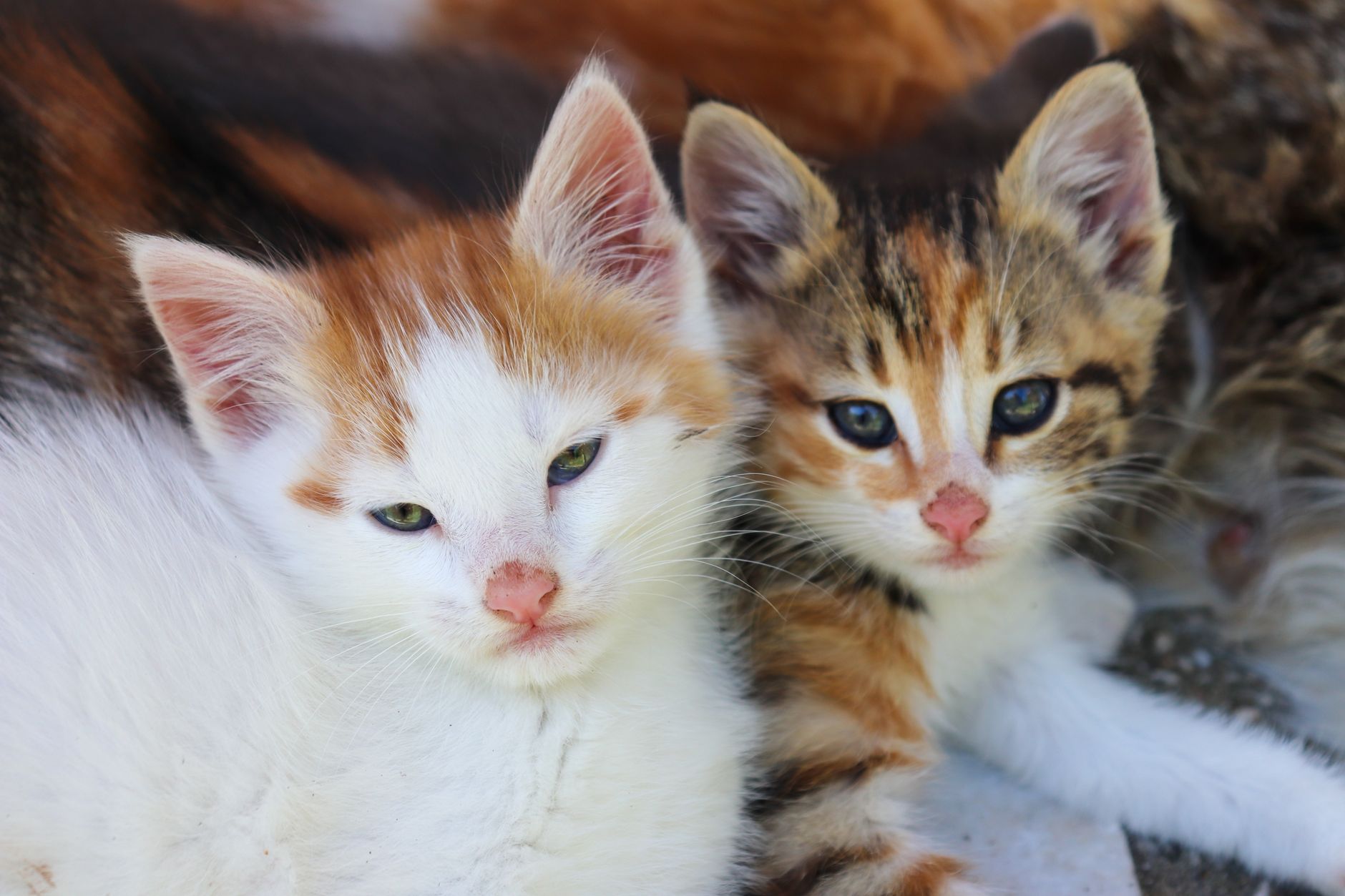
The idea for this post began with one of my cats. He is a particularly vocal male who often walks through the house meowing, or sometimes simply yowling, as though he has something important to announce. At times, the reason seems obvious. He may be hungry, looking for attention, searching for another cat, or objecting to a closed door. At other times, however, he appears to wander from room to room calling out for reasons I cannot identify. I began to wonder whether there might be a way to determine what he is trying to communicate. Is every yowl merely an expression of a general mood, or do different sounds carry different information?
I first learned from Jackson Galaxy that cats communicate extensively through their tails, ears, eyes, posture, and movements. A raised or twitching tail, flattened ears, narrowed or widened eyes, and changes in body position can reveal fear, irritation, curiosity, affection, or readiness to play. Sometimes this body language communicates more clearly than their voices. Yet their vocalizations still intrigue me. I recognize the particular meow my cats use when they expect food, and I can usually distinguish it from a cry of protest or a request for attention. But how much more might be contained in those sounds that I do not understand? Could a cat’s different vocalizations function as distinct signals corresponding to particular needs, objects, individuals, or situations?
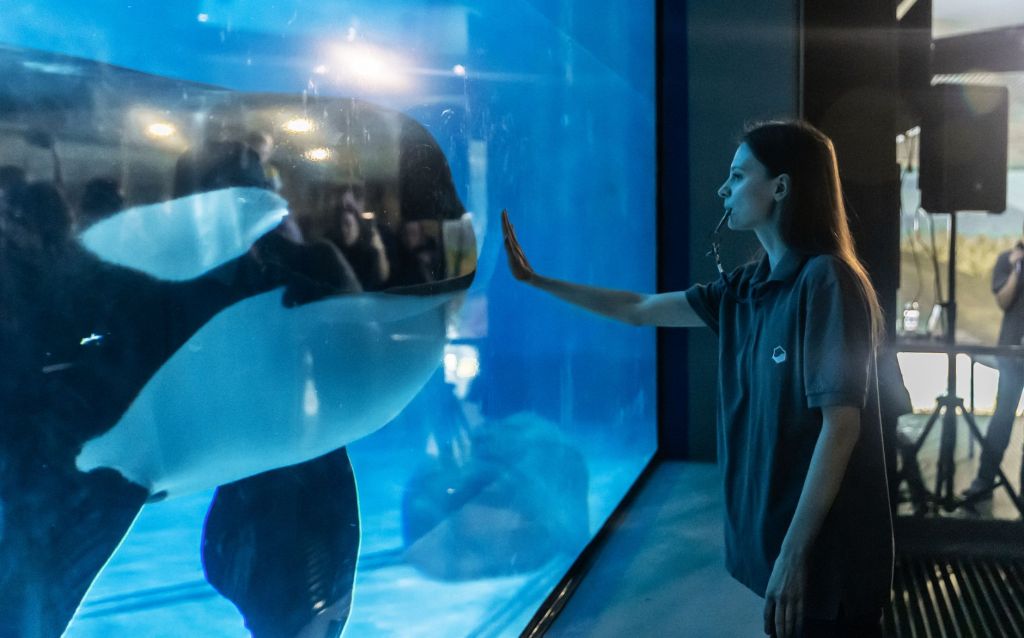
Those questions remained in the back of my mind while I was watching Shark Week and learning more about how orcas communicate. Their calls can travel through the water across considerable distances, allowing members of a pod to remain connected and coordinate their behavior. That made me wonder whether the same basic problem applies across many species. Birds sing, whales call, dolphins whistle, wolves howl, and cats yowl, however, describing the sound is not the same as understanding the message. How do we move from hearing an animal vocalization to identifying what, if anything, it means? How would we begin to translate it?
That is what led me to think about what I am calling animal linguistics. For me, the term simply refers to the study of how animals communicate, particularly through sound. I do not know whether animal linguistics is already the proper name of an established field, and I am not presenting these thoughts as a scientific investigation. These are personal musings that emerged during one of my periods of thinking time. I am writing them down to explore the problem, consider possible methods, and ask whether there might be a systematic way to connect an animal’s sounds with the circumstances in which they occur and the responses they produce.
My Working Thesis
Let me state upfront what I think my working thesis is. Animal vocalizations should be investigated as context-dependent systems for transmitting biologically relevant information, rather than interpreted primarily through human categories such as “songs.” Calling something a bird song or whale song may describe how it sounds to us, but it does not necessarily explain what information the animal is communicating.
The question before us is how can we translate animal vocalizations. They seem to mean something. And if we are to try to translate them where should we start. It seems we should assume they may have a more limited vocabulary than humans, meaning they are not philosophizing and not in need of words for everything we do. It seems we should start where we are with a child. What are the basics, bedrock communication basics, like hunger and danger. Start with the hierarchy of needs if you will.
From that starting point would be to test whether recurring vocalizations correspond to basic needs or conditions, such as danger, food, mating, movement, social coordination, or environmental change. From there, researchers could expand and ask whether those signals communicate more specific information: the type of danger, the location of food, the direction of travel, the distance of another animal, or the intensity of a changing condition. In other words, we should begin with the simplest biologically useful meanings and allow greater complexity to emerge only when the evidence supports it.
Overall Structure of My Proposed Model
The basic structure of my proposed model is straightforward: begin with biological necessity, observe the context in which a vocalization occurs, examine how other animals respond, and allow greater complexity to emerge from the evidence rather than projecting human language onto animals.
Of course, this approach rests on an important assumption: that animal vocalizations function, at least in some limited sense, like human verbal communication. From experience, I know that certain meows I hear every morning appear to mean, “Wake up and feed us.” The sounds are repeated in similar circumstances and produce a predictable response from me. That does not prove that cats possess language in the full human sense, but it suggests that at least some vocalizations are more than random noise. If they were merely meaningless sounds, the rest of this line of reasoning would quickly fall apart.
My proposal begins with the idea that an animal’s most necessary communications probably concern survival, reproduction, and social coordination. Repeated vocalizations may represent recurring categories of information. Their probable meanings could be inferred by comparing the sound being made, the circumstances in which it occurs, and the response of the animals hearing it. Researchers could begin with the simplest plausible interpretation and then test progressively more detailed possibilities.
Artificial intelligence may be useful for identifying recurring acoustic patterns, subtle variations, and relationships that human listeners might miss. However, sound patterns alone are not enough for translation. Contextual and behavioral evidence would still be necessary. More complex or abstract meanings should be accepted only when the evidence requires them.
Consider an alarm call. Does the sound communicate only a general warning—“Danger”? Or does it distinguish between different threats, such as “Danger: shark” and “Danger: storm”? Could the call also communicate location or direction—“Danger to the north” or “Danger approaching from the east”? The difference between a general warning and a detailed message could reveal how complex an animal’s communicative system really is.
In the next few sections, I will unpack these ideas more carefully: what animals are most likely to communicate, how meaning might be inferred from context and response, how specific their signals may become, and where artificial intelligence might help us listen more closely.
This section now functions as both a summary of the model and a roadmap for the rest of the post.
Animal Vocalizations Probably Serve Practical Functions
We should begin with the basics. If animals are communicating, what are they most likely communicating about? Animals expend energy producing calls, cries, whistles, songs, yowls, and other sounds. It therefore seems reasonable to begin with the assumption that many of these vocalizations serve some biological or social purpose rather than existing merely as sound or entertainment.
Limiting our investigation initially to known biological and social necessities could help reduce the possible vocabulary to a manageable level. If animals are communicating at all, these are the subjects they would most likely need to communicate about. Rather than assuming that every sound might represent an unlimited range of meanings, we could begin with danger, food, mating, territory, movement, and social contact. This would give researchers a practical starting point without ruling out greater complexity later.
Calling something a “birdsong” or a “whale song” describes how it sounds to human ears, but it does not tell us what information the vocalization may contain. What sounds musical to us may function as a warning, mating signal, territorial claim, location marker, or call for social contact. The word song may be poetic and convenient, but it can also tempt us to interpret animal sounds through human categories before we understand their function.
We must also recognize that our hearing is limited. Some animals can detect frequencies that humans cannot hear, as is clearly the case with dogs. In the ocean, orcas and other cetaceans use sounds that can travel considerable distances through water. This means that animal communication may contain frequencies, variations, and patterns that are partly or entirely inaccessible to unaided human hearing. Before we can interpret what animals are communicating, we must first make certain that we are capable of detecting the full signal.
The Most Likely Subjects Concern Basic Needs
If we are going to begin with the most likely meanings, what basic subjects should we look for? One useful approach might be to think in terms of something like a hierarchy of needs. Animals would presumably communicate first about the conditions most closely connected to survival, reproduction, movement, and life within a social group.
The safest starting point would be to examine matters animals clearly need to communicate about:
- danger or the presence of predators;
- food or the absence of food;
- readiness to mate;
- territorial claims;
- direction of travel or migration;
- separation from or the location of group members;
- changes in weather or environmental conditions.
There are almost certainly other possibilities. This is simply the initial list that occurred to me, and I do not pretend that it is exhaustive. The point is not to define the full range of animal communication in advance, but to identify the most biologically necessary subjects and begin there.
This approach uses what might be called a minimal semantic model. Semantics concerns meaning, so a minimal semantic model begins by assuming the smallest amount of meaning necessary to explain the observed behavior. If a recurring call causes animals to flee, for example, we should first test whether it means something as simple as “danger” before concluding that it communicates the type, direction, distance, and speed of the threat. Greater complexity may be present, but it should emerge from the evidence rather than from our imagination.
The First Question Is Whether Calls Represent Broad Categories
An initial investigation might ask whether a particular sound communicates something general, such as:
- “danger”;
- “food”;
- “mate”;
- “come here”; or
- “move away.”
These vocalizations would function less like complete sentences and more like single words, signals, commands, or alerts. This seems like a reasonable and appropriately rudimentary place to begin. Before assuming that animals communicate detailed descriptions, we should first determine whether certain sounds consistently correspond to broad categories of meaning.
A dog’s growl provides a familiar example. We generally understand it as some form of warning: “Stay back,” “Leave me alone,” or “Do not come closer.” The growl may not communicate a complete grammatical sentence, but it still conveys useful information and often produces an immediate response. The listener does not need a dictionary to recognize that the sound means something.
The first task, then, is to identify whether repeated vocalizations reliably correspond to these broad categories. Once that connection is established, researchers could begin asking whether different versions of the same call carry more specific meanings.
The Next Question Is How Specific the Information Becomes
Once a broad meaning has been established, the next question is whether animals distinguish among subcategories. This seems to represent the next level of complexity in communication: moving beyond a single-word signal and adding more specific information.
For example, does a whale call communicate only “danger,” or can it also specify:
- the kind of danger;
- the direction from which it is approaching;
- its distance;
- its intensity;
- whether the danger is moving;
- the appropriate response?
A general alarm signal would already be useful. But a call meaning “danger from a shark approaching from the east” would convey considerably more information. The same could apply to food, mating, migration, or the location of other group members.
If animal calls encode distinctions such as type, location, direction, distance, or urgency, then their communicative systems may possess a much larger “vocabulary” than a simple collection of alarm signals. The task would be to determine how much information is actually present without assuming complexity before the evidence supports it.
Meaning Cannot Be Recovered from Sound Alone
A recording by itself is not enough to determine meaning because communication depends upon context. A useful investigation would need to document at least three elements:
- The signal: the precise vocalization being produced.
- The context: what is happening when the vocalization occurs.
- The response: how other animals behave after hearing it.
Repeated patterns connecting these three elements could reveal probable meanings. For example, if a particular call consistently occurs in the presence of a predator and causes nearby animals to hide, flee, gather together, or become vigilant, the combined evidence would support interpreting it as an alarm signal. The sound alone may be ambiguous, but the sound joined with the circumstances and the response begins to reveal its function.
We should also distinguish among the different channels of communication animals use. A channel is simply the means through which information is transmitted. Vocalization is one channel, but animals may also communicate through body language, facial expression, posture, movement, touch, scent, vibration, or visual display. Some species may rely heavily on one channel, while others combine several at once.
The range of signals available within each channel may limit or expand the amount of information an animal can convey. If an animal can produce only one truly undifferentiated sound, then the amount of information carried through vocalization would probably be limited. A larger vocal vocabulary requires some form of differentiation, whether through distinct calls or changes in pitch, rhythm, duration, repetition, volume, or sequence. The same principle applies to body language and scent: greater variation may allow for more specific messages.
Animal communication may therefore be multimodal, meaning that several channels work together as parts of one message. A cat’s growl may communicate a warning, but when it is accompanied by flattened ears, widened eyes, an arched back, and a rapidly moving tail, the message becomes much clearer. The vocalization is only one part of the communication.
To understand animal communication fully, researchers may need to study the entire pattern rather than isolate a single channel. The meaning may not be found in the sound alone, the posture alone, or the scent alone, but in the way those signals combine within a particular situation.
Receiver Behavior Is Part of the Evidence
Communication is not established merely because one animal makes a sound. For communication to occur, another animal must receive the signal and respond to it in some way. Researchers would therefore need to determine whether the receiving animal:
- notices the sound;
- alters its behavior;
- responds differently to different calls;
- behaves appropriately even when the original stimulus is hidden from view.
The receiver’s behavior can help distinguish meaningful communication from coincidence, emotional expression, or general excitement. If one animal gives a particular call and another consistently reacts in a way appropriate to the situation, that response becomes evidence that information has been transmitted.
I can observe something like this among my own cats. One is extremely vocal, while the other rarely vocalizes at all. Yet when the noisy one appears to be asking for food, the quieter cat often begins prancing around the feeding area or follows one of the humans toward it, tail raised and moving with obvious enthusiasm. The quieter cat may not join the conversation vocally, but his behavior suggests that he understands what is happening.
A hiss produces an even clearer response. If one cat hisses, the other immediately goes on high alert, without exception. Other meows, however, may be completely ignored or acknowledged only by the slight turn of an ear. This suggests that the cats do not respond merely because a sound has been made. They appear to distinguish among vocalizations and assign different levels of importance to them.
How other animals respond can therefore provide clues even when the surrounding context is unclear to us. The caller may know what the sound means, and the receiver may know what it means, even when the human observer does not. By carefully comparing different calls with the reactions they produce, we may begin to work backward toward the probable meaning.
Animal Communication May Be Socially Learned
Human children acquire language partly by associating sounds with people, objects, situations, and responses. Some animal communication may develop in a similar way through repeated social exposure. Young animals may learn that a particular call accompanies danger, food, mating, movement, or social contact. This raises an important question: Are animal signals genetically fixed, socially learned, individually invented, or produced through some combination of all three?
Some forms of communication seem to be largely innate, baked into the animal, so to speak. A cat separated from its mother before observing another cat hiss may still appear to know how to hiss and how to use the accompanying posture. Similar patterns of flattened ears, arched backs, raised fur, and defensive movements appear across many cats. This suggests that not all animal communication must be learned through socialization. Some signals may arise from inherited instincts and shared anatomy.
That does not mean social learning plays no role. Animals may inherit a basic set of signals while also learning how, when, and with whom to use them. Experience could modify the timing, intensity, sequence, or meaning of those signals. A basic alarm call might be innate, for example, while more specific variations are learned from members of the group.
This opens an intriguing area for study. If we could identify the basic communicative system of a species, would we also discover regional differences resembling dialects or languages? Would isolated populations use different calls for similar situations? Could family groups, pods, packs, or colonies develop their own conventions through socialization?
The fact that some animals can be trained to use communication buttons also suggests that they may be capable of learning additional symbolic associations. That does not necessarily mean they are using language in the full human sense, but it does show that at least some animals can connect a distinct signal with an object, action, desire, or outcome. If socially learned associations can be added to an innate communicative foundation, then animal communication may be more flexible, and more culturally variable, than it first appears.
Artificial intelligence could assist but cannot replace contextual observation
Why am I thinking about all of this in the first place? My initial thought was simple: Wouldn’t it be useful to have an animal-to-human translator app? Artificial intelligence seems well suited for that kind of task. We already use AI to translate between human languages, often with enough accuracy for the general meaning to come through. So why not use it to translate cats, birds, whales, or orcas?
The difficulty is that AI would first need to learn the animal’s vocabulary, assuming we can call it that. It would also need to be multimodal, meaning that it could process more than one channel of communication at the same time. Listening to the vocalization would not be enough. The system would also need to see the animal’s posture, movement, facial expression, and surrounding environment. Scent would probably remain outside its reach—at least until someone finally invents smell-o-vision.
AI could still be extremely useful. It could identify recurring acoustic structures, classify different calls, and detect variations in pitch, rhythm, sequence, duration, or frequency that human listeners might miss. It might discover that two calls sounding identical to us are actually distinct signals to the animal producing or receiving them. But recognizing a pattern is not the same as understanding its meaning.
To begin translating those patterns, AI would need data connecting each call with:
- environmental conditions;
- visible objects, food sources, or threats;
- the caller’s behavior and body language;
- the identity and social role of the caller;
- the responses of nearby animals;
- and the eventual consequences of the interaction.
An AI system might notice, for example, that a particular call consistently occurs when a predator approaches and that nearby animals immediately hide. Another variation might cause them to look upward, move toward cover, or gather around their young. By comparing thousands of these interactions, AI could begin linking different vocal patterns with probable meanings and appropriate responses.
AI would therefore function first as a pattern-analysis tool within a broader observational and experimental method, not as an automatic translator. It could help researchers organize enormous amounts of sound, video, and behavioral data, but humans would still need to establish the context and test whether the proposed translations are correct. The dream of an animal translator may not be impossible, but the first version would probably look less like a magical universal translator and more like a carefully trained system offering cautious interpretations: “Possible food request,” “Probable warning,” or perhaps, in the case of my cats, “Human, you are late with breakfast.”
Complexity Should Be Added Only When the Evidence Requires It
Any investigation of animal communication should begin with the simplest plausible meanings and gradually test more complex possibilities. The progression might look something like this:
“Danger” → “Predator” → “Shark” → “Shark approaching from the east.”
Likewise:
“Food” → “Food here” → “Flowers available here” → “Food territory controlled by a potential mate.”
Researchers should not assume that the final, more complex interpretation is present unless experiments demonstrate that receiving animals actually respond to those distinctions. The goal should be to allow complexity to emerge from the evidence rather than to read humanlike sentences into every bark, whistle, chirp, or yowl.
At least in principle, this seems to be within our technological capabilities today. We can record sounds across frequencies humans cannot hear, capture video and behavioral data, compare thousands of interactions, and use artificial intelligence to identify recurring patterns. Whether researchers are already studying animal communication in precisely this way, I do not know. As I said at the beginning, I did not research the field before writing these thoughts down.
This post began as a brain dump into a voice recorder while I was sitting beside the pool one afternoon. No worries—I was quiet. Anyone nearby probably assumed I was on a telephone call. In reality, I was trying to capture the raw output of my thinking before the ideas disappeared. Later, I organized those thoughts, with some help from AI in creating an outline, so that I could examine whether they formed a coherent model.
Perhaps this entire line of thought is already well established, and researchers are far ahead of anything I have proposed here. In that case, boo on me for arriving late to the conversation, but huzzah for the scientists already doing the work. On the other hand, perhaps this way of framing the problem contributes something useful, even if only a question, a structure, or a possible starting point.
Either way, the exercise has been worthwhile. My cats are still yowling, the orcas are still calling through the ocean, and I am still wondering what they are saying. Perhaps the first step toward understanding them is not to imagine that they speak exactly as we do, but to pay closer attention to what they need, when they call, and how others respond.
Foot Note
A final side thought: When I completed this post, I remembered that my cats were initially startled by recordings of cats meowing or hissing on YouTube or television. Now they mostly ignore them. Have they learned to distinguish recorded sounds from live ones, or have repeated exposures simply conditioned them not to respond? Perhaps it is similar to a cat reacting to its reflection in a mirror at first and then gradually learning that the image poses no threat.
Then again, during Shark Week, after we had watched several programs about sharks, one of our cats went and found a shark-shaped toy, that had been laying around untouched for a year, and began playing with it while the show was still on. Coincidence? Probably. But it was enough to make me wonder.
My cats also seem especially interested in nature programs featuring birds. They will sit and watch those shows with remarkable intensity, tracking the movement on the screen as though the birds might somehow escape into the room. Fish and underwater scenes hold their attention too, though usually not for as long. That raises another question: Are they recognizing the animals, responding mainly to motion and sound, or reacting to something closer to predatory instinct? Once again, I do not know, but they certainly appear to be watching rather than merely looking.
Excerpt
Can animal vocalizations be translated? Beginning with my cats’ meows and orca calls, I explore a simple model: start with basic needs, study context and response, and let complexity emerge from evidence. Perhaps AI can help us listen more carefully—and someday understand what animals are saying.
ᛏᛟ ᛗᛟᚱᛞᛟᚱ ᚨᚾᛞ ᛒᚨᚲ


Leave a comment