
“A riddle wrapped in a mystery inside an enigma.”
I have written before about how much I enjoy tucking Easter eggs into my posts. Little nods. Hidden doors. Quiet signals to the attentive reader. But the more I have thought about it, the more I have realized that this fascination runs much deeper than a clever reference or a buried joke. It reaches into something older in me, something almost primal. I love the feeling that there is more there than first appears. I love the suspicion that the world is not exhausted by the obvious.
Who does not enjoy a good puzzle or mystery? Granted, some people do not. Some would rather have every card face up on the table and every passage brightly lit. But mysteries are all around us whether we welcome them or not. They hide in stories, in symbols, in old buildings, in libraries, in maps, in ritual, in memory, and sometimes in plain sight. That last part may be my favorite. Not merely that something is hidden, but that it is hidden openly. Sitting there in the light. Waiting for the right eyes to see it.
There is a particular delight in secret knowledge. Not secret in the cheap sense of exclusion for its own sake, but secret in the older sense. Concealed. Veiled. Waiting. The joy is not just in knowing that something is hidden. The joy is in finding that the thing was there all along, disguised by familiarity, ignored by haste, or mistaken for something ordinary. Things may not be as they seem, and that is half the fun.
If you ever visit my library, you would find signs of this everywhere. Little gems tucked along the path. Objects that point beyond themselves. References that open into other references. Clues that are less like announcements and more like invitations. Depending on the quest you are on, you may pass by them without a second glance, or you may suddenly realize that what looked like decoration was really a marker, and what seemed incidental was part of a trail.
That, I think, is part of why quests have always fascinated me. Not just treasure, though treasure matters. Not just the answer, though answers have their place. It is the sense that reality sometimes rewards the diligent, the curious, and the observant. The world is not always flat and obvious. Sometimes it has layers. Sometimes it whispers. Sometimes it leaves coins for those willing to kneel down and look beneath the leaves.
I have always loved stories of maps, riddles, lost artifacts, and hidden chambers. The Da Vinci Code, National Treasure, Indiana Jones, The Goonies, Zelda, Tomb Raider, and Allan Quatermain all drew me in for the same reason. They are not just stories about objects. They are stories about pursuit. About explorers and adventurers who refuse to believe that the surface is all there is. I suppose that is part of why they have always felt so familiar to me. In my own way, I have always fancied myself an explorer too.
What captures me is not simply the treasure at the end, though that matters. It is the hunt itself. The searching. The noticing. The piecing together. The moment when one clue suddenly makes sense of another, and the world opens just a little wider than it was before. I love the adventure of it, the looking and the finding, the sense that patience and attentiveness might be rewarded with discovery.
Of course, the frustration comes with it. Dead ends. Wrong turns. Misread clues. The sinking feeling that you missed something obvious. I could do with a little less of that. And yet, is that not part of the game? If every door opened at a touch and every answer came at first glance, the whole thing would lose its magic. Mystery requires resistance. A quest worth remembering has to make you work for it.
That is probably why escape rooms feel so natural to me. We love doing escape rooms and playing escape room games at home because they capture that same rhythm of discovery. They train you to stop assuming that things are only what they appear to be. A box may not just be a box. A page may not just be a page. A symbol may not just be decoration. In these games, ordinary objects become possible doors.
What I especially love about the home games is how they force you to think sideways. You may have to talk about the box, hold part of it up to the light, align one page of the instruction book with something found later in the game, or notice that a pattern you dismissed earlier was quietly waiting for the right context. These are not the kinds of moves you make in everyday life. They require a different posture toward the world, one that is slower, more observant, and more willing to suspect that meaning may be layered into things rather than sitting plainly on the surface.
That is part of the thrill. You are being taught to see differently. You learn to pay attention to details that most people would pass over. You become alert to texture, placement, sequence, shadow, omission. In a sense, the game is not only hiding clues. It is trying to reshape the player into the kind of person who can find them.
And perhaps that is why this all reaches farther back for me than games or clever design. I have been drawn to mysteries and secrets for as long as I can remember. Even as a child, I was captivated by them in movies, comic books, and fiction. There was something irresistible about a story that withheld just enough to make you lean forward. Not merely action, but a question. Not merely danger, but a hidden logic waiting to be uncovered.
Sometimes the mystery was not about buried gold or a lost artifact. Sometimes it was about knowledge itself. Why were the robots killing people in apparent violation of the Laws of Robotics? That is not a treasure map mystery. It is more of a whodunit, or perhaps a howdunit. But the structure is remarkably similar. Something is wrong on the surface. Something does not fit. The real treasure at the end is understanding. You follow the clues, test the assumptions, and eventually uncover not a chest of coins, but the hidden mechanism that makes the whole thing make sense.
I think that matters. We often speak as though treasure must be material, something you can hold, spend, or lock away. But some of the best treasures are intelligible rather than tangible. They are the reward of seeing clearly at last. The answer to the riddle. The hidden pattern beneath the confusion. The secret of how it was done. That kind of discovery has its own peculiar satisfaction, and for some of us, it may be the richer prize.
And that, for me, is where mystery becomes something even greater. Turn a mystery into a quest and now you have more than a question waiting for an answer. You have distance. You have danger. You have movement. You have the promise that something meaningful waits at the end, even if the road to it is long and costly. A quest carries a different kind of weight because it demands perseverance. It asks something of the seeker. It is not just about solving. It is about becoming the sort of person who can endure the journey long enough to reach the payoff. That is part of what makes it feel almost sacred. Think of the long road to destroy the Ring. The treasure there is not something gained but something carried, guarded, and finally relinquished for the sake of a greater good. Even that is a kind of hidden prize.
That is why the old quest stories still have such power. Do you remember Dungeons and Dragons? The clues were rarely handed to you in a neat little line. You had to search for them, piece them together, and figure out what kind of beast you were really facing before you ever drew your sword. Maybe the goal was to slay the dragon and claim a heap of gold. Maybe it was to rescue a princess. Maybe the reward was riches, renown, or the gratitude of a kingdom. But the deeper reward was always in the unfolding of the adventure itself, the sense that every discovery pushed you one step closer to the heart of the mystery.
And of course, no real quest is ever clean and direct. There are always side passages, tangential adventures, and unexpected errands that turn out not to be distractions after all. The side quest may hold the very thing needed for the final confrontation. You may have to seek out a forgotten spell book in some ruined tower because hidden in its pages is the one incantation that can break the gatekeeper’s power. You may need a key, a map fragment, a word of power, or a companion whose significance is only understood near the end. That is part of the strange beauty of quests. What first appears incidental may later prove essential. The road curls back on itself. Meaning gathers slowly. And somewhere along the way, what looked like a detour begins to feel like providence.
Which raises the next question. What makes a quest worth taking in the first place?
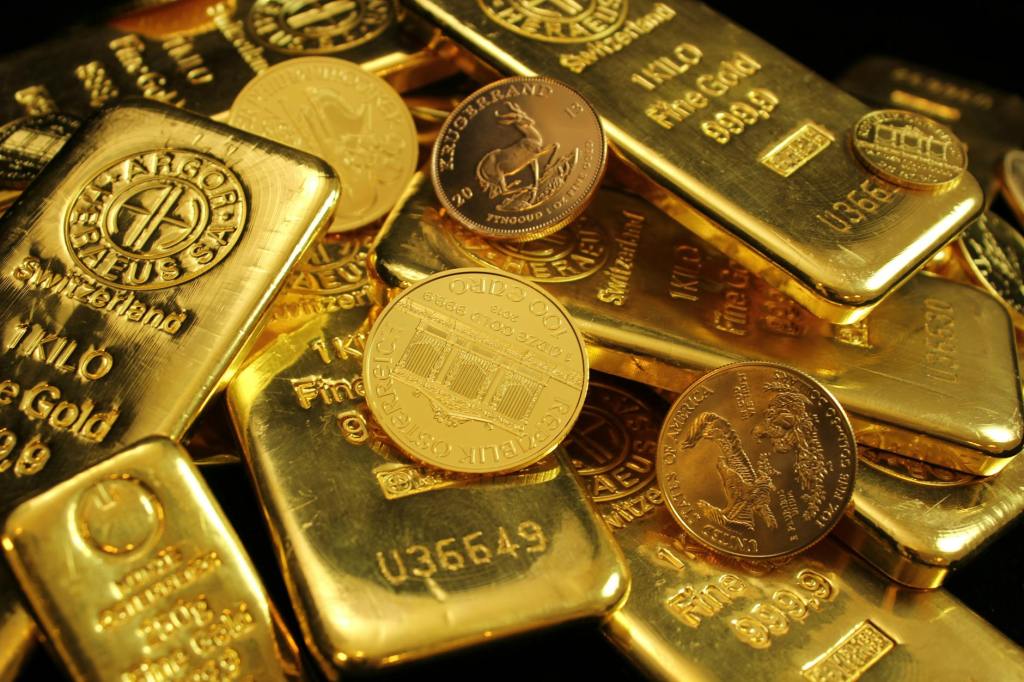
Treasure, of course. But treasure comes in many forms. Sometimes it is gold, jewels, or some artifact hidden in a ruined chamber. Sometimes it is knowledge, the long-sought answer that finally explains the riddle. Sometimes it is rescue, restoration, or the saving of something precious that was nearly lost. Whatever form it takes, a good quest needs a payoff. There must be something at the end that justifies the cost of the road. Otherwise, was the quest worthy of the quester at all?
After all, no one wants to spend years of effort, piles of money, and no small portion of heart only to discover that the treasure was carried off long ago by some forgotten thief. Nor do we want to pour our time and resources into the pursuit of hidden knowledge only to find that the secret was not much of a secret after all. A quest without a worthy end can curdle into disappointment. The promise of mystery must be matched by the dignity of the reward.
And yet, this is where things become more interesting. Sometimes the treasure at the end is not the greatest treasure after all. Sometimes the quest itself becomes the prize. I can remember countless hours playing Dungeons and Dragons with my friends, chasing clues, making plans, arguing over risks, laughing at disasters, and pressing forward into whatever waited around the next corner. Looking back, that was the real treasure. Not the imaginary gold. Not the magical item. Not even the victory. It was the fellowship, the adventure, the shared memory, and the sense that for a little while we had stepped together into another world.
Maybe that is one of the oldest truths hidden inside every worthy quest. We begin by seeking treasure, but along the way we are also being given something else. Companionship. Wonder. Patience. Imagination. A story we will carry long after the map has been folded away. Sometimes the chest at the end is full of coins. Sometimes it is full of insight. And sometimes, though we do not realize it until much later, the real treasure was the road itself and those who traveled it with us.
Excerpt
A love letter to mysteries, hidden clues, and the long road of the quest. From childhood stories to escape rooms and D&D, this post explores why some treasures are buried in plain sight, and why sometimes the greatest reward is not the prize at the end, but the journey itself.
Slightly More Intentional Than It Looks

 Treasures of the Elysian Fields
Leave a comment