
Experiential Knowledge
As we continue our slow journey through John 1, the road begins to fill with people. We have already stood before the vast opening of the Gospel, with creation, light, darkness, and the eternal Word. We have met John the Baptist, the wilderness voice who reminds us that the journey is not about us. Now we begin to see Jesus gathering travelers. He does not merely announce ideas from a distance. He invites people to come near, to follow, to stay, and to see.
“Come and you will see.”
That phrase is simple, but it is not small. Jesus is beginning to recruit His disciples, but He does not begin with a full doctrinal lecture, a complete system, or a carefully outlined theology of everything. John has already told us who Jesus is. He is the Word who was with God and who is God. He is the One through whom all things came into being. He is the Light shining in the darkness. The theology is immense. But when Jesus starts drawing people to Himself, the invitation is personal.
Come and see.
That is not against theology. It is theology becoming relationship. It is truth taking on flesh in the actual life of following Jesus. John gives us the height of Christology at the beginning of the chapter, but then Jesus invites people to learn Him by being with Him. There are some things we can know because we are told. There are other things we only begin to know because we come near.
This is what I mean by experiential knowledge. Experiential knowledge is not mere emotion. It is not replacing truth with feelings. It is knowing by encounter, by nearness, by participation. It is one thing to know about bread. It is another thing to eat. It is one thing to know about a road. It is another thing to walk it. It is one thing to know about Christ. It is another thing to follow Him closely enough that His life begins to teach us from the inside.
“Follow me.”
That is the pattern we see unfolding. Andrew comes. Peter is brought. Philip follows. Nathanael is invited. The knowledge grows along the road. The disciples do not understand everything at once. They do not begin with full comprehension. They begin by coming near.
This is important for spiritual formation. Jesus did not call people merely to admire Him from a distance. He did not invite them only to agree with statements about Him, as necessary as right belief is. He called them into His company. He invited them into the with God life by inviting them to be with Him. Later in John’s Gospel, this will become the language of abiding. Here, in the first chapter, the seed is already being planted. First they ask where He is staying. Later they will be told to abide in Him.
That is worth pondering. The Christian life is not only a matter of correct answers, though truth matters greatly. It is also a matter of staying near. The disciples come to know Jesus by walking with Him, watching Him, listening to Him, misunderstanding Him, being corrected by Him, being loved by Him, and remaining with Him.
And then there is Nathanael. Nathanael is especially moving to me because before he really knows Jesus, Jesus already knows him. Nathanael approaches with skepticism. “Can anything good come out of Nazareth?” That is not exactly the grandest opening line of faith. Yet Jesus sees him. Jesus knows him. Jesus speaks of him before Nathanael has really understood who stands before him.
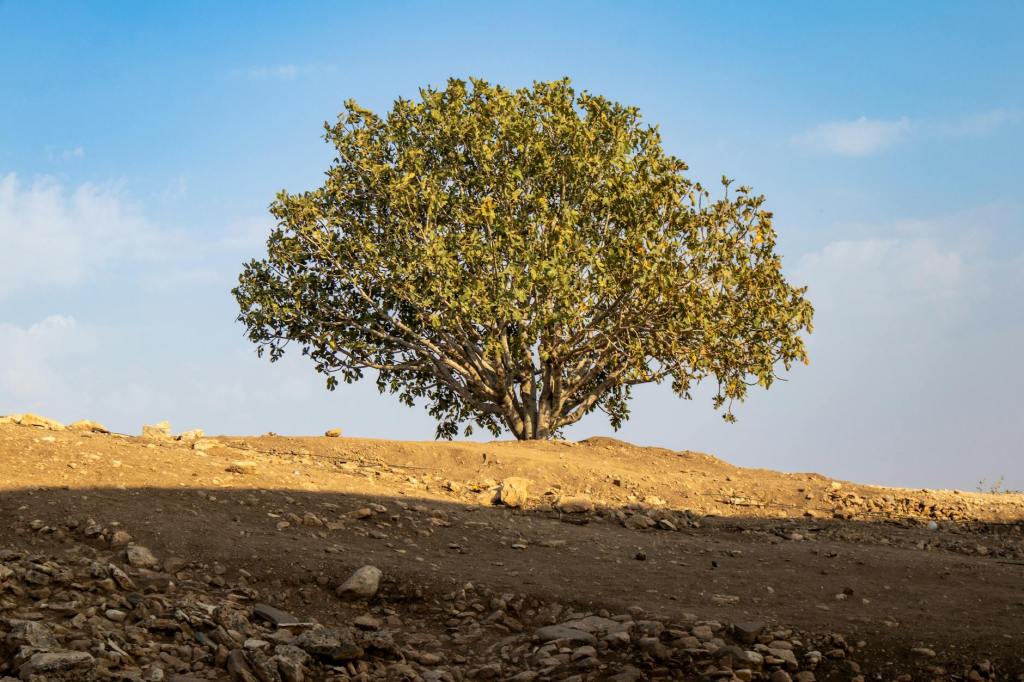
Jesus says He saw Nathanael under the fig tree. That little detail stops me. We are not told everything it means. Perhaps Nathanael was praying. Perhaps he was studying. Perhaps he was sitting in thought. Perhaps he was simply alone. Or maybe it has something to do with fishing. Whatever the full meaning, Nathanael understands that Jesus has seen something hidden. Jesus knows him before Nathanael knows Jesus. That is both comforting and unsettling.
It is comforting because I do not have to explain myself fully before God can understand me. Christ already knows. He sees the hidden places. He knows the thoughts beneath the words, the fears beneath the reactions, the longing beneath the questions. He sees us under our own fig trees, in the places where no one else is watching.
But it is also unsettling because being known removes some of our illusions. We often imagine that we are hidden. We can manage our image with others, and sometimes we even manage it with ourselves. But Christ sees truly. He does not need our performance. He does not need our carefully edited version of the story. He already knows.
The beautiful thing is that Jesus does not use His knowledge of Nathanael to shame him. He uses it to invite him further in. That tells us something important about Christ. His knowledge of us is not meant to crush us. It is meant to call us into trusting surrender. He knows me better than I know myself.
This connects to what has been stirring in me through John 1. The Light shines in the darkness, but not to humiliate the soul. The Word becomes flesh, so God is not an abstract principle at a safe distance. He comes near. He sees. He calls. He invites. He knows us before we know Him, and still He says, “Come.”
That may be one of the deeper truths here. God already knows us, yet He invites us to know Him. Not merely as an idea. Not merely as a doctrine. Not merely as a topic of study. He invites us into experiential knowledge, the knowledge of nearness, trust, obedience, and love.
There is also a gentle challenge here. Sometimes I want knowledge of Jesus without the inconvenience of proximity. I want insight without surrender. I want clarity without following. I want understanding without staying. I want to see greater things, but I do not always want to walk the road that leads there.
But Jesus does not say, “Stand at a distance and analyze Me.” He says, “Come and see.” He says, “Follow Me.” He says, “You will see greater things.”
The greater things are not promised to detached observers. They are promised along the road. They open to those who come near.
That does not mean we turn off our minds. John’s Gospel will not let us do that. It begins with some of the richest theology in all of Scripture. But theology is meant to become communion. Truth is meant to become life. The Word became flesh, and so our discipleship must also become embodied. It must enter our habits, our speech, our relationships, our obedience, our attention, and our willingness to stay near Christ when we do not yet understand everything.
Maybe that is part of what Jesus is asking of us in this passage. Not that we have everything figured out before we follow. Not that we have perfect certainty before we come. Not that we know the whole map before we take the first step. But that we come near enough to see, and keep following long enough to be changed.
This also connects with what Gifford has called perichoretic salvation, or more pastorally, what I call, dancing with God. Perichoresis is a theological word often used to describe the mutual indwelling of the Father, Son, and Holy Spirit. I am not using it to erase the difference between Creator and creature. We do not become God by nature. But in Christ, by grace, we are invited into real participation, real communion, real union with Him.
That is why experiential knowledge matters. Jesus is not merely giving the disciples information about Himself. He is drawing them into shared life. “Come and see” is not just an invitation to observe. It is an invitation to enter the orbit of His presence. “Follow me” is not merely a command to agree with His teaching. It is a call to walk with Him until His life begins to shape our life.
This is where the language of theosis (often used by our Easter Orthodox brothers and sister in Christ) also becomes helpful. Theosis, often translated as deification, does not mean that we become God in essence. It means we are made participants in the divine life by grace. We become more truly human by union with Christ, not less. We are healed, illumined, transformed, and drawn into the life God always intended for us.
John’s Gospel is rich with this theme. The opening chapter begins with nearness: come, see, follow, remain. Later, Jesus will speak of abiding. He will say, “You in me, and I in you.” He will pray that His people may be one as He and the Father are one. The movement is not from doctrine to mere emotion, but from revelation to communion. We are not only learning facts about Jesus. We are being invited into life with Jesus.
So experiential knowledge is not a lesser form of knowledge. In the Christian life, it may be the knowledge toward which all true theology is moving. Right doctrine gives us the map, but union with Christ is the journey itself. Theology tells us who the Light is. Discipleship teaches us to walk in the Light. Theosis says the Light is not merely around us, but begins to transform us from within.
That is the dance. Christ in me, and me in Christ. Not confusion. Not absorption. Not passivity. But responsive participation. He leads, I follow. He speaks, I listen. He shines, I open. He loves, I learn to love. He abides, and I am invited to abide in Him.
The road of discipleship begins with invitation. Come and see. Follow Me. You will see greater things.
Prayer
Lord Jesus, You already know me better than I know myself. Teach me to come, to stay, and to see. Let my knowledge of You become more than information. Let it become communion, obedience, and life.
Reflection
- Where is Jesus inviting me right now to “come and see,” not merely to understand Him from a distance, but to draw near and learn Him through relationship?
- Do I tend to treat knowledge of Christ mainly as information to possess, or as communion to enter, a shared life where I am changed by staying near Him?
- If Christ already knows me, as He knew Nathanael under the fig tree, what hidden part of my life do I need to bring into His presence with trust rather than fear?
Excerpt
Jesus’ invitation to “come and see” reminds us that knowing Christ is not merely information, but relationship. John 1 invites us into experiential knowledge, where discipleship becomes nearness, communion, union with Christ, and the beginning of a deeper dance with God.
I invite you to look closer


Leave a Reply