
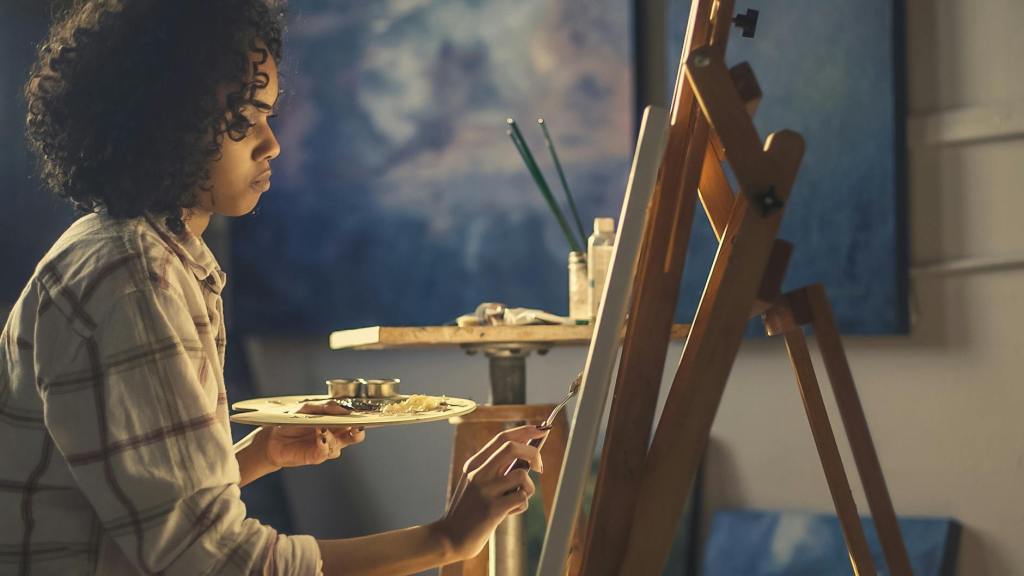
There is something I have been circling for a while now, and I am not sure I have said it quite this way before, but it keeps showing up in how I think about art, creation, and even our life with God. We often treat knowledge as if it were simply information, something we can describe, define, or explain. But is that really knowing? Or is there another kind of knowing that only comes through experience?
Think about art for a moment. I can tell you what the Mona Lisa looks like. I can show you a picture of it. But if you have ever stood in front of it, you know there is a difference. There is something about being there, taking it in, noticing the detail, the scale, the presence of it. And even then, what you are seeing is still only a reflection, a representation of something more real, more alive, more beautiful than the painting itself. The art points beyond itself.
“The soul becomes dyed with the color of its thoughts.” – Marcus Aurelius
And it is not just about what the art represents. Art also tells you something about the artist. When you experience a piece of music, you feel something. When you stand before a painting or a sculpture, you begin to see through someone else’s eyes. You are, in a very real sense, receiving something of the artist. It is almost like a one-way conversation. They are not experiencing you, but you are experiencing them. You are being invited into their way of seeing the world, their emotions, their interpretation of reality.
So what is happening there? Is this just observation, or is it something deeper? It begins to feel like a kind of participation. Not full union, not mutual indwelling, but still a real encounter. You are not just learning about the art. You are, in some sense, entering into it.
That raises an important question. If that is true of art, what does that mean for everything else we engage with? What we watch, what we read, what we listen to, what we dwell on? Are these things forming us more than we realize?
I remember seeing a piece of abstract art once and thinking, that is ugly. That was my immediate reaction. But later I began to wonder, what if it is not trying to be beautiful in the way I expect? What if it is expressing chaos, or disorientation, or a fractured view of reality? And if that is the case, then what I am experiencing is not just the image, but the artist’s perception of the world. Whether I fully understand it or not, I am still being shaped by the encounter.
Of course, there is a caution here. We do not always interpret things correctly. Just as we can misread a book, we can misread art. Our experience may not perfectly align with what the artist intended. That is why it helps to see more of their work, to begin to recognize patterns, themes, and deeper meaning. Over time, we start to understand not just a single piece, but the person behind it.
“Fantasy remains a human right: we make in our measure and in our derivative mode, because we are made.” – J. R. R. Tolkien
And this is where it begins to connect to something deeper. Art is not just expression, it is what we might call sub creation. God creates ex nihilo, out of nothing. We do not. We take what already exists and shape it. We take wood, stone, pigment, sound, and we bring order out of what would otherwise remain unformed. There is something in that which reflects the pattern of creation itself, moving from chaos toward order.
If that is true, then engaging with art is not a trivial thing. It becomes part of our formation. Not all art will move us toward what is good, true, and beautiful. Some of it may distort, confuse, or even pull us away from those things. So discernment matters. What are we allowing ourselves to experience? What are we repeatedly placing before our eyes and minds?
This applies just as much to creation itself. I can describe the ocean to you. I can tell you about the waves crashing, the smell of the salt air, the sound, the force of it. I can show you pictures. But until you stand there and feel it, you do not really know it. The same is true of standing on a mountain, looking out over a vast landscape, or watching the night sky filled with stars. There is a kind of knowing that only comes through experience.
And through that experience, something else happens. Creation begins to tell you something about the Creator. Not in a complete or exhaustive way, but in a real way. You begin to glimpse beauty, order, power, and even generosity. It is not just information about God. It is an encounter that shapes how you see Him.
This is why I think experience matters so deeply. Not as a replacement for truth, but as a participation in it. There is a difference between knowing about something and actually knowing it. One is descriptive. The other is formative.
“The aim of art is to represent not the outward appearance of things, but their inward significance.” – Aristotle
So perhaps the question is not just what do I know, but what am I experiencing? And even more, what is that experience doing to me?
Does what I engage with move me toward agape love, toward what is good for others, toward truth and beauty? Or does it pull me in another direction? Because experience is not neutral. It is shaping us, one way or another.
And maybe that helps us see something about the earlier conversation around images and symbols. Not to reopen that whole discussion, but simply to say this. If experience forms us, then what we see and engage with matters. Not because the object itself holds power, but because of what happens within us as we encounter it.
So the invitation is simple, but not easy. Pay attention to what you are experiencing. Do not just consume it. Enter into it thoughtfully. Ask what it is revealing, what it is shaping, and where it is leading your heart.
Because in the end, we are all being formed by what we behold. The question is, into what?
Excerpt
True knowledge is not just information but experience. Through art and creation, we encounter something beyond ourselves and are quietly shaped by it. What we see, hear, and dwell on forms us over time. The question is not only what we know, but what is shaping who we are becoming.
One More Secret in Plain Sight


Leave a Reply