
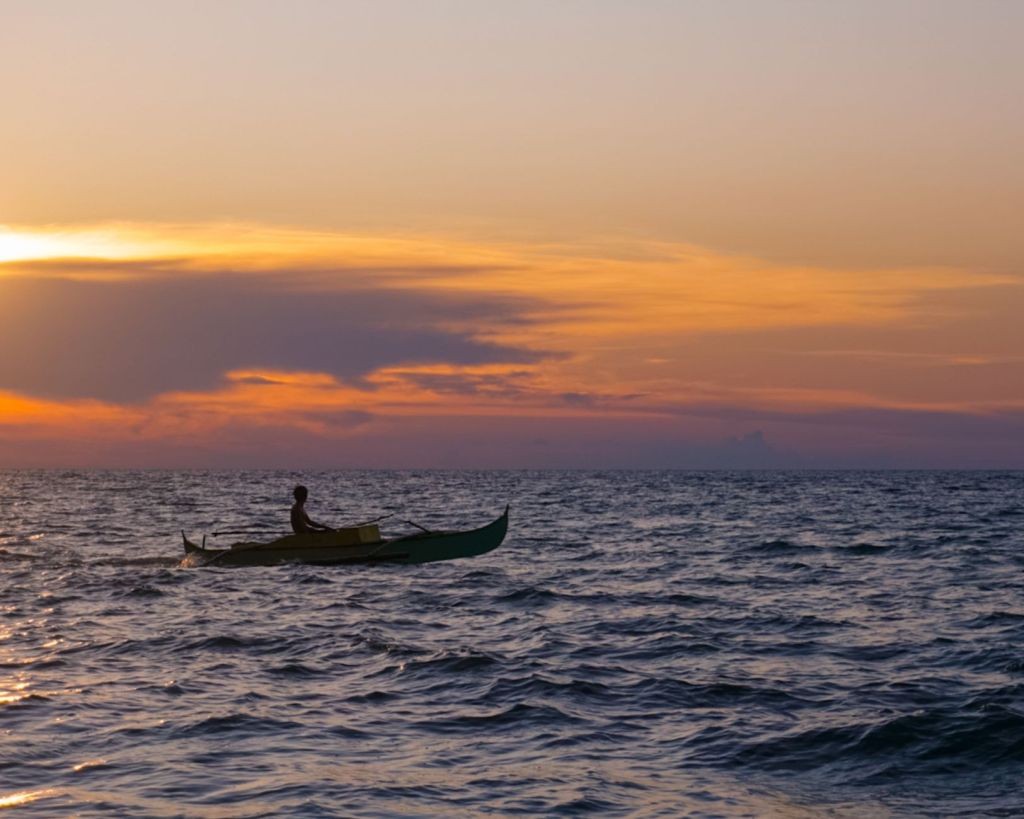
I recently saw the new live-action adaptation of Moana, and afterward I went back and watched both animated films. Somewhere along the way, this became more than simply revisiting a Disney story. I also watched the two-part National Geographic special Voyagers: Exploring Pacific Waters on Disney+, which examines the extraordinary history of Pacific navigation. That brought to mind Jared Diamond’s book Collapse: How Societies Choose to Fail or Succeed, particularly his discussion of island societies and the pressures created by limited resources.
Those different threads began weaving themselves together in my mind: Moana, Polynesian wayfinding, environmental limits, cultural memory, and the question of how civilizations preserve the knowledge they need to survive.
I may be reading too deeply into a Disney movie. That is always possible. Still, good stories often carry more than their creators consciously placed within them. They become vessels capable of carrying ideas across generations, rather like the voyaging canoes hidden beneath Motunui.
The usual interpretation of Moana is that it is a coming-of-age story about a young woman discovering herself, defying expectations, and following her heart. That interpretation is not wrong. Moana certainly grows into her abilities, challenges her father’s authority, crosses a forbidden boundary, and discovers a calling larger than the life planned for her.
But I think the story is more countercultural than that. Moana is not primarily about escaping tradition to discover an independent self. It is about recovering a deeper tradition that her community has forgotten. Moana does not become herself by separating herself from her family, ancestors, or people. She becomes herself by discovering her place within their continuing story, as part of a family and community.
In a culture that often treats tradition as an obstacle to personal authenticity, Moana quietly suggests the opposite: tradition may be one of the primary ways we discover who we are. That may come as a pleasant surprise to those who assume Disney always promotes a heavy individualism in which self-discovery requires breaking free from family, community, and inherited expectations.
“Tradition means giving votes to the most obscure of all classes: our ancestors.” – G. K. Chesterton
A People Who Had Lost Their Way
When we first encounter the people of Motunui, they appear stable, prosperous, and secure. They have food, community, leadership, and a beautiful island protected by a reef. Chief Tui teaches Moana that everything the people need is already there. She will eventually become chief, place her stone upon the mountain, and continue the established way of life.
The reef marks the boundary of their world. To Tui, this boundary represents safety. Beyond it lies danger, uncertainty, and death. His fear is not entirely irrational. He once attempted to cross the reef and lost his friend. His prohibition therefore comes from grief and trauma, not stupidity or malice. He wants to protect his daughter and his people.
Yet what began as a reasonable precaution gradually hardened into an absolute rule. Over time, the people forgot why their ancestors sailed and lost the cultural knowledge required for safe travel and wayfinding. Caution became cultural amnesia. Now, with the island’s food supply failing, the rule meant to protect them had become a danger in itself.
The central conflict is not simply between tradition and freedom. Tui defends the life the community has come to know: remain on the island, avoid the ocean, and preserve what feels safe. Tala, however, points Moana toward an older and deeper inheritance. The people of Motunui were not always confined to one island; they were voyagers. Yes, there was danger in crossing the ocean, but there was an even greater danger in forgetting the hard-earned wisdom of their ancestors.
Their settled, safe feeling, life is not the whole of their inheritance. The rule against crossing the reef is comparatively recent. It was created in response to danger and preserved by fear. Wayfinding, however, reaches back through generations. It includes accumulated knowledge about stars, currents, winds, waves, birds, weather, canoe construction, cooperation, memory, and courage.
Tui preserves the prohibition. Tala preserves the memory. Moana must determine which one reflects the deeper identity of her people.
The Hidden Canoes
One of the most important scenes in the first film occurs when Tala leads Moana into the cave and reveals the voyaging canoes hidden within it. These are not merely old artifacts. They represent a capability the community has lost. The canoes are tools once used alongside the knowledge of navigation and wayfinding, while the paintings and images on the cave walls preserve part of the memory of that knowledge. Together, they reveal that the past has not disappeared completely; it has been hidden, waiting to be remembered and restored.
Motunui has not simply forgotten an interesting chapter of its history. Its people have lost the knowledge that once allowed them to adapt, explore, connect, trade, migrate, and survive. Their history has been sealed away, and with it, an entire range of possibilities.
Tradition is often treated as little more than nostalgia: old stories, ceremonies, clothing, songs, or customs preserved because our ancestors happened to practice them. But traditions can also contain what we might call adaptive knowledge which is knowledge accumulated through generations of trial, error, observation, sacrifice, and survival.
Sometimes people continue a practice long after they have forgotten all the reasons it began. That can make traditions appear arbitrary. We look at an inherited boundary or habit and ask, “Why should we keep doing this?” That is a fair question. Traditions should be examined. Some traditions are harmful, unjust, or no longer useful. The mere fact that something is old does not make it wise.
But the opposite is also true. The fact that we no longer understand a tradition does not mean it never had a purpose. We should be careful before tearing down a bridge merely because we have forgotten who built it or what lies on the other side. True wisdom requires us to preserve knowledge and apply it rightly—to understand why certain practices worked, why others failed, and what consequences followed. We remember not so that we can repeat the past mechanically, but so that we do not repeat its worst mistakes.
The people of Motunui had abandoned wayfinding because it appeared dangerous. Yet when the fish disappeared and the crops began to fail, the supposedly safe way of life became the most dangerous option. They had placed all their hopes in the continued abundance of one island while allowing the knowledge that could carry them elsewhere to disappear. The way was shut, and fear kept it shut. Placing whole community in danger of extinction.
The Island as a Microcosm
This is where Voyagers: Exploring Pacific Waters and Diamond’s Collapse helped provide a broader context for the importance of being able to move from island to island. An island is a kind of microcosm (a small-scale representation of a larger system) where environmental limits are easier to see than they are on a continent. There is only so much land, forest, freshwater, wildlife, and arable soil available. As the population grows, pressure on those finite resources grows with it, eventually creating the need either to adapt, conserve, or seek new places to live.
If people cut down every tree, they eventually run out of wood for shelter, tools, fires, and canoes. If they eat the last animals capable of reproducing, the population may satisfy an immediate hunger while eliminating future food. When someone is starving, the last pig begins to look less like a breeding resource and more like dinner. That decision may be understandable, but it does not make the consequences disappear. Environmental problems do not remain environmental for long. They become economic, political, social, and moral problems.
Living in harmony with nature does not require us to treat nature as a god or romanticize it as something morally perfect. It simply requires us to recognize our dependence upon it. We need clean water, fertile soil, breathable air, stable climates, healthy ecosystems, and access to food. When we damage those systems, we ultimately damage ourselves. Caring for the environment is therefore not an act of worship but an act of wisdom, responsibility, and self-preservation.
In Collapse: How Societies Choose to Fail or Succeed, Jared Diamond examines why some societies survive environmental and social pressures while others decline. He uses Rapa Nui, or Easter Island, as one of his most memorable examples. According to the account Diamond presents, the islanders gradually cleared most of their forests and placed increasing demands on a limited environment. The loss of trees affected agriculture, soil quality, access to timber, and the ability to build canoes, eventually contributing to food shortages, conflict, and social collapse. For Diamond, Rapa Nui became a cautionary tale about what can happen when a society consumes the natural resources upon which its own survival depends.
Some question his conclusions, nevertheless, the broader insight remains relevant: human communities live within ecological limits. Island societies make those limits easier to see, but the principle applies to all of us. Earth itself is an island surrounded by an environment in which we cannot survive without substantial technological assistance.
We do well to remember that the biosphere, the relatively thin region of Earth capable of supporting life, is not infinitely expandable. Whatever philosophical or theological language we use to describe nature, we depend upon it. We live in community with the created world, not above it or outside it. That does not require us to deify nature. It requires us to recognize reality.
The people of Motunui are endangered not merely because their island is failing, but because they have lost the cultural knowledge that once gave them alternatives. A hurricane, crop disease, depleted fishery, or prolonged drought could devastate an isolated island. Wayfinding does not eliminate those dangers, but it gives a community mobility, connection, and options. The hidden canoes therefore represent more than cultural pride. They represent a means of resilience.
Who Is Moana?
The heart of Moana is still the question of identity, a subject I expect to explore more in the near future. Like many people, Moana wants to know who she is. Yet the answer she discovers is very different from the modern idea that identity is something we invent entirely from within ourselves. Instead, she comes to understand herself through her family, her ancestors, her people, and the responsibilities she carries within that larger story.
She is the daughter of Tui and Sina. She is Tala’s granddaughter. She is the future chief of Motunui. She is descended from voyagers. She belongs to a people, a place, an island, and a story that began long before she was born. Her identity is clearly relational, just as ours is. We are shaped in part by our relationships, our responsibilities, and the place we hold within a family and community.
That does not mean she lacks individuality. Moana has a distinctive personality, particular abilities, unusual courage, and a calling that others do not initially understand. But those qualities do not separate her from her community. They prepare her to serve it. She does not leave Motunui because she despises her people. She leaves because she loves them.
She does not cross the reef simply to prove that no one can tell her what to do. She crosses because the island is dying, her grandmother has revealed the truth, and someone must recover what has been lost. Moana is not wandering because she is lost. She sails because her people have lost the way.
This is why her disobedience cannot be reduced to individual rebellion. She appeals from a fear-based rule to a deeper inheritance. She rejects her father’s prohibition, but she does not reject her father, her responsibilities, or her role as future chief. Her apparent rebellion is actually fidelity. She remains faithful to Motunui by doing what Motunui has forgotten how to do.
“What is not good for the swarm is not good for the bee.” – Marcus Aurelius
Formed by the Voyage
Moana inherits a calling, but she does not inherit competence. The same is true for each of us. We may be called toward something, but we must still grow into that calling. Moana is not automatically a master wayfinder simply because she feels drawn to the ocean. The ocean may choose her, but it does not spare her from failure. She struggles to control the canoe, makes poor decisions, underestimates Maui, becomes discouraged, and nearly gives up. The voyage forms her. Along the way, she takes what she learned from her people, their stories, their paintings, and the memory of their ancestors, and begins applying that inherited knowledge to the challenges before her.
Moana discovers what she can do only by attempting things she has never done. Had she remained on the island, she might have become a capable chief within the world she already understood, but she would never have discovered the larger vocation carried within her ancestry. Tradition gives her a direction, not a complete set of instructions.
Tala gives her the memory of who her people were. Maui teaches her practical skills. The ocean tests her. Failure humbles her. Responsibility strengthens her. Courage becomes more than enthusiasm because it survives disappointment.
This is another way Moana resists easy individualism. It does not tell us that authenticity means doing whatever feels right. Desire alone is insufficient. Calling requires formation, discipline, endurance, and service. Moana becomes a wayfinder by wayfinding. The trials do not create her identity from nothing, but they bring inherited potential into mature form.
Moana and Maui: Two Ways of Finding Worth
Maui provides an interesting contrast. Moana gradually discovers her identity through belonging and responsibility. Maui attempts to construct his identity through usefulness, accomplishment, power, and applause. He lists everything he has done for humanity. He pulled islands from the sea. He captured the sun. He gave people fire. He wants gratitude, admiration, and recognition. His boastfulness hides a much deeper wound: he was abandoned. Maui believes that if he does enough impressive things, people will love him.
His magical hook is more than a tool for him. It represents the power through which he earns approval. When the hook is damaged, Maui does not merely fear losing his abilities. He fears losing the identity he has built around them. Moana, on the other hand, does not need Maui because he is famous. She needs him to take responsibility for what he has done. Returning the heart requires him to become something more than the sum of his achievements.
His growth occurs when he chooses loyalty and sacrifice even though doing so may destroy the very object that makes him feel valuable. Moana receives identity through relationship and service. Maui tries to earn identity through usefulness and admiration. Both of them must learn that their identity is deeper than performance.
Te Kā and the Loss of the Heart
Te Kā is an interesting twist, and I think she can be understood as nature personified. At first, she appears to be the final monster Moana must defeat. Yet Moana eventually recognizes what everyone else has missed: Te Kā is Te Fiti without her heart. The enemy is not destroyed; she is restored. That adds another layer to the story. When the natural world is wounded, exploited, or thrown out of balance, the answer is not always domination or destruction. Sometimes restoration is what is needed.
This is a powerful moment because Moana succeeds through discernment rather than superior force. She looks past the anger, fire, and violence and recognizes a wounded identity. “I know who you are,” Moana tells her. Those words echo the question Moana has been asking about herself throughout the film. She can recognize Te Fiti because she has learned to see identity as something deeper than present appearance or behavior. Te Kā is what remains when the heart has been stolen.
The ecological crisis, the spreading darkness, and the failure of Motunui are not isolated problems. They flow from a violation of the proper relationship between human beings, the divine or mythic world, and nature. Maui took the heart because he wanted to give humanity another gift and receive further admiration. His attempt to help through domination produced devastation. Restoration begins when what was taken is returned.
From Recovery to Reconnection
The second animated film expands the theme. In the first movie, Moana recovers the forgotten vocation of her own people. In Moana 2, that restored tradition becomes the means of reconnecting communities that have become separated from one another. Moana is no longer merely learning to sail. She is now responsible for leading others.
That requires a different kind of growth. A solitary hero may survive through courage and improvisation, but a leader must recognize the abilities of other people, trust them with responsibility, and bring them together around a shared purpose.
The threat in the second film is not simply physical destruction. It is isolation. Separated communities lose more than trade routes. They lose relationships, knowledge, shared memory, and the ability to help one another. Connection increases resilience because no community possesses every skill or resource it may someday need.
The first film asks whether one people can recover its lost identity. The second asks whether separated peoples can find one another again. Once more, tradition points forward rather than backward. Wayfinding is not recovered so that Moana can reenact the past like a museum display. It becomes the means by which her people enter a larger future. Tradition is not simply memory of where we have been. It can also be a map showing where we may go next.
A Living Tradition
I want to be clear that none of this means Moana teaches blind traditionalism. By traditionalism, I do not mean that every inherited custom is correct, that authorities should never be questioned, or that society should remain frozen in the past. Traditions can preserve prejudice, injustice, and error just as easily as they can preserve wisdom. I dislike hearing, “We do it this way because we have always done it this way.” But I am equally suspicious of the idea that we should change simply for the sake of change. Wisdom requires us to examine what we have inherited, understand why it exists, preserve what is good, and correct what is not.
Tui’s prohibition is itself a tradition by the time Moana challenges it. The movie therefore gives us something more nuanced than “old ways good, new ways bad.” It distinguishes between a living tradition and a rigid rule. A living tradition carries wisdom forward while allowing each generation to receive it, test it, embody it, and apply it under changing circumstances. It is neither mechanical repetition nor constant reinvention.
Moana does not simply reproduce the past. She combines the responsibilities of chiefship with the recovered vocation of wayfinding. She learns from her grandmother, her ancestors, Maui, the ocean, and her own experience. When she returns, she does not abolish Motunui’s community or leadership structure. She renews them. The past was not perfect, and the future cannot be a photocopy of it. But the present cannot flourish after amputating itself from the past.
Our Own Forgotten Canoes
This may be where Moana speaks most directly to our own culture. Modern society often assumes that liberation requires the rejection of inherited norms. Tradition is suspected because it comes from the past, and the past is treated primarily as a catalogue of ignorance, repression, and injustice. There is a bit of truth in that criticism. Our ancestors made terrible mistakes. They sometimes defended cruelty as custom and injustice as order. Obviously we should not preserve something merely because it is old.
But we have moved from healthy criticism toward something more radical: the assumption that we can discard inherited institutions, moral frameworks, communities, and identities without losing anything essential. Nietzsche’s madman announced the death of God and understood that the consequences would extend far beyond the disappearance of religious belief. Remove the central source of meaning, and eventually the values, institutions, and assumptions built around it begin drifting as well.
We may celebrate the freedom of being unmoored without asking where the current is carrying us. The people of Motunui believed they were safe because they had stopped sailing. They had eliminated one danger while quietly creating another. They did not realize how much their survival depended upon a tradition they no longer practiced.
That should make us pause and let that sink in. Perhaps some of the customs we inherited contain wisdom we do not fully understand. Perhaps family, community, faith, ritual, duty, restraint, and belonging are not merely obstacles to authenticity. Perhaps they are among the things that make a coherent self-possible.
We are not born as isolated individuals who later decide whether to join society. We enter the world as sons and daughters, members of families, inheritors of languages, stories, obligations, and places. Even our rebellion uses words and ideas given to us by others. None of us creates ourselves from nothing. The question is not whether we will receive a tradition. We already have. The question is whether we will examine it honestly, reject what is false, preserve what is wise, and hand something worthwhile to those who follow us.
The Way Forward
There are three ideas I want to leave with you.
First, tradition is not inherently bad. Sometimes tradition is the very thing that saves the day. The people of Motunui did not survive by abandoning their past. They survived because Moana recovered the wisdom, tools, and practices their people had forgotten. Wayfinding was not an empty ritual or a quaint relic. It was knowledge accumulated through generations of experience. Of course, traditions must be examined. Some should be corrected, and some should be abandoned. But we should not assume that something is useless simply because it is old or because we no longer understand its purpose. Sometimes the knowledge we need for the future is hidden in the canoes of the past.
Second, our identity is relational. Moana does not discover herself as an isolated individual disconnected from everyone around her. She discovers who she is as a daughter, granddaughter, future chief, wayfinder, and member of a people whose story began long before she was born. The same is true for us. We are shaped by our relationships, responsibilities, communities, and the people we serve. Individuality matters, but identity cannot be reduced to whatever we invent or feel within ourselves. We should also ask what place we hold in the lives of others. Are we serving our families and communities? Are we using our gifts only for ourselves, or are we helping others find their way?
Finally, Moana reminds us that our relationship with the environment is not optional. Te Kā may be nature personified, wounded and thrown out of balance after her heart was taken. She cannot simply be conquered. She must be restored. In much the same way, when we exploit or damage the natural systems upon which we depend, those consequences eventually return to us. If we fail to care for the environment, it will no longer sustain us as it once did. The land will become less fertile, the water less drinkable, the air less healthy, and the food supply less secure. Nature does not reject us in the personal sense, but the personification captures an important truth: there is a balance we must respect if we intend to live.
Almost the entire known universe is hostile to human life. We cannot breathe in space, drink from the oceans of other worlds, or plant crops among the stars without extraordinary technology. As far as we presently know, this narrow biosphere is the only place where human beings can live naturally. We are not above it, outside it, or independent from it. We are part of it, and our lives depend upon its continued health.
That may be the deeper wisdom running through Moana. Remember where you came from. Discover who you are through the people you love and serve. Care for the world that carries you.
The past, the community, and the environment are not obstacles to our freedom. Properly understood, they are the relationships that make life possible. Sometimes the future depends upon remembering the old ways. Sometimes finding ourselves requires serving something larger than ourselves. And sometimes saving our world begins by returning its heart.
References
- Diamond, J. (2005). Collapse: How societies choose to fail or succeed. Viking.
- Dittmer, H. (2021). Moana made waves: Discussing the representation of Pacific Islanders in the Disney movie Moana. Pacific Geographies, 55, 25–29. doi:10.23791/552529
- DASH Pictures. (2026). Voyagers: Exploring Pacific Waters [TV series]. National Geographic.
- Tamaira, A. M. K., & Fonoti, D. (2018). Beyond paradise? Retelling Pacific stories in Disney’s Moana. The Contemporary Pacific, 30(2), 297–327. doi:10.1353/cp.2018.0029
Excerpt
Moana is more than a story of self-discovery. It is a reflection on tradition, relational identity, and our dependence on the natural world. Sometimes the wisdom needed for the future is found by recovering what the past taught us, serving our communities, and restoring what has been wounded.
48°52.6′ S, 123°23.6′ W


Leave a comment