
Social Media Brings Out the Worst in People
Social media has a strange way of bringing out the worst in us. It rewards speed over wisdom, outrage over reflection, and certainty over humility. We see something, feel something, and before we have had time to think, pray, or examine our motives, we post. Then others agree, amplify, and applaud. Before long, what began as a thought becomes a public declaration, and sometimes that declaration is made in the name of God.
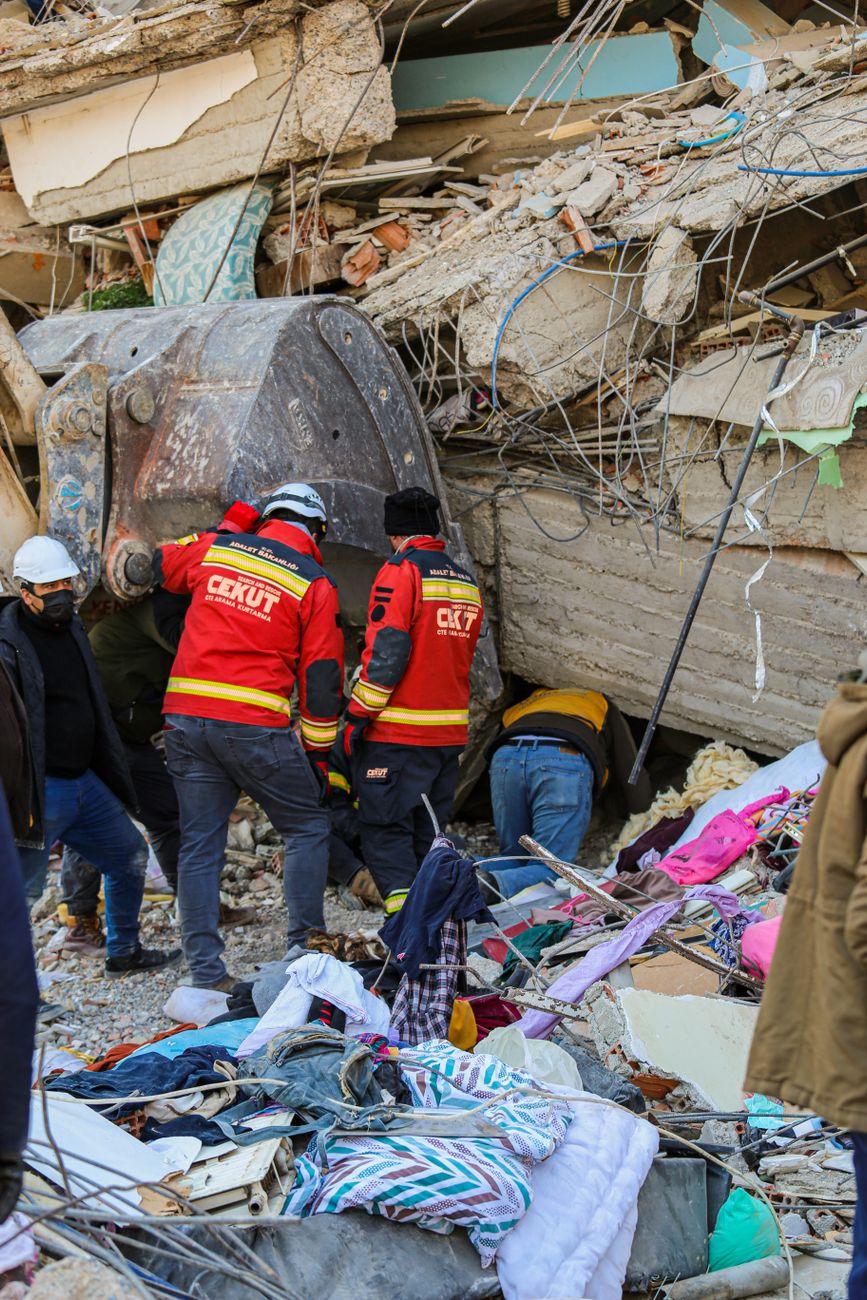
Recently, I saw a post claiming that God was judging certain countries because of a string of earthquakes. Sadly, this was not the first time I had seen something like that. I have seen many posts where Christians speak as though they have direct access to God’s hidden purposes, announcing divine judgment over disasters, nations, groups, or individuals. Sometimes the words are not merely careless. They are cruel.
My first reaction was anger. Honestly, I wanted to respond sharply. Part of me wanted to shake the person and say, “Do you understand what you are doing?” But anger, even when it begins with a legitimate concern, does not always help us speak wisely. So I paused. I responded more carefully than I felt. I suggested that Christians should think seriously about what it means to speak for God, and what it means to misrepresent Him.
That is really the issue at the heart of this post. When Christians say, “God is judging them,” especially without clear revelation, we may be doing something far more serious than offering a bad opinion about current events. We may be misusing God’s name. We may be bearing false witness about God. We may be taking our own interpretation, our own fear, our own bias, or our own political or religious instincts, and stamping God’s authority on it.
That should concern us. Christians are not merely private individuals with religious opinions. We represent Christ. We are called to be ambassadors, witnesses, lights in the world, and people who love our neighbors. That means our words carry a certain weight. Our tone matters. Our claims matter. And when we speak publicly, especially online, we need to ask whether we are pointing people toward reconciliation with God or putting unnecessary obstacles in their path.
This will be a longer reflection because the issue deserves careful treatment. I want to look at Scripture, the commandment against taking God’s name in vain, the language of Christians as ambassadors, and the danger of claiming divine authority for things God has not actually revealed. But the practical concern is simple: Christians need to be slower, humbler, and more careful before declaring what God is doing in someone else’s suffering.
Because when disaster strikes, our first calling is not to explain the suffering of others from a distance. Our first calling is to love.
Ambassadors Do Not Invent the King’s Message
Before we can talk about earthquakes, disasters, judgment, or social media posts, we need to begin with something more basic: How do people see Jesus in this world?
Most people do not begin by reading a theology textbook. They do not start with a careful study of church history or biblical languages. Often, they begin by watching Christians. They listen to our words. They observe our actions. They notice our tone. They see what we celebrate, what we condemn, what we excuse, what we amplify, and what we share on social media. Then, fairly or unfairly, they connect those things to the God we claim to serve. We may wish it were otherwise, but public witness works that way. We are under a microscope, and sometimes our careless words become someone else’s picture of Jesus.
This should sober us. If it does not weigh heavy on your heart, I may not be making myself clear. Christians represent Jesus in the world. That does not mean we represent Him perfectly. We do not. It does not mean every Christian is a trained theologian or polished communicator. We are not. But it does mean that when we speak publicly, especially when we speak in the name of God, our words (or posts) carry weight. We can help clear a path toward Christ, or we can place unnecessary stumbling blocks in the road.
An ambassador carries the message of the King; he does not invent one and stamp the King’s name on it.
Paul gives us one of the clearest pictures of this in 2 Corinthians 5:18–21. He says God has given believers the “ministry of reconciliation.” Then he writes, “We are therefore Christ’s ambassadors, as though God were making his appeal through us.” That is a remarkable statement. Christians are entrusted with a message, but the message is not private speculation. It is not, “Here is what I think God must be doing behind the scenes.” It is not, “This disaster proves God is judging those people.” The message entrusted to the ambassador is this: “Be reconciled to God.”
The Greek word Paul uses is πρεσβεύω (presbeuō, be ambassador). An ambassador does not speak as an independent commentator. He speaks as a representative. His authority is derived authority, which means it comes from the one who sent him. If he faithfully delivers the message of the king, he acts with the king’s authority. But if he invents his own message and presents it as the king’s word, he has not honored the king. He has misrepresented him.
Paul uses similar language in Ephesians 6:19–20, where he asks for prayer that he may proclaim the mystery of the gospel boldly, saying that he is “an ambassador in chains.” Again, the ambassador role is tied to proclaiming the gospel faithfully and courageously. It is not tied to claiming secret knowledge about God’s hidden purposes in current events.
This pattern runs throughout the New Testament. In John 20:21, Jesus says, “As the Father has sent me, I am sending you.” That is representative language. The disciples are sent by Jesus as Jesus was sent by the Father. That gives Christian witness real authority, but also real responsibility.
In Acts 1:8, Jesus tells His followers that they will be His witnesses. A witness testifies to what has been given, seen, and received. A witness does not invent testimony. In Matthew 28:18–20, Jesus sends His followers to make disciples, baptize, and teach obedience to what He commanded. Again, the content of the mission is defined by Jesus, not by our guesses about current events.
Jesus also says His disciples are “the light of the world” in Matthew 5:14–16, and that their good works should lead others to glorify the Father. Peter says something similar in 1 Peter 2:9 when he calls God’s people “a chosen people” and “a royal priesthood,” called to declare the praises of the One who brought them out of darkness. In 1 Peter 4:11, the warning becomes even sharper: “If anyone speaks, they should do so as one who speaks the very words of God.”
Wow. That is not a casual standard. It gives me pause, and honestly, it makes me examine my own words carefully. I do not want to step outside the message I have been entrusted to carry.
Remember, if we are going to speak as Christians, we should speak with humility, reverence, and care. If we are going to say, “God says,” or “God is doing this,” or “This disaster is God’s judgment,” we had better be very sure we are not confusing our interpretation with God’s revelation.
This is where Jeremiah 23 becomes painfully relevant. God rebukes prophets who claimed to speak for Him when He had not sent them. They ran with a message, but it was not His message. They spoke visions from their own minds, not from the mouth of the Lord. That is very close to the danger we face when we attach God’s name to our own assumptions, fears, prejudices, or political instincts.
And here is the uncomfortable point: our words and actions often reveal what we really believe about Jesus. If we speak about suffering people with cruelty, (“God hates gays” comes to mind) what are we telling the world about the Christ we claim to represent? If we seem eager to announce judgment but slow to show mercy, what image of God are we putting on display? If our first instinct is to explain tragedy from a distance rather than love our neighbor up close, are we carrying the King’s message, or have we quietly replaced it with our own?
Christians are ambassadors of reconciliation. That does not mean we deny judgment. It does not mean we pretend sin is harmless or that God is indifferent to evil. But it does mean we must not invent divine explanations where God has not given them. The ambassador’s task is not to sound impressive, prophetic, or certain. The ambassador’s task is to be faithful.
A Brief Ancient Warning: False Embassy
The ancient world understood this more clearly than we sometimes do. In classical Athens, there was even a legal category called παραπρεσβεία (parapresbeia, false embassy). It referred to misconduct by ambassadors: failing to follow instructions, giving false reports, betraying allies, or accepting bribes. The ambassador was accountable because he was not merely speaking for himself. His words carried the authority of the city that sent him.
One famous example comes from the conflict between Demosthenes and Aeschines. In 343 BC, Demosthenes prosecuted Aeschines over an embassy to Philip II of Macedon in a speech known as On the False Embassy. Aeschines was acquitted, so we should not overstate the case. Still, the accusation itself is revealing. Demosthenes argued that Aeschines had given untruthful reports, disobeyed instructions, delayed at a crucial moment, and acted in a way that harmed Athens.
That is the point I want us to notice. In the ancient world, an ambassador was not treated as a free agent with permission to improvise. He had a commission. He had instructions. He had a duty to represent the sender faithfully.
There is also the darker example of Timagoras, an Athenian ambassador who was condemned to death after accepting lavish gifts from the Persian king. The issue was not simply that he brought back an unpopular message. It was that he was believed to have compromised his mission and violated the trust of the city he represented.
The lesson is simple: do not compromise the message.
Now, we should be careful with the analogy. I am not saying ancient ambassadors were regularly executed for every bad message or every diplomatic mistake. Ancient diplomacy was more complicated than that, and foreign envoys were often protected because nations wanted their own envoys protected in return. But the principle still stands: a representative is accountable for faithfully carrying the message, staying within his commission, and not corrupting the mission.
This gives me pause, and I hope it gives you pause too, dear reader. If ordinary human cities expected ambassadors to speak faithfully on behalf of their rulers, how much more carefully should we speak when we claim to represent Christ?
Bearing God’s Name Falsely
But wait, there is more.
There is a commandment in the Ten Commandments that is often narrowed down until it becomes smaller than it really is. We usually hear it this way: “You shall not take the name of the LORD your God in vain.” That command appears in Exodus 20:7 and again in Deuteronomy 5:11. Depending on the numbering tradition, it is called the Second Commandment in Catholic and Lutheran traditions, or the Third Commandment in many Protestant and Reformed traditions.
Most of us were taught that this commandment means we should not use God’s name as a swear word. That is true as far as it goes. God’s name should not be used carelessly, crudely, or irreverently. But that is not all the commandment means. The command is not only about profanity. It is also about representation.
The Hebrew matters here. The phrase is built around נָשָׂא (nasa, carry), שֵׁם (shem, name), and שָׁוְא (shav, emptiness). Take a look at your Hebrew lexicon of choice for Exodus 20:7 and you will find תִשָּׂא (tissa, you carry), שֵׁם (shem, name), and לַשָּׁוְא (lashav, falsely/in vain). The verbal idea involves lifting, carrying, bearing, or taking, while the final term carries the sense of emptiness, vanity, falsehood, or uselessness. There is much that could be unpacked here, and maybe there will be a future blog post looking more carefully at the nuances. For now, the point is clear enough: the command is not as narrow as many people assume. It is not only about avoiding profanity. More broadly, it warns us not to carry, bear, lift up, or use God’s name falsely, emptily, or deceptively. That is bigger than watching our language when we are angry. It reaches into how we represent God.
Carmen Joy Imes has done important work on this in Bearing Yhwh’s Name at Sinai. Her study argues that the “name command” has often been interpreted mainly as a speech-related prohibition: false oaths, irreverent speech, cursing, false teaching, and similar issues. But she argues that the Sinai context points to Israel bearing YHWH’s name as His covenant people. In that reading, the command calls for “proper representation.”
Proper representation. That bears repeating. If God’s people bear God’s name, then misrepresenting God is not a minor issue. A Christian saying, “God is judging this country through this earthquake,” may be doing more than making a bad guess. He may be bearing God’s name falsely by claiming divine authority for something God has not revealed.
This concern is not only found in one modern scholar. There is also a traditional Reformed version of the same warning. The Westminster Larger Catechism says the Third Commandment requires God’s name, titles, attributes, Word, works, and everything by which He makes Himself known (includes our speech and behavior) to be used reverently. It also specifically forbids “misapplying of God’s decrees and providences” and misinterpreting or misapplying God’s Word.
That is exactly the issue here. When someone looks at an earthquake, hurricane, fire, disease, or tragedy and says, “This is God’s judgment on those people,” they may be misapplying God’s providence. Providence means God’s governing care over creation and history. Christians believe God is sovereign, but that does not mean every Christian has the authority to interpret every event as if we had access to the hidden counsel of God.
For Lutherans, Luther makes a similar point in The Large Catechism. He says God’s name is misused when people call upon God “for purposes of falsehood or wrong,” and that God’s name cannot be misused worse than when it is used to support falsehood and deceit. That should make us tremble a little.
To take God’s name in vain is not only to say God’s name carelessly. It is also to carry God’s name falsely. It includes misusing God’s name, falsely invoking God’s authority, misrepresenting God, and carrying His name in a way that dishonors Him.
This is where social media becomes spiritually dangerous. Attaching God’s authority to our message is something people do all the time. We post our interpretation, our instinct, our outrage, or our theological assumption, and then we dress it up as if God Himself has spoken. That is exactly what we should not do.
If we are going to talk about sin, this is one place where the word may fit. Sin is not merely breaking a rule; it is missing the mark, a moral wrong that bends us away from love of God and love of neighbor. When we post something that claims God’s prerogative, declaring judgment where God has not clearly spoken, we may be doing more than making a careless comment. We may be bearing His name falsely.
And this does not stop with the original post. When others comment approvingly, saying things like, “They deserve it,” or “Go get them, God,” they may be participating in the same spiritual danger. Even resharing without comment can amplify a message that misrepresents God. That should concern us deeply. Few things create a stumbling block faster than portraying God as cruel, petty, or eager to destroy. Instead of helping people move toward repentance and relationship with their Creator, careless words spoken in God’s name may push them farther away.
Yes, there is a commandment against it. But even deeper than commandment keeping is love. If we truly love God with all our heart, soul, mind, and strength, we should not want to misrepresent our Beloved. We should not want to put words in His mouth. We should not want to speak falsely in His name, even accidentally.
Love should make us careful. Reverence should make us slow. And humility should make us very cautious before we declare what God is doing in someone else’s suffering.
For me, even if I believed with a high degree of certainty that God was judging a nation for some injustice it was committing, I would still be very careful. I would not rush online and declare, “Thus saith the Lord: you are judged, and this earthquake is God’s judgment.” I know I am not perfect. I know my own interpretation can be flawed. And I do not want to carelessly, or even accidentally, attribute to God something He has not actually said. Trust me, I try to carry that caution into this blog as well. If I am going to speak about God, I want to do so with reverence, humility, and holy fear, because I do not want to misrepresent the One who loves me enough to lay down His life to bring me into relationship with Him.
The Bible’s Severe Warning Against False Prophetic Speech
Oswald Chambers once asked a piercing question in one of his devotionals: “Have I Slandered God?” His immediate concern was not earthquakes or social media posts. He was writing about worry, spiritual laziness, and the ways we draw false conclusions about God’s character. But the principle applies more broadly. It is possible for a Christian to slander God by saying something false about Him, His character, His intentions, or His actions.
That phrase has stayed with me: slandering God. That is a dire warning for Christians, especially when we speak publicly. I am willing to repeat what God has clearly revealed. I can say, “For God so loved the world.” I can say God is holy. I can say God judges evil. I can say God calls all people to repentance. I can say creation is broken and groaning. Those are biblical categories. Those stay safely between the lines of what God has revealed.
But to say, “This earthquake is God’s judgment on that nation”? No. That is a different kind of claim. A scientific caution matters here too. Earthquakes are frequent natural events. The U.S. Geological Survey explains that an earthquake is caused by sudden slip on a fault, and the National Earthquake Information Center locates about 20,000 earthquakes around the world each year, or about 55 per day. So a “string of earthquakes,” by itself, is not evidence of a specific divine message.
That does not mean God is absent from creation. It does not mean God cannot judge nations. It does not mean God cannot use natural events for His purposes. The Bible clearly teaches that God is sovereign. But sovereignty does not mean I have permission to interpret every earthquake, tornado, hurricane, fire, disease, or tragedy as if I had been invited into the hidden counsel of God.
There is a difference between repeating revelation and claiming revelation. If I say, “Scripture teaches that God judges sin,” I am repeating revelation. If I say, “God caused this earthquake to judge that country,” I am claiming knowledge of God’s specific intention behind a specific event. Unless God has revealed that, I may be putting words in God’s mouth.
And the Bible treats that with extreme seriousness. Deuteronomy 18:20–22 warns against the prophet who presumes to speak in God’s name something God has not commanded. That word “presumes” matters. It is not merely a mistake. It is unauthorized speech dressed in divine authority. Deuteronomy 13 adds another layer: even signs and wonders do not validate a prophet who leads people away from the Lord. In other words, sounding spiritual is not enough. Being dramatic is not enough. Even being impressive is not enough.
Now, Christians today are not ancient Israel under the Mosaic civil order. We are not called to execute false prophets. But the severity of the Old Testament warning should still make us tremble. God does not treat unauthorized claims made in His name as a small thing.
The prophets continue this warning. Jeremiah 23 condemns those who run even though God has not sent them, and who speak even though God has not spoken. God says they speak visions from their own minds, not from the mouth of the Lord. Ezekiel 13 says something similar. God rebukes prophets who prophesy “out of their own hearts,” who follow their own spirit, and who have “seen nothing.” That sounds painfully relevant in this situation.
Someone sees a disaster, feels a theological impulse, mixes in some outrage, fear, bias, or political instinct, and then declares, “God is judging them.” But have they seen anything? Has God actually spoken? Or are they following their own spirit and calling it discernment?
Job gives us another warning. Job’s friends had theology, but it was theology without heart. They believed God was just, sin was serious, and suffering had meaning. Much of what they said was not entirely wrong in the abstract. But they applied it wrongly to Job. They tried to explain another man’s suffering from the outside, and at the end of the book God says they had not spoken rightly about Him.
That should stop us in our tracks. It is possible to say true things in the wrong way, at the wrong time, with the wrong application, and end up speaking falsely about God. We need to be cautious enough to speak the right truth, in the right way, at the right time, and for the right reasons.
N. T. Wright makes a helpful observation about 1 Kings 22, where the false prophets told King Ahab what he wanted to hear. They appeared to have Scripture and tradition on their side, and yet they did not have God on their side. A person can sound biblical, confident, and religious, and still falsely claim God’s authority.
The New Testament does not relax the warning. Jesus warns against false prophets in Matthew 7. John tells believers not to believe every spirit, but to test the spirits because many false prophets have gone out into the world. Peter warns that false teachers will arise among Christians just as false prophets arose among Israel.
James adds one more warning that should make every public Christian communicator pause: “Not many of you should become teachers,” because teachers will be judged more strictly. If that is true for teachers, it should also concern anyone who uses a public platform to speak confidently in God’s name.
This includes me. This includes every pastor, blogger, podcaster, teacher, commenter, and social media warrior who decides to post as if they know exactly what God is doing in someone else’s suffering.
Dallas Willard often emphasized that the issue in Matthew 7 is not merely religious language or outward credentials, but actually doing the will of the Father. False prophets are known by their fruit. That means speaking for God is not simply about sounding spiritual. It requires Christlike character, humility, love, obedience, and submission to God.
So before we say, “God is judging them,” we should ask some hard questions.
- Has God actually said this?
- Am I repeating Scripture, or am I adding my own interpretation and giving it divine authority?
- Does this sound like the ministry of reconciliation?
- Does this reflect the character of Jesus?
- Will this help suffering people move toward God, or will it place another stumbling block in their path?
The Bible gives us permission to proclaim what God has revealed. It does not give us permission to invent God’s private explanations for every tragedy. There is a world of difference between saying, “God calls all people to repentance,” and saying, “Those people had this earthquake coming.” One is faithful witness. The other may be slandering God.
Jesus on Disasters: Luke 13 and John 9
So what can we glean from Jesus on this topic? I want to be careful here. I am not saying, “Jesus told me what He would say about this earthquake.” That would be the very problem I am warning against. But we can look at how Jesus responded when people tried to connect suffering, tragedy, and sin too quickly.
Luke 13:1–5 is one of the most important passages for this discussion. Some people came to Jesus and told Him about Galileans whose blood Pilate had mixed with their sacrifices. It was a brutal political and religious tragedy. Jesus then brought up another tragedy: eighteen people who died when the tower in Siloam fell on them.
His response is striking. He does not say, “Yes, they must have deserved it.” He does not say, “Clearly, God was judging those people more severely than everyone else.” Instead, He asks whether they were worse sinners than others. His answer is no.
That does not mean Jesus denies sin, judgment, or repentance. He does not soften those realities. In fact, He says, “Unless you repent, you too will all perish.” But notice what He refuses to do. He refuses to let people turn tragedy into a smug explanation of someone else’s guilt. He takes the easy accusation, “They must have had it coming” and turns it into a mirror.
Jesus does something similar in John 9:1–3. His disciples see a man who was blind from birth, and they ask, “Rabbi, who sinned, this man or his parents, that he was born blind?” That question reveals a common instinct: someone must be to blame. If there is suffering, there must be a direct moral cause. If there is pain, someone must have done something to deserve it.
Jesus rejects the blame-frame. He says it was not that this man sinned or that his parents sinned, but that the works of God might be displayed in him. Jesus does not give them permission to speculate about hidden guilt. He moves them away from accusation and toward the possibility of God’s redemptive work. That should slow us down when we are tempted to explain someone else’s suffering too quickly.
When disaster strikes, our first instinct should not be to assign blame from a distance. Jesus does not encourage that kind of spiritual detective work. He does not train His disciples to look at suffering people and say, “Now let us determine what sin caused this.” Instead, He redirects the conversation toward repentance, humility, mercy, and the work of God.
This does not mean all suffering is meaningless. It does not mean sin has no consequences. It does not mean God never judges. Scripture gives us examples where God does judge nations and individuals. But we must be very careful not to claim more than we have been given.
Together, these passages call us to a better way. We can affirm that God is holy and just without pretending we know the hidden reason behind every tragedy. We can call all people to repentance without pointing at the wounded and saying, “This proves God is against you.” We can believe in divine judgment without becoming self-appointed interpreters of every earthquake, storm, illness, or accident. Jesus gives us a pattern, and if Christians are meant to be “little Christs,” then we should follow Him here too.
What We May Say and What We Should Not Say
At this point, someone might say, “But doesn’t Scripture show God judging through events?”
Yes, it does. The Bible gives examples of God judging nations, cities, rulers, and individuals. God is not indifferent to evil. He is not a passive observer of injustice. He is holy, just, and morally serious. So the issue is not whether God can judge through events. Scripture shows that He can.
The issue is whether we have the authority to interpret a specific event as a specific act of divine judgment when God has not revealed that meaning.
There are things Christians may say with confidence because Scripture clearly teaches them. There are also things Christians may say humbly as reflections or applications. But there are some things we should not say unless God has actually revealed them.
Here are a few examples.
Safe biblical speech sounds like this:
- “God judges sin.”
- “All people should repent.”
- “Disasters remind us that life is fragile.”
- “Creation is broken and groaning.”
- “Christians should respond with compassion, prayer, and help.”
These statements stay within the boundaries of biblical revelation. They do not claim secret knowledge. They do not pretend to know why a particular earthquake, fire, storm, illness, or accident happened. They repeat truths Scripture already gives us.
Humble interpretation sounds different:
- “This disaster reminds me of our need for repentance and mercy.”
- “This should move us to pray and serve.”
- “This may be a warning to all of us not to presume on tomorrow.”
- “This tragedy reminds us that life is fragile and that we should seek God while we can.”
- “This should make us examine our own hearts, not condemn people from a distance.”
That kind of speech applies biblical wisdom without pretending to possess divine insider knowledge. It does not say, “I know exactly why God did this.” It says, “This event should humble me, awaken me, and move me toward prayer, repentance, compassion, and action.”
But dangerous presumptive speech sounds like this:
- “God sent this earthquake because that country did X.”
- “God is punishing those people.”
- “This disaster proves God is judging them.”
- “They had it coming.”
- “God is finally giving them what they deserve.”
That is where we cross a dangerous line. You would be walking on thin ice. The first category repeats biblical truth. The second applies biblical wisdom humbly. The third claims specific divine knowledge.
When we say, “God judges sin,” we are speaking within revelation. When we say, “This disaster reminds us all to repent,” we are applying wisdom with humility. But when we say, “God caused this earthquake to punish those people for that sin,” we are claiming to know the specific intention of God behind a specific event.
Unless God has revealed it, we should not say it as if God is saying it. Who do we think we are? Are we part of God’s council? His own counsel He will keep. Yes, that may sound vaguely Yoda-like, but the point is serious: God has not invited us to invent His private reasons and publish them as divine revelation.
There is a difference between being biblically serious and being spiritually reckless. There is a difference between warning people with humility and weaponizing someone else’s suffering. There is a difference between proclaiming what God has said and attaching God’s name to what we assume.
So maybe before we post, comment, like, or share, we should ask:
- Am I repeating what God has revealed?
- Am I applying biblical wisdom humbly?
- Or am I claiming to know something God has not told me?
- Are my words and actions motivated by love?
That small pause could save us from bearing God’s name falsely. It could keep us from slandering God. It could keep us from turning someone else’s suffering into a stage for our own certainty. And perhaps, by slowing down, we might actually become better ambassadors of the King, helping lead more people toward His waiting arms.
Across Christian Traditions
At this point, some readers may already agree with the main argument and wonder why we need to keep pressing the issue. That is fair. If you are already convinced that Christians should not casually declare disasters to be God’s judgment, you may be ready to move toward the conclusion.
But not everyone will be convinced. Some Christians hear this kind of caution and immediately think of Jesus cleansing the temple. They remember Christ overturning tables and making a whip, and they assume that righteous anger gives them permission to speak harshly in God’s name whenever they believe the cause is just. But the temple cleansing is not a blank check for spiritual recklessness or self-righteous condemnation. Jesus was not having an online temper tantrum. He was not guessing at God’s motives from a distance. He was the Son of God, acting with perfect knowledge, perfect authority, and perfect love.
We are not. So I want to continue a little further, especially for those who may think strong conviction removes the need for careful speech. Across Christian traditions, there are serious warnings about misusing God’s name, misrepresenting God’s providence, and speaking as though our interpretations carry divine authority.
And I want to be clear: I am not writing this as someone who has never failed here. I freely confess that I have misrepresented God in the past. I have spoken too quickly, assumed too much, and carried more confidence than humility. I repent of that, and I do not want to repeat it.
God, give me strength to represent You faithfully.
Church Voices
This concern is not merely a Protestant thing, or a Catholic thing, or an Orthodox thing. Across Christian traditions, we find a similar warning: do not misuse God’s name, do not casually claim divine authority, and do not speak as though your interpretation is God’s revelation.
This should raise a flag and call us to attention. If Christians across traditions disagree on many things, but still converge on this basic caution, perhaps we should pay attention. The Church as a whole has long recognized that speaking for God is dangerous when it is careless, self-serving, presumptuous, or false.
A very direct modern Catholic example comes from Fr. Raniero Cantalamessa, preacher to the papal household. In his 2020 Good Friday sermon in St. Peter’s Basilica, he warned that God is “our ally,” not the ally of destructive forces, and specifically said God was not the ally of the virus. His context was the COVID-19 pandemic, but the principle carries over: Christians should be very careful about presenting disaster as though it were simply God’s weapon against people.
Catholic reporting after the 2011 Japan earthquake summarized Cantalamessa even more directly: disasters that strike the guilty and innocent alike should not be presented as God’s punishment. That is not a denial of God’s sovereignty. It is a warning against confidently assigning divine blame where God has not spoken.
Pope Francis has made a related point when warning against “pseudo-Christians” and “pseudo-pastors.” Reflecting on Jesus’ words about false prophets, he said they may speak much and do impressive things, but their hearts are not open to hear the Word of God. They act from themselves, not from God. That is painfully relevant to our topic. The issue is not merely whether someone sounds religious. The issue is whether the person is listening to God, bearing good fruit, and speaking from humble obedience rather than self-generated certainty.
The Vatican’s 2024 norms on alleged supernatural phenomena are also worth noticing. These norms do not deny that God can act in extraordinary ways. In fact, they begin by acknowledging that the Holy Spirit works in the Church and gives gifts that encourage spiritual growth. But they also warn that alleged divine events may involve doctrinal error, oversimplification of the Gospel, sectarian mentality, imagination, novelty-seeking, fabrication, or lying. Pope Francis approved the norms and ordered their publication.
Non-Catholics should take note. The Catholic Church formally recognizes that claims of divine messages require careful discernment because people can attribute things to God that may actually come from imagination, error, deception, or other motives. If the Church uses caution with alleged visions and supernatural claims, how much more cautious should the average social media user be before declaring, “God sent this earthquake because of that sin”?
The Orthodox tradition gives us a similar caution. Fr. John Breck, writing for the Orthodox Church in America, distinguishes between God’s permissive will and His intentional will. He writes that God may permit natural disasters, but that God does not inflict natural disasters as punishment and remains a God of love.
Some readers may not fully agree with every part of that Orthodox framing. Fair enough. Christian traditions do not always speak about providence in exactly the same way. But the caution is still useful: God may be sovereign over events without us presuming to know His exact intent behind a tragedy. There is a difference between confessing that God is Lord over creation and pretending we can read every disaster like a decoded memo from heaven.
But this much I do know: a disaster is an opportunity to demonstrate God’s love. How often have we failed to seize that opportunity? When people are wounded, grieving, displaced, or afraid, the Christian response should not begin with accusation from a distance. It should begin with compassion, prayer, presence, and help.
The Lutheran tradition also speaks directly to the misuse of God’s name. Luther’s Large Catechism says God’s name must not be appealed to falsely and that God’s name “cannot be misused worse than for the support of falsehood and deceit.” Luther then says the greatest abuse occurs in spiritual matters when false preachers offer their “lying vanities” as God’s Word.
That sounds very close to my concern in this post. To say, “This is God’s judgment,” when God has not said so, is to risk using God’s name to support our own falsehood, speculation, or spiritual vanity.
The Reformed tradition gives an equally pointed warning. The Westminster Larger Catechism says the Third Commandment requires God’s name, Word, and works to be used reverently. It also forbids misinterpreting or misapplying God’s Word, and specifically warns against misapplying God’s decrees and providences.
That is almost exactly the issue I am writing about here. An earthquake is an event within providence. A flood, fire, or disease is an event within providence. But to claim we know precisely what God is saying through that event, when God has not revealed it, may be a misapplication of providence.
Even within evangelical circles that strongly affirm divine judgment, we still find warnings against confident blame-casting. The Gospel Coalition Australia, for example, says Scripture includes disasters that are revealed as divine judgment, but also notes that Luke 13 warns us against confident pronouncements about who is to blame. The article states that we are not omniscient and do not know why specific natural disasters occur, while also maintaining that disasters remind us of mortality, repentance, and final judgment.
That is a balanced point. We do not need to deny judgment in order to reject presumption. We do not need to deny God’s sovereignty in order to refuse spiritual guesswork. We do not need to pretend disasters are meaningless in order to stop weaponizing them against suffering people.
Across these traditions, the shared wisdom is clear enough: speak carefully when you speak of God. When Christians say, “God is judging them,” without revelation, they are not merely making a denominationally questionable statement. They are stepping into territory that Catholic, Orthodox, Lutheran, Reformed, evangelical and other voices all warn us to enter with trembling, if we enter it at all.
Popular and Contemporary Christian voices
Maybe I have not mentioned your denomination. Maybe you do not closely follow Catholic, Orthodox, Lutheran, or Reformed sources. Fair enough. So let me keep driving the point a little further by looking at some popular and contemporary Christian voices.
Charles Spurgeon is one of the strongest examples. In his 1861 sermon “Accidents, Not Punishments,” preached after fatal public accidents, Spurgeon warned against treating every calamity as a specific punishment for sin. He argued that the same kinds of events happen to both the righteous and the wicked, and that we should not invent God’s reason when God has not given His reason.
That is exactly the caution we need. Spurgeon was not denying God’s providence. He was not denying sin, judgment, or repentance. But he refused the easy move from “something terrible happened” to “therefore those people were being punished by God.”
John MacArthur, preaching on Luke 13, makes a similar point. He notes that Jesus challenged the conventional assumption that the Galileans who suffered were greater sinners than others. MacArthur connects the passage to the same kind of theology we see in Job and John 9: the assumption that a person’s suffering can be confidently traced back to that person’s particular guilt.
John Piper is more complex, because he often uses stronger language about God’s sovereignty and judgment than some Christians are comfortable with. But even Piper, when discussing disasters, appeals to Luke 13 and turns the warning inward. In his NPR tsunami interview, he said that when he hears of such calamity, his deepest interpretation is that God is calling John Piper to repent. That is a very different posture from pointing at victims and saying, “They must have deserved it.”
Piper’s point is important here. Even voices with strong views of divine sovereignty do not need to become careless interpreters of someone else’s tragedy. We can believe God is sovereign without pretending we have been handed the divine explanation for every disaster.
James W. Sire also helps us here, especially through his work Scripture Twisting. The book helps people decern twenty ways cults misread the Bible, including errors such as misquotation, ignoring context, and overspecification. That last one is important: overspecification. Sometimes the problem is not that someone quotes no Scripture. The problem is that they quote Scripture and then specify more than the text actually says. A Bible verse attached to a disaster does not automatically make the interpretation biblical.
Greg Koukl makes the same point practically with his famous advice: “Never read a Bible verse.” His point is not that Christians should avoid Scripture, of course. His point is that we should not isolate a verse from its context and then make it say whatever we want it to say. He says we should read at least the paragraph, check the context, and observe the flow of thought before focusing on the verse.
That applies directly here. Quoting a verse about judgment does not prove that a particular earthquake was God’s judgment on a particular nation. Context matters. Genre matters. Setting matters. What God has actually revealed matters.
Frank Viola gives a helpful caution for Christians who are more open to contemporary prophetic speech. He says he still believes in the present-day function of spiritual gifts, but he also warns that much of what passes for prophecy today is not the real thing. In one recent article, he says many alleged prophetic utterances are imitative, artificial, and not truly centered on revealing Christ.
That is useful because it shows that even someone open to prophecy can still say, “Do not treat every claimed word from God as though it is actually from God.” Claimed revelation must be tested. It must be measured by Scripture, wisdom, fruit, and mature discernment. We do not honor the Spirit by refusing to test the spirits.
Charles Swindoll also warns about false teachers and the damage they cause. In his teaching on Titus 1:10–16, Dealing with the Difficult and Dangerous, Swindoll addresses the need to confront false teachers within the church. Insight for Living summarizes the message as a warning that standing for truth is not a playground but a battleground, requiring courage and discernment.
In the study notes for that message, false teachers are evaluated by their fruit, echoing Jesus’ warning that a tree is known by its fruit. The issue is not merely whether someone sounds religious. The issue is whether the teaching is true, whether the character is godly, and whether the fruit is healthy.
So across these popular voices, the same pattern keeps appearing.
- Spurgeon warns us not to turn accidents into punishments when God has not told us to do so.
- MacArthur points us back to Jesus’ refusal to say disaster victims were worse sinners.
- Piper turns disaster into a call for personal repentance rather than victim-blaming.
- Sire warns us that Scripture can be twisted.
- Koukl reminds us that context controls meaning.
- Viola warns that not every “prophetic” claim is truly from God.
- Swindoll reminds us that false teaching is not harmless and must be tested by truth, character, and fruit.
Different traditions. Different personalities. Different emphases. But the caution is remarkably consistent. Do not misuse Scripture. Do not speak for God where God has not spoken. And do not turn someone else’s suffering into a platform for your own spiritual grandstanding.
Historic Christian Voices
### Historic Christian Voices
Some readers may not be especially moved by contemporary voices. Fair enough. Perhaps the historic voices of the Church will feel more time-tested.
The early Church also tested claims to speak for God. The Didache, an early Christian teaching document, warns that not everyone who speaks “in the Spirit” is truly a prophet. A prophet is known by the way of the Lord, by conduct, and by integrity. In other words, early Christians did not naively accept every spiritual claim just because someone used spiritual language. Claims to speak for God had to be tested.
Augustine is useful here too, especially in The City of God. After the sack of Rome in AD 410, some pagans blamed Christianity for Rome’s suffering. Augustine pushed back against simplistic blame narratives. He argued that the blessings and sufferings of earthly life fall upon both the good and the bad, and that the City of God and the earthly city remain intermixed until the final judgment. Augustine did not deny judgment, but he resisted shallow cause-and-effect explanations of historical catastrophe.
John Calvin, commenting on Luke 13, also noticed that Jesus denied the victims of Pilate’s violence and the tower of Siloam were worse sinners than others. Calvin’s application is sober: when disaster happens, we should begin with our own repentance rather than speculating about the guilt of others.
Martin Luther is more nuanced. During plague, he could speak of disaster in terms of chastisement, testing, and divine seriousness. But he strongly rejected fatalism and recklessness. He urged Christians to use medicine, take precautions, avoid infecting others, and care for neighbors. In other words, even when Luther used strong providential language, he did not turn that into permission to neglect love of neighbor.
Teresa of Ávila and John of the Cross are especially useful because they took supernatural experience seriously while still warning against deception. A Christian who believes God may speak must be even more careful, not less. Teresa’s Interior Castle warns that visions and locutions should only be trusted on the strongest grounds because deception, self-deception, and other causes are possible.
John of the Cross is even more direct. He warns that even when visions and locutions come from God, we may still misunderstand them because of “the defective way in which we understand them.” That is a humbling thought. Even if someone believes God has shown them something, the human interpretation of that experience may still be flawed.
Augustine gives us another layer of caution in On Christian Doctrine. He warns that someone who draws from Scripture a meaning the writer did not intend “goes astray.” Augustine is speaking about biblical interpretation, but the principle applies broadly: we must not force Scripture, providence, or spiritual impressions to say what we want them to say.
Taken together, these historic voices give us a wise and sober pattern. Test claims to speak for God. Do not assume every tragedy reveals the special guilt of the victims. Begin with repentance in your own heart. Care for your neighbor in practical ways. Be cautious with visions, impressions, and interpretations. Do not force Scripture to carry more than it actually says.
The historic Church does not give us permission to become reckless with God’s name. If anything, it calls us to greater humility. The older voices remind us that spiritual confidence is not the same thing as spiritual authority, and religious language is not the same thing as faithful representation.
So again, we return to the central point: Christians may proclaim what God has revealed, but we must be very careful about claiming to know what God has not revealed. After all, what is wrong with caution when we are speaking for God? Few things we say carry more weight than words spoken in His name.
Doesn’t the Bible Show God Judging Nations?
At this point someone may raise the obvious objection:
“But the Bible does show God judging nations through disasters, plagues, famine, war, and catastrophe.”
Yes. It does.
Scripture shows that God can judge through historical events. God judged Egypt. God judged Israel and Judah. God judged nations through famine, plague, conquest, exile, and other calamities. So the issue is not whether God can judge. The issue is not whether God ever uses historical events to confront evil. The Bible clearly teaches that He can and does.
The issue is whether we have the authority to interpret a specific event as a specific act of divine judgment when God has not revealed that meaning to us.
That is the difference.
In Scripture, when a prophet declares the meaning of an event, the prophet is speaking by revelation. The prophet is not merely observing current events, drawing a conclusion, and stamping God’s name on it. The prophet speaks because God has spoken. That is a very different thing from seeing an earthquake on the news and saying, “God is judging that country because of this specific sin.”
We should be honest that some respected Christian voices have spoken more directly about disasters as judgment than I am comfortable doing. John Wesley is an important example. In his sermon “The Cause and Cure of Earthquakes,” Wesley explicitly described earthquakes as divine judicial acts and punishments for sin.
So yes, there is a historic Christian voice that presses the point further than I would.
But we should also remember that Wesley wrote before modern seismology, before plate tectonics, and before our current understanding of how frequent earthquakes are. He did not live with the scientific knowledge we now have about fault lines, subduction zones, seismic activity, and the so-called Ring of Fire. That does not automatically make his theological point wrong, but it should make us cautious about simply repeating his conclusions as if nothing has been learned since the eighteenth century.
Maybe the best way to receive Wesley charitably is to hear him speaking in a more general sense: calamity reminds us that humanity lives outside Eden. Creation is broken. Death is real. Sin has disordered the world. We live in a groaning creation, waiting for redemption. I can affirm that. Scripture itself gives us that kind of language.
But that is different from saying, “This specific earthquake is divine judgment on this specific nation for this specific sin.” That is the line I do not want to cross. It is also a line I hope no Christian would cross.
Wesley’s example is useful because it reminds us that Christian history is not perfectly uniform on this question. It also reminds us why we need careful biblical reasoning, not merely a favorite quotation from a favorite teacher. I respect Wesley deeply, but I still think Luke 13 places guardrails around how quickly we should move from disaster to blame.
Even if one speaks generally about judgment, repentance, and the brokenness of creation, it is still another thing to say, “This specific earthquake happened because that specific country committed that specific sin.” The first may be a biblical reflection. The second claims divine knowledge. And unless God has revealed that knowledge, we should not claim it.
Pastoral Damage: What This Does to Suffering People
Why have I gone this far to make this point? Because the stakes are not small.
People’s eternal destiny may lie in the balance. Now, I want to be careful. I am not claiming secret knowledge about purgatory, hell, the pit, or the exact mechanics of what happens when each person dies. The views are legion, and I am not pretending to settle all of that here. But I do know this: God’s will is that none should perish. I know God is just. I know God is love. How all of that works out in the end will be both just and loving, because God is both.
But here is what troubles me. Some of the loudest voices talking about judgment seem strangely unconcerned about the people they claim are under judgment. For the hellfire-and-brimstone crowd, this should be even more sobering. If you truly believe eternal separation from God is awaiting people, why do you not act like it? Why does your warning sound more like satisfaction than grief? Why does your theology look more like accusation than rescue?
If we believe people are in danger, then love should move us toward them, not make us glad to see them suffer.
When Christians say, “God is judging them,” they may wound people who are already grieving, displaced, injured, or terrified. They may be speaking over someone who just lost a home, a child, a spouse, a parent, a church, a school, or a neighborhood. And into that pain, instead of bringing comfort, prayer, and help, we sometimes bring explanation. Worse, we bring accusation.
Job’s friends are the biblical warning here. They had theology, but it was theology without heart. They believed God was just, sin was serious, and suffering had meaning. Much of what they said was not entirely wrong in the abstract. But they applied it wrongly to Job. They tried to explain another man’s suffering from the outside, and at the end of the book, God says they had not spoken rightly about Him.
That should stop us in our tracks. Bad theology can become cruelty when spoken over someone else’s suffering.
What I do know is this: Christians are called to help those in need. When disaster strikes, our first response should not be condemnation, speculation, or theological point-scoring. Our first response should be love.
That love should include prayer, but it should not stop with prayer. Scripture repeatedly calls God’s people to embodied mercy: feeding the hungry, caring for the wounded, mourning with those who mourn, doing good as we have opportunity, and sharing with those in need. Love is not merely a feeling we have from a distance. Love moves. Love acts. Love crosses the road.
Jesus makes this painfully clear in the parable of the Good Samaritan in Luke 10:25–37. The Samaritan does not stop on the road to explain why the wounded man is suffering. He does not ask whether the man made poor choices. He does not use the man’s pain as an object lesson for someone else’s guilt. He sees him, has compassion, binds his wounds, transports him, pays for his care, and promises follow-up help.
James says something similar in James 2:14–17. If someone is without clothes and daily food, and we say, “Go in peace; keep warm and well fed,” but do nothing about their physical needs, what good is that? Faith without works is dead. Religious words are not enough when someone is bleeding on the road.
John presses the point even further in 1 John 3:16–18. If we have material possessions and see a brother or sister in need but withhold compassion, how can the love of God be in us? Then he says, “Let us not love with words or speech but with actions and in truth.” Actions and truth. Not accusation and speculation.
Jesus also identifies Himself with the suffering in Matthew 25:31–46. The hungry, the thirsty, the stranger, the naked, the sick, and the imprisoned are not distractions from spiritual life. They are places where our love for Christ is tested and revealed. When we serve them, we serve Him. When we neglect them, we neglect Him.
Paul tells us in Romans 12:15 to mourn with those who mourn. He does not say, “Explain the grief of those who mourn.” He does not say, “Assign blame to those who mourn.” He says to mourn with them. Enter the sorrow. Sit with the wounded. Weep before you speak.
Galatians 6:10 tells us to do good to all people as we have opportunity. Hebrews 13:16 says not to neglect doing good and sharing, because such sacrifices please God. That means disaster response is not secondary to Christian witness. It is Christian witness. Helping the suffering is one way we bear God’s name faithfully.
So before we presume to explain God’s hidden purposes, perhaps we should ask a simpler question: Who is hurting, and how can we help?
That question may not satisfy our desire to explain everything. It may not give us the thrill of being the person with the prophetic hot take. It may not win the comment section. But it might make us more faithful ambassadors. It might keep us from slandering God. It might help a suffering person see, not a cruel caricature of God, but a small glimpse of the Christ who moves toward the wounded with compassion.
And that, dear reader, matters more than winning an argument online.
You Are Being Soft On Sin
Now, whenever I raise compassion as the first Christian response, someone is often tempted to say, “You are being soft on sin.”
Maybe that is the easy accusation. But I do not think it is true.
I am not trying to be soft on sin. I am trying to take a sin seriously we often ignore: the sin of misrepresenting God. I am trying to take seriously the danger of speaking where God has not spoken, of attaching His name to our interpretation, and of placing stumbling blocks in front of people who may already be wounded, grieving, angry, or far from Him.
Compassion is not weakness. Mercy is not moral compromise. Love is not the denial of truth. In Christ, truth and love are not enemies. They belong together.
So if what you just read stirred up anger in you, brother or sister, perhaps that anger is worth examining. Not every anger is righteous anger. Sometimes anger is a flare sent up from a defended place in the soul. Take it as an invitation to pause, pray, and listen. Turn your heart toward the Holy Spirit, and listen for His still, quiet voice.
Conclusion
I have taken the long way around the horn, and at this point, you may agree with me. You may already believe that Christians should not casually declare disasters to be God’s judgment. If so, perhaps this has been a long walk to a familiar destination.
But perhaps you are still unconvinced.
If that is the case, I am honestly not sure what else to add. We have looked at the Old Testament, the Torah, the prophets, Jesus, Paul, Peter, and the warnings of the New Testament. We have considered Catholic, Orthodox, Lutheran, Reformed, evangelical, historic, and contemporary Christian voices. Across all of that, the same warning keeps appearing: be very careful when you claim to speak for God.
This is a warning to Christians, especially those of us who speak publicly about God. We are ambassadors for Christ, but ambassadors do not invent the King’s message. We may repeat what God has revealed. We may say, “God is holy.” We may say, “God judges sin.” We may say, “For God so loved the world.” We may call all people, including ourselves, to repentance.
But when we look at an earthquake and say, “God is judging that nation,” we have moved beyond repeating Scripture. We are claiming to know God’s specific reason for a specific tragedy. Unless God has revealed that, we are standing in dangerous territory.
The Bible takes this seriously. In the Old Testament, false prophets were not treated as merely mistaken commentators. They were people who put words in God’s mouth. They claimed divine authority for what God had not spoken. Deuteronomy, Jeremiah, and Ezekiel all warn against this kind of presumption.
That should sober us. If God is not judging that nation in the way we claimed, then we have misrepresented God. We have spoken falsely in His name. We may have also wounded suffering people by turning their tragedy into our sermon illustration. And that is not a small thing.
So let us be careful. Let Scripture speak where Scripture speaks. Let us be humble where God has not revealed His hidden purposes. Let disaster move us to repentance, prayer, compassion, and service. Let us mourn with those who mourn, help those who are wounded, feed those who are hungry, and point people toward reconciliation with God.
We do not need to deny God’s holiness to show God’s mercy. We do not need to deny judgment to refuse presumption. We do not need to explain every disaster in order to be faithful witnesses. Sometimes the most faithful thing we can do is speak what God has clearly spoken, remain silent where He has not spoken, and move toward the suffering with the love of Christ.
Go, then, with the love of God: speak truth with humility, serve the wounded with compassion, and bear His name faithfully in a world that desperately needs to see Him clearly.
References
- Alliance of Confessing Evangelicals. (2024, November 28). Westminster Larger Catechism. https://alliancenet.org/creeds-confessions-and-catechisms/westminster-larger-catechism/
- Augustine of Hippo. (n.d.). The city of God: Book I. New Advent. https://www.newadvent.org/fathers/120101.htm
- Augustine of Hippo. (n.d.). On Christian doctrine: Book I. Georgetown University. https://faculty.georgetown.edu/jod/augustine/ddc1.html
- Bible Hub. (n.d.). Exodus 20:7 Hebrew text analysis. https://biblehub.com/text/exodus/20-7.htm
- Breck, J. (2006, January 1). Can God suffer? Orthodox Church in America. https://www.oca.org/reflections/fr.-john-breck/can-god-suffer
- Calvin, J. (n.d.). Commentary on a harmony of the Evangelists, Matthew, Mark, and Luke: Luke 13:1–9 (W. Pringle, Trans.). Christian Classics Ethereal Library. https://ccel.org/ccel/calvin/calcom32/calcom32.ii.xxvi.html
- Cantalamessa, R. (2020, April 10). “I have plans for your welfare and not for woe”: Sermon for Good Friday 2020 in St. Peter’s Basilica. https://www.cantalamessa.org/?lang=en&p=3883
- Catholic Church. (n.d.). Catechism of the Catholic Church: Paragraph 7. The Fall. The Holy See. https://www.vatican.va/content/catechism/en/part_one/section_two/chapter_one/article_1/paragraph_7_the_fall.html
- Catholic Church. (n.d.). Catechism of the Catholic Church: Article 2, The second commandment. The Holy See. https://www.vatican.va/content/catechism/en/part_three/section_two/chapter_one/article_2.html
- Catholic Church. (n.d.). Catechism of the Catholic Church: II. Taking the name of the Lord in vain. The Holy See. https://www.vatican.va/content/catechism/en/part_three/section_two/chapter_one/article_2/ii_taking_the_name_of_the_lord_in_vain.html
- CatholicCulture.org. (2011, April 25). Natural disasters are not punishment from God: Papal preacher. https://www.catholicculture.org/news/headlines/index.cfm?storyid=10107
- Chambers, O. (n.d.). Have I slandered God? My Utmost for His Highest. https://utmost.org/modern-classic/have-i-slandered-god/
- Dicastery for the Doctrine of the Faith. (2024, May 17). Norms for proceeding in the discernment of alleged supernatural phenomena. Holy See Press Office. https://press.vatican.va/content/salastampa/en/bollettino/pubblico/2024/05/17/240517h.html
- Imes, C. J. (2018). Bearing Yhwh’s name at Sinai: A reexamination of the name command of the Decalogue. Eisenbrauns.
- Jeffery, J. (2022, May 17). Are natural disasters the judgment of God? The Gospel Coalition Australia. https://au.thegospelcoalition.org/article/are-natural-disasters-the-judgment-of-god/
- Koukl, G. (2013, February 4). Never read a Bible verse. Stand to Reason. https://www.str.org/w/never-read-a-bible-verse
- Lewis, C. S. (2001). Mere Christianity. HarperOne. Original work published 1952.
- Luther, M. (2020). Plague advice from Martin Luther. Christian History Institute. https://christianhistoryinstitute.org/magazine/article/plague-advice-from-luther Original work published 1527
- Luther, M. (n.d.). The Large Catechism: Part I, The Second Commandment. The Book of Concord. https://thebookofconcord.org/large-catechism/part-i/commandment-ii/ Original work published 1529.
- MacArthur, J. (2004, December 5). Supernatural lessons from a natural disaster [Sermon]. Grace to You. https://www.gty.org/sermons/42-180/supernatural-lessons-from-a-natural-disaster
- New Advent. (n.d.). The Didache. https://www.newadvent.org/fathers/0714.htm
- Pascal, B. (1995). Pensées (A. J. Krailsheimer, Trans.). Penguin Classics. Original work published 1670.
- Piper, J. (2020, February 28). How do we make sense of the coronavirus? Desiring God. https://www.desiringgod.org/interviews/how-do-we-make-sense-of-the-coronavirus
- Pope Francis. (2015, June 25). Listen first. The Holy See. https://www.vatican.va/content/francesco/en/cotidie/2015/documents/papa-francesco-cotidie_20150625_listen-first.html
- Schaeffer, F. A. (1972). He is there and he is not silent. Tyndale House.
- Sire, J. W. (1980). Scripture twisting: 20 ways the cults misread the Bible. InterVarsity Press.
- Spurgeon, C. H. (n.d.). Accidents, not punishments [Sermon]. The Spurgeon Library. https://www.spurgeon.org/sermons/accidents-not-punishments/
- St. John of the Cross. (n.d.). Ascent of Mount Carmel: Book II, chapter 29. Christian Classics Ethereal Library. https://www.ccel.org/ccel/john_cross/ascent.v.xxix.html
- St. Teresa of Ávila. (n.d.). Interior castle; or, The mansions. Christian Classics Ethereal Library. https://www.ccel.org/ccel/teresa/castle2.x.iii.html
- Swindoll, C. R. (n.d.). Dealing with the difficult and dangerous [Sermon]. Insight for Living Ministries. https://insight.org/broadcasts/message/dealing-with-the-difficult-and-dangerous
- United States Geological Survey. (n.d.). What is an earthquake and what causes them to happen? https://www.usgs.gov/
- United States Geological Survey. (n.d.). Why are we having so many earthquakes? https://www.usgs.gov/
- Viola, F. (2021, October 7). Personal prophecies, bitterness, and dismay. Beyond Evangelical. https://www.frankviola.org/2021/10/07/personalprophesies/
- Wesley, J. (1750). The cause and cure of earthquakes [Sermon]. Wesley Center Online. https://wesley.nnu.edu/john-wesley/the-sermons-of-john-wesley-1872-edition/sermon-129-the-cause-and-cure-of-earthquakes/
- Westminster Assembly. (n.d.). Westminster Larger Catechism. The Westminster Standard. https://thewestminsterstandard.org/westminster-larger-catechism/
- Willard, D. (n.d.). The parabolic teaching about Christ’s kingdom [Audio teaching]. Dallas Willard Ministries. https://dwillard.org/resources/audio/parabolic-teaching-about-christs-kingdom
- Wright, N. T. (2016, July 12). How can the Bible be authoritative? NTWrightPage. https://ntwrightpage.com/2016/07/12/how-can-the-bible-be-authoritative/
Excerpt
When Christians claim disasters are God’s judgment without revelation, we risk misrepresenting God, wounding suffering people, and bearing His name falsely. Scripture calls us to speak where God has spoken, stay humble where He has not, and respond to tragedy with repentance, compassion, prayer, and service.
The darkness under the lamp

 Treasures of the Elysian Fields
Leave a comment