
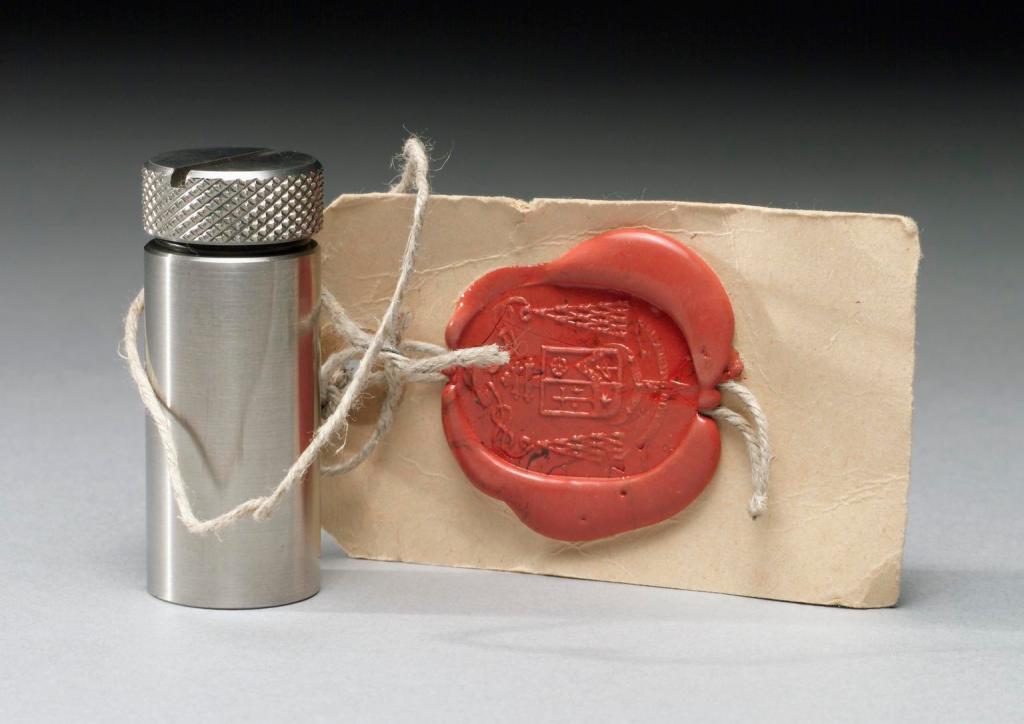
In the realm of historical mysteries, the Shroud of Turin has long been a subject of skepticism and debate. I confess that I was once among those who dismissed it as a mere historical oddity, casually attributing it to the realms of curiosity rather than serious consideration. Like many others, I found myself swayed by the purportedly conclusive carbon dating test conducted in 1988, which seemingly debunked the shroud’s connection to Jesus Christ’s burial. This conviction led me to express my skepticism publicly, echoing the prevailing sentiment shaped by mainstream media. However, my certainty was short-lived, as newfound evidence emerged to challenge the initial carbon dating results.
In the annals of my academic journey, my exploration of the Shroud of Turin and the Sudarium of Oviedo marked a pivotal moment during my pursuit of a master’s degree in 2013. Little did I anticipate that the course assignment, which initially seemed like a scholarly endeavor, would evolve into an ongoing investigation. In the years since I penned that term paper, the landscape of evidence surrounding the Sudarium of Oviedo has undergone significant augmentation. Notably, recent findings related to DNA analysis from the Sudarium merit dedicated attention and a subsequent blog post. However, before delving into these contemporary revelations, I find it fitting to revisit and share the foundations of my original research paper, providing a comprehensive understanding of the subject before integrating the latest developments.
2013 Research Paper
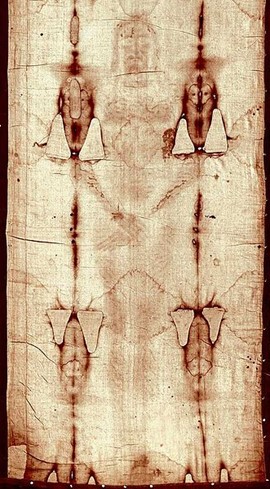
I have to admit that when I saw the topic of the Shroud of Turin I scoffed at it. I think I even posted a comment online that it was nothing more than a historical oddity and not worth serious consideration. I, like millions of others, thought the carbon dating test preformed in 1988 was conclusive proof that the shroud could not have been the actual burial shroud of Jesus Christ. After all, that is all the major media had reported on the topic. No sooner than I had made that statement then new evidence came to light that refutes the original carbon dating results.
Typically, when I look at a truth claim, I assess the available evidence I have and assign a probability to it[1]. I never give anything a rating of absolute certainty. I know enough to know that my finite intellect could not possible account for all possibilities and I realize I need to recognize that as a fact. In order to be intellectually honest I came up with a scale of probability I use for all truth claims. See the scale below.[2]

Figure 1 – Scale of Certainty
I have to admit that up unto last week I would have said the probability of the Shroud of Turin being the actual burial shroud of Jesus Christ was somewhere between Extremely and Highly unlikely given the results of the 1988 radiometric dating. Although the results had been questioned from time to time, there was little or no change in the consensus that the shroud must have been a medieval forgery. It seemed that no amount of evidence could trump the 1988 carbon dating results. However, samples from the shroud have recently gone through other non-destructive dating tests that refute the original carbon dating results. With conflicting dating results, I think it is time to review the evidence to date to see which hypothesis best explains the evidence.
In a 1984 Biblical Archaeology Review (BAR) article, Robert Wild gives a number of reasons why he feels the shroud is a medieval forgery. First of all, the blood seems to flow down the body as if the body was standing and not lying down. Second, Wild cites Samuel Pellicori that one would not expect to find blood on 2000 year old linen. Third, normally bodies were washed before placing them in the tomb, indicating that it should not have as many blood stains. Fourth, the blood stains should have been smeared while the body was transported to the tomb and from the spices. Fifth, the shroud shows clear links to known artistic renderings of Christ. Sixth, he cites alleged contradictions in to the Gospel accounts. Finally, he cites the lack of a history before the 14th century as evidence of medieval forgery.
Although Wild agreed that the shroud depicts wounds that align with the gospel accounts of the crucifixion and that the image on the shroud is an undistorted three dimensional image, he speculated that an artist or forger seared or scorched the image onto the linen with some sort of heated sculpture. He proposes this will account for the three dimensional quality of the image and the fact that the image was not made with paint or pigment.[3]
The debate seemed to be over on October 13, 1988 when Cardinal of Turin, Anastasio Ballestrero, announced that the radiocarbon test on the shroud dated the samples from 1260 to 1390 with a 95% certainty rate. However, the debate on the origin of the shroud was just getting started. Almost immediately the Association of Scientists and Scholars International for the Shroud of Turin (ASSIST) questioned the accuracy of the results. The samples that were used in the tests were taken from a section on the shroud that had been burned during a fire in 1532 and some restoration had been done on the shroud after the fire damage. ASSIST called into question the results based upon the idea that the samples may have been contaminated by the fire or restoration work.[4]
According to Dr. Douglas Donahue, co-director of the accelerator radiocarbon laboratory at the University of Arizona, one of the three labs that performed the test in 1988, “There was no indication of any contamination on the samples tested.” This lead scientists from the Shroud of Turin Research Project (STURP) met with Dr. Gonella[5] to propose new testes to see how the image came to be on the cloth and any possible preservation measures for the shroud. At this time the debate seemed to turn from whether it was the shroud of Christ, to, how did they make this forgery?
Gary Vikan in the Nov/Dec issue of BAR wrote that it was a forgone conclusion that the carbon 14 dating proved that the shroud had not come in contact with Jesus. He also claimed that, “the shroud of Turin was created to deceive.” His speculation is based in part on the fact that other ‘so called’ acheiropoietos[6] are now lost to history or have been deemed forgeries. Vikan also bring up the point that the first record of the shroud, to which we have an unbroken chain of custody to today, is in 1357 AD. Further, 1357 is well within the dates given for the carbon 14 dating.[7]
The obvious problem with Vikan’s theory is that it is based on speculation. First, he assumed the 12th century shroud in Constantinople was a different shroud or acheiropoietos than the shroud of Turin. What if it was the same shroud? It could not have been given the dates given in the 1988 carbon 14 dating. Or could it?
Let’s now turn to the known history of the shroud. The shroud of Turin first appears in Northern France owned by a French nobleman named Geoffrey de Charnay. He put the shroud on display in 1357 at his private chapel in Lirey. At the time the Bishop of Troyes, Henri of Poitiers, believed it to be a fake because some unidentified person had told him that he had painted it.[8] This evidence certainly seems to point in the direction of a medieval forgery. However, questions remain. For instance, why didn’t the Bishop produce the alleged forger and be done with the controversy?
Interestingly, there is some very compelling evidence that the shroud of Turin may have been the shroud of Constantinople in the 12th century. First, the Pray Manuscript, which can reliably be dated to 1196 AD, contains images of the Constantinople shroud that has striking similarities to the Shroud of Turin, including haring bone texture and holes lined up in an “L” shaped pattern.[9] Second, Robert de Clari, a fourth crusade French crusader, describes a shroud that was raised up every Friday in Constantinople in the church of Blachernae. Although some modern scholars think his account is mistaken[10], Geoffrey de Charney’s (the 1357 owner of the shroud) wife is a direct descendant of Robert de Clari, the chronicler of the shroud in Constantinople and one of the crusaders who sacked Constantinople.[11] After that sack the shroud went missing and afterwards, the Eastern Church made a number of attempts to find it.[12]
The scholars who thought that Robert de Clari was mistaken were no doubt influenced by the 1988 carbon dating of the shroud of Turin. Indeed, Walter C. McCrone, in part, based his results on the carbon dating and the lack of history for the shroud before 1357.[13] According to McCrone’s tests he determined their shroud had been stained with a diluted dye and that there was no blood on the shroud.[14] However, McCrone’s theory is not without controversy. Chemical tests conducted by John Heller and Alan Adler indicate the presence of blood.[15] Recent forensic tests indicate it is blood type AB from pre and post mortem wounds.[16]
However, there is more evidence that places the shroud at an earlier date and originating possibly from Judea. For example, limestone samples taken from the shroud are from the rare aragonite formed limestone and include strontium and iron. These samples are just like limestone found in tombs in Jerusalem.[17] Of course, these tests were conducted before the 1988 carbon dating. However, how would a medieval forger have known that we could test for limestone or that differences in limestone could be detected in the future?
Another example is pollen samples taken from the shroud. In 1999, scientists from Missouri Botanical Gardens reported results of recent tests on pollen and flower imprints on the shroud. Their ground breaking work was published in their book, Flora of the Shroud of Turin. They reported that based on pollen found on the shroud, the date for the shroud should be before the 8th century. In addition, pollen from Gundelia tourrenfortii, (a derivative of the sunflower) a flower that only exists in the Near East, was found on the shroud. In a test conducted by Max Frei in 1973 and 1978, a total of 47-49 different types of pollen were found to be on the shroud that are only found in Israel and Turkey. In addition, images from 14 different plants were found on the shroud which indicates the flowers and plants came from the vicinity of Jerusalem during the spring growing season (April and March).[18]
To be sure the pollen and plant image evidence is not without controversy. Botanist Vaughn M. Bryant Jr. who wrote a review of Flora of the Shroud of Turin in BAR, said he did not find the evidence convincing for 4 reasons. First, the book does not explain how the samples were taken. Second, it does not explain how the evidence was stored for 20 years. Third, it does not explain what happened to the other pollen that was removed in 1973 and 1978. Finally, the book does not explain how the authors are so certain of their results.[19] I don’t see how simply raising questions about the samples acquisition, storage, and disposition of other samples, without reasons to question those procedures is rational. Questioning the certainty of the authors and not their evidence is not relevant to the issue at hand. Additionally, I get the sense that Bryant’s objections may be unduly skeptical. It seems to me that the images of flower and plants on the shroud verify the pollen testing results. Bryant did not offer an alternate explanation or rational as to why the pollen samples match the plant images on the shroud. It seems to me that any objection to their findings must account for this. It is not enough to simple raise questions. Perhaps his unduly skepticism is informed by the 1988 carbon dating, however, he did not cite this as one of his objections.
Another piece of evidence that seems to be at odds with the 1988 carbon 14 dating of the shroud comes from The Sudarium of Oviedo in Spain. Tradition has it that the Sudarium is the face cloth of Jesus mentioned in Gospel of John 20:6-7. The journey of the Sudarium starts in Palestine in 614 AD to Alexandria in 616 AD, across Northern Africa to Spain prior to 718 AD. Test of pollen content on the Sudarium match that of the historic route. An investigation team headed by Guillermo Heras and Dr. Jose Villalain found additional evidence that points to legitimate claims of the Sudarium. They found the blood stains are one part blood type AB and six parts pleural oedema[20]. Additionally, residues of what are most likely myrrh and aloe where found on the Sudarium. This aligns with the account in John 19:39-40. Finally the stains on the Sudarium match the typical Jewish facial. This evidence, along with the fact that there is nothing to suggest the contrary, has lead Mark Guscin to conclude the Sudarium is in fact the face cloth used on Jesus Christ.[21]
Mark Guscin vividly shows how the stains on the Shroud of Turin align perfectly with the stains on the Sudarium of Oviedo. He also cites forensic evidence supporting the fact that the Sudarium and Shroud of Turin were made at the same time. First, the rare Blood type AB are on both cloths. Second, blood on both cloths are from pre and post mortem bleeding.[22] Furthermore, Guscin reports in an online article, that the size of the nose (8cm) is an exact match on both cloths. Stains on the right side of the mouth that are seen on Sudarium have been confirmed on the Shroud of Turin by Dr. John Jackson using photo enhancements. Additionally, the alignment of stains between the Sudarium and the Shroud of Turin align seventy points of confidence on the front and fifty on the rear side of the cloth.[23] This evidence seems too exact to be coincidence; in fact, I would think it would take a supernatural miracle for such a coincidence. It appears that the Sudarium and the Shroud would have had to been together at some time in the distant past.
Another way in which to date the shroud has come to light since the initial carbon dating and has to do with the predictable rate of decay of vanillin in linen. Tests have determined that it is possible to date linen by chemical means based upon the amount of vanillin left in the linen. For example, other medieval linen from the time period in question tested positive for vanillin and linen from the Dead Sea scrolls tested negative for vanillin. From these results, we can see that medieval linen should have traces of vanillin and first-century linen should not. Tests have determined that there is no trace of vanillin in the original shroud, indicating a much older age than was determined by the 1988 carbon dating tests. [24]
After the 1532 fire when the shroud was damaged and narrowly escaped destruction, portions of the shroud that were damaged where repaired or replaced. Concerns that the samples taken for radio carbon dating may have come from the damaged areas or have been contaminated by them have also cast doubt on the reliability of the dating results. A gum/dye/mordant coating was found on one of the samples used for carbon dating. For the major portion of the shroud, gum/dye/mordant is absent, leading some to think replaced portions were dyed to match the sepia tone of the original.[25] Further, vanillin was found only in the area where the original carbon dating sample was taken. The rest of the shroud tested negative for vanillin.[26] This lends credibility to the claim that the original carbon dating samples were, in fact, contaminated or taken from medieval repairs to the shroud.
The Vatican Insider reported in December of 2011 that they have made repeated requests for the raw data from the original carbon dating tests. Apparently, calculation errors were made with the original test data. The raw data has not been produced and casts further doubt on the original testing results.[27]
John Jackson of the Turin Shroud Center of Colorado has addressed some of the skeptical claims against the authenticity of the shroud with two compelling evidences. First, Jackson demonstrates that the image on the shroud is only on the surface of the fibrils, each one individually colored, and there is no trace of paint. In addition, nothing seeped into the lower fibrils of the cloth. He claims that the image could not have been made by a heated bar relief scorching the linen as proposed by Robert Wild. Further, the time the linen would have to have been on the heated surface should have to have been for less than a second. This would be impossible for a medieval artist or forger to do.[28] In fact, no one to date has been able to reproduce an image with the same macro and micro features of the image on the shroud.[29]
Second, Jackson provides corroborating evidence that the shroud described by Robert de Clari in Constantinople in 1204 can, in fact, be the same shroud. The evidence comes from a pattern of folds that can still be detected in the shroud with 3D photography. Folds leave permanent marks on linen, however, the series of folds don’t follow a pattern for normal folded storage. Jackson’s team lead by David Fornof designed a machine that could raise the shroud in and out of a box as described by Robert de Clari and other artistic depictions, that when a cloth of similar dimensions is put on it, end up with an identical fold pattern.[30] Aside from the fact that the lack of a history is not proof there is no history for the shroud before 1357, this lends credibility to the possibility the shroud in Constantinople may have been the same shroud. Earlier questionable accounts have the shroud possibly in the possession of King Abgar V of Edessa in the first century.[31] While this earliest account is not without problems, it does offer a possible history for the shroud prior to Constantinople. A possible history is not a lack of a history.
Third, Jackson answers concerns about the alleged gospel discrepancies concerning multiple cloths mentioned in the gospel of John raised by Robert Wild and others. The Gospel mentions a face cloth and the other cloths (plural). Jackson speculates the face cloth is Sudarium of Oviedo. As for the cloths (plural), Jackson believes they are both in the shroud of the Turin. Here theory comes from a two inch wide strip the length of the shroud that was sewn onto the shroud. Many have speculated it was done for repairs. However, discoloration from the weaving pattern on the two inch wide strip matches the discoloration of the weaving pattern on the main body of the shroud. The pattern from the two inch cloth and the main body of the shroud matches down the entire length. Jackson demonstrates how this two inch strip was used to wrap the body after it was placed into the main portion of the shroud. Apparently at a later date the cloth was sown back onto the shroud. His demonstration also demonstrates how the shroud was wrapped around the body and how this aligns perfectly with the blood stains.[32]
Recent archeological evidence further militates against the idea that the shroud is a medieval forgery or art. Bones unearthed in Judea from a Roman crucifixions show that nails were pierced through the wrists and trough the side of the heel. All of the art in the medieval period depicts nails piercing the hands and the top of the feet. In his book, Det sande ansigt – Jesus og ligklaedet I Torino (The True Face: Jesus and the Shroud of Turin), Dr. Niels Svensson MD confirms the evidence on the shroud does, in fact, support the archeological evidence showing nails in the wrists and side of the heel. Peter Dean, a forensic medical examiner, reviewed the evidence and came to the same conclusion.[33]
If an artist or forger was making the shroud during medieval times, how did they know what we only now know is an accurate depiction of a Roman crucifixion? An artist or forger would have gone with the standard depiction of the day, not with what we know today. This, of course, does not prove this shroud is the actual burial cloth of Jesus. However, it too appears to contradict the 1988 carbon dating.
Finally one of the best pieces of evidence against the 1988 carbon dating results was just announced on March 30, 2013. In their new book, Il Mistero della Sindone (The Mystery of the Shroud) Giulio Fanti and Savero Gaeta report on new dating tests and how Fanti speculates the image on the shroud was made. Of most interest and controversy are the results of the age testing. Fanti conducted 3 separate non-destructive tests on fibers taken from the shroud in 1978 by Professor Ray Rodgers. He conducted the same tests on 20 separate cloths with known dates ranging between 3000 BC and 2000 AD for a baseline. On the shroud one test was conducted using infra-red light and rendered a date of 300 BC ±400. The second test was conducted using Raman spectroscopy and rendered a date of 200 BC ±500. The final test, a multi-parametric mechanical test, rendered a date of 400 AD ±400. These tests have a 95% confidence rate and the average date for all three tests would be 33 BC ±250. These 3 separate tests plus the fact the original samples may have been from a later addition to the shroud seem to cast grave doubt on the 1988 carbon dating accuracy for the whole shroud. However, the Vatican is being extremely cautious about the latest test results citing the samples collected by Ray Rodgers in 1978 have been outside of their custody.[34] Of course, simply being outside of their custody is not a good reason to doubt the validity of the test.
The question remains: is the Shroud a medieval forgery or work of art? We need a hypothesis that explains the totality of the evidence. We have 5 separate tests performed in order to date the shroud. The 1988 carbon tests are doubted for a number of reasons including, most importantly, that it is highly likely the sample was taken from an area that was a late repair to the shroud. The other 3 tests have yet to be vetted but questions about the chain of custody have already been raised. However, vanillin tests support the early dates and not a late medieval date. Along with the new archaeological evidence, it seems highly unlikely the shroud is a mediaeval forgery or work of art. Of course, one could claim that the shroud could be a first-century forgery or art from Judea. This hypothesis could account for the pollen, plant, limestone and possibly the Sudarium evidence. However, the main problem with this hypothesis is it still cannot account for how the image was put on the cloth by an artist or forger. One would think that a new method of art or forgery would not be limited to a single item. I think the best explanation given all of the evidence is that the shroud is the burial cloth of Jesus. For me, I have changed my mind from it being highly unlikely to being highly likely. Perhaps new evidence will surface that will drive me back to the unlikely side or even to extremely likely.
Bibliography
- Bennett-Smith, Meredith. “Shroud Of Turin Real? New Research Dates Relic To 1st Century, Time Of Jesus Christ .” The Huffington Post. March 29, 2013. http://www.huffingtonpost.com/2013/03/28/shroud-of-turin-real-jesus_n_2971850.html (accessed April 4, 2013).
- Bryant, Vaughn M. “Does Pollen Prove the Shroud Authentic?” Biblical Archaeology Review Nov/Dec (2000): 36-44.
- Gleghorn, Michael. Probing the Shroud of Turin. 2001. http://www.probe.org/site/c.fdKEIMNsEoG/b.4221019/k.9CC0/Probing_the_Shroud_of_Turin.htm (accessed APR 15, 2013).
- Guscin, Mark. The Sudarium of Oviedo: Its History and Relationship to the Shroud of Turin. 1997. http://www.shroud.com/guscin.htm (accessed APR 15, 2013).
- Holy Shroud Offical Site. 2013. http://www.sindone.org (accessed April 13, 2013).
- Kohlbeck, Joseph A., and Eugenia L. Nitowski. “New Evidence May Explain Image on Shroud of Turin.” Biblical Archaeology Review Jul/Aug (1986): 18-29.
- Madden, Thomas, and Donald Queller. The Fourth Crusader: The Conquest of Constantinople. Second Edition. Philadelphia: University of Pennsylvania Press, 1997.
- McCrone, Walter C. “The Shroud Painting Explained.” Biblical Archaeology Review, no. Nov/Dec 1998 (1998): 27-29.
- Miller, Wendy. “Shroud of Turin—What It Is and Where It’s Been.” Biblical Archaeology Review Jul/Aug (1986): 18-29.
- Montgomery, John Warwick. “How Much Evidence to Justify Religious Conversion?” Philosophia Christi Vol. 13 No. 2, 2011: 449-460.
- Shroud of Turin. Directed by David W. Rolfe. Produced by BBC. Performed by Rageh Omaar. 2008.
- Rogers, Raymond N. “Studies on the radiocarbon sample from the shroud of turin.” Thermochimica Acta 425 (2005): 189-194.
- Siefker, Robert W., Daniel S. Spicer, Keith Propp, Dave Fornof, Rebecca Jackson, and John Jackson. The Shroud, A Critical Summary of Observations, Data and Hypotheses v.1.2. Colorado Springs: The Shroud Center of Colorado, 2013.
- Singer, Suzanne F. “Has the Shroud of Turin Been Dated—Finally?” Bible Review April (1989): 38-39.
- STERA Inc. “BREAKING NEWS! New Shroud Book Sparks Immediate Controversy.” Shroud of Turin Education and Research Association, Inc. March 30, 2013. http://www.shroud.com/latebrak.htm (accessed April 2, 2013).
- “Strata.” Biblical Archaeology Review Jul/Aug (1998): 12-16.
- Tornielli, Andrea. “New experiments on Shroud show it’s not medieval.” Vatican Insider. March 26, 2013. http://vaticaninsider.lastampa.it/en/inquiries-and-interviews/detail/articolo/sindone-23579/ (accessed April 10, 2013).
- Tosatti, Marco. “The Shroud is not a fake.” Vatican Insider. December 12, 2011. http://vaticaninsider.lastampa.it/en/inquiries-and-interviews/detail/articolo/sacra-sindone-holy-shroud-sabana-santa-10738/ (accessed April 10, 2013).
- Vikan, Gary. “Debunking the Shroud: Made by Human Hands.” Biblical Archaeology Review, no. Nov/Dec 1998 (1998): 27-29.
- Wild, Robert A. “The Shroud of Turin—Probably the Work of a 14th-Century Artist or Forger.” Biblical Archaeology Review Mar/Apr (1984): 30-46.
Foot Notes
[1] According to Montgomery this is in accord with modern analytical epistemology. Montgomery, JW. “How Much Evidence to Justify Religious Conversion,” Philosophia Christi Volume 13, Number 2 2011, pg 449-460.
[2] John Warwick Montgomery uses something similar when he talks about probability from the context of a legal framework. Beyond reasonable doubt, clear, strong and cogent, and preponderance of evidence.
[3] Wild, Robert A. “The Shroud of Turin—Probably the Work of a 14th-Century Artist or Forger.” Biblical Archaeology Review, Mar/Apr 1984, 30-46. http://members.bib-arch.org/publication.asp?PubID=BSBA&Volume=10&Issue=2&ArticleID=6 (accessed 4/10/2013)
[4] Singer, Suzanne F. “Has the Shroud of Turin Been Dated—Finally?.” Bible Review, Apr 1989, 38-39. http://members.bib-arch.org/publication.asp?PubID=BSBR&Volume=5&Issue=2&ArticleID=16 (accessed 4/10/2013)
[5] Dr. Luigi Gonella was professor of physics at the Turin Polytechnic Institute and was the scientific advisor to Cardinal Ballestrero.
[6] Acheiropoietai (acheiropoietos, singular) literally means “not made by human hands” it is a class of object said to have been made by the contact impression of holy bodies.
[7] Vikan, Gary. “Debunking the Shroud: Made by Human Hands.” Biblical Archaeology Review, Nov/Dec 1998, 27-29. http://members.bib-arch.org/publication.asp?PubID=BSBA&Volume=24&Issue=6&ArticleID=5 (accessed 4/10/2013)
[8] Vikan, Gary. “Debunking the Shroud: Made by Human Hands.” Biblical Archaeology Review, Nov/Dec 1998, 27-29. http://members.bib-arch.org/publication.asp?PubID=BSBA&Volume=24&Issue=6&ArticleID=5 (accessed 4/10/2013)
[9] Omaar, Rageh. Shroud of Turin, BBC, 2008 Director David W. Rolfe. http://www.imdb.com/title/tt1220584/
[10] Madden, Thomas, and Donald Queller. The Fourth Crusade: The Conquest of Constantinople. University of Pennsylvania Press, 1997. Second edition. page 139.
[11] Omaar, Rageh. Shroud of Turin, BBC, 2008 Director David W. Rolfe http://www.imdb.com/title/tt1220584/
[12] I read this in one of the articles and cannot locate the reference. What I recall was the Bishop of Constantinople wrote the Pope or others in the western church asking for it’s return.
[13] McCrone, Walter. “The Shroud Painting Explained.” Biblical Archaeology Review, Nov/Dec 1998, 27-29. http://members.bib-arch.org/publication.asp?PubID=BSBA&Volume=24&Issue=6&ArticleID=5 (accessed 4/10/2013)
[14] McCrone, Walter. “The Shroud Painting Explained.” Biblical Archaeology Review, Nov/Dec 1998, 27-29. http://members.bib-arch.org/publication.asp?PubID=BSBA&Volume=24&Issue=6&ArticleID=5 (accessed 4/10/2013)
[15] Kohlbeck, Joseph A., Nitowski, Eugenia L. “New Evidence May Explain Image on Shroud of Turin.” Biblical Archaeology Review, Jul/Aug 1986, 18-29. http://members.bib-arch.org/publication.asp?PubID=BSBA&Volume=12&Issue=4&ArticleID=1 (accessed 4/10/2013)
[16] Omaar, Rageh. Shroud of Turin, BBC, 2008 Director David W. Rolfe. http://www.imdb.com/title/tt1220584/
[17] Kohlbeck, Joseph A., Nitowski, Eugenia L. “New Evidence May Explain Image on Shroud of Turin.” Biblical Archaeology Review, Jul/Aug 1986, 18-29. http://members.bib-arch.org/publication.asp?PubID=BSBA&Volume=12&Issue=4&ArticleID=1 (accessed 4/10/2013)
[18] Bryant, Vaughn M., Jr. “Does Pollen Prove the Shroud Authentic?.” Biblical Archaeology Review, Nov/Dec 2000, 36-44, 75. http://members.bib-arch.org/publication.asp?PubID=BSBA&Volume=26&Issue=6&ArticleID=2 (accessed 4/10/2013)
[19] Bryant, Vaughn M., Jr. “Does Pollen Prove the Shroud Authentic?.” Biblical Archaeology Review, Nov/Dec 2000, 36-44, 75. http://members.bib-arch.org/publication.asp?PubID=BSBA&Volume=26&Issue=6&ArticleID=2 (accessed 4/10/2013)
[20] Liquid that collects in the lungs when someone dies of asphyxiation.
[21] Guscin, Mark. The Sudarium of Oviedo: Its History and Relationship to the Shroud of Turn. Shroud of Turin Education and Research Association, Inc. (STERA Inc.) Colorado, 1997. www.shroud.com/guscin.htm (accessed 15 Apr 2013)
[22] Omaar, Rageh. Shroud of Turin, BBC, 2008 Director David W. Rolfe http://www.imdb.com/title/tt1220584/
[23] Guscin, Mark. The Sudarium of Oviedo: Its History and Relationship to the Shroud of Turn. Shroud of Turin Education and Research Association, Inc. (STERA Inc.) Colorado, 1997. www.shroud.com/guscin.htm (accessed 15 Apr 2013)
[24] Rodgers, Raymond N. Studies on the radiocarbon sample from the shroud of Turin. Thermochimica Acta 425, 2005 p. 189-194
[25] Rodgers, Raymond N. Studies on the radiocarbon sample from the shroud of Turin. Thermochimica Acta 425, 2005 p. 189-194
[26] Siefker, et al. The Shroud, A Critical Summary of Observations, Data and Hypotheses v.1.2. Colorado Springs: The Shroud Center of Colorado 2013. Retrieved APR 17, 2013, from http://www.shroudofturin.com/Resources/SDTV1.2.pdf
[27] Tosatti, Marco, “The Shroud is not a fake.” Rome, Vatican Insider, Dec. 12, 2011, Retrieved APR, 10, 2013, from http://vaticaninsider.lastampa.it/en/inquiries-and-interviews/detail/articolo/sacra-sindone-holy-shroud-sabana-santa-10738/
[28] Omaar, Rageh. Shroud of Turin, BBC, 2008 Director David W. Rolfe http://www.imdb.com/title/tt1220584/
[29] Tosatti, Marco, “The Shroud is not a fake.” Rome, Vatican Insider, Dec. 12, 2011, Retrieved APR, 10, 2013, from http://vaticaninsider.lastampa.it/en/inquiries-and-interviews/detail/articolo/sacra-sindone-holy-shroud-sabana-santa-10738/
[30] Omaar, Rageh. Shroud of Turin, BBC, 2008 Director David W. Rolfe http://www.imdb.com/title/tt1220584/
[31] Gleghorn, M. (2001). Probing the Shroud of Turin. Retrieved APR 15, 2013, from Probe Ministries: http://www.probe.org/site/c.fdKEIMNsEoG/b.4221019/k.9CC0/Probing_the_Shroud_of_Turin.htm
[32] Omaar, Rageh. Shroud of Turin, BBC, 2008 Director David W. Rolfe http://www.imdb.com/title/tt1220584/
[33] Omaar, Rageh. Shroud of Turin, BBC, 2008 Director David W. Rolfe http://www.imdb.com/title/tt1220584/
[34] STERA Inc., Breaking News, New Shroud Book Sparks Immediate Controversy, Florissant, Colorado. Shroud of Turin Education and Research Association, Inc., 2013. Accessed APR 2, 2013 from http://www.shroud.com/latebrak.htm
Excerpt
Embark on a captivating exploration of the Shroud of Turin and the Sudarium of Oviedo in “Unveiling Mysteries.” From my 2013 research to recent DNA revelations, we dissect the evidence surrounding these relics. Join the journey of examination as we unravel the enigmas concealed within the folds of history and science.
Relic Handling by Professionals Only


Leave a Reply