
I am tired of partisanship. I am tired of it in politics, and I am tired of it in the Body of Christ, the universal Church. Not because differences do not matter. Not because doctrine is optional. Not because truth should be watered down until it no longer tastes like anything. I am tired of it because division has a way of becoming a drug. It promises clarity, identity, and righteousness, but too often it leaves us suspicious, hardened, and unloving. It teaches us to look at our brothers and sisters in Christ as problems to be solved rather than people to be loved.
And we should not pretend this is harmless. How many times in history have people used division to excuse cruelty? How many times have human beings first drawn a hard line between “us” and “them,” and then convinced themselves that whatever happens on the other side of that line no longer needs to trouble the conscience? That spirit is not just dangerous in nations. It is dangerous in churches. It is dangerous in denominations. It is dangerous in comment sections, pulpits, councils, and conversations over coffee after worship.
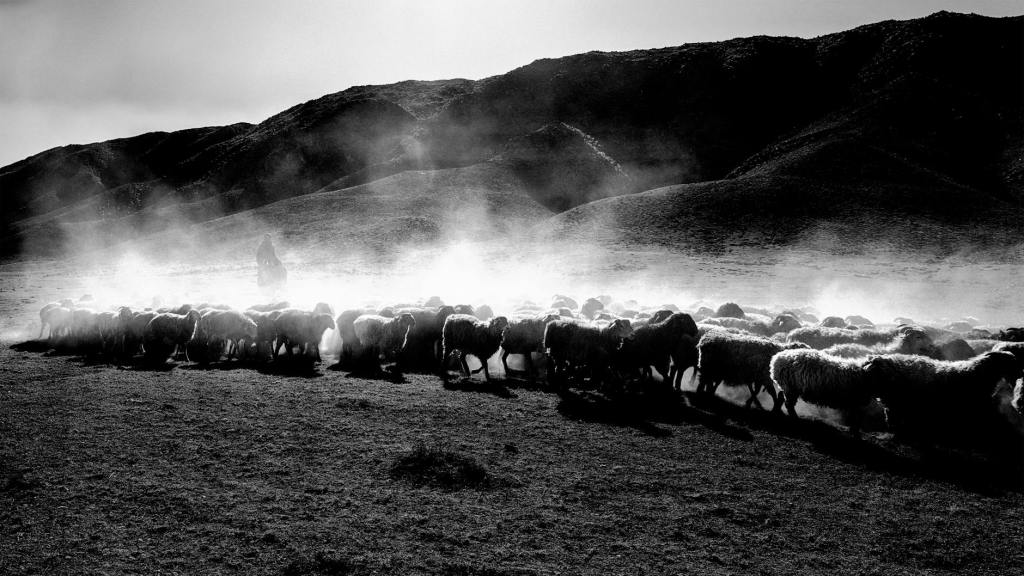
Christians sometimes speak as though we own the flock. We talk as if we can see perfectly who belongs and who does not, who is truly Christ’s and who is not, who is safely inside and who is certainly outside. Now let me be clear: there are real boundaries to Christian faith. Doctrine matters. Truth matters. The gospel matters. There is such a thing as error, and there is such a thing as false teaching. A shepherd who never guards the sheep is not being loving. But there is also a danger on the other side. There is a danger in taking the Shepherd’s seat.
The flock does not belong to me. It does not belong to my preferred tradition, my favorite teacher, my denomination, my party, my tribe, or my theological vocabulary. The flock belongs to Christ.
C. S. Lewis gave us a helpful image in Mere Christianity. He described “mere Christianity” like a hallway with rooms branching off from it. The hallway matters because it represents the shared Christian center, the place where believers recognize the core confession of the faith. But the hallway is not meant to replace the rooms. Christians still enter particular traditions, worship in particular communities, and live out the faith with particular convictions. That image is useful because it refuses two opposite errors. It refuses the error of pretending that denominational differences do not matter, but it also refuses the error of pretending that only our room belongs to the house.
That is where I want to begin. Protestant, Catholic, and Orthodox Christians may disagree on serious matters, and those matters deserve honest conversation. But we should be very careful before we speak as though Christ has no sheep outside our room. We may guard doctrine without pretending we have the Shepherd’s eyes. We may love our tradition without confusing it with the whole flock. We may speak truth without forgetting that the One who finally knows His own is not us.
Jesus is the Shepherd. We are not. Because He knows His sheep, calls them by name, and gathers them into “one flock,” Christians should be very cautious about drawing hard boundary lines where Jesus has not authorized us to draw them. Doctrine matters, but Jesus Himself gave love as the visible mark of discipleship, and He warned religious experts that Scripture study can miss its true end when it does not lead us to Him. John 10:16, John 10:27, John 13:34–35, and John 5:39–40 all support that pastoral warning. John 10:16 points us toward Christ gathering one united flock under Himself, and John 13:35 reminds us that mutual love is the public identifying mark of Jesus’ disciples.
Jesus does not say, “You will create My flock.” He does not hand the disciples a clipboard and say, “Sort them for Me.” He does not give us ownership papers over the pasture. He says, “And other sheep I have, which are not of this fold: them also I must bring, and they shall hear My voice; and there shall be one fold, and one shepherd” (John 10:16, KJV).
That is a word we need to hear with trembling. Jesus says, “I have.” Jesus says, “I must bring.” Jesus says, “They shall hear My voice.” The action belongs first to Him. He is the one gathering. He is the one calling. He is the one leading. He is the one keeping. The flock is not manufactured by our factional confidence. It is gathered by the voice of Christ.
Now, someone might say, “But surely the Church has boundaries.” Yes, it does. The sheep hear His voice; they do not follow a stranger. Truth matters. Doctrine matters. The gospel matters. But Jesus’ words should make us careful. He does not say there will be many owners, many flocks, and many competing shepherds. He says there will be one flock and one Shepherd. That means our task is never to replace Him, but to point toward Him, listen to Him, follow Him, and help others hear His voice more clearly.
Calvin, commenting on John 10:16, preserves an old warning from Augustine that ought to humble us: there may be “many wolves within the Church” and “many sheep without.” That is not an argument for carelessness. It is an argument against arrogance. Visible lines matter, but they do not give us perfect sight into the invisible knowledge of Christ. Some people may stand close to holy things and remain far from the Shepherd. Others may be nearer to His voice than we know.
That should slow us down. It should make us less eager to speak final words over souls that belong to God. It should make us careful about mistaking our map for the Shepherd’s pasture. We can guard truth without pretending we have perfect sight into every soul. We can defend doctrine without acting as though Christ has appointed us to sit on His throne. We can say, “This is true,” without saying, “I can see everything Jesus sees.”
The Church does not create the Shepherd’s flock. The Shepherd creates, gathers, and keeps His flock. Our calling is to be faithful witnesses, not rival shepherds. Our calling is to listen for His voice, not drown it out with our own. And perhaps one of the first signs that we are truly listening is that we begin to speak with more humility about those whom Christ may already be calling by name.
Jesus says, “My sheep hear my voice, and I know them, and they follow me” (John 10:27, KJV). Notice the order. The sheep hear. Jesus knows. The sheep follow. What He does not say is, “My sheep will be perfectly identified by every other sheep.” He does not say, “My servants will always be able to sort the flock without error.” He says, “I know them.”
That should give us peace. Not laziness. Not indifference. Peace. There is a kind of anxious religion that feels the need to settle every question, label every person, patrol every border, and render a final verdict on every soul. But Jesus does not ask us to carry the weight of omniscience. That belongs to God. We are called to be faithful. We are called to discern. We are called to speak truth in love. But we are not called to know what only the Shepherd knows.
And Jesus also promised that we would not be left alone. He told His disciples that the Spirit of truth would guide them into all truth (John 16:13). So here is a question worth asking: do we actually believe Him? Do we believe the Holy Spirit is capable of leading Christ’s people into truth, or do we quietly assume that truth will collapse unless we personally guard every gate?
That does not mean truth does not need defenders. It does. The Church is called to teach, correct, discern, and hold fast to the faith once delivered. But there is a difference between being a faithful witness to truth and acting as though we are truth’s owners. The Holy Spirit is not unemployed. Christ has not abandoned His Church. God is not wringing His hands, hoping our faction gets everything under control.
Maybe part of our anxiety comes from forgetting that truth is not merely an idea we possess. Truth is ultimately found in a Person. Jesus says, “I am the way, the truth, and the life” (John 14:6, KJV). If that is true, then guarding truth must look like abiding in Christ, listening to the Spirit, practicing love, and walking in humility. Otherwise, we may defend propositions about Jesus while failing to move like Jesus.
And maybe that is where faith has to do its work in us. Can we trust Jesus with His own flock? Can we believe that God has it under control? Can we resist the temptation to act as though the Church will fall apart unless we personally know exactly where every sheep stands? There is a holy freedom in admitting, “I do not know everything, but Christ does.” That confession is not weakness. It is worship.
John Zizioulas, from within the Orthodox tradition, helps us remember that the Church is not merely a sorted list of correct opinions. It is communion, or koinonia, a shared life of persons gathered into relationship with God and with one another. That does not erase doctrine. Communion without truth becomes sentimental fog. But truth without communion becomes cold and brittle, like a fence with no pasture inside it. Christian belonging is not less than doctrinal. But it is more than doctrinal. It is relational, sacramental, and Christ-centered.
The sheep are recognized first by the Shepherd before they are recognized by us. That does not mean we stop caring about truth. It means we stop pretending we are the final judge of Christ’s pasture. We may see signs. We may hear confession. We may observe fruit. We may recognize love, repentance, worship, humility, and obedience. But the deepest knowing belongs to Jesus.
So perhaps our posture should be one of bold humility. Bold, because Christ really does call His sheep, and His voice is not silent. Humble, because we do not see as He sees. We do not know every hidden wound, every secret prayer, every trembling act of repentance, every soul slowly turning toward the light. The Shepherd knows. And because the Shepherd knows, we do not have to pretend that we do.
Of course we are going to ask the question: who is in and who is out? Human beings almost cannot help asking it. We want the boundary. We want the line. We want the map. We want to know where the safe territory ends and the danger begins. But maybe Jesus is pressing a deeper question upon us: why do we need to know that first?
If I am commanded to love my neighbor, love my enemy, love the stranger, love the wounded, love the difficult, love the brother or sister who sees some things differently than I do, then how much does my treatment of them depend on my ability to label them correctly? If the command is agape love, then I am not free to withhold love until I have solved the boundary question. I am not free to say, “Once I know whether you are in or out, then I will decide whether I owe you patience, mercy, kindness, honesty, gentleness, and prayer.”
That is strangely freeing. I do not have to know everything in order to love faithfully. I do not have to settle every ecclesial dispute before I obey Jesus. I do not have to determine the final condition of another person’s soul before I can treat them as someone made in the image of God, someone Christ may be calling, someone the Spirit may be working on, someone I am commanded to love. Once love becomes the first obligation, I am released from the exhausting burden of needing to classify everyone before I can be faithful.
But for those who still want to know where the line is drawn, Jesus does give us something visible. And it might surprise us. He does not say, “By this everyone will know that you are My disciples, if you win every argument.” He does not say, “By this everyone will know, if you can identify every error in every other tradition.” He does not say, “By this everyone will know, if you have perfect denominational confidence.” He says, “By this shall all men know that ye are my disciples, if ye have love one to another” (John 13:35, KJV). That is the mark He gave.
Not sentimentality. Not weakness. Not doctrinal laziness. Love. Agape love. The kind of love that seeks the good of the other before the victory of the self. The kind of love that tells the truth without cruelty. The kind of love that corrects without contempt. The kind of love that refuses to reduce a person to a label, a faction, a mistake, or a disagreement. The kind of love that looks like the cross before it sounds like a creed.
John Wesley understood something of this in his sermon “Catholic Spirit.” He was not saying doctrine does not matter. He was not saying conviction should be thrown into the street like unwanted furniture. But he did ask whether those whose hearts are turned toward God should withhold fellowship from one another over every difference. His great line still carries a holy challenge: “If it be, give me thine hand.” In other words, if your heart is right with God, then let us not refuse one another the hand of Christian love.
And maybe this is where the Church has to start again. Not with the arrogance that says love replaces truth. It does not. But with the humility that admits truth without love becomes a clanging cymbal. If we are eager to test everyone else but slow to examine whether we love one another, we may be using the wrong test first. If our doctrine makes us proud, harsh, suspicious, and unmerciful, then perhaps we have not yet understood the doctrine we claim to defend.
So yes, let us care about truth. Let us care about doctrine. Let us care about the boundaries of Christian faith. But first, let us obey the command Jesus plainly gave. Love one another. Love before sorting. Love while discerning. Love when correcting. Love when disagreeing. Love because Christ loved us first. And once we begin there, we may find that the Shepherd has freed us from a burden we were never meant to carry.
Doctrine matters. Scripture matters. Truth matters. A Christianity without doctrine is not deep. It is thin. It is a fog where a faith should be. But doctrine has a purpose, and Scripture has a direction. They are meant to lead us to Christ.
Jesus says, “Search the scriptures; for in them ye think ye have eternal life: and they are they which testify of me. And ye will not come to me, that ye might have life” (John 5:39–40, KJV). That is a sobering word. These were not people who ignored Scripture. They searched it. They studied it. They handled holy words. And yet Jesus says they were missing the One to whom those holy words were pointing.
So let us be careful here. Jesus is not rebuking them for taking Scripture seriously. He is rebuking them for missing Christ while holding Scripture in their hands.
That should make every Bible-believing Christian tremble a little. It is possible to study the text and miss the Person. It is possible to defend the Bible and fail to be formed by the One the Bible reveals. It is possible to know the vocabulary of truth while lacking the life of truth. We may win an argument about Christ and still fail to move toward Christ.
This is why doctrine must be more than a weapon for winning tribal battles. Good doctrine should order our loves. It should train our eyes. It should bring us closer to Jesus, make us more obedient to Jesus, and conform us more fully to the character of Jesus. If our doctrine makes us less loving, less humble, less patient, less truthful, less merciful, and less willing to examine ourselves, then something has gone wrong.
Thomas Oden is helpful here because he cared deeply about doctrine, but not as a novelty machine or a factional badge. His concern for paleo-orthodoxy and consensual Christianity was a call to recover the ancient, shared center of the faith, the faith received, tested, prayed, preached, and confessed across the life of the Church. He was not asking Christians to abandon conviction. He was asking Christians to stop chasing every new wind and every narrow party distinctive as if the newest quarrel were the center of the gospel.
That is a word for us. The center is not my faction. The center is not my cleverness. The center is not the latest controversy. The center is Christ. Scripture testifies to Him. Doctrine serves Him. The Church belongs to Him. And if we search the Scriptures rightly, they should not make us proud gatekeepers standing over the flock. They should make us humble disciples walking after the Shepherd.
And the apostle Paul presses this even further. The church in Corinth had begun dividing itself into camps. Some said, “I follow Paul.” Others, “I follow Apollos.” Others, “I follow Cephas.” And Paul’s response cuts straight through the noise: “Is Christ divided?” (1 Corinthians 1:12–13, KJV). In another place he reminds them, “Who then is Paul, and who is Apollos, but ministers by whom ye believed… I have planted, Apollos watered; but God gave the increase” (1 Corinthians 3:5–6, KJV).
So let me say this plainly, and I say it carefully: I do not ultimately follow the Bishop of Rome. I do not ultimately follow a patriarch. I do not ultimately follow a famous preacher, not even someone as respected as Billy Graham. These may be faithful servants. They may be gifts to the Church. They may help point the way. But they are not the Shepherd.
I follow Christ.
And that is not rebellion. That is obedience. That is not dismissal of the Church. That is the proper ordering of the Church. The Bible says so. Christ alone is the head of the Church. Christ alone calls the sheep. Christ alone knows His own. And every true servant of God, if they are faithful, will not gather a flock around themselves, but will point beyond themselves and say, “Follow Him.”
Paul gives us another needed guardrail: not every question that can be asked must become a boundary line in the Church. Some questions are worth asking. Some are worth studying carefully. Some require courage, discernment, and correction. But some questions become spiritual rabbit trails, pulling us away from Christ and into speculation, suspicion, and quarrels.
Paul warns Timothy not to give attention to “fables and endless genealogies,” because they produce disputes rather than faithful stewardship before God (1 Timothy 1:4, KJV). He tells Titus to avoid “foolish questions, and genealogies, and contentions, and strivings about the law,” because they are “unprofitable and vain” (Titus 3:9, KJV). He reminds Timothy again that “foolish and unlearned questions” produce strife (2 Timothy 2:23, KJV). That is not Paul being anti-intellectual. That is Paul being pastoral. He knows that not every controversy forms us into Christlikeness. Some controversies simply train us to enjoy the fight.
And we need to hear that. There is a kind of religious personality that confuses intensity with faithfulness. It treats every disagreement as a hill to die on, every mystery as a problem to solve, every difference as a threat, and every unanswered question as an excuse to draw another line. But Paul will not let us baptize quarrelsome speculation and call it zeal. Faithfulness is not measured by how many fights we can start. Faithfulness is measured by whether we are being formed into the likeness of Christ.
This is where ecumenical theology can help us think more carefully. Minna Hietamäki’s work on ecumenism and church relations reminds us that Christian unity has been understood in different ways across traditions, and that diversity does not automatically destroy unity. That matters. Unity is not the same thing as uniformity. The Body of Christ is not a factory line producing identical parts. It is a living communion gathered around one Lord, one faith, one baptism, and one God and Father of all.
Now, let us be clear again: this does not mean doctrine is unimportant. It does not mean every difference is harmless. It does not mean we shrug our shoulders at truth and say, “Well, who can know?” That is not Christian humility. That is surrender. Where Scripture speaks plainly, we should listen. Where the gospel is clear, we should stand. Where Christ commands, we should obey.
But where Scripture gives hints, shadows, and partial glimpses, we should be careful not to turn speculation into a test of belonging. We should not make our most fragile inferences carry the weight of Christ’s own voice. We should not confuse our theological architecture with the foundation Himself. Some things must be held with humility, reverence, and patience before the mystery of God.
The goal is not passive vagueness. The goal is active participation. We are learning to move with Christ, to respond to His voice, and to let His life be lived through us like a holy dance of grace, obedience, and love. We are not called to win every speculative dispute. We are called to follow the Shepherd. And on this point, the Scriptures speak clearly: there is one flock.
Christian unity is not doctrinal laziness. Let me say that plainly because someone will surely hear this argument and think I am saying all beliefs are equal, sin does not matter, doctrine is optional, and the Church should stop discerning. I am not saying that. The Church has always had to guard the faith. The Church has had to take stands against serious errors, and from that long struggle we have the councils, the creeds, and the language that helps us confess Christ rightly.
So no, unity does not mean pretending differences do not exist. Unity is refusing to let our differences dethrone the Shepherd.
But we should also be honest. The whole Church has not gathered in council in a very long time. That matters. If we are going to speak about the shared center of historic Christianity, then the creeds and the early councils carry a different kind of weight than every later dispute, every denominational distinctive, every school of interpretation, and every favorite teacher’s framework. There are truths Christians must confess. There are boundaries that matter. But outside that deep, ancient, shared center, there is also a great deal we should hold with humility.
That does not mean those questions are unimportant. Some of them are very important. But not every important question should become a dividing wall. Some matters may need to be left to prayer, conscience, patient study, pastoral guidance, and the leading of the Holy Spirit. If Jesus promised that the Spirit of truth would guide His people into all truth, then perhaps we can trust that God is still at work in people who do not yet see everything exactly as we do.
This is where the Catholic ecumenical tradition offers an important reminder. Vatican II’s Unitatis Redintegratio does not deny doctrinal difference. It does not pretend the divisions of the Church are imaginary. But it does call Christians to speak of one another with truth and fairness, avoiding words, judgments, and actions that misrepresent other Christians. That is not compromise. That is obedience to love. Jeffrey Gros and Thomas Stransky stand within that same broader ecumenical concern: unity must be pursued honestly, without erasing real differences, but also without bearing false witness against our brothers and sisters.
Every Christian theology should have room for the Church in its fullness. Not merely my congregation. Not merely my denomination. Not merely my tradition. The Church. The universal Church. The Body of Christ. The communion of saints. The flock. If our theology has no meaningful place for Christians outside our own room, then maybe our room has become too small. Maybe we have mistaken one chamber of the house for the whole household of God.
Discernment is necessary. But discernment must be governed by humility, love, and allegiance to Christ. Truth does not need our arrogance. The Church does not need more factional pride dressed up as faithfulness. The flock belongs to Jesus. And if we remember that, then we can hold conviction without contempt, defend doctrine without division as our first instinct, and seek unity without surrendering truth.
The Church is larger than our faction. It is larger than our preferred language, our favorite preacher, our denominational instincts, our theological shorthand, and our familiar room in the house. That does not mean those things are worthless. A room can be a good room. A tradition can be a faithful tradition. A local church can be a place of real discipleship, sacrament, teaching, worship, and love. But the room is not the whole house.
The longing for one flock is not sentimental modern tolerance. It is not a soft idea invented by people who do not care about truth. It is rooted in Jesus’ own words, Jesus’ own prayer, Jesus’ own command, and the Church’s long struggle to live faithfully with both truth and love. “One flock, one shepherd” is not a slogan from a committee. It comes from the mouth of Christ.
That is why the ecumenical conversation matters. The Dictionary of the Ecumenical Movement, edited by voices such as Nicholas Lossky, José Míguez Bonino, Geoffrey Wainwright, and others, shows just how wide and serious this concern has been across the Christian world. Catholic, Orthodox, Anglican, Protestant, Evangelical, and global Christian leaders have wrestled with what it means to seek unity without dishonesty, to honor truth without contempt, and to confess Christ without pretending our faction is the whole Body.
And that should humble us. If serious Christians across many traditions have wrestled with this question, then we should not dismiss Christian unity as weakness. We should not treat it as a hobby for the naive. The desire for unity is not the enemy of doctrine. It is one of the fruits of belonging to the Shepherd who said there would be one flock.
The Church has always had to walk this difficult road. Truth without love becomes harsh. Love without truth becomes hollow. Unity without doctrine becomes fog. Doctrine without unity becomes a sword always looking for someone to cut. But Jesus calls us to something better. He calls us to Himself.
So maybe the question is not whether our faction matters. It may matter very much. The question is whether our faction has become too large in our imagination and Christ too small. The question is whether we can love our tradition without making it the measure of the whole Church. The question is whether we can say, with conviction and humility, that the flock is larger than what we can see from our own pasture fence.
And it is worth pausing here to hear a voice like Dallas Willard, who consistently reminded the Church that eternal life is not merely a future destination, but a present participation in the life of God. In his teaching on “living the eternal life now,” Willard emphasizes that the Kingdom of God is not confined to our institutions, labels, or factions. It is the active reign of God breaking into ordinary life, forming people into Christlikeness here and now.
That matters for this conversation. If eternal life is already at work in those who are responding to Christ, then the boundaries of God’s activity may not always align perfectly with our categories. Willard does not dismiss doctrine, but he reframes the goal: the aim is transformation into the character of Christ, not merely correct classification. The question shifts from “Have I sorted everyone correctly?” to “Am I actually becoming the kind of person who lives in the reality of God’s Kingdom?”
That perspective steadies us. It reminds us that the Church is not merely an organization to be managed, but a people being formed. It calls us to focus less on controlling the edges and more on abiding in the center. And it gently confronts us with this possibility: that the life of God may be at work in places we did not expect, in people we have not yet fully understood, because the Shepherd is still calling, still forming, and still gathering His flock even now.
So here we are. After all the arguments, all the distinctions, all the lines we are tempted to draw, we come back to something simple, something steady, something that does not move.
Stay near the Shepherd. We should speak truth. We should care about doctrine. We should discern carefully. We should not drift into confusion or pretend that error does not matter. The Church must remain rooted, grounded, and faithful. But even as we do all of that, we should tremble just a little at this truth: the flock is not ours.
It never was. Jesus is the Shepherd. He knows His sheep. Not generally. Not vaguely. He knows them by name. He knows their wounds, their doubts, their histories, their prayers whispered in the dark, their slow turning toward the light. He knows who is His, even when we are unsure. He is not confused. He is not anxious. He is not losing track of His flock.
And He is still calling. That should humble us. It should quiet the need to control everything. It should soften the way we speak about one another. It should remind us that we are sheep before we are anything else. Sheep who need guidance. Sheep who need mercy. Sheep who need a Shepherd far wiser than we are.
And the mark He gave us was not tribal certainty. It was love.
Not love after we have sorted everyone. Not love once we are satisfied with their theology. Not love only for those who sound like us, vote like us, or worship like us. Love now. Love first. Love as the visible sign that we belong to Him.
So hold your convictions. Study the Scriptures. Defend the truth. But do it as someone who stands under the Shepherd, not in His place. Do it as someone who knows they are known. Do it as someone who loves because they have been loved first.
Stay near Him. Listen for His voice. Follow where He leads. And trust Him to gather His flock.
References
- Augustine of Hippo. (n.d.). Tractates on the Gospel of John: Tractate 47. New Advent. https://www.newadvent.org/fathers/1701047.htm
- Balthasar, H. U. von. (1987). Theodramatics, Vol. 3: Dramatis personae: Persons in Christ. Ignatius Press.
- Calvin, J. (n.d.). Commentary on John, volume 1. Christian Classics Ethereal Library. https://www.ccel.org/ccel/calvin/calcom34.xvi.iv.html
- Gros, J. (2004). Toward full communion: Faith and order and Catholic ecumenism. Theological Studies, 65(1), 2–22.Ok
- Hietamäki, M. (n.d.). Ecumenism and church relations. In St Andrews Encyclopaedia of Theology. University of St Andrews. https://www.saet.ac.uk/Christianity/EcumenismandChurchRelations
- Hooker, R. (1989). Of the laws of ecclesiastical polity (A. S. McGrade, Ed.). Cambridge University Press.
- Lewis, C. S. (2001). Mere Christianity. HarperOne. (Original work published 1952)
- Lossky, N., Bonino, J. M., Pobee, J., Stransky, T. F., Wainwright, G., & Webb, P. (Eds.). (2002). Dictionary of the ecumenical movement (2nd ed.). WCC Publications.
- MacLaren, A., Henry, M., & other commentators. (n.d.). John 13:35 commentaries. Bible Hub. https://biblehub.com/commentaries/john/13-35.htm
- MacLaren, A., Henry, M., & other commentators. (n.d.). John 5:39 commentaries. Bible Hub. https://biblehub.com/commentaries/john/5-39.htm
- Second Vatican Council. (1964). Unitatis redintegratio: Decree on ecumenism. Vatican. https://www.vatican.va/archive/hist_councils/ii_vatican_council/documents/vat-ii_decree_19641121_unitatis-redintegratio_en.html
- Working Preacher. (n.d.). Commentary on John 13:31–35. Luther Seminary. https://www.workingpreacher.org/commentaries/revised-common-lectionary/fifth-sunday-of-easter-3/commentary-on-john-1331-35
- Wesley, J. (1872). Sermon 39: Catholic spirit. In The sermons of John Wesley (1872 ed.). Wesley Center Online. https://wesley.nnu.edu/john-wesley/the-sermons-of-john-wesley-1872-edition/sermon-39-catholic-spirit/
- Willard, D. (n.d.). Living the eternal life now. Dallas Willard Ministries. https://dwillard.org/resources/audio/living-the-eternal-life-now
- Zizioulas, J. D. (1985). Being as communion: Studies in personhood and the church. St. Vladimir’s Seminary Press.
Excerpt
A pastoral reflection on Christian unity, humility, doctrine, and love. Jesus is the Shepherd. We are not. The flock belongs to Christ, and the visible mark He gave His disciples was not tribal certainty, but love.
Be excellent to each other


Leave a comment