
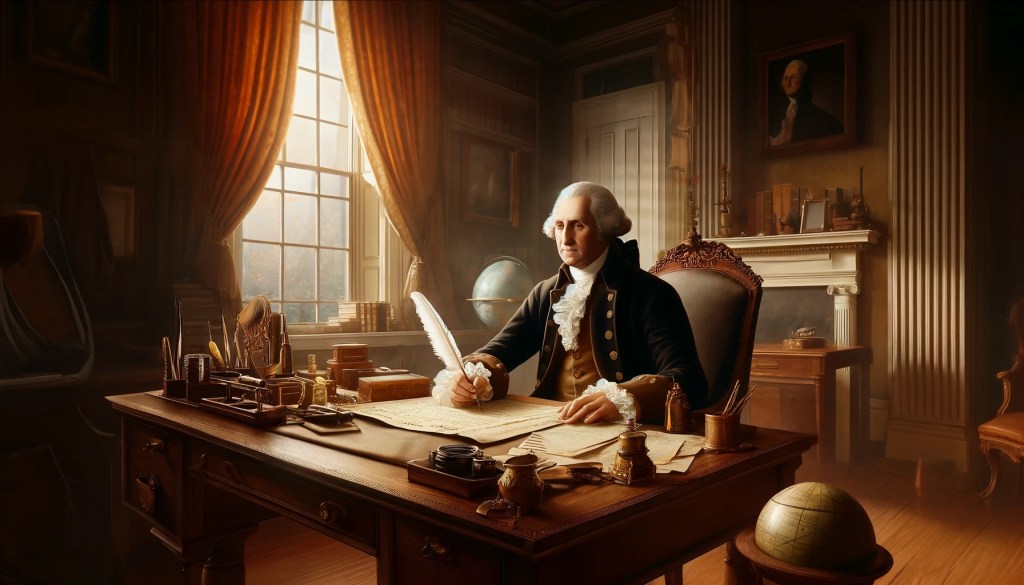
Reflecting on Presidential Thanksgiving Proclamations
When my children were small, one of our Thanksgiving traditions was to read something meaningful before dinner. Some years it was a prayer by George Washington, and others it was his Presidential Thanksgiving Proclamation. These readings served as a memorial to remind us of what Thanksgiving is truly about—a time to focus on gratitude and reflect on the blessings we often take for granted.
I loved this practice, as it brought depth and meaning to our celebrations. At the time, I wasn’t aware of Abraham Lincoln’s Thanksgiving Proclamation, but now that I’ve discovered it, I’m inspired to restart this tradition and include both Washington’s and Lincoln’s proclamations this year. These proclamations provide timeless reminders of the importance of gratitude, especially in the context of national unity and resilience.
In this post, let’s take a closer look at both proclamations—their history, their message, and their enduring relevance. While I’ve made an effort to modernize the spelling for ease of reading, the heart of these proclamations remains as powerful today as it was when they were first written.
President George Washington’s Proclamation
General Thanksgiving
By the PRESIDENT of the United States Of America
A PROCLAMATION
WHEREAS it is the duty of all nations to acknowledge the providence of Almighty God, to obey His will, to be grateful for His benefits, and humbly to implore His protection and favor; and Whereas both Houses of Congress have, by their joint committee, requested me “to recommend to the people of the United States a DAY OF PUBLICK THANKSGIVING and PRAYER, to be observed by acknowledging with grateful hearts the many and signal favors of Almighty God, especially by affording them an opportunity peaceably to establish a form of government for their safety and happiness:”
NOW THEREFORE, I do recommend and assign THURSDAY, the TWENTY-SIXTH DAY of NOVEMBER next, to be devoted by the people of these States to the service of that great and glorious Being who is the beneficent author of all the good that was, that is, or that will be; that we may then all unite in rendering unto Him our sincere and humble thanks for His kind care and protection of the people of this country previous to their becoming a nation; for the signal and manifold mercies and the favorable interpositions of His providence in the course and conclusion of the late war; for the great degree of tranquility, union, and plenty which we have since enjoyed;– for the peaceable and rational manner in which we have been enable to establish Constitutions of government for our safety and happiness, and particularly the national one now lately instituted;– for the civil and religious liberty with which we are blessed, and the means we have of acquiring and disusing useful knowledge;– and, in general, for all the great and various favors which He has been pleased to confer upon us.
And also, that we may then unite in most humbly offering our prayers and supplications to the great Lord and Ruler of Nations and beseech Him to pardon our national and other transgressions;– to enable us all, whether in publick or private stations, to perform our several and relative duties properly and punctually; to render our National Government a blessing to all the people by constantly being a Government of wife, just, and constitutional laws, discreetly and faithfully executed and obeyed; to protect and guide all sovereigns and nations (especially such as have shewn kindness unto us); and to bless them with good governments, peace, and concord; to promote the knowledge and practice of true religion and virtue, and the increase of science among them and us; and, generally to grant unto all mankind such a degree of temporal prosperity as he alone knows to be best.
GIVEN under my hand, at the city of New-York, the third day of October, in the year of our Lord, one thousand seven hundred and eighty-nine.
(signed) G. Washington
Source: The Massachusetts Centinel, Wednesday, October 14, 1789
President Abraham Lincoln’s Proclamation
By the President of the United States of America.
A Proclamation.
The year that is drawing towards its close has been filled with the blessings of fruitful fields and healthful skies. To these bounties, which are so constantly enjoyed that we are prone to forget the source from which they come, others have been added, which are of so extraordinary a nature that they cannot fail to penetrate and soften even the heart which is habitually insensible to the ever-watchful providence of Almighty God. In the midst of a civil war of unequalled magnitude and severity, which has sometimes seemed to foreign States to invite and to provoke their aggression, peace has been preserved with all nations, order has been maintained, the laws have been respected and obeyed, and harmony has prevailed everywhere except in the theatre of military conflict; while that theatre has been greatly contracted by the advancing armies and navies of the Union.
Needful diversions of wealth and of strength from the fields of peaceful industry to the national defense, have not arrested the plough, the shuttle or the ship; the axe has enlarged the borders of our settlements, and the mines, as well of iron and coal as of the precious metals, have yielded even more abundantly than heretofore. Population has steadily increased, notwithstanding the waste that has been made in the camp, the siege and the battle-field; and the country, rejoicing in the consciousness of augmented strength and vigor, is permitted to expect continuance of years with large increase of freedom.
No human counsel hath devised nor hath any mortal hand worked out these great things. They are the gracious gifts of the Most High God, who, while dealing with us in anger for our sins, hath nevertheless remembered mercy. It has seemed to me fit and proper that they should be solemnly, reverently and gratefully acknowledged as with one heart and one voice by the whole American People. I do therefore invite my fellow citizens in every part of the United States, and also those who are at sea and those who are sojourning in foreign lands, to set apart and observe the last Thursday of November next, as a day of Thanksgiving and Praise to our beneficent Father who dwelleth in the Heavens. And I recommend to them that while offering up the ascriptions justly due to Him for such singular deliverances and blessings, they do also, with humble penitence for our national perverseness and disobedience, commend to His tender care all those who have become widows, orphans, mourners or sufferers in the lamentable civil strife in which we are unavoidably engaged, and fervently implore the interposition of the Almighty Hand to heal the wounds of the nation and to restore it as soon as may be consistent with the Divine purposes to the full enjoyment of peace, harmony, tranquility and Union.
In testimony whereof, I have hereunto set my hand and caused the seal of the United States to be affixed.
Done at the City of Washington, this third day of October, in the year of our Lord one thousand eight hundred and sixty-three, and of the Independence of the United States the eighty-eighth.
By the President: Abraham Lincoln
William H. Seward, Secretary of State.
Source: https://www.battlefields.org/learn/primary-sources/abraham-lincolns-proclamation-thanksgiving
Comparing Washington’s and Lincoln’s Thanksgiving Proclamations
When we examine the Thanksgiving proclamations of George Washington (1789) and Abraham Lincoln (1863), it’s essential to consider the vastly different historical contexts in which they were written. Each reflects the unique challenges and opportunities of its time—one during a period of peace and national establishment, the other in the midst of a defining national crisis.
Historical Context
- Washington’s Proclamation (1789): Issued shortly after the ratification of the Constitution, Washington’s proclamation celebrated the birth of a new government—one by the people, for the people, founded on the principle of consent of the governed. It was a moment of hope, unity, and thanksgiving for the blessings of peace and liberty.
- Lincoln’s Proclamation (1863): Written during the Civil War, Lincoln’s proclamation sought to unite a nation deeply divided and on the verge of collapse. It called for gratitude even amid suffering, emphasizing the need for hope, healing, and humility.
Comparative Themes
| Theme | Washington (1789) | Lincoln (1863) |
| Unity | Celebrates the establishment of the Constitution and the unification of the states. | Calls for national unity and healing during the Civil War’s devastation. |
| Divine Providence | Expresses gratitude for God’s guidance in founding the nation and its government. | Acknowledges God’s blessings even during a time of immense hardship. |
| Gratitude | Thanks for peace, liberty, and the promise of the republic’s future. | Gratitude for blessings such as fruitful harvests despite the war’s toll. |
| Motivation | Establishes a national identity in a young republic. | Seeks to inspire hope, reconciliation, and unity during a national crisis. |
Shared Elements
Both proclamations share a civic, secular nature in the original sense of the word, promoting unity and gratitude without favoring any specific sect or denomination. Yet, both explicitly acknowledge divine providence, recognizing God as the ultimate source of blessings and guidance.
- Washington’s Proclamation focuses on gratitude for peace, prosperity, and the successful establishment of a government designed to protect liberty and happiness.
- Lincoln’s Proclamation reflects gratitude for blessings amid strife, recognizing God’s mercy and the hope for national healing.
Both proclamations remind us that Thanksgiving is more than a holiday; it’s a moment to reflect on the enduring strength of the nation and its capacity for resilience, even in the face of great challenges. Both proclamations also remind us that Thanksgiving is fundamentally a civic holiday, rooted in the shared values and experiences of the American people. As I noted in a previous blog post, Thanksgiving is unique in its ability to transcend boundaries, functioning as a civic, secular, and religious holiday all at once. It serves as a memorial—an opportunity to collectively pause, reflect, and remember our blessings. For Washington, it was a time to celebrate the unity and promise of a fledgling republic; for Lincoln, it was a call to healing and gratitude amidst national strife. These proclamations underscore that Thanksgiving is not just about personal gratitude but also about acknowledging the shared gifts and challenges of our nation, uniting us in appreciation and hope for the future.
Reflecting on the Thanksgiving Proclamations
As we prepare to gather with family and friends this Thanksgiving, it’s worth taking a moment to reflect on the profound messages in Washington’s and Lincoln’s proclamations. Both leaders called on Americans to give thanks—not just for personal blessings, but for the gifts of our nation: freedom, liberty, and the opportunities they afford. Are we truly grateful for these gifts, and do we recognize the responsibilities that come with them?
Thanksgiving invites us to pause and appreciate the freedom and liberty we often take for granted. These values are the foundation of our democracy, and they require active participation. Washington celebrated the establishment of a government “by the people and for the people,” while Lincoln urged unity and healing during one of our darkest times. Their words challenge us to consider: Are we doing our part to uphold these ideals?
In recent years, contentious elections and national divisions have strained our sense of unity. This Thanksgiving, let us rise above political differences and seek common ground. Just as Washington and Lincoln envisioned a nation bound by shared purpose, we too can find strength in our collective gratitude and work toward reconciliation. As we feast, laugh, and give thanks, let us also reflect on how we can contribute to a stronger, more united nation—one that values liberty, responsibility, and the bonds that tie us together.
Note to my Atheist Friends
It’s worth noting that the presidential proclamations call for gratitude to God as our provider, but to my atheist friends, there is no need to feel excluded—there is room for you in this nation, too. Thanksgiving is a time for gratitude in all its forms, and you can express thanks in your own way, whether it’s a general appreciation for life’s blessings or honoring the men and women who have built and sustained this great nation. I stand with you, sharing a heart of gratitude for the peace and freedom that allow us to live side by side, united in our shared values and hopes for a better future.
Final Thought
As we celebrate Thanksgiving, take a moment to pause and count your blessings. Gratitude has a way of centering us, reminding us of what truly matters. I’m often drawn to the movie White Christmas this time of year, which includes a beautiful reminder of thankfulness in its iconic song, Count Your Blessings Instead of Sheep. Though not strictly about Thanksgiving, its message fits perfectly with the holiday: focusing on gratitude helps us find peace and perspective, even in the most challenging times. Let this Thanksgiving be a time to reflect, appreciate, and share gratitude with those around you.
Lyrics
When I’m worried and I can’t sleep
I count my blessings instead of sheep
And I fall asleep counting my blessings
When my bankroll is getting small
I think of when I had none at all
And I fall asleep counting my blessings
I think about a nursery and I picture curly heads
And one by one I count them as they slumber in their beds
If you’re worried and you can’t sleep
Just count your blessings instead of sheep
And you’ll fall asleep counting your blessings (x2)
Excerpt
Explore the timeless messages of gratitude, unity, and resilience in George Washington’s and Abraham Lincoln’s Thanksgiving proclamations. Reflect on the blessings of freedom, liberty, and shared values, and find inspiration for healing and unity this Thanksgiving as we gather to give thanks for our nation and its enduring principles.
I Wished for Nautical Nonsense

 Treasures of the Elysian Fields
Leave a reply to Thanksgiving a Time for Gratitude – Treasures of the Elysian Fields Cancel reply