
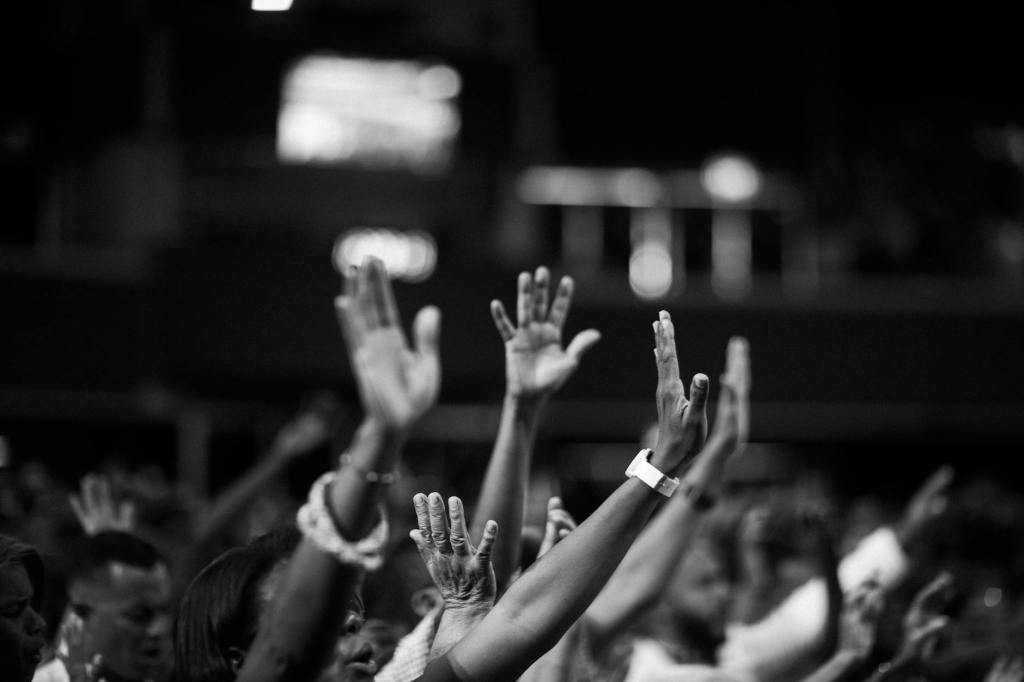
What follows are not polished conclusions. They are reflections from someone who feels like he is circling something important but still searching for the right language. If I miss a distinction or fail to say something clearly, I ask for a little grace. I am thinking out loud about something that keeps appearing in my reading and in my experience of spiritual formation.
Over the past months I have been reading authors who come from different traditions and use different vocabulary, yet they seem to be pointing toward the same center. Dallas Willard writes about spiritual formation as the process of Christ being formed in us. James Gifford Jr. describes perichoretic salvation, drawing from the Trinitarian term perichoresis (περιχώρησις), the mutual indwelling and interpenetration of the Father, Son, and Holy Spirit. In the Eastern Orthodox tradition, a similar vision appears in the doctrine of theosis (θέωσις), the idea that salvation involves participation in the divine life by grace. Major Ian Thomas insists that the Christian life cannot be lived by human effort because only Christ can live the Christ life. Brother Lawrence quietly describes communion with God while washing dishes.
Different voices. Different eras. Different theological language. Yet the same intuition keeps appearing. Christ in us. We in Christ. Participation in the life of God. But if that is true, it raises a question that I do not think we explore often enough. What does that actually mean in lived experience? Not as a doctrine on paper, but as a reality of life.
James Gifford Jr., in his discussion of perichoretic salvation drawing from the Trinitarian concept of perichoresis (the mutual indwelling life of the Father, Son, and Spirit), hints that the implications of this framework extend far beyond the immediate scope of his work. He suggests that many of the downstream theological implications still need to be explored. I find that invitation compelling, because once you begin thinking in participatory terms, a number of longstanding theological questions begin to look different. For example, it offers a compelling way to think about the divine inspiration of Scripture. The biblical authors were fully human, writing with their own personalities, vocabulary, and historical context. Yet through the indwelling work of the Spirit they also participated in something greater than themselves. In that sense the Scriptures can be both fully human and fully divine in origin, in a way that echoes the mystery of Christ himself, who is confessed as fully God and fully man. If participation and mutual indwelling are truly central to salvation, then this participatory framework may illuminate far more than personal spirituality. It may reach into how we understand revelation, community, and the ongoing life of the Church. And that makes this, at least to me, a remarkably rich field for further exploration.
If those implications really do extend further than we have explored, then it naturally pushes the question in a new direction. How exactly does this shared participation work among believers? Lately I have been wrestling with an idea that might help describe it. I am not certain the language already exists in theology, so I may be reaching for a term that needs refining. But the concept that keeps coming to mind is something I would call transitive communion.
In grammar, a transitive relationship passes through something. It connects multiple elements through a shared action. If A is connected to B, and B is connected to C, the relationship extends across the chain.
What if something similar is happening spiritually?
Scripture repeatedly tells us that believers are united with Christ. Paul speaks of being “in Christ.” Jesus speaks of abiding in the vine. The early church speaks of participation in the divine life, what the Eastern tradition calls theosis (θέωσις), participation in God’s life by grace.
But here is the thought that keeps returning to me. If I am in Christ, and you are in Christ, then our connection to one another cannot be reduced merely to agreement on doctrines, denominational alignment, or institutional belonging. Those things matter, of course, but they are not the deepest layer of Christian unity.
Because if two people are truly in communion with God, then they must, in some real sense, be in communion with one another. Not because they organized it. Not because they signed the same confession. But because they share the same indwelling life. We are connected through Him. Our communion with one another is, in that sense, transitive through Christ.
Or to put it more simply, if Christ dwells in each believer through the Holy Spirit (pneuma, πνεῦμα), then every believer is participating in the same living presence. That means Christian community is not merely a social agreement. It is not merely institutional membership. It is participation in a shared life.
Which also suggests something quietly radical. Beneath our real doctrinal disagreements and historical divisions, there may still exist a deeper layer of unity wherever genuine communion with God is present. The life of Christ does not fragment simply because our theological language does.
We are literally one body because we share one life. Paul hints at this constantly. “You are the body of Christ.” “Christ in you, the hope of glory.” “We, though many, are one body.” These are not merely metaphors about cooperation. They are descriptions of shared participation. And that thought changes how we think about almost everything in the Christian life.
“I have other sheep that do not belong to this fold. I must bring them also, and they will listen to my voice. So there will be one flock, one shepherd.” John 10:16 NRSV
It means spiritual formation is not simply moral improvement. It is participation. It is learning to live in conscious awareness of the life that is already present within us. Dallas Willard often described the Christian life this way. Transformation happens not primarily through willpower but through participation in the life of Christ. The goal is not behavior modification but union.
Major Ian Thomas captured the same idea with a striking simplicity. He would say that the Christian life is impossible. Only Christ can live it. The only hope is to allow Christ to live His life through us. That language may sound mystical at first, but when you think about it carefully it is simply taking the New Testament seriously. If Christ truly dwells in the believer, then the source of Christian character is not self-generated effort. It is participation in His life.
This is where Gifford’s language of perichoretic salvation becomes helpful. The term perichoresis originally described the inner life of the Trinity. The Father is in the Son. The Son is in the Father. The Spirit proceeds from and indwells both. The divine persons exist in mutual indwelling love. Gifford’s argument is that salvation is not merely forgiveness or legal standing before God. It is an invitation into that shared life. Salvation is participation in the relational life of the Trinity.
Which means the Christian life is not simply believing the right things about God. It is being drawn into communion with Him. And if that is true, then the idea of transitive communion becomes even more striking.
“I wanted to emphasize last time that the way you live and the easy yoke is by following the Great Commission. Church works with the Great Commission you begin with discipleship and you bring disciples together in trinitarian fellowship and it is the Trinity that is doing the work and you get to watch. And then with that foundation it is easy to lead people into obedience, but if you don’t have that foundation it’s simply impossible and you wind up with people who are following traditions of men following legalistic dictates of some kind on themselves, perhaps more mercilessly than on anyone else, and goodbye to the easy yoke at that point.” – Dallas Willard
Because if believers participate in the life of Christ, and Christ participates in the life of the Father through the Spirit, then the entire community of believers is connected through that same divine life. Our unity is not institutional. It is ontological. Ontological refers to the nature of being or existence itself it is what something is at the level of reality, not merely how we think about it or describe it. It is participation in the same living presence of God.
This also helps explain why love (agapē, ἀγάπη) is so central to the Christian life. Jesus does not merely command love as an ethical rule. He says something much more profound. “As the Father has loved me, so I have loved you. Abide in my love.” In other words, the love we are called to express is not self-generated moral virtue. It is participation in the very love that flows within the Trinity itself. That is why the apostle John can say something that would otherwise seem impossible. “We love because He first loved us.” The love does not originate in us. It flows through us.
Someone said something to me the other day that has stayed with me. They suggested that agapē (ἀγάπη), the self-giving love Scripture speaks of, is not something human beings can manufacture on their own. It is something only God can produce. At first that sounds almost discouraging, but the more I reflected on it the more it seemed perfectly consistent with the idea of mutual indwelling. If Christ truly lives in us through the Spirit, then the love expressed through believers is not generated by our own moral effort. It is the life of God being expressed through us. In that sense we become vessels through which divine love enters the world. This is exactly what Jesus was pointing to when He said, “By this everyone will know that you are my disciples, if you love one another” (John 13:35). John later echoes the same mystery even more plainly: “If we love one another, God lives in us” (1 John 4:12). The wellspring of this love is not human personality or emotional warmth. Its source is the life of the Trinity itself. We do not create it apart from God. We express it through union with Him. And that love, dear brothers and sisters, is what draws us into communion with one another through Christ.
When we step back, we begin to see how several theological tensions start to resolve themselves. Christians often debate the relationship between orthodoxy, orthopraxy, and orthopathy. Right belief. Right action. Right affection.
Sometimes churches emphasize one and neglect the others. Some guard doctrine fiercely but struggle with compassion. Others emphasize loving action but grow suspicious of theology. Still others focus on spiritual experience while drifting away from both doctrinal clarity and moral formation. But if the Christian life is participation in the life of the Triune God, these are not competing priorities. They are expressions of the same reality.
- Orthodoxy flows from participation in the truth of Christ.
- Orthopraxy flows from participation in the life of Christ.
- Orthopathy flows from participation in the love of Christ.
This is not accidental language. Jesus explicitly identified Himself as “the way, the truth, and the life” (John 14:6), and the New Testament repeatedly teaches that “God is love” (agapē, ἀγάπη) (1 John 4:8). When these statements are held together, something profound emerges. The very realities represented by orthodoxy, orthopraxy, and orthopathy correspond to what God Himself is. Christ is the truth that orthodoxy seeks to guard. Christ is the life that orthopraxy seeks to embody. And the love that orthopathy seeks to cultivate ultimately flows from the very nature of God. When believers participate in the life of Christ, they are not merely aligning ideas, actions, and emotions with moral ideals. They are participating in the truth, life, and love that originate in the Triune God Himself.
Without participation, orthodoxy becomes ideology, orthopraxy becomes activism, and orthopathy becomes sentimentality. But with participation, all three become expressions of the same indwelling life.
This brings me back to something I mentioned earlier. There is very little room for boasting in this vision of the Christian life. If Christ is the one living His life through us, then our role is not self-exaltation but surrender. The New Testament uses the term kenosis (κένωσις), meaning self-emptying. Christ emptied Himself. The Christian life echoes that same posture. We surrender our attempt to manufacture righteousness and instead learn to abide in the life already given.
This also changes how we think about teaching and leadership. Jesus is the teacher. We are conduits. If Christ truly lives in us, then every act of teaching becomes an act of service in which Christ Himself is the one shaping hearts and minds. That applies to explicitly spiritual settings, but I suspect it applies much more broadly as well. A professor teaching anatomy to medical students can do it in love. A craftsman mentoring an apprentice can do it in love. A parent guiding a child can do it in love.
This kind of participation in the life of Christ is not some optional side quest in Christian living, reserved for the especially spiritual or the unusually disciplined. It is the main quest. Too often the gospel is reduced to what Dallas Willard called a “gospel of sin management,” where the goal becomes avoiding bad behavior while trying to imitate Christian conduct through sheer effort. But the invitation of the gospel is far deeper than learning to behave better. The call is to receive a new life altogether. The Christian journey is not about attempting to act like Christ through moral discipline alone. It is about allowing Christ to live His life through us. Our aim is not merely to manage sin but to participate in the living presence of God, to abide in Christ, and to allow His truth, His life, and His love to be expressed through us in the world.
Because Christ is not confined to church activity. He is Lord of the whole of life. And if His life truly dwells within us, then even ordinary moments become opportunities for His life to flow outward toward others. Which brings us back to that earlier idea. Transitive communion.
If Christ lives in you and Christ lives in me, then we are already connected at the deepest level imaginable. The unity Christians speak about is not something we manufacture through institutional cooperation. It is something we discover as we learn to live in the reality of Christ’s presence.
We are many persons. But one body. And perhaps that is why spiritual formation is so essential and yet so often missing in modern Christian life. We can affirm doctrines, attend services, and engage in ministry activity while still missing the central reality of communion with God.
Let me restate the issue more plainly, because the implications of this idea of transitive communion begin to press on something that has troubled me for a long time. If participation in the life of God is real, then communion with God necessarily creates communion with others who share that same life. Participation in God produces relational unity among believers. The structure of that unity is almost transitive in nature.
Believer → Christ → other believers.
If I am in Christ and you are in Christ, then the connection between us is not merely theoretical. It is not merely social. It is not merely institutional. It is real because it flows through the same indwelling life of Christ by the Holy Spirit. Our communion with one another is transitive through Him. And that realization makes the divisions of the church feel even more troubling.
I have long struggled with the fractures within Christianity. Historically, the church has divided itself along doctrinal boundary lines, denominational identities, and institutional authority structures. Some of those divisions were born out of real theological disputes that mattered deeply. Yet if salvation is participatory, if believers share in the life of Christ Himself, then these divisions begin to look very different.
Which raises a question that may be uncomfortably simple. Do we not believe in the communion of the saints? Many of us have stood in church and confessed the Apostles’ Creed: “I believe in… the communion of saints.” Yet I sometimes wonder whether we actually pause to consider what we are saying. In many Protestant churches we do not recite the creed very often anymore, and when we do, that phrase can slip past almost unnoticed. Perhaps we assume we already know what it means. But the confession was never meant to describe a loose association of people who happen to share similar religious ideas. It points to something much deeper: a real participation in the life of Christ that binds believers together across congregations, traditions, and even centuries. When we confess the communion of saints, we are acknowledging that those who share in Christ also share in one another. The saints are in communion because they share the same life. If that is what we truly believe, then the idea of transitive communion should not sound strange at all. It should sound like something the church has been confessing all along.
Because the transitive nature of communion exposes something uncomfortable. When believers who are genuinely in communion with God refuse communion with one another, something is out of alignment with the very nature of the life they share. Which raises a sobering thought. The division of the body of Christ may not merely be unfortunate. It may be sinful. Paul certainly seemed to think so when writing to the Corinthians about factions in the church. Christ is not divided. The body is one. The life is shared.
This is why moments of reconciliation between separated parts of the church matter so much. Recently there was a widely reported meeting between Pope Leo XIV and Ecumenical Patriarch Bartholomew at the Ecumenical Patriarchate in Istanbul on November 30, 2025. The two leaders issued what was described as a historic declaration for Christian unity. They reaffirmed their shared commitment to the goal of full communion, emphasized the importance of walking together “in love and truth,” rejected the use of religion to justify violence, and renewed the desire for a common date for Easter. They explicitly rooted their hope for unity in Jesus’ prayer in John 17, “that they may all be one.”
No one claimed that full communion had been restored between the Catholic and Eastern Orthodox churches. That separation, which has existed since the Great Schism of 1054, remains. But the Vatican has also acknowledged that a “profound communion already exists,” even if full visible communion has not yet been realized. Pope Leo XIV told a delegation from the Ecumenical Patriarchate that the churches already share deep communion while continuing to work toward visible unity through dialogue and cooperation.
Whatever one thinks about the specific theological issues involved, that language is fascinating. A profound communion already exists. In other words, even across centuries of separation, there is an acknowledgment that the shared life of Christ has not disappeared.
Which brings me to something that strikes me as unfortunate. Protestants are often not part of these conversations, even though we freely acknowledge that many Catholics and Orthodox believers are sincere followers of Christ. We may even say without hesitation that they are in communion with God. But then in the next breath, we say they are not in communion with us.
If communion is transitive through Christ, that should at least give us pause. Because if two believers share communion with the same Lord, the logic of participation suggests that some form of communion must already exist between them, even if it is imperfect or unrecognized.
Jesus Himself gives us a clear principle about division. When accused of casting out demons by the power of Satan, He responds with a simple but profound observation: “If a kingdom is divided against itself, that kingdom cannot stand” (Matthew 12:25–26; Mark 3:24–25; Luke 11:17). While He was addressing a specific accusation in that moment, the principle is broader. Division weakens what is meant to be unified. A house fractured against itself cannot endure. If the Church truly is the body of Christ, sharing one life through the Spirit, then persistent division within that body should concern us deeply. It runs against the very logic Jesus describes. A kingdom built on shared life cannot thrive when its members continually separate themselves from one another.
Of course, there are those who insist that the lines must be drawn more sharply. They argue that doctrinal boundaries determine who is truly in communion with God and who is not. I understand the impulse. Truth matters. Doctrine matters. Orthodoxy matters. But I would be very cautious about claiming to know exactly where God draws that line. Jesus’ own words should make all of us careful.
In Matthew 25:31–46, in the parable of the sheep and the goats, something remarkable happens. Both groups are surprised by the final judgment. The sheep did not realize that their acts of compassion were acts of service to Christ Himself. The goats did not realize that their failure to care for others was a failure to care for Christ.
Neither group correctly assessed their own spiritual condition. That should humble every Christian who is tempted to confidently sort humanity into the categories of “in” and “out.”
What is even more striking is the criterion Jesus uses. The judgment is not framed in terms of denominational identity, theological vocabulary, or ritual correctness. It is relational. Christ identifies Himself with “the least of these,” making love of neighbor inseparable from love of God.
The sheep did not perform their acts of mercy as calculated religious duties. Their compassion flowed naturally from a transformed heart. So naturally, in fact, that they did not even recognize its spiritual significance. The goats, on the other hand, assumed they belonged among the righteous. Yet their lives lacked the fruit of mercy, hospitality, and compassion. The surprise on both sides reveals something important. Genuine righteousness often expresses itself without self-awareness, while self-assured religiosity can hide deep spiritual blindness. All of this should make us cautious.
Dividing the body of Christ is a sin. I do not think that statement is controversial. What becomes controversial is the question of where the line of belonging actually lies. Every tradition assumes that its own doctrinal boundaries define the true church. Lutherans draw lines. Calvinists draw lines. Catholics draw lines. Orthodox draw lines. Every movement believes it has located the correct demarcation. But I suspect that if there is a line separating the true body of Christ from something else, it is not drawn by Luther or Calvin or Rome or Constantinople. It is drawn by God Himself.
And Jesus certainly hints at where that line runs when He says, “By this everyone will know that you are my disciples, if you love one another” (John 13:35). The word translated “love” there is agapē (ἀγάπη), the self-giving love that flows from the very life of God. As we reflected earlier, this is not a kind of love human beings manufacture on their own. It is the love that originates in the Trinity and is expressed through those who live in communion with Him. In other words, the mark of those who truly belong to Christ is not merely doctrinal alignment, but the visible presence of God’s own love flowing through them toward one another.

Up to this point I have been talking about communion in the sense of participation in the life of Christ and the transitive communion that flows from that participation. At this point it is natural to turn to the sacrament that the Church itself calls Communion. I realize immediately that some will object here. They may say that I am conflating two different things: the sacrament of the Lord’s Supper and the indwelling life of believers through the Holy Spirit. But I am not convinced they are as separate as we often assume. In fact, I suspect they belong together in a very real way.
If the life of Christ truly dwells within believers, and if that life creates a transitive communion among all who share it, then the table of the Lord should be one of the most powerful visible expressions of that reality. Yet ironically, one of the places where the division of the body of Christ becomes most visible is precisely at the Lord’s table.
Many churches practice something called closed communion. If you are not a member of that particular congregation, or if you do not affirm their specific doctrinal formulations, you are not invited to the table. In some places the instructions are explicit. Only members may partake. Others should refrain.
Think about that for a moment.
If a person belongs to Christ, if the Spirit of God dwells within them, if they are part of the body of Christ, who exactly has the authority to deny them a place at Christ’s table? The table does not belong to a denomination. It does not belong to a pastor, a board, or a theological tradition. It belongs to Christ.
And it is worth remembering something that is often overlooked. At the very first Lord’s Supper, Judas was at the table. The man who would betray Jesus within hours sat there with the others when the bread was broken and the cup was shared. Jesus knew exactly who he was and what he was about to do, yet He did not remove him from the table beforehand. That detail should give us pause before we become too confident about policing Christ’s table ourselves. If the Lord Himself allowed even Judas to sit at that table, we should be very cautious about deciding who is worthy to approach it.
And when we begin drawing boundaries around it that Christ Himself did not establish, we risk doing something far more serious than maintaining doctrinal order. We risk placing a stumbling block before someone who is seeking communion with God.
That should give us pause.
I suspect this practice is one of the lingering pieces of baggage within Protestantism itself. The Reformation rightly challenged many things, but the Protestant world has accumulated its own traditions and assumptions over time. Some of them may be hindering rather than helping people grow into the abundant life Christ offers.
Because the truth is something we all quietly know. None of us approaches the Lord’s table as people who have arrived. We approach as sinners. Every one of us falls short of the glory of God. Some sins we recognize. Others we are blind to. If participation in the Lord’s table required perfect self-awareness or flawless moral condition, none of us should approach it at all.
If we are going to exclude from the table everyone who is still entangled in sin, then we must also exclude ourselves. The table is not for the spiritually perfected. It is for those who are on the journey of learning to let Christ live His life through them.
When I think about the Lord’s table, I cannot help but hear an echo of another scene in Jesus’ teaching. In Luke 14:7–11 He watches people at a banquet choosing the places of honor, quietly angling for the best seat, and He tells a parable that feels painfully relevant. Do not take the highest place, He says, because someone more distinguished may arrive and you will be asked to move down in humiliation. Instead, take the lowest place, so the host may say, “Friend, move up higher.” And then comes the principle that cuts through every religious performance: “For all those who exalt themselves will be humbled, and those who humble themselves will be exalted.” I wonder if we need to hear that same word when we approach the Lord’s Supper. Come humbly. Take the low place. Let Christ be the one who seats His guests. Do not come scanning the room to judge who deserves to be there. Come with your eyes on the Host, not on the other attendees. Because the table is not where we establish our status. It is where we surrender it.
This also brings us to another place where the idea of participation and indwelling may help us see things a little differently. When we begin to think about communion not merely as a ritual but as an expression of the real indwelling presence of Christ in His people, some of the long-standing doctrinal disputes surrounding the Lord’s Supper begin to feel less central than they often appear.
In a very real ontological sense, whenever believers gather and share the meal Christ commanded, whether it is a full table or the small elements many churches now use, we are entering into communion with Christ and with one another. The bread and the cup point to that reality, but the deeper truth is that those who partake are already participants in the life of Christ through the Spirit. When that is understood, the question of whether Christ is truly present in communion begins to look less mysterious. If Christ truly dwells within His people, then His presence at the table should not surprise us at all.
For centuries Christians have attempted to explain that presence in different ways. The Catholic Church speaks of transubstantiation, the idea that the substance of the bread and wine becomes the body and blood of Christ. The Lutheran tradition speaks of sacramental union, describing Christ’s body and blood as present “in, with, and under” the elements. The Eastern Orthodox tradition often speaks of metousiosis, or simply refers to the mystery of the change without tying it tightly to Western philosophical categories.
Each of these traditions is attempting to honor the reality that Christ is truly present. But it sometimes seems that the debate can become overly focused on the metaphysics of the bread and wine themselves. Meanwhile, Jesus gives us a simpler promise. In Matthew 18:20 He says that where two or three gather in His name, He is present among them. If Christ is present whenever believers gather in His name, then His presence at the table should not be surprising. The deeper focus of communion may not be the transformation of the elements so much as the participatory presence of Christ among His people.
In that light, communion becomes something both simpler and more profound. The bread and the cup are not merely objects to analyze but signs pointing to a shared life that already exists. Those gathered at the table are people in whom Christ already dwells.
Which means something beautiful follows from this.
If you are in communion with Christ, and I am in communion with Christ, then we are already in communion with one another. This is what the Church has long confessed as the communion of saints. When we begin to see communion through the lens of participation and indwelling, we are not stretching the meaning of the word communion. If anything, we may be recovering the depth of what it has always meant.
So let me end where I began, with the simple intuition that keeps resurfacing no matter which tradition I read from or which vocabulary I borrow. The Christian life is not primarily a matter of maintaining the right labels, managing religious boundaries, or perfecting our ability to appear doctrinally tidy. The heart of salvation is participation. It is union with Christ and communion with God, drawn into the life of the Trinity through the indwelling Holy Spirit. Call it theosis (θέωσις), call it perichoretic salvation, call it abiding, call it Christ living His life through us. The terms differ, but the center remains. And if that center is real, then the conclusion follows with almost uncomfortable clarity: communion with God creates communion with others. If I am in communion with Christ and you are in communion with Christ, then we are in communion with one another. This is the “transitive” reality I have been trying to name. Believer → Christ → other believers. That is not a sentimental hope. It is what it means to be one body.
Which means the call to action is not complicated, but it is demanding. Stop treating communion as a theory. Do not reduce it to an idea you agree with in the abstract while living as if separation is normal. Seek communion with Christ as the main quest of your life. Abide in Him. Ask for the kind of life that cannot be produced by willpower, the kind of love that cannot be manufactured by personality. Ask for agapē (ἀγάπη), the love that comes from God Himself, because only that love can hold the church together. Then practice it. Repent where you have withheld it. Refuse the easy instinct to treat other believers as outsiders simply because they do not speak your theological dialect. You can and should care about truth, but do not weaponize truth against the very body it was meant to build up.
And perhaps most practically, come to the table with reverence and humility. Come remembering that Christ welcomed imperfect disciples, and that even Judas was present at the first Supper. Come not as a gatekeeper but as a beggar. Come to receive Christ, and in receiving Him, receive His people. If we truly believe what we confess, that there is a communion of saints, then we must live as if it is real. We must act as if participation is real. We must love as if the Spirit is truly dwelling in us.
Because if salvation is participation in the Triune life, then division is not merely unfortunate. It is a contradiction. And if unity is rooted in Christ’s indwelling presence, then communion is not optional. It is the shape of the life we have been given.
So my invitation is simple. Be in communion with Christ. And because you are, be in communion with all the saints.
Excerpt
I keep returning to a simple and unsettling thought: if I am in communion with Christ and you are in communion with Christ, then we are in communion with one another. Our unity is not merely institutional. It is ontological. And the Church should live as if that is true.
Borehole Optimism Persists


Leave a Reply