

The Ecology of the Mind
Our minds are not fortresses. They are ecosystems — porous, interdependent, teeming with borrowed thoughts and inherited intuitions. We like to imagine ourselves as sovereign thinkers, but most of what lives in our heads arrived there from somewhere else: parents, peers, media, culture, and the invisible algorithms that decide what we see next. In an age where ideas spread faster than truth, mental sovereignty has become a fragile illusion.
Influence is the air we breathe. It can sustain or suffocate, depending on what we inhale. Once, influence was slow — a conversation, a sermon, a printed page carried by hand. Now it flashes at the speed of light, entering through screens rather than senses. What used to be a trickle of persuasion has become a torrent of manipulation. Our minds have evolved no natural immunity to such velocity.
Recently, as part of developing my Influence Meta-Framework, I immersed myself in five remarkable books that each explore a different dimension of how ideas shape, distort, or heal our thinking. Gladwell’s Revenge of the Tipping Point examines the velocity of social contagion; Saad’s The Parasitic Mind warns how ideology infects reason; Cialdini’s Influence exposes the invisible levers of persuasion; Sloman and Fernbach’s The Knowledge Illusion reveals why we never truly think alone; and Samples and Perez’s Clear Thinking in a Messy World offers a Christian primer on logic, bias, and discernment in an age of confusion.
Each of these works speaks to a corner of the same vast question: how can we live freely in a world designed to influence us? Together, they offer a kind of field manual for mental stewardship — a way to tend the ecology of our minds so that wisdom, not noise, takes root.
If the digital age has turned the mind into open terrain, then clear thinking, humility, and reason are its gardeners. Influence is inevitable. But infection is not.
The Tipping Point Revisited — When Influence Goes Viral
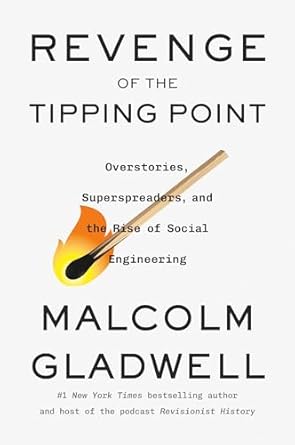
Malcolm Gladwell once described ideas as viruses that leap from person to person until a critical mass is reached—a tipping point where a small cause becomes a social epidemic. When he first wrote about this phenomenon at the turn of the millennium, it felt almost whimsical, a sociology of sneakers and Sesame Street. But in Revenge of the Tipping Point, Gladwell returns with a sobering update: the world he imagined has arrived, and it is far less playful than he hoped.
We now live inside the epidemic itself. Influence, once rare and unpredictable, has become the background radiation of modern life. Algorithms amplify our emotions; outrage travels faster than compassion; misinformation metastasizes before truth can lace its boots. The tipping point is no longer an event—it is a permanent condition.
“The same forces that make ideas spread also make lies contagious.”
In the analog age, communication had natural friction. Ideas had to survive slow transmission: letters, conversation, the editorial gate of print. That friction filtered noise, forcing reflection. Today, we have stripped away the resistance. Every thought, true or false, can spark a wildfire before reason wakes up.
Gladwell’s insight forces a deeper question: If influence has become frictionless, what slows us down? The answer is not more data—it is discipline. A discipline of attention, of pause, of proportion. When we rush to share what provokes us most, we surrender our agency to the very contagion we fear. The solution begins with an ancient virtue largely forgotten in digital life: prudence—the moral intelligence of knowing when not to react.
In a world of viral outrage, slowing down is an act of rebellion. Reflection is resistance. The practice of pause—reading before sharing, breathing before replying—becomes the modern form of discernment. Gladwell’s “revenge” is that the architecture of virality now rewards our worst impulses. But the counter-revolution begins at the individual scale, where consciousness replaces compulsion.
“In an age of acceleration, nothing can be more exhilarating than going slow.” — Pico Iyer
If the first revolution of the tipping point made ideas contagious, the next must make awareness contagious. The only cure for viral thinking is viral reflection.
The Parasitic Mind — When Bad Ideas Hijack Good People

Gad Saad begins The Parasitic Mind with a simple but unsettling analogy: ideas can behave like parasites. They enter the host, rewire its behavior, and compel it to act against its own best interests — all while convincing the host it is choosing freely. In nature, the Toxoplasma gondii parasite causes rats to lose their fear of cats. In culture, ideological parasites cause people to lose their fear of absurdity.
Saad’s argument is evolutionary and psychological, but its implications are moral. He warns that our minds have become vulnerable to what he calls “idea pathogens” — belief systems that exploit our noblest emotions (empathy, fairness, justice) and redirect them away from truth. Like biological viruses, these mental infections spread through contact: classrooms, social feeds, and well-meaning conversations. The symptoms include moral grandstanding, allergic reactions to dissent, and an inability to say the words I might be wrong.
“You can’t reason people out of something they weren’t reasoned into.” — Jonathan Swift
The tragedy, Saad suggests, is not that people believe false things — it’s that they feel those falsehoods are virtuous. Emotional contagion overrides epistemic caution. The ancient harmony between reason and compassion, which once guided moral judgment, fractures into tribal outrage. When feeling becomes the sole arbiter of truth, even the best intentions can become instruments of manipulation.
Saad’s prescription is not cynicism but cognitive hygiene: cultivating habits that strengthen what he calls the “mind’s immune system.” Laughter and logic are his favored antibodies. Humor disarms dogma; evidence disarms ideology. Exposure to opposing views acts like a mental vaccine, triggering the production of intellectual antibodies before fanaticism can take hold.
“Freedom of speech is the immune system of a free society.” — Saad
What makes The Parasitic Mind so provocative is that it refuses to pathologize individuals. The parasite, after all, is not the host’s fault. It thrives where emotional need meets intellectual neglect. In that sense, Saad’s evolutionary metaphor becomes a moral one: if we want to live freely, we must nourish our mental ecology with humility, evidence, and laughter — the nutrients that keep parasites from finding a home.
In the grand architecture of influence, Saad reminds us that ideas are not neutral. Some heal; some harm. The task is not to fear infection but to practice discernment — to love truth enough to resist what flatters our emotions at its expense.
Influence — The Invisible Strings That Pull Us
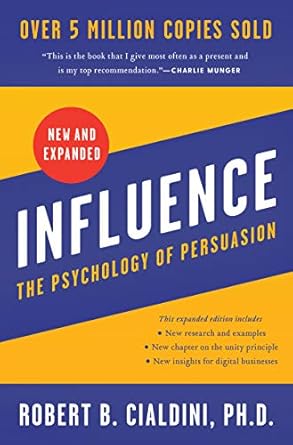
If Gad Saad warns us about what infects the mind, Robert Cialdini shows us how it gets in. His classic, Influence: The Psychology of Persuasion, is less a map of manipulation than an anatomy of being human. We are creatures of pattern and shortcut, built to decide quickly and conserve mental energy. Cialdini’s six principles—reciprocity, commitment, social proof, liking, authority, and scarcity—are the quiet strings that pull us toward compliance before we ever notice the tug.
Each of these triggers has evolutionary roots. Reciprocity builds cooperation; consistency keeps communities stable; social proof helps us survive by imitation. None of these are flaws. They are features of social intelligence. But what was once adaptive in small tribes becomes exploitable in a global marketplace. The same instincts that once kept us safe now make us predictable.
“People don’t always think their way into acting; more often, they act their way into thinking.” — Robert Cialdini
In a world engineered for attention, these psychological levers have become instruments of design. A “limited-time offer” activates scarcity bias. A well-dressed expert invokes authority. The “likes” on a post reinforce social proof. Each cue bypasses deliberation and appeals directly to instinct. The system doesn’t have to know your soul—only your patterns.
Awareness is our first defense. Cialdini’s genius lies not in teaching manipulation but in revealing it. By naming the principle at play, we can re-engage the rational mind before the automatic one decides for us. This is the same insight used in cognitive behavioral therapy: naming the emotion breaks the enchantment. “Ah, that’s scarcity bias.” “That’s an appeal to authority.” Language becomes the firewall of consciousness.
“Once you name the force, it loses its grip.”
The moral dimension of Cialdini’s work is often overlooked. Persuasion, he reminds us, is not evil—it’s inevitable. Every relationship, institution, and conversation involves influence. The question is who uses it, and toward what end. Ethical influence invites consent and transparency; unethical influence hides its hand. The goal is not to escape persuasion, but to practice it with integrity.
“Ethical persuasion is influence with respect intact.” — Paraphrased from Cialdini
To study influence is not to become paranoid—it is to become aware. When you can see the strings, you can choose which ones you wish to dance to.
The Knowledge Illusion — Why None of Us Think Alone

If Cialdini shows us the strings that guide our behavior, Steven Sloman and Philip Fernbach show us why we rarely notice them. In The Knowledge Illusion: Why We Never Think Alone, they dismantle one of our favorite myths—that understanding lives inside individual minds. In truth, it lives in networks. What we call “my knowledge” is often communal intelligence we borrow without realizing it.
Ask someone to explain how a toilet works, or a zipper, or the economy. Confidence will soar—until they try. That moment of blankness is the illusion of explanatory depth. We feel like experts because we live surrounded by expertise. Our certainty rests on the assumption that someone—out there, somewhere—understands what we don’t. It’s an efficient adaptation, but also a dangerous one.
“Human thought is not the product of isolated minds, but of a community of minds working together.” — Sloman & Fernbach
This social nature of thought is both our greatest strength and our Achilles’ heel. It’s what allows civilization to exist: no single person could build a smartphone, navigate a city, or write a constitution alone. But it also explains how misinformation, conspiracy, and polarization spread so easily. We don’t just share facts; we share confidence. And confidence, as it turns out, is more contagious than truth.
“We argue to win, not to discover truth. And we outsource our reasoning to those who argue for our side.” — Sloman & Fernbach
Sloman and Fernbach’s insight reframes the conversation about influence. The problem isn’t that people are irrational—it’s that we’re interdependent. Our reasoning evolved for collaboration, not isolation. We think together, for better or worse. Understanding this makes humility not a weakness, but a form of intellectual realism.
Epistemic humility—the willingness to admit the limits of one’s understanding—is the antidote to the illusion of omniscience. It transforms argument into dialogue and ignorance into curiosity. When we stop pretending to know everything, we rediscover the joy of learning together.
“True wisdom is knowing you know nothing.” — Socrates
In a world saturated with certainty, humility is countercultural. But it may be the only path to clarity. To think well is to think together—responsibly, reflectively, and with reverence for the truth that no one mind can contain.
Clear Thinking in a Messy World — Reviving the Christian Mind
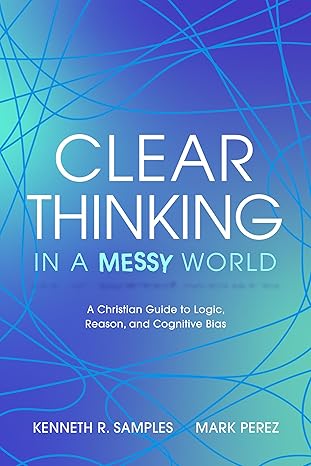
Kenneth Samples and Mark Perez’s Clear Thinking in a Messy World is more than a primer on logic or cognitive bias—it’s a call to arms for the Christian intellect. In an age where emotion often substitutes for conviction and slogans stand in for theology, Samples and Perez remind us that loving God with all your mind is not optional. It is obedience.
Their book feels like the revival of a nearly forgotten tradition: Christian intellectualism. For centuries, thinkers like Augustine, Aquinas, Pascal, and Lewis understood reason as a gift woven into the fabric of faith. Today, that lineage has grown faint beneath the noise of populist spirituality and reactionary politics. Samples and Perez write as physicians of the intellect, diagnosing what they call the anti-intellectual epidemic within the modern church—the quiet assumption that reason is somehow unspiritual, or even suspect.
“The Christian faith is not opposed to reason—it requires it.” — Samples & Perez
Against this drift, they make a bold claim: Christianity is not a refuge from critical thinking; it is the home of it. Faith, rightly understood, seeks understanding (fides quaerens intellectum). Truth is not threatened by inquiry because truth is God’s domain. To think clearly is to worship truthfully.
“All truth is God’s truth.” — Augustine of Hippo
The book’s structure is both practical and pastoral. It walks readers through logical fallacies, the mechanics of argument, and the cognitive biases that distort our discernment. But beneath the surface lies a deeper project: reawakening the moral courage to think. They point out that many Christians fall prey to the same emotional contagions as the secular world—especially the allure of conspiracy theories, which promise secret knowledge and moral superiority while bypassing humility and verification. The result, they warn, is a counterfeit epistemology: a form of “faith” that feeds fear instead of love.
Their remedy is not cynicism but intellectual discipleship: a disciplined pursuit of clarity grounded in Scripture, logic, and evidence. This kind of thinking does not dilute faith—it deepens it. Faith without reason drifts into superstition; reason without faith collapses into arrogance. Together, they form a coherence that neither can achieve alone.
In this sense, Clear Thinking in a Messy World is a bridge—between theology and cognitive science, between faith and philosophy, between heart and mind. Samples and Perez invite believers to rejoin the long conversation of Christian thought, to see critical reasoning as a sacred trust rather than a secular threat.
“Anti-intellectualism is not piety—it is neglect.”
Clear thinking, then, becomes not merely a mental discipline but a spiritual act of stewardship. It is how we tend the garden of the mind so that truth, not fear, may grow.
Toward an Ethic of Mental Self-Defense
Each of these five works illuminates a different facet of influence—how it arises, how it spreads, and how it can either corrupt or cultivate the human spirit. Gladwell shows us the velocity of contagion; Saad warns of its toxicity; Cialdini explains its mechanics; Sloman and Fernbach reveal its interdependence; and Samples and Perez restore the moral framework needed to think clearly in the storm. Together they form what I would call a meta-ecology of influence—a vision of the mind not as a sealed citadel but as living terrain that must be tended, protected, and renewed.
The first step in mental self-defense is recognition. Influence is not the enemy; it is the medium of our existence. Every relationship, every idea, every faith community depends on it. The danger lies not in being influenced but in being unaware of it. Like breathing polluted air, the harm accumulates slowly until discernment weakens and distortion feels like truth.
“To eradicate the parasites of the mind, we must rekindle our commitment to reason, freedom, and the pursuit of truth.” – Gad Saad
The second step is humility. As The Knowledge Illusion reminds us, none of us think alone. Our understanding is communal; our reasoning is relational. When we mistake borrowed certainty for personal insight, arrogance fills the void where awe should be. To practice epistemic humility is to remember that we stand on the shoulders of others—and that we, too, can be wrong.
The third step is courage—the moral courage to question our tribes, our timelines, and even our teachers. Gad Saad’s metaphor of mental parasites makes this clear: infection often masquerades as righteousness. It takes bravery to confront one’s own contagion, to replace the comfort of outrage with the discipline of thought.
Cialdini gives us the practical tools: the levers and triggers that shape persuasion. Naming them is not enough; we must wield them ethically. Influence used well becomes mentorship, diplomacy, even love—the gentle art of helping others see more clearly rather than coercing them to agree.
Finally, Samples and Perez remind us that clear thinking is a form of worship. In their view, reason is not the rival of faith but its ally. To think well is to honor the Creator who gave us minds capable of wonder and truth. The battle against anti-intellectualism, whether in the church or the culture, is not about winning arguments; it is about preserving the integrity of the imago Dei—the divine image that reasons, reflects, and seeks understanding.
“Faith and reason are the two wings on which the human spirit rises to the contemplation of truth.” — John Paul II
If the digital age has turned ideas into contagions, then discernment is our vaccine, humility our filter, and courage our antidote. Influence is inevitable; manipulation is optional. We cannot seal our minds from the world, but we can steward what we allow to take root there.
The future will belong not to the loudest voices or the most viral memes, but to those who cultivate interior clarity—to those who think slowly, question deeply, and love truth more than comfort.
“Be transformed by the renewing of your mind.” — Romans 12:2
That renewal is not an event but a daily practice—an ethic of mental self-defense, a devotion of attention, and perhaps, the highest form of influence we can offer the world.
Reading as Resistance
If this essay has resonated with you, let it serve as both a mirror and a map. Each of these books offers a way to see more clearly, to think more deliberately, and to live more freely in an age of manipulation:
- Malcolm Gladwell, Revenge of the Tipping Point — how virality has turned from a marvel into a menace.
- Gad Saad, The Parasitic Mind — how ideology exploits emotion and how to build mental immunity.
- Robert Cialdini, Influence — the timeless psychology of persuasion and the ethics of using it well.
- Steven Sloman & Philip Fernbach, The Knowledge Illusion — why our confidence exceeds our comprehension and how humility restores clarity.
- Kenneth Samples & Mark Perez, Clear Thinking in a Messy World — a revival of Christian intellectualism and the call to love God with the mind as well as the heart.
Together, they form a curriculum for discernment—an intellectual catechism for the twenty-first century. Read them not as weapons against others but as mirrors for yourself.
So I ask you:
- What ideas have been shaping you lately—perhaps without your noticing?
- Which of them deserve to stay, and which have merely taken up residence rent-free?
If these questions stir something in you, I invite you to follow my continuing series on the Meta-Framework of Influence and Control, where I explore the psychological, philosophical, and spiritual mechanisms that shape how we think, believe, and act.
| Related Posts for Influence & Control Meta-Framework |
| Explore my series exploring the psychological tools, logical distortions, and social mechanisms that shape how influence and undue control operate. |
| Posts | References |
Excerpt
In a world where ideas spread faster than truth, protecting your mind has become an act of stewardship. Drawing from Gladwell, Saad, Cialdini, Sloman & Fernbach, and Samples & Perez, this post explores how influence shapes us—and how discernment, humility, and reason can renew the mind in an age of viral ideas.
References
- Cialdini, R. B. (2021). Influence: The psychology of persuasion (New and expanded ed.). New York, NY: Harper Business.
- Gladwell, M. (2024). Revenge of the tipping point. New York, NY: Little, Brown and Company.
- Saad, G. (2020). The parasitic mind: How infectious ideas are killing common sense. Washington, DC: Regnery Publishing.
- Samples, K. R., & Perez, M. (2023). Clear thinking in a messy world: A Christian guide to logic, reason, and cognitive bias. Downers Grove, IL: InterVarsity Press.
- Sloman, S. A., & Fernbach, P. (2017). The knowledge illusion: Why we never think alone. New York, NY: Riverhead Books.

 Treasures of the Elysian Fields
Leave a comment