
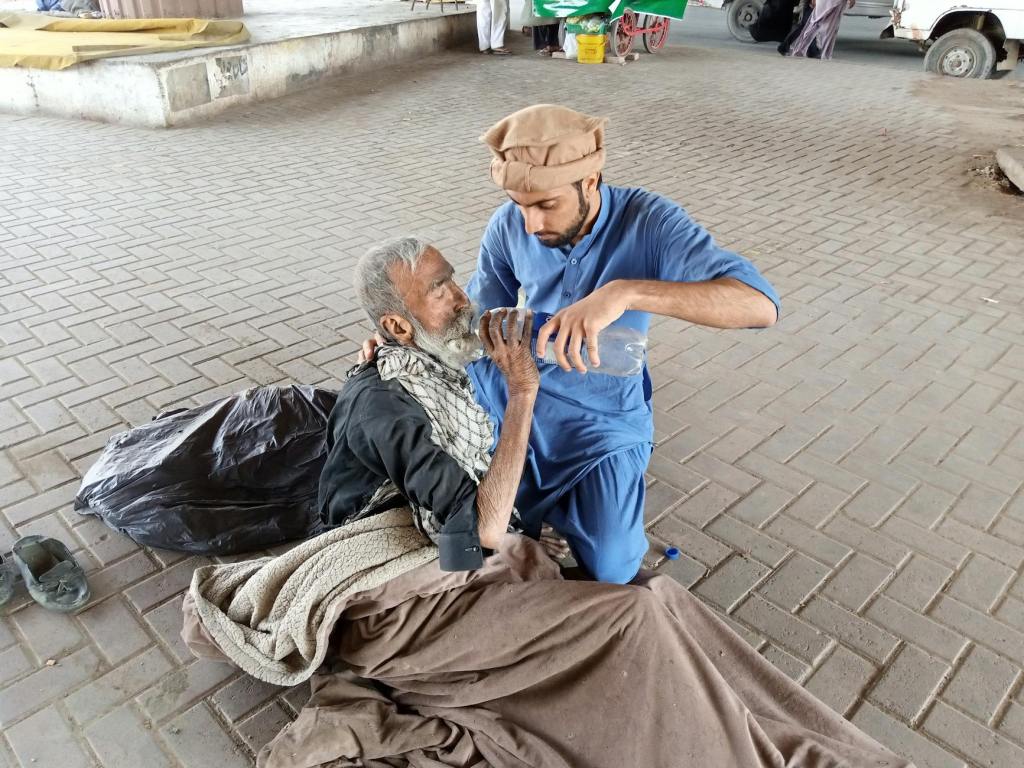
Immigration, Refugees, and the Call to Love the Foreigner
I began reflecting on immigration not only here in America, but across the world. Everywhere, debates about borders, refugees, and undocumented workers stir strong emotions. Some dismiss opposition to immigration as mere xenophobia, while others frame it only as a matter of national security or economics. But I could not help recalling that the Bible speaks extensively about the treatment of foreigners. That realization pushed me to dig deeper. What I found convinced me that Christians in particular should pause and take a hard look at what Scripture actually says before lending their support to certain modern practices and policies toward immigrants.
The Foreigner in Ancient and Modern Context
The treatment of the foreigner—variously translated in English Bibles as sojourner, alien, or stranger—is one of the recurring ethical and theological themes of the Hebrew Bible. It is not a marginal issue, but one deeply bound up with Israel’s own story of slavery and deliverance. Israel’s memory of being oppressed as foreigners in Egypt became the foundation of God’s covenantal expectation: to show justice, mercy, and inclusion toward those who are outsiders.
In Hebrew, two terms carry distinct shades of meaning. The word nokri (נָכְרִי) generally refers to someone not native to the land, often with only temporary contact. Such a person, if friendly, was to be treated with hospitality. By contrast, the ger (גֵּר) was a resident alien—someone who lived among Israel long-term and enjoyed certain social and religious privileges. Unfortunately, these distinctions blur in translation. The King James Version often renders both simply as “stranger,” while other translations oscillate between “foreigner,” “sojourner,” or “alien.” This nuance matters: one term highlights distance, the other integration.
Israel’s laws were not naive about foreigners. Contact with outsiders carried risks of cultural corruption, as seen in prohibitions against foreign marriages (1 Kings 11:1–4; Neh. 13:26–27) or participation in certain religious festivals (Exod. 12:43). Economic regulations, too, sometimes distinguished between insiders and outsiders: interest could be charged to foreigners but not to fellow Israelites (Deut. 23:19–20), and foreign debts were excluded from the remission of the sabbatical year (Deut. 15:2–3). Yet alongside these practical boundaries stands an unmistakable ethical refrain: do not mistreat or oppress the foreigner, for you were foreigners in Egypt (Exod. 22:21).
By the New Testament period, the concept had taken on a theological orientation. Ethnic and national identity no longer determined belonging; instead, Christ broke down dividing walls. The apostle Paul could write that believers in Jesus are “no longer strangers and sojourners, but fellow citizens with the saints” (Eph. 2:19). In other words, the categories of insider and outsider themselves became transformed by God’s grace.
This biblical background places a moral demand on how we think about immigration today. Whether one uses the language of “illegal aliens” or “undocumented workers,” the deeper issue for Christians and Jews is not paperwork but principle. God’s people are called to remember their own history as outsiders and to extend justice and compassion accordingly. And just as Israel’s law demanded fair treatment and due process for the sojourner, so too Christians and Jews today must insist on justice and dignity for foreigners in our midst.
This somewhat reminds me of a sci-fi movie in the 80’s. In the 1985 film Enemy Mine, two bitter enemies—a human and an alien—are stranded together and forced to depend on one another. What begins in fear and hostility becomes a story of shared humanity. That is the heart of the biblical vision: to remember that the “other” is not our enemy but our neighbor, and that in treating them justly we reflect the God who delivered us when we were strangers.
Memory as Moral Imperative
The heartbeat of Israel’s ethic toward the foreigner is memory. Again and again, the Torah grounds its command in the nation’s own story: “You shall not wrong a sojourner or oppress him, for you were sojourners in the land of Egypt” (Exod. 22:21; cf. Lev. 19:34; Deut. 10:19). Israel’s collective memory of slavery and deliverance was not just history—it was a moral compass. To forget Egypt would be to forget what it felt like to be powerless, voiceless, and dependent on the mercy of others.
This moral reasoning is unique. In most ancient cultures, law was grounded in power, privilege, or the authority of kings. Israel’s law, by contrast, grounded justice in empathy: remember what it was like when you were the outsider. That memory was to shape not only personal behavior but also national policy.
For Christians, this principle is amplified. The apostle Paul reminds Gentile believers that they were once “strangers to the covenants of promise” but now are brought nearby Christ (Eph. 2:12–13). In other words, spiritual memory—recalling our own inclusion by grace—becomes the basis for extending welcome to others.
Applied today, this means Christians and Jews cannot approach immigration solely through the lenses of politics or economics. Memory obligates us to empathy. When we see migrants at our borders or refugees seeking shelter, the biblical question is not first “what papers do they have?” but “what would it feel like to be them?” The memory of being the stranger compels us to extend justice and compassion to the stranger. God calls His people to remember their smallness, their vulnerability, and to let that memory guide their treatment of others.
Equal Justice and Legal Parity
One of the most radical aspects of Israel’s law is its insistence that foreigners be treated equally under the law. “One law shall be for the native-born and for the stranger who dwells among you” (Exod. 12:49). Leviticus echoes the same principle: “You shall have the same rule for the sojourner and for the native, for I am the LORD your God” (Lev. 24:22). This was not symbolic—it had real legal implications. Foreigners could participate in festivals (Deut. 16:11, 14), offer sacrifices (Num. 15:14–16), and even find refuge in Israel’s cities of asylum (Num. 35:15). Judges were commanded to rule fairly between Israelites and foreigners alike (Deut. 1:16).
In a world where justice was normally tiered by status, nationality, or class, this was nothing short of revolutionary. Israel’s law insisted that the stranger could not be treated as a second-class human being. The law was not simply for the protection of insiders—it reflected the justice of God, who shows no partiality.
This ethic set Israel apart from other great civilizations. In Rome, only a full citizen enjoyed the rights of trial and protection from abuse; foreigners had few or no legal safeguards. In India’s caste system, birth determined dignity and access to justice, leaving entire groups like the Dalits outside the boundaries of human worth. Against such systems, the Torah thundered: one law for all.
For Christians, this principle flows into the New Testament vision. Paul insists that in Christ there is “neither Jew nor Greek” (Gal. 3:28). Citizenship in God’s kingdom erases the status distinctions that human law so often codifies.
This matters immensely today. Modern immigration law often creates a two-tiered system: citizens enjoy full rights, while undocumented workers live in constant fear of exploitation, deportation, or summary judgment without due process. But the biblical mandate insists that justice must not depend on paperwork or passport. True justice applies equally to all. For Christians and Jews, this means advocating for due process in immigration courts and resisting any system that treats some people as less worthy of legal protection than others.
Israel’s Torah offers a vision where even the stranger, the outsider, stands equal under the law because God Himself is just.
Historical Contrasts: Ancient Systems of Inequality
Rome’s Hierarchy
The Roman Empire prided itself on law (lex Romana), but that law was never applied equally. Rights were distributed according to a rigid hierarchy of status:
- Roman Citizens (cives Romani) enjoyed the full protection of law. They had the right to a trial, the right to appeal to Caesar, protection from torture, and in many cases immunity from certain punishments such as crucifixion. The phrase civis Romanus sum (“I am a Roman citizen”) could stop a soldier or magistrate in his tracks.
- Latin allies (Latini) held an intermediate status. They could own property and conduct business but did not enjoy the full protections of citizens.
- Foreigners (peregrini)—which included conquered peoples and immigrants—had virtually no rights under Roman law. They were at the mercy of local governors or magistrates, who often exercised brutal discretion. Justice was not a matter of universal principle but of privilege.
- Slaves were considered property, not persons. They could be tortured, branded, or executed at their master’s will.
This system created a legal pyramid where the worth of a person was measured not by their humanity but by their passport. Even the apostle Paul had to invoke his Roman citizenship to avoid a flogging (Acts 22:25–29). The fact that his claim shocked the centurion shows how unthinkable it was that a foreigner might actually have legal protection.
Against this backdrop, the Torah’s command stands as a prophetic thunderclap: “You shall have the same rule for the sojourner and for the native, for I am the LORD your God” (Lev. 24:22). No Roman jurist would have recognized such a principle. In Rome, law reinforced hierarchy; in Israel’s covenant, law was to reflect God’s impartial justice. The foreigner, often powerless and voiceless, was not to be excluded from protection but explicitly included.
This contrast is not merely historical trivia—it is moral revelation. Rome’s system of inequality is far closer to how the world naturally organizes itself: insiders with rights, outsiders with none. Israel’s law was countercultural, establishing a divine ethic that true justice cannot be tiered by status.
Modern parallels are not hard to find. Immigration systems today often resemble Rome’s pyramid. Citizens enjoy full rights, permanent residents enjoy many but not all, while undocumented workers—like the peregrini of old—live outside the full protections of law. They may work, pay taxes, and contribute, but they remain perpetually vulnerable. If they protest unfair wages or unsafe conditions, they risk being “flogged” in the modern sense—deportation.
The biblical vision calls this out for what it is: injustice. God’s law demands equal protection, not a hierarchy of worth.
The Indian Caste System
If Rome’s hierarchy of citizenship created a legal pyramid, the Indian caste system produced a social and religious one. For centuries, Hindu society has been ordered by the varna system—a framework that assigns status, duty, and even spiritual worth at birth.
- Brahmins (priests and scholars): At the top, guardians of ritual purity, learning, and religious authority.
- Kshatriyas (warriors and rulers): The class of power, governance, and defense.
- Vaishyas (merchants and landowners): The economic class, responsible for trade and agriculture.
- Shudras (servants and laborers): The working class, meant to serve the other three.
Outside of this system entirely were the Dalits, historically called “untouchables.” They were relegated to the most demeaning and dangerous tasks: handling corpses, cleaning latrines, disposing of waste. Contact with them was considered polluting, which justified their exclusion from temples, schools, and even basic community life. For Dalits, injustice was not just an accident of society—it was codified into the very fabric of culture and religion.
Like Rome’s pyramid, this system created tiered humanity. Birth determined dignity. Status dictated access to justice. A Dalit could be abused, assaulted, or dispossessed with little recourse. Even in modern India, despite legal reforms, caste discrimination remains a deep wound, and Dalits still face widespread prejudice and exploitation.
Here again, the biblical vision speaks as a radical contrast. Israel’s law did not permit entire groups of people to be written off as “untouchable.” Instead, it commanded: “You shall not pervert justice due to the sojourner or the fatherless” (Deut. 24:17). Leviticus goes even further: “You shall love the stranger as yourself” (Lev. 19:34). Where caste denies equality and excludes entire classes from human dignity, the Torah enshrines inclusion and insists that foreigners share in Sabbath rest (Exod. 20:10), in festivals (Deut. 16:14), and in legal protection (Lev. 24:22).
The New Testament intensifies this ethic. Paul declares in Galatians 3:28: “There is neither Jew nor Greek, slave nor free, male nor female, for you are all one in Christ Jesus.” This was a direct theological assault on caste-like thinking. Identity in Christ is not stratified but equalized; birth no longer determines worth.
The modern application is clear. When immigrant workers today are locked into cycles of exploitation—sometimes even forced into conditions that resemble slavery—they become the “Dalits” of our globalized economy. Their status as outsiders leaves them vulnerable to wage theft, unsafe labor, and even human trafficking. Just as Israel was called to resist Egypt’s oppression, so Christians and Jews today must resist any system that codifies inequality and denies justice to the foreigner.
note
It is worth noting that not all Indian religious traditions reinforce caste divisions. Sikhism, for example, founded in the 15th century by Guru Nanak, emphasizes the spiritual and social equality of all people regardless of birth. Sikh teaching rejects caste and insists that all stand equally before God, with the community meal (langar) symbolizing shared dignity across status lines. In this sense, Sikhism represents an indigenous egalitarian voice in contrast to the rigid hierarchies of the caste system.
Exploitation and Modern Parallels
These ancient systems of inequality find echoes in our world today. Undocumented immigrants often live in fear of deportation, which makes them vulnerable to exploitation. Employers can pay below minimum wage, deny safe working conditions, or threaten to “call immigration” if workers speak up. Human traffickers prey on the same fear, trapping men, women, and children in cycles of abuse because they know victims are too afraid to seek help from authorities.
This is exactly the kind of oppression Scripture condemns. “Do not pervert justice or show partiality… Do not deprive the foreigner or the fatherless of justice” (Deut. 24:17). “Woe to those who oppress the foreigner, the widow, and the fatherless” (Jer. 7:6). God’s law was not only about fairness in court but also about protecting the vulnerable from systemic abuse.
If Christians and Jews turn a blind eye to such exploitation today, we align ourselves not with the covenant ethic of justice but with Rome and caste systems that stratify humanity. To remain faithful to the God of the Bible is to insist that due process, fair treatment, and protection from abuse apply to all—citizen and foreigner alike.
Justice that excludes the outsider is not justice at all.
Provision and Protection
The God of Israel is portrayed throughout Scripture as the protector of the vulnerable. Again and again, the Torah insists that this includes the foreigner. “He defends the cause of the fatherless and the widow, and loves the foreigner residing among you, giving them food and clothing. And you are to love those who are foreigners, for you yourselves were foreigners in Egypt” (Deut. 10:18–19). God’s care is not abstract; it takes tangible form in the provision of daily necessities.
Israel was commanded to mirror this divine generosity. Farmers were instructed not to reap to the very edges of their fields or strip their vineyards bare, but to leave a portion “for the alien, the fatherless, and the widow” (Deut. 24:19–21). The poor and the foreigner were to find sustenance in the land’s abundance, not exclusion from it. Even the Sabbath commandment extended rest to the sojourner within Israel’s gates (Exod. 20:10), reminding the people that foreigners were not merely laborers but fellow bearers of God’s image, equally deserving of dignity and renewal.
The Psalms reinforce this vision: “The LORD watches over the foreigner and sustains the fatherless and the widow” (Ps. 146:9). God is not a tribal deity who cares only for Israel; His justice extends to all who are vulnerable, including the outsider. The prophets echo the same theme, repeatedly condemning Israel for neglecting or exploiting the foreigner (Jer. 7:6; Mal. 3:5). Injustice toward the stranger was not a minor failing but a covenantal breach, provoking divine judgment.
For Christians, this ethic is brought to its fullest expression in Jesus’ words: “I was hungry and you gave me food, I was thirsty and you gave me drink, I was a stranger and you welcomed me” (Matt. 25:35). In identifying Himself with the hungry, the thirsty, and the stranger, Christ reveals that to provide for the foreigner is not simply an act of mercy but a direct service to Him. The writer of Hebrews adds an even more striking reflection: “Do not neglect to show hospitality to strangers, for thereby some have entertained angels unawares” (Heb. 13:2). Caring for the stranger may not only be a test of faithfulness—it may be an encounter with the presence of God Himself in disguise.
This vision calls God’s people to a posture of radical empathy and generosity. The foreigner is not a burden to be managed but a neighbor to be loved, a person under the special care of the Lord Himself. To protect and provide for them is to participate in the character of God, who has always been the defender of the outsider.
In Victor Hugo’s Les Misérables, Jean Valjean’s life is redeemed when the Bishop of Digne provides him food and shelter instead of treating him as a criminal. That simple act of provision becomes the turning point of the story. In much the same way, the biblical vision suggests that caring for the foreigner can be a moment of redemption—not only for the stranger but for the society that dares to embody God’s justice and mercy.
Warnings Against Oppression
The Bible does not leave the treatment of foreigners in the realm of suggestion; it attaches severe warnings and consequences for injustice. “Do not oppress the foreigner, the fatherless or the widow and do not shed innocent blood in this place… if you do not follow these commands, then I will make this house like Shiloh and this city a curse among all the nations of the earth” (Jer. 7:6, 14). The message is stark: mistreating the vulnerable places an entire nation under judgment.
Deuteronomy 27:19 pronounces a curse: “Cursed is anyone who withholds justice from the foreigner, the fatherless or the widow.” This curse was not symbolic—it was covenantal. Israel’s national well-being was directly tied to its treatment of outsiders and the powerless.
The prophets return to this theme with sobering force:
- Jeremiah 22:3 – “Do no wrong or violence to the foreigner, the fatherless, or the widow.”
- Ezekiel 22:7, 29 – God condemns Jerusalem: “They oppress the foreigner among you and deny them justice.”
- Zechariah 7:10 – “Do not oppress the widow or the fatherless, the foreigner or the poor. Do not plot evil against each other.”
- Malachi 3:5 – God declares judgment against those “who deprive the foreigners among you of justice.”
Together these texts show that God takes oppression personally. To deny justice to the foreigner is not merely an ethical failing; it is covenant-breaking rebellion against the God who defends them.
The story of Ruth gives this teaching flesh and blood. As a Moabite woman living in Israel, Ruth had every reason to be vulnerable. But Boaz obeyed the law’s commands—he let her glean in his fields, ensured her safety, and treated her with dignity. His kindness not only preserved her life but also wove her into Israel’s story of redemption. Through Ruth came King David, and ultimately the Messiah. Had she been oppressed or excluded, Israel’s history itself would have been diminished.
By contrast, when Israel neglected or exploited the foreigner, the prophets consistently announced judgment: cities destroyed, people exiled, blessings withdrawn. Mistreatment of outsiders was not an incidental sin but one of the reasons for national collapse.
This has profound implications today. When immigrants and refugees are exploited—when wages are withheld, when fear of deportation is used as a tool of silence, when foreigners are treated as disposable—modern societies replay the very sins Scripture condemns. And just as in ancient Israel, such oppression does not go unnoticed by God.
Scripture presents with greater force: oppression of the foreigner invites not only social instability but divine judgment.
Blessing Through Inclusion
The story of the Bible does not end with warnings against oppression. It also casts a vision of blessing that flows through the inclusion of foreigners. From the very beginning, God’s promise to Abraham carried this expansive hope: “All peoples on earth will be blessed through you” (Gen. 12:3). Israel’s identity was never meant to be closed in on itself; it was always designed to be a channel of blessing to the nations.
This vision comes into focus in the story of Ruth. A Moabite widow, Ruth was by every cultural measure an outsider. Yet through her loyalty to Naomi and her faith in the God of Israel, she became part of Israel’s covenant story. Her inclusion was not incidental—it was essential. Ruth became the great-grandmother of King David, placing her squarely in the genealogy of Jesus (Matt. 1:5). In Ruth we see that God not only allows foreigners into His people; He weaves them into the very center of His redemptive plan.
The prophets echo this hope. Isaiah 56 offers a breathtaking vision: “Let no foreigner who is bound to the Lord say, ‘The Lord will surely exclude me from his people.’… these I will bring to my holy mountain and give them joy in my house of prayer… for my house will be called a house of prayer for all nations” (Isa. 56:3–7). Here, foreigners are not merely tolerated—they are welcomed, celebrated, and given a place at God’s altar.
For Christians, this vision reaches its fulfillment in Christ. Paul declares that those once “strangers and aliens” are now “fellow citizens with the saints and members of God’s household” (Eph. 2:19). The walls that divide Jew from Gentile, insider from outsider, have been broken down in Jesus (Eph. 2:14). The gospel is not a story of exclusion but of radical welcome.
The Bible also points us forward to the ultimate horizon of hope. In the book of Revelation, John sees a multitude “from every nation, tribe, people and language, standing before the throne and before the Lamb” (Rev. 7:9). In this final vision of God’s kingdom, no foreigner is excluded; the redeemed of every people stand together as one family. The eschatological hope is not uniformity but unity—diverse nations brought into harmony by the love of God.
This has profound ethical implications. Foreigners are not only people to be protected from oppression; they are often vessels of God’s blessing. Excluding them may mean shutting ourselves off from the very gifts God intends for us. By contrast, inclusion brings vitality, renewal, and even salvation.
The final picture in Revelation is even greater than the Avengers assembled—it is humanity itself, gathered across every boundary, united at last in worship and blessing.
The inclusion of foreigners in Israel’s story and the prophetic hope of all nations gathering to God’s house naturally leads to the climactic question: how is this vision fulfilled? For Christians, the answer is found in Christ Himself. Jesus not only reaffirms the ancient commands to love the stranger, but He radicalizes them—collapsing the boundaries of “neighbor” and “outsider” entirely. The Torah laid the groundwork, the prophets cast the vision, but in Jesus the ethic of inclusion becomes the very heart of discipleship.
The Christian Fulfillment
The ethic of welcoming and protecting the foreigner finds its fullest expression in Christ. When asked what is the greatest commandment, Jesus replied: “Love the Lord your God with all your heart, soul, and mind… and love your neighbor as yourself” (Matt. 22:37–39). The command to love one’s neighbor collapses the old boundaries between insider and outsider. In the parable of the Good Samaritan (Luke 10:25–37), Jesus makes the radical claim that the true neighbor is not the fellow countryman or religious insider but the despised foreigner who shows mercy. For Christians, discipleship cannot be separated from this radical ethic of love and welcome.
Yet here we face a troubling contradiction in the modern church. Many fundamentalists and evangelicals insist that the Bible is the sole authority for faith and practice, often appealing to its commands to legislate morality on issues like sexuality, abortion, or Sabbath observance. And yet, when it comes to immigration, refugees, and the treatment of foreigners, biblical clarity is often set aside. In many cases, evangelicals—and especially those aligned with Christian nationalism—support policies that directly contradict the Bible’s repeated commands to love, protect, and include the stranger.
The United States provides concrete examples. Family separation policies at the southern border tore children from their parents—an act difficult to square with the God who “sets the lonely in families” (Ps. 68:6). Asylum seekers fleeing violence have been placed in indefinite detention, often in dehumanizing conditions, despite Scripture’s call to “welcome the stranger” (Matt. 25:35). Undocumented workers are frequently exploited, denied fair wages, or threatened with deportation if they speak out—echoing the very injustices the prophets condemned: “Do not oppress the foreigner… or deprive them of justice” (Jer. 22:3; Mal. 3:5). Christian nationalism, in its eagerness to protect borders, often ends up sanctifying policies that violate God’s explicit concern for the vulnerable.
This selectivity raises an uncomfortable question: if the Bible is truly our authority, why are its clearest ethical imperatives toward the foreigner so often ignored? The Torah, the prophets, the teachings of Jesus, and the witness of the early church are unanimous in their demand for justice and compassion toward outsiders. To disregard this while zealously enforcing other commands is not fidelity to Scripture but a distortion of it. As James warns, “If you show favoritism, you sin and are convicted by the law as lawbreakers” (Jas. 2:9).
For Christians, the call is clear. We cannot claim Christ as Lord while denying the dignity of the foreigner, the refugee, the undocumented worker. To do so is to betray not only the law of Moses but the very heart of the gospel.
Christ calls us to break free from such selective obedience and embrace the fullness of His radical love—even, and especially, for the foreigner.
Toward a Just and Compassionate Society
From Genesis to Revelation, the Bible speaks with a remarkably consistent voice about the treatment of the foreigner. Israel was commanded to remember its own story in Egypt, to extend equal justice to the sojourner, to provide for the outsider’s needs, to avoid oppression, and to recognize the blessing that comes through inclusion. The prophets warned of judgment when these commands were ignored, and the New Testament declared that in Christ the dividing walls are torn down. The foreigner is not a threat to God’s people but part of God’s plan for redemption.
To love the foreigner is not optional—it is at the heart of covenant faithfulness and Christian discipleship.
In contrast, the great empires of history—Rome with its tiered citizenship, India with its caste system, even modern nation-states with their exclusionary immigration practices—have stratified humanity into insiders and outsiders, those with rights and those without. The Bible stands as a prophetic challenge to all such systems: true justice is not selective, but equal; not exploitative, but protective; not exclusionary, but radically inclusive.
This leaves Christians and Jews today with an urgent question: will we align ourselves with Rome and caste systems that stratify and exploit, or will we embrace the covenantal ethic of God’s justice and compassion? Immigration debates are not merely political or economic. For people of faith, they are profoundly theological. They ask us whether we will remember that we too were strangers, that we too were redeemed, and that we too are called to love the foreigner as ourselves.
To apply the Bible selectively—invoking it loudly on some issues while ignoring its clear commands on immigration and justice—is to fall into hypocrisy. But to embrace its whole counsel is to bear witness to the God who loves the stranger and who gathers people from every tribe, tongue, and nation into His kingdom.
In The Lord of the Rings, the fate of Middle-earth does not rest on kings or warriors but on small hobbits—the outsiders whom no one expected. The biblical story offers a similar hope: blessing comes through those we might be tempted to dismiss as insignificant or foreign. If we exclude them, we may be shutting ourselves off from the very instruments of God’s redemption.
The call is clear. To be faithful to God’s Word is to advocate for justice, dignity, and due process for all foreigners, whether refugees, migrants, or undocumented workers. To love the foreigner is not optional—it is at the heart of covenant faithfulness and Christian discipleship.
Questions for Reflection
- When I think of immigrants, refugees, or undocumented workers, do I view them primarily through the lens of politics—or through the lens of Scripture?
- How does remembering my own family’s history of migration, displacement, or struggle deepen my empathy for today’s foreigners?
- In what ways might I, my community, or my church be guilty of “selective obedience”—championing biblical authority in some areas while ignoring clear commands about the treatment of strangers?
- What practical steps could I take to extend provision, protection, and welcome to the foreigners in my midst?
Related Posts in This Series
This post is part of the series Justice for the Stranger: What the Bible Says About Refugees, Immigrants, and Foreigners.
- Post 1 What Scripture Says About Immigrants
- Post 2 Justice for the Stranger (this post)
- Post 3 Israel and Palestine, An Abrahamic View
Resources
- Achtemeier, P. J., Harper & Row and Society of Biblical Literature. (1985). In Harper’s Bible dictionary (1st ed., p. 318). Harper & Row.
- Carpenter, E. E., & Comfort, P. W. (2000). In Holman treasury of key Bible words: 200 Greek and 200 Hebrew words defined and explained (p. 63). Broadman & Holman Publishers.
- Manser, M. H. (2009). Dictionary of Bible Themes: The Accessible and Comprehensive Tool for Topical Studies. Martin Manser.
- Barry, J. D., Mangum, D., Brown, D. R., Heiser, M. S., Custis, M., Ritzema, E., Whitehead, M. M., Grigoni, M. R., & Bomar, D. (2012, 2016). Faithlife Study Bible. Lexham Press.
Excerpt
Immigration and refugees spark heated debates, but Scripture speaks with clarity: justice and compassion for the stranger. From the Torah to Jesus’ teaching, the Bible commands equal treatment, provision, and love for foreigners. This post explores how faith challenges selective politics and calls for dignity in immigration and refugee care.
Crew Temporarily Unavailable

 Treasures of the Elysian Fields
Leave a reply to What Scripture Says About Immigrants – Treasures of the Elysian Fields Cancel reply