

The Invisible Middle
Politics today feels like a tug-of-war where the rope is fraying—and the loudest voices are pulling hardest from the extremes. The far right and far left dominate the conversation, drowning out those who want reason, moderation, and common good. Somewhere in the noise, the middle has been pushed aside, dismissed, or bullied into silence.
As John F. Kennedy once warned: “Let us not seek the Republican answer or the Democratic answer, but the right answer. Let us not seek to fix the blame for the past. Let us accept our own responsibility for the future.”
The middle, it seems, has become invisible. But many of us still live here, trying to navigate the shouting match on either side.
The Politics of Division and Manipulation
Politics today has become less about the common good and more about the art of division. Far-left and far-right voices dominate the airwaves, drowning out moderates who seek practical solutions. What we’re left with is a shouting match in which ideology takes precedence over reality.
But in a democracy, dissenting voices are not a threat—they are essential. We cannot afford to silence them. No one has a monopoly on the truth, and genuine humility requires admitting that none of us has all the answers. Anyone who claims otherwise is either delusional or deliberately deceptive.
Leaders like Donald Trump have become masters at exploiting this environment. He excels at misdirection—shifting the subject, dismissing questions with “That’s stupid,” or simply refusing to engage. Such tactics may avoid accountability in the moment, but they deepen the distrust that already divides us.
What this country needs is not another ideological warrior, but a leader who can listen, integrate dissent, and unite rather than fracture. We should not have to wait for another national tragedy, like 9/11, to remind us that we are one people.
Waiting for Crisis to Unite
The tragedy is that unity often comes only after disaster. After 9/11, the nation pulled together—but do we really want to wait for another calamity before we find common cause again?
Instead of treating immigrants, academics, or political opponents as “the enemy,” we need leaders who elevate the common good above ideology. Whoever runs for president next should champion bringing the country back together, not tearing it further apart.
Because if leadership only wins by division, then we all lose. A democracy without trust becomes fertile soil for manipulation and authoritarianism. And when citizens stop listening to one another, outside actors—from foreign powers to propaganda machines—step in to fill the vacuum.
Influence vs. Manipulation
There’s an important difference between awareness and manipulation. Raising awareness informs; manipulation coerces.
Public health campaigns like “Drugs are bad” or anti-smoking ads aim to raise awareness. Sometimes they use dramatic imagery—people with holes in their throats—to jolt viewers into facing reality. That kind of emotional nudge can be ethical if it’s rooted in truth and intended to save lives.
But there’s a line. Cross it, and awareness becomes exploitation. Think of the ASPCA commercials with sad puppy eyes and Sarah McLachlan’s haunting soundtrack. Yes, they inspire donations, but they do so by tugging at guilt, not reason.
This is the spectrum of influence we’ve been mapping in this series: from benign awareness to coercive manipulation. From Super Bowl ads designed to make you smile and buy chips, to cult leaders demanding absolute loyalty, to political movements demanding unquestioned obedience. Influence itself isn’t inherently evil—it’s how it’s used that matters.
Seeing Through Bias
One advantage of standing in the middle is perspective. You can see the spin on both sides. Each camp points out manipulation in the other but is blind to its own. That’s the trap of confirmation bias: we question what we disagree with but swallow whole what affirms us.
Take video testimony as an example. A clip may claim to show violence or injustice, but the camera angle might obscure key details. What’s left unsaid can be as misleading as what’s shown. Courts are cautious about video testimony for this reason—perception isn’t always reality.
In one recent case, a video circulated online claiming to show a violent act. But on closer inspection, the video itself lacked evidence for the claims the narrator made. You couldn’t see what he said he saw. His credibility collapsed under scrutiny. Yet for those who already wanted to believe the worst, the video was enough.
This illustrates a key point from our influence framework: omission, framing, and bias are not just tactics of politicians and media—they are baked into human psychology. We see what we want to see, and we miss what doesn’t fit.
Reclaiming the Middle Voice
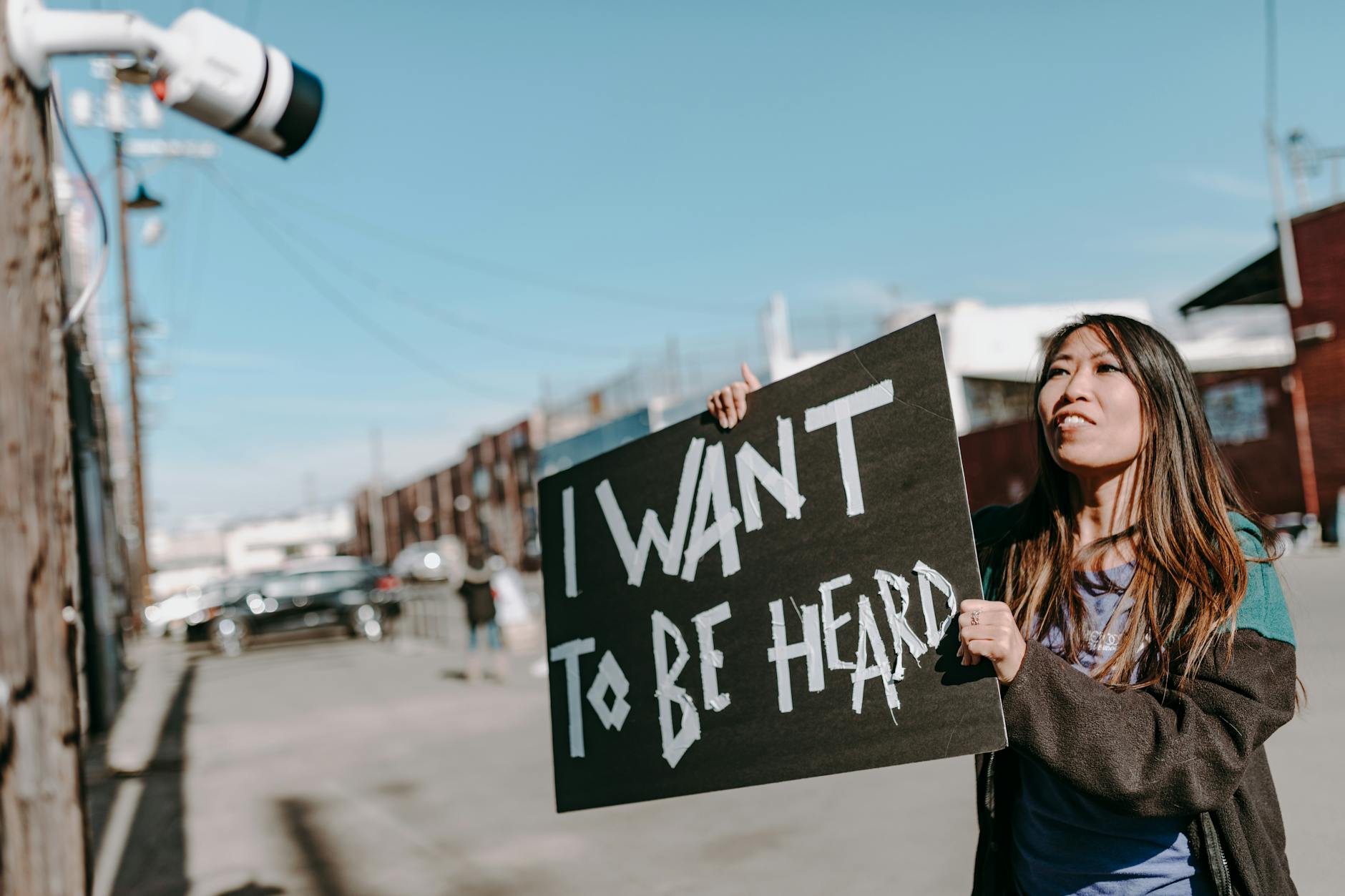
The middle is not gone—but it has been silenced. Too often, moderates are told, “If you’re not for us, you’re against us.” Refusing to pick a side gets you painted as the enemy of both.
Another common manipulation is the claim that voting for a third party is “throwing your vote away.” In reality, believing that narrative is what throws the vote away. It keeps people locked into a binary system, reinforcing the very polarization they dislike. If enough people resisted that pressure and voted their conscience, those so-called “wasted” votes could shift the political landscape in meaningful ways. The lie is not that your vote doesn’t matter—the lie is that it only matters if you give it to one of two camps.
But in reality, the middle may be our last hope of bridging the divide. Moderates can question narratives from both sides, evaluate evidence critically, and resist the temptation to live inside an echo chamber. As Star Wars’ Obi-Wan Kenobi put it: “Only Sith deal in absolutes.” Absolutism is the enemy of truth.
The middle does not mean lukewarm or indifferent. It means committed to truth even when it’s inconvenient, open to dialogue even when it’s unpopular, and willing to hold leaders accountable no matter their party.
What Happened to the Middle Class?
This post is about the “middle” on the political spectrum, but another thing often comes to mind when we ask, Where did the middle go?—the American middle class. For decades, it was the stabilizing force in our democracy. Today, however, it feels more like the missing piece, squeezed between the wealthiest few and a struggling lower class.
According to the Pew Research Center, the share of U.S. household income held by the middle class has dropped from 62% in 1970 to just 43% in 2022—while the upper-income share rose from 29% to 48%. In the same period, as middle-wage growth stagnated, housing costs surged. By 2024, the income needed to afford a median-priced home was $126,670, while the median household income was just $80,610.
Meanwhile, the wealthiest Americans continue to fuel consumer spending in ways that widen the divide. The richest 10% now account for 50% of all U.S. consumer spending—up from 36% three decades ago. As inflation and interest rates climb, the middle class faces stagnating wages, rising debt, and shrinking savings, creating what analysts call a “selective recession” for this group.
The middle class, much like the political middle, is being hollowed out. Once a source of stability and incremental progress, it now carries a disproportionate tax burden, reduced financial security, and diminishing influence. Both politically and economically, the erosion of the middle is a warning sign we can’t afford to ignore.
Reflection and Invitation
Maps don’t prevent deception, but they help reveal the traps. That’s what this series on influence is about: giving us tools to see where persuasion turns into manipulation, where ideology trumps truth, and where omission distorts reality.
But here’s the deeper question I want to leave you with:
If you’re not careful, who is actually deciding what you believe—your own reasoned judgment, or the manipulator who frames the story first?
And here’s a harder question: Who truly benefits from silencing the middle and keeping us divided? Is this just partisan warfare—left versus right—or is there something more sinister, with puppet masters orchestrating division for their own gain? Or perhaps it’s both. Are we being played?
Colophon
I want to thank my lovely wife for contributing to this post. The ideas here grew out of a conversation we had together, and her insights helped shape the way I approached this topic.
| Related Posts for Influence & Control Meta-Framework |
| Explore my series exploring the psychological tools, logical distortions, and social mechanisms that shape how influence and undue control operate. |
| Posts | References |
Excerpt
In today’s divisive politics, the middle voice is disappearing. Extremes dominate, moderates are silenced, and manipulation fuels distrust. What happened to the middle—both politically and economically? From lies of omission to the shrinking middle class, this post explores influence, division, and the urgent need for unity.
Reference
Trends in income and wealth inequality https://www.pewresearch.org/social-trends/2020/01/09/trends-in-income-and-wealth-inequality/
Dream of US home ownership slips further from view — as average mortgage costs leap far past median incomes, By Mary K. Jacob, New York Times, Aug. 15, 202 https://nypost.com/2025/08/15/real-estate/dream-of-us-home-ownership-slips-further-from-view-as-average-mortgage-costs-leap-far-past-median-incomes/
Can the rich continue to prop up US consumer spending? By Jamie McGeever, Reuters, August 18, 2025 https://www.reuters.com/markets/us/can-rich-continue-prop-up-us-consumer-spending-2025-08-18/
As the wealthy keep spending, here’s why the middle class is in for a tough 2025, By Venessa Wong, MarketWatch, Dec. 24, 2024 https://www.marketwatch.com/story/as-the-wealthy-keep-spending-heres-why-the-middle-class-is-in-for-a-tough-2025-5e5b3a0b

 Treasures of the Elysian Fields
Leave a comment