
Introduction: The Thanksgiving of 1777 – A Nation’s First Gratitude
The journey to uncover the milestones in the evolution of Thanksgiving as a national tradition brings us to 1777, a pivotal year in American history. As the colonies took their bold step toward independence, this marked one of the first instances of a thanksgiving celebration in the United States of America, distinct from earlier colonial practices.
What makes the 1777 Thanksgiving remarkable is its timing—occurring shortly after the colonies declared their independence. Unlike modern celebrations, there’s no indication it drew inspiration from the Pilgrims’ 1621 feast, which would become a later cornerstone of Thanksgiving lore. Instead, this was a uniquely American act of gratitude, born in the crucible of revolution and resilience.
As Thanksgiving has evolved alongside the nation, this 1777 celebration stands out as a defining moment—a proclamation of gratitude for survival, unity, and hope in the midst of struggle. Let’s delve deeper into this milestone and explore its significance in shaping the tradition we celebrate today.
Context of the 1777 Thanksgiving, A Nation at War
By the fall of 1777, the American Revolution was in full swing, and the fledgling United States faced a daunting struggle for independence. Although the Declaration of Independence had been signed the year before, securing freedom from British rule was far from certain. The colonies were locked in a grueling war against the might of the British Empire, with battles taking a heavy toll on resources, morale, and lives.
Defeats on the battlefield, shortages of supplies, and the sheer enormity of opposing one of the world’s most powerful nations left many colonists weary and uncertain about the future. Amid this adversity, however, moments of triumph and resilience brought hope and renewed determination.
One such moment of triumph came in October 1777, with the pivotal Battle of Saratoga. This hard-fought victory by the Continental Army, under the leadership of General Horatio Gates, marked a significant turning point in the war. The success at Saratoga not only boosted the morale of the American forces but also convinced France to formally ally with the colonies—a critical development that significantly strengthened the American cause.
The victory at Saratoga provided more than just a military advantage; it represented a glimmer of hope and the possibility of ultimate success in the quest for independence. It was in this spirit of gratitude and renewed faith in their struggle that the Continental Congress called for a day of thanksgiving, making the 1777 observance the first official Thanksgiving of the United States as a new nation.
The Role of the Continental Congress
Recognizing the significance of this victory, the Continental Congress took a bold step to unite the colonies in collective gratitude. On November 1, 1777, the Congress issued a proclamation calling for December 18, 1777, to be observed as a day of thanksgiving and praise throughout the newly declared United States.
The proclamation aimed to bring the colonists together, both in spirit and purpose, by focusing on two key themes:
- Gratitude for Victory: Acknowledging the divine favor that had granted the Continental Army success at Saratoga.
- Blessings of Liberty: Celebrating the “blessings of civil and religious liberty,” which the colonies sought to preserve through their struggle for independence.
The language of the proclamation reflected the deep spiritual and providential dimensions of the colonists’ efforts:
- Gratitude to God: It expressed thanks to the “Almighty God” for granting them victory and sustaining their cause.
- Call for Unity: The proclamation emphasized the importance of “union and harmony” among the colonies, recognizing that unity was essential for the survival of their nascent nation.
- Humility and Dependence: Citizens were urged to humbly seek “a continuance of His favor and protection” in their ongoing struggle.
This first nationally recognized Thanksgiving was more than a celebration of military success—it was a deliberate act of nation-building, designed to foster a sense of collective identity and purpose among the thirteen colonies. It underscored the belief that their struggle for independence was not just a political endeavor but a cause aligned with divine providence.
The proclamation emphasized gratitude to God for His “divine favor,” acknowledging the spiritual and providential dimension of the colonists’ struggle for independence. It also called for unity and humility, urging citizens to “cultivate the spirit of union and harmony” and to seek “a continuance of His favor and protection.”
Text of the Proclamation:
Continental Congress 1777 Thanksgiving Proclamation
This is the text of the Continental Congress November 1, 1777 national Thanksgiving Day Proclamation; as printed in the Journals of Congress.
IN CONGRESS – November 1, 1777
Forasmuch as it is the indispensable duty of all men to adore the superintending providence of Almighty God; to acknowledge with gratitude their obligation to him for benefits received, and to implore such farther blessings as they stand in need of; and it having pleased him in his abundant mercy not only to continue to us the innumerable bounties of his common providence, but also smile upon us in the prosecution of a just and necessary war, for the defense and establishment of our unalienable rights and liberties; particularly in that he hath been pleased in so great a measure to prosper the means used for the support of our troops and to crown our arms with most signal success:
It is therefore recommended to the legislative or executive powers of these United States, to set apart Thursday, the 18th day of December next, for solemn thanksgiving and praise; that with one heart and one voice the good people may express the grateful feelings of their hearts, and consecrate themselves to the service of their divine benefactor; and that together with their sincere acknowledgments and offerings, they may join the penitent confession of their manifold sins, whereby they had forfeited every favor, and their humble and earnest supplication that it may please God, through the merits of Jesus Christ, mercifully to forgive and blot them out of remembrance; that it may please him graciously to afford his blessings on the governments of these states respectively, and prosper the public council of the whole; to inspire our commanders both by land and sea, and all under them, with that wisdom and fortitude which may render them fit instruments, under the providence of Almighty God, to secure for these United States the greatest of all blessings, independence and peace; that it may please him to prosper the trade and manufactures of the people and the labor of the husbandman, that our land may yield its increase; to take schools and seminaries of education, so necessary for cultivating the principles of true liberty, virtue and piety, under his nurturing hand, and to prosper the means of religion for the promotion and enlargement of that kingdom which consisteth in righteousness, peace and joy in the Holy Ghost.
And it is further recommended, that servile labor, and such recreation as, though at other times innocent, may be unbecoming the purpose of this appointment, be omitted on so solemn an occasion.
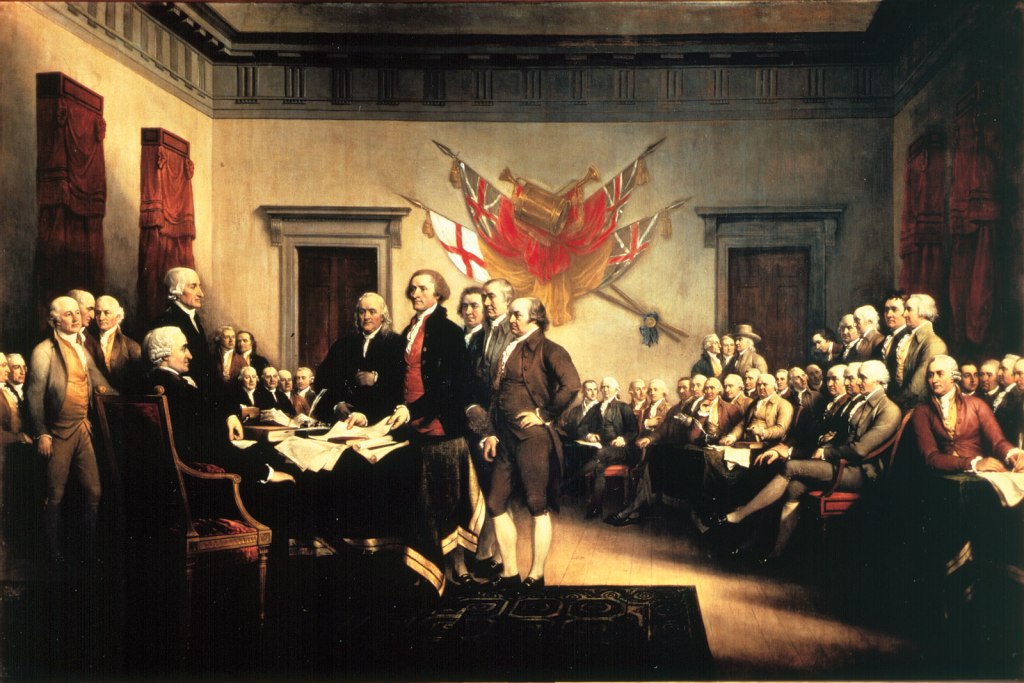
How Thanksgiving Was Celebrated in 1777
The Thanksgiving of 1777 was a day marked by solemn reflection, communal gatherings, and expressions of gratitude. Observance began with church services, where ministers delivered sermons that connected the victory at Saratoga to the larger cause of independence. These sermons often emphasized themes of divine providence, gratitude for liberty, and the need for unity in the face of ongoing challenges.
Unlike modern interpretations of separation of church and state, the Revolutionary War period saw a strong partnership between religious and civic life. The church played a significant role in supporting the war effort, with many viewing the struggle for independence as not only a political cause but also a spiritual one. Religious liberty, one of the many motivations for the Revolution, was deeply intertwined with the colonists’ fight for freedom. This Thanksgiving observance exemplified the overlap of civic, secular, and religious elements that continues to characterize the holiday.
Church services included prayers for the soldiers and leaders of the Continental Army, as well as for continued success in the war. Congregations were encouraged to reflect on the blessings of liberty and the importance of perseverance in their shared cause. The spiritual dimension of the day offered both comfort and inspiration to communities facing hardship.
Though the Thanksgiving of 1777 included communal meals, these gatherings were modest compared to modern traditions. Wartime scarcity meant that feasts varied greatly by region, often consisting of simple, locally available foods. Nevertheless, these shared meals reinforced a sense of solidarity and shared purpose among the colonists, reminding them of the collective effort required to sustain their fight for independence.
This first nationally recognized Thanksgiving was not only a time to give thanks but also a moment to strengthen communal bonds and renew the colonists’ resolve in their struggle for liberty. It reflected the resilience and resourcefulness of a people united by both spiritual faith and a shared political vision.
Despite the proclamation’s noble intent, the realities of war presented significant challenges for observing Thanksgiving. Food shortages and the logistical difficulties of organizing public gatherings in areas occupied or threatened by British forces made widespread celebrations difficult.
Yet, the very act of proclaiming a day of thanksgiving served as a morale booster, reminding the colonists of their reasons for hope, their shared values, and the blessings they had already received. It was a call to resilience and gratitude, even in the face of adversity, proving that the spirit of Thanksgiving could endure even during the hardest of times.
Note
Communal meals have always been a powerful way to build and strengthen a sense of community. Whether it’s the shared meals of the early church, like the Lord’s Supper, which originally served as a true communal gathering rather than the more ritualized practices we see today, or the humble feasts of Thanksgiving in 1777, food and drink have a unique way of fostering connection. There’s something inherently unifying about gathering around a table, sharing sustenance, and engaging in fellowship. It seems that breaking bread together goes beyond nourishment—it forms bonds, reinforces solidarity, and reminds us of our shared humanity. This is certainly a rabbit hole worth exploring further in the future!
The Importance of the 1777 Thanksgiving
The Thanksgiving of 1777 was more than a day of gratitude; it was a deliberate effort by the Continental Congress to foster unity and national identity during the tumultuous years of the Revolutionary War. By calling for a unified celebration across all 13 colonies, the proclamation sought to remind the colonists of their shared cause and collective purpose, creating a sense of solidarity crucial for the survival of the nascent nation.
The proclamation also reflected the deeply religious nature of the colonies, where thanksgiving days were often tied to expressions of gratitude to divine providence. It tapped into a long-standing tradition of thanksgiving observances in colonial America, particularly in New England, where such days were rooted in both civic and spiritual practices. By connecting the Revolutionary War effort to divine favor, the 1777 Thanksgiving gave the struggle for independence a spiritual dimension, reinforcing the belief that their cause was just and guided by a higher power.
The Thanksgiving celebrations of 1777 marked an important milestone in the evolution of Thanksgiving as a uniquely American institution. While earlier colonial thanksgivings were more localized, this was the first instance of a nationally unified observance, setting the stage for future proclamations such as George Washington’s in 1789 and Abraham Lincoln’s in 1863. In this way, the 1777 Thanksgiving laid the groundwork for the modern holiday we know today.
Conclusion
Tough times often remind us to be grateful for what we have, and the Thanksgiving of 1777 exemplifies this truth. In the midst of the Revolutionary War, following the pivotal victory at Saratoga, the fledgling United States set aside a day to reflect and give thanks.
This celebration was more than a moment of gratitude—it was a unifying call for a nation in its infancy to recognize its blessings and seek divine guidance in its fight for independence. It demonstrated the power of Thanksgiving to foster unity, resilience, and hope, even during the most challenging times.
The 1777 Thanksgiving stands as a testament to the enduring spirit of gratitude that continues to shape American history. It reminds us that, even in struggle, there is always something for which to be thankful—a tradition as meaningful today as it was then.
“Give thanks in all circumstances; for this is God’s will for you in Christ Jesus.” – 1 Thessalonians 5:18
Reflecting on the 1777 Thanksgiving
As we consider the Thanksgiving of 1777, take a moment to reflect on its meaning and how it resonates with us today. Amidst the hardships of war, the colonists paused to give thanks—not for perfect peace or complete victory, but for a pivotal moment of progress in their struggle for independence. Their gratitude was not reserved for the end of their journey, but for the small, meaningful victories along the way.
Ask yourself:
- Are you thankful for what you have, even in the midst of challenges?
- Can you find gratitude for the small victories and blessings in your own life, even when the bigger picture feels uncertain?
The 1777 Thanksgiving reminds us that gratitude is a choice, a perspective that enables us to see the good amid the setbacks. It encourages us to focus on what we’ve achieved, however modest, and to nurture hope for the future.
This perspective is as relevant today as it was during the Revolutionary War. What does this tell us about Thanksgiving today? It reminds us that Thanksgiving is not just about feasting or celebration; it’s about pausing to recognize the progress we’ve made, the relationships that sustain us, and the resilience that carries us forward. Just as the colonists in 1777 found unity and strength in their shared gratitude, so too can we use Thanksgiving to reconnect with what truly matters and to draw inspiration for the challenges ahead.
Take this moment to reflect on your own life.
- What are you grateful for today?
- What small victories can you celebrate?
- How can you carry this spirit of gratitude into the days beyond Thanksgiving?
Excerpt
Discover the significance of the 1777 Thanksgiving, a unifying moment during the Revolutionary War. Amid struggle, the fledgling United States paused to give thanks for the victory at Saratoga. Reflect on how gratitude for small victories and shared purpose can inspire resilience and hope in today’s Thanksgiving celebrations.
Reference
- Thanksgiving Proclamation 1777 By the Continental Congress The First National Thanksgiving Proclamation https://pilgrimhall.org/pdf/TG_First_National_Thanksgiving_Proclamation_1777.pdf

 Treasures of the Elysian Fields
Leave a reply to Thanksgiving a Time for Gratitude – Treasures of the Elysian Fields Cancel reply