
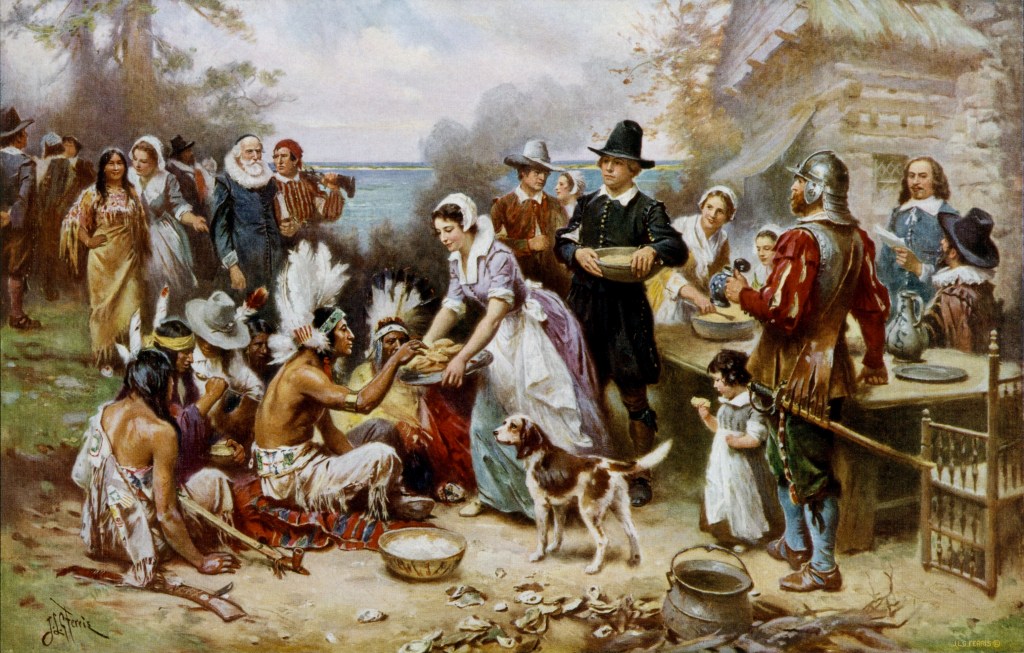
Picture The First Thanksgiving, 1621. By Jean Leon Gerome Ferris, c.1912-1915.
In this next installment on the history of the United States Thanksgiving tradition, I delve into the worldview of the first Pilgrims. This post will explore the beliefs, values, and cultural mindset that shaped their practices and how those perspectives laid the foundation for the Thanksgiving holiday we know today.
1. Introduction
Thanksgiving, as we celebrate it today, is a uniquely American holiday, yet its origins are deeply rooted in the Christian faith—particularly the Puritan traditions of the Pilgrims. Far from being merely a secular occasion or cultural milestone, Thanksgiving reflects an enduring practice of gratitude that is both spiritual and communal. This gratitude, as the Pilgrims understood it, was central to their worldview, shaped by their reliance on divine providence and their commitment to a life oriented by faith.
The story of Thanksgiving begins with the Pilgrims’ journey to the New World. Driven, in part, by a desire for religious freedom, these English Puritans set sail aboard the Mayflower in 1620, enduring a perilous voyage and arriving in an unfamiliar land. Their first winter in Plymouth was devastating, with harsh conditions claiming nearly half their number. Yet, through perseverance and the assistance of the Wampanoag people, they survived, eventually reaping a successful harvest in the autumn of 1621. This moment of survival and provision led to a three-day celebration that included both the Pilgrims and the Wampanoag. While later romanticized in American mythology, this event was primarily an expression of gratitude—both to God and to the Indigenous allies who had helped them.
This post will explore how the Pilgrims’ deeply Christian perspective on gratitude shaped the earliest Thanksgiving traditions. Rooted in Puritan theology and biblical principles, their practices reflected an understanding of thanksgiving as not merely a reaction to blessings but as an integral part of a faithful life. By examining the Pilgrims’ journey, their hardships, and their first expressions of gratitude, we gain insight into how this enduring practice became the foundation for one of America’s most cherished holidays.
The next section, A Journey of Faith and Survival, delves into the Pilgrims’ voyage, their trials, and how their faith sustained them through their darkest moments.
2. A Journey of Faith and Survival
The story of the Pilgrims is one of extraordinary determination, faith, and resilience. Their voyage aboard the Mayflower in 1620 and the establishment of Plymouth Colony were driven by a desire for religious freedom and the opportunity to build a community centered on their deeply held beliefs. Yet, their journey was fraught with challenges, from the perils of transatlantic travel to the harsh realities of life in an unfamiliar land.
The Voyage of the Mayflower
On September 6, 1620, the Pilgrims departed from Plymouth, England, aboard the Mayflower, a vessel financed by a group of investors known as the Merchant Adventurers. These investors provided the majority of the funds needed for the expedition, hoping to profit from the economic opportunities in the New World. While the Pilgrims themselves contributed what they could, they relied heavily on this financial backing to make their journey possible.
The Pilgrims’ primary motivation was religious freedom. As Puritans, they sought to separate from the Church of England, which they believed retained too many elements of Roman Catholicism. Facing persecution and restrictions on their practices, they resolved to establish a community where they could worship freely and govern themselves according to their religious principles.
The voyage itself was arduous. The cramped conditions aboard the Mayflower made the crossing difficult, and many passengers fell ill. After 66 days at sea, they finally arrived off the coast of present-day Massachusetts in December 1620, settling at a location they named Plymouth.
The Harsh Reality of the First Winter
The Pilgrims’ arrival in the New World marked the beginning of an even greater struggle. The first winter proved devastating, as they faced brutal cold, inadequate shelter, and limited supplies. Nearly half of the original 102 passengers perished due to illness and exposure. Despite these hardships, their faith sustained them. They clung to their belief that God had led them to this new land for a purpose, which strengthened their resolve to persevere.
The Role of the Wampanoag People
The Pilgrims’ survival during those early years was largely due to the assistance of the Wampanoag people, whose generosity and knowledge were instrumental. The Wampanoags, led by Massasoit, formed an alliance with the Pilgrims that included mutual defense and cooperation. Their guidance in adapting to the New World proved critical in several key ways:
- Agriculture: The Wampanoags taught the Pilgrims to grow corn, beans, and squash together using the “Three Sisters” method, which improved soil fertility and provided essential nutrition.
- Fishing and Hunting: They demonstrated techniques for fishing in local waters and hunting the region’s wildlife, ensuring a reliable food supply.
- Foraging: The Pilgrims learned how to identify edible plants and herbs, which supplemented their diet and provided medicinal benefits.
- Building Shelters: Wampanoag expertise in constructing shelters better suited to the New England climate helped the Pilgrims endure harsh winters.
- Sharing Resources: During that first brutal winter, the Wampanoags shared food and resources, offering critical support when the Pilgrims were at their most vulnerable.
This cooperation and alliance, born out of necessity and mutual benefit, exemplified the spirit of survival and adaptation. While later historical narratives often romanticize these interactions, the reality was more complex, marked by political considerations and tensions. Yet, there is no doubt that without the Wampanoags’ aid, the Pilgrims might not have survived to establish their colony.
The Pilgrims’ journey to the New World and their survival in its harsh environment stand as a testament to their faith and resilience. Their willingness to endure hardship in pursuit of religious freedom laid the foundation for one of America’s most enduring traditions: Thanksgiving. This practice of gratitude, rooted in the Pilgrims’ Christian worldview and their reliance on divine providence, continues to inspire reflections on the power of faith and cooperation in the face of adversity.
3. The First Harvest Feast in 1621
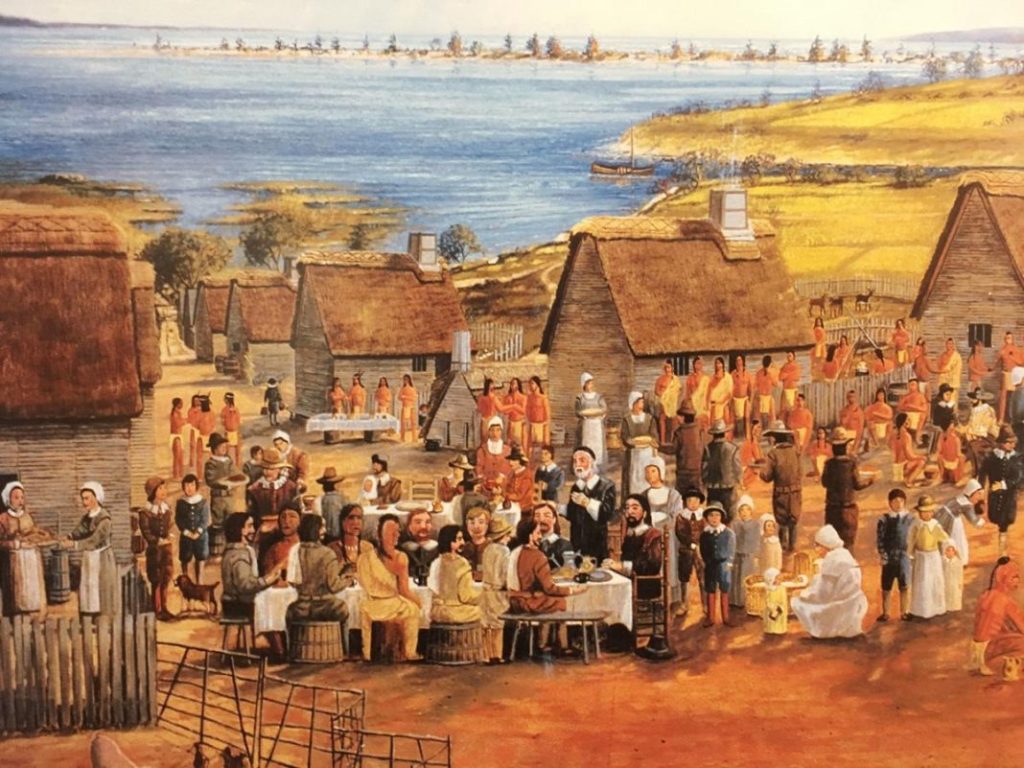
The autumn of 1621 marked a moment of profound gratitude for the Pilgrims. After surviving their first brutal winter in the New World, the community experienced its first successful harvest, thanks in large part to the agricultural techniques taught by the Wampanoag people. The event that followed, often romanticized as the “First Thanksgiving,” was a three-day celebration of this abundance. While later accounts cast it as a harmonious gathering, the reality was more complex—rooted in gratitude but layered with tension and political implications.
A Celebration of Gratitude and Survival
The Pilgrims’ first harvest feast, likely held in October 1621, was a modest but meaningful occasion. According to Edward Winslow’s “Mourt’s Relation”, the Pilgrims prepared for the celebration by sending men to gather fowl, which provided enough meat to feed the settlement for several days. The Pilgrims’ gratitude was deeply tied to their Christian worldview, seeing the harvest as evidence of God’s provision and a sign of His favor after the hardships they had endured.
Winslow describes how, during the celebration, the Pilgrims “exercised [their] arms,” possibly as part of a display of preparedness or for recreation. This act inadvertently set the stage for an unanticipated encounter with the Wampanoag people.
The Role of the Wampanoag People
The Wampanoags, led by Massasoit, were not formally invited to the feast. Instead, they arrived after hearing the sound of gunfire, believing the Pilgrims were under attack. Massasoit brought approximately 90 warriors to the settlement, prepared for potential conflict. However, upon discovering the Pilgrims were celebrating, the Wampanoags decided to join in, contributing five deer to the feast.
This interaction, while ultimately peaceful, highlights the precarious nature of the relationship between the Pilgrims and the Wampanoag. While the two groups had formed an alliance earlier that year—primarily based on mutual defense against other tribes—there were underlying tensions. The Pilgrims were newcomers to the Wampanoags’ land, and their survival depended heavily on the goodwill and assistance of their Indigenous neighbors.
A Mythical Harmony
Over time, the 1621 feast has been mythologized as a moment of seamless cooperation and unity, forming the basis of America’s Thanksgiving story. Yet, Winslow’s account and other primary sources reveal a more nuanced picture. The feast was less about fellowship and more about survival, with political dynamics and misunderstandings shaping the interactions between the two groups.
Despite this complexity, the Pilgrims’ gratitude remained central. Their Christian perspective emphasized thanksgiving as an act of faith, acknowledging divine providence in all circumstances. As William Bradford later wrote in Of Plimoth Plantation, the Pilgrims “began now to gather in the small harvest they had” and to prepare for the coming winter with a sense of abundance and hope, thanks to both their hard work and the support of the Wampanoag people.
A Legacy of Gratitude
Though the 1621 celebration was not formally a “Thanksgiving” as the Pilgrims would have understood it—Puritan thanksgiving days were typically solemn occasions marked by fasting and prayer—it planted the seeds for a tradition that would grow over centuries. At its heart was the Pilgrims’ profound sense of gratitude: to God for sustaining them, to the Wampanoag for their assistance, and to one another for their perseverance. This spirit of thanksgiving, rooted in faith and resilience, continues to define the holiday’s essence today.
4. Gratitude in Puritan Theology
For the Puritans, including the Pilgrims, gratitude was more than an emotion—it was a foundational Christian virtue and a core aspect of their spiritual life. They believed that thanksgiving was not only a response to God’s blessings but also a duty that reflected a proper understanding of His sovereignty and goodness. Gratitude served as a tangible expression of faith, humility, and reliance on divine providence.
Gratitude as a Response to God’s Providence
Puritan theologians wrote extensively on the importance of gratitude, emphasizing it as a natural and necessary response to God’s work in every aspect of life. Thomas Manton, in his work One Special Duty – Thankfulness, described thanksgiving as “a sensible acknowledgment of favors received or an expression of our sense of them, by word and work, to the praise of the bestower.” For Manton, gratitude was not merely a feeling but a practice that combined reflection, expression, and action.
Thomas Watson, another prominent Puritan thinker, also highlighted gratitude in his writings. In All Things for Good, Watson encouraged believers to maintain a thankful heart even in adversity, emphasizing that God’s providence works through both blessings and challenges. He noted, “Gratitude is a handmaiden of contentment,” suggesting that a spirit of thankfulness fosters peace and satisfaction by focusing on what one has rather than what one lacks.
Other Puritans echoed these sentiments. John Boys famously wrote, “As the Lord loveth a cheerful giver, so likewise a cheerful thanksgiver,” linking gratitude with the joy and humility that should characterize a faithful life.
Puritan “Days of Thanksgiving”
The Puritan practice of thanksgiving was solemn and reflective, distinct from the festive feasting that characterizes modern Thanksgiving celebrations. Days of thanksgiving were typically proclaimed in response to specific events, such as a bountiful harvest, the safe return of travelers, or the resolution of a crisis. These occasions were marked by fasting, prayer, and communal worship, focusing on giving thanks to God for His providence.
Unlike their celebratory counterparts, these days of thanksgiving were often introspective, emphasizing repentance and spiritual renewal alongside gratitude. The Puritans believed that expressing thanks to God required a serious acknowledgment of His hand in all circumstances, aligning with their broader theological framework of humility and dependence on divine will.
Biblical Teachings on Gratitude
The Puritans’ deep commitment to gratitude was firmly rooted in Scripture, which they regarded as the ultimate guide for faith and practice. Several key passages shaped their understanding of thanksgiving:
- 1 Thessalonians 5:18: “Give thanks in all circumstances; for this is the will of God in Christ Jesus for you.”
- This verse reflects the Puritan belief that gratitude was not conditional but constant, an act of trust in God’s sovereignty even during hardship.
- Philippians 4:6: “Do not be anxious about anything, but in every situation, by prayer and petition, with thanksgiving, present your requests to God.”
- Here, gratitude is presented as a remedy for anxiety, encouraging believers to shift their focus from fear to faith.
- Ephesians 5:20: “Always giving thanks to God the Father for everything, in the name of our Lord Jesus Christ.”
This passage emphasizes the universality of thanksgiving, recognizing God’s presence and provision in all things, both good and challenging.
The Puritans applied these biblical principles in their daily lives, striving to cultivate gratitude as a discipline. Whether through prayer, communal worship, or acts of kindness, they sought to honor God by acknowledging His grace and mercy in all circumstances.
Gratitude as a Spiritual Discipline
The Puritans understood gratitude not as a fleeting response to blessings but as a lifelong discipline that shaped their worldview. It informed their contentment, resilience, and reliance on God’s providence. By consistently practicing thankfulness, they deepened their faith, strengthened their communities, and maintained hope in the face of trials.
This emphasis on gratitude remains a central legacy of Puritan theology, influencing not only the Pilgrims’ first Thanksgiving but also the broader cultural and spiritual values that continue to shape modern expressions of thanksgiving. Through their writings and practices, the Puritans offer timeless insights into the transformative power of gratitude, urging us to view it as a way of life rather than a momentary gesture.
5. The Christian Influence on Western Gratitude: The Broader Legacy of Christian Gratitude
Gratitude, as a cornerstone of Western thought, has deep roots in Christian teachings that have shaped not only individual lives but also societal values. As previously noted, Thanksgiving in the United States embodies overlapping civic, secular, and religious themes. Yet, it is Christianity’s enduring influence that provides the foundational framework for this tradition. Much like the dye in a fabric, Christianity’s mark on Western culture may fade over time, but its essence remains embedded in the fabric of society.
From the early days of Christendom, the Bible’s teachings on gratitude profoundly influenced Western ideals. Biblical principles, which emphasized humility, thankfulness, and the recognition of blessings, became the lens through which individuals and communities viewed life. Gratitude was seen not merely as a fleeting emotion but as an enduring practice that connected people to God, to each other, and to the broader purpose of existence. This spiritual perspective on thankfulness permeated personal values, ethics, and even public holidays, leaving an indelible imprint on Western culture.
Gratitude, as rooted in Christian teachings, has always been a transformative force, shaping both individual lives and societal cohesion. The biblical call to “give thanks in all circumstances” (1 Thessalonians 5:18) encourages resilience, fostering a mindset that finds hope and meaning even in adversity. This perspective was especially evident in the Puritan worldview, which saw gratitude as a stabilizing force amid uncertainty.
Gratitude also fosters contentment, both spiritually and socially. As Puritan theologian Thomas Watson wrote, “Gratitude is a handmaiden of contentment.” By focusing on what one has—whether spiritually or materially—gratitude cultivates peace and satisfaction, countering the discontentment that can arise from focusing on what is lacking.
The Christian emphasis on gratitude has left a lasting legacy in Western culture, one that transcends religious boundaries while continuing to shape personal and communal practices. Thanksgiving, as both a holiday and a tradition, reflects this enduring influence. It stands as a testament to the transformative power of gratitude, offering a moment for reflection, unity, and shared celebration. By embracing thankfulness—rooted in faith and resilience—we honor this rich legacy and reaffirm the values that continue to sustain individuals and communities alike.
6. Conclusion: Thanksgiving’s Enduring Message
To fully appreciate the origins and significance of Thanksgiving, it is essential to understand the theological mindset of the Pilgrims. Their decision to dedicate three days to celebrate and give thanks was deeply rooted in their faith and their biblical understanding of gratitude. For the Pilgrims, thanksgiving was not just an act of acknowledgment but a profound expression of trust in God’s providence and recognition of His blessings, even amid adversity. This spiritual framework became the foundation for what would evolve into one of America’s most cherished traditions.
Yet, gratitude is not bound by religious belief—it is a universal virtue that resonates with all humanity. This universality is what makes a holiday centered on thankfulness so enduring and transcendent. Thanksgiving, as both a practice and a celebration, fosters connection and unity, inviting individuals from all walks of life to pause, reflect, and appreciate the blessings they share.
But Thanksgiving is more than just a holiday. It’s a reminder to cultivate gratitude as a daily practice—a mindset that can transform how we experience the world. Whether expressed through faith, relationships, or personal reflection, gratitude strengthens resilience, deepens contentment, and builds connections that sustain us as individuals and as a community.
In my next post, we’ll explore an intriguing question: What was the first Thanksgiving celebration in the Americas by Europeans? Hint: It wasn’t in 1621, and its story offers yet another fascinating perspective on the roots of gratitude in our shared history. Stay tuned!
Reflection
As we gather to celebrate Thanksgiving, it’s worth taking a moment to reflect on the deeper roots of this holiday and how its original spirit of gratitude can inspire our own lives. For the Pilgrims, thanksgiving was a profoundly spiritual act—an acknowledgment of God’s providence and blessings, even amid trials. While Thanksgiving today has grown into a broadly secular (meaning no preference for sect of religion) celebration, its origins remind us of the power of gratitude as a practice that transcends circumstances and brings meaning to our lives.
As you celebrate, consider the following questions to bring a deeper sense of reflection to your Thanksgiving traditions:
How can we apply the Puritan ideal of gratitude in our modern lives?
- The Puritans viewed gratitude not as a fleeting response to good fortune but as a discipline that shaped their entire outlook on life. In today’s fast-paced world, how can we cultivate this intentional mindset? What daily practices—such as journaling, prayer, or simply pausing to reflect—can help us recognize and appreciate the blessings in our lives?
What does it mean to give thanks “in all circumstances”?
- In 1 Thessalonians 5:18, we are called to “give thanks in all circumstances,” a challenging yet transformative perspective. How can we find gratitude even during difficult times? What lessons or blessings can we uncover in adversity, and how might this practice of thankfulness help us build resilience and hope?
Thanksgiving invites us to pause and embrace gratitude not only for what we have but for the relationships, experiences, and growth that shape our lives. Whether your celebration includes a moment of prayer, sharing what you’re thankful for, or simply reflecting in quiet gratitude, let this holiday be an opportunity to reconnect with the enduring message of Thanksgiving: that gratitude is not just a response to abundance but a way of seeing and living that enriches every moment.
“Enter his gates with thanksgiving; go into his courts with praise. Give thanks to him and praise his name.” Psalm 100:4 NLT
Resources:
- One Special Duty – Thankfulness – Thomas Manton (1620-1677) https://www.apuritansmind.com/the-christian-walk/one-special-duty-thankfulness-thomas-manton/
- 10 Must-Read Books by the Puritans for Christians Today https://www.beautifulchristianlife.com/blog/10-must-read-books-by-the-puritans-for-christians-today
- Primary Sources for “the first thanksgiving” at Plymouth, Pilgrim Hall Museum, https://www.pilgrimhall.org/pdf/TG_What_Happened_in_1621.pdf
- Pilgrim myths: Don’t believe everything your kindergarten teacher told you https://www.capecodtimes.com/story/news/history/2024/11/25/history-of-thanksgiving-4-myths-about-the-pilgrims-and-the-true-story/76401640007/
- The First Thanksgiving in America, American Heritage Education Foundation https://americanheritage.org/the-first-thanksgiving-in-america/
Excerpt
Explore the worldview of the Pilgrims in this deep dive into the roots of Thanksgiving. Discover how their faith, values, and resilience shaped the first celebrations of gratitude, laying the foundation for one of America’s most cherished traditions. A closer look at history reveals the enduring spirit of Thanksgiving.
Unusual Kindness

 Treasures of the Elysian Fields
Leave a comment