
1 Introduction
I find myself returning to Forbidden Planet time and time again. It’s one of my favorite science fiction films, and I often reflect on its implications. I’ve been working on this blog post, in one form or another, for decades. Lately, I’ve been considering what Forbidden Planet can teach us in light of today’s technological advancements, such as AI and the transhumanism movement. Now seems like the right time to finally put these thoughts into writing. This is by no means the end of what I have to say on the subject.
Monsters from the Id: The Timeless Themes of Forbidden Planet and Their Relevance Today
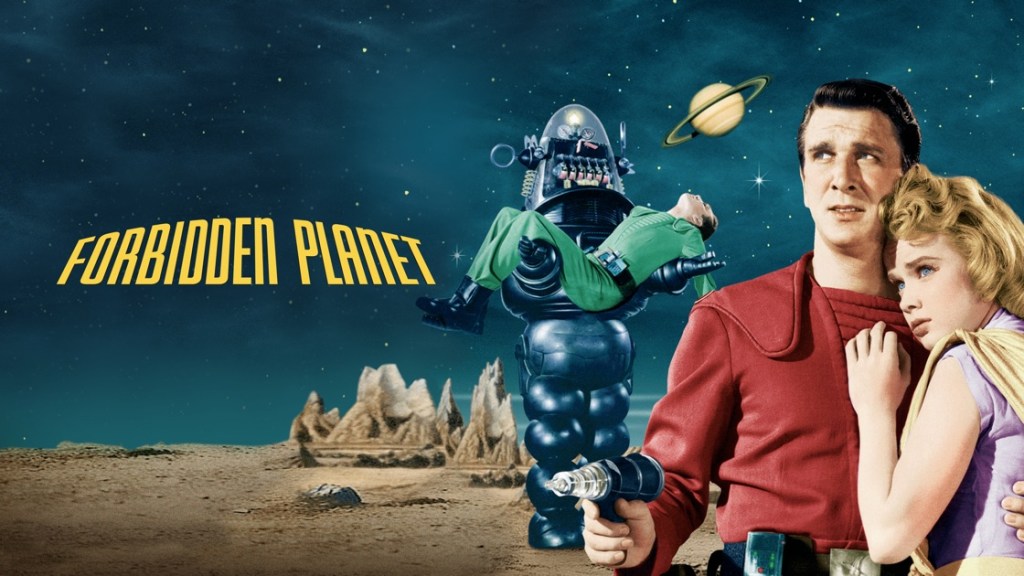
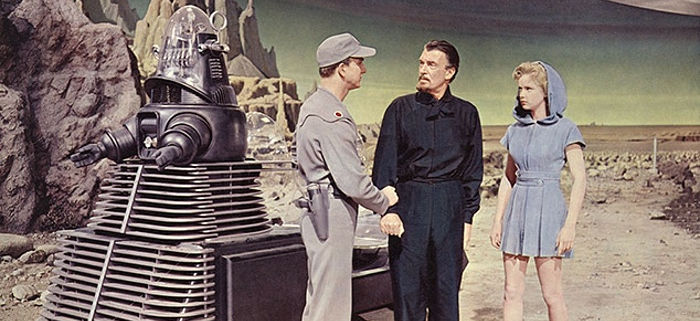
Forbidden Planet is a landmark science fiction film released in 1956, directed by Fred M. Wilcox and produced by Nicholas Nayfack. It stars Walter Pidgeon as Dr. Edward Morbius, Anne Francis as his daughter Altaira, and Leslie Nielsen, in one of his early serious roles, as Commander John J. Adams. The movie also introduced audiences to one of the most iconic robots in cinematic history: Robbie the Robot.
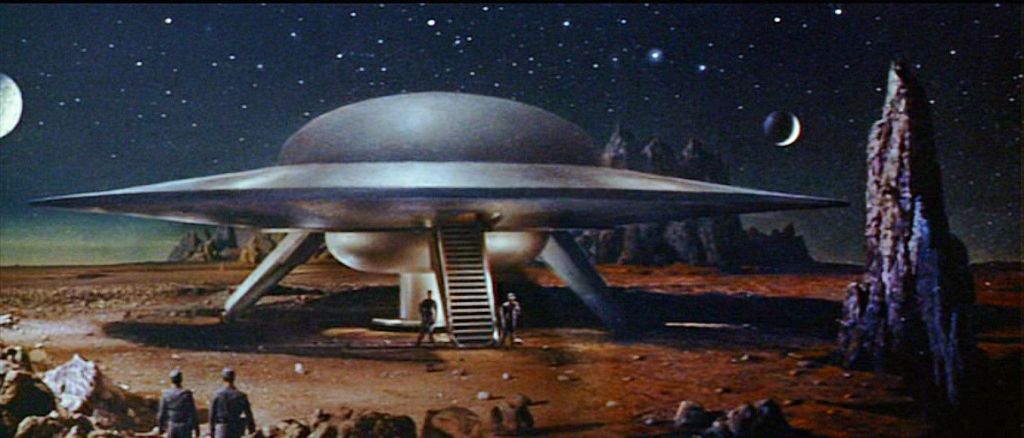
The story is loosely based on William Shakespeare’s The Tempest and takes place on the distant planet Altair IV, where a space crew investigates the fate of a previous expedition and discovers the remnants of a highly advanced but extinct alien civilization known as the Krell. Dr. Morbius, the lone survivor of the previous mission, has harnessed some of the Krell’s incredible technology, but he is unaware of its catastrophic effects as it amplifies his own subconscious fears and desires, leading to the manifestation of dangerous “monster from the id.”
The film was groundbreaking for its time, featuring impressive special effects, including the first entirely electronic musical score by Louis and Bebe Barron. Robbie the Robot, built at a cost of $125,000—a substantial sum for the era—became a cultural icon and appeared in many other films and TV shows.
Reception and Legacy
Forbidden Planet was well-received upon its release, praised for its imaginative story, high production values, and thought-provoking themes. It earned an Academy Award nomination for Best Special Effects, a rarity for science fiction films of that era. Although it was not a major box office hit initially, the film has since become a cult classic and is considered one of the most influential science fiction films ever made.
Over the years, its reputation has grown, with many citing it as a precursor to later genre-defining works such as Star Trek and Star Wars. Its exploration of themes like the dangers of unchecked technological advancement and the complexities of human nature remain relevant today. In 2013, the movie was selected for preservation in the United States National Film Registry by the Library of Congress for being “culturally, historically, or aesthetically significant,” cementing its status as a timeless piece of cinematic history.
The Core Themes: Human Nature, Power, and Technology
Forbidden Planet delves into the complexities of human nature, exploring how our deepest fears and desires can manifest in ways we can’t control. The concept of the “monsters from the id” is a compelling metaphor for the darker aspects of the subconscious mind, akin to Carl Jung’s notion of the shadow self—the parts of our psyche that we repress but which are still integral to who we are. This theme is woven into the film’s narrative, creating a powerful allegory about the unseen forces that influence our actions and the dangers of ignoring these inner shadows.
The film’s central story revolves around Dr. Morbius and his access to the ancient and powerful technology of the Krell, an advanced alien civilization. This technology, designed to amplify the mind’s creative powers, unwittingly unleashes the repressed elements of Morbius’s subconscious, leading to the creation of monstrous entities. This serves as a cautionary tale about the dangers of wielding immense power without understanding or respecting its consequences. The Krell, despite their intellectual and technological prowess, were destroyed by their own creations—monsters born from the darkness of their subconscious minds.
In this way, Forbidden Planet examines the theme of power and its corrupting influence. Morbius’s intellectual arrogance blinds him to the reality that even his good intentions are tainted by his unconscious fears and desires. His downfall illustrates the adage “absolute power corrupts absolutely,” showing that power can erode self-restraint and moral integrity, transforming even the noblest of intentions into a catalyst for destruction. The film suggests that power doesn’t merely change what we do—it changes who we are, often in ways we don’t realize until it’s too late.
This timeless theme is relevant beyond the film’s narrative, resonating with broader discussions about the impact of technological and political power. Whether it’s the unchecked ambition of political leaders or the rapid, unreflective development of new technologies, Forbidden Planet poses an enduring question: Do we have the wisdom to handle the power we create? As society gains more control over nature and even human nature, through advancements in fields like artificial intelligence and genetic engineering, we must confront the potential for these tools to amplify our flaws and exacerbate existing issues.
The film’s cautionary message is clear: without humility and self-awareness, even the most brilliant minds can fall victim to their own hubris. Dr. Morbius’s tragic end serves as a reminder that the pursuit of knowledge and power must be tempered by an understanding of the darker forces within us. It’s a narrative that, despite being conceived in the 1950s, continues to speak to the complexities and dangers of human ambition in the modern world.
2 The Psychological Depth: Monsters from the Id
One of the most compelling aspects of Forbidden Planet is its exploration of the subconscious mind through the concept of the “monsters from the id.” In the film, these monsters are literal manifestations of Dr. Morbius’s deepest, darkest thoughts and desires—forces he cannot consciously control. The term “id” comes from Freudian psychology, representing the primal part of the mind that harbors instinctual drives and desires. The “monsters from the id” embody the idea that these hidden, often dark aspects of human nature can surface in dangerous and uncontrollable ways.
Exploring the Subconscious
The movie’s portrayal of these monsters resonates with modern psychological theories, particularly Carl Jung’s concept of the shadow self. According to Jung, the shadow is the unconscious part of the psyche that contains repressed weaknesses, desires, and instincts. It’s the side of ourselves we often deny or are unaware of, yet it influences our actions and decisions. In Forbidden Planet, the Krell technology, which amplifies the subconscious mind, unleashes this shadow in its most destructive form. Dr. Morbius, unaware of the dark corners of his own psyche, becomes the unwitting architect of his own and others’ destruction.
This theme of the uncontrollable subconscious taps into a fundamental fear: the idea that beneath our civilized exterior lies a raw, untamed force that, if triggered, can wreak havoc. It’s a powerful reminder that human nature is complex and multifaceted, containing both light and dark elements. The film suggests that we must acknowledge and understand these darker aspects of ourselves to avoid being controlled by them.
The Illusion of Control
Forbidden Planet challenges the comforting notion that we have full control over our actions. The Krell technology exposes how easily the subconscious can overrule the conscious mind, raising profound questions about free will and self-awareness. If parts of our behavior are driven by forces we cannot consciously access, how much control do we really have over our lives?
This idea aligns with modern psychological research, which shows that much of our behavior is influenced by subconscious processes, biases, and repressed emotions. For example, we may act out of anger or fear without fully understanding the deeper, unconscious roots of those emotions. If these hidden influences shape our actions, the notion of moral accountability becomes complex. Are we truly responsible for actions driven by aspects of ourselves we cannot fully perceive or control?
Freud’s iceberg metaphor, where conscious thought represents only the visible tip, and the vast majority of mental processes occur beneath the surface, is apt here. The conscious mind, with its perceptions of free will and self-control, may only skim the surface of a deeper, more turbulent sea of subconscious influences. This idea is unsettling because it suggests that we are, in some ways, at the mercy of forces beyond our conscious grasp.
Human Nature and Moral Responsibility
The film’s portrayal of the subconscious also raises broader questions about human nature. Are we, as some philosophical traditions suggest, inherently flawed or “fallen,” needing rules and laws to restrain our darker impulses? Or is human nature a blank slate, shaped by experience and environment? Forbidden Planet seems to argue that there is a dark side inherent in us—a shadow that, if left unchecked, can lead to catastrophic consequences.
This perspective challenges more optimistic views of humanity as fundamentally good or rational. Instead, it aligns with the view that civilization and morality are thin veneers over more primal instincts. The story of Dr. Morbius and the Krell technology illustrates the danger of denying or ignoring this darker side. By refusing to confront his own shadow, Morbius becomes a victim of it, leading to tragedy not just for himself but for those around him.
The Relevance Today
Forbidden Planet remains relevant because these questions about human nature, control, and responsibility are more pressing than ever in our technologically advanced world. As we develop increasingly powerful technologies, from artificial intelligence to genetic engineering, we must grapple with the potential for these tools to amplify not just our virtues, but also our flaws. The film warns that without self-awareness and ethical restraint, we risk unleashing our own “monsters from the id,” with consequences we may not foresee or be able to control.
Ultimately, Forbidden Planet is a meditation on the human condition, suggesting that true self-awareness may be more elusive than we think. If we are to navigate the complexities of modern life and technology responsibly, we must be willing to look inward and confront the shadows within ourselves. Only by understanding the depths of our own nature can we hope to wield the power we create without falling victim to it.
3 Power and Corruption: A Cautionary Tale
In Forbidden Planet, the downfall of the Krell civilization serves as a powerful cautionary tale about the dangers of unchecked technological advancement. The Krell, a once-mighty and highly intelligent species, created a machine that could amplify their subconscious desires and transform them into reality. While they believed they had achieved the pinnacle of technological mastery, they failed to anticipate the catastrophic consequences of this power. Their subconscious minds, with all their hidden fears and dark impulses, were unleashed, leading to their complete destruction.
This tragic story parallels the Biblical account of the Fall of humanity. In the Garden of Eden, the serpent tempted Adam and Eve with the promise that eating the forbidden fruit would make them “like God,” granting them knowledge of good and evil. This act of disobedience, motivated by the desire to transcend their human limitations, brought about the Fall, introducing sin and suffering into the world. Similarly, the Krell’s hubris—believing they could wield god-like power over their own minds—led to their downfall.
The theme of power corrupting those who wield it is also echoed in the myth of Prometheus, who stole fire from the gods to give to humanity. Fire, as a metaphor for technology and knowledge, represents both enlightenment and danger. Prometheus, feeling pity for humans living in darkness and ignorance, provided them with this transformative tool, only to face eternal punishment for his defiance. This story, like that of the Krell, illustrates that with great power comes great responsibility—and a significant risk of unintended consequences.
There’s a profound resonance here with the Biblical warning against trying to “be like God.” As humanity gains the ability to alter the very fabric of life through technologies like AI and genetic engineering, we must ask ourselves: Are we playing God? Have we, like Prometheus, taken the fire of technological power without fully understanding the potential for harm? Are we, in our pursuit of progress, ignoring the darker aspects of human nature that could turn these advances against us?
This brings to mind the fable of the scorpion and the frog, where the scorpion, despite promising not to sting, cannot resist its nature and dooms them both. In the same way, are we, driven by our inherent flaws, creating technologies that could ultimately be our own undoing?
Modern Parallels: Transhumanism and Technological Ambition
The Krell’s story is particularly relevant to contemporary debates around transhumanism and the ethical use of emerging technologies. Transhumanism envisions a future where we can transcend our biological limitations, enhancing our physical and mental capabilities through technology. While this vision offers incredible possibilities—curing diseases, extending life, enhancing intelligence—it also poses profound ethical and existential questions.
If human nature is malleable, as transhumanism suggests, what becomes of those darker aspects of ourselves that we seek to control or eliminate? Just as the Krell’s attempt to perfect themselves led to their destruction, might we, in our pursuit of human enhancement, create new “monsters” by ignoring or underestimating the complexities of our own nature?
This caution extends to other technological advancements as well. The internet, for example, was initially seen as a revolutionary tool for communication and information sharing. However, we are now facing the unintended consequences: misinformation, loss of privacy, and a growing sense of disconnection despite being more “connected” than ever. This is a classic case of technology outpacing our ability to foresee its societal impact, much like the Krell, who failed to anticipate the catastrophic potential of their own creations.
The stakes are even higher with transhumanism, which seeks to alter fundamental aspects of what it means to be human. While the promise of eradicating diseases and enhancing cognitive abilities is appealing, we must consider the broader implications for identity, social equality, and even the nature of consciousness itself. Are we prepared to handle the ethical and societal challenges that come with reshaping humanity?
The Need for Ethical Restraint
The Krell’s tragic end serves as a stark warning: technological advancement without ethical foresight and humility can lead to disaster. Just because something can be done doesn’t mean it should be done. As we push the boundaries of what’s possible, we must also ask the critical questions about what it means for the future of humanity.
In developing and deploying powerful technologies, there must be a balance between innovation and caution. This means not just celebrating the potential benefits, but also rigorously evaluating the risks and ethical implications. We need policies and frameworks that can guide the responsible use of technology, ensuring that our pursuit of progress does not come at the cost of our humanity.
The story of the Krell is a timeless reminder that the pursuit of knowledge and power must be tempered by an understanding of our own limitations and the darker elements of human nature. As we stand on the brink of a new era of technological possibilities, we would do well to remember the cautionary tales of the past—and to proceed with both courage and humility.
4 The Role of Technology: Robbie the Robot vs. the Krell Machine
Robbie the Robot has always been one of my favorite characters in Forbidden Planet. I find myself relating to him more than to any other character in the film. This isn’t just a one-time occurrence either; I often find myself drawn to characters who struggle with emotions or have difficulty relating to the world around them, like the robot in Lost in Space. Perhaps it’s the clear, logical nature of such characters that appeals to me, or maybe it’s their ability to navigate the complexities of the human world with a kind of purity and integrity that we sometimes lack.
Robbie as a Symbol of Ethical Technology
Robbie represents a controlled and ethical use of technology, designed with clear boundaries and a focus on serving humanity. He is bound by Asimov’s Laws of Robotics, which ensure that he cannot harm humans or allow them to come to harm. These “guardrails” make Robbie a reliable and benevolent presence in the film. His limitations are not flaws but strengths; they reflect a deliberate choice to prioritize safety and ethical behavior over unchecked capability.
In stark contrast, the Krell’s technology lacked these constraints. It was a tool of immense power with no built-in safeguards, designed to amplify the mind’s potential without consideration of the dangers it might unleash. We don’t know what the Krell were thinking when they created this technology—whether they were too confident in their control over it, or whether they simply failed to anticipate the catastrophic consequences of their actions. What we do know is that their civilization was destroyed, not by external forces, but by their own creations—manifestations of their subconscious minds, untethered and uncontrollable.
The lesson here isn’t to reject technology outright, but to approach it with caution and humility. It’s not about saying “no” to technological progress, but about saying “yes, but…”—yes to innovation, but with restraints; yes to advancement, but with an awareness of the potential for harm. Just as we have laws and rules in society to protect us from ourselves, technology must also be developed with built-in safeguards to protect us from our own creations.
Technology Reflects Its Creators
Technology inevitably reflects the virtues and flaws of its creators. It carries within it the biases, intentions, and limitations of those who design and build it. Robbie, with his ethical programming, embodies humanity’s aspiration to create tools that serve the common good and operate within defined moral boundaries. He’s a symbol of how technology can be a force for positive change when it aligns with our values.
On the other hand, the Krell machine represents the dangers of hubris and the failure to acknowledge our own darker impulses. Their technology was created without the necessary ethical constraints, and as a result, it magnified the very worst aspects of their nature. This is a potent reminder that, whether we realize it or not, the technology we create will always reflect something of ourselves. If we ignore our own potential for error, bias, or malice, those flaws can become embedded in our creations.
I must note that even technology with guardrails, like Robbie the Robot, can be misused if not carefully monitored. A memorable example from Forbidden Planet is the scene where Robbie produces 60 gallons of bourbon for the ship’s cook, played by Earl Holliman. While this request might seem humorous and harmless, it highlights the potential for even “safe” technology to be exploited. In this case, Robbie’s adherence to ethical constraints prevents serious harm, limiting the impact to a comical case of overindulgence rather than genuine danger. However, it serves as a reminder that, while Robbie’s abilities are restrained by design, technology is only as responsible as those who control it. Unlike the Krell machine, which amplifies every dark impulse of the subconscious with devastating consequences, Robbie’s limitations keep his missteps relatively benign. Yet, this scene underscores that even with safety measures in place, technology can still be misused in ways that, while not catastrophic, can lead to unintended consequences. It’s a playful nod to the idea that, without wisdom and discretion, even the best-intentioned tools can cause problems.
Consider the modern parallels: social media, originally designed to connect people, has also facilitated the spread of misinformation, fostered division, and contributed to social isolation. It’s as if our need for connection and our baser instincts for validation and conflict were baked into the platforms from the start. Similarly, AI and autonomous systems, if not carefully regulated, could potentially act in ways that reflect the darker aspects of human nature—bias, aggression, or selfishness.
This is why it’s crucial to design technology with ethical foresight, building in the necessary constraints to prevent misuse and harm. Robbie the Robot, with his clear ethical boundaries, stands as a model for what responsible technological development can look like. The Krell machine, on the other hand, is a stark warning of what happens when we ignore the need for restraint.
A Beacon of Optimism
Robbie’s presence in Forbidden Planet adds a layer of optimism to what is otherwise a cautionary tale. He suggests that technology, when guided by wisdom and ethical principles, can be a force for good. While he may not be as powerful or advanced as the Krell technology, he is ultimately more beneficial because he is governed by principles that prioritize human safety and well-being.
This contrast between Robbie and the Krell machine underscores a crucial point: sometimes, simpler technology—designed with ethical foresight and limitations—can be more effective and less dangerous than the relentless pursuit of unchecked advancement. As we continue to develop new technologies, from AI to genetic engineering, we would do well to remember Robbie’s example. It’s not the power of technology that defines its value, but how we choose to use it and the boundaries we set to ensure it serves, rather than endangers, humanity.
5 Timeless Themes: Why Forbidden Planet Resonates Today
Forbidden Planet continues to resonate today because it tackles fundamental concerns about the relationship between technology and human nature—concerns that have only grown more pressing in our digital age. The film’s portrayal of the Krell’s downfall, due to their misuse of powerful technology, serves as a stark reminder that the tools we create can have unintended and often dangerous consequences. This is especially relevant in a world where technology permeates every aspect of our lives, from artificial intelligence and social media to genetic engineering and beyond.
The unintended consequences of modern technology are evident in many areas, but perhaps most strikingly in social media. Platforms that were originally designed to connect us have, paradoxically, contributed to increased social isolation and polarization. Despite being more digitally connected than ever, many people report feeling more lonely and disconnected from real-world relationships. This mirrors the film’s cautionary tale about the dangers of failing to anticipate how powerful tools can amplify the darker aspects of human nature. Just as the Krell’s technology unwittingly unleashed their hidden fears and desires, social media has exposed and magnified our tendencies toward division, tribalism, and addiction to instant gratification.
This paradox of connection and isolation is at the heart of Forbidden Planet’s enduring relevance. The film suggests that there is always a shadow side to progress, an inherent flaw in human nature that can turn even the most benevolent technology against us. As we embrace new tools and platforms that promise to improve our lives, we must remain vigilant about the potential hidden costs—costs that may not be immediately apparent but can have profound implications for society and individual well-being.
One of the reasons Forbidden Planet and other cautionary tales like the Garden of Eden, Prometheus, and The Tempest are so compelling is that they speak to a flaw in human nature that we are all too aware of. Ever since humanity first picked up a rock to build a shelter or hunt for food, those same tools have eventually been turned against other humans. This pattern has repeated throughout history, demonstrating that every technological advance carries with it the potential for misuse and harm.
The stories of the Fall, Prometheus stealing fire, and Prospero’s dangerous command over the spirits all serve as reminders of this dark truth: that our greatest strengths are often intertwined with our greatest vulnerabilities. These timeless myths and narratives are not just cautionary tales; they are reflections of an aspect of human nature that we continue to grapple with—our unquenchable desire for knowledge and power, and the perilous consequences that can arise when we seek to transcend our limits without fully understanding the implications.
Today’s society, however, seems largely unaware of these lessons. In our rush to innovate and embrace the latest technological advancements, we often overlook the cautionary wisdom embedded in these stories. As we push the boundaries of what is possible, from creating life in a lab to integrating AI into every facet of existence, we must remember that technology itself is neutral—it is our use of it, shaped by our human flaws and desires, that can lead to greatness or destruction.
The themes explored in Forbidden Planet are timeless because they acknowledge something fundamental about human nature—a flaw that is both our greatest challenge and, perhaps, our most defining characteristic. As we continue to develop tools that shape our world and ourselves, we would do well to heed these cautionary tales, recognizing that the true test of our progress is not just in what we create, but in whether we can use our creations wisely, with an awareness of both their potential and their peril.
6. Cautionary Tales for the Digital Age
The story of the Krell in Forbidden Planet serves as a profound warning for our current era of rapid technological advancement. It reminds us that, as we develop powerful new tools and systems, we must prioritize ethical considerations and maintain a keen awareness of our own limitations. The Krell, despite their incredible intelligence and technological prowess, were destroyed by their own creation—a machine that amplified their subconscious desires, ultimately manifesting their deepest fears and darkest impulses. Their fate illustrates the hubris of believing we can control all aspects of our creations without recognizing the complexities and potential pitfalls of our own nature.
Lessons from the Krell
The Krell’s tragic downfall is a stark reminder that even the most well-intentioned innovations can carry hidden dangers if we fail to anticipate their potential impact. Their story suggests that it is not enough to ask what technology can do; we must also ask what it should do. In our pursuit of progress, we must resist the temptation to believe that we can master all outcomes simply by pushing the boundaries of what is possible. Without self-awareness and ethical foresight, the very tools we create to improve our lives can become instruments of our own destruction.
This cautionary tale is especially relevant today as we grapple with transformative technologies like artificial intelligence, genetic engineering, and transhumanism. The possibility of altering or enhancing our biology and psychology through technology raises profound questions about what it means to be human. If our nature is malleable, as transhumanism suggests, then how do we deal with those darker elements of our psyche that we might inadvertently amplify? Are we, like the Krell, at risk of creating new “monsters” by trying to perfect ourselves without fully understanding the consequences?
The Human Factor: Navigating the Future
To navigate this complex landscape, we must integrate ethical reflection into every stage of technological development. This means considering not only the intended uses of a technology but also its potential for misuse and unintended consequences. Here are a few practical steps we can take:
Ethical Design Principles: Develop and adhere to ethical guidelines that prioritize human well-being, fairness, and accountability. This could involve setting boundaries for how technologies are used, such as restricting certain types of AI or genetic modifications to avoid exacerbating social inequalities or infringing on personal freedoms.
Interdisciplinary Collaboration: Involve ethicists, sociologists, psychologists, and other experts in the development process to ensure a diverse range of perspectives is considered. This can help identify potential ethical issues and societal impacts that might not be apparent to technologists alone.
Transparent Development and Deployment: Encourage transparency in how technologies are developed and deployed, allowing for public scrutiny and informed debate. This can help build trust and ensure that technologies serve the public good rather than narrow interests.
Adaptive Regulation: Implement adaptive regulatory frameworks that can evolve alongside technological advancements. This would help address new ethical dilemmas and risks as they arise, ensuring that regulations remain relevant and effective in protecting society.
Promoting Digital Literacy: Educate the public about the ethical and societal implications of emerging technologies. By fostering a more informed and engaged society, we can encourage responsible use and demand greater accountability from those who develop and deploy these technologies.
The Paradox of Connection and Isolation
The unintended consequences of technology are evident in our current digital landscape. Social media, designed to connect us, has also contributed to increased isolation, misinformation, and societal division. Algorithms tailored to keep us engaged often amplify our subconscious biases, feeding our need for validation and instant gratification while driving us further apart. This is eerily reminiscent of the Krell’s technology, which was meant to elevate their civilization but instead magnified the destructive elements of their subconscious minds.
The paradox of being more connected yet feeling more disconnected is a testament to the hidden flaws in the systems we’ve built. Our tools, shaped by human hands, inevitably reflect our virtues and vices, our aspirations and insecurities. It’s as if our subconscious fears and desires—like the craving for approval or the fear of missing out—are influencing how we use these technologies, sometimes in ways that undermine our well-being.
A Call for Humility and Self-Awareness
The lesson from Forbidden Planet is clear: technology, no matter how advanced, cannot transcend the limitations of its creators. It will always carry traces of our own nature, with all its complexities and contradictions. As we continue to innovate, we must do so with humility, acknowledging that the “monsters from the id” are not just science fiction—they are reflections of our inner struggles, our biases, and our desires.
To prevent these hidden forces from manifesting in harmful ways, we must design our technologies with care, guided by ethical principles and a deep awareness of our own limitations. By balancing innovation with responsibility, we can ensure that the tools we create serve to uplift humanity rather than hasten its downfall. The story of the Krell is a powerful reminder that, while technology holds immense potential for good, it is ultimately up to us to use it wisely.
7 Conclusion
Forbidden Planet is a film that feels almost prophetic in its exploration of technology and human nature. Created in the 1950s, the filmmakers and writers couldn’t have predicted the rise of the internet, artificial intelligence, or the transhumanism movement, yet they captured timeless concerns about the relationship between humanity and its creations. The film’s message—that any tool or system can amplify both our virtues and flaws—is more relevant today than ever as we navigate the ethical complexities of advanced technologies like AI and genetic engineering.
What makes Forbidden Planet so enduring is its ability to anticipate the very debates we are grappling with now. The story of the Krell, who were undone by their own technological mastery, serves as a stark warning against the hubris of believing we can control all aspects of our inventions without considering the potential dark consequences. Their fate underscores that even the most advanced civilization can be destroyed by failing to recognize and manage the darker elements of its own nature.
As we continue to push the boundaries of technological innovation, the need for humility and caution cannot be overstated. While technology offers unprecedented possibilities for progress, it also carries the risk of unforeseen and potentially catastrophic consequences. This makes Forbidden Planet a powerful reminder that we must balance our aspirations with a deep sense of responsibility and ethical reflection. The film resonates across generations because it speaks to a fundamental struggle: how to wield our creations wisely without falling victim to the darker impulses they might unleash.
Should there be a remake of Forbidden Planet? Only if it stays true to the original’s thoughtful exploration of human nature and technology. The film’s concept of battling one’s inner demons is timeless, but the context in which we interpret those battles has evolved. A remake could offer a fascinating opportunity to delve into modern dilemmas, such as the unforeseen consequences of attempting to reshape human nature through technology. However, it would be crucial to preserve the philosophical depth and cautionary essence of the original story, rather than sacrificing it for flashy visuals or superficial updates.
Ultimately, Forbidden Planet reminds us that while the specifics of technology may change, the fundamental questions about its impact on society, morality, and identity remain constant. As we forge ahead into an increasingly complex digital and technological landscape, we would do well to remember the lessons of the past. Just because we have the power to create, it does not mean we fully understand the implications of our creations. With humility and wisdom, we must strive to ensure that the tools we build serve to elevate humanity rather than become the instruments of our own undoing.
Reflection
- How do you think modern technology, like AI or genetic engineering, might amplify the darker aspects of human nature, similar to the Krell technology in Forbidden Planet?
- Do you believe our drive to enhance and perfect ourselves through transhumanism could lead to unforeseen consequences? What ethical boundaries should we consider?
- In what ways do you see the paradox of digital connection and social isolation playing out in your own life or society at large? How can we balance technology’s benefits with its potential drawbacks?

 Treasures of the Elysian Fields
Leave a reply to Laws of AI – Treasures of the Elysian Fields Cancel reply