

Whether you’re aware of it or not, I’ve never been a fan of labels. I believe individuals transcend the simplistic, one-dimensional categorizations we assign to them. This applies to ourselves as well. Labels tend to confine people within narrow boxes, oversimplifying their complexities. In reality, people are intricate and resist being neatly pigeonholed. Perhaps our inclination to use labels is rooted in a coping mechanism for our cognitive biases—a type of shorthand in our system 1 thinking. Arguably, it serves a purpose at a cognitive level, sparing us the exhaustive mental effort of engaging in system 2 thinking every time we encounter someone new. I won’t delve into an evolutionary biology tangent, but it’s an interesting thought to explore at another time. The essence of my argument is that labels function as convenient shortcuts, falling short of truly encapsulating the richness of individuals, including the labels we affix to ourselves.
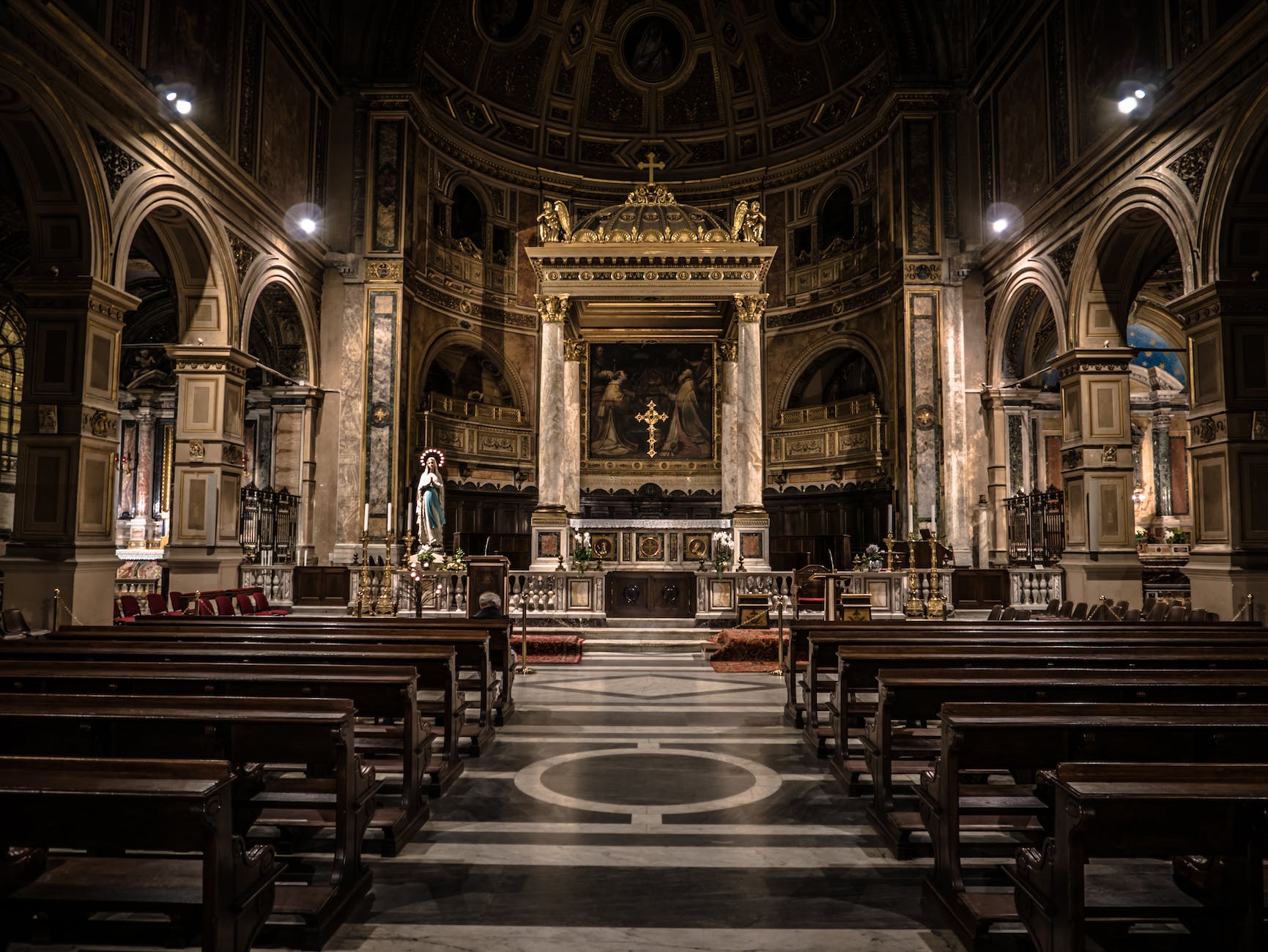
Despite my aversion to labels, I’ve grappled with defining my spiritual identity over the years. I’ve transitioned from identifying as Lutheran to Baptist, then as a child of God, and eventually simplifying it to just Christian. These shifts have mirrored changes in my theological perspective. However, I find labels, even self-imposed ones, to be laden with unintended baggage. When I proclaim myself a Christian, people often jump to assumptions about my beliefs and motives based on preconceived notions.
This tendency can be exasperating. To counteract these biases and promote more genuine understanding, I’ve adopted the label of an “Atypical Christian.” The term ‘Atypical’ serves as a deliberate speed bump, disrupting automatic assumptions and prompting others to inquire about its meaning. This approach compels people to ask me directly, opening the door for a shared exploration of my beliefs and practices. While I may not conform to conventional Christian norms, my commitment to following Christ remains steadfast.
Through my experiences, I’ve come to a realization about theological perspectives. Much of the theology we adhere to isn’t explicitly outlined in the Bible. Unlike a systematic theology book, the Bible isn’t organized like a reference manual where you can find a dedicated section on topics like salvation. Instead, it’s a diverse collection of books, resembling a small library with various genres.
The challenge arises when theologians piece together information from different parts of the Bible to construct their understanding of what God intends to convey. This approach often involves reading between the lines and subjective interpretation, introducing an element of ambiguity. While I acknowledge the importance of theology and the need for a correct understanding, some individuals seem to miss the broader picture in their focus on intricate details.
I believe that the Bible deliberately presents clear, non-negotiable principles, leaving little room for debate on essential matters. This, I argue, is intentional—a symbolic gesture encouraging us to prioritize the fundamental aspects of our faith and avoid getting lost in the minutiae. It serves as a reminder to keep the main things at the forefront of our understanding.
The unfortunate reality within the Christian community is the propensity to engage in conflicts over differing interpretations, leading to divisive schisms. It raises a crucial question: why can’t we, as believers, acknowledge the existence of mysteries within our faith and leave certain matters to individual understanding and conviction? There’s a humility in admitting that not everything can be neatly dissected and comprehended.
The arrogance surfaces when we assume the role of guides, believing that we must lead others to a singular truth. A more humble perspective might be to trust in the guidance of the Holy Spirit within each individual believer. If someone is in Christ, the conviction is that the Holy Spirit will illuminate the truth to them.
The sin committed by denominations and churches, in this context, lies in the unnecessary division of the broader community of believers—the body of Christ. These divisions often emerge over issues of doctrine that some have deemed nonnegotiable. The consequence is a fragmented and weakened body, hindering the unity that is intended to characterize the Christian faith. Recognizing the limitations of our understanding and embracing the mystery, while fostering unity and respect for individual journeys in faith, could potentially alleviate such divisions.
“For I have been informed concerning you, my brethren, by Chloe’s people, that there are quarrels among you. Now I mean this, that each one of you is saying, “I am of Paul,” and “I of Apollos,” and “I of Cephas,” and “I of Christ.” ” 1 Corinthians 1:11-12 (NIV)
Paul’s statement aligns with the biblical admonition against unnecessary divisions, as found in 1 Corinthians 1:11-12, where Paul addresses the quarrels among believers who align themselves with different leaders. My rejection of labels and denominations in favor of following Christ resonates with his call for unity in the Christian community.
The idea of rejecting divisive labels finds resonance in the broader concept of unity, as expressed in the biblical verse Mark 3:25, “If a house is divided against itself, that house cannot stand.” This principle, emphasizing the importance of unity, is not only applicable to the United States but has deeper roots in ancient wisdom, such as Aesop’s fables and, more significantly, in biblical teachings.
My stance reflects a desire to prioritize the core essence of Christian faith—following Christ—above man-made distinctions. It echoes the call for unity within the body of believers, emphasizing the common ground that all Christians share in their devotion to Christ, rather than being divided by human-made denominations.
What criteria do we use to identify someone within the Christian community? Is it solely based on their doctrinal beliefs or denominational affiliation? Must they align with a specific doctrine or denomination, such as exclusively being Catholic or Baptist? Determining who qualifies as a Christian is a nuanced question with various interpretations. Nevertheless, a semblance of a definition can be gleaned from the Bible.
Your love for one another will prove to the world that you are my disciples.” John 13:35 (NLT)
This passage appears to serve as a litmus test for authentic followers of Jesus, echoing his fundamental teaching to prioritize the love for God and neighbors. While recognizing the importance of doctrine, I contend that love takes precedence as the primary focus. Given the extensive debates on doctrinal matters, perhaps certain aspects should be entrusted to the convictions of individual disciples of Christ. It’s a suggestion to have faith in the Holy Spirit guiding them to discover the truth.
What about church traditions? For Protestants, it’s not supposed to be an issue as they adhere to the concept of sola scriptura. While this may sound appealing, it’s worth noting that this is a theological opinion and is inherently self-refuting. The Bible itself doesn’t prescribe exclusive reliance on its text for theology. Apologies if this challenges a cherished concept. On the other hand, does the Catholic approach, incorporating the Bible, tradition, and the Pope’s decrees, prove effective? The historical example of indulgences suggests otherwise. The value of traditions lies in their ability to foster growth in our relationship with God (loving God) and enhance our relationships with others (loving our neighbors).
Personally, I don’t feel compelled to be dogmatic about every point or possess answers to every question. It’s acceptable to acknowledge that some aspects may remain mysterious, and that’s perfectly fine. Trusting in God allows for the comfort of not needing to comprehend everything.
“‘You shall love the Lord your God with all your heart, with all your soul, and with all your mind.’ 38 This is the first and great commandment. 39 And the second is like it: ‘You shall love your neighbor as yourself.’ 40 On these two commandments hang all the Law and the Prophets.” Matthew 22:37-40 (KJV)
I strongly believe in approaching all doctrine with a filter of love. The pivotal question I pose to myself is, “How does this particular theological concept contribute to my growth in love for God and my neighbor?” If I struggle to establish a meaningful connection, I question whether it should occupy a central place in my theological framework. This realization has led me to the epiphany that love should be the starting point for all theology.
I’ve pondered whether any theologian embarked on their theological journey with this foundational principle, unraveling their doctrines from the core of love. While I’ve encountered Christian books emphasizing the importance of love and even theology texts with a focus on love, I’ve yet to come across a work that explicitly begins with love as the overarching premise and then systematically relates all other doctrinal aspects back to this central theme.
This approach, starting with love and building theological understanding from there, resonates with me as a profound and potentially transformative way to engage with the complexities of Christian doctrine. It aligns with the essence of Jesus’ teachings, encapsulated in the command to love God and love one’s neighbor, suggesting that every theological endeavor should stem from and ultimately contribute to this fundamental principle of love.
Embracing the principle of filtering all doctrine through the lens of love serves as a compass, guiding us to stay centered on the main thing. By constantly asking how a particular theological concept contributes to our love for God and others, we safeguard against getting entangled in doctrinal intricacies that may distract from the fundamental essence of our faith. This approach helps us avoid losing sight of the forest for the trees, maintaining a clear perspective on the core teachings of Christianity. It reminds us that, ultimately, the depth of our love for God and our neighbors is the measure of our fidelity to the essence of the Christian message, preventing us from being ensnared by theological minutiae that may lead us astray.
I’m not intending to delve into the rabbit hole of Orthodoxy and Orthopraxy at this moment; that’s a discussion for later posts. My current emphasis revolves around my aversion to labels. If compelled to adopt one, my intention is to discourage people from confining me within a box based on their cognitive biases. Recognizing that we all harbor cognitive biases, I make this point not as an accusation but as a shared acknowledgment. Labels, in their simplicity, risk oversimplifying the complexity of individual beliefs and experiences, and I prefer to navigate discussions without preconceived notions, allowing for a more open and genuine exchange of ideas.
Excerpt
The author expresses a strong aversion to labels, believing they oversimplify human complexity and create unnecessary divisions, especially within Christianity. Emphasizing love as the foundation for faith and understanding, they advocate for a more individualized approach to spirituality that values personal journeys over rigid doctrinal adherence, fostering unity and genuine connections among believers.

 Treasures of the Elysian Fields
Leave a reply to Blessing Same-Sex Marriage: Too far? Not far enough? – Treasures of the Elysian Fields Cancel reply