
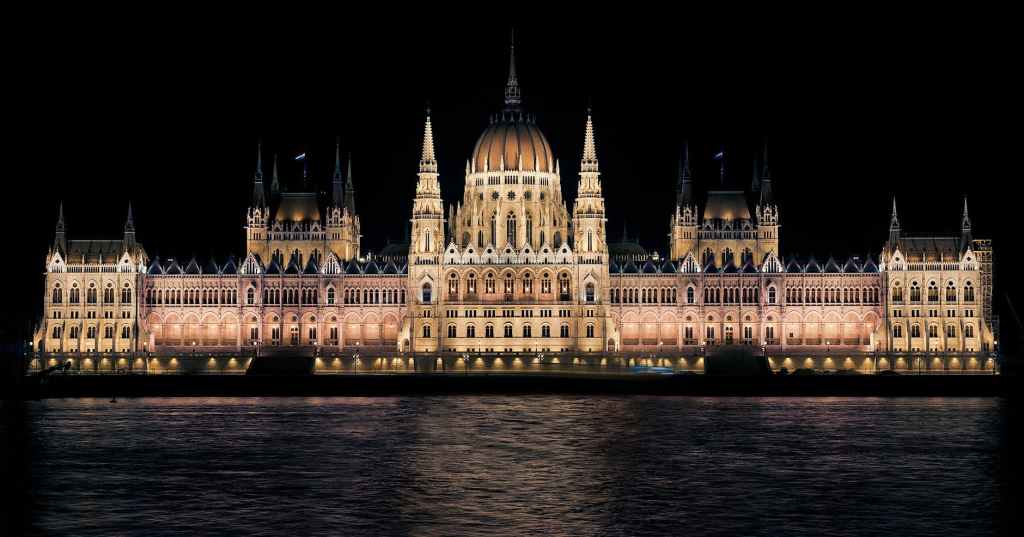
I. Why Hungary Is “Mythic” in U.S. Culture-War Discourse
In the last several years, Hungary has taken on a symbolic weight in American culture war conversation that far exceeds its geographic size. Prime Minister Viktor Orbán has repeatedly framed his government as a distinctly Christian alternative to what he describes as an “ocean of liberal governments” in Europe, even as an “island” defending Christian civilization against secularism, multiculturalism, and moral fragmentation. This is not simply description. It is an invitation. It presents Hungary as a civilizational counter model to liberal democratic norms, and it quietly urges Americans to imagine, What if we did something like that (Lamour, 2022; Máté-Tóth & Rakovics, 2023).
That kind of framing lands because it touches real nerves. Many Western Christians look around and see consumerism, moral relativism, shrinking religious participation, and the slow fading of shared cultural standards. In that environment, Hungary’s constitutional appeal to Christian heritage and its explicit defense of “Christian civilization” can feel like reassurance. It signals that faith can still occupy public space, not only private devotion (Fundamental Law of Hungary, 2011; Lamour, 2022). For some observers, Hungary looks like evidence that a modern state can reassert Christian identity while still keeping the outer form of electoral legitimacy.
But rhetoric and reality must be held apart if we want to think clearly. Political scientists and legal scholars assessing Hungary’s post 2010 trajectory often place it within debates about democratic backsliding and competitive authoritarianism, meaning systems that keep elections while steadily reshaping the rules, the oversight structures, and the institutional guardrails that keep power accountable (Bermeo, 2016; Levitsky & Way, 2010). At the same time, scholars of religion and politics frequently describe Orbán’s use of Christianity less as doctrinal governance and more as identity shaping discourse, what some call Christianism, where Christianity functions as a civilizational and cultural boundary marker rather than a theological framework (Lamour, 2022; Máté-Tóth & Rakovics, 2023).
That is the tension that makes Hungary “mythic” in American debate. Hungary is not invoked merely as a country. It is invoked as a symbol. For supporters, it can serve as proof that Christian identity can be politically restored. For critics, it can serve as warning that restoration language easily becomes church entanglement in projects of national consolidation. Hungary’s symbolic power sits precisely in that ambiguity.
So the central question is not whether Hungary calls itself Christian. The question is what that designation actually does in practice. My thesis here will try to stay measured: Hungary shows how religion can be politically elevated without necessarily producing deeper ecclesial vitality or spiritual renewal, and how church and state alignment can generate real institutional benefits while also producing serious theological and civic distortions. The task is neither romanticism nor caricature, but careful examination of the model in its historical, constitutional, and sociological context.
II. Definitions: Clarifying Terms Before the Temperature Rises
If we are going to have a serious conversation about Hungary and Christian nationalism, we have to slow the pace before we raise the volume. These debates often generate more heat than light because key words carry moral weight long before they carry clear meaning. Precision is vital here.
Before assessing Hungary’s church and state relationship, we need to define our terms carefully.
1. Church and state alignment
Church and state alignment refers to patterns of cooperation, funding, privilege, and shared public projects between religious institutions and political authorities. It does not automatically mean theocracy, nor does it require a formally established state church. It describes a spectrum.
On that spectrum, churches may receive public funding, administer schools or social services, influence educational frameworks, or be symbolically elevated in constitutional language. Alignment is about structured cooperation.
This is distinct from full establishment, where a church exercises direct governing authority or where the state formally adopts a single confession. In contemporary Hungary, the constitution affirms Christian heritage and the state cooperates extensively with major churches in education and social services, yet ecclesial bodies do not govern the state. The government retains final regulatory authority over recognition and funding (Fundamental Law of Hungary, 2011).
So alignment here means structured cooperation under conditions of state supremacy, not shared sovereignty.
2. Christian nationalism
Christian nationalism, as I am using the term, refers to the fusion of Christian identity with national belonging and political legitimacy. It is not simply Christians participating in public life. It is not merely advocating policies informed by Christian moral reasoning.
It is a framework in which being authentically national is implicitly or explicitly linked to being culturally or historically Christian.
That distinction matters. There is a difference between arguing that Christian ethics should inform public policy and claiming that the nation itself is inherently Christian. Douglas Groothuis notes that nationalism can foster solidarity and cultural continuity, yet it can also drift into exclusion and idolatry when national identity is sacralized. The decisive question is whether Christianity is functioning as theological conviction or as political boundary marker.
In American debate, these categories are often blurred. Clarifying them helps prevent us from either baptizing every form of patriotic rhetoric or condemning every Christian political voice.
3. Christianism and Christian national discourse in Hungary
In scholarly analysis of Hungary, some researchers use the term Christianism to describe the political deployment of Christian identity. Lamour argues that in Orbán’s rhetoric Christianity operates as a nodal signifier, meaning a central organizing symbol that binds together themes such as nationhood, border defense, cultural continuity, and resistance to liberal cosmopolitanism (Lamour, 2022). In this usage, Christianity is less doctrinal confession and more civilizational language.
Máté Tóth and Rakovics similarly show through discourse analysis that references to Christianity in Orbán’s speeches structure narratives of belonging and difference over time. Christianity delineates insiders and outsiders. It anchors a story about Hungarian destiny within Europe (Máté-Tóth & Rakovics, 2023).
This analytical lens does not require judging sincerity. It simply identifies the political function of religious language in national identity formation.
4. Democratic backsliding and competitive authoritarianism
Finally, Hungary’s church and state alignment must be situated within its broader governance context. Democratic backsliding refers to the gradual erosion of liberal democratic norms and institutional checks rather than sudden collapse. Bermeo notes that contemporary erosion often proceeds through legal and constitutional mechanisms, especially through executive aggrandizement that weakens independent courts, media, and oversight bodies while preserving elections (Bermeo, 2016).
Levitsky and Way describe competitive authoritarian regimes as systems in which multiparty elections continue but incumbents tilt the playing field in their favor. Opposition parties compete, yet institutional advantages, regulatory pressures, or media asymmetries reduce the fairness of the contest (Levitsky & Way, 2010).
This vocabulary does not automatically classify Hungary in this section. It does, however, provide the conceptual grammar commonly used by scholars evaluating post 2010 developments.
These definitions establish the terrain. Church and state alignment describes the structure. Christian nationalism identifies the identity logic. Christianism explains how religious language operates politically in Hungary. Democratic backsliding and competitive authoritarianism situate that alignment within a broader institutional environment.
With terms clarified, we can proceed without collapsing into polemics or romanticism.
III. Historical and Constitutional Context: What Kind of “Christian” Is in View?
To understand Hungary’s present alignment between church and state, we have to look carefully at how the nation narrates itself in law. The crucial question is not simply whether Christianity is mentioned. Many constitutions reference God or heritage. The deeper question is this: what kind of Christianity is being invoked, and to what end?
A. Hungary’s Constitutional Self-Narration
Hungary’s 2011 Fundamental Law opens with the words “God bless the Hungarians” and includes a National Avowal that explicitly acknowledges the role of Christianity in preserving the nation and shaping its history (Fundamental Law of Hungary, 2011). The constitution situates Hungarian identity within a story of Christian heritage, civilizational continuity, and cultural endurance.
That language matters. But it must be read carefully.
The constitution does not establish a state church. It does not adopt a doctrinal confession. It does not grant governing authority to ecclesial bodies. Instead, Christianity appears primarily as a historical and civilizational reference point. It functions as part of the national narrative.
In this respect, Hungary’s rhetoric resembles strands of American discourse that speak of the United States as a “Christian nation.” That phrase can mean very different things. It may refer to the religious convictions of many founders. It may point to the influence of biblical ethics on law and culture. Or it may suggest that national identity itself is inherently Christian. Public debate often slides between these meanings without noticing the shift.
Hungary’s Fundamental Law operates largely at the level of heritage and identity rather than ecclesial authority. The invocation of Christianity is civilizational. It signals continuity and moral orientation. It does not codify doctrine. That distinction is decisive. What we see is not theological governance but symbolic elevation.
Scholars examining Orbán’s rhetoric have made similar observations. Christianity functions as a civilizational marker that structures narratives about Europe, migration, and national destiny rather than articulating sacramental theology or confessional commitments (Lamour, 2022; Máté Tóth & Rakovics, 2023). In both constitutional text and political speech, Christianity appears primarily as identity.
B. Official Neutrality and Symbolic Elevation
Here a paradox emerges.
On the one hand, Christianity is publicly privileged. It is woven into constitutional language. It is invoked frequently in political rhetoric. It is presented as foundational to Hungarian identity.
On the other hand, the state retains decisive authority over legal recognition, funding frameworks, and institutional arrangements for religious bodies.
We might summarize the situation this way: symbolically Christian, administratively sovereign.
Hungary is not a theocracy. Churches do not govern. The state determines which religious communities receive formal recognition and public support. That means that although Christianity is rhetorically elevated, religious institutions remain dependent on state mechanisms for legal status and financial cooperation.
This is where demarcation becomes critical. Which churches receive favor? Which are sidelined? By what criteria? Even if doctrine is not directly regulated, the perception of conditional favor can create suspicion. If funding and institutional access are linked to alignment with state priorities, critics will argue that independence is weakened. Supporters will respond that cooperation does not equal coercion.
But the issue is subtler than overt control. The real question is whether structural dependence gradually shapes behavior. Churches reliant on public resources may hesitate before publicly challenging government policy. Governments that privilege certain religious bodies may unintentionally narrow pluralism and civic trust.
The constitutional framework therefore presses two intertwined questions.
Does symbolic elevation of Christianity foster moral cohesion without distorting ecclesial integrity?
And can churches remain genuinely free while receiving material and legal benefit from the state?
These tensions are not unique to Hungary. They appear anywhere religion is publicly honored yet legally regulated. Hungary simply sharpens the contrast because Christianity is invoked as civilizational identity while simultaneously managed within a centralized legal structure.
IV. How the Relationship Works in Practice: Mechanisms of Alignment in Hungary
Up to this point we have been defining terms and clarifying structure. Now we move from architecture to operation. How does church and state alignment actually function in Hungary?
In what follows, I will describe the primary mechanisms at work. For each, I will name three things: what it is, why supporters welcome it, and why critics raise concern. The aim is description before judgment, but not description without moral awareness. Every institutional arrangement carries both plausible goods and plausible risks.
A. Political Rhetoric and Identity Framing
What it is
Orbán and the governing party consistently frame Hungary as a guardian of Christian civilization and Christian Europe. Christianity in this rhetoric functions as civilizational inheritance. It grounds national identity and legitimizes policy priorities, especially around migration, sovereignty, and cultural cohesion.
Scholars have shown that references to Christianity in Orbán’s speeches are not random flourishes but patterned discourse that can be traced over time (Máté Tóth & Rakovics, 2023). Lamour argues that Christianity operates as a nodal signifier, meaning a central organizing symbol that binds together themes such as nationhood, border protection, and resistance to liberal cosmopolitan norms (Lamour, 2022). Christianity becomes a unifying story that gives coherence to a wider political vision.
Why supporters like it
Supporters often view this as cultural honesty. They see it as explicit acknowledgment of Hungary’s historical inheritance and moral framework. In a world of rapid social change and demographic anxiety, the language of Christian civilization provides narrative stability.
For many, this is not about enforcing doctrine. It is about anchoring identity. They perceive Western Europe as drifting into fragmentation and believe Hungary’s rhetoric restores moral clarity and continuity.
Why critics worry
Critics worry that when Christianity becomes civilizational boundary marker, political disagreement can morph into identity conflict. If the nation is defined in Christian terms, dissent risks being framed as civilizational betrayal rather than policy difference.
There is also a subtler pressure. Even without overt coercion, churches may feel incentive to align publicly with governing narratives to preserve access and influence. Faith can shift from theological confession to political badge. Minorities and dissenters may begin to feel socially peripheral. The problem is not always force. It is fusion.
B. Law, Institutions, and the Rule of Law Setting
What it is
Church and state alignment does not exist in isolation. It is embedded within Hungary’s broader institutional environment. European Union monitoring frameworks examine judicial independence, anti-corruption systems, media pluralism, and institutional checks (European Commission, 2023). Human Rights Watch evaluates civil society space, minority protections, and rights practices (Human Rights Watch, 2024).
These concerns are not primarily theological. They are structural. They describe the environment in which alignment unfolds.
Why supporters like it
Supporters often argue that strong executive direction and institutional reform were necessary to overcome post-communist dysfunction and elite capture. They may view external monitoring as politically selective or culturally biased, especially when critiques intersect with conservative positions on family or national sovereignty.
From this vantage point, cooperation with churches becomes part of a broader strategy to stabilize social order and deliver public goods through trusted institutions.
Why critics worry
Critics argue that when institutional power becomes centralized, alignment becomes more vulnerable to politicization. If oversight bodies weaken, discretion expands. That discretion can extend to which churches receive recognition, funding, or access.
In that environment, alignment risks becoming instrument rather than partnership. Instead of mutual accountability, the church may become embedded within a broader consolidation of authority.
C. State Funding, Legal Recognition, and Church Privileges
What it is
A central mechanism of alignment is structured cooperation through public financing and legal recognition. Churches operate schools, charities, and cultural institutions with state support. This model is not unique to Hungary. Variations of it exist across Europe.
The practical questions concern transparency and discretion. How are churches recognized? How is funding distributed? What leverage does the state retain?
Why supporters like it
Supporters emphasize competence and capacity. Churches often run effective schools and social services. Public funding strengthens community infrastructure and preserves cultural heritage.
They may argue that if the state already funds education and welfare, supporting church run institutions is simply plural provision of public goods.
Why critics worry
Critics focus on funding conditionality, even when informal. If churches rely on state support, leaders may hesitate before criticizing policy. Selective privilege can become soft discipline. Churches aligned with governing priorities may flourish institutionally, while dissenting or smaller communities encounter obstacles.
Even without explicit doctrinal interference, a loyalty economy can emerge. The risk is reputational and prophetic. Independence may erode not by decree but by dependence.
D. Education and Cultural Memory
What it is
Education and public memory shape national identity. States influence curricula, commemorations, and cultural funding. In Hungary, Christian heritage can be presented not merely as religious history but as national essence.
The story of the nation becomes intertwined with Christian continuity. This shapes how citizens understand Hungary’s relationship to Europe, migration, and perceived external threats.
Why supporters like it
Supporters see cultural continuity. Every society transmits a story. Teaching national history in continuity with Christian heritage, they argue, strengthens civic identity and moral formation.
They also contend that liberal societies are not neutral. They simply embed different narratives. Better, they say, to articulate one’s heritage openly than to disguise it under secular abstraction.
Why critics worry
Critics worry that cultural policy can slide into homogenization. When one narrative dominates civic formation, minorities may feel excluded. Alternative interpretations of history may be labeled disloyal.
There is also the concern of instrumentalization. Christianity may be used to sacralize national memory rather than to witness to a kingdom that judges every nation, including one’s own.
E. Family Policy and Demographic Strategy
What it is
Hungary has pursued family centered demographic policy framed around traditional family norms and national continuity. Incentives encourage marriage and childbearing. The rhetoric often presents demographic stability as cultural survival.
Why supporters like it
Supporters argue that demographic decline threatens national continuity and intergenerational solidarity. They see pro-natalist policy as legitimate state interest and view family incentives as constructive rather than punitive.
Many also note alignment with longstanding Christian teaching on marriage and family, interpreting such policy as healthy cooperation between moral tradition and public law.
Why critics worry
Critics caution that demographic policy can become moralized identity politics. If the state privileges certain family forms, others may be stigmatized. Family policy can evolve into boundary enforcement about who counts as proper citizen.
When churches become closely identified with such policy, they risk being perceived as political enforcers rather than pastoral communities. Over time, polarization deepens and witness narrows.
At every level, alignment operates through ordinary institutional mechanisms. None of these mechanisms is inherently tyrannical. None is automatically virtuous. The question is not whether cooperation exists. It is how cooperation shapes both church and state over time.
V. Benefits: What Hungary’s Model Can Give to the Church and to the State
If we are going to critique a model honestly, we must first admit why it attracts loyalty. Church and state alignment in Hungary is not sustained by force alone, nor by empty symbolism. It persists because it appears to offer tangible goods. Some of those goods are institutional. Some are cultural. Some are sincerely theological.
A balanced analysis must acknowledge them.
A. Potential Benefits to the Church
1. Resources for Mission-Adjacent Work
Hungary’s model provides material support to major Christian denominations in areas such as education, charitable services, and preservation of religious heritage. Public financing of church run schools and social services allows religious institutions to expand their reach into domains traditionally associated with Christian mission: care for the poor, support for families, community formation.
From the standpoint of institutional sustainability, such funding reduces financial instability and enables long-term planning. In a post-communist context where churches were once suppressed, state support can also be interpreted as restorative recognition of historical injustice. The preservation of churches, monasteries, and sacred sites reinforces continuity and collective memory.
Supporters argue that these resources need not distort mission. Churches have always educated and served. Public funding, they contend, simply strengthens work that is already intrinsic to Christian practice.
2. Institutional Visibility
Hungary’s constitutional and rhetorical elevation of Christianity ensures that churches are not relegated to the private sphere. In a European environment where religion is often framed as marginal or declining, symbolic recognition can enhance cultural presence and legitimacy.
Public acknowledgment of Christian heritage communicates that faith is not merely tolerated but valued as part of the national story. For believers who perceive Western liberalism as dismissive of religious conviction, this matters. It can strengthen morale and encourage younger clergy and lay leaders to pursue public engagement without feeling culturally displaced.
Visibility does not equal vitality. But it does affect confidence and social standing.
3. Access to Public Policy Influence
Where churches are integrated into public dialogue, they gain channels through which to shape ethical discourse. In Hungary, this is most visible in debates over family policy, education, and cultural preservation.
Supporters argue that Christian social teaching has long engaged questions of the common good, subsidiarity, and human dignity. Alignment with the state creates institutional pathways through which those principles can inform legislation. From this vantage point, cooperation is not capitulation. It is moral engagement.
The crucial claim here is that influence can be exercised without surrendering identity.
B. Potential Benefits to the State
1. Legitimacy and Social Cohesion
Religious language can function as shared moral vocabulary. By appealing to Christian heritage, political leaders situate contemporary governance within a narrative that resonates with historical memory. Scholars of religion and nationalism note that civilizational symbols often stabilize identity during periods of rapid change (Lamour, 2022).
Supporters of Hungary’s approach argue that invoking Christian civilization provides continuity in a fragmented moral landscape. In societies marked by secularization and polarization, religious symbolism can offer reference points that cut across partisan categories.
At least in theory, such language can unify rather than divide.
2. Service Delivery
Churches often operate high-trust networks embedded in local communities. They administer schools, hospitals, and social programs. When states partner with these institutions, they can leverage established infrastructure for efficient service delivery.
In Hungary, public support for church-run schools and social services allows the state to meet educational and welfare goals through existing structures. Supporters argue that this reflects plural provision rather than monopoly, combining national oversight with decentralized trust networks.
The state benefits from competence that it did not have to build from scratch.
3. Identity Formation and Political Mobilization
Political leadership always involves narrative construction. The language of Christian civilization offers a coherent story about belonging and value. In democratic systems, identity frameworks are often used to mobilize voters. Hungary’s emphasis on Christian heritage functions within that dynamic.
From a strategic standpoint, civilizational framing unifies constituencies concerned about migration, demographic decline, or perceived moral erosion. It simplifies complex policy debates into narratives of preservation and continuity. Supporters see this as transparent articulation of national priorities. Critics see boundary construction. From the state’s perspective, the benefit is narrative coherence and electoral consolidation.
C. Why Some Sincere Christians Support This Model
It is important to resist caricature. Support for Hungary’s approach does not automatically arise from cynical power seeking. Many Christians who speak favorably of the model do so from deeply held moral and theological concerns.
They worry about moral fragmentation and consumer individualism. They believe liberal neutrality has eroded shared virtue and weakened family stability. They see demographic decline as a serious challenge to intergenerational continuity. They fear that if the state refuses to affirm a moral framework, the vacuum will be filled by ideologies more corrosive to human dignity.
From this perspective, alignment is not about dominance. It is about preservation. It is a defensive response to what is perceived as civilizational crisis. Public affirmation of Christian heritage is seen as recovery of memory rather than imposition of faith.
Acknowledging these motivations is essential for intellectual integrity. The appeal of Hungary’s model rests not only on institutional advantage but on genuine concern for social cohesion, virtue, and the future of Christian witness in modern societies.
Only after we grant that appeal its strongest form can we responsibly examine its risks.
VI. Costs and Risks: Negative Impacts on Church and State in Hungary
Every political arrangement that draws church and state closer together carries tradeoffs. Proximity to power always shapes identity. Even when the benefits are real, structural alignment generates pressures that work slowly, sometimes invisibly, on both ecclesial life and civic order.
It is not enough to ask what such a model gives. We must also ask what it takes.
A. Costs to the Church
1. Loss of Prophetic Independence
When churches receive material support or legal privilege from the state, public critique of governing authorities can become institutionally expensive. No official decree may silence dissent. Yet financial dependence has a way of encouraging caution.
In Hungary’s broader governance environment, where executive authority has expanded and institutional safeguards are debated within European monitoring frameworks, proximity to power can blur the line between moral witness and political alignment (European Commission, 2023). The closer churches are woven into state-supported initiatives, the harder it may become to challenge policies that conflict with Christian ethical teaching.
The risk is not dramatic persecution. It is habituation. Leaders learn, often unconsciously, where the boundaries lie. Self-moderation replaces prophetic clarity. Over time, the church’s capacity to speak truth to power can be softened, not by coercion, but by incentive.
2. Nominal Christianity and Identity Formation
A second danger is theological and sociological rather than legal. When Christian identity becomes culturally affirmed or politically advantageous, affiliation may rise without corresponding spiritual depth.
This pattern is not unique to Hungary. Church history repeatedly shows that when Christianity becomes marker of belonging, conformity can replace conversion. Critics of state-aligned Christianity have long warned that privilege incentivizes identification rather than discipleship.
In Hungary, Christianity often appears in political rhetoric as civilizational identity rather than summons to repentance or sacramental life (Lamour, 2022; Máté Tóth & Rakovics, 2023). The claim here is modest. Symbolic elevation may strengthen cultural Christianity while weakening spiritual formation. That remains an empirical question, yet it aligns with historical precedent.
Visibility is not vitality.
3. Internal Polarization
When political narratives intertwine with religious identity, churches can absorb partisan divisions. Clergy and laity may increasingly sort along political lines.
In polarized settings, disagreement over migration, family policy, or relations with the European Union can be reframed as disagreement over Christian fidelity itself. Political disagreement becomes spiritual suspicion. The church, rather than transcending division, begins to mirror it.
Such internal strain erodes trust within congregations. It weakens the church’s capacity to model reconciliation in a fractured society. A community called to unity in Christ may become another arena of cultural conflict.
4. Moral Credibility Risk
When the church is publicly perceived as political actor, evangelistic credibility can diminish among those outside the governing coalition.
If Christian institutions are closely associated with a particular party or executive agenda, critics and minorities may see the church as extension of the state rather than community shaped by the gospel. Over time, this perception hardens cynicism about religious motives.
This is a warning, not a verdict. Yet the pattern is recognizable. When institutional influence becomes indistinguishable from spiritual faithfulness, the church risks confusing proximity to power with obedience to Christ. Traditions that emphasize the church as servant and reconciler consistently caution against that confusion.
B. Costs to the State
1. Pluralism, Civic Trust, and Majority Domination
When a state aligns closely with a dominant religious identity, tension arises within plural societies. Democratic legitimacy depends not only on majority rule but on protection of minority rights. Tocqueville warned of the tyranny of the majority, where cultural dominance can translate into marginalization of dissent.
If national identity is framed in explicitly Christian civilizational terms, minority communities may increasingly be perceived as peripheral or even threatening. Political disagreement can harden into identity conflict. Citizens begin to see each other not as partners in shared civic project but as rival moral camps.
External monitoring bodies have raised concerns in Hungary about minority protections, civil society space, and equal treatment under law (European Commission, 2023; Human Rights Watch, 2024). Whether one agrees with every assessment, the recurring concern is structural: when institutional counterweights weaken, majoritarian impulses face fewer restraints. In that environment, symbolic privilege can reinforce perceptions of unequal citizenship.
Short-term cohesion among supporters may come at the expense of long-term civic trust.
2. Policy Captured by Culture War
Another risk is that governance becomes absorbed into moralized identity struggle. When political debate is cast in civilizational language, compromise appears as betrayal. Prudential reasoning yields to symbolic signaling.
Christian civilizational rhetoric can mobilize voters. Yet if public policy becomes primarily tool of cultural boundary enforcement, effectiveness and fairness may suffer. The language of moral defense can displace deliberative pluralism.
The state may gain clarity of narrative while losing depth of deliberation.
3. Human Rights and International Legitimacy
When majoritarian identity politics shape administrative practice, risks to minority protections increase. Human rights organizations have documented concerns in Hungary regarding media freedom, civil society regulation, asylum policy, and treatment of vulnerable populations (Human Rights Watch, 2024). The European Commission has likewise highlighted questions of judicial independence and institutional checks (European Commission, 2023).
Even when a government defends its actions as democratic expression or cultural preservation, international frameworks evaluate states against shared rule of law and rights standards. Divergence can produce diplomatic friction, financial consequences, and reputational cost.
Alignment between church and state does not automatically produce rights violations. Yet when majority culture and political authority reinforce each other without strong institutional counterweights, minority protections can weaken.
The danger is not inevitable collapse. It is gradual imbalance.
And imbalance, sustained long enough, reshapes both church and state.
VII. Hungary and Russia: Similar Surface, Different Operating Logic
At a glance, Hungary and Russia can look like variations of the same story. Both governments invoke Christianity in national rhetoric. Both describe themselves as defenders of traditional morality against liberal Western cultural influence. Both are cited in debates about Christian nationalism. But surface similarity is not structural identity.
Beneath the rhetoric lie different historical trajectories and different operating logics. If we collapse them into one category, we flatten important distinctions. Careful comparison helps us see where the resemblance ends and where the divergence begins.
A. Russia’s Model: Sacralized State Power
In Russia, the relationship between President Vladimir Putin and the Russian Orthodox Church reflects deeper theological and civilizational integration. Scholars such as Agadjanian note that the discourse of “traditional morality” has become central to contemporary Orthodox identity construction. It does not merely affirm heritage. It frames Russia as moral bulwark against Western decadence and situates Orthodoxy within a larger narrative of civilizational destiny (Agadjanian, 2017).
In this model, the church does more than provide symbolic language. It participates in legitimizing the state’s broader ideological vision. Religious vocabulary can frame geopolitical conflict as moral struggle. National survival and spiritual mission become intertwined.
The fusion risk here is substantial. When the church helps sacralize state power, political objectives can acquire quasi theological weight. Over time, ecclesial teaching and national ideology can blur into one another. Dissenting religious communities may face regulatory pressure or legal disadvantage, though the intensity and form of such pressure have varied. Debate continues about the degree of independence retained by the Russian Orthodox Church, yet critics argue that alignment with state objectives constrains its capacity for sustained public opposition.
The defining feature of the Russian model is sacralization. The state is not merely accompanied by religious identity. It is infused with spiritual meaning.
B. Hungary’s Model: Cultural Christianity as National Brand
Hungary operates differently.
Christian heritage is prominently invoked, but Christianity functions primarily as civilizational and cultural marker rather than sacramental authority structure. Orbán’s rhetoric presents Hungary as defender of Christian Europe, yet theological argumentation plays secondary role to identity framing (Lamour, 2022; Máté Tóth & Rakovics, 2023).
The Hungarian state retains clear administrative authority over recognition, funding, and institutional structure. Churches cooperate with the state in education, social services, and cultural programming, but they do not share in constructing sacred imperial ideology. The emphasis is less metaphysical destiny and more cultural continuity.
That does not mean leverage is absent. Legal recognition frameworks and public financing provide structural influence. Churches aligned with national priorities often operate within favorable conditions. Those that dissent may encounter obstacles. The alignment is political and transactional rather than explicitly theological, yet still consequential.
Hungary deploys Christianity as identity resource. Russia integrates Orthodoxy into civilizational mission.
C. The Key Contrast
The distinction can be put plainly.
In Russia, the church helps sacralize the state’s civilizational project.
In Hungary, the state leverages Christian identity to define national belonging and policy priorities.
Both involve religion and power. The difference lies in direction and depth. Russia’s model embeds religious authority within expansive civilizational ideology. Hungary’s model employs Christianity as cultural frame within nationalist political structure.
One leans toward metaphysical fusion. The other toward identity branding, though branding with real institutional consequences.
D. Geopolitical Proximity and the Question of Alignment
Another layer complicates the comparison. Hungary has maintained economic ties with Russia, especially in energy, and has at times diverged from broader Western consensus within European institutions. This has prompted speculation about possible geopolitical alignment.
Rhetoric about traditional values can obscure institutional difference. Yet institutional realities matter. Hungary remains embedded in European Union and NATO frameworks. Its legal structure differs substantially from Russia’s political system.
Foreign policy decisions are shaped by economics and strategy. Hungary’s church and state model does not replicate Russia’s sacralized fusion of ecclesial authority and imperial ideology. The risks of convergence are therefore more geopolitical than theological.
In Russia, church alignment appears closely intertwined with state power in ways critics describe as coercive or structurally constraining. In Hungary, formal independence is more clearly preserved, though observers debate how durable that independence remains amid institutional centralization.
The broader lesson is straightforward.
Similar rhetoric does not guarantee identical arrangements. Both Hungary and Russia invoke Christianity. The depth, direction, and consequences of that invocation are not the same.
VIII. Hungary and the United States: Why the American Structure Changes the Game
Comparisons between Hungary and the United States often assume that similar rhetoric implies similar institutional structure. That assumption is misleading. The constitutional architecture of the United States changes the available options before anyone even gets to policy. Because of that, the phrase Christian nation carries very different legal and political implications in America than it does in Hungary or Russia.
A. The United States Constitutional Baseline
The First Amendment states that Congress shall make no law respecting an establishment of religion or prohibiting the free exercise thereof. These two clauses, often called the Establishment Clause and the Free Exercise Clause, create a dual commitment. Government may not establish an official church, and it may not suppress religious practice.
Over time, Supreme Court jurisprudence has interpreted these clauses in a way that permits certain forms of accommodation and cooperation while still prohibiting formal establishment or preferential structures that resemble establishment. The American model does not require strict privatization of religion. Public funding can reach religious institutions through neutral programs. Religious speech is protected in public life. Yet the state may not designate a national church or legally privilege one religious body as bearer of national identity.
The practical result is structural differentiation. Churches can influence public life through persuasion and participation, but they do not receive constitutional endorsement as defining the nation. Any alignment must pass through legal guardrails designed to prevent coercion and unequal treatment.
B. What Separation Helps With
This differentiated structure yields several benefits.
First, it protects churches from becoming instruments of state power. Because the state cannot formally establish or control a church, religious institutions retain legal independence. They can affirm or critique political authority without losing their standing.
Second, it protects minority religious communities from coercion or exclusion. If there is no established church, citizenship does not depend on adherence to a dominant religious identity. In principle, legal equality should not rise and fall with majority preference.
Third, it reduces the likelihood that the gospel becomes fused with national identity by law. Americans may argue rhetorically that the nation is Christian, but that claim carries no constitutional force. National belonging is civic rather than confessional. That difference matters. It creates space for Christian conviction without turning Christianity into state sanctioned badge of citizenship.
C. What Separation Can Cost
This structure also brings real tensions.
Religious communities may experience public discourse as dismissive or marginalizing. Because the state cannot privilege Christian symbolism or language, religious arguments must compete in plural public square. Some believers interpret this as loss of influence, even cultural displacement.
Churches also operate with greater institutional independence. They cannot rely on broad constitutional recognition for funding or automatic social authority. Financial sustainability, education, and charitable work must be pursued within competitive civil environment. That independence can foster integrity, but it also limits structural privilege.
Finally, pluralism creates contestation. In the American model, persuasion replaces enforcement. Public moral disagreement cannot be settled by constitutional declaration of religious identity. Competing visions must argue their case in democratic institutions and civil society. For some Christians, that can feel unstable or fragmented.
The Problem of Terminology
This comparison reveals a deeper problem. When phrases like Christian nation or Christian nationalism are used across Hungary, Russia, the United States, and the United Kingdom, they point to very different realities.
- In Russia, Christian identity can be integrated into civilizational state narrative with close ecclesial alignment.
- In Hungary, Christianity can function as constitutional heritage marker and political identity frame.
- In the United States, constitutional law prohibits establishment even when political rhetoric invokes Christian heritage.
- In the United Kingdom, an established church coexists with robust liberal democracy and practical pluralism.
The same phrase, applied across these contexts, often obscures more than it clarifies. It compresses distinct constitutional arrangements, historical trajectories, and theological dynamics into single label. In public debate, that compression pulls words away from institutional reality.
This does not remove the need for moral evaluation. It does, however, demand analytical precision. Before affirming or condemning Christian nationalism in any setting, we should ask: what constitutional structure, what institutional arrangement, and what theological logic are actually in view?
Without that clarity, debate becomes symbolic rather than substantive.
IX. Theological Evaluation: Why Christ’s Kingdom Points in a Different Direction
Up to this point, we have been descriptive. We have looked at structures, incentives, and institutional mechanics. Now the lens shifts. Political arrangements can be efficient or stabilizing. They can produce visible goods. But Christian theology asks a deeper question.
- Not simply, Does it work?
- But, Does it reflect the nature of Christ’s kingdom?
- The decisive issue is formation. What kind of disciples does this arrangement produce?
A. Kingdom Logic and Nation State Logic
The New Testament presents the kingdom of God as categorically distinct from political sovereignty. Jesus refused to root his mission in coercive power or national restoration. When confronted with opportunities to seize authority, he declined them. Though his authority extended over all creation, he revealed it not through domination but through suffering love, the embrace of enemies, and resurrection vindication. In doing so, he confronted the status quo and overturned prevailing assumptions about what power truly is.
N. T. Wright has argued that the kingdom Jesus announced redefines power itself. It advances not through domination but through faithful witness and self-giving service. Power, in the gospel, is transformed from control to sacrifice. That distinction matters whenever Christianity is aligned with state identity.
When Christian identity becomes political badge, discipleship can hollow out. Cultural belonging replaces conversion. National loyalty replaces repentance. The church may grow in affiliation while shrinking in spiritual depth. The danger is not persecution. It is nominalism.
Jesus’ command to render to Caesar what belongs to Caesar and to God what belongs to God establishes principled differentiation between political obligation and divine allegiance. The problem emerges when those spheres collapse. If the state becomes primary vehicle for defining Christian identity, ultimate loyalty can blur.
This is the pressing theological question for Hungary and for any similar model. Can a state that symbolically elevates Christianity also allow the church to remain spiritually independent? Can churches retain freedom to confront injustice when conscience shaped by the Spirit demands it?
Structural alignment does not automatically eliminate that freedom. But the durability of freedom depends on institutional safeguards and theological clarity.
The deeper issue is formation. Does alignment cultivate repentance, holiness, and sacrificial love? Or does it incentivize conformity to national narrative? A church that multiplies Christian labels while weakening transformation cannot claim theological success, however stable the political order may be.
B. The Constantinian Warning
Christian history offers caution.
Hauerwas and Willimon warn that when the church seeks influence through partnership with the state, it risks exchanging prophetic marginality for cultural dominance. That exchange often carries hidden cost. Influence can soften critique. Privilege can dull courage.
The Constantinian settlement did not destroy Christian witness. It reshaped it. The church gained protection and prestige. It also absorbed the temptations of empire. Cultural stability increased. Spiritual compromise often followed. The lesson is not withdrawal from public life. It is vigilance. Proximity to power always reshapes identity.
When the church aligns closely with governing authority, it may gain access while losing credibility. Its voice can begin to sound like endorsement rather than proclamation. Theologically, that is perilous. The church’s authority flows from fidelity to Christ, not recognition by the state.
C. What a Healthier Posture Looks Like
A healthier posture preserves differentiation while allowing engagement.
The church must be free enough to bless policies that genuinely advance justice and the common good. It must also be free enough to critique those same authorities when they depart from justice. It must love neighbors as neighbors, not reframe them as enemies in moralized political struggle.
Freedom of conscience is central. Faith requires uncoerced response to grace. Belief sustained by political pressure is not faith but conformity.
If a believer, guided by the Spirit, must confront wrongdoing by the state, institutional alignment must not silence that voice. The church stands under the judgment of Christ before it stands beside any government.
The ultimate test remains spiritual vitality. Does the arrangement produce repentance, holiness, and costly love? Or does it produce identity Christians attached to national narrative?
A church filled with culturally affirmed believers but lacking transformed disciples has gained visibility while losing depth.
D. Final Exhortation
A sober conclusion holds two truths together.
Christians may rightly seek justice through law. Christian moral reasoning belongs in public discourse. Believers can advocate policy consistent with their convictions and cooperate with governments in pursuit of social good.
At the same time, Christians must resist the fusion of Christian identity with national belonging. When authentic citizenship becomes intertwined with Christian labeling, the gospel is reduced to civilizational marker.
Christ’s kingdom transcends ethnicity, party, and geopolitical alliance. The church is called to witness to a kingdom not of this world while living faithfully within it. Its power does not rest in constitutional language or state sponsorship but in fidelity to the crucified and risen Lord.
The final measure is not whether a nation calls itself Christian. It is whether the church within that nation remains free to follow Christ wherever He leads, even when that path runs against the grain of national power.
X. A Clearer Lens: Holding Gains and Dangers Together
This discussion has moved from description to evaluation with deliberate care. If there is one hope at this stage, it is clarity. Much of the contemporary rhetoric about Christian nationalism, Christian nations, or Christian government runs at cross purposes because participants are often speaking about very different constitutional systems, historical trajectories, and institutional realities.
Many debates proceed without close knowledge of how church and state actually function in Hungary, how that differs from Russia, or how fundamentally different the American constitutional framework is. Without that context, conversation becomes reactive rather than analytical. Terms stretch beyond their precision. Warnings and endorsements alike drift from institutional fact into symbolic projection.
A sober conclusion must therefore hold both sides of the ledger together.
Hungary offers real institutional gains for churches and real narrative legitimacy for the state. Churches may receive stable funding for schools, social services, and cultural preservation. Christian heritage is publicly affirmed rather than confined to private devotion. The state gains a moral vocabulary that reinforces national story and collective identity.
At the same time, the spiritual and civic costs can be substantial. Alignment can blur prophetic boundaries. Institutional privilege can coexist with declining religiosity. Political identity can substitute for discipleship. Civic trust can narrow if pluralism appears constrained or if minority communities perceive favoritism.
The central question is not whether such a model is possible. It is whether it strengthens both spiritual vitality and civic health over time.
What to Watch
Several concrete indicators deserve sustained attention.
First, trends in religiosity compared with institutional privilege. If churches expand in funding and public visibility while religious participation, sacramental life, and spiritual formation decline, the tension becomes visible. Reporting has already noted the gap between institutional prominence and shrinking affiliation within parts of Hungarian Christianity. Long term trajectory matters more than rhetorical claim.
Second, the independence of ecclesial voice. Do churches retain freedom to critique policy without financial or legal vulnerability? Can they publicly address injustice, including injustice enacted by governing authorities who share their moral vocabulary? The health of the church depends upon this freedom.
Third, pluralism and civic trust. External indicators such as European Union rule of law monitoring and human rights assessments provide imperfect but useful lenses into institutional integrity, minority protections, and public confidence in governance. If civic trust narrows along tribal lines, the risk of majority dominance increases.
Fourth, neighbor love in practice. Political rhetoric often frames national identity in civilizational terms. Yet Christian faith is ultimately measured not by boundary maintenance but by love of neighbor, especially the vulnerable and the outsider. Does alignment cultivate generosity and justice, or does it intensify cultural antagonism? This question reaches beyond law into formation.
The theological concern is not that Christians seek the common good through political means. It is whether national projects absorb Christian identity in ways that weaken discipleship and diminish witness.
If the reader now sees that much public rhetoric compresses distinct realities into simplified categories, then the conversation has progressed. Hungary is neither utopia nor dystopia. It is a complex case in which institutional gain and spiritual risk coexist.
The enduring question remains: does the arrangement help the church remain the church, and does it help the state pursue justice without eroding pluralism and trust?
That is not only Hungary’s question. It is ours as well.
“But Peter and the apostles answered, ‘We must obey God rather than men.’” Acts 5:29 (ESV)
Excerpt
Hungary reveals a sober truth: church and state alignment can deliver stability, resources, and cultural affirmation, yet it can also blur discipleship and narrow pluralism. The real test is not whether a nation calls itself Christian, but whether the church remains free to follow Christ above all power.
References
- Americamagazine.org. . (2024, March 1). The Catholic Church in Hungary is deeply politicized—and shrinking. America Magazine. https://www.americamagazine.org/politics-society/2024/03/01/catholic-church-hungary-orban-lgbt-247393
- Adriányi, G., & Kloczowski, J. (2008). Catholic nationalism in Greater Hungary and Poland. In S. Gilley & B. Stanley (Eds.), The Cambridge History of Christianity (pp. 260–281). Cambridge University Press. https://doi.org/10.1017/CHOL9780521814560.018
- Agadjanian, A. (2017). Tradition, morality and community: Elaborating Orthodox identity in Putin’s Russia. Religion, State & Society, 45(1), 39–60
- Appadurai, A. (2017). Democracy fatigue. In The future as cultural fact. Verso.
- Arató, K., & Koller, B. (2022). Illiberalism in Hungary: The politics of authoritarian transformation. Routledge.
- Asad, T. (2003). Formations of the secular: Christianity, Islam, modernity. Stanford University Press.
- Bermeo, N. (2016). On democratic backsliding. Journal of Democracy, 27(1), 5–19.
- Buzogány, A., & Varga, M. (2018). The ideational foundations of the illiberal backlash in Central and Eastern Europe: The case of Hungary. Review of International Political Economy, 25(6), 811–828
- Casanova, J. (1994). Public religions in the modern world. University of Chicago Press.
- Coppedge, M., Gerring, J., Knutsen, C. H., Lindberg, S. I., Teorell, J., Altman, D., Bernhard, M., Bormann, N.-C., Glynn, A., Hadenius, A., Kalberg, S., Kristian, S., Lührmann, A., Marquardt, K. L., McMann, K. M., Mechkova, V., Pemstein, D., Saxer, L., & Ziblatt, D. (2021). The V‑Dem dataset v11: A new platform for the study of democracy. Journal of Democracy, 32(4), 1–22.
- Dolan, Stephen. “A Christian Constitutional Challenge – Hungary’s Fundamental Law.” Canopy Forum, November 4th, 2024. https://canopyforum.org/2024/11/04/a-christian-constitutional-challenge-hungarys-fundamental-law/.
- The Economist. (2020). Special report: Democracy in retreat. The Economist.
- European Commission. (2023). 2023 Rule of Law Report — Country chapter on Hungary. European Commission. https://commission.europa.eu/publications/2023-rule-law-report_en
- Feischmidt, M., & Hervik, P. (2015). Mainstreaming the extreme: Intersecting challenges from the far right in Europe. Intersections, 1(1), 3–17
- Finta, C. (2025, September 25). Orbán and Trump had an urgent phone call: Here’s what they talked about. Daily News Hungary. https://dailynewshungary.com/orban-trump-phone-call-the-topics/
- Freedom House. (2023). Freedom in the World 2023: Hungary country report. Freedom House. https://freedomhouse.org/report/freedom-world/2023/hungary
- Groothuis, D. (2024, March 27). Nationalism: Pro and con. Worldview Bulletin. https://worldviewbulletin.substack.com/p/nationalism-pro-and-con
- Grzymala-Busse, A. (2015). Nations under God: How churches use moral authority to influence policy. Princeton University Press
- Hauerwas, W. (2015). The work of theology. Wm. B. Eerdmans.
- Hauerwas, W., & Willimon, W. H. (2014). Resident aliens: Life in the Christian colony (Expanded 25th anniversary ed.). Abingdon Press. (Discusses the dangers of “Constantinianism” and state‑aligned Christianity.)
- Human Rights Watch. (2024). World Report 2024: Hungary. Human Rights Watch. https://www.hrw.org/world-report/2024/country-chapters/hungary
- Human Rights Watch. (multiple years). Hungary country entries (select annual reports and thematic briefings). Human Rights Watch. https://www.hrw.org/europe/central-asia/hungary
- Hunter, J. D. (2010). To change the world: The irony, tragedy, and possibility of Christianity in the late modern world. Oxford University Press.
- Hurd, E. S. (2015). Beyond religious freedom: The new global politics of religion. Princeton University Press.
- Kiss, L. N. (2023, January 25). Defending heritage and faith: Navigating the intersection of Christianity and nationalism in Hungary. Providence. https://providencemag.com/2023/01/defending-heritage-and-faith-navigating-the-intersection-of-christianity-and-nationalism-in-hungary/
- Knox, Z. (2005). Russian society and the Orthodox Church: Religion in Russia after communism. Routledge.
- Koesel, K. J. (2014). Religion and authoritarianism: Cooperation, conflict, and the consequences. Cambridge University Press.
- Kovács, É., & Trencsényi, B. (2020). The “Christian-national” idea in Hungary: Its historical genealogy and contemporary uses. East European Politics and Societies, 34(2), 369–390
- Lirien, N. (2024, June 11). What is meant by Christian nationalism? TOTEF. https://totef.org/2024/06/11/what-is-meant-by-christian-nationalism/
- Levitsky, S., & Way, L. A. (2010). Competitive authoritarianism: Hybrid regimes after the Cold War. Cambridge University Press.
- Lamour, C. (2022). Orbán Urbi et Orbi: Christianity as a nodal point of radical‑right populism. Politics and Religion, 15(2), 317–343. https://doi.org/10.1017/S1755048321000134
- Levitsky, S., & Ziblatt, D. (2018). How democracies die. Crown.
- MacCulloch, D. (2010). Christianity: The first three thousand years. Penguin. (Provides historical analysis of persecution, Christendom, and nominal Christianity.)
- Magyar, B. (2016). Post-communist mafia state: The case of Hungary. CEU Press
- Mahmood, S. (2015). Religious difference in a secular age: A minority report. Princeton University Press.
- Manchester, J., & Kelly, L. (2025, November 7). 5 takeaways from Trump’s meeting with Hungary’s Orbán. The Hill. https://thehill.com/homenews/administration/5595831-trump-orban-meeting-takeaways/
- Máté‑Tóth, A., & Rakovics, Z. (2023). The discourse of Christianity in Viktor Orbán’s rhetoric. Religions, 14(8), Article 1035. https://doi.org/10.3390/rel14081035
- Mudde, C. (2019). The far right today. Polity Press.
- Ozzano, L., & BolzonarI, F. (2020). Populism and religion. Routledge. (Contains a major chapter on Orbán’s “Christianism.”)
- Richters, K. (2013). The post-Soviet Russian Orthodox Church: Politics, culture and greater Russia. Routledge.
- Snyder, T. (2018). The road to unfreedom: Russia, Europe, America. Tim Duggan Books.
- (Discusses Hungary as a case of “managed democracy.”)
- Stark, R. (1996). The rise of Christianity: A sociologist reconsiders history. Princeton University Press. (Explores why persecuted churches often grow in depth and sincerity.)
- Suslov, M., & Uzlaner, D. (Eds.). (2022). Religious nationalism in modern Russia: The imperial impulse. Edinburgh University Press.
- Szombati, K. (2026). How the churches serve the state: Two-nations populism, loving segregation, and pastoral power on the social margins in Hungary. Current Anthropology, 67(Suppl. 28). https://doi.org/10.1086/739210
- Taylor, C. (2007). A secular age. Harvard University Press.
- Tertullian. (197–220/1997). Apology (T. R. Glover, Trans.). Harvard University Press. (Original source of “the blood of the martyrs is the seed of the church.”)
- Wanner, C. (2022). Everyday religiosity and the politics of belonging in Putin’s Russia. Cornell University Press.
- Wright, N. T. (2018). Paul: A biography. HarperOne. (Discusses early Christian identity formation under empire.)
- Wright, N. T. (2020). God and the pandemic: A Christian reflection on the coronavirus and its aftermath. Zondervan. (Contains Wright’s broader critique of Christian identity tied to political power.)
- Wright, N. T. (2023). Jesus and the powers: Christian political witness in an age of totalitarian terror and dysfunctional democracies. Zondervan Reflective

 Treasures of the Elysian Fields
Leave a comment