
Most political conversations never get past the surface. We argue about taxes, speech, regulation, religion in public life, or whether the state should enforce moral norms. But underneath every one of those debates are deeper, quieter questions: What is a human being? What gives a government legitimacy? What is justice? What is freedom? What is the highest good toward which a society should aim? You cannot answer policy questions wisely if you have never examined the philosophical soil from which they grow. This reading list exists to bring those hidden roots into view.
“One of the penalties for refusing to participate in politics is that you end up being governed by your inferiors.” – Often attributed to Plato
Every political position rests on an invisible philosophy, whether we admit it or not. When someone says government should enforce morality, or stay out of people’s lives, or that the majority decides, or that rights are absolute, they are already standing on a set of assumptions. Aristotle and Aquinas ground politics in virtue and purpose built into nature. Hobbes begins with fear of chaos. Locke appeals to natural rights and consent. Rousseau invokes the general will. Rawls looks to procedural fairness. Nozick defends inviolable individual rights. Augustine sees all politics under the shadow of the Fall. King and Thoreau ask what obedience means when justice fails. If we adopt conclusions without understanding their premises, we are borrowing a worldview we have not examined.
Power is always dangerous, especially when it is unexamined. Political authority expands. Nations mythologize themselves. Leaders justify coercion. Citizens rationalize their tribe. Without philosophical discipline, patriotism slides into nationalism, law becomes domination, religious conviction hardens into coercion, and justice mutates into vengeance. Reading voices like Burke, Tocqueville, Wolterstorff, O’Donovan, and King cultivates the kind of humility that restrains power before it devours the very goods it claims to protect.
Many of us defend “freedom” instinctively, yet few can explain where our modern understanding of liberty came from. Works such as Locke’s reflections on toleration, The Federalist Papers, Siedentop’s account of the rise of the individual, Witte’s study of Reformation rights, and Woodberry’s research on the missionary roots of liberal democracy reveal that constitutional liberty did not emerge by accident. It was forged through theological, philosophical, and political struggle. If you do not understand those roots, you will not recognize when they begin to erode.
For Christians especially, political engagement carries deep tensions. Augustine’s two cities, Luther’s two kingdoms, Calvinist resistance theory, O’Donovan’s political theology, Hauerwas’ critique of Christendom, Wright and Bird’s reflections on the powers, and VanDrunen’s post-Christendom realism all wrestle with the same question: How do we live faithfully in political structures that are never ultimate? Without this framework, believers drift into withdrawal, baptize the nation, or confuse political victory with the Kingdom of God. Serious reading guards against the shallow fusion of cross and flag.
“Educate and inform the whole mass of the people… They are the only sure reliance for the preservation of our liberty.” – Thomas Jefferson
Pluralism is not a slogan; it is a hard-won achievement. Living with deep disagreement requires intellectual discipline. Rawls, Inazu, Galston, Langerak, and others explore how people who differ at the deepest moral levels can coexist without violence, whether neutrality is possible, what counts as public reason, and how integrity survives disagreement. Dismiss pluralism too quickly and you may be advocating coercion without realizing it. Embrace it naively and you may dissolve moral seriousness into relativism.
Every political philosophy must also answer the question of resistance. When should citizens disobey? Thoreau, King, Chenoweth, Brennan, Delmas, and the American founders all wrestle with this problem. Unexamined resistance descends into chaos. Unquestioned obedience curdles into tyranny. Without moral criteria, outrage becomes impulsive and submission becomes cowardice. These readings provide categories for discerning the difference.
This list also refuses to let you remain comfortable. It includes Marx and libertarians, Hobbes and Rawls, Burke and Paine, Hauerwas and Leithart, along with non-Western voices such as Mencius and Laozi. Political maturity requires understanding arguments you disagree with at their strongest. If you only read your side, you are not thinking; you are reinforcing. Steelmanning (the opposite of strawman) opponents is not a weakness. It is the discipline of someone who cares about truth more than tribe.
“Democracy cannot succeed unless those who express their choice are prepared to choose wisely.” – Franklin D. Roosevelt
Democracy, finally, assumes educated citizens. The founders believed self-government requires moral and intellectual formation. If citizens do not understand separation of powers, natural rights, the dangers of concentrated authority, or the fragile achievement of religious liberty, democracy decays into factional manipulation. Reading is not elitism. It is a civic responsibility.
This list is not about winning arguments. It is about forming judgment, cultivating humility, understanding trade-offs, anticipating unintended consequences, and recognizing the limits of political salvation. Politics cannot save the human soul. But it can certainly destroy a society when reduced to slogans. If you are confident in your political views, read the works that challenge them. If you are uncertain, read the works that built the world you inhabit. Serious political thought is not a luxury in a self-governing society. It is a moral obligation.
There are over 120 texts listed here. You could read them all and it might take a year or two if you were truly dedicated. Many are available as audiobooks if that fits your rhythm of life. Another option is to read quality summaries. That is not the full experience, but it is far better than remaining unaware of these ideas. Some summaries are stronger than others, and AI can help generate overviews, but always double-check what it produces. Serious thought deserves careful verification.
You may notice a work you think should be here. I have tried to include the major streams of thought, but I am certain I have missed something. Leave a comment and I will gladly consider adding it. There are easily a thousand books that could qualify under the philosophy of government, but a list that large becomes unusable. My aim is not exhaustiveness but coherence, to include the main currents of political thought and the key works that shape or challenge them, without overwhelming the reader before the journey even begins.
“A republic, if you can keep it.” – Benjamin Franklin
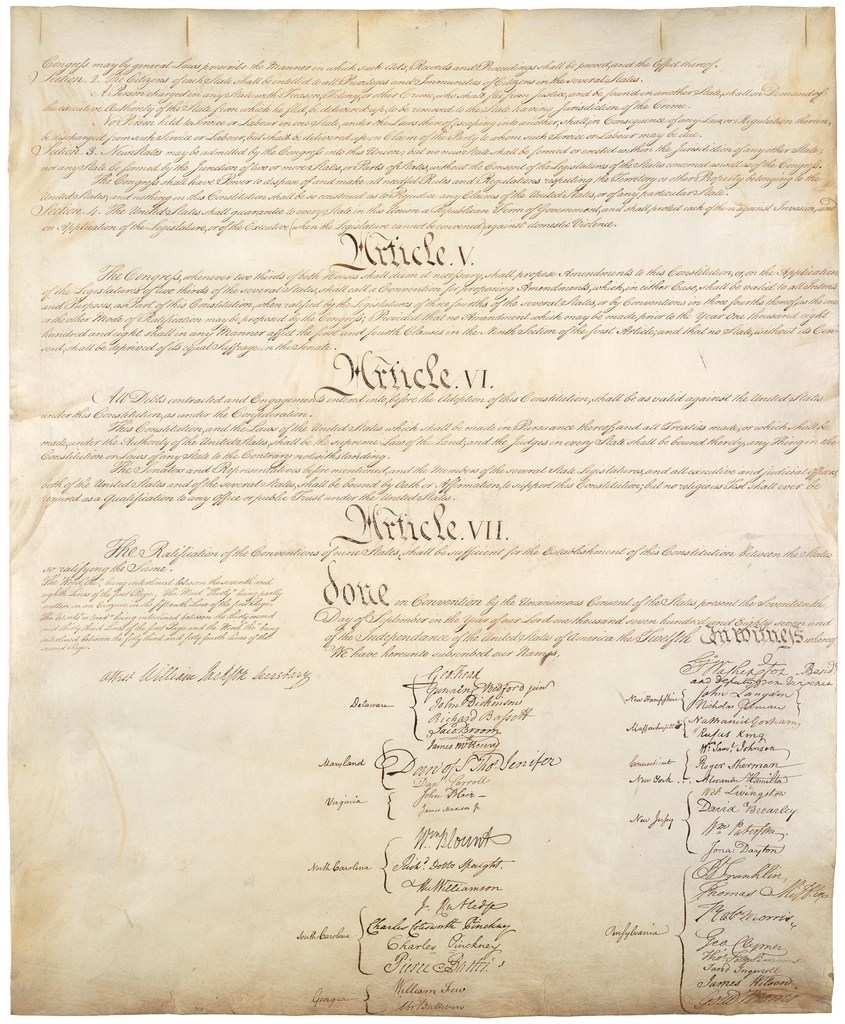
As we approach the semiquincentennial of this grand American experiment, two and a half centuries since a fragile republic was declared into existence, many now whisper, and some openly proclaim, that it has gone wrong. But republics do not usually die from a single blow; they erode from within. They decay when citizens forget their inheritance. We are not merely polarized we are historically malnourished. We discard our roots as backward, unaware that history, when ignored, does not disappear. It returns. It repeats. It reminds. Someone once warned that democracy endures only so long as its people are fit to sustain it. Whether that warning was ancient, apocryphal, or prophetic hardly matters. The truth stands. We face a decision worthy of this anniversary: to relearn the foundations of ordered liberty or to drift, quietly and almost gratefully, into the comfortable shackles of tyranny that always follow civic amnesia.
Resources
Ahdar, R., & Leigh, I. (2013). Religious freedom in the liberal state (2nd ed.). Oxford University Press.
Aquinas, T. (2002). Political writings (R. W. Dyson, Trans. & Ed.). Cambridge University Press.
Aquinas, T. (1949). On kingship (G. B. Phelan, Trans.). Pontifical Institute of Mediaeval Studies. (Original work composed ca. 1267)
Aristotle. (ca. 350 BCE). Politics
Augustine. (1998). The City of God (H. Bettenson, Trans.; J. O’Meara, Ed.). Penguin Classics. (Original work written 413–426 CE)
Bacote, V. E. (2015). The political disciple: A theology of public life. Zondervan.
Barnett, R. E. (1998). The structure of liberty: Justice and the rule of law. Oxford University Press.
Bastiat, F. (1850). The law.
Bird, M. F. (2022). Religious freedom in a secular age: A Christian case for liberty, equality, and pluralism. Zondervan Academic.
Boaz, D. (Ed.). (1997). The libertarian reader. Free Press.
Brennan, J. (2019). When all else fails: The ethics of resistance to state injustice. Princeton University Press.
Bretherton, L. (2019). Christ and the common life: Political theology and the case for democracy. Eerdmans.
Brooks, D. (2000). Bobos in paradise: The new upper class and how they got there. Simon & Schuster.
Burke, E. (1790). Reflections on the Revolution in France.
Cahoone, L. (2014). The modern political tradition: Hobbes to Habermas [Video lecture series]. The Great Courses.
Cahoone, L. (2014). Ideas in politics: Liberty, democracy, rights, community [Video lecture series]. The Great Courses.
Calvin, J. (1559). Institutes of the Christian religion (F. L. Battles, Trans.; J. T. McNeill, Ed.). Westminster John Knox Press.
Camp, L. C. (2020). Scandalous witness: A little political manifesto for Christians. Eerdmans.
Chalmers, J. (1776). Plain truth. (Original pamphlet published 1776)
Chenoweth, E., & Stephan, M. J. (2011). Why civil resistance works: The strategic logic of nonviolent conflict. Columbia University Press.
Cicero, M. T. (ca. 52 BCE). De legibus [On the laws].
Cole, J. (2022). Christian political theory: An introduction. Cascade Books.
Culver, R. D. (2000). Civil government: A biblical view. Wipf & Stock. (Original work published 1974)
Delmas, C. (2018). A duty to resist: When disobedience should be uncivil. Oxford University Press.
Dickinson, J. (1767–1768). Letters from a farmer in Pennsylvania. (Original essays published 1767–1768)
Doyle, A. (2022). The new puritans: How the religion of social justice captured the Western world. Constable.
Durant, W., & Durant, A. (1935–1975). The story of civilization (11 vols.). Simon & Schuster.
Eliot, T. S. (1939). The idea of a Christian society. Faber & Faber.
Ellul, J. (1988). Jesus and Marx. Eerdmans.
Fox, J. (2020). Thou shalt have no other gods before me: Why governments discriminate against religious minorities. Cambridge University Press.
Galston, W. A. (2005). The practice of liberal pluralism. Cambridge University Press.
The Great Courses. (2011). Great minds of the Western intellectual tradition [Video lecture series]. The Great Courses.
Gregory the Great. (1950). Pastoral care (H. Davis, Trans.). Newman Press. (Original work published ca. 590 CE)
Grudem, W. (2010). Politics according to the Bible: A comprehensive resource for understanding modern political issues in light of Scripture. Zondervan.
Habermas, J. (2003). Intolerance and discrimination. International Journal of Constitutional Law, 1(1), 2–12.
Halík, T. (2016). I want you to be: On the God of love (P. Turner, Trans.). University of Notre Dame Press.
Hamilton, A., Madison, J., & Jay, J. (1787–1788). The Federalist papers.
Hauerwas, S. (1991). After Christendom? How the church is to behave if freedom, justice, and a Christian nation are bad ideas. Abingdon Press.
Heinlein, R. A. (1966). The moon is a harsh mistress. G. P. Putnam’s Sons.
Hobbes, T. (1651). Leviathan.
Holland, T. (2019). Dominion: How the Christian revolution remade the world. Basic Books.
Huemer, M. (2012). The problem of political authority: An examination of the right to coerce and the duty to obey. Palgrave Macmillan.
Hume, D. (1777). Essays, moral, political, and literary.
Hunter, J. D. (2010). To change the world: The irony, tragedy, and possibility of Christianity in the late modern world. Oxford University Press.
Inazu, J. D. (2016). Confident pluralism: Surviving and thriving through deep difference. University of Chicago Press.
Inazu, J. D. (2020). Learning to live together: Meditations on community and democracy. University of Chicago Press.
Innes, D. (2019). Christ and the kingdoms of men: Foundations of political life. P&R Publishing.
Jefferson, T. (1774). A summary view of the rights of British America. (Original pamphlet published 1774)
John of Salisbury. (1990). Policraticus (C. J. Nederman, Trans.). Cambridge University Press. (Original work published 1159)
Kalantzis, G., & Lee, G. W. (Eds.). (2014). Christian political witness. InterVarsity Press.
Kant, I. (1795). Perpetual peace.
Käsemann, E. (1969). Jesus means freedom. Fortress Press.
Kelaidis, K. (2022). Holy Russia? Holy war? Why the Russian Orthodox Church is backing Putin’s war on Ukraine. Broadleaf Books.
Keller, T., & Inazu, J. D. (Eds.). (2020). Uncommon ground: Living faithfully in a world of difference. Thomas Nelson.
King, M. L., Jr. (1963). Letter from Birmingham Jail.
King, M. L., Jr. (1963). I have a dream. (Delivered August 28, 1963)
Kisin, K. (2023). An immigrant’s love letter to the West. Constable.
Kwok, P.-L. (2021). Postcolonial politics and theology. Westminster John Knox Press.
Langerak, E. (2014). Civil disagreement: Personal integrity in a pluralistic society. Georgetown University Press.
Laozi. (ca. 6th–4th century BCE). Dao de jing [Tao te ching].
Leithart, P. J. (2010). Defending Constantine: The twilight of an empire and the dawn of Christendom. InterVarsity Press.
Lévy, B.-H. (1980). The testament of God. Harper & Row.
Lincoln, A. (1863). Gettysburg address. (Delivered November 19, 1863)
Lincoln, A. (1865). Second inaugural address. (Delivered March 4, 1865)
Lincoln, A. (1863). The Emancipation Proclamation. (Issued January 1, 1863)
Lirien, N. (2025, July 22). The Pope’s restraint: A Protestant view on political endorsements. Treasures of the Elysian Fields. https://totef.org/2025/07/22/the-popes-restraint-a-protestant-view-on-political-endorsements/
Lirien, N. (2025, May 27). Love in the face of empire: Martin Luther King Jr. Treasures of the Elysian Fields. https://totef.org/2025/05/27/love-in-the-face-of-empire-martin-luther-king-jr/
Lirien, N. (2024, December 3). When to obey and when to resist. Treasures of the Elysian Fields. https://totef.org/2024/12/03/when-to-obey-and-when-to-resist/
Lirien, N. (2024, June 25). Balancing love for country and devotion to God: A critical look at Christian nationalism. Treasures of the Elysian Fields. https://totef.org/2024/06/25/balancing-love-for-country-and-devotion-to-god-a-critical-look-at-christian-nationalism/
Lirien, N. (2024, June 11). What is meant by Christian nationalism? Treasures of the Elysian Fields. https://totef.org/2024/06/11/what-is-meant-by-christian-nationalism/
Lirien, N. (2024, February 22). Summary: Civil government — A biblical view. Treasures of the Elysian Fields. https://totef.org/2024/02/22/summary-civil-government-a-biblical-view/
Locke, J. (1689). Two treatises of government.
Locke, J. (1689). A letter concerning toleration.
Luther, M. (1523). Temporal authority: To what extent it should be obeyed.
Macedo, S. (2000). Diversity and distrust: Civic education in a multicultural democracy. Harvard University Press.
Machiavelli, N. (1513). The Prince.
MacIntyre, A. (1981). After virtue: A study in moral theory. University of Notre Dame Press.
Mamet, D. (2022). Recessional: The death of free speech and the cost of a free lunch. Broadside Books.
Marx, K. (1867). Capital.
Mencius. (2003). Mencius (I. Bloom, Trans.). Columbia University Press. (Original work ca. 4th century BCE)
Mill, J. S. (1859). On Liberty.
Mill, J. S. (1869). The subjection of women.
Friedman, M. (1962). Capitalism and freedom. University of Chicago Press.
Middleton, J. R. (2005). The liberating image: The Imago Dei in Genesis 1. Brazos Press.
Montesquieu, C. de. (1748). The spirit of laws.
Moreland, J. P. (2013). A biblical case for limited government. Institute for Faith, Work & Economics.
Mounk, Y. (2023). The identity trap: A story of ideas and power in our time. Penguin Press.
Guru Nanak. (1469–1539). Teachings of Guru Nanak. (Original teachings delivered orally and recorded by early Sikh scribes)
Nozick, R. (1974). Anarchy, state, and utopia. Basic Books.
Nuyen, A. T. (2013). The “Mandate of Heaven”: Mencius and the divine command theory of political legitimacy. Philosophy East and West, 63(2), 113–126. https://www.jstor.org/stable/43285816
O’Donovan, O. (1996). The desire of the nations: Rediscovering the roots of political theology. Cambridge University Press.
Otis, J. (1764). Vindication of the rights of British colonies. (Original pamphlet published 1764)
Page, W. T. (1917). The American’s Creed. United States House of Representatives. (Formally accepted April 3, 1918)
Paine, T. (1776). Common sense. (Original work published 1776)
Paine, T. (1776–1783). The American crisis. (Original pamphlets published 1776–1783)
Pilgrims. (1620). The Mayflower Compact. (Adopted November 11, 1620)
Plato. (ca. 380 BCE). The Republic.
Rawls, J. (1971). A theory of justice. Harvard University Press.
Rothbard, M. N. (1973). For a new liberty: The libertarian manifesto. Macmillan.
Rousseau, J.-J. (1762). The social contract.
Saunders, B. (2019). The crisis of civil law: Rethinking legal authority. Oxford University Press.
Schiess, K. (2023). The ballot and the Bible: How Scripture has been used and abused in American politics and where we go from here. Brazos Press.
Siedentop, L. (2015). Inventing the individual: The origins of Western liberalism. Penguin.
Sikh Gurus. (1604). Sri Guru Granth Sahib. (Compiled by Guru Arjan; original scripture completed in 1604)
Simpson, J. (2019). Permanent revolution: The Reformation and the illiberal roots of liberalism. Belknap Press.
Skillen, J. W. (2014). The good of politics: A biblical, historical, and contemporary introduction. Baker Academic.
Smith, A. (1776). The wealth of nations.
Smith, J. K. A. (2017). Awaiting the king: Reforming public theology. Baker Academic.
Stark, R. (1996). The rise of Christianity: A sociologist reconsiders history. Princeton University Press.
Stout, J. (2004). Democracy and tradition. Princeton University Press.
Taylor, C. (1989). Sources of the self: The making of the modern identity. Harvard University Press.
Thoreau, H. D. (1849). On the Duty of Civil Disobedience [Originally published as Resistance to Civil Government].
Tocqueville, A. de. (1835–1840). Democracy in America.
United States. (1776). The Declaration of Independence. Continental Congress.
United States. (1787). The Constitution of the United States. Constitutional Convention.
United States. (1791). The Bill of Rights. U.S. Congress.
United States Congress. (1964). Civil Rights Act of 1964. (Public Law 88‑352)
United States Congress. (1965). Voting Rights Act of 1965. (Public Law 89‑110)
VanDrunen, D. (2020). Politics after Christendom: Political theology in a fractured world. Zondervan Academic.
Wang, Y. (2022). Faithful disobedience: Writings on church and state from a Chinese house church movement (H. Wang, Ed.). InterVarsity Press.
Washington, G. (1796). Farewell address. United States Congress.
West, C. (2004). Democracy matters: Winning the fight against imperialism. Penguin Press.
Wilson, J. (1764). Considerations on the nature and extent of the legislative authority of the British Parliament. (Original pamphlet published 1764)
Witte, J., Jr. (2007). The reformation of rights: Law, religion, and human rights in early modern Calvinism. Cambridge University Press.
Witte, J., Jr., & Alexander, F. S. (Eds.). (2007). From Irenaeus to Grotius: A sourcebook in Christian political thought, 100–1625. Eerdmans.
Wolterstorff, N. (2012). The mighty and the almighty: An essay in political theology. Cambridge University Press.
Wolterstorff, N. (2015). Review of Civil disagreement: Personal integrity in a pluralistic society, by E. Langerak. Faith and Philosophy, 32(3), 338–341. https://doi.org/10.5840/faithphil201532345
Woodberry, R. D. (2012). The missionary roots of liberal democracy. American Political Science Review, 106(2), 244–274.
Wright, N. T., & Bird, M. F. (2024). Jesus and the powers: Christian political witness in an age of totalitarian terror and dysfunctional democracies. Zondervan.
Wycliffe, J. (2001). On civil lordship (S. Lahey, Trans.). Medieval Sources Series. (Original work composed ca. 1375)
Yong, A. (2010). In the days of Caesar: Pentecostalism and political theology. Eerdmans.
Excerpt
As we approach the 250th anniversary of this American experiment, many are openly wondering whether it has failed. A republic does not collapse only from invasion; it can wither from ignorance. We have lost our historical memory, forgetting the roots of our liberty and why they mattered.

 Treasures of the Elysian Fields
Leave a comment