
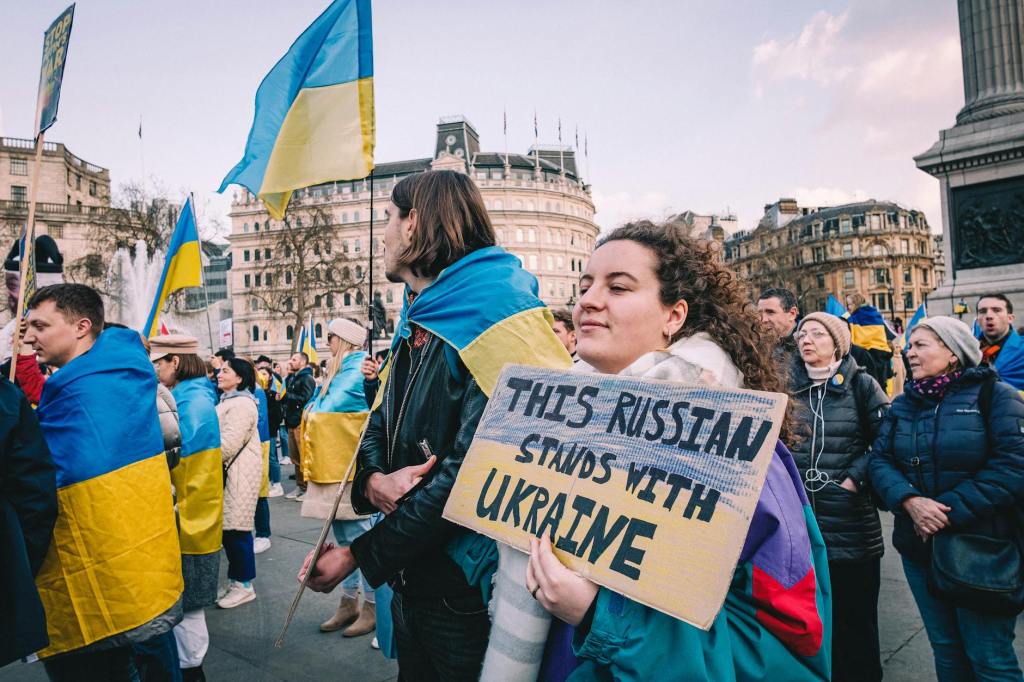
There was a time when the “public square” meant a literal place. A town commons. A courthouse step. A park where speeches were given and arguments were made. If you wanted to exercise your freedom of speech, you showed up. You stood. You spoke. People could see your face.
Today, that square glows from a screen. Social media has become the new public square. It is where citizens debate policy, criticize leaders, organize movements, expose wrongdoing, and sometimes, let’s be honest, yell at strangers. It is where freedom of speech is most visibly exercised. And yet, we still treat it as though it were merely a private playground owned by corporations.
Is that a misunderstanding?
When people call on social media companies to suspend accounts of those they disagree with or demand that platforms “police” speech more aggressively, do they fully grasp what they are asking? Even those who understand how to use these platforms effectively often fail to appreciate the structural role they now play in democratic life.
Freedom of speech is the right to express opinions without censorship or restraint. If social media is where that expression now happens, then it is functionally the public square. And if it is the public square, should corporations or governments have the authority to decide which lawful opinions may be voiced?
Anything less than robust protection begins to threaten something larger. If speech can be restricted because it is offensive, inconvenient, or politically unpopular, then what prevents the gradual erosion of all our rights? Who decides which speech is “too much”?
If democracy is to survive, must we not first accept that we will not all agree? We need to be able to disagree without vilifying those who dissent from us. We need to treat people with respect, even when we find their words objectionable. People will say things that anger us. They have that right. Silencing them because we dislike what they say is not a victory for justice; it is a quiet betrayal of the constitutional order that protects us all.
And yet, freedom does not mean indifference to truth. We do not have to agree. We do not have to listen. We are free to speak out against error. In fact, we have a responsibility to defend truth and stand for justice. But that responsibility is exercised through more speech, not less.
We have seen what censorship looks like elsewhere. Consider the restrictions placed on speech in China and the suppression of dissent in Hong Kong. Do we truly want to move toward a model where centralized authorities determine which criticisms of government are permitted?
Speech, of course, has limits. You cannot falsely shout fire in a crowded theater. You cannot defame someone without consequence. You cannot issue criminal threats, harass with intent to harm, or incite imminent violence. The bar for unprotected speech is high and rightly so. Courts have consistently required that speech be intended and likely to produce imminent lawless action before it loses protection. That standard is not accidental. It exists precisely because political speech, especially speech criticizing government, is considered core protected speech.
So what are we to make of situations where administrations use administrative subpoenas to request the identities of individuals critical of federal agencies such as ICE? Even if the action is legally defensible, the optics are troubling. Criticizing the government is not a fringe activity; it is foundational. Anonymous political speech has deep roots in American history. The Federalist Papers themselves were published under pseudonyms.
When government seeks to unmask critics, it may claim legitimate investigative purposes. Perhaps some accounts are issuing threats. Perhaps some are foreign influence operations. It is entirely possible that investigations will reveal accounts linked to Russia or other nation-states engaged in information warfare. But until such evidence is publicly demonstrated, the appearance of retaliation chills speech. And in constitutional law, appearance matters. A chilling effect can silence just as effectively as prosecution.
And here the analogy to the public square becomes complicated. In a physical square, anonymity is limited. If you stand on a crate and shout, people see you. Online, identity is cheap to create, easy to fake, and infinitely scalable. One individual, or one foreign intelligence service, can simulate thousands of voices. Deepfakes now add visual and audio plausibility to synthetic personas. This is not a trivial concern. Identity has become weaponizable.
In the real-world square, you can judge tone, body language, and physical presence. Online, you may be arguing with a bot farm or a foreign psy-op while believing you are engaging a neighbor. Attribution is no longer a convenience; it is becoming a civic necessity.
Some platforms have experimented with partial transparency. Twitter (now X) has added location flags showing where an account was created. That is at least a signal. But it is not a solution. VPNs exist. People move. Creation location does not equal operational origin. It may provide a false sense of authenticity.
So what do we actually want?
A real-name system? That risks chilling dissent and harming whistleblowers. Full anonymity? That invites abuse and manipulation. Perhaps the future lies somewhere in between: verified humanity without forced exposure of legal identity. Proof-of-personhood systems. Cryptographic identity layers. Mechanisms that confirm “this is a real human with consistent behavior” without necessarily revealing who they are. Would that approximate the digital equivalent of seeing a face in the square?
Attribution matters because the information environment is adversarial. Deepfakes erode trust. Nation-states exploit ambiguity. Public discourse collapses when we cannot tell who is real. The challenge is to preserve freedom while defending shared reality. Social media is a two-edged sword.
Freedom of speech has never meant freedom from consequences. Social consequences are part of civic life. Professional consequences are often messy but real. Governmental consequences are where constitutional safeguards become essential.
Anonymity makes people bold. Sometimes recklessly so. It amplifies negative sentiment. It enables threats people would never utter face-to-face. But it also protects the dissident, the whistleblower, the vulnerable employee, the woman protesting compulsory hijab laws in Iran who could be imprisoned or even worse if identified.
Here is the paradox as I see it: anonymity is dangerous in free societies but essential in unfree ones.
Social media platforms operate globally. U.S. citizens expect First Amendment protections. Europeans demand GDPR privacy. Chinese citizens navigate the Great Firewall. Russians face criminalization of dissent. Iranians risk death for protest. A single platform cannot cleanly apply one rule set to all these realities.
How do we protect dissidents in authoritarian regimes while maintaining accountability in democratic ones? There is no simple answer. Tiered anonymity? Verified humanity? Transparency requirements for government identity requests? Public reporting on how many subpoenas are issued and why? Strong judicial oversight? Perhaps all of the above.
One thing seems clear: censorship is a tool of dictators, not democracies. Corporations now steward the infrastructure of the new public square. That stewardship carries a social responsibility. Governments must ensure that responsibility is honored without themselves becoming the arbiters of permissible opinion. And yet, we must also confront abuse, deepfakes, harassment, and foreign influence campaigns, without sacrificing the freedoms we seek to defend.
If you are unwilling to have your name attached to what you post, perhaps that is worth reflecting on. But if you live under a regime where attaching your name could mean imprisonment or death, anonymity is not cowardice, it is survival.
So where is the balance? We are living in an era where freedom of speech is both more powerful and more fragile than ever before. The digital public square magnifies voices and distorts them. It liberates and destabilizes. It democratizes and manipulates. The question is not whether speech should be free. It must be.
And we must be honest about our current reality: anonymity is, in many spaces, the default rule. Censorship by social media companies is already here, whether we approve of it or not. The question is no longer whether constraints exist, but how we navigate them.
Some platforms are less likely to censor and more likely to allow a fuller range of constitutionally protected speech. Others enforce stricter content moderation policies. We may choose platforms aligned with our values, but we should not confuse platform choice with the elimination of risk. Because even where speech is freer, deception is easier.
Deepfakes will grow more convincing. Fake accounts will multiply. Influence operations will become more sophisticated. And the greatest vulnerability may not be technical at all, it may be us. Are we more likely to trust something simply because it confirms what we already believe? Are we quicker to report something because it offends our tribe? Confirmation bias does not disappear online; it is amplified.
So perhaps the final responsibility rests not with corporations or governments, but with citizens. Be wise as serpents. Test all things. Do not trust a post simply because it flatters your side. Do not amplify outrage without verification. Do not assume authenticity because you agree.
If the new public square is here to stay, and it is, then its health will depend not only on policies and protections, but on prudence, discernment, and restraint. Freedom of speech remains the rule. Anonymity is common. Censorship pressures are real. Deception is rising. The question is whether we will meet this moment with wisdom equal to the power we now possess.
Excerpt
Social media has become the new public square—where freedom of speech is exercised, contested, and sometimes constrained. But anonymity, censorship pressures, deepfakes, and foreign influence campaigns complicate the picture. If speech is to remain free, citizens must pair liberty with discernment—testing what they see, resisting confirmation bias, and defending truth without surrendering freedom.

 Treasures of the Elysian Fields
Leave a comment