
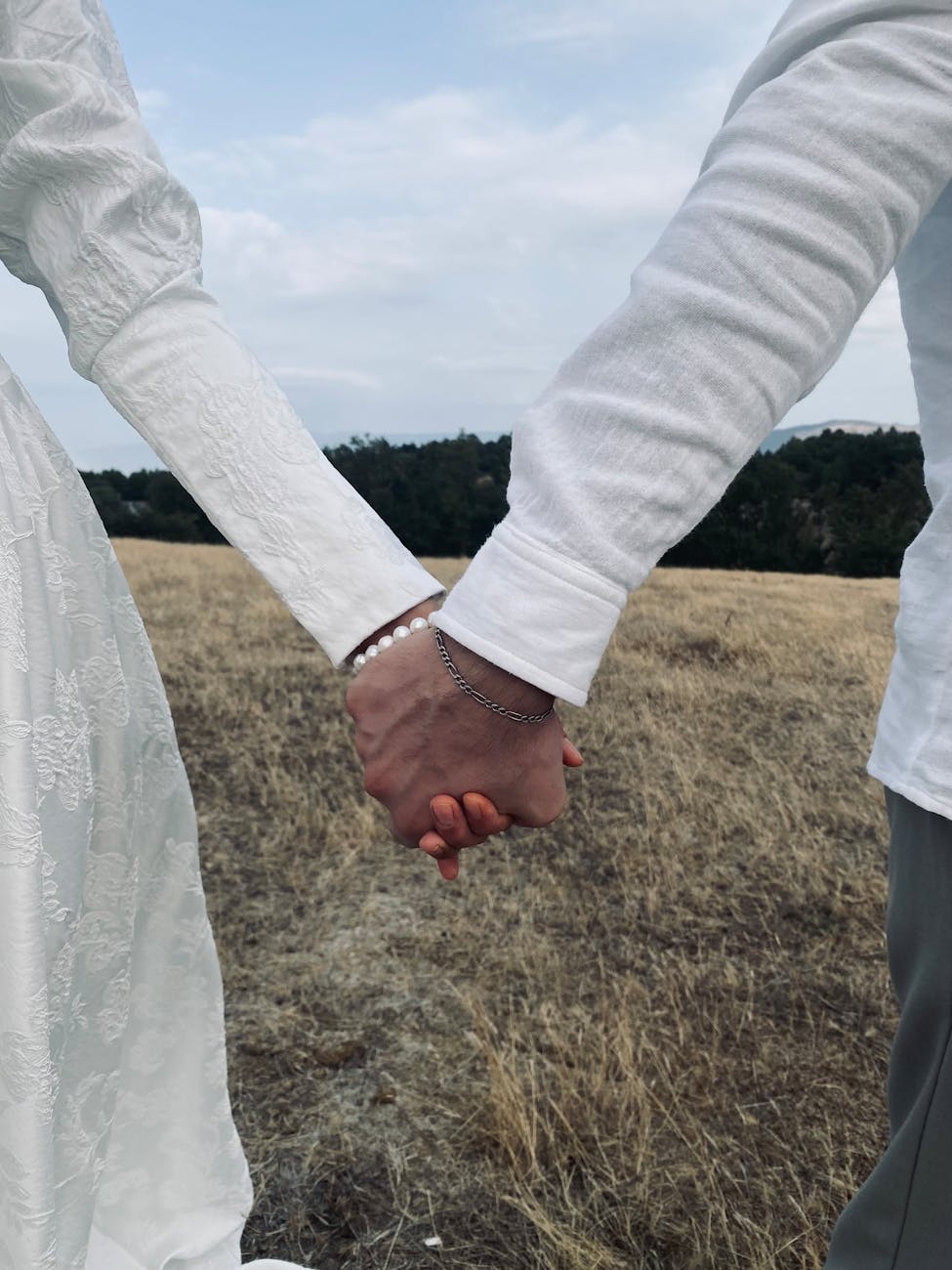
Till death do us part. I’ve been thinking about marriage again. Not about who should be allowed to marry. Not about the number of people involved. Not even about sex. Just about one simple thing that somehow isn’t simple at all. Duration. What does it mean to promise yourself to one person for an entire lifetime? That’s it. That’s the question.
A lot of conversations today revolve around redefining or reimagining marriage in various ways. But I want to flip the script. Instead of arguing over structure, I want to zoom in on time. On the idea of “till death do us part.” On the possibility of being with the same person for eighty years. For some people, that thought is terrifying. For others, it is deeply comforting. I suppose it depends on how good the relationship is.
Not All Marriages Were Meant to Last Forever
It is easy to assume that lifelong marriage has always been the norm. It hasn’t. There were cultures that practiced temporary unions. In parts of the Celtic world, couples could be handfasted for a year and a day. After that period, they could renew their vows or part ways. It was, in a sense, a structured trial.
In Sasanian Persia, there were fixed-duration marriages for companionship or specific social needs. Early Islamic communities practiced forms of contractual marriages for a set time. In some indigenous cultures, couples lived together before formalizing their bond, and either could leave before permanence was established. In Heian-era Japan, a groom might visit the bride’s home periodically, and if the visits stopped, the marriage effectively ended.
Human beings have experimented with marriage the way we experiment with most institutions. Some models emphasized flexibility. Some emphasized testing compatibility. Some were structured to regulate sexuality more than to cultivate lifelong partnership.
So the lifelong model is not the only one history offers. Which makes the question more interesting. Why has the idea of lifelong marriage remained so nearly universal across civilizations?
The Modern Appeal of “Until It Doesn’t Work”
There is something very appealing about a marriage that lasts until either party wants out. It respects autonomy. It recognizes that people change. It gives both individuals an exit if the relationship becomes harmful or stagnant. It seems compassionate. And honestly, I understand the argument. If two people are miserable, why force them to remain bound? If suffering is avoidable, why sanctify it?
Some suffering is part of life. I get that. But some suffering can be prevented. I lived that tension. After twenty years of fighting in my first marriage, I didn’t think it was worth it to continue. We were no longer friends. We were more like housemates. When divorce was presented as an option, I took it. I took it because the marriage was very difficult. I felt stuck. I felt resigned to a kind of fate. I remember thinking, “I guess this is just my lot in life. Suffering is part of life, so just deal with it.” But there is a difference between inevitable suffering and suffering that someone is actively choosing to inflict on you. That distinction took me a long time to understand.
When Love Becomes Manipulation
For much of that marriage, I fought tooth and nail to try and change the other person. It didn’t work. In fact, things only got worse. One of the hardest lessons I learned is that you cannot change other people. They have to want to change.
There was no desire to change. What I did not see for many years was emotional blackmail. I did not have language for it. Once I learned what it was, I could see it everywhere. And once I could see it, I could not unsee it. That knowledge changed everything.
I even confronted it. I explained what I believed was happening. I hoped that clarity would bring growth. There was one small moment near the end that looked like change. I held onto it. I thought maybe the seriousness of divorce might jar something loose. It did not.
Looking back, what I took as confession may have been another attempt to preserve control. I cannot claim to know motives, but I can say the patterns did not shift. So here is the uncomfortable question. Should I have stayed? Would enduring have eventually produced something better? Would agape love, the kind that is not dependent on behavior, have transformed the situation if I had just held on long enough? What if it would have taken eighty-nine years?
We never get to see all possible futures. We only choose among the ones we can imagine.
Agape, Endurance, and Limits
There is a powerful theological vision of marriage rooted in agape. Love that does not withdraw. Love that stays in good times and bad. Love that mirrors the way God loves us. That vision is beautiful. There is real stability and comfort in knowing someone will be there for you when you are at your worst. There is psychological safety in that kind of commitment. There is hope and possibly joy that grows out of shared decades.
But here is where I struggle. We are not God. God’s love is not dependent on our behavior. But God is not subject to manipulation. God is not emotionally blackmailed. God is not diminished by another’s refusal to grow. Human beings are.
At what point does long-suffering love become enabling? At what point does endurance cross the line into allowing harm? How long is love supposed to be patient? And how do you enforce boundaries when the other person refuses to respect them? These are not rhetorical questions. I genuinely wrestle with them.
The Anxiety of Conditional Commitment
And yet, I am still drawn to the lifelong model. There is something about a marriage that has no expiration date that feels different. If either person can leave at any time, the background anxiety of loss never fully disappears. The relationship becomes provisional. If you know the other person has already mentally rehearsed an exit, you cannot fully rest.
Lifelong marriage, at least in theory, removes that question. It says, “We are in this. We are not constantly evaluating whether to stay.” That kind of permanence can produce deep trust. It can also produce deep resentment. It can be either shelter or prison. Maybe the real difference lies not in the vow itself, but in the character of the people making it.
The Unanswerable Counterfactual
I still think about the road not taken. If I had stayed, would something have changed over the long arc of an entire life? Or would the patterns have simply calcified further? I do not know. You cannot make decisions based on imagined futures alone. You also cannot live paralyzed by fear of what might have been.
Some suffering is avoidable, and if it is avoidable, perhaps you should avoid it. Some suffering is not avoidable, and then the question becomes what kind of person you will be in it. Marriage sits right in the middle of that tension.
Why Lifelong Marriage Still Deserves Reflection
In a world optimized for exits, there is something countercultural about endurance. A lifelong marriage offers the possibility of growing old with someone who has seen every version of you. It offers a shared narrative that stretches across decades. It invites a kind of unconditional love that can only be learned over time. It does not guarantee joy. It does not guarantee growth. It certainly does not guarantee safety.
But it creates a framework where transformation is possible precisely because escape is not the first instinct. And maybe that is what I am most curious about. Have we too quickly abandoned the idea of permanence because we have seen it misused? Have we confused wise boundaries with disposable commitment? Is there something profoundly stabilizing about knowing that, barring serious harm, we are not going anywhere?
I am not writing this as someone who has it all figured out. I am writing this as someone who has lived both endurance and exit. I know the cost of staying too long. I also know the weight of walking away. So I keep coming back to the question of duration.
What if lifelong marriage is not about guaranteeing happiness, but about creating a container sturdy enough for real love to grow? And what if the real work is not deciding whether marriage should last forever, but becoming the kind of person who could sustain something that long? I am still thinking about that.
And I should say this. I have found someone now that I know I can go the distance with. Not because it is easy. Not because we never disagree. But because there is friendship, mutual growth, and a shared desire to build something lasting. Perhaps in my first marriage I was not ready. Perhaps I did not fully understand what lifelong commitment actually required of me. That is life, isn’t it? We grow. We learn. At least we are supposed to. Hopefully we grow and learn. And maybe that, more than anything, is what makes a lifelong marriage possible in the first place.
Final Note
I have been exploring different aspects of marriage lately, looking at it from different angles and asking questions I probably should have asked much earlier in life. If this topic interests you, feel free to check out some of my other posts where I reflect on commitment, love, boundaries, and growth. I am not offering final answers so much as thinking out loud and inviting you to do the same.
Excerpt
I’ve been thinking about marriage again. Not about who qualifies or how it should be structured, but about time. What does it mean to promise yourself to one person for an entire lifetime? Is that kind of permanence a burden, or could it be the very thing that allows real love to grow?

 Treasures of the Elysian Fields
Leave a comment