
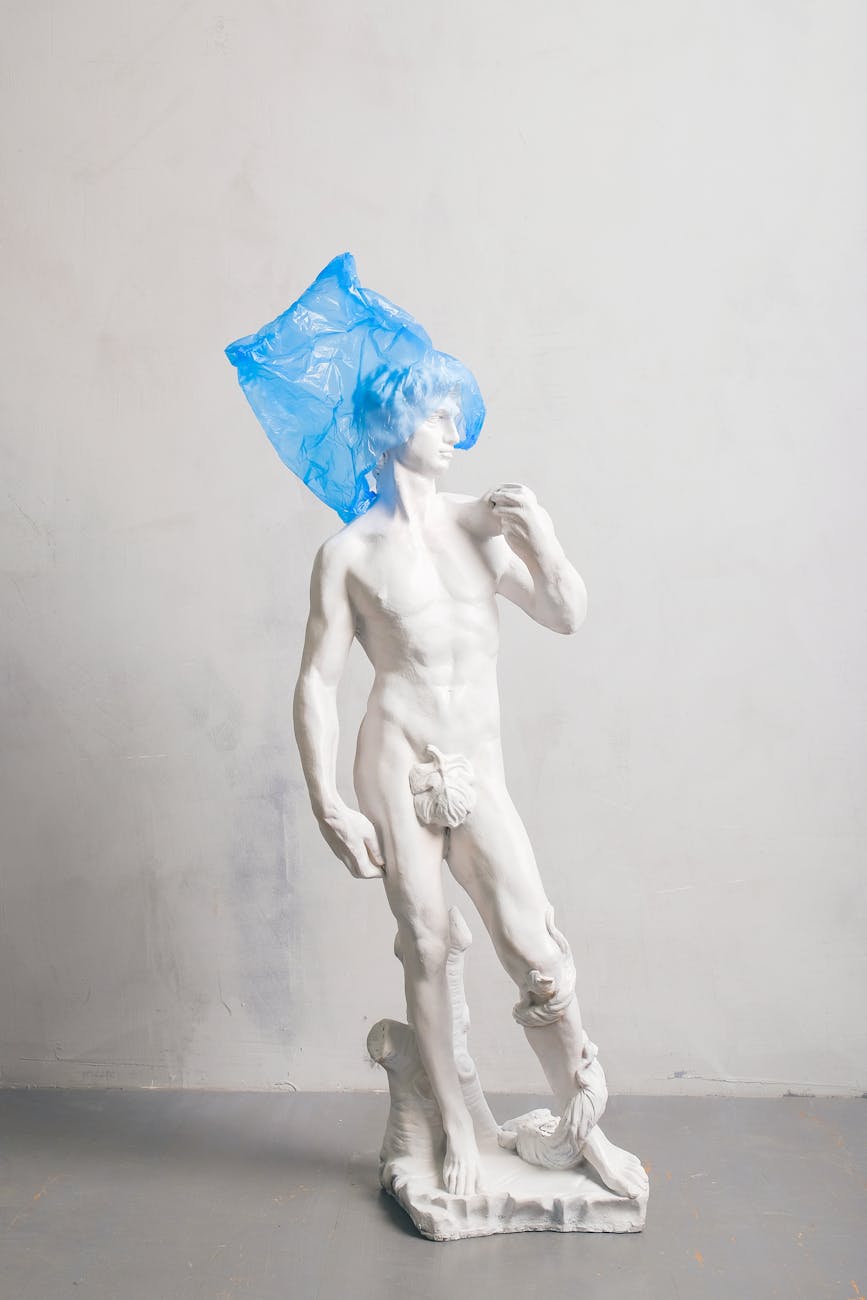
In October 2025, the Burlington, Vermont City Council voted to ban public nudity. Until then, the city had one of the loosest approaches in the United States — technically allowing people to strip down in public so long as they weren’t engaging in lewd acts. That era has ended. By a 9–2 vote, Burlington declared public nudity “indecent exposure,” subject to fines that escalate for repeat offenses. Special events such as the city’s Naked Bike Ride will remain exempt, but the default norm has shifted: cover up, or pay up.
What’s remarkable is how much this local decision mirrors national ambivalence. In America, questions of public nudity have never been settled by broad consensus. A recent YouGov poll shows nearly a quarter of Americans enjoy being nude, but only a sliver believe it belongs in public. Meanwhile, across the Atlantic, Britons show a somewhat more permissive attitude — at least in designated settings like beaches, saunas, or one’s own garden.
The divergence raises a deeper question: what are we really debating when we argue about nudity? Is it simply about public order, or does it expose our cultural insecurities about the body itself?
The Numbers: U.S. Snapshot (YouGov America, Aug 2025)
A recent YouGov survey offers a fascinating snapshot of American attitudes toward nudity.
- Comfort with nudity: 24% say they like or love being naked, 44% remain neutral, and 25% dislike or hate it.
- Views of nudists/naturists: 17% hold positive views, 27% negative, with the rest neutral.
- Context legality/acceptance: Strong approval emerges for nudist resorts and designated beaches, but support plummets for ordinary public settings like city parks or pools.
- Toplessness: 73% say it’s fine for men, yet only 27% say the same for women — a glaring double standard.
- Associations: 37% link nudity to sex and sexuality, while 30% associate it with non-sexual freedom.
One detail stands out: nearly one in five Americans think it should be illegal to be nude in one’s own garden. That small patch of personal space — fenced off, private, an extension of the home — is still, for some, a matter of public concern. Surprising, isn’t it? The idea that someone might care about what happens behind your hedge says less about exposure than it does about anxiety: nudity becomes threatening not only when it is seen, but even when it might be imagined.
The Founding Fathers and Non-Sexual Nudity
It may surprise modern readers, but Benjamin Franklin — hardly a fringe figure — openly practiced what he called “air baths.” Each morning he sat naked by a window, reading or writing, convinced the exposure to fresh air was healthy and invigorating.
“I rise early almost every morning, and sit in my chamber without any clothes whatever… agreeable, and most pleasing.” — Benjamin Franklin, 1768
Franklin’s habit reminds us that nudity has not always carried the stigma it does today. For some of America’s most pragmatic minds, it was a matter of hygiene, health, and freedom — not scandal.
The Numbers: U.K. Snapshot (YouGov UK, July 2025)
Britons, surveyed just weeks before the American poll, show a slightly more permissive outlook on nudity — though, like the U.S., context makes all the difference.
Willingness to be nude in public: 39% say they’d be willing “in at least some form.” The gender gap is stark: 49% of men compared to just 29% of women.
Context acceptability:
- Private nudist sites: 95%
- Nudist beaches: 93%
- One’s own garden: 73%
- Sauna: 48%
- Swimming in a natural body of water: 45%
- Countryside: 23%
- Public beach: 12%
- Public pool: 4%
- Public park: 3%
- Town/city centre: 2%
The pattern is unmistakable: high acceptance where nudity is designated, expected, or contained; steep decline where it intrudes on everyday public life. Interestingly, a notable minority (23%) accept nudity in the countryside — suggesting a kind of British pragmatism: if it’s out of sight and harms no one, why worry?
Compared to Americans, Britons appear to parse the distinction between “nudity as freedom” and “nudity as disruption” more clearly. Where Americans show high anxiety even about someone being naked in their own back garden, Britons grant more leeway to private and semi-private spaces.
“It’s not the naughty bits we object to — it’s the people who enjoy them.” — Monty Python’s Flying Circus
What’s Striking
Looking across the Atlantic, a few patterns leap out.
The designated-space effect. Both Americans and Britons overwhelmingly support nudity when it happens in clearly marked places — nudist resorts, beaches, saunas. Acceptance then collapses in everyday spaces like public parks or pools. This suggests the real issue is not nudity itself but the ambiguity of where it happens. If people know what they’re walking into, they’re fine; if nudity appears unannounced, anxiety spikes.
The gender double standard. Nowhere is the divide sharper than in attitudes toward toplessness. Three-quarters of Americans say it’s fine for men to bare their chests at the beach, but less than a third extend the same courtesy to women. The body becomes acceptable when coded “neutral,” suspect when coded “sexual.”
The American neutrality puzzle. The U.S. poll revealed a strikingly large “neutral” camp — 44% indifferent about being nude themselves. Neutrality, however, is not always indifference. It may conceal embarrassment, avoidance, or a live-and-let-live philosophy. Without deeper probing, we can’t tell whether neutrality means tolerance or quiet discomfort.
The countryside factor. In Britain, nearly one in four find nudity acceptable in rural settings — far higher than one might expect. This reflects a subtle ethic: what happens off the beaten path, out of sight, is less of a social violation. It’s a tacit bargain between personal freedom and public order.
The Burlington paradox. The new ban in Vermont highlights just how patchwork American attitudes are. For decades, Burlington technically allowed nudity in public spaces, an almost European quirk in a country otherwise cautious. Now, under pressure from local businesses, the city has pivoted to prohibition. Local norms, more than national consensus, seem to dictate the boundaries of what counts as “decent.”
“The liberty of the individual must be thus far limited; he must not make himself a nuisance to other people.” — John Stuart Mill
Academic Perspectives
Surveys give us the numbers, but academic research helps us understand why people think the way they do about nudity. Several themes emerge from recent scholarship:
Stigma research. Psychologists have developed tools like the Naturism Stigma Scale (NSS) to measure prejudice against naturists. Findings show that stigma operates on two levels — personal (what I believe) and perceived (what I think others believe). This distinction matters: many people may not personally object to naturism, but assume society at large does, and conform accordingly.
Psychological outcomes. A growing body of research suggests naturism has tangible benefits. Keon West and colleagues (2018) found that participation in naturist activities improves body image, boosts self-esteem, and increases life satisfaction. Far from being destructive, social nudity appears to nurture well-being.
Framing effects. Qualitative studies reveal that perceptions shift dramatically depending on how nudity is described. When naturism is framed as non-sexual, family-friendly, and rule-governed, non-naturists tend to respond with greater acceptance. In other words, the context and story around nudity shape how it is judged.
Historical backdrop. Europe’s “free body culture” (Freikörperkultur) and topless beach traditions normalized nudity as part of health and leisure long before such practices gained traction in the U.S. By contrast, American norms were shaped by Puritan moral codes and a patchwork of local decency ordinances, producing a more conflicted relationship with the body.
Taken together, the research suggests that stigma is not fixed. It is malleable, contingent on framing, and influenced by culture, law, and personal experience.

Sidebar: Nudity, Christianity, and Cultural Memory
It is often assumed that Christian tradition forbids nudity, but the historical record is more complex. In the early church, baptisms were performed nude, a practice described by Hippolytus and Cyril of Jerusalem as a stripping away of the “old man” of sin before putting on the new life in Christ. Ritual nudity was not shameful — it was sacred.
“As soon, then, as you entered, you put off your garment; and this was an image of putting off the old man with his deeds. Having been stripped, you were naked; in this also imitating Christ, who was stripped naked on the Cross.” — Cyril of Jerusalem, Mystagogical Catecheses II.2
Throughout history, there have also been movements like the Adamites, radical sects who worshipped unclothed to embody a return to Edenic innocence. Such groups were condemned as heretical, but their existence shows that nudity and Christianity have never been entirely at odds.
Even in art, the Church’s relationship to the body has shifted. Renaissance masterpieces celebrated the naked human form as divine handiwork, only to be later covered, censored, or defaced under pressures of “modesty” — Michelangelo’s Last Judgment in the Sistine Chapel being the most famous example.
In this light, modern American discomfort with nudity seems less a timeless Christian doctrine and more the legacy of Puritan modesty codes imported and amplified in U.S. culture. Where Europe retained strands of FKK (Freikörperkultur) or Mediterranean topless traditions, the U.S. fused Protestant moral anxieties with legal prohibitions, creating a far stricter divide between “naked” and “decent.”
Why This Matters Now
Public nudity debates are about more than skin. They touch on questions of gender equality, body positivity, and freedom of expression. In an age of shifting norms — from OnlyFans to body-positivity campaigns — the tension between law, culture, and lived practice is only sharpening.
Burlington’s new ban is one datapoint, but the broader story is how societies negotiate where the line between private freedom and public decency is drawn.
In the United States especially, covering the body has had an unintended consequence: it has made the body into something inherently sexual. If the only time we see nudity is during sex, then of course we will sexualize the naked body. The result is a culture that struggles to desexualize the human form, and in doing so, struggles to see people as more than sexual objects.
Desexualizing the body would not diminish intimacy — it would transform it. It would free us from the constant churn of objectification and advertising that exploits our insecurities. It could reshape how we treat one another, not as consumable images but as whole persons. A healthier relationship with our own bodies could ripple outward into healthier relationships with each other.
Conclusion
It is tempting to dismiss debates about nudity as fringe, the stuff of odd news stories or quirky local ordinances. But if we pause for a moment, we see that these debates touch something deeper: our cultural assumptions about the body, about sexuality, and about freedom itself.
It is not anti-Christian to be a nudist; history shows that sacred nudity once marked the waters of baptism. It is not anti-American either; one of our most celebrated founders, Benjamin Franklin, embraced daily nudity for health and clarity of mind. The question is not whether nudity is inherently shameful, but what we have chosen to make it mean.
So here is the thought experiment: if you were designing laws and customs from scratch, where would you draw the line — and why? Would you insist the body be hidden, at risk of turning it into a perpetual object of desire? Or would you allow space for nudity as a normal, non-sexual dimension of human life?
Perhaps our answer reveals less about skin than about the stories we tell ourselves about what it means to be human.
“If anything is sacred, the human body is sacred.” — Walt Whitman, Leaves of Grass
Excerpt
From Burlington’s new ban to Britain’s countryside tolerance, debates about public nudity reveal deep cultural assumptions about freedom, sexuality, and the body. History shows nudity was once sacred, even in baptism. What changed, and why does America remain so anxious about bare skin?
References
- Aleteia. (2019, April 26). How was baptism practiced in the early Church? Aleteia. https://aleteia.org/2019/04/26/how-was-baptism-practiced-in-the-early-church/
- Cyril of Jerusalem. (1886). Catechetical Lectures (Mystagogical Catecheses II). In P. Schaff & H. Wace (Eds.), Nicene and Post-Nicene Fathers, Second Series, Volume 7. Christian Literature Publishing Co. (Original work published ca. 350 CE)
- Mill, J. S. (1859). On liberty. London: John W. Parker and Son.
- NBC5/MyNBC5. (2025, October 2). Indecent exposure in Burlington public spaces now illegal. https://www.mynbc5.com/article/indecent-exposure-in-burlington-public-spaces-now-illegal/68124774
- Patheos. (2024, January 25). Naked baptism in the early church. Patheos, Anxious Bench blog. https://www.patheos.com/blogs/anxiousbench/2024/01/naked-baptism-in-the-early-church/
- Seven Days Vermont. (2025, October 2). Burlington officially bans public nudity. https://www.sevendaysvt.com/news/burlington-officially-bans-public-nudity/
- Soylemez, K. K., Lusher, J., & Rachitskiy, M. (2023). A review of the literature on the complex relationship between stigma and naturism. World Journal of Advanced Research and Reviews, 19(1), 1326–1335. https://wjarr.com/sites/default/files/WJARR-2023-1501.pdf
- Soylemez, K. K., Lusher, J., & Rachitskiy, M. (2025). Naturism stigma scale: Adaptation of a standardised measure of stigma towards naturism. Psychology International, 7(1), 9. https://www.mdpi.com/2813-9844/7/1/9
- Soylemez, K. K., Lusher, J., & Rachitskiy, M. (2024). Exposing perceptions and beliefs towards naturism: A qualitative exploration of personal narratives. GSC Advanced Research and Reviews, 9(1), 65–77. https://gsconlinepress.com/journals/gscarr/content/exposing-perceptions-and-beliefs-towards-naturism-qualitative-exploration-personal
- West, K., & colleagues. (2018). Naked and unashamed: Investigations and applications of the effects of naturist activities on body image, self-esteem, and life satisfaction. Journal of Happiness Studies, 19(3), 819–839. https://doi.org/10.1007/s10902-017-9846-1
- Whitman, W. (1855/2017). Leaves of grass. Yale University Press. (Original work published 1855)
- YouGov America. (2025, August 29). Public nudity poll results. YouGov. https://d3nkl3psvxxpe9.cloudfront.net/documents/Public_Nudity_poll_results.pdf
- YouGov UK. (2025, July 24). Difford, D. What do Britons think of public nudity? YouGov. https://yougov.co.uk/society/articles/52638-what-do-britons-think-of-public-nudity

 Treasures of the Elysian Fields
Leave a comment