
1. Introduction — The Creator’s Image in Us
Humans, the Scriptures say, are made in the imago Dei—the image of God. What does that mean beyond a theological slogan? At minimum, it means we echo something essential about God’s nature. God is Creator; we are sub‑creators. We do not create ex nihilo (out of nothing), but we do shape what already exists—organizing, naming, cultivating, composing. If God calls forth a cosmos from undifferentiated potential, we take the givens of life and coax them toward pattern and purpose.
Let’s suppose you dump a box of LEGO bricks onto the table. No one buys a set already assembled so they can gleefully tear it back into pieces. The delight is moving from scattered parts to a starship, a cottage, a dragon—order from chaos. That small act is a parable of our vocation. The same impulse shows up when we convert a weedy corner into a garden bed, sketch a melody out of noise, or turn a roomful of strangers into a team with a mission.
Well, you might say, “Isn’t ‘order’ just rigidity—spreadsheets and rules strangling spontaneity?” Not in the biblical sense. Order (cosmos) is the hospitable arrangement that lets life flourish. It makes room for play, beauty, and surprise. It’s the difference between a wild score of instruments all tuning at once and the moment they fall into harmony. The notes don’t disappear; they find their place.
“We are made in the image of the Creator, and therefore we are called to create.” — Madeleine L’Engle
This, then, is our central thread: a God‑given impulse to bring order out of chaos—stewarding materials, moments, and meanings so that goodness can grow. The story runs from Genesis into archaeology and anthropology (how peoples organized themselves), into art and technology (how we design worlds), and even into our hobbies. As Tolkien hinted with his notion of “sub‑creation,” we participate in a larger music, adding our lines to the great theme. Careful readers may notice the quiet echo of Eden every time scattered pieces become a whole.
2. The Genesis Pattern: Chaos to Cosmos
Primeval Chaos (Genesis 1:2)
The opening verse of the Bible after “In the beginning” is striking: tohu va-bohu—“formless and void.” This is not a scene of evil, but of unshaped potential. The waters are deep, unbounded, undefined, like a lump of clay before the potter touches it. Hovering over this potential is the Spirit of God, a deliberate Artist poised to bring purpose where there is only possibility.
Divine Ordering Acts
Genesis 1 unfolds as a series of creative separations and assignments: light from darkness, waters above from waters below, land from sea, day from night, and the marking of time by celestial bodies. Each act is both structural and purposeful. Boundaries are drawn not to limit life, but to make it possible. Even the sea—a frequent biblical image of chaos—and the great sea creatures (the tanninim) are pronounced “good.” In this cosmos, the wild has its place.
“Evening and Morning” as a Theological Arc
The refrain “and there was evening, and there was morning” is more than a timestamp—it is a miniature parable.
- Erev (evening) carries connotations of obscurity, mixture, and entropy.
- Bôqer (morning) implies discernibility, clarity, and order.
Each day begins in shadow and ends in light, moving from the uncertain to the structured. This sixfold rhythm of transformation culminates in the seventh day’s rest—a state of complete, harmonious stability.
Quantum Mechanics and Potentiality
In a curious way, the Genesis picture of unformed potential resonates with what we glimpse in quantum mechanics. At the smallest scales, the universe is a haze of possibilities—a “wave function” representing countless potential states. Nothing definite exists until there is an interaction—an “observation” that collapses the wave function into a concrete reality. In Genesis, God is the ultimate Observer, bringing the cosmos into determinate form. His “Let there be…” is the final, authoritative measurement, turning the potential into the actual. Just as the quantum world requires interaction to yield an outcome, so the unshaped creation requires the divine will to give it boundaries, names, and purpose.
Adam’s Ordering Zeal
The ordering doesn’t end with God. Humanity, made in His image, participates. Adam’s naming of the animals is more than labeling; it is an act of taxonomy, bringing definition to diversity. In a way, Adam is the first librarian, cataloging life with the same meticulous energy a modern biologist brings to a field guide—or a child brings to completing a Pokédex in Pokémon. We still do this today: mapping the genome, organizing data into domains, classifying every beetle, star, and element we discover. It’s the human echo of the divine voice that first said, “Let there be…”
If Genesis 1 is a cosmic overture, then humanity’s role is like joining an orchestra already playing, picking up an instrument, and learning to play in harmony with the Composer’s score—a score that always moves from chaos toward cosmos.
3. The Fracturing of Order
If Genesis 1–2 is a symphony of harmony, Genesis 3 is the sudden dissonance that jars the ear. The garden, once balanced between Creator, creation, and caretaker, becomes a place of rupture. The same humanity that was entrusted to name, cultivate, and co-create now steps outside the harmony, and chaos begins to seep back in.
The change is immediate. Innocence turns to shame, the nakedness once celebrated now something to hide. Unity gives way to blame. Communion with God is replaced by fear-driven hiding, and even the ground itself, once a willing partner in cultivation, begins to resist—sprouting thorns and thistles where fruit once grew freely. What was once an orchestra playing in perfect time begins to slip off-beat; the melody is still there, but fractured.
This is not the rich, unformed potential of tohu va-bohu from Genesis 1. This is disorder—a degradation of what had already been shaped. If creation began as a movement toward increasing order, function, and flourishing, the Fall introduces a kind of moral and relational entropy. In physics, entropy is the measure of disorder in a system, and unless new energy is introduced, that disorder will only grow. Spiritually, the moment humanity turns away from God is like an isolated system cut off from its primary energy source. The connection with the divine “Observer” who brought the world into being is damaged, and the decay begins.
Yet even here, the longing for order remains. We feel it in the ache for justice when the world is unfair, in the hunger for beauty when life feels gray, in the yearning for peace when everything is loud and fractured. These are not random desires; they are echoes—resonances of a time when the world was whole. The human heart remembers, even if dimly, the feel of Eden under bare feet and the sound of unbroken fellowship with God.
That memory pulls at us like a half-forgotten melody, and we try to hum along in our own way. Sometimes it’s through the building of families and communities, sometimes through art and gardens, sometimes through acts of compassion and mercy. Yet the pull toward disorder is just as strong, and the tension between the two leaves us in a constant state of repair—like a crew on a damaged starship patching the hull mid-flight, always hoping to bring the vessel home.
This homecoming instinct is more than nostalgia; it is a spiritual homing beacon, calling us back to the Garden we lost. It is why stories of paradise regained, from ancient myths to modern films, resonate so deeply. It is why we keep trying to make the world a little more whole, even when we know we can’t fully restore it ourselves. The biblical story will carry this tension—chaos pressing in, God drawing us back toward order—until the day the music of creation is played in perfect harmony once more.
4. The Chaos–Order Thread Across Scripture
The longing for Eden is not just a personal yearning; it’s a theme that pulses through the entire biblical narrative. Again and again, God steps into moments of chaos—political, spiritual, cosmic—and begins the work of reordering. The Bible is, in many ways, a series of movements from disorder back toward harmony, each one echoing the creation account and foreshadowing the final restoration.
We see it in the Exodus. Israel begins in Egypt under Pharaoh’s heavy hand, a place of political oppression and moral distortion where God’s people are reduced to bricks and burdens. This is chaos on a national scale. But God breaks that grip with signs and wonders, leading His people through the waters and into the wilderness. At Sinai, He gives the covenant and the Torah, a divine blueprint for ordering life together—a framework for justice, worship, and community. The chaos of slavery yields to the structure of a holy nation.
We hear it in the Psalms. Again and again, the psalmists confront images of chaos: roaring waters, encircling enemies, the suffocating weight of despair. Yet in the act of worship—whether through lament or praise—chaos is reframed. Memory becomes a tool of reordering, as Israel recalls God’s past deliverance and His power over the deep. Singing these songs doesn’t erase the trouble, but it draws it into a larger, ordered story where God’s presence sets boundaries on the storm.
And we witness it on the grandest scale in Revelation. The final pages of Scripture are filled with dragons, beasts, plagues, and cosmic upheaval—the imagery of ultimate disorder. Yet, through it all, the Lamb reigns, and the story crescendos toward a new heaven and a new earth. This is not merely a fresh start; it is the perfected order of creation, a restoration of harmony so complete that Eden itself is surpassed. The river of life flows once more, the tree of life stands accessible again, and the fracture from Genesis 3 is healed.
From the first garden to the last city, the Bible traces a single, unbroken theme: God moves His creation from chaos toward cosmos, from brokenness toward beauty, from exile back home. There is a certain artistry to it, as if history itself is a canvas in the hands of a master painter. A Bob Ross landscape doesn’t leap fully formed onto the canvas—it emerges stroke by stroke, layer by layer. At first, the shapes are vague and the colors undefined. Then, with each careful addition, the picture sharpens, details come alive, and what once seemed random resolves into a work of art. God’s redemptive ordering follows the same rhythm: patient, deliberate, and breathtaking when the full picture finally comes into view.
5. Humanity’s Role: Edenic Stewardship
When God placed humanity in the garden, the charge was clear: to cultivate (abad) and to keep (shamar). These are not the verbs of exploitation but of stewardship—active care that protects and nurtures. Adam’s naming of the animals was more than a whimsical exercise; it was an act of ordering, of bringing definition to the wild variety of creation. From the very beginning, humanity’s role was to work in harmony with God’s ordering work, extending the pattern of chaos-to-cosmos outward into the world.
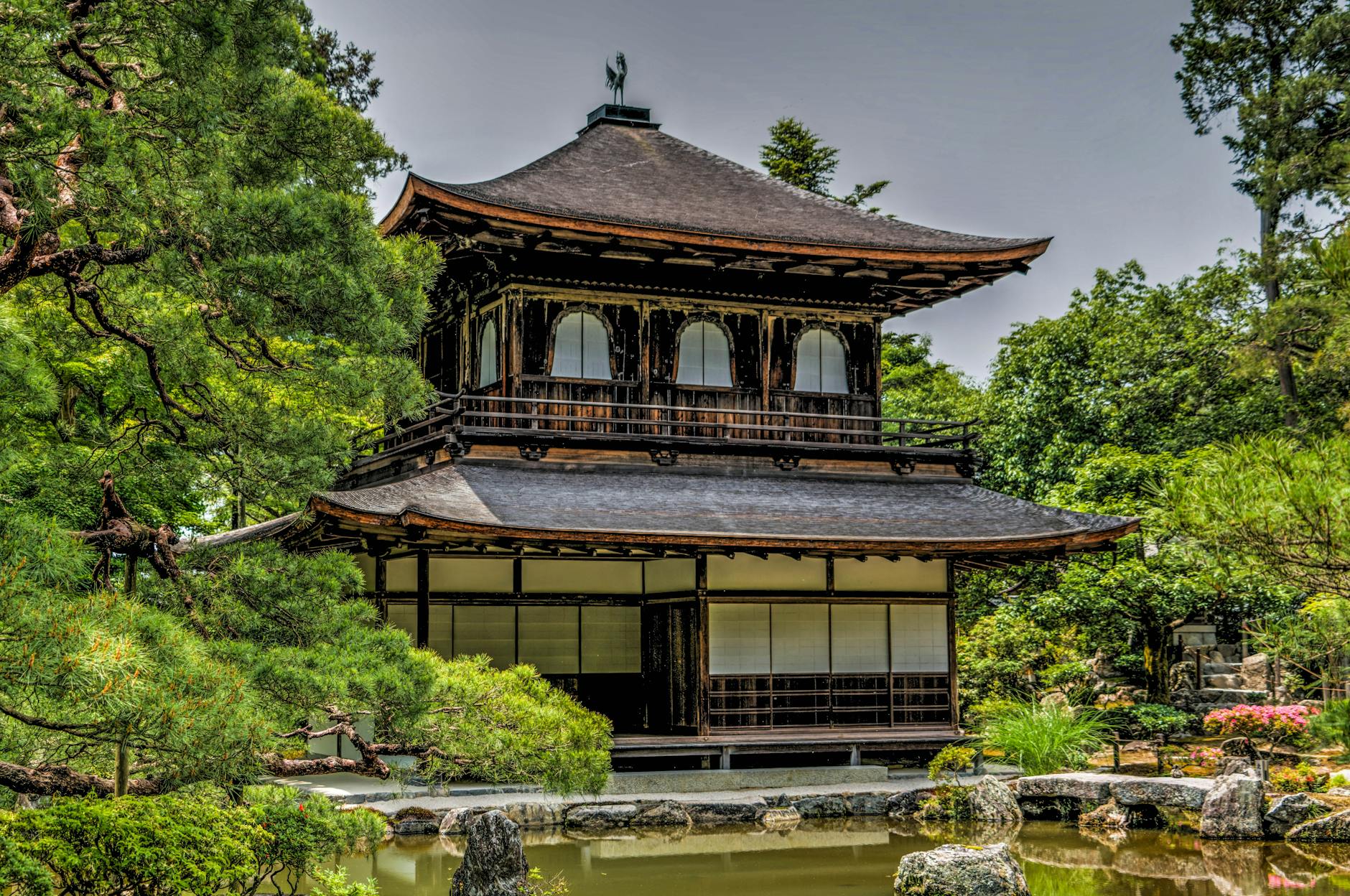
You can see this reflected in the care of a Japanese Tea Garden or a Zen Garden. Every stone, every ripple of sand, every carefully pruned plant is intentional, chosen to create balance and harmony. Or consider the discipline of bonsai—trees are pruned, wired, and grafted, not to diminish them, but to shape them into living works of art. There is a beauty in a cultivated garden that you don’t see in an untended field, just as there is a harmony in music that has been composed rather than left to random notes.
Even the way we manage forests tells the same story. I’ve seen Yellowstone National Park’s approach after a great fire—letting nature reclaim the land without human interference. Decades later, the landscape still bears the scars: stands of blackened trunks, fallen timber, and a wild tangle that resists coherence. By contrast, in the Black Hills of South Dakota, where burnt trees were mulched and new saplings planted, the forest has returned much more quickly to its former beauty—order restored even if the rows of trees stand somewhat equidistant.
“A society grows great when old men plant trees whose shade they know they shall never sit in.” — Greek Proverb
The point isn’t that one method is “natural” and the other “artificial,” but that human beings are themselves part of nature, called from Eden onward to play an active role in its care. The biblical command to “subdue” the earth has often been misunderstood as a license to exploit, but in context it’s the mandate of a steward—to guide, to guard, to shape. We are meant to bring order to creation, not to strip it bare. To let it run wild is to abdicate the role we were given; to manage it wisely is to honor the One whose image we bear.
6. From Garden to Civilization
The Eden story does not end in the garden. Humanity carried its vocation outward, and over time the scope of our ordering grew. What began with tending a plot and naming animals expanded into organizing communities, cultivating fields, and building cities. Anthropologists see the great shift from hunter-gatherer life to agriculture as one of the most significant moves toward structured living in human history. Agriculture brought predictability—food could be stored, populations could grow, and new forms of leadership and cooperation became necessary.
“Adopt the pace of nature: her secret is patience.” — Ralph Waldo Emerson
One of the most fascinating clues to this transition is Göbekli Tepe in modern-day Turkey. These massive stone circles, with their carved pillars and intricate art, appear to predate formal agriculture. If that’s true, then the site raises tantalizing questions. How could a monument of such scale be built without a settled farming society to sustain the workers? Was there a surplus of food from rich hunting grounds, or a cooperative network of groups pooling resources for a shared vision? Whatever the case, it suggests that the impulse to create order—here expressed in stone and symbol—was already deeply woven into humanity’s nature.
It’s tempting to imagine Göbekli Tepe as something like a Babylon 5 of the prehistoric world—a great gathering place where different bands of hunter-gatherers came together, trading not only goods but stories, rituals, and a sense of identity larger than their own clan. In a way, such a site represents the first ordering of humanity on a civilizational scale, moving from the egalitarian fluidity of small, mobile groups to the complex organization needed for monumental projects.
If the garden was humanity’s first classroom in stewardship, places like Göbekli Tepe may have been the earliest experiments in applying that lesson to a much bigger canvas. They show that the human longing to bring order from chaos is not confined to agriculture or architecture—it is the same Edenic vocation, writ large in stone.
7. Order Beyond Agriculture
The impulse to bring order from chaos extends far beyond fields and forests. Artistic creation, city planning, literature, music, and even technology are forms of “gardening” in the realm of ideas—taking raw potential and shaping it into something meaningful. Yet order is not the same as rigidity. True order is about harmony and intentionality, not about imposing sterile uniformity.
“We do not create the work. I believe we, in fact, are discoverers.” — Michelangelo
Unfortunately, many of our modern cities have lost this sense of harmony. In the rush to build higher, faster, and more dramatically, architecture often becomes a contest of egos—designs meant to outshine rather than to integrate. The result is skylines that dominate the landscape rather than converse with it, and developments like the proposed “wall” city in the Middle East that seem more like monuments to human hubris than expressions of human community. We too often treat the natural world as a blank canvas to overwrite, rather than a partner in design.
Perhaps we would do better to model our cities after Japanese Tea Gardens. In these spaces, every stone, bridge, and pathway is chosen not to overpower the landscape, but to work with it, guiding the visitor into a sense of harmony. A tea garden evokes humility, transition, and readiness; its winding paths and intentional pauses invite movement with purpose. In contrast, Zen gardens cultivate stillness and introspection, their carefully raked gravel and precisely placed stones offering a vision of emptiness that is not absence, but potential.
These gardens embody deeper Japanese aesthetic concepts that could serve our urban planning well. Ma (間), the space between, is the rhythm of silence and form—the breath between notes in music. In a Zen garden, this is the expanse of raked gravel inviting the mind to settle; in a tea garden, it’s the stepping stones that make you slow your pace, turning your walk into a meditation. Yūgen (幽玄), or subtle mystery, is the mountain suggested by a few rocks or the glimpse of a path half-hidden from view. It’s beauty that hints rather than shouts. And mono no aware (物の哀れ), the gentle sadness of things, reminds us that beauty is fleeting—the raked patterns that a wind will erase, the autumn leaves that will soon decay.
By contrast, much of Western garden tradition emphasizes control, symmetry, and spectacle—French formal gardens as symbols of dominance over nature, English landscapes designed for theatrical reveal. Both East and West seek to bring nature into conversation with human imagination, but Japanese gardens tend toward subtle integration, while Western traditions often display grandeur and power.
The lesson here is not to abandon our Western heritage, but to recover the humility and restraint found in the Japanese approach—where order emerges from collaboration with the land rather than conquest of it.
In every domain—whether planting a tree, designing a building, writing a novel, or composing a city skyline—the question remains the same: are we bringing the world into deeper harmony, or bending it into the shape of our ego? True order is less about control and more about cultivating a space where life, beauty, and meaning can flourish together.
Side Note: Biophilic Design
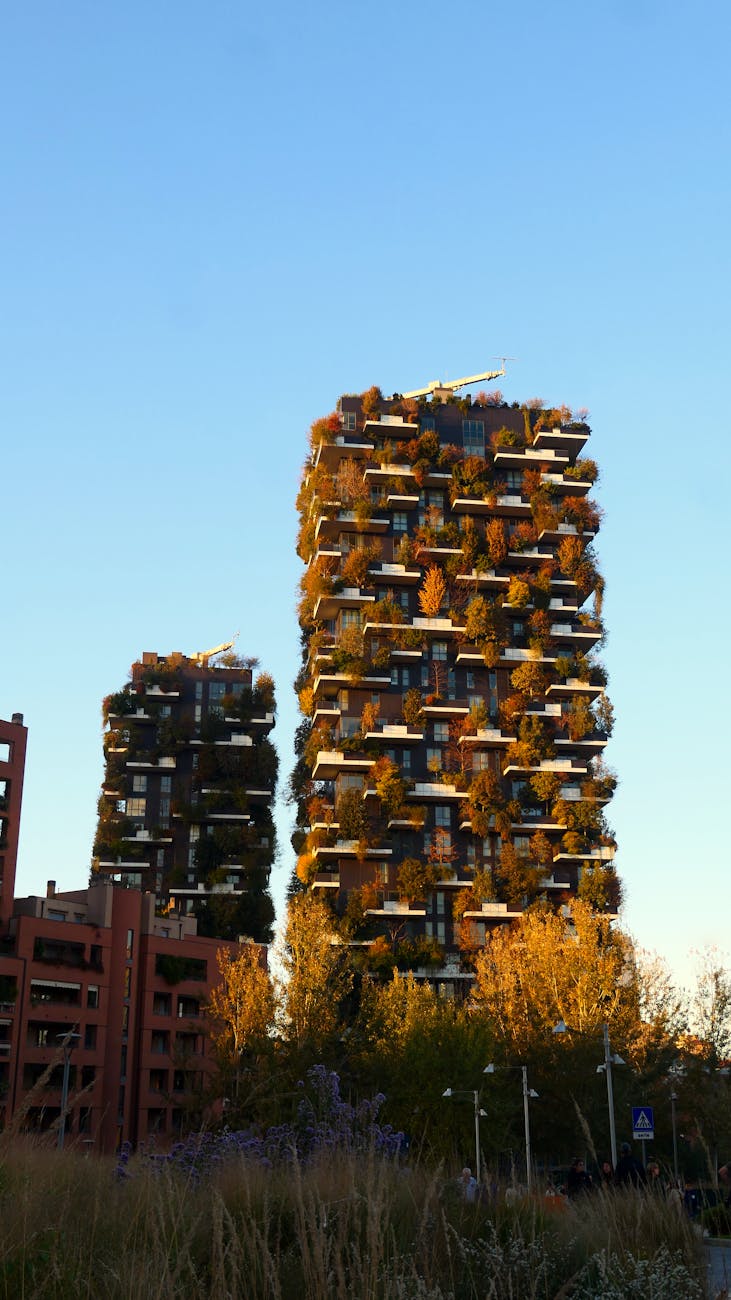
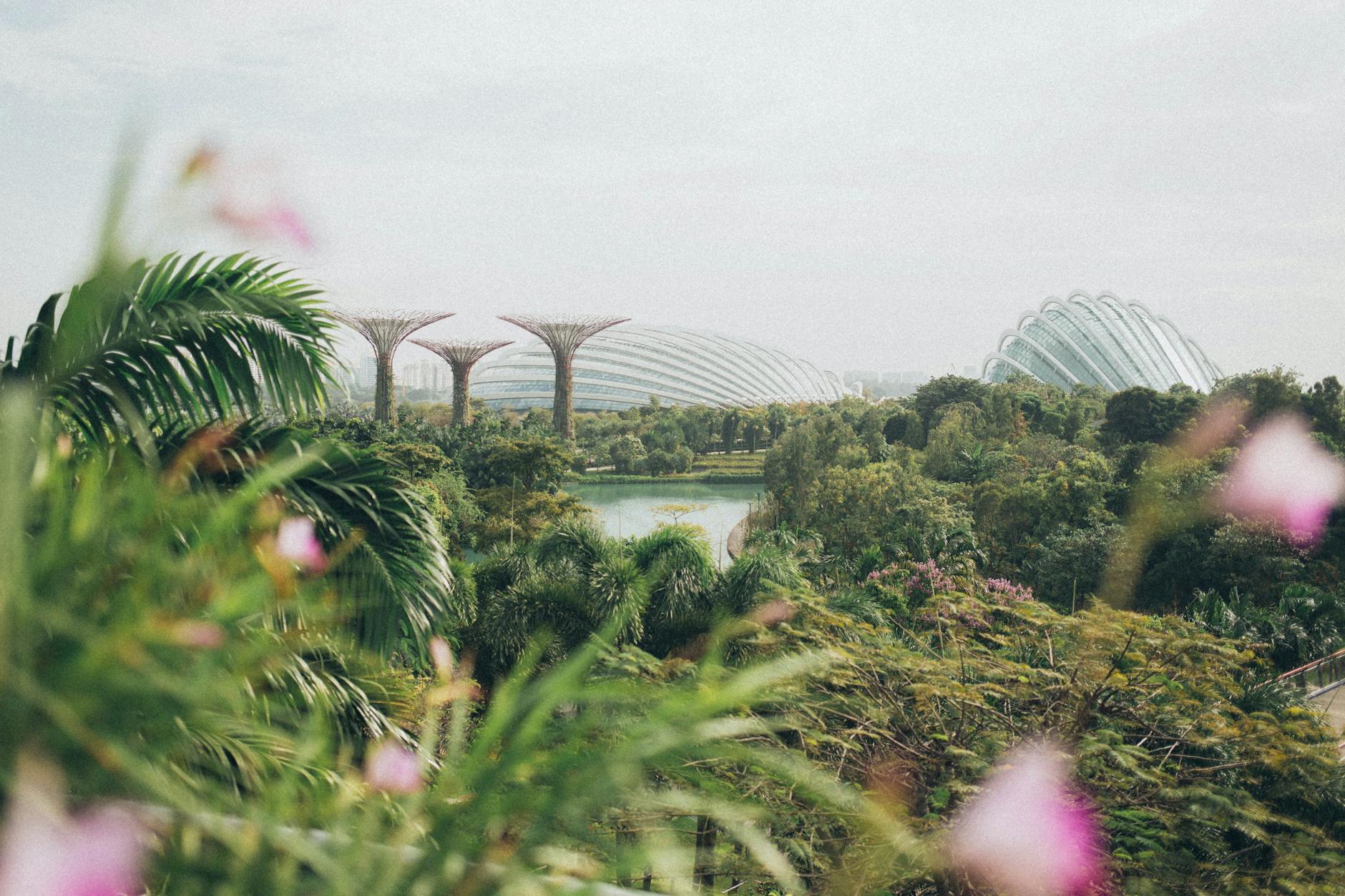
In recent years, architects and planners have begun reviving an ancient instinct—bringing nature into the heart of the city. Known as biophilic design, this approach integrates greenery into buildings through living walls, rooftop gardens, and even entire “vertical forests.” Like the Hanging Gardens of Babylon, these spaces aim to reconnect urban life with the restorative presence of the natural world. Done well, it transforms cities from concrete deserts into places where human structures and nature thrive together.
8. Naturism and the Longing for Eden
If part of our calling is to live in harmony with creation, then naturism can be seen as a deeply personal way of entering that harmony. Being nude in nature is more than a preference or a lifestyle choice—it can be a symbolic reconnection to the pre-Fall order of Eden. Before shame, before the fracture of Genesis 3, humanity walked the earth unclothed, unhidden, and unafraid, fully integrated with the world around them.
Modern culture offers an almost whimsical echo of this in events like World Naked Gardening Day. On the surface, it’s playful. But beneath the humor is something more profound: the act of tending the earth without barriers, restoring even for a moment the innocence and immediacy of Eden. There’s a strange truth here—sometimes the most lighthearted traditions carry the deepest archetypes.
The experience itself is visceral. Indoors, surrounded by walls, the senses are muted; outside, unencumbered, they awaken. The warmth of sunlight, the texture of bark, the scent of the earth—each detail feels sharper, more present. I’ve stood nude in the mountains and felt my senses come alive in a way that no indoor space could ever replicate. It’s not about exhibitionism; it’s about connection.
For the naturist, this longing to be nude is not merely about comfort or preference—it’s a call to return to a state of order and innocence. It’s the body’s way of remembering what the heart already knows: that we were made for unbroken fellowship with creation, for a life without the partitions of fear or shame. When we experience even a taste of that wholeness, the ache for Eden becomes all the more real.
9. Personal Reflection — My Garden as Micro-Eden
For me, gardening has always been more than a hobby. It’s an act of creation and stewardship, a way of taking the raw, untamed elements of nature and coaxing them into harmony. I choose where to plant, what colors will complement, how tall each plant will grow. It is intentionality woven into beauty—an echo of the Creator’s own work in Eden.
Of course, it isn’t without its challenges. Pests chew through leaves, weather turns harsh, and plans are often disrupted by forces beyond my control. These are the modern-day thorns and thistles, reminders that we live after the Fall, where order is always contested by disorder. But perhaps that’s part of the meaning. In tending my garden, I’m participating in the same struggle humanity has faced since the gates of Eden closed—seeking to bring order from chaos, even in a small corner of the world.
“Without order, nothing can exist; without chaos, nothing can evolve.” — Oscar Wilde
I often wonder why it feels so peaceful to work the soil. Maybe it’s because we were made for this. We are sub-creators, taking nature’s random movements and bringing them together like instruments in an orchestra—transforming cacophony into harmony. Each weed pulled, each plant placed just so, feels like one more note in a melody that has been playing since the beginning of time.
My garden is not Eden, but it is my micro-Eden. It is a place where I can, in some small way, restore the order and beauty we once knew. And even if the restoration is only temporary—until the next pest, the next storm—it points toward a greater hope. One day, the garden will not be a metaphor or a fragment, but a whole world, restored. Until then, I’ll keep tending my little patch of earth, one seed, one season, one song at a time.
10. Conclusion — Our Ongoing Call
From Genesis to Revelation, the movement from chaos to order is more than an ancient story—it is the blueprint for our vocation. We are made in the image of a Creator who brings cosmos out of tohu va-bohu, and that same impulse runs in our veins. Every act that brings harmony—whether planting a garden, painting a canvas, leading a team, reconciling a relationship, or building a community—is part of our imago Dei calling. It is why we desire it, why there’s satisfaction in a completed project, a resolved melody, a balanced design. We are never more ourselves than when we are ordering the world toward beauty and purpose.
And this isn’t confined to the soil or the workshop. Sculpture, painting, photography, literature, music, architecture—every art form is an act of ordering, shaping raw material into something that carries harmony and meaning. In all of these, we are echoing the voice that first said, “Let there be…”
“What you do makes a difference, and you have to decide what kind of difference you want to make.” — Jane Goodall
The question is how we will live this out. Will we use our creative gifts to inflate our own importance, or to participate in the ongoing restoration of Eden’s harmony? The biblical pattern of “evening and morning” invites us to choose—to let every obscurity move toward clarity, every discord toward peace, every fragment toward wholeness.
How, then, can we live so that our “evening” always turns toward “morning”?
Reflection
- Where in your life do you feel most called to bring order from chaos, and how do you see that as part of your God-given design or purpose in life?
- If you could redesign your city or community with the harmony of a Japanese garden, what changes would you make?
- What practices—gardening, art, music, or something else—help you feel most connected to creation (nature) and remind you of Eden?
Excerpt
Discover how the biblical theme of chaos to order shapes our lives—from Eden’s garden to modern stewardship. Explore creation, art, cities, and naturism as reflections of our imago Dei calling, bringing harmony, beauty, and purpose to the world around us.

 Treasures of the Elysian Fields
Leave a comment