

The rabbit hole of exoplanets—it’s a deep one, and I’ve been happily tumbling down it for a while now.
What began in a philosophy class—debating the fine-tuning of the universe and the probability of life—has since turned into a sprawling journey across cosmic disciplines. If you’re willing to get a little nerdy with me (and I hope you are), this isn’t just a topic; it’s a constellation of interconnected questions and mysteries. Think of it like wandering through adjacent sections of a grand galactic library, or getting sidetracked in the Jedi Archives after finding an obscure reference to Kamino.
So, if we begin to wander around the topic of exoplanets, what are we likely to come across? Well, down the rabbit hole we go—no white rabbit required. Like strolling through a well-stocked bookstore with no agenda, just curiosity as your compass, you never know what you’ll find. One moment you’re scanning titles on planetary formation, and the next, you’ve stumbled into a dusty corner where astrobiology rubs elbows with the Fermi Paradox and the eerie silence of the cosmos. Have you ever followed a trail like that? Maybe it started with a random article or a late-night documentary and suddenly, you’re neck-deep in the physics of Dyson spheres or arguing with yourself over the Drake Equation. There’s something magical in that kind of intellectual wandering—a sense of unexpected discovery that feels a lot like treasure-hunting.
What is an exoplanet?
An exoplanet is a planet that orbits a star outside our solar system. Unlike the familiar planets circling our Sun, exoplanets belong to distant star systems, some hundreds or even thousands of light-years away. They come in an astonishing variety—gas giants, rocky Earth-like worlds, lava planets, and even rogue planets drifting alone through space. Many are found using indirect methods like transit photometry or radial velocity, as they’re too faint and distant to observe directly. The study of exoplanets has transformed our understanding of planetary systems and raised profound questions about life, habitability, and our place in the cosmos.
Even in science fiction—whether it’s the diverse planetary playgrounds of Star Wars and Star Trek, or the harsh, shadowy landscapes of Riddick—we’re constantly confronted with the exhilarating variety of alien worlds. For me, one of the most mind-blowing ideas comes from Halo: a ringworld, not a planet at all, but an immense, habitable structure shaped like a ring. It’s a product of intelligent design within the story, but imagine the implications if we discovered something like that formed naturally. It would knock our collective socks off and send the scientific community spiraling into theorizing overdrive. This is what makes the study of exoplanets so enchanting—it’s as vast as the universe itself, and no two worlds are exactly alike. Every discovery adds a new page to the greatest travelogue we’ve ever written, one in which the next chapter might just change everything we think we know.
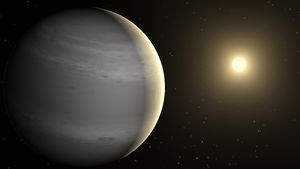
The Search Begins: Detection and Classification
As we tumble further into the rabbit hole of exoplanets, the first cavernous chamber we encounter is one of detection—the ancient yet ever-advancing art of finding worlds we cannot directly see. This isn’t the stuff of backyard telescopes and wishful stargazing. Discovering an exoplanet is more like cosmic sleuthing than sightseeing.
The most popular method, transit photometry, watches for the telltale dimming of a star’s light as a planet passes—or transits—in front of it. Imagine noticing a fly walking across a car’s headlight from several miles away, and you’ll have some idea of the delicacy involved. Then there’s radial velocity, where we detect the subtle wobble in a star’s motion caused by the gravitational tug of an orbiting planet—a bit like inferring the presence of an invisible dance partner by the sways of the dancer you can see.
For more exotic cases, astronomers use gravitational microlensing, a method that bends space-time itself—Einstein would be proud. When a planet passes between a distant star and us, its gravity can act like a lens, briefly magnifying the background star’s light. It’s rare and fleeting, like catching a glimpse of the Millennium Falcon exiting hyperspace before disappearing again.
And then there’s direct imaging—the astrophysical equivalent of spotting a firefly next to a lighthouse from across the country. We block out the star’s light and try to isolate the faint glow of its planetary companion. Advanced telescopes like the upcoming Nancy Grace Roman Space Telescope and future interferometric arrays promise to improve this dramatically.
Once we’ve found these elusive worlds, we begin the second stage: classification. Here we step into the taxonomical jungle of planetary types—gas giants like Jupiter, ice giants like Neptune, super-Earths that are more massive than our own but not quite gas balloons, and mini-Neptunes that blur those lines altogether.
We find lava worlds, their surfaces perpetually molten due to extreme proximity to their stars—basically Mustafar without the Sith Lords. We catalog tidally locked planets, where one side forever faces the star, basking in eternal daylight while the other languishes in frigid darkness. And let’s not forget rogue planets, untethered to any star, drifting through the galaxy like cosmic ronin—silent, solitary, and mysterious. Somewhere, Riddick might be sharpening his knives.
Each planet discovered adds not just to our inventory, but to our sense of what’s possible. Nature, it turns out, has a flair for the unexpected. And we’re just getting started.

Formation and Orbital Oddities
Next down the rabbit hole we tumble into the swirling, turbulent world of planetary formation and orbital dynamics—a realm where gravity is king, queen, and court jester all rolled into one. This is where the cosmic stories begin, in swirling disks of gas and dust around young stars, the so-called protoplanetary disks. Here, through a chaotic mix of accretion, collision, and gravitational wrestling, planets are born.
According to the nebular hypothesis, our most widely accepted theory, stars form from collapsing clouds of gas, and the leftover material flattens into a disk. Within this rotating nursery, dust grains stick together, forming pebbles, boulders, and eventually planetesimals—the building blocks of planets. Some coalesce into rocky terrestrial worlds, others grow large enough to capture thick atmospheres and become gas or ice giants. But as with all good theories, reality keeps complicating the narrative.
Consider the challenge of hot Jupiters—massive gas giants found orbiting perilously close to their stars. By traditional models, such planets shouldn’t form there, where temperatures are too high for gas accretion. Yet they exist, seemingly having migrated inward after forming farther out. Then there are super-Earths and mini-Neptunes, types of planets that don’t even exist in our solar system, yet are incredibly common elsewhere.
Now throw in binary or multiple star systems. The gravitational dynamics get exponentially more complex. Picture a dance floor where three DJs are each spinning a different genre, and the dancers (our planets) are struggling to keep their rhythm. These systems give rise to circumbinary planets—planets that orbit two stars, like Tatooine—or planets that weave unstable orbits between two stars before being flung out entirely, destined to wander as rogues.
We’re also beginning to understand just how delicately tuned planetary systems must be for long-term stability. Orbital resonances, where planets exert regular gravitational influences on each other, can stabilize or destabilize orbits. Gravitational perturbations from nearby stars, massive planets, or even passing stars in dense stellar nurseries can tilt, shift, or eject planets over time.
What’s more, planetary systems are not static. They evolve. Tidal forces can lock a planet’s rotation, atmospheric loss can alter its climate, and collisions can completely reshape or even destroy worlds. The more we observe, the more we realize the solar system we call home might be an outlier, not a template.
This is a space of ongoing revolution. New discoveries—like planets orbiting pulsars, planets with wildly tilted axes, or systems where planets orbit in polar orbits—continue to upend our understanding. But that’s the joy of it. If we’re not dogmatic about what we “know,” every disruption is an invitation to rethink, refine, and reimagine.
In this cosmic dance, gravity might be the choreographer, but chaos gets a featured solo.
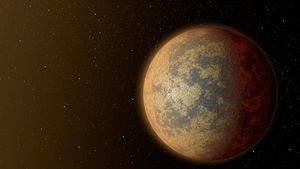
Habitable Zones and the Home Question
As we continue our descent through the rabbit hole, we inevitably stumble upon the most headline-grabbing, imagination-stirring question in all of exoplanet research: Is there life out there? It’s the clickbait magnet of space journalism—the breathless announcements, the promises of alien microbes, the dramatic renderings of distant worlds. And yes, I fall for it every time. But I’ve learned to temper my expectations. The reality behind the headlines is often more nuanced—and more fascinating—than the hype lets on.
The foundation of this search is the concept of the habitable zone, often romanticized as the “Goldilocks zone.” It’s that orbital sweet spot around a star where conditions might allow for liquid water to exist on a planet’s surface. Not too hot, not too cold, just right—at least in theory. But as our own solar system demonstrates, being in the zone is no guarantee. Venus bakes in a runaway greenhouse effect, while Mars lies cold and desolate, once wet but now bone-dry and rusting. They both sit within our Sun’s habitable zone, yet neither is exactly beachfront real estate.
So scientists now ask deeper questions: What kind of atmosphere does a planet have? What’s the gravity like? Is it tidally locked, with one side scorched and the other frozen? What kind of star is it orbiting—calm like our Sun or temperamental like a red dwarf with violent flares that strip away atmospheres? The answers to these questions reshape the map of habitability.
And then there’s a more audacious question: What about technologically habitable planets—worlds that may not be ideal now but could become viable with enough ingenuity (and perhaps a few trillion dollars)? Could we terraform a harsh planet, engineer its atmosphere, or build self-sustaining biospheres under protective domes like something out of Total Recall? Could we even adapt ourselves—biologically or cybernetically—to suit alien environments? The stuff of science fiction, yes, but also a frontier of serious speculation.
The search for life isn’t just about meeting our galactic neighbors—though the idea of cosmic company is thrilling. It’s also about hedging our bets. Our Earth, lovely as it is, has a cosmic expiration date. Eventually, our Sun will bloat into a red giant and consume the inner planets. And that’s assuming we survive long enough to witness it, given our penchant for ecological mismanagement and geopolitical brinkmanship.
So maybe this search isn’t only a quest for signs of life, but a practical reconnaissance mission. We’re scouting for potential new homes. For emergency lifeboats. For seeds to plant elsewhere. The ultimate cosmic real estate venture.
If we want our species to outlive its planetary cradle—to become more than just a footnote on a single blue marble—we’ll need to figure out how to get off the third rock from the Sun. And more importantly, we’ll need somewhere to go.
Because space is not just the final frontier—it might be our only one.
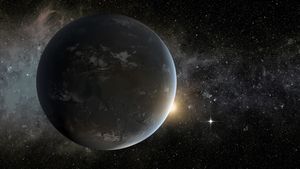
Astrobiology: Life, Complexity, and Human Adaptability
Once we’ve mapped the habitable zones and scouted the planetary real estate, we arrive at one of the most fascinating rabbit burrows of all: astrobiology—the study of life in the universe. But this field is not limited to asking if there’s life out there. It also invites us to wonder how life arises, adapts, and—if we’re bold—how we ourselves might adapt to life beyond Earth.
At its core, astrobiology seeks to understand the conditions under which life can emerge and thrive. On Earth, life began surprisingly early in our planet’s history and has proven astonishingly resilient—from microbes in boiling vents to extremophiles that survive radiation doses that would fry a starship crew. These examples expand our idea of what’s possible and suggest that simple life might be common across the cosmos.
But complex life, let alone intelligent life, is another matter. The jump from single-celled to multicellular organisms, the emergence of brains, language, culture—these required a chain of highly improbable steps. Evolutionary biologists speak of “hard steps” that make the emergence of complex life vanishingly rare on cosmic timescales. In this view, Earth might not just be special; it might be unique.
So how do we detect life when we can’t even see the planets directly? Astrobiologists search for biosignatures—traces of life’s activity in a planet’s atmosphere, such as oxygen, methane, or more exotic chemicals like phosphine or dimethyl sulfide. Using space telescopes, we analyze the light that filters through a planet’s atmosphere during a transit. It’s like reading the barcode of a distant world, hoping to catch a whiff of life.
And now, let’s flip the question. Rather than asking whether life can already exist on these worlds, what if we asked: Could we bring life there?
Enter the speculative frontier of human adaptability. If we ever hope to live beyond Earth—on Mars, the moons of Jupiter, or distant exoplanets—we’ll need to confront alien conditions. Different gravity. Toxic or thin atmospheres. Deadly radiation. Wild temperature swings. This leads to fields like space medicine, bioengineering, and exoecology—studying how we might survive, thrive, and even evolve in foreign environments.
We might build habitats that simulate Earth-like conditions. Or we might alter ourselves—genetically, biologically, or cybernetically. Could future humans breathe methane-rich air? Withstand higher gravity? See in different spectra of light? These are not just questions for science fiction anymore—they’re the domain of astrobiology’s most radical edge. I have a series on transhumanism that links in with this.
Ultimately, astrobiology isn’t just about discovering others—it’s about discovering ourselves. It asks: What is life, really? What does it take to survive? And are we prepared to change ourselves in order to reach the stars?
If even one world out there proves habitable—by nature or by nurture—it will reshape our destiny. Not just as Earthlings, but as cosmic beings.
Where Science Meets Meaning: Philosophical and Theological Frontiers
Now we arrive at what might be the most precious chamber in this rabbit hole—a place where data gives way to deep wonder, where science hands off the baton to philosophy, theology, and speculation. This is where the treasure really lies—not in hard numbers, but in the questions they lead us to ask.
One of the most fascinating starting points is the Rare Earth Hypothesis. It suggests that while microbial life might pop up in cosmic corners with some regularity, complex life—conscious, sentient, world-shaping life—is astonishingly rare. Plate tectonics, magnetic fields, a stabilizing moon, the right star, the right place in the galaxy—the list of necessary conditions begins to feel less like a recipe and more like a miracle. And that nudges us toward the deeper question: Is this rarity just chance… or design?
Then there’s the Drake Equation, a legendary formula that tries to estimate the number of civilizations in our galaxy. While mathematically elegant, it’s built on layers of unknowns. But its real value may not be in the number it yields—it’s in the framework it offers to think about life, intelligence, and our place in the cosmic story.
Of course, staring at these equations and hypotheses eventually brings us face to face with the Fermi Paradox—the eerie silence of the stars. If life is probable, if the galaxy is old, if stars and planets are abundant… then why haven’t we heard anything? Where is everybody?
This silence has theological overtones. Is it because we’re the first? The only? Is the universe a grand stage set for a single play? Or are we just too early, too isolated, or too primitive to join the cosmic chorus?
And the rabbit hole deepens.
Enter the Anthropic Principle—a philosophical lens that observes, quite simply, that we see a life-permitting universe because we’re here to see it. The Weak Anthropic Principle merely states the obvious. The Strong version, however, tiptoes into teleology, suggesting the universe must be structured in such a way that observers like us inevitably emerge.
The Multiverse Theory takes that further. If our universe is just one of countless others, each with its own physical laws, then the fine-tuned constants that allow life here aren’t surprising. We just won the cosmic lottery by being in the right kind of universe. Problem solved? Perhaps. But new questions emerge. If there are infinite universes, where are the other observers? Do we still matter if we’re just one of an endless set of possibilities?
And then, shimmering like a lens flare in all this uncertainty, comes The Privileged Planet Theory. It suggests not only is Earth finely tuned for life—it’s also uniquely designed for discovery. Positioned in a clear galactic region, equipped with a moon that allows for perfect solar eclipses, wrapped in an atmosphere transparent to a vast range of electromagnetic radiation, Earth isn’t just habitable. It’s knowable. And maybe, just maybe, that’s not an accident.
It’s enough to make you feel like you’re in a Matrix-style simulation, where the Architect has left behind riddles and clues, inviting us to wake up, look around, and start asking the big questions.
Why this universe? Why this planet? Why now?
These are not just scientific inquiries. They are echoes of ancient theological longings and philosophical yearnings, dressed in the garb of modern cosmology. They invite us to be more than passive observers. They call us to be interpreters.
And maybe, in the grand cosmic library, that’s the section we’re meant to read next.
Why Bother?
Well, you might say, “Why study all this?” I’d argue the real question is: how could we not?
- We’re searching for extraterrestrial life—potential cosmic neighbors or long-lost cousins.
- We’re identifying potential new homes, even if they’re millennia away.
- We’re learning more about the universe, and in turn, more about ourselves.
- And we’re engaging with ancient and modern philosophical questions about creation, chance, design, and purpose.
And let’s be honest—this stuff is just plain awe-inspiring. We are living through a golden age of discovery, a time when news of newly discovered exoplanets arrives not every decade, but almost every week. The torrent of articles piling up in my folders is both exhilarating and overwhelming—a paper trail of progress charting humanity’s growing understanding of the cosmos. Each new find rewrites some assumption, challenges a theory, or opens a door we didn’t even know existed.
Think about that for a moment: in all of human history, only in our generation have we begun to catalog the planets orbiting other stars. For thousands of years, we looked up and saw only points of light. Now we know many of them have worlds—worlds with climates, compositions, and maybe even conditions for life. We stand at a threshold no other generation has stood at before, able to ask deeper questions not just about the stars, but about our place among them.
Can we just pause and appreciate that? The sheer privilege of living here, on this planet, and now, in this moment. To be conscious in an age where our reach extends beyond our own solar system—where curiosity is not just a luxury, but a vehicle for expanding the boundaries of human knowledge. That’s not just cool. It’s sacred.
An Invitation to Explore
Look, I’m not going to pretend I’m the life of the party—unless, of course, the party involves spontaneous debates about the Roche limit, orbital eccentricity, or whether humanity should attempt to terraform Mars or Europa first. (Spoiler: most parties don’t.) But if those kinds of rabbit holes light up your curiosity the way they do mine, then you’re in good company.
This space—this blog, this little corner of the digital cosmos—is where I plan to leave a trail of thoughts, reflections, questions, and references. Think of it as a kind of cosmic breadcrumb trail through the ever-expanding galaxy of discovery. I’ll be writing more, linking back to resources, and hopefully starting conversations that don’t always have tidy answers—but are richer for it.
So if you find yourself wondering what it would mean to discover life on Gliese 12 b, or you’ve ever stayed up too late pondering the implications of the Fermi Paradox, or if you just love a good sci-fi metaphor stretched into a philosophical treatise—feel free to join in. Comment, question, share your own musings or reading suggestions. I welcome it all.
Because, as the Starship Enterprise reminds us, the mission isn’t just to know. It’s to explore—boldly, curiously, and preferably with a good sense of humor. And who knows? Maybe, like Data learning to tell a joke, we’ll discover new ways to be human in the process.
Excerpt
Explore the captivating rabbit hole of exoplanets—from their discovery and classification to philosophical questions about life, rarity, and purpose. Join a cosmic journey blending science, wonder, and curiosity, where each discovery invites us to rethink our place in the universe. It’s a conversation worth having—boldly and thoughtfully.
References
References: Exoplanets

 Treasures of the Elysian Fields
Leave a comment