

Through the Looking Glass of Empire
It began, as many curious journeys do these days, with a casual scroll through Audible. I stumbled across a free audio course from The Great Courses: Great Heroes and Heroines of Hawaiian Heritage by Leilani Basham. With a soft spot for the stories of First Nations and indigenous peoples—whose voices are often the first lost in the clamor of modernity—I decided to listen. Though I have no known Hawaiian ancestry, I’ve long believed that when any culture disappears, it’s not just their loss. It’s humanity’s. Every language forgotten, every story silenced, every worldview erased is a narrowing of the lens through which we can understand the full richness of what it means to be human.
This course presented not just a history lesson, but a tapestry of struggle, resilience, and memory. It reminded me of how complex and often contradictory the legacies of empire really are—especially in a place like Hawaii. In today’s discourse, “imperialism” and “colonialism” are usually wielded like blunt instruments—condemnations rather than analyses. And while many of those condemnations are deserved, they can also obscure something more uncomfortable to admit: that not all outcomes are as easy to categorize as villains and victims.
So here’s the question I’d like to explore: What if the incorporation of Hawaii into the United States—though undeniably rooted in injustice—ended up offering a better future for more people than a return to an idealized, possibly nonexistent, past ever could?
That question doesn’t diminish the wrongs done. But it complicates the narrative, as all good questions do.
Consider King Kamehameha. His unification of the Hawaiian Islands in the early 19th century is often celebrated as a feat of leadership and vision. But look closely, and you’ll see something far more Machiavellian: strategic marriages, bloody battles, and political dominance. A Pacific Game of Thrones, if you will—native-born imperialism long before the Stars and Stripes planted itself on Hawaiian soil. If we call the American annexation “empire,” must we not also interrogate Kamehameha’s conquests with the same lens?
As I listened to the voices in Basham’s course—leaders, artists, warriors of culture and language—I found myself torn between mourning and marvel. Mourning the deep wounds inflicted on a people whose ways of knowing were nearly erased. Marveling at their tenacity, and at the paradox that out of destruction sometimes grows a hybrid beauty no one could have planned.
It is through this looking glass—of empire, memory, and messy history—that I invite you to peer with me. Not for easy answers, but for the kind of questioning that expands, rather than contracts, our understanding of who we are.
The Double-Edged Word: Imperialism
Imperialism. The word itself carries a weight that precedes any specific historical context—evoking images of ships cresting foreign shores, flags planted in strange soils, and native tongues silenced beneath foreign laws. It’s a term that signals exploitation, power imbalance, and the corrosive loss of cultural identity. In the modern imagination, it has become synonymous with injustice, particularly in the context of European and American expansions into lands not their own.
And yet—like all powerful words—”imperialism” is a double-edged blade. Wielded today in political discourse, it often functions less as a lens for understanding and more as a rhetorical cudgel. It flattens history into morality plays, casting neatly delineated heroes and villains. But history rarely offers such clarity. Human affairs are seldom so binary. Sometimes the invader builds hospitals. Sometimes the native king wages war. Sometimes, intentions are noble, and outcomes are tragic—or vice versa.
Well, you might say that calling U.S. involvement in Hawaii benevolent imperialism is like calling Darth Vader a misunderstood father. And yet… some narratives, no matter how uncomfortable, demand reexamination. The truth may not vindicate, but it might complicate.
Take, for instance, the unspoken tension in the Star Trek universe. The Prime Directive is a guiding principle: do not interfere with less advanced civilizations. It is a code meant to respect autonomy and prevent cultural contamination. But how often does Captain Kirk violate it? Regularly. And why? Because the ideal meets the real, and the real is messy. A civilization is dying, or a tyrant is in power, or a plague is ravaging a planet. Kirk intervenes—not out of malice, but out of pragmatic morality. The results are not always ideal, but they are often defensible.
Was the United States playing Kirk or the Klingons in Hawaii? Was annexation a breach of sovereignty or a rescue from isolation? Intent versus outcome—how do we judge such moments? Especially when those outcomes lead to a radically transformed society in which many today—native or not—find identity, security, and opportunity?
To further complicate things, Hawaii today is home to a new kind of native—those born on the islands but not genetically descended from the pre-European inhabitants. I think of them as people of the middle: living at the crossroads of heritage and hybridity. Some carry both Polynesian and European blood, some none at all, but they all carry Hawaii in their bodies, their language, and their sense of place.
From a sociological perspective, this is not unusual. Culture is not static. It is as fluid as the seas that surround the Hawaiian archipelago. What mattered to one generation may shift in the next. Customs, values, even language adapt to new realities. To honor a culture is not to freeze it in time like a museum artifact—it is to recognize its evolution. After all, no wave in the ocean is ever the same, though they all belong to the same sea.
So perhaps the real tragedy is not that Hawaii changed. Perhaps the greater loss would have been if it hadn’t.
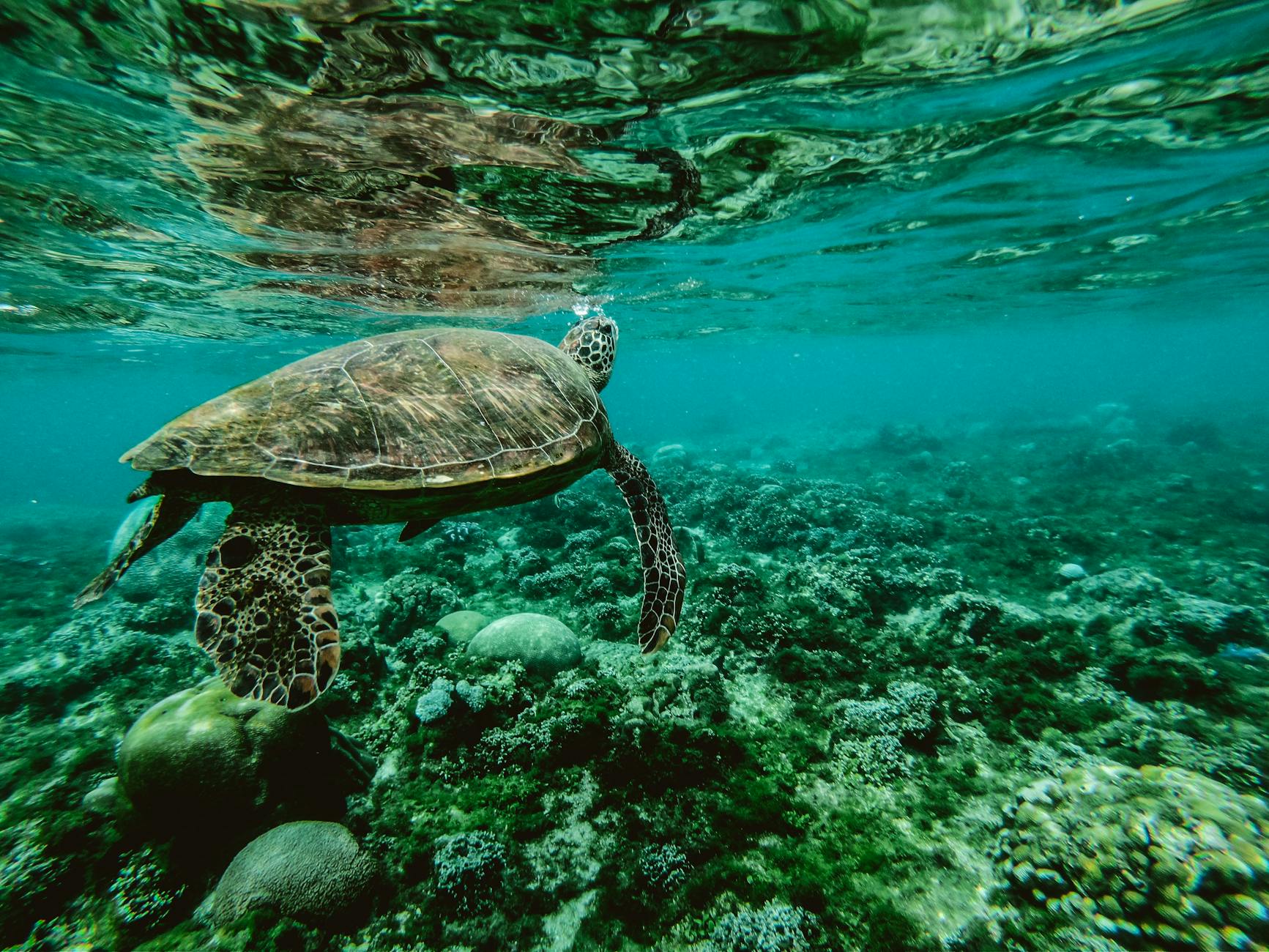
Was Pre-Imperial Hawaii a Paradise?
When we talk about Hawaii before contact with the West, it’s tempting—almost irresistible—to imagine a paradise. Lush landscapes, vibrant chants echoing across volcanic valleys, outrigger canoes tracing the stars across open seas, and a society in harmony with its environment. And while these elements are real and worthy of awe, they form only part of the picture. Like the infamous deleted octopus scene in The Goonies, much of what’s left out of the popular story shapes our emotional response more than what’s actually on the screen.
The reality of pre-imperial Hawaii is richer, more complex, and—importantly—more human. Native Hawaiian culture was deeply spiritual and sophisticated in its relationship with land and ocean. Their methods of navigation, their ecological stewardship, and their oral histories reflect a profound and meaningful way of knowing. But it was also a society marked by rigid social hierarchies and power struggles. The ali‘i (chiefly class) ruled over makaʻāinana (commoners) and kauwā (outcasts or slaves), with clear delineations of status and mobility. These weren’t abstract differences—they were embedded in law, religion, and everyday life.
Internal conflict was not uncommon. Rival chiefs often waged war for dominance, and it was through blood and battle that King Kamehameha ultimately unified the islands. His unification—a feat rightly remembered with admiration—was achieved not through peaceful consensus but through strategic alliances, European firearms, and decisive military campaigns. It was, by any measure, a form of internal colonization.
This doesn’t diminish the achievements of Kamehameha or the depth of Hawaiian tradition. But it does caution us against embracing the Myth of the Noble Savage—the romanticized belief that indigenous cultures are innately peaceful, egalitarian, and ecologically perfect until corrupted by outsiders. This myth is not only historically inaccurate; it strips indigenous people of their humanity, turning them into symbols rather than real, living, thinking, flawed, and courageous human beings.
We must remember: paradise is not a place on Earth. Every culture, including our own, is touched by the same frailties—pride, fear, greed, violence—that have shaped human societies across every continent and era. But that doesn’t mean cultures are morally equivalent, nor does it erase what is unique and beautiful. There is good in the Hawaiian way of knowing and being. Profound good. And to lose it—through neglect, suppression, or romantic illusion—would be a loss not just to Hawaiians, but to all of us.
The hope, as always, is that when two cultures meet, both can become better for it. Not diluted, not erased—but refined. There’s no denying that European imperialism often failed this ideal. Coercion, not cooperation, was the rule. But imagine a better first contact—not a conquest, but a conversation. A learning. A relationship. That is not a naïve hope, but a moral imperative, if we are ever to live together on this shrinking, interdependent planet.
Because like any worthwhile relationship, cultural encounter should not be about domination but transformation—about growing together into something neither could have become alone.
Cultural Loss or Cultural Evolution?
When discussing the history of Hawaii, it’s easy to focus on what was lost: the near-extinction of the Hawaiian language, the outlawing of hula, the dismantling of native governance. These were not small wounds. They cut to the heart of a people’s identity. Yet today, something remarkable is happening. Hawaiian is once again spoken in schools. Hula is danced in public celebrations. Words like aloha, ohana, and mahalo have entered the broader American vocabulary—not as tokens, but as windows into a way of being that continues to resonate.
So the question arises: was this truly cultural loss, or something more complicated—cultural evolution?
Not every change is a conquest. Some transformations come not from foreign domination but from modernity itself. Technologies shift, economies globalize, lifestyles adapt. The disappearance of traditional Polynesian navigation techniques wasn’t solely due to colonizers—it was also because ships and planes made such skills obsolete for everyday life. That doesn’t make it good or bad; it makes it human. Culture is not a fossil—it’s a current, always flowing, reshaping its banks.
Consider surfing. Once practiced by a small group of Hawaiians, it now breaks over beaches from Sydney to Santa Cruz. Is that appropriation? Perhaps. But it’s also diffusion. Surfing has become a global language—an echo of Hawaiian ingenuity carried on the waves of history. Likewise, hula has returned, not as a museum exhibit, but as a living tradition. This is fusion, not just dilution.
In the science fiction series Babylon 5, alien civilizations coexist aboard a single space station. Cultures collide, blend, and often warp each other in unexpected ways. Traditions are lost. New ones are born. What survives isn’t always what the old guard would choose—but it is always something alive, something that speaks to the present. The series doesn’t pretend cultural encounters are easy or equitable. But it shows that evolution, not isolation, is the real engine of survival.
And this is where Hawaii’s story diverges from what might have been. If the islands had been absorbed by Imperial Japan or subjected to a totalitarian regime like Communist China, it is very unlikely that any renaissance of Hawaiian identity would have been permitted. No public hula. No Hawaiian immersion schools. No space for activists, artists, and scholars to reclaim what had been buried.
But Hawaii is a state in a democratic republic. Imperfect though it may be, the United States allows space for communities to vote, to protest, to legislate, and to revive. The people of Hawaii didn’t just get swept away by empire—they’ve used the tools of that empire to push back, to reclaim, and to reshape.
And that, too, is part of the story. The survival of Hawaiian culture is not just a miracle of endurance—it’s a testament to adaptation, agency, and yes, evolution.

Victimhood vs. Agency in the Democratic Era
There’s a delicate line between honoring historical injustice and becoming entangled in a narrative of permanent victimhood. The course Great Heroes and Heroines of Hawaiian Heritage—to its credit—did not overtly push this narrative. But some of the familiar phraseology, the laments about “what was lost” and the calls for a “return” to something more authentically Hawaiian, seemed to gently infer it. It’s a sentiment that appears often in post-colonial discourse, and it’s entirely understandable. But it’s also worth examining with clear eyes.
The truth is: you can be wronged and still be responsible for what comes next.
From a Stoic or even a pragmatic Western perspective, there’s a powerful question to ask: You’re here now. What will you do about it?
This isn’t a dismissal of the past. It’s an invitation to agency. Pain is real. Loss is real. But neither needs to be the end of the story. In fact, many Hawaiians are already writing the next chapter—reviving the language, practicing traditional arts, protecting sacred lands, legislating for local interests, and educating the public on their complex heritage. They are doing this not as passive victims but as active agents within a democratic republic.
And that matters. Not all nations allow this kind of voice. Not all empires, past or present, give their annexed peoples a vote, a platform, or a seat at the table. One might even ask: would King Kamehameha—the revered unifier of the islands—have tolerated open dissent from rival chieftains once he established his rule? Would a return to monarchy truly create a freer or more inclusive society for modern Hawaiians, many of whom now share ancestry with Chinese, Japanese, Filipino, Portuguese, and Anglo settlers?
This raises the core challenge: Is the call to “return” to a pre-contact, pre-statehood Hawaii actually a form of nostalgic erasure—one that overlooks the plural, complex, and mixed heritage of today’s Hawaiian people?
We’re not dealing with a simple rewind button. History doesn’t work like that. No culture remains pure—not even the concept of “Hawaiian” as it exists today. To demand a return to a purist vision of the past might actually exclude many who were born of Hawaii, live its rhythms, speak its dialects, and yet don’t fit neatly into its pre-contact genealogy.
In Star Wars, Princess Leia loses everything when Alderaan is destroyed. Her home. Her culture. Her monarchy. But she doesn’t waste time trying to restore the old regime or rebuild the palace. Instead, she joins the Rebellion and reimagines power in a new form—rooted not in nostalgia, but in hope and justice. That’s not forgetting the past; that’s building something worthy of it.
If there’s a lesson here, it may be this: agency does not require amnesia. It requires vision. And the tools of democracy—however imperfect—offer the space to wield that vision. Hawaiians today are not simply the inheritors of a tragedy. They are the authors of a renaissance.
A Personal Reflection on Heritage and Complexity
I want to be clear—I’m not speaking from a place of indifference or detachment. My thoughts here aren’t those of someone watching from the sidelines, unaffected by the forces of colonization and cultural loss. In truth, my own ancestors colonized my ancestors. It’s a strange thing to reckon with—that within my own bloodline are both the oppressed and the oppressors, the keepers of tradition and those who, for many reasons, left it behind.
Like many, I have lost much of the cultural heritage of my native ancestors. The songs, the language, the customs—many of these things faded, some forgotten entirely. And yet, I’ve tried in my own life to revive what I can. To learn. To remember. To embody pieces of a past that still whisper through the generations. It’s not about returning to some imagined purity, but about honoring what was, understanding what is, and carrying forward what can still live.
The truth—messy, beautiful, and often uncomfortable—is that some of my ancestors were terribly wrong in their choices. Others, perhaps out of fear, opportunity, or necessity, joined in with the colonizing culture. They adopted its clothing, its language, its religion. I lament that more of the original customs weren’t kept. But some were. And from those fragments, we can learn. We can build.
That’s why I love watching those family history programs that trace the lineage of public figures. There’s always a moment of surprise when someone learns that they descend from an unexpected branch of humanity—interracial marriage, hidden migration, unknown resilience. These stories are not outliers; they are the human story. We are all, in one way or another, tangled in this vast, shared web.
And that’s the deeper point, really: we are one human race. Different paths, yes. Different wounds and wisdom. But still one.

Democracy, Compromise, and the Future of Identity
In the decades since Hawaii’s statehood, the democratic process—however flawed or incremental—has become a platform not just for assimilation, but for cultural protection and renewal. Laws that once banned the teaching of Hawaiian in schools have been repealed. Language immersion programs now thrive. Sacred lands are being defended through legislation. Cultural practices once outlawed or marginalized—like hula, traditional navigation, and storytelling—are now taught, celebrated, and increasingly woven into the public consciousness.
None of this came easily. It came through voting, organizing, testifying, and legislating. Through the slow, often painful work of democracy. It is not perfect—but it is possible. That possibility, the ability for a people to shape their own future even within a larger system, should not be underestimated. Few other outcomes of imperial contact in world history offer such space for meaningful cultural revival.
And yet, some voices still call for a “return to Hawaiian rule.” It’s a powerful and emotionally resonant idea. But what does it mean, practically speaking, in a plural, globalized Hawaii?
Would it mean political independence under a reinstated monarchy? Would it mean sovereignty only for those of verified pre-contact descent? What of the millions of people—Filipino, Japanese, Chinese, Portuguese, white, Black—who have been born in Hawaii and now call it home? Whose identities are no less entwined with the islands than the descendants of the original Polynesian settlers? In seeking justice for one group, are we at risk of marginalizing others who are also, genuinely, Hawaiian in the broader cultural sense?
There’s a danger in nostalgia when it becomes a blueprint. In his Meditations, Marcus Aurelius warns against living in illusions—whether they are rooted in fear or longing. “Do not hanker after what you do not have. Instead, fix your attentions on the finest and best that you have, and imagine how much you would long for these if they weren’t in your possession.” It’s a call to live fully in the present, to recognize what is good and true now, and to act virtuously with what we can influence.
A return to the past may not be possible. It may not even be desirable, if we’re honest. But building a just, inclusive future rooted in respect for that past—that is possible. And it’s already happening.
Democracy requires compromise, yes. But compromise isn’t surrender. It’s the art of co-creating a shared space where different identities—rooted, hybrid, emerging—can find voice and expression. It’s what makes Hawaii not just a story of colonization, but a case study in cultural resilience.
The future of Hawaiian identity will not be a return. It will be a weaving—threads of ancient chant and contemporary activism, of Polynesian voyaging and global migration, of rootedness and reach. It will be made, not reclaimed. And it will belong to all who choose to shape it.
What History Do We Want to Remember?
In the ongoing conversation about cultural loss, imperialism, and identity, one crucial question often gets overlooked: what parts of history do we choose to remember, and why? Are we remembering simply to grieve—or also to learn, to enrich, to reconnect with the deeper threads of what made a people unique, resilient, and wise?
For Hawaii, much of that memory rests in the time before European contact. It is a history filled with its own triumphs and tragedies, yes—but also with extraordinary human achievement. The religion, the chants, the rituals of kapu (sacred law), and most of all, the navigational genius that allowed Polynesians to find and settle some of the most remote islands on Earth—these deserve more than a footnote in the story. They deserve reverence, study, and celebration.
But let’s be clear: this is not a call for nationalist nostalgia. Not a longing to resurrect a pre-contact utopia that never truly existed. It’s about enrichment—about reclaiming knowledge that can still speak to the human condition today. It’s about reconnecting with a worldview that saw land not as property, but as kin; the ocean not as barrier, but as pathway; and knowledge not as commodity, but as mana—a kind of spiritual power passed through generations.
We see echoes of this in Moana, the Disney film that did more than many textbooks to introduce mainstream audiences to the beauty of Polynesian navigation and mythology. When Moana sails beyond the reef, guided by ancestral voices and star charts written in memory, we are reminded of what was possible long before the compass. That story is not fiction. It’s a dramatization of real, historical brilliance.
And if you’ve ever read Kon-Tiki—Thor Heyerdahl’s account of his daring 1947 raft voyage from South America to the Polynesian islands—you see another layer. Though Heyerdahl’s theory about Pacific migration has since been largely debunked, his voyage proved that ancient techniques of ocean travel could indeed conquer vast distances. He paid tribute, in his own way, to the navigators who crossed blue deserts without maps, relying only on stars, swells, birds, and instinct. Their science was intuitive, their tradition oral, their results astonishing.
So, what history do we want to remember?
We want the kind that honors the ingenuity of these early ocean voyagers. The kind that sees their religion not as primitive myth, but as a cosmology of deep meaning. The kind that marvels at how a people could thrive on islands forged by fire and ruled by tides.
This is the kind of memory that enriches—not to idolize the past, but to illuminate the present. It’s not about who owns the story of Hawaii. It’s about who is willing to listen, to learn, and to carry it forward with integrity.
Because when we remember rightly—not selectively, not romantically, but rightly—we don’t just preserve a culture. We expand our own.
Remembering the Lessons of Collapse
This reflection on pre-contact Hawaiian history reminds me of another powerful book I read—Collapse: How Societies Choose to Fail or Succeed by Jared Diamond. In one chapter, Diamond explores the story of Easter Island, another Polynesian settlement, known for its enigmatic moai statues and equally mysterious societal decline. The people of Rapa Nui created incredible works of art—stone monuments of a scale and mystery that continue to captivate the world. But what haunts Diamond, and what haunts me, is the silence around them.
We have the stones, but not the stories.
According to Diamond, deforestation and unsustainable resource use played a major role in the island’s ecological collapse. Without trees, they could no longer build canoes, fish effectively, or maintain their agricultural systems. Their society fell into ruin—not because they lacked ingenuity, but perhaps because they failed to course-correct in time. The oral traditions that might have explained how and why this happened are, for the most part, lost.
And that’s the tragedy: not just that a society collapsed, but that its wisdom collapsed with it.
For better or worse, there’s always a story. The question is whether we will remember it in time to learn something from it. Preserving culture—Hawaiian or otherwise—is not just about pride or identity. It’s also about humility. About listening to voices from the past who, if they could speak, might still be warning us.
Conclusion: Forward, Not Backward
Modern Hawaiian identity—like all identities worth their salt—is not a museum exhibit. It’s not a frozen artifact of a bygone time, to be dusted off and admired but never touched. It’s a living synthesis: of Polynesian voyagers and missionary schools, of sacred chants and surfboards, of hula and hip-hop, of English and ʻŌlelo Hawaiʻi spoken in the same sentence. It is what happens when a people refuse to be erased—even as their story is rewritten, redacted, or reshaped.
To be Hawaiian today is not merely to descend from a certain bloodline. It is to live with aloha. It is to remember the past with reverence and wrestle with the present with courage. It is to navigate—like the ancestors did—without clear maps but with fixed stars.
So we come to the central question: What if the greatest act of preservation is actually adaptation?
What if holding onto the soul of a culture doesn’t mean rejecting all change, but embracing the best of it? What if empire—while undeniably unjust in its origins—can sometimes, paradoxically, fertilize the ground for unexpected flourishing? What if, in the same way volcanic ash enriches soil, the upheaval of history can produce a fiercer, more rooted identity than might have ever existed without it?
This isn’t to excuse the past. It is to challenge ourselves to live wisely in the present. The call isn’t to return to what was—but to become something worthy of what was lost.
So let’s not march backward into an idealized past that never fully existed. Let us instead sail forward—like the wayfinders of old—using the stars of memory to guide us, but always with our eyes on the horizon.
Foot Notes
1.) Course Reference: Great Heroes and Heroines of Hawaiian Heritage by Leilani Basham (The Great Courses)
This six-lecture course offers a nuanced look at the transformation of Hawaii from an isolated archipelago to the 50th U.S. state. Taught by Leilani Basham of the University of Hawai’i at Mānoa, it profiles pivotal Hawaiian political leaders, scholars, activists, and artists from the 19th and 20th centuries. The course emphasizes the resilience of Hawaiian identity in the face of cultural suppression and celebrates the figures who led the Hawaiian Renaissance and preserved native traditions amidst monumental change.
2.) In Collapse: How Societies Choose to Fail or Succeed, Jared Diamond presents Easter Island as a prime example of societal collapse due to environmental mismanagement. He argues that the island’s inhabitants overexploited their natural resources, particularly by cutting down trees for construction and transportation of their famous moai statues. This deforestation led to soil erosion, loss of biodiversity, and food shortages, ultimately contributing to population decline and societal breakdown.
Diamond identifies five factors that contribute to collapse: climate change, hostile neighbors, loss of essential trade partners, environmental degradation, and poor societal responses. Easter Island, he suggests, suffered primarily from self-inflicted environmental damage, exacerbated by overpopulation and unsustainable practices.
Resources
- Great Heroes and Heroines of Hawaiian Heritage, by Leilani Basham, The Great Courses
- Hawai‘inuiākea School of Hawaiian Knowledge https://manoa.hawaii.edu/hshk/people/kamakakuokalani/leilani-basham/
- Kon Tiki, by Thor Heyerdahl
- Collapse: How Societies Choose to Fail or Succeed, by Jared Diamond
Excerpt
Is Hawaii’s past only a story of loss—or also of resilience and renewal? This post explores imperialism, cultural evolution, and identity through Hawaiian history, asking: What if true preservation means adapting, not reverting? A thoughtful journey through history, memory, and the paradox of progress.

 Treasures of the Elysian Fields
Leave a comment