

Introduction: Echoes of Integrity Across the Ages
As I spent time immersing myself in the life and thought of Boethius, I didn’t set out to draw any modern political parallels. My focus was ancient Rome—philosophy, justice, virtue, and the collapse of an empire. (You can read that here.) But as I read, something began to stir. Not a forced analogy, not a partisan comparison, but a quiet echo—one that grew louder with each chapter.
What struck me most was not just Boethius’s intellect, but his moral courage. A man of high office and noble birth, he chose to defend a fellow senator against unjust charges, knowing the personal risk. For this stand, he was imprisoned and executed, condemned by a regime that could no longer tolerate independent thought or dissent. His story is a tragic one, but also enduring—a testament to the cost of integrity in times of political uncertainty.
While reflecting on this, I began to notice subtle but significant resonances with events in recent American political life. Specifically, I thought about several public servants who, regardless of your political leanings, were removed or marginalized not necessarily for incompetence or scandal, but for voicing disagreement, standing by institutional norms, or refusing to conform to personal loyalty tests. I saw patterns—not of party politics, but of power dynamics that repeat through history.
Let me be clear: political retaliation is not unique to any one party or administration. Both sides of the aisle have seen moments where disagreement is mistaken for disloyalty, and where ethical stands come at a professional cost. This is not a critique of one man or one ideology—it’s an invitation to reflect on a recurring human theme: What happens when truth and loyalty to principle come into conflict with political power?
This blog post isn’t about vilifying or vindicating. It’s about looking, with sober curiosity, at how ancient patterns of political fear, virtue, and retribution still unfold in our own time—and what we can learn from a man like Boethius, who stood for truth when it cost him everything.
Boethius: The Ancient Archetype
Boethius was not the first to suffer for his integrity, nor would he be the last. His story belongs to an older and deeper tradition—one that spans cultures and centuries. We see its echoes in the biblical narratives of Joseph in Egypt, who was thrown into prison despite his fidelity, and Daniel in Babylon, who served wisely in a foreign court yet found himself condemned for his faith. These are men who rose to prominence not through cunning, but through character. And like Boethius, they were ultimately punished not for wrongdoing, but for doing what was right when it was inconvenient to those in power.
Born into one of Rome’s most noble families in the final years of the Western Roman Empire, Anicius Manlius Severinus Boethius stood at the crossroads of history. He was a scholar, a statesman, and a bridge between the classical and medieval worlds. In Theodoric’s Gothic court, he held the high office of Master of the Offices—a role not unlike a chief of staff or minister of state—responsible for coordinating the machinery of imperial governance.
And yet Boethius was more than an administrator. He was a philosopher deeply committed to justice, reason, and the preservation of moral order. Like Joseph and Daniel, he was a man of faith and intellect serving in a foreign and often hostile system, walking the tightrope between loyalty to the state and loyalty to truth.
His moment of crisis came when he defended a fellow senator, Caecina Albinus, against charges of treason. It was a courageous act—one grounded not in political calculation, but in a deep sense of justice and duty. He stood up in the Senate and refused to let falsehood go unchallenged. And for that, the accusation was turned on him.
Theodoric, once his patron, became his accuser. The religious tension between Arian Christianity (Theodoric’s faith) and Nicene Christianity (Boethius’s) added another layer of suspicion. In a climate of fear and shifting power, his commitment to truth became dangerous.
“Courage is almost a contradiction in terms. It means a strong desire to live taking the form of readiness to die.” – G. K. Chesterton
Boethius was imprisoned, tortured, and eventually executed. But before his death, he wrote what would become one of the most influential works of medieval thought: The Consolation of Philosophy. It is in this text—not in any public defense or political manifesto—that we hear the voice of a man who still believed in the power of reason, virtue, and the eternal good even when every earthly support had been stripped away.
In this, Boethius becomes an archetype: not just a tragic figure, but a model of moral clarity under political pressure. He stands in that long line of public servants—ancient, biblical, and modern—who refused to exchange truth for survival. And by doing so, he reminds us that integrity is not measured by what it gains us, but by what it costs—and what it preserves within us.
For those interested in a deeper exploration of Boethius’s life, thought, and the reasons I consider him one of my personal exemplars, I’ve written a previous blog post titled “Boethius, Exemplar of Integrity.” In it, I delve into his philosophical legacy, his defense of virtue, and how his story continues to speak across the centuries. I encourage you to read it for a fuller picture of this remarkable man—one whose courage and intellect continue to inspire my thinking and, I hope, might inspire yours too.
Echoes in Our Time: Public Servants and the Cost of Integrity
In reading Boethius, I wasn’t searching for modern comparisons—but they surfaced nonetheless. While the circumstances are vastly different, the moral shape of his story—truth confronted by power, principle punished by politics—resonates across centuries. In recent American history, we’ve seen public servants who, regardless of party, found themselves in similar tension: asked to choose between loyalty to a leader and loyalty to truth. And when they chose the latter, they were dismissed.
Consider James Comey, the former FBI Director. In 2017, he was abruptly fired while his agency was leading an investigation into foreign interference in the U.S. election. The dismissal raised immediate concerns about political influence over the justice system. Comey, for his part, stood by the independence of his office—a stand that may have cost him the trust of some, but preserved the integrity of his mission.
Rex Tillerson, the former Secretary of State, was also removed—famously learning of his dismissal via tweet while returning from diplomatic travel. His sin? A series of policy disagreements and reported refusals to echo certain presidential views on foreign powers. Tillerson had a reputation for candor, and that candor came at a cost.
Then there was General Jim Mattis, Secretary of Defense, who resigned not in scandal, but in principle. His resignation letter cited a deep divergence in values—particularly regarding America’s role among allies and the treatment of international commitments. In his view, to remain silent would be to compromise the integrity of the office he held. Like Boethius, he left not with anger, but with clarity.
And finally, Chris Krebs, director of the Cybersecurity and Infrastructure Security Agency (CISA), was fired after publicly affirming that the 2020 election was secure—statements grounded in evidence, but seen by some as disloyal. In today’s world, where perception can outweigh truth, his professional integrity was rewarded not with praise, but with a pink slip.
Now, to be fair, not every dismissal is unjust, and not every conflict signals tyranny. But there is a pattern worth noticing—a pattern where principled dissent is met with suspicion, marginalization, or outright removal. And while these men were not executed, as Boethius was, they were subjected to the modern equivalents: career erasure, public discrediting, and political exile.
It’s easy to downplay this. “They’ll write books,” some say. “They’ll get speaking gigs.” Perhaps. But the deeper concern is what their removal says about the civic space for conscience—about what happens to a government, or any institution, when loyalty to truth is seen as disloyalty to leadership.
Boethius’s life helps us recognize these moments not as isolated controversies, but as expressions of a deeper, recurring struggle: between power and principle, between convenience and conscience. And whether in sixth-century Ravenna or twenty-first-century Washington, the question remains the same:
What happens when truth no longer has a seat at the table?
“The most important thing in your life is not what you do; it’s who you become. That’s what you will take into eternity.” – Dallas Willard
The Price of Integrity
To stand for what is right when it is unpopular is one thing. To stand for it when it is dangerous—that is something else entirely. And that is the common thread running from Boethius in the sixth century to the public servants of our own era: the willingness to pay a personal price for the sake of truth.
Boethius knew the cost. His defense of a fellow senator—his simple refusal to allow false accusations to go unanswered—led directly to his imprisonment, torture, and death. He did not waver. And in that refusal to compromise, we see not just moral clarity, but a kind of tragic heroism: choosing integrity over survival.
The men we mentioned earlier—Comey, Tillerson, Mattis, Krebs—did not face execution. But in their own contexts, they too were faced with a decision: comply quietly, or speak out and face the consequences. They chose the latter.
And the consequences have continued to unfold. In a move that raised serious concerns among national security experts, former President Trump revoked security details from several political rivals, including Jim Mattis, a decorated Marine general and former Secretary of Defense. While such removals are not unheard of, the political framing of these decisions—often announced through public statements or media leaks—suggested not administrative prudence, but punishment. A message sent, and received.
In these modern cases, the “cell” may not be made of stone and iron, but of exile from the circles of influence, loss of voice, and in some cases, threats to personal safety. The weapon of power has evolved. Today, it is wielded through public discrediting, removal of institutional protections, and the erasure of legacy.
“Courage is not simply one of the virtues, but the form of every virtue at the testing point.” – C.S. Lewis, The Screwtape Letters
These moments call to mind another exemplar of mine—Dietrich Bonhoeffer, the German theologian who resisted the Nazi regime, ultimately participating in a plot to assassinate Hitler and paying with his life. Like Boethius, Bonhoeffer was a man who could have remained silent, protected by status and intellect. But he chose action. He chose to stand where justice demanded, not where safety invited. His haunting words still echo:
“Not to speak is to speak. Not to act is to act.”
Bonhoeffer, Boethius, and yes—even the officials dismissed in our time—remind us that integrity has a cost. Sometimes it is your job. Sometimes your reputation. Sometimes your life. And what makes their choices even more striking is that they were not revolutionaries by temperament. They were institutionalists, insiders, servants of order who only resisted when order itself became unjust. That’s what makes their stand so powerful. It wasn’t rebellious; it was faithful—faithful to the deeper ideals that the institutions were meant to serve.
So often, we ask, “What would I have done if I were there?” These stories ask a harder question: What are we doing now?
From Theodoric to Trump: Authoritarian Echoes on All Sides
Authoritarianism is not an ideology. It is a posture toward power, and it can emerge under any flag. The story of Boethius is often read as a tale of a good man crushed under a monarch’s paranoia. And it is. But it is also a case study in what happens when any regime—whether imperial, democratic, religious, or revolutionary—can no longer tolerate dissent. That pattern did not die with Theodoric, nor is it exclusive to any one political party or movement today.
While this post reflects on the actions of the Trump administration, particularly in regard to the dismissal and public discrediting of dissenting officials, it would be irresponsible—and intellectually dishonest—not to also observe how similar dynamics appear on the other end of the political spectrum. Authoritarian reflexes are not unique to conservatism. They can—and do—take root in progressive spaces as well.
In recent years, we’ve seen individuals “canceled” for expressing views that deviate from prevailing orthodoxies, even when those views are expressed as part of a larger dialogue or framed within personal conscience. These individuals may not lose their lives or even their careers outright, but they are often socially ostracized, professionally blacklisted, or digitally erased. Some are academics, some are artists, some are public intellectuals. What they share is not a uniform belief system, but a willingness to ask uncomfortable questions or express dissenting views, which in certain environments has become a punishable offense.
One widely debated example is that of Gina Carano, an actress who was dismissed from her role in the Disney+ series The Mandalorian. Carano had expressed views on social media—some political, some historical—that were deemed controversial or offensive by many. While critics saw her comments as crossing a line, supporters viewed her firing as a form of ideological punishment, an act not of corporate accountability but of enforced conformity. The message to others in similar roles was clear: step outside the accepted narrative, and you may be removed.
This is what some have called “liberal authoritarianism”—not in the classical liberal sense, but in the contemporary context where political orthodoxy within progressive institutions can become a tool of exclusion. The punishments may differ from those meted out in authoritarian regimes, but the underlying dynamic is troublingly familiar: a narrowing of acceptable discourse, a fear of asking the wrong question, a chilling effect on conscience.
In both cases—whether from the populist right or the activist left—there is a growing tendency to view disagreement not as a contribution to public discourse, but as a form of disloyalty or danger. Those who question the prevailing narrative are not debated; they are dismissed. Not refuted, but removed. And this is why Boethius matters.
He reminds us that truth-seeking is inherently disruptive, and therefore always vulnerable to repression. He stood up to Theodoric, not to spark rebellion, but to defend the principles of justice, reason, and institutional integrity. His loyalty was to virtue, not power. And for that, he became a threat.
We must not repeat that mistake—on either side of the aisle. If we care about democracy, dialogue, and a society governed by conscience rather than coercion, we must be willing to defend those who speak in good faith, even when we disagree. We must recognize that the punishment of dissent is not just a tactic of autocrats. It can arise wherever fear outweighs truth, and wherever ideological purity is valued more than moral courage.
“But in the end it’s only a passing thing, this shadow; even darkness must pass.” – Samwise Gamgee, The Two Towers, LOTR (J.R.R. Tolkien)
The Consolation of Integrity
There was a time when political dissenters were marched from Newgate Prison through the streets of London to the infamous Tyburn Tree—a gallows at the edge of the city where crowds gathered to watch public executions. The condemned were hanged before cheering mobs, and their deaths became spectacles of warning, reminders of what happened to those who defied the order of power.
The Tyburn Tree no longer stands, of course. But in a strange way, it has metamorphosed, not disappeared. Today, we have no need of wooden gallows—we have platforms. We have feeds. We have the digital coliseum, where reputations are executed before millions in comment threads, viral hashtags, and opinion columns. It is no longer enough to disagree; one must be destroyed. The sentence is not passed by a court, but by the crowd. And the effect is the same: fear, silence, erasure. Boethius would recognize this.
And yet, he offers us an antidote—not in defiance, not in rage, but in philosophical clarity. His consolation does not deny the cruelty of the world; it reveals its limitations. He teaches us that Fortune is fleeting. Power, popularity, office—these are not signs of moral worth. They are subject to the wheel: rising today, falling tomorrow. To build your life on them is to live in a house of sand.
What, then, remains?
Virtue, Boethius insists, must be its own reward. It is not the means to status or praise—it is the end. Justice, courage, wisdom, and temperance are not tactics. They are treasures. And if you are stripped of every title, every platform, every defense—virtue is the one thing that cannot be taken from you.
Most profoundly, Boethius offers a vision that reaches beyond the political entirely. For him, the ultimate Good—whether you call it God, Truth, or the Ground of Being—is outside of time, untouched by public opinion or election cycles. To anchor your soul in that eternal horizon is to become unshakable in a world defined by flux.
This is not a message of withdrawal. It is a call to inner fortitude—to the kind of moral strength that can serve institutions faithfully without being owned by them, that can stand for truth without becoming embittered, and that can suffer loss without losing hope.
Boethius, in his prison, did not know that his words would outlast the empire that condemned him. He did not write for immortality. He wrote because he believed truth still mattered, even if no one else seemed to care. So must we. And maybe that is why I write.
Conclusion: Whispering Truth Into the Storm
“A dead thing can go with the stream, but only a living thing can go against it.” – G. K. Chesterton
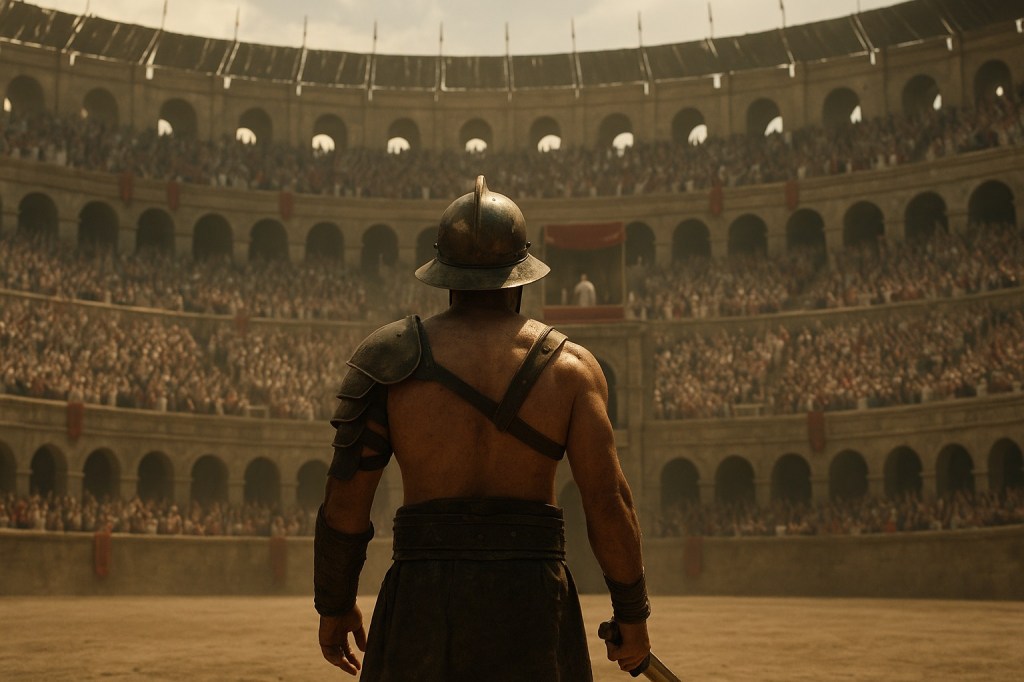
What unites Boethius, Bonhoeffer, Daniel, and Joseph is not their era, their theology, or their political context—but their courageous clarity in moments of moral crisis. They were advisors, ministers, and thinkers—men of wisdom operating within systems that turned against them when integrity proved inconvenient. And yet, each refused to bend to fear or flattery. They did not run. They stood in the arena.
Their stories speak not only from history—they speak into our present. They remind us that integrity is often costly, and truth rarely welcomed by those clinging to power. But they also remind us that character echoes longer than compromise, and that what is written in the quiet of a prison cell may outlast what is shouted from a podium.
We live in chaotic times. The wheels of Fortune turn faster than ever. Leaders rise and fall by the hour, reputations are made and ruined with a tap. But the wisdom of these exemplars still offers us a way through: Consolation. Not escape, but anchor. Not retreat, but resolve.
They call us to live not for applause, but for the good, even when it costs us everything else.
So here is the question—one that Boethius faced under Theodoric, and one that every generation must face again:
Who would you rather be: the one who obeyed orders, or the one who stood alone, whispering truth into the storm?
Excerpt
Boethius, Bonhoeffer, Daniel, and Joseph remind us: true integrity often demands quiet courage in loud times. Whether facing emperors or algorithms, the cost of conscience is real. Their voices still whisper through the storm: virtue is its own reward. Who will you be—compliant in comfort, or courageous in chaos?
Resources
- Great Minds of the Medieval World – The Great Courses by Dorsey Armstrong
- Boethius, Exemplar of Integrity https://nlirien.wordpress.com/2025/04/29/boethius-exemplar-of-integrity/
- The Four Best Books on or by Boethius by Lennox Johnson, January 7, 2019 https://thedailyidea.org/best-books-boethius/
- Theodoric the Great, by Joshua J. Mark, World History Encyclopedia, https://www.worldhistory.org/Theodoric_the_Great/
- Boethius: First of the Medievals? by Isaac Toman Grief, 18 August 2021′ World History Encyclopedia, https://www.worldhistory.org/article/1804/boethius-first-of-the-medievals/
- Theodoric, Britannica, https://www.britannica.com/biography/Theodoric-king-of-Italy
- Theodoric the Great, Wikipedia, https://en.wikipedia.org/wiki/Theodoric_the_Great
- Trump Revenge Tour Targets Cyber Leaders, Elections April 14, 2025, https://krebsonsecurity.com/2025/04/trump-revenge-tour-targets-cyber-leaders-elections/
- Trump Is Gutting Efforts to Combat Foreign Election Interference https://www.motherjones.com/politics/2025/02/trump-cisa-foreign-election-interference/
- Election systems feared to be vulnerable as Trump administration cuts workers tasked with security https://www.cbsnews.com/news/trump-administration-firings-election-systems/
- Five Reasons Why Trump Fired Rex Tillerson, by Graham Lanktree, Newsweek, Mar 13, 2018 https://www.newsweek.com/fire-reasons-why-trump-fired-rex-tillerson-842374
- Why President Trump Fired Rex Tillerson, Time, https://time.com/5198200/donald-trump-fired-rex-tillerson-analysis/
- First cabinet of Donald Trump, Wikipedia, https://en.wikipedia.org/wiki/First_cabinet_of_Donald_Trump
- List of dismissals and resignations in the first Trump administration https://en.wikipedia.org/wiki/List_of_dismissals_and_resignations_in_the_first_Trump_administration
- Trump shocks with ouster of FBI’s Comey, Politico, https://www.politico.com/story/2017/05/09/trump-fires-fbi-director-james-comey-238175
- Everything we know about Trump’s firing of FBI director James Comey, PBS, https://www.pbs.org/newshour/politics/everything-know-trumps-firing-fbi-director-james-comey
- The Enduring Relevance of Boethius Virtue Ethics in the Modern World https://judgmentcallpodcast.com/2024/08/the-enduring-relevance-of-boethius-virtue-ethics-in-the-modern-world/
- The Wisdom of Boethius for Uncertain Times by Robert Koerpel May 21, 2020, Church Life Journal, https://churchlifejournal.nd.edu/articles/the-wisdom-of-boethius-for-uncertain-times/
- Imprisonment and Death of Boethius, EBSCO https://www.ebsco.com/research-starters/history/imprisonment-and-death-boethius
- Christian Philosopher Boethius Was Maligned And Unjustly Executed, Christian History Institute, https://christianhistoryinstitute.org/dailystory/permalink/christian-philosopher-boethius-was-maligned-and-unjustly-executed
- On the Consolation of Philosophy, Wikipedia, https://en.wikipedia.org/wiki/On_the_Consolation_of_Philosophy
- 35 Facts About Boethius, Factsnippet, https://www.factsnippet.com/site/facts-about-boethius.html
- Boethius, Wikipedia, https://en.wikipedia.org/wiki/Boethius
- Boethius Executed for Treason, by Dan Graves, Christianity.com, Apr 28, 2010 https://www.christianity.com/church/church-history/timeline/301-600/boethius-executed-for-treason-11629706.html#google_vignette
- Caecina Decius Faustus Albinus, Wikipedia, https://en.wikipedia.org/wiki/Caecina_Decius_Faustus_Albinus
- Bark, William. “Theodoric vs. Boethius: Vindication and Apology.” The American Historical Review, vol. 49, no. 3, 1944, pp. 410–26. JSTOR, https://doi.org/10.2307/1841026. Accessed 22 Apr. 2025.
- Call Sign Chaos: Learning to Lead by Jim Mattis and Bing West https://amzn.to/44zaPRu
- A Higher Loyalty: Truth, Lies, and Leadership by James Comey https://amzn.to/4iuz1YJ
- Kremlin ‘satisfied’ with US proposal to ban Ukraine from Nato by Jorg Luyken https://www.telegraph.co.uk/us/


 Treasures of the Elysian Fields
Leave a comment