
I’m going to try telling this story again, partly because it feels more relevant now than ever. Growing up, my dad shared a story from his high school days that left a lasting impression on me. It wasn’t just a tale of teenage antics or adolescent bravado; it was a life lesson wrapped in simplicity.
My dad told me about a bully at his school—a classic figure who saw toughness as his ticket to power. This guy thrived on confrontation, picking fights for no reason other than to assert his dominance. He was the kind of person who prowled the hallways, looking for his next target, someone to intimidate or challenge.
One day, my dad found himself in the bully’s crosshairs. For reasons he never fully understood, the bully decided my dad would be his next victim. But my dad did something unexpected. When confronted, he looked the bully in the eye and calmly said, “I’m not going to fight you. You can hit me, but I won’t fight back.”
And that was it. My dad stood his ground, not with fists but with words. The bully froze, seemingly disarmed by this unanticipated response. No punches were thrown. My dad simply walked away.
He told me later that walking away wasn’t an act of fear—it was an act of courage. “It takes more strength to choose peace than to give in to someone else’s aggression,” he’d say. At the time, I didn’t fully grasp what he meant. It sounded noble but idealistic, a nice theory for someone who hadn’t been in the trenches of high school recently. But little did I know, his words would eventually resonate with me in ways I never imagined.
As much as I admired his story, I would soon find myself in a similar situation, faced with my own version of that high school bully. And the lessons my dad had passed down would be tested in ways that felt both painfully real and deeply illuminating.
A Personal Test
Later in my life, my dad’s story became more than a memory—it became a guiding principle. In high school, I found myself in a situation eerily similar to his. It was after P.E., in the chaos of the locker room, when a boy I didn’t know decided he wanted to fight me.
I had no idea what I’d done to upset him. There hadn’t been an argument, no accidental shove or harsh words exchanged. Yet there he was, ready to throw down, his body language a clear challenge. He was Vietnamese, and it was evident he knew some form of martial arts. The way he carried himself, balanced and ready, was enough to signal that he wasn’t bluffing.
Now, I wasn’t exactly a martial arts expert, but I’d seen The Karate Kid. I knew enough to have a healthy respect for anyone who practiced martial arts—and an even healthier instinct not to test their skills in a real-life confrontation.
In that moment, my dad’s story flashed through my mind like a neon sign: “It takes more courage to walk away than to fight.” So, I decided to follow his example.
“I’m not going to fight you,” I said, my voice steady despite the tension in the air. Then I turned and walked away.
Was that cowardice? I don’t think so. I’ve come to see it as strategic risk avoidance. At the time, I was a geeky, nerdy high school student who didn’t fit neatly into any social group. I wasn’t a jock, a drama kid, or a member of one of the school’s many cliques. My goal wasn’t to climb the social ladder or prove my toughness—it was simply to make it through high school without drawing unnecessary attention to myself.
Choosing to walk away wasn’t about fear of getting hurt (though let’s be honest, that was part of it). It was about recognizing that some battles aren’t worth fighting. The cost of proving my toughness—if I could even manage to do so—wasn’t worth the risk of injury or escalation. Instead, I chose peace, not because I was weak, but because I valued self-preservation and saw no need to engage in pointless conflict. Like my dad, I found strength in restraint.
Looking back, I realize how significant that moment was. It wasn’t just about avoiding a fight; it was about defining who I wanted to be. I chose not to let someone else’s aggression dictate my actions. In doing so, I reclaimed a sense of control in a situation designed to strip me of it.
High School as a Battleground
Before diving further into my locker room confrontation, it’s important to set the stage and give you a sense of what my high school was like. Polk High School in east Springfield wasn’t just a typical high school; it was an intense microcosm of societal tensions.
By the time I arrived as a freshman, the school had already gained notoriety as one of the roughest in the area. In fact, during either my freshman or sophomore year, Polk made headlines for having the highest number of homicides in the region—possibly even the state or the nation. I’m not entirely sure about the exact ranking, but the reputation alone painted a clear picture: this was not a place for the faint-hearted.
The campus was divided into factions, each group holding its own turf. The three main gangs on campus were a large Vietnamese gang, a smaller Black gang, and a significant Hispanic gang. Despite their differences, these groups generally avoided direct conflict with one another, adhering to an unspoken rule of territorial boundaries.
Beyond the gang lines, the student body fragmented into other cliques: the jocks, a handful of skinheads, the performing arts kids, and, of course, the nerds. I didn’t fully belong to any of these groups. My family was lower-middle-class, and I had been bussed to Polk High as part of a diversity initiative—one that felt more like an administrative checkbox than a meaningful effort at integration. I was definitely in the minority there, navigating an environment where alliances and divisions were often stark.
And yet, despite the segmented social landscape, I managed to carve out a niche of my own. I had friends across different groups: Black, Hispanic, Vietnamese, even some of the drama kids and members of the Christian club. But if I’m honest, my identity on campus was solidly within the realm of stereotypical nerd-dom.
I was the kid in the chess club, trading moves and strategies like they were state secrets. My friends and I wrote Star Trek-themed letters to each other—full-on narratives set in the Starfleet universe. I didn’t have the bravado of the jocks or the rebellious edge of the performing arts crowd. I wasn’t tough enough to roll with the skinheads (not that I wanted to) or bold enough to align with any gang. Instead, I did my best to keep my head down, avoid unnecessary attention, and survive the jungle that was Polk High.
This context mattered. It shaped every interaction, every decision, and every moment of high school life. My encounter in the locker room wasn’t just about one boy wanting to pick a fight; it was a reflection of the unspoken tensions that ran through the school. In that environment, the choice to walk away wasn’t just about courage or strategy—it was about understanding the stakes of a world where every action had the potential to escalate.
Uncertainty
Returning to the locker room incident, I still don’t know why that boy wanted to fight me. His anger seemed to materialize out of thin air, directed at me with an intensity that didn’t make sense. But over time, I’ve wondered if it might have been connected to another event—a moment that, even now, feels like a blur of confusion and tension.
I’m not sure if this happened before or after the locker room confrontation, but I can’t help wondering if the two incidents were linked. Here’s what happened: one day during lunch, I was hanging out with my friend Bud, who was Black. We were wandering through the math building when we crossed paths with a Vietnamese boy in the hallway.
What happened next caught me completely off guard. Without any warning or explanation, Bud sucker-punched the boy in the head and took off running. Just like that. The Vietnamese boy’s friends—there were several of them—immediately sprang into action, chasing Bud down the hallway.
I didn’t know what else to do, so I ran too. I wasn’t about to stick around and get caught in the middle of a brewing gang altercation. My heart pounded as we sprinted toward the main causeway, where the Black gang usually hung out. The Vietnamese students stopped following us at that invisible boundary, an unspoken rule of territorial division that prevented the situation from escalating further.
When Bud finally stopped, he was out of breath but grinning, as if this had been some kind of adrenaline-fueled game. “Play it cool if the narcs come,” he said, referring to the school’s security officers. I nodded, my thoughts racing as I tried to process what had just happened.
Sure enough, a counselor pulled me aside later that day, asking if I knew anything about the incident. I played dumb, insisting I hadn’t seen anything. The truth was, I wanted no part in whatever this was. I wasn’t aligned with either group, and the last thing I wanted was to become a target by association.
Looking back, I’m still unsure whether this hallway encounter had anything to do with the boy in the locker room. Maybe it was coincidence. Maybe the boy thought I was more involved than I actually was. Or maybe the two events were completely unrelated, and the locker room fight was just another random moment of high school hostility.
Whatever the case, the memory of that day sticks with me—not because of what I did, but because of what I didn’t do. I didn’t throw a punch. I didn’t take sides. I didn’t escalate the situation. Some might call it cowardice, but for me, it was self-preservation. It was an understanding that, in a place like Polk High, getting involved could have consequences far beyond what any of us anticipated.
An Unsettling Alliance
Walking away from the boy in the locker room didn’t mean the confrontation was over. As I exited into the hallway, he and his friend followed, their intentions still unclear but their persistence undeniable. I hadn’t showered and was still wearing my gym clothes, a choice that would haunt me all day as I avoided going back into the locker room.
As I stepped into the hallway, trying to distance myself from the growing tension, Steve, a well-known skinhead, caught sight of what was happening. Steve and his crew were infamous around campus, often stationed near the auto shop, where their presence alone could change the course of a situation. It didn’t take long for them to notice the commotion—a crowd forming around me as I tried to walk away.
What happened next felt surreal. Steve signaled to his group, and suddenly, they were in the middle of the situation, forcing the boy and his friends to back off. I can’t recall the exact words exchanged; at the time, I was too scared and overwhelmed to focus on anything but the possibility of a fight breaking out. All I knew was that I wanted to be left alone, and now there was a new variable—Steve and his crew—turning the situation into something even more complicated.
To my relief, the intervention worked. The boy and his friends backed off, clearly not interested in testing the skinheads’ resolve. Before leaving, Steve issued a warning to the boy that sticks with me to this day: “He’s under my protection. If you try anything against him, you’ll have to deal with all of us.”
Later, Steve approached me directly. His demeanor was casual, as if this was all in a day’s work for him. “If they bother you again, let us know. We’ll take care of it,” he said, his words carrying both reassurance and a faint undercurrent of menace. Then, almost as an afterthought, he added, “Be proud of who you are.” Clearly it was a white pride reference that made me feel more uncomfortable.
The whole interaction left me unsettled. On one hand, I was grateful for the intervention—it had likely spared me from further confrontation that day. But on the other hand, it raised questions I wasn’t equipped to answer. Did I now owe allegiance to the skinheads? Was I expected to align myself with their group, their ideology, their way of life? The thought felt suffocating. I didn’t want to be part of any group that demanded loyalty or perpetuated conflict. I just wanted to stay invisible, to navigate high school without stepping on anyone’s toes.
Reflecting on it now, the situation reminds me of the prison dynamics in shows like Oz, where alliances are forged not out of friendship but out of necessity—and often come with strings attached. While Steve and his crew had helped me that day, the idea of being “under their protection” didn’t feel like a blessing. It felt like a weight, a reminder that in high school—and in life—sometimes survival means navigating murky, morally complex waters.
The Price of Protection
As it turned out, there were indeed strings attached to Steve’s so-called “protection.” It wasn’t long before I found myself unwittingly tangled in his web, a reminder that favors rarely come without a cost.
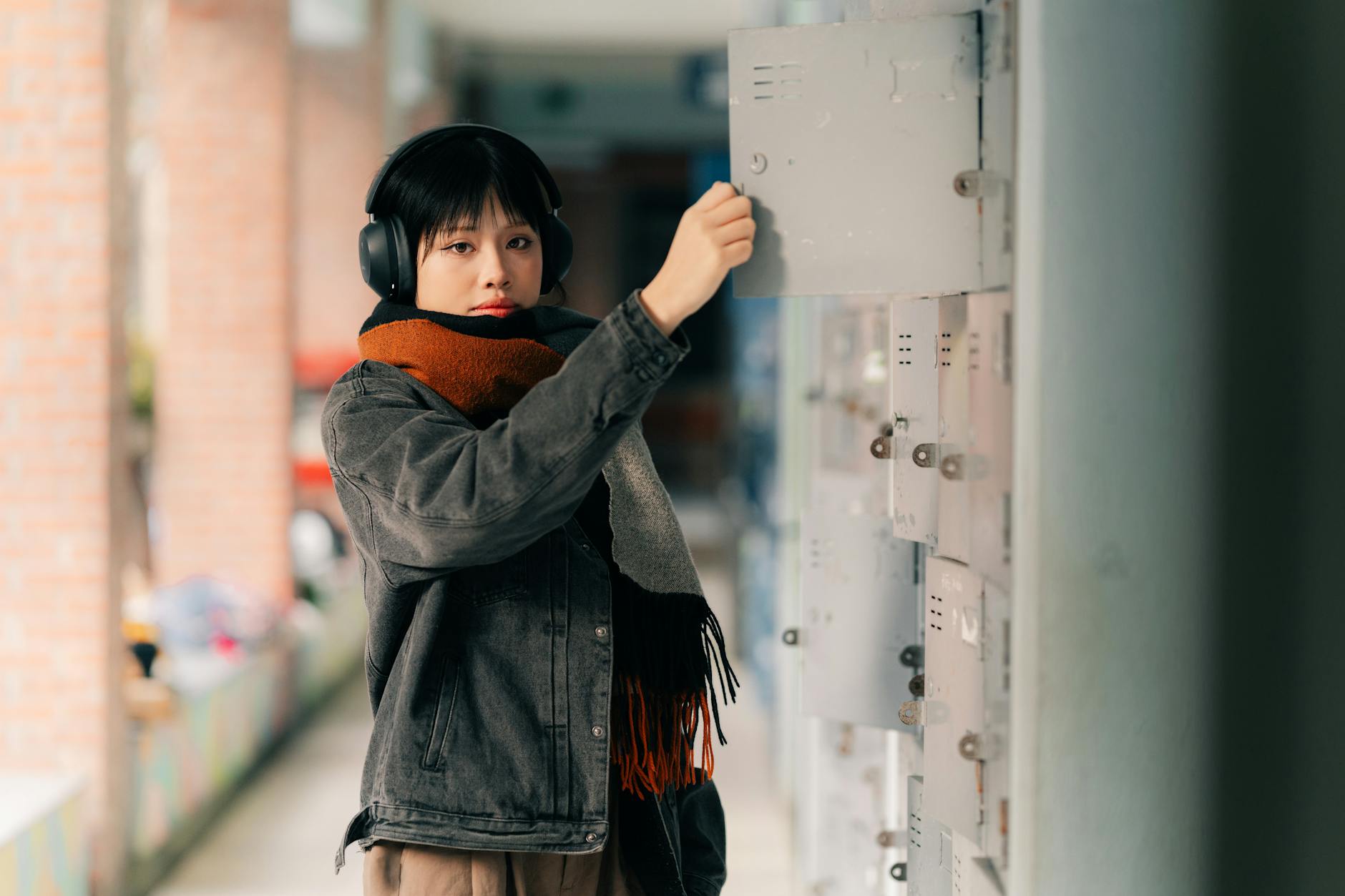
One day, we were called out of class for a locker inspection. The whole thing was an inconvenience, and I was venting about it with one of my nerdy friends as we lined up near our lockers. My locker, like most high schoolers’, was a disaster—a mix of food crumbs, gym clothes, and an avalanche of homework assignments I hadn’t quite managed to organize.
A few lockers down, Steve stood, visibly nervous. It wasn’t like him; he usually exuded an air of control and swagger, the kind of confidence that came from being a feared presence on campus. But that day, his demeanor was different, and I soon found out why.
As the teachers conducting the inspections moved closer, Steve stepped over to me, holding a bag. His voice was low but urgent. “Hide this in your locker,” he said.
I froze. There wasn’t time to think, no opportunity to weigh my options or push back. The urgency in his tone left no room for negotiation. Instinctively, I took the bag and shoved it into my messy locker.
When the teachers reached me, they glanced at my open locker, made a dismissive comment about my lack of organization, and moved on. My heart pounded as they inspected Steve’s locker a few feet away. I didn’t know what was in the bag, but the way he had pushed it on me told me it wasn’t something as innocent as lunch or a pair of sneakers.
After the inspection, Steve came back and retrieved the bag. It wasn’t until later that I found out what it contained: a gun.
Holy shit. A gun. What the hell was he doing with a gun at school?
The weight of the incident hit me all at once. That bag could have gotten me expelled, or worse. If the teachers had checked my locker and found it, I would have been the one in trouble, not Steve. No amount of “it’s not mine” would have convinced anyone otherwise.
I felt used. Betrayed, even. Steve had seen me as a convenient option, a nerdy, “trustworthy” kid with good grades and a solid reputation among the teachers. He must have thought I was a safe bet, someone the staff wouldn’t suspect. And in some ways, he was right. My clean-cut image had shielded me from suspicion that day, but at a cost I hadn’t chosen to pay.
There’s a lesson in that, I suppose—a harsh one. Alliances, whether they form in high school hallways or in prison yards, often come with hidden costs. Protection is rarely free, and the price is rarely fair.
Looking back, I can see the parallels to the dynamics of power and loyalty in environments like the prison shows I’ve seen. You don’t get something for nothing. The favors you receive often come with strings, ones that can tighten around you at the worst possible moment. Steve had saved me once, but his “protection” wasn’t the safety net it had seemed. Instead, it became a trap—one I hadn’t realized I’d fallen into until it was too late.
Love, Loss, and Lingering Questions
High school was an intensely complicated time—so much so that I might even call parts of it traumatic. There were the daily tensions of surviving at a school like Polk High, where gang rivalries loomed large, and even minor social interactions could feel like navigating a minefield. But amid the chaos, there were fleeting moments of connection, moments that offered a glimmer of warmth in an otherwise cold and calculating environment.
One of those moments came in the form of Kelly. She played tennis and was Vietnamese, a kind and genuine person in a school where kindness often felt like a rarity. We weren’t serious by any stretch, but we had a quiet, affectionate connection. For a while, we exchanged letters, those carefully folded notes that felt like miniature treasures at the time. She was one of the only girls at Polk High who gave me the time of day, and for a self-proclaimed nerd trying to fly under the radar, that meant a lot.
Eventually, I worked up the courage to ask her out. I remember rehearsing the words in my head, bracing for the possibility of rejection, but also hoping for the best. What I didn’t expect was her response.
She told me, with an apologetic look, that her father had forbidden her from dating a white boy. It wasn’t just a rule; it came with a threat of violence if she disobeyed. “I have to stick to my own kind,” she said, her voice tinged with both regret and resignation.
That was the end of whatever relationship we might have had. There was no fight, no dramatic fallout—just the quiet understanding that we couldn’t be together, not because we didn’t want to, but because the world around us wouldn’t allow it.
I sometimes wonder what became of Kelly. Did she eventually break free from the “old ways” her father clung to, the traditions and boundaries brought over from the old country? Or did her family gradually adopt more Western notions, opening the door for her to live a life of her own choosing? I’ll probably never know.
Thinking back now, I can’t help but wonder if my brief connection with Kelly might have had something to do with the locker room incident. Could the Vietnamese boy who wanted to fight me have known about us? Was his aggression fueled by a sense of loyalty to his community or by some unspoken code of behavior? Or was it just a coincidence, unrelated to Kelly or anything else?
I’ll never know the answer, and maybe it doesn’t matter. High school was full of uncertainties like that, moments where the motives and meanings behind people’s actions were murky at best. What I do know is that Kelly was a bright spot in an otherwise difficult time, a reminder that even in the harshest environments, connection and kindness can still find a way to surface.
Reflections on Survival and Choices
High school was, without a doubt, a culture shock for me. Before Polk High, I attended a private school where the stresses and traumas were of a different nature. There, the bullies wielded words, not fists, and while the scars they left were emotional, they were never life-threatening. Polk High, however, was an entirely different arena—a place where conflict felt closer to survival instinct, and the stakes seemed impossibly high for a teenager.
Reflecting on my experiences, I can’t help but think about the choices I made and how they shaped the trajectory of my life. Following my dad’s advice helped me navigate some tough spots, but sometimes I wonder: did it really? What would have happened if I’d chosen differently?
What if I had fought that boy in the locker room? Would I have earned respect—or escalated the situation, possibly getting hurt or worse? What if I’d said no to Steve when he handed me that bag? Would he have retaliated, or would the teachers have found the gun and implicated me anyway? What if I’d stood by Bud when he sucker-punched that Vietnamese boy instead of running off? Would I have been dragged into a gang conflict I couldn’t escape?
Maybe it’s extreme to imagine these scenarios ending with me in prison, but the ripple effects of small decisions in environments like Polk High are impossible to ignore. One choice could have changed everything.
Looking back, I think my survival came down to a few key principles. First, I avoided direct conflict wherever possible, choosing peace over escalation. Second, I stayed under the radar, careful not to draw attention to myself. Third, and perhaps most importantly, I maintained friendships across different groups. I wasn’t a part of any one clique, but I wasn’t an outsider either. I tried to be like Switzerland—neutral, uninvolved, and unlikely to make enemies.
It also helped that I had a reputation as a nerd. I had one of the highest grade averages in the school, and the teachers and counselors all knew it. Being in the chess club and earning a reputation as the quiet, reliable student worked in my favor. After all, how many people in the chess club do you know who cause trouble at school?
That’s my story. It’s a mix of choices, challenges, and lessons learned in a tough environment. Did I always make the right decisions? Who knows? What I do know is that I made the decisions I felt were best at the time, and they’ve become part of who I am today.
If there’s one thing I hope to share with anyone reading this, it’s that survival isn’t just about strength or cleverness. It’s about knowing yourself, knowing your environment, and navigating the situations you’re thrown into with as much wisdom and integrity as you can muster.
I don’t know where life has taken some of the people from those years—Steve, Bud, Kelly, or even that boy in the locker room. But I do know that my experiences taught me the value of restraint, the importance of seeking peace, and the power of staying true to yourself even in a storm.
“Blessed are the peacemakers,” the Bible says. Maybe I wasn’t a perfect peacemaker, but I did my best to avoid making enemies, to defuse conflict when I could, and to walk away when the risk outweighed the reward.
That’s all any of us can do, really—make our choices, live with the consequences, and keep learning as we go.
Excerpt
High school was a maze of choices and survival. From navigating fights to uneasy alliances, I learned the value of restraint, neutrality, and diverse friendships. Reflecting on these moments, I see how small decisions shaped my path and taught me that sometimes, walking away is the greatest act of courage.

 Treasures of the Elysian Fields
Leave a comment