

Introduction: The Next Evolution of Thanksgiving
The evolution of Thanksgiving in the United States reached a pivotal moment in 1789 with President George Washington’s proclamation, marking the first national Thanksgiving Day under the newly ratified Constitution. This proclamation, issued on October 3, 1789, and observed on November 26, was far from an isolated act. It built on a foundation of earlier Thanksgiving observances, including the Continental Congress’s call for a day of thanks in 1777 and even earlier “proto-thanksgivings” in the Americas before the famous Pilgrims’ celebration of 1621.
Washington’s proclamation was historically significant because it united the nation in gratitude under its newly established government. For the first time, Thanksgiving was observed as a national tradition within the framework of the Constitution, reflecting a collective acknowledgment of the blessings that had shaped the young republic. This proclamation set a precedent, cementing Thanksgiving’s place as a unifying and reflective tradition in American life.
Context and Historical Background
Thanksgiving as a tradition in the United States did not emerge in isolation but was deeply rooted in earlier colonial and revolutionary practices. The Thanksgiving observances of the past, such as the Pilgrims’ celebration in 1621 and annual New England practices, had already established a foundation for communal expressions of gratitude. More recently, during the Revolutionary War, the Continental Congress issued a proclamation for a day of thanksgiving in 1777, urging gratitude for military victories and providential blessings amid the nation’s fight for independence (as explored in a previous post).
By 1789, the context of Thanksgiving had shifted. The new republic, formally established with the ratification of the U.S. Constitution in 1788, was entering a new chapter. George Washington’s inauguration as the first president in 1789 marked the beginning of the United States as a unified, constitutional government. Amid this atmosphere of newfound stability and purpose, the proclamation of a national Thanksgiving reflected a desire to celebrate the nation’s achievements and express collective gratitude.
Unlike the hardships that had characterized many earlier thanksgiving observances, this 1789 Thanksgiving was a moment of joy and reflection in response to the successful establishment of the republic. It illustrates how Thanksgiving in the United States is both a civic holiday, marking pivotal moments in the nation’s history, and a tradition deeply rooted in the Christian virtue of gratitude, which lends it a unique blend of secular and religious significance. This dual nature has allowed Thanksgiving to resonate across generations, serving as a unifying moment for a diverse nation.
The Congressional Resolution of September 25, 1789
The genesis of George Washington’s 1789 Thanksgiving Proclamation began with a resolution passed by Congress on September 25, 1789. This act reflected a profound sense of gratitude and unity in the newly formed United States. The successful creation of the U.S. Constitution, after significant challenges and debates, was seen as nothing short of a providential achievement.
The path to the Constitution was fraught with significant challenges that required careful negotiation and compromise. Slavery was a deeply divisive issue, necessitating contentious agreements to maintain unity among the states. Representation was another major point of debate, with larger states pushing for population-based representation while smaller states insisted on equal representation. Additionally, heated discussions emerged over the balance of power between the federal government and individual states, reflecting differing visions for the structure of the new nation. These obstacles underscored the complexity of uniting diverse interests under a single framework, making the Constitution’s eventual ratification a remarkable achievement.
Despite these challenges, the unity of the 13 colonies was preserved, and the Constitution was ratified in 1788. By the time Congress met in 1789, there was much to celebrate and even more to be grateful for—a unified nation with a government “of the people, by the people, and for the people.” Congress’s resolution for a Thanksgiving proclamation reflected this shared sentiment of joy and gratitude.
Interestingly, Congress did not issue its own Thanksgiving proclamation but instead requested that President Washington make the official declaration. The reasoning behind this decision has been interpreted in various ways. Some suggest that Congress sought to present a united front between the legislative and executive branches, emphasizing their collaboration in the new government. Others believe Congress deferred to Washington out of respect for the Constitution, which may have placed such proclamations within the President’s sphere of influence. I hold to an optimistic interpretation that this choice symbolized a unified government working together to inspire national gratitude. Regardless of the specific motivation, Congress’s request reflected its recognition of Thanksgiving’s symbolic power as a unifying national tradition.
The resolution was driven by several key motivations. In a diverse and fragile republic, Thanksgiving was seen as an opportunity to foster unity and shared purpose among the states and citizens. It also emphasized gratitude for the peaceful establishment of the Constitution and government, despite the formidable challenges faced during its creation. Additionally, Congress sought to instill a moral tone, encouraging humility, virtue, and civic responsibility. By calling for a collective day of reflection, they aimed to inspire Americans to appreciate their blessings and consider their role in preserving the young republic. This resolution not only set the stage for Washington’s proclamation but also laid a foundation for Thanksgiving as a uniquely American tradition, deeply tied to both civic and spiritual gratitude.
Key Figures Behind the Resolution
Several influential leaders in Congress played pivotal roles in advancing the Thanksgiving resolution, underscoring that this historic moment was not Washington’s achievement alone. It was truly a team effort, reflecting the collaborative spirit of the early republic. Recognizing the contributions of these key figures is essential to understanding the broader context of the proclamation. Their efforts to promote unity, gratitude, and moral purpose were instrumental in shaping the nation’s first national Thanksgiving. As we reflect on this milestone, it is fitting to express gratitude not just to Washington but to all the founding fathers whose vision and dedication laid the foundation for our country. Here are four of the key players who helped make this proclamation possible.
- Elias Boudinot (New Jersey):
- Introduced the resolution to Congress.
- Advocated for a national expression of gratitude to God for the Constitution and the liberties it protected.
- Roger Sherman (Connecticut):
- Supported the resolution, emphasizing the role of divine providence and the importance of fostering civic virtue.
- James Madison (Virginia):
- Backed the resolution despite reservations about federal authority, recognizing the importance of gratitude in uniting the young republic.
- Fisher Ames (Massachusetts):
- Shaped the resolution’s moral and religious tone, promoting stability and national cohesion.
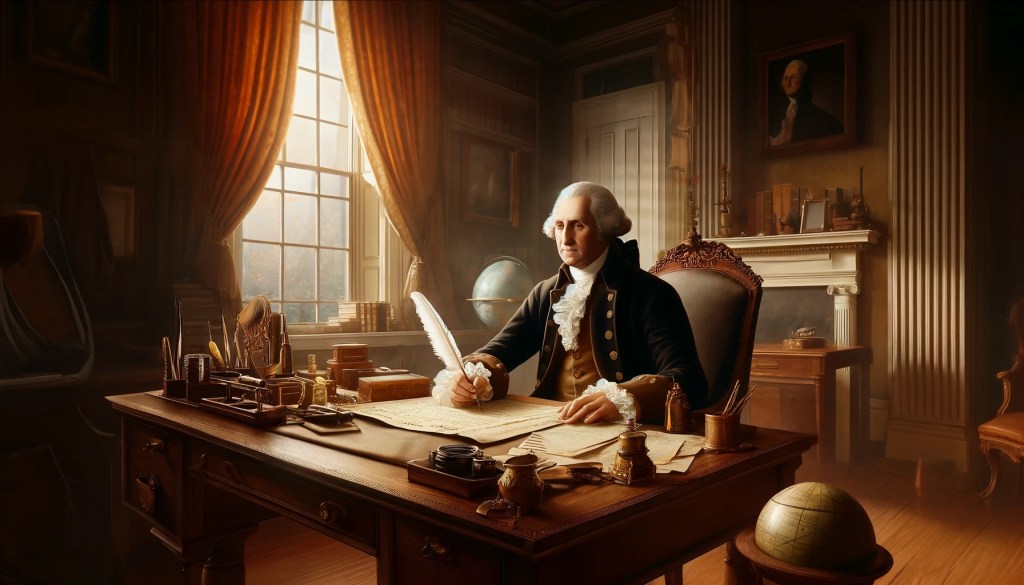
Washington’s Thanksgiving Proclamation
George Washington’s 1789 Thanksgiving Proclamation seamlessly wove together civic and religious themes, reflecting the unique interplay of faith and governance in the early United States. While secular in the sense that it showed no preference for a particular religion, the proclamation acknowledged a divine and benevolent God actively guiding the affairs of humanity. This sentiment resonated deeply with the majority of Christian sects in the United States at the time, as well as with the smaller Jewish communities, who shared in the broader cultural recognition of gratitude and providence.
Washington’s proclamation emphasized several major themes that continue to resonate in the Thanksgiving tradition. First, it highlighted national gratitude, calling on Americans to give thanks to God for His role in the nation’s founding, independence, and the successful establishment of the Constitution. Washington encouraged reflection on the “manifold blessings” the nation had received, including peace, liberty, and the opportunity to build a republic rooted in justice and freedom.
Second, the proclamation sought to promote unity by encouraging Americans to collectively acknowledge their shared blessings. By focusing on gratitude, Washington aimed to transcend regional differences and political divides, fostering a sense of common purpose and identity in the young republic.
Finally, Washington’s words carried a moral and religious tone, reflecting his belief in the importance of virtue and morality as essential foundations for the republic’s success. He linked national gratitude to moral conduct, emphasizing that the flourishing of the nation depended not only on effective governance but also on the character and values of its people. These themes established Thanksgiving as a day for collective reflection, unity, and the cultivation of virtue.
Washington’s proclamation set a precedent for Thanksgiving as both a civic and spiritual observance, demonstrating how national traditions can reflect shared values without favoring specific religious doctrines. It remains a testament to the importance of gratitude, unity, and moral integrity in the life of a nation.
This resonates deeply with the foundational principle of a representative government—a government by the people and for the people. Such a system implies not only the privilege of living in a democracy but also the responsibility and duty of its citizens to actively participate. In Washington’s time, this idea of civic engagement was closely tied to virtue and moral conduct, as the success of the republic was believed to depend on the active involvement and character of its people. Today, this sense of duty often seems diminished, as many take the freedoms and opportunities of democracy for granted. Washington’s call for reflection and gratitude serves as a reminder that the strength of our nation lies not only in its institutions but in the active participation and commitment of its citizens.
Legacy of the Proclamation
The legacy of Washington’s Thanksgiving Proclamation is profound, serving as a foundation for future proclamations and shaping Thanksgiving into a national tradition. It established a precedent for presidents to issue Thanksgiving proclamations, a practice later embraced by Abraham Lincoln and other leaders to unite the nation in gratitude during pivotal moments in history. Washington’s proclamation reinforced Thanksgiving as a unifying national tradition, skillfully blending civic, secular, and religious elements to encourage reflection and shared purpose among citizens. Its historical significance lies in its emphasis on gratitude and the acknowledgment of divine providence in the founding and development of the United States. This proclamation not only set the tone for Thanksgiving as a day of collective reflection but also highlighted the enduring role of humility and thankfulness in shaping the nation’s identity.
Conclusion
Washington’s 1789 Thanksgiving Proclamation remains a powerful testament to the spirit of gratitude that underpins the United States’ founding. At its heart was a profound thankfulness for the Constitution, liberty, and the shared blessings that united a fledgling republic. It called on Americans to reflect on the nation’s achievements with humility, fostering unity and civic responsibility as cornerstones for building a prosperous future.
The proclamation’s message is timeless, emphasizing values that continue to resonate: gratitude, moral reflection, and a collective sense of purpose. It serves as a cornerstone of the Thanksgiving tradition, reminding us of the importance of giving thanks not just for individual blessings but for the shared ideals that bind us as a nation.
As we continue exploring Thanksgiving’s evolution, the next blog post will examine another pivotal moment in its history: President Abraham Lincoln’s proclamation during the Civil War, issued at a time when the nation faced its greatest existential threat. Stay tuned as we delve into how this proclamation reshaped Thanksgiving amidst a divided and war-torn America.
Reflection: Gratitude for the Constitution and the Freedoms It Embodies
As you consider the legacy of Washington’s 1789 Thanksgiving Proclamation, take a moment to reflect on the profound gratitude it calls us to express for the United States Constitution and the freedoms it enshrines.
- What does the Constitution mean to you personally?
- Consider how the principles it established—liberty, justice, and government by the people—shape your daily life. How often do we pause to appreciate the protections and opportunities this framework provides?
- Are you thankful for the freedoms and liberties you enjoy?
- Think about the freedom to speak, worship, and participate in civic life. How do these rights impact your sense of security and possibility?
- How can you actively honor the responsibilities that come with these liberties?
- Washington’s proclamation reminded citizens of their civic duties. In what ways can you contribute to strengthening your community and upholding the values of the Constitution?
- How does gratitude for the Constitution inspire unity?
- In a time of division, reflecting on the shared blessings of freedom and governance can be a unifying force. What steps can you take to foster unity and mutual respect in your community?
By reflecting on these questions, we not only express gratitude for the vision of the founding fathers but also recommit ourselves to the responsibilities that come with the freedoms we cherish. This Thanksgiving, let us honor the legacy of the Constitution by appreciating its role in shaping a nation where liberty and opportunity remain enduring ideals.
Excerpt
George Washington’s 1789 Thanksgiving Proclamation called the nation to gratitude for the Constitution, liberty, and shared blessings. It emphasized unity, civic responsibility, and divine providence. As we reflect on its legacy, let us appreciate the freedoms we enjoy and recommit to upholding the values that define the United States.
References
- The First Thanksgiving Proclamation by Seth Kaller https://www.abaa.org/blog/post/washingtons-thanksgiving-proclamation
- Congress Establishes Thanksgiving, The Center for Legislative Archives, National Archives https://www.archives.gov/legislative/features/thanksgiving
- George Washington’s Thanksgiving Proclamation https://www.sethkaller.com/freedomdocuments/thanksgiving/
- Britannica, The Editors of Encyclopaedia. “Elias Boudinot”. Encyclopedia Britannica, 20 Oct. 2024, https://www.britannica.com/biography/Elias-Boudinot. Accessed 29 November 2024.
- Britannica, The Editors of Encyclopaedia. “Roger Sherman”. Encyclopedia Britannica, 19 Jul. 2024, https://www.britannica.com/biography/Roger-Sherman. Accessed 29 November 2024.
- Fisher Ames (1758 – 1808), https://www.mountvernon.org/library/digitalhistory/digital-encyclopedia/article/fisher-ames-1758-1808
- Bernhard, Winfred E. “Ames, Fisher.” American National Biography Online, February 2000. http://www.anb.org/view/10.1093/anb/9780198606697.001.0001/anb-9780198606697-e-0200005.
- Britannica, The Editors of Encyclopaedia. “Fisher Ames”. Encyclopedia Britannica, 30 Jun. 2024, https://www.britannica.com/biography/Fisher-Ames. Accessed 29 November 2024.
- James Madison, The 4th President of the United States, The White House, https://www.whitehouse.gov/about-the-white-house/presidents/james-madison/
- Brant, Irving. “James Madison”. Encyclopedia Britannica, 29 Oct. 2024, https://www.britannica.com/biography/James-Madison. Accessed 29 November 2024.
- James Madison, History.com Editors, https://www.history.com/topics/us-presidents/james-madison

 Treasures of the Elysian Fields
Leave a comment