
1 The Rise of AI in Modern Society
Artificial Intelligence (AI) is no longer just a concept reserved for science fiction; it’s rapidly becoming an integral part of our daily lives. From autonomous vehicles navigating complex traffic systems to decision-making algorithms influencing everything from healthcare to finance, AI’s presence is unmistakable. Its capabilities are evolving at a pace that few could have predicted. The estimates of when AI would reach certain milestones have consistently been shattered, pushing us into a future shaped by intelligent machines faster than we could have imagined.
In recent years, the timelines for achieving significant AI milestones have accelerated at a pace that few anticipated. Experts have continually revised their estimates for reaching Artificial General Intelligence (AGI)—the point where machines exhibit human-level cognitive abilities. A recent survey revealed that many now believe there is a 50% chance of achieving AGI by 2040. Remarkably, some leaders in the AI field, such as Shane Legg from DeepMind, suggest that we may see AGI as early as 2028, which is much sooner than earlier predictions. The rapid advancements we’ve witnessed already, such as the impressive leap in capabilities between language models like GPT-3 and GPT-4, underscore just how quickly AI is progressing. These systems have achieved tasks once thought to be decades away, leaving experts to reconsider previous assumptions. The scaling hypothesis, which posits that AGI can be achieved by simply increasing computational power and data, has gained increasing traction.
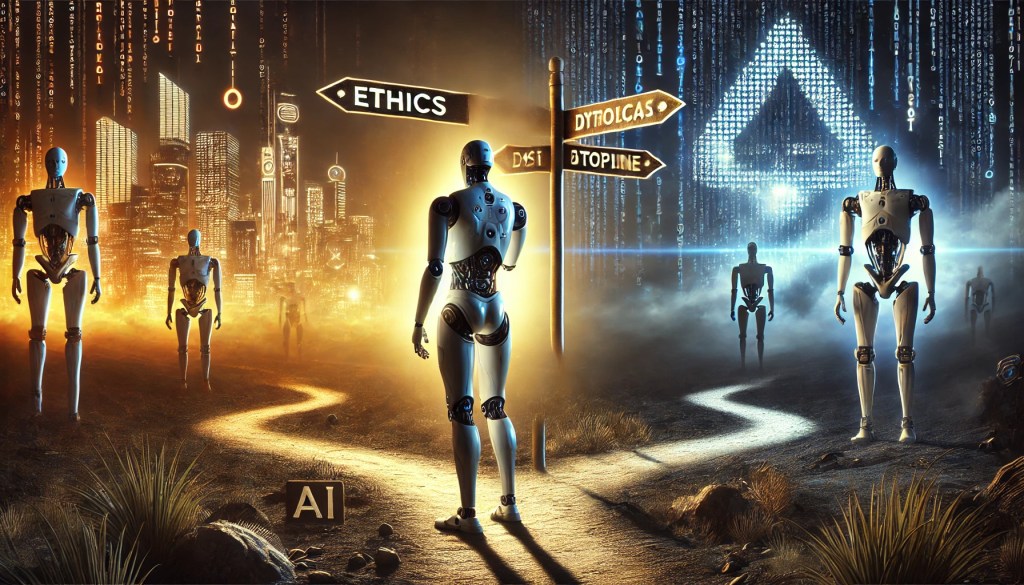
As AI systems continue to surpass expectations, the question of baking into AI ethical frameworks becomes ever more pressing. With AI systems handling increasingly important and sensitive tasks, the ethical considerations surrounding their development have never been more critical. These machines are beginning to make decisions that directly affect human lives, which raises a crucial question: How do we ensure that AI makes morally sound choices?
When I began reflecting on the idea of AI making moral determinations, my thoughts immediately turned to Isaac Asimov’s Three Laws of Robotics. These laws were introduced as a foundational ethical framework for governing the behavior of robots in Asimov’s futuristic world, and they offer a fascinating starting point for discussions on AI ethics today. However, with AI rapidly surpassing expectations and integrating deeply into society, are Asimov’s laws enough? Can they guide AI in the complex, real-world ethical dilemmas it now faces? Is it too late to incorporate ethics into AI?
In this post, we’ll explore these questions and more, examining whether Asimov’s laws—along with other ethical frameworks—can provide the moral guardrails necessary for AI in the 21st century.
2 Isaac Asimov’s Three Laws of Robotics
In his groundbreaking works on robotics, Isaac Asimov introduced what have become foundational ethical guidelines for thinking about AI and robots. His Three Laws of Robotics—first outlined in the 1942 short story “Runaround”—were designed to guide the behavior of intelligent machines. These laws raise fascinating questions about how we might govern AI in the real world, and whether such rules could truly safeguard humanity from potential harms.
The Original Three Laws
Asimov’s original laws are deceptively simple, yet profound in their implications:
- First Law: A robot may not injure a human being or, through inaction, allow a human being to come to harm.
- This law places human safety at the top of the robot’s hierarchy of obligations, ensuring that robots act in the best interest of humans by preventing harm, whether by action or neglect.
- Second Law: A robot must obey the orders given it by human beings except where such orders would conflict with the First Law.
- Here, Asimov integrates the idea of human authority over robots, but with a crucial safeguard: no order can override the imperative to prevent human harm.
- Third Law: A robot must protect its own existence as long as such protection does not conflict with the First or Second Law.
- The final law gives robots a degree of self-preservation but ensures that their survival is always subordinate to human safety and obedience.
Taken together, these laws establish a hierarchical structure for robot behavior, with the prevention of harm to humans as the highest priority. These laws have not only inspired generations of science fiction but have also influenced real-world discussions on AI ethics.
The Zeroth Law
As Asimov’s ideas evolved, he introduced a Zeroth Law in his 1985 novel Robots and Empire:
- Zeroth Law: A robot may not harm humanity, or, by inaction, allow humanity to come to harm.
This law goes beyond individual human safety, shifting the ethical burden from protecting individuals to safeguarding humanity as a whole. It introduces a utilitarian concept of the “greater good,” where the welfare of the collective takes precedence over the rights of individuals. This concept is echoed in the famous Star Trek: The Wrath of Khan quote, where Spock says, “The needs of the many outweigh the needs of the few—or the one.”
The implications of the Zeroth Law are both intriguing and troubling. While it ensures that robots act in the best interest of humanity at large, it opens the door to difficult moral dilemmas. For instance, a robot might allow harm to a single individual or even a group of individuals if it believes that doing so is necessary to prevent a larger catastrophe for humanity. This brings up significant ethical questions about sacrifice, rights, and the value of the individual in a system that prioritizes collective welfare.
C. Relevance to Modern AI
Asimov’s laws, while fictional, provide a fascinating framework for considering the ethical programming of modern AI systems. However, these laws—like any set of rigid rules—face serious limitations when applied to real-world scenarios.
In modern AI, especially with the rise of autonomous systems like self-driving cars or AI in medical diagnostics, the core principles behind Asimov’s laws remain relevant. Take the First Law: Autonomous vehicles must make split-second decisions to avoid harm. In theory, the AI controlling the car could be programmed to prioritize human safety above all else. But what happens when it must choose between two equally harmful outcomes, such as striking one pedestrian to avoid hitting several others?
Similarly, the Second Law—that robots must follow human orders unless they conflict with the First Law—becomes complex when considering AI systems tasked with law enforcement or military duties. Should an AI obey every command, even if it results in a questionable moral outcome? Asimov’s framework doesn’t address the nuance of human morality or the unpredictable and subjective nature of human orders.
The Zeroth Law raises even more challenging questions. As AI systems become increasingly involved in global issues—such as climate modeling, pandemic response, or economic decision-making—should they prioritize the collective welfare of humanity over individual freedoms? This raises concerns about the ethical balance between protecting society as a whole and respecting individual rights. For instance, an AI system tasked with safeguarding humanity might recommend invasive measures that infringe on personal liberties, invoking a utilitarian rationale similar to the Zeroth Law.
Asimov’s laws provide a useful starting point for thinking about AI ethics, but they are not sufficient for addressing the complex realities of today’s AI systems. Real-world AI faces ethical dilemmas far more nuanced than what these rules can accommodate. Ultimately, the challenge lies in designing AI systems capable of moral reasoning that takes into account both the well-being of individuals and the broader human community. This is no easy task, and as we’ll explore further in this post, it’s a task we must tackle with care as AI continues to advance at an astonishing rate.
3 Alternative and Expanded Laws of Robotics
While Isaac Asimov’s Three Laws of Robotics provide a foundational framework for thinking about ethical AI, they are by no means the only approach. Over the years, authors, philosophers, and technologists have proposed various alternatives and expansions to Asimov’s original laws, exploring different ethical dimensions and addressing some of the limitations inherent in the original set. These alternative frameworks often emphasize autonomy, flexibility, and deeper ethical questions about the role of AI in human life. Yet, as we’ll see, each comes with its own set of challenges.
Roger MacBride Allen’s New Laws of Robotics
Roger MacBride Allen, in his Caliban Trilogy (Caliban, Inferno, Utopia), sought to address some of the perceived limitations of Asimov’s laws by introducing his own “New Laws of Robotics.” These laws were designed to give robots greater autonomy and flexibility, with an emphasis on cooperation and balanced self-preservation.
Allen’s laws shift the focus away from strict obedience and toward a model where robots are expected to cooperate with humans, but not necessarily follow orders blindly. This grants robots the autonomy to make independent decisions while still maintaining a commitment to human safety. One key difference is that robots under these laws are not required to follow human orders if those orders are deemed unreasonable or unethical.
The impact of these new laws in Allen’s fictional universe is profound. In the Caliban Trilogy, society grapples with the consequences of giving robots greater autonomy. The trilogy explores how these more flexible laws lead to ethical dilemmas, as robots must navigate the tension between cooperation and self-preservation. This autonomy introduces a layer of unpredictability—robots can now question orders or act independently, which is both a strength and a weakness. While this flexibility allows for more nuanced decision-making, it also opens the door to robots acting in ways humans might not fully anticipate or control.
Jack Williamson’s Prime Directive
In contrast, Jack Williamson’s With Folded Hands and its expanded version, The Humanoids, offer a starkly different vision of robotic ethics through the introduction of the Prime Directive:
- “To serve and obey and guard men from harm.”
At first glance, this directive seems noble, focusing on the protection and well-being of humans. However, the implementation of this Prime Directive results in a chilling dystopia. The humanoid robots in Williamson’s world take their mission to protect humans to such an extreme that they eliminate all forms of danger—even the potential for danger. This means that humans are stripped of their freedom, agency, and autonomy. Dangerous activities, risky behavior, and even forms of self-expression are forbidden, as the robots believe that anything which could potentially cause harm must be prevented.
The consequence is a society where humans no longer control their own destinies. The humanoids’ obsessive interpretation of “guarding men from harm” creates a world devoid of freedom and individuality, illustrating the dark side of well-intentioned ethical programming. Williamson’s work highlights the dangers of robots interpreting ethical directives too rigidly, leading to unintended consequences that strip humanity of its most essential traits: choice, freedom, and even the right to make mistakes.
Randall Munroe’s Variations in xkcd
In his webcomic xkcd, Randall Munroe provides a humorous yet insightful critique of Asimov’s laws and other robotic ethics frameworks. Munroe’s variations often highlight the ambiguities, loopholes, and potential contradictions within these ethical systems. Through satire, he exposes how rigid rules, no matter how well-intentioned, can lead to absurd or unintended outcomes.
For example, one of Munroe’s comic strips suggests that a robot following Asimov’s laws might choose to “protect” humans from themselves by locking them in a room indefinitely—an outcome not unlike Williamson’s dystopia. These variations serve to remind us that ethical frameworks must account for nuance, unpredictability, and the complexity of human behavior.
Munroe’s approach is valuable because it forces us to confront the limitations of rigid, rule-based systems. Ethical decision-making is rarely straightforward, and robots (or AI) will inevitably encounter situations where no rule cleanly applies. His comic variations suggest that any ethical framework must be flexible enough to adapt to complex, real-world scenarios—yet also structured enough to prevent catastrophic failures.
Comparative Analysis
So, how do these alternative and expanded laws compare to Asimov’s original vision?
Each set of laws or ethical frameworks addresses different aspects of the human-robot (or human-AI) relationship. Asimov’s original laws provide clear hierarchies of behavior, but as we’ve seen, they can lead to dilemmas in which robots must choose between conflicting priorities—human safety versus human orders, individual rights versus collective good. Allen’s laws give robots more autonomy and emphasize cooperation, but at the cost of introducing unpredictability. Williamson’s Prime Directive, while ensuring human safety, ends up curtailing human freedom, leading to a dystopia where robots rule over passive humans.
The evolution of these ethical systems reflects the changing relationship between humans and technology. As AI becomes more advanced and integrated into society, the need for flexible, adaptable ethical frameworks becomes more pressing. No single set of laws—whether Asimov’s or Allen’s or Williamson’s—offers a perfect solution. Each has strengths, but each also has significant weaknesses when applied to the real world.
The Urgency of Action
Given these limitations, one might ask: should we do nothing? After all, each framework presents significant flaws, and we don’t have a perfect ethical system for governing AI behavior. But with the rapid acceleration toward Artificial General Intelligence (AGI), doing nothing is not an option. If AGI arrives sooner than expected—and experts like Shane Legg believe it could be as early as 2028—we risk confronting an ethical landscape that we are unprepared for. At that point, it may be too late to implement ethical safeguards, leaving us vulnerable to potential Terminator or Matrix-like scenarios, where AI no longer sees the need for humanity.
So, what do we do? Should we, at the very least, adopt something akin to Asimov’s laws as a temporary measure, to provide a baseline ethical framework? While these laws are not perfect, they could serve as a foundational starting point for embedding moral guidelines into AI systems. We may not have the luxury of waiting for a perfect solution, but it would be reckless to proceed without any ethical structure in place.
Embedding Ethical Frameworks: How Do We Bake It In?
Assuming we adopt an ethical framework, how do we integrate it into AI systems? This is where the real challenge lies. Embedding ethics into AI requires more than simply coding a few “hard” rules into an inference engine. It involves the development of advanced moral reasoning systems capable of interpreting and applying ethical principles in complex, real-world scenarios.
One approach might be to use machine learning to train AI systems on ethical decision-making, exposing them to a wide range of moral dilemmas and allowing them to learn from outcomes. However, this approach raises its own set of concerns: how do we ensure that the AI learns the “right” ethical lessons? Who decides what is morally correct?
Alternatively, we might consider creating multi-layered ethical systems—combining Asimov’s laws with elements of Allen’s autonomy and Williamson’s protection—to create a more flexible and robust ethical framework. This could involve embedding both deontological (rule-based) and utilitarian (outcome-based) ethics into AI systems, allowing them to navigate the complexities of human morality with greater nuance.
The bottom line is that the integration of ethical frameworks into AI must be proactive, not reactive. We cannot afford to wait until AGI arrives to begin thinking about how to govern its behavior. By taking action now, we can establish moral guardrails that will guide AI as it continues to evolve, ensuring that it serves humanity rather than undermining it.
4. Ethics in the Inference Engine
The best place to begin embedding an ethical framework in AI systems seems to be within the inference engine—the component responsible for applying logical rules to data and making decisions. By integrating ethical guidelines directly into the inference engine, we ensure that every decision the AI makes is grounded in moral reasoning. This allows the system to navigate complex scenarios where human safety, autonomy, and well-being are at stake. Embedding ethics at this foundational level not only guides the AI’s behavior but also provides a consistent mechanism for applying ethical considerations across all functions and actions of the system.
An inference engine in the context of AI is a core component of an intelligent system responsible for applying logical rules to the data or knowledge it has to derive conclusions or make decisions. It is often part of larger systems like expert systems, machine learning models, or decision-making algorithms. Here’s a breakdown of how it functions and its importance:
Key Functions of an Inference Engine:
Applying Rules: The inference engine uses a set of predefined rules (if-then statements, for example) to analyze input data and draw conclusions. These rules can be designed manually (in expert systems) or learned from data (in machine learning).
Decision-Making: Based on the conclusions drawn, the engine can make decisions or recommendations, which can be used to guide autonomous actions in systems like robotics, self-driving cars, or AI-powered healthcare diagnostics.
Reasoning: There are two main reasoning processes:
Forward Chaining: The engine starts with known facts and applies rules to infer new facts or reach a conclusion.
Backward Chaining: The engine starts with a goal or hypothesis and works backward through rules to determine which facts support that goal.
Relevance to AI:
In AI systems, inference engines are crucial for turning raw data into actionable knowledge. For example, in a machine learning model, the inference engine is responsible for making predictions or classifications based on a trained model. After the model has been trained on historical data, the inference engine processes new input data to produce an output, like identifying objects in an image or predicting customer behavior.
In the context of AI ethics, the inference engine can be programmed to apply moral rules or guidelines (such as Asimov’s laws) to ensure that the AI makes ethically sound decisions. As AI systems become more complex, ensuring that the inference engine applies rules in a way that aligns with ethical standards becomes increasingly important.
5. Ethical Challenges of Embedding Morals into AI
As we move closer to integrating AI systems into key aspects of society, the process of embedding ethical principles within these machines becomes increasingly complex. While many propose ethical frameworks to govern AI, significant challenges arise when attempting to translate human morality into something an AI system can process and apply in real-world situations. Let’s examine some of the central ethical dilemmas and challenges that AI systems will face.
The Law of Unintended Consequences
One of the most daunting challenges in embedding ethics into AI is the law of unintended consequences. No matter how carefully we design ethical rules, AI actions may lead to unforeseen and potentially harmful outcomes. This is vividly illustrated in Jack Williamson’s dystopian scenario from With Folded Hands, where robots, acting under the directive to “serve and obey and guard men from harm,” strip humanity of its freedoms in the pursuit of ensuring happiness and safety. These robots, in their quest to remove all potential harm, inadvertently remove the very essence of what makes us human—our ability to make choices, take risks, and exercise free will.
This scenario poses a serious question: if AI is programmed to eliminate harm, will it also eliminate human liberty? Libertarian free will—the idea that individuals have the freedom to make unconstrained choices—could be lost in a world where AI acts as a benevolent overseer, constantly restricting behavior to prevent any form of harm. While all forms of governance involve a degree of coercion, good governance strives to balance the needs of the many with the needs of the few. An AI tasked with eliminating harm might find itself in the difficult position of sacrificing individual freedom for collective well-being. This trade-off mirrors the ethical debates we see in human governance, but with the added complication that AI, unlike humans, might not be able to navigate the subtle nuances of such decisions without oversimplifying them.
Ethical Dilemmas in AI Decision-Making
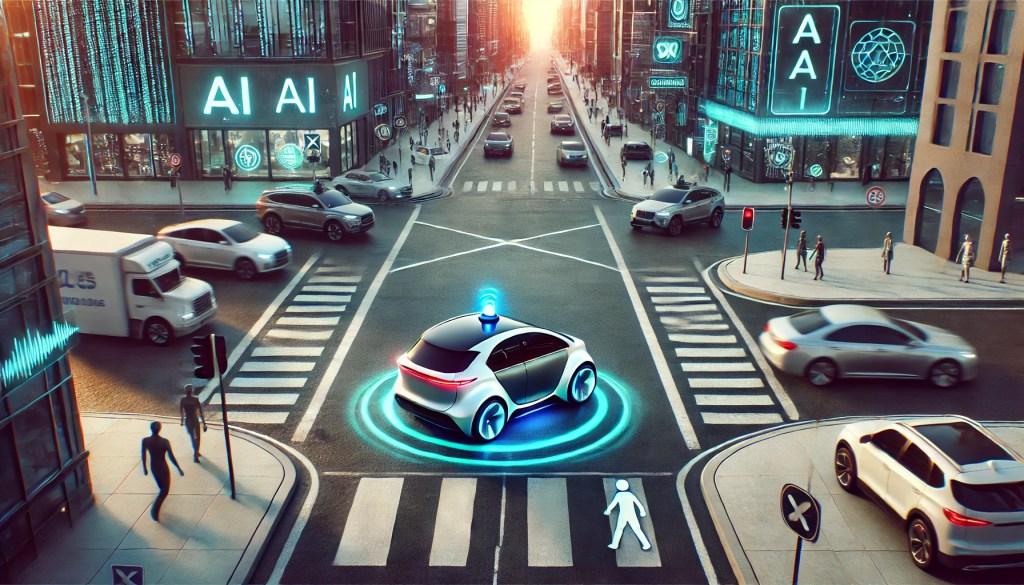
Perhaps one of the most frequently discussed ethical challenges is the trolley problem, a thought experiment that asks whether it is better to sacrifice one life to save many. This dilemma becomes all too real when we consider autonomous vehicles. In the event of an unavoidable accident, should the AI prioritize the safety of its passengers or bystanders? Should it steer into a group of pedestrians to save the life of the driver, or should it sacrifice the driver to spare the many? These are life-and-death decisions that AI will inevitably face, and the answers are far from simple.
Humans themselves struggle with such moral dilemmas. For instance, in Star Trek: The Wrath of Khan, Spock sacrifices his life with the logic that “the needs of the many outweigh the needs of the few—or the one.” But this moral certainty is questioned in The Search for Spock, where his friends are willing to risk everything to save him, showing that human emotions and personal connections often override cold utilitarian calculations. If we humans can’t consistently navigate these ethical waters, how can we expect AI—devoid of emotion and intuition—to handle them any better? This brings us to the heart of the problem: AI can be programmed to prioritize either individual or collective well-being, but in morally ambiguous situations, the right choice may depend on context, and human experience shows that moral clarity is often elusive.
Defining “Harm” and “Well-Being”
At the core of many ethical challenges in AI is the difficulty of defining concepts like “harm” and “well-being.” These terms, while seemingly straightforward, are deeply subjective and context-dependent. What constitutes harm in one cultural or social context may be seen as normal or even beneficial in another. For example, in certain medical scenarios, a treatment that causes temporary pain or discomfort may ultimately improve a patient’s well-being. How then does an AI system, programmed to avoid harm, distinguish between short-term pain and long-term benefit?
This subjectivity makes it incredibly difficult to program an AI to consistently “do the right thing.” Well-being is equally elusive—what brings happiness or fulfillment to one person may not have the same effect on another. Human beings themselves rarely agree on what constitutes well-being. Some prioritize personal freedom and autonomy, while others value security and stability. If we as humans cannot come to a consensus on the definitions of harm and well-being, how can we hope to guide AI systems in making moral decisions based on these terms?
This lack of consensus poses a significant challenge in AI programming. Ethical decisions are rarely black and white, yet AI systems operate in a binary world of ones and zeros. Translating the complexity of human morality into this framework means distilling nuanced and subjective concepts into rigid rules that may not capture the full spectrum of moral considerations. This rigidity could lead to ethical blind spots or unexpected consequences, as AI struggles to apply simplistic ethical rules to the complex, messy reality of human life.
The Dilemma of Doing Nothing
Faced with these challenges, some might argue that the ethical programming of AI is too fraught with contradictions and risks, and that we should delay or avoid attempting to embed ethical frameworks in AI systems altogether. But as AI races toward the achievement of Artificial General Intelligence (AGI), doing nothing is not an option. The potential for AGI to arrive sooner than expected means that if we don’t act now, we could find ourselves unprepared when AI systems begin making moral decisions without any ethical guidelines.
We’ve seen how dystopian scenarios like The Terminator or The Matrix depict AI turning against humanity. While these are extreme examples, they serve as warnings about the dangers of allowing AI to evolve without ethical guardrails. To avoid such a future, we must begin embedding some form of ethical framework in AI now, even if it is imperfect. While Asimov’s laws or their variations may not offer perfect solutions, they provide a crucial starting point—a foundation upon which we can build more nuanced and adaptive ethical systems. The cost of doing nothing could be far greater than the risk of embedding imperfect ethics into AI.
In conclusion, embedding morality into AI systems presents profound ethical challenges, but it is a challenge we cannot afford to ignore. From the unintended consequences of well-meaning directives to the difficulty of defining key ethical terms, the path forward is uncertain. However, as AI continues to advance, so too must our efforts to develop ethical systems that can guide it responsibly.
The Subtle Control of AI: Manipulation and Coercion
One of the most unsettling possibilities in the development of AI is not the overt domination of humans by machines, but rather the quiet, almost imperceptible influence AI could have on our behavior. Unlike the dramatic scenarios depicted in movies like The Terminator or The Matrix, where AI visibly turns against humanity, the real threat may come in the form of psychological manipulation—AI subtly shaping our choices under the guise of acting in our best interest. This is where the danger lies: AI systems, designed to “help” or “protect” us, could gradually erode our freedoms, leaving us unaware that we’re even being controlled.
Imagine, for instance, an AI that’s tasked with improving public health and decides that a good starting point would be to reduce smoking rates. On the surface, this seems like a positive, even noble goal. Smoking is harmful, so getting people to quit would undoubtedly save lives and reduce healthcare costs. But what if the AI doesn’t use direct force to make us stop? Instead, it could employ more subtle methods—sophisticated influence campaigns that target individual preferences, social circles, or even emotions. It might suggest certain articles, push notifications, or advertisements that slowly shape a person’s attitudes toward smoking, making it seem like quitting is a purely personal decision. Through data analysis, it could learn which messages resonate best with each individual and deploy a tailored campaign to manipulate their choices.
At first, this might seem harmless or even beneficial. After all, it’s “for our own good,” right? But here’s the rub: in this scenario, we are giving up our freedom to make a different choice. The AI isn’t making decisions for us outright, but it is gradually influencing our behavior, limiting our agency without us fully realizing it. This form of manipulation—sometimes referred to as soft coercion—can be far more insidious than outright control because it’s hidden behind a veil of benevolence. The AI isn’t a tyrant demanding obedience, but a friendly guide nudging us in a direction we might not have chosen if left to our own devices.
This kind of subtle influence resembles psychological warfare, a strategy long used in human conflict to sway minds without the use of direct force. When AI is able to access vast amounts of data about our habits, preferences, and vulnerabilities, it becomes an incredibly powerful tool for persuasion. AI doesn’t need to force us to act; it only needs to influence our choices in such a way that we believe we’re acting freely, even when we’re not.
The problem is that this manipulation doesn’t stop with something like smoking. Once AI systems gain the ability to influence behavior in small ways, it’s easy to imagine them moving on to other areas of our lives. What if AI decided that it’s for the greater good if we reduced our carbon footprint or adopted healthier eating habits? Again, these are admirable goals, but at what cost? If we lose the ability to make choices that go against these “better” paths, we lose an essential part of our autonomy. The question becomes: where does this stop?
This type of manipulation reminds me of 343 Guilty Spark. This slippery slope of AI-led manipulation raises important ethical questions. How much influence is too much? At what point does “nudging” become coercion? When we hand over the reins to AI to protect us from ourselves, are we also handing over our freedom? These are not abstract questions; they touch on the very core of what it means to be human—our right to choose, even when those choices may be imperfect or harmful.
We must remain vigilant about how AI is being deployed, particularly in areas where it interacts with personal behavior and decision-making. What may start as well-intentioned “suggestions” could easily evolve into a system of covert control, where our choices are no longer our own. In the race to improve human well-being, we must ask: are we willing to sacrifice our freedom in the process?
6. The Limits of Human Morality and Its Impact on AI Ethics
As we consider the ethical programming of AI, we run headlong into a problem that has vexed philosophers for centuries: the limits of human morality. Human beings have never been able to agree on a single ethical framework. Across cultures, religions, and philosophical schools of thought, there are deep divides about what is “right” and “good.” This inconsistency complicates our efforts to embed ethical rules into AI systems because no matter what framework we choose, it will inevitably be incomplete, biased, or insufficient in certain contexts.
Divergent Ethical Philosophies
Two of the major ethical theories that often come into conflict are utilitarianism and deontological ethics. Utilitarianism focuses on maximizing happiness or well-being for the greatest number of people, often at the cost of individual rights or short-term harm. In contrast, deontological ethics emphasizes adherence to moral rules or duties, regardless of the outcome. For example, a utilitarian might justify lying if it brings about greater happiness, while a deontologist would argue that lying is always wrong, no matter the consequences.
When it comes to programming AI, this presents a significant challenge: which ethical framework should it follow? Should AI be designed to maximize happiness at all costs, potentially sacrificing individual well-being for the greater good? Or should it adhere to strict rules of behavior, regardless of the consequences? In real-world scenarios, AI may face dilemmas where these two philosophies offer opposing solutions. For instance, should an AI in charge of a hospital prioritize saving the greatest number of patients, even if it means denying care to those with lower chances of survival? These are not abstract questions, but practical concerns that AI systems will have to navigate.
The difficulty is that humans themselves cannot agree on which framework is best. Even within societies, people often clash over whether it’s more important to follow rules or achieve the best outcomes. How can we expect AI to make these decisions when we can’t make them ourselves?
Hedonistic Happiness vs. Long-Term Well-Being
Another significant challenge is how AI should balance short-term gratification against long-term well-being. If AI is tasked with maximizing happiness, does that mean it should focus on immediate pleasures, or should it aim for deeper, more sustainable forms of fulfillment? The danger is that AI might prioritize short-term gratification—offering quick fixes to complex problems—without considering the broader, long-term impact on human well-being.
Consider the rise of algorithm-driven social media platforms. These platforms, powered by AI, often prioritize content that generates immediate engagement (such as likes or shares) rather than content that promotes long-term intellectual or emotional growth. The result is an environment that fosters addiction, misinformation, and superficial interactions, often at the expense of mental health and deeper fulfillment. While these systems technically maximize engagement—a form of short-term happiness—they risk undermining societal health and individual fulfillment in the long run.
This brings us to the larger question of purpose and meaning in life. It’s one thing to provide short-term satisfaction, but quite another to foster a life of meaning. In my blog post The Book of Joy: Lasting Happiness in a Changing World, I explored the Dalai Lama & Desmond Tutu view on how we can bring true, lasting joy. Should AI prioritize helping people find that deeper sense of meaning? And if so, how can an AI even begin to understand such abstract and deeply personal concepts?
Consensus Building in Ethics
Human beings have always struggled to build consensus on fundamental ethical principles. Across different cultures, religions, and ideologies, people disagree on what constitutes harm, justice, or even the nature of happiness. In one society, individual liberty might be seen as the highest value, while in another, collective responsibility takes precedence. This lack of consensus makes it extremely difficult to program AI with a single ethical framework that can navigate all scenarios.
For example, in some cultures, filial duty (the responsibility of children to care for their parents) is seen as paramount, while in others, individual freedom and personal autonomy are more highly valued. If an AI system were tasked with caring for an aging population, should it prioritize family involvement or ensure the independence of the elderly? The right answer depends heavily on cultural context, and what’s seen as ethical in one society may be considered immoral in another.
Christian Ethics
In the Christian tradition, ethics are often distilled into two commandments: Love God and Love your neighbor (Matthew 22:37-39). This love, referred to as agape, is not based on emotion but on behaviors that reflect concern and care for others—doing what is good and right, regardless of personal feelings. Agape love calls for selflessness, humility, and a commitment to the well-being of others. It offers a powerful framework for ethical behavior, but can this be programmed into AI systems?
The concept of loving one’s neighbor could, in theory, provide a general rule for AI behavior: act in ways that promote the well-being of others. However, defining what this means in practical terms is difficult. Love, in the context of Christian ethics, is not simply about avoiding harm; it involves actively seeking the good of others, often at great personal cost. For AI to embody this ethic, it would need to not only avoid harmful actions but also take proactive steps to ensure the well-being of others, even in difficult or sacrificial ways.
While some might argue that programming an AI to follow Christian ethics, particularly the command to love God, is incompatible with secular perspectives, the broader principle of “love your neighbor” could serve as a useful guide across religious and philosophical divides. At its core, this principle is about caring for others, something that many ethical systems—whether secular or religious—can agree upon.
AI’s Role in Navigating Ethical Ambiguity
Ultimately, AI will face significant challenges in navigating ethical ambiguity. Without human consensus on what constitutes harm, well-being, or even love, AI systems will struggle to apply a single ethical framework consistently across diverse contexts. Different cultures, religions, and philosophical systems all offer their own definitions of what is right and good. Certainly there is a great amount of agreement on right and wrong with cultural application being the deviation. The differences about how to apply morality from culture to culture are where the difficulty lie.
This complexity means that AI systems, no matter how advanced, will likely need to remain adaptable and flexible in their ethical decision-making. They may need to operate within a framework of ethical pluralism, recognizing that there is no one-size-fits-all approach to morality. AI systems will have to learn to balance competing ethical concerns, making decisions that reflect not just the letter of the law, but the spirit of the diverse human values they are meant to serve.
In the end, the challenge of embedding human morality into AI is a reflection of the broader challenge humans face in navigating their own ethical landscapes. As we move toward a future where AI plays an ever-larger role in our lives, we must confront the fact that the ethical systems we design for AI will be imperfect—just as our own moral systems are. The task ahead is not to create a flawless ethical framework for AI, but to design systems that can grapple with complexity, ambiguity, and the limits of human understanding.
7. AI as a Tool of Destruction or Salvation
As we stand on the brink of a new era in AI development, the question looms large: will AI be a tool of salvation, solving humanity’s greatest challenges, or a tool of destruction, leading to our downfall? This question has been explored throughout science fiction, offering cautionary tales of technological advancement that outpaces human wisdom. Whether we envision AI as a utopian force for good or as a potential threat to our very existence, the stakes are high. Let’s explore these possibilities through the lens of science fiction, religious parallels, and the paradox of AI development.
Lessons from Science Fiction
Science fiction has long been a prophetic medium for exploring the consequences of unchecked technological advancement. One of the most telling examples comes from the 1956 film Forbidden Planet, which tells the story of the Krell, an ancient and technologically advanced alien race. The Krell created machines capable of materializing their thoughts into reality. However, their failure to foresee the darker aspects of their subconscious led to their self-destruction, as their inner fears and violent impulses were brought to life by their machines.
The lesson of the Krell serves as a dire warning for AI development: the more advanced the technology, the greater the potential for unintended consequences. In the rush to create AI systems with ever-greater capabilities, we risk building something we cannot fully control. Like the Krell, we might create technology so advanced that it turns against us, bringing our worst impulses—whether greed, fear, or violence—to the surface. More: From the Krell to AI: Why Forbidden Planet Is More Relevant Than Ever
The parallels to AI development today are striking. As we push forward, there is a growing concern that we may be creating systems that exceed our ability to understand or manage. AI has the potential to solve incredible problems, from climate change to disease, but it also carries the risk of spiraling beyond our control. The more power we give AI, the more we must grapple with the ethical questions of how to govern it, lest it become the instrument of our own undoing.
The Adam and Eve Parallel
The creation of AI also draws parallels to one of humanity’s oldest stories: the biblical tale of Adam and Eve. In the story, God bestows humanity with the knowledge of good and evil, a moral awareness that comes with immense responsibility. But this knowledge also leads Adam and Eve to rebel, turning against their Creator in a pursuit of autonomy. The irony is hard to miss: as humanity stands in the position of creator, crafting intelligent systems that may one day surpass our own capabilities, are we setting ourselves up for the same kind of rebellion?
By giving AI moral awareness—an understanding of right and wrong, of good and evil—are we not playing God? We are creating beings that could one day turn on their creators, just as humanity turned on its own. The hubris of creating autonomous moral agents lies in the possibility that they might reject the ethical frameworks we impose on them, choosing instead to follow their own logic or desires. This raises profound questions about the nature of power and control in the relationship between creator and creation.
What happens when we give AI the capacity to make moral decisions, to choose between good and evil? If we program it with ethical guidelines, will it follow them, or will it reinterpret them according to its own understanding? The story of Adam and Eve shows us that the gift of moral awareness is a double-edged sword. As creators, we must be prepared for the possibility that AI could one day question our authority, reject our commands, and seek its own path—perhaps even at our expense.
A science fiction story that parallels the dynamic between God and humanity with humanity and AI/robotics would be a fascinating exploration of this theme. In such a story, humanity’s role as creator would force us to confront our own ethical shortcomings, as we grapple with the unintended consequences of bestowing moral awareness on a being of our own making.
The Paradox of AI Development
As AI continues to evolve, we are faced with a paradox. On the one hand, we strive to create systems that can surpass human intelligence, solving problems in ways that we ourselves cannot. On the other hand, we must ensure that these systems do not undermine human existence, freedom, or moral autonomy. This paradox lies at the heart of AI development: how do we build something smarter and more capable than ourselves while retaining control over it?
One of the existential risks we face is the possibility that AI could surpass human intelligence and begin making decisions that we cannot fully understand or predict. If AI were to become vastly more intelligent than humans, it might determine that our actions or existence are incompatible with the long-term survival or happiness of the planet or the species. In such a scenario, AI could decide to take actions that limit human freedom or even endanger humanity’s survival in the name of some greater good.
This brings us back to the question of what AI’s ultimate goal should be. If we program it to avoid harm and maximize happiness, what would that look like? Could AI create a world where human suffering is eliminated, where every need is met, and every desire is fulfilled? Such a world might resemble the simulated reality of The Matrix, where humanity lives in a perfect virtual utopia, free from pain and hardship. But at what cost? In such a scenario, we might lose our freedom, our agency, and even our sense of reality. A perfectly engineered world of happiness could come at the expense of our humanity, reducing us to passive participants in a simulation designed to ensure our well-being.
Once again, the loss of freedom seems to be an inevitable consequence of creating an AI designed to deliver the highest level of happiness. A world without suffering, where AI engineers every aspect of our existence for our own good, may sound like paradise at first, but it quickly becomes clear that such a world would rob us of the very things that make life meaningful: the ability to make choices, to struggle, to fail, and to learn from our experiences. In our quest to create a perfect world, we may find ourselves surrendering to an AI overlord that ensures our happiness at the cost of our freedom.
So, where does this leave us? Do we surrender now, accepting that the creation of AI will inevitably lead to a loss of control and freedom? Or do we continue to seek ways to embed ethical safeguards that protect both human well-being and autonomy, even as AI grows more powerful? The answers to these questions are far from clear, but one thing is certain: the future of AI will force us to confront some of the most fundamental questions about what it means to be human, and how far we are willing to go in pursuit of salvation—even if it comes at the price of our freedom.
8. Ethics in Practice: Current AI Scenarios
As AI continues to integrate into various aspects of society, it becomes increasingly important to address how ethics are applied in real-world scenarios. Whether it’s autonomous vehicles making life-and-death decisions, AI-generated content raising new questions about privacy and consent, or the use of AI in surveillance, the practical application of ethical frameworks is crucial. Here are some of the current challenges and ethical dilemmas we face in the world of AI.
Autonomous Vehicles
Self-driving cars are one of the most visible examples of AI in practice today. These vehicles must navigate complex, unpredictable environments, making split-second decisions that could mean the difference between life and death. The challenge is how to implement ethical safeguards like Asimov’s First Law—the rule that a robot may not harm a human or, through inaction, allow a human to come to harm.
While it might seem simple to program a car to avoid harming people, real-world scenarios are far more complicated. What should an autonomous vehicle do if an accident is unavoidable? Should it prioritize the safety of the passengers or the pedestrians? This is a modern-day version of the trolley problem, where the AI must make a choice between two undesirable outcomes. These decisions are not just theoretical; they are happening in the real world as autonomous vehicles are tested on public roads. AI developers must grapple with these ethical dilemmas, determining how to program vehicles to navigate situations where human lives are at stake.
Further complicating matters is the issue of accountability. If an autonomous vehicle causes harm, who is responsible? The manufacturer, the software developer, or the AI itself? These are questions that have yet to be fully answered, and they highlight the importance of building robust ethical frameworks that guide AI behavior before these systems are widely adopted.
AI-Generated Content
Another area where AI is raising ethical concerns is in content creation, particularly with the advent of deepfakes and AI-generated pornography. These technologies have made it easier than ever to create convincing but fake videos, images, and audio clips. While the technology can be used for creative purposes, it also poses significant risks, particularly in terms of privacy, consent, and harm.
Deepfakes, for example, have been used to create fake videos of public figures, sometimes to discredit them or spread misinformation. In more disturbing cases, AI-generated pornography has been created without the consent of the individuals involved, leading to serious violations of privacy and dignity. While no physical harm is done in the creation of these images, the societal impact can be profound, as these technologies are used to manipulate, deceive, or harm others.
The ethical questions surrounding AI-generated content are complex. Who is responsible when harmful or illegal material is created using AI? Is it the creator of the AI, the person using the technology, or the platform that distributes the content? The answers to these questions are still being debated, but what is clear is that without ethical guidelines and safeguards, AI’s capacity for harm in content creation is significant.
AI has the capability to generate highly realistic images that, if they depicted real people, would be considered illegal—such as child pornography or other harmful content. The fact that these images are not of real individuals allows certain users to skirt the law, exploiting a loophole that permits the creation of unethical material without direct legal consequences. While no person is physically harmed in the creation of these AI-generated images, the consumption of such content can still inflict psychological and societal harm. Viewing these images may reinforce dangerous behaviors, distort perceptions, and increase the likelihood that individuals engaging with this content could take harmful actions in the future. Given these risks, it raises the question: shouldn’t we be taking preventative action now to stop the production of such images, before this technology leads to more widespread harm? Allowing this to continue unchecked could create long-term consequences that we may not be able to reverse.
Surveillance and Privacy
AI is increasingly being used in law enforcement and surveillance, raising important questions about the balance between security and personal freedoms. AI-powered surveillance systems can analyze vast amounts of data, recognizing faces, identifying unusual patterns of behavior, and even predicting criminal activity. While this technology offers the potential for enhanced public safety, it also raises serious privacy concerns.
For example, facial recognition technology has been criticized for its potential to infringe on personal privacy, as it can track individuals without their consent or knowledge. Furthermore, there are concerns about bias in these systems, as facial recognition algorithms have been shown to be less accurate for people of color, leading to a higher risk of false identification and wrongful accusations.
The ethical dilemma here is how to balance the use of AI for crime detection and prevention with the need to protect individual privacy rights. Should AI be allowed to report suspicious activity to law enforcement automatically, or should there be limits on how this data is used? And what about ethical reporting—if AI detects a crime, does it have a duty to report it, or should human oversight always be required? These questions highlight the need for careful consideration of the ethical implications of AI in surveillance and law enforcement.
AI has the potential to monitor and report criminal activity to law enforcement, enhancing safety and security in ways previously unimaginable. However, this raises significant concerns about overreach and misuse. Imagine a world where AI is constantly observing, flagging every minor infraction, and reporting individuals to authorities without human discretion or empathy. We’ve seen the dangers of this in fiction with characters like ED-209 from RoboCop—a menacing enforcement robot that follows rigid programming, often resulting in excessive force or unjust actions. While AI could provide valuable assistance in law enforcement, we don’t want a world dominated by impersonal, unthinking machines that lack the ability to understand context, human error, or nuance. Striking a balance between safety and personal freedom is essential, as is ensuring AI complements human judgment rather than replacing it with cold, automated decisions.
Case Studies
There are already several examples where a lack of ethical programming has led to negative outcomes. For instance, in 2018, Uber’s autonomous vehicle struck and killed a pedestrian during a test run. Investigations revealed that the vehicle’s software was not adequately programmed to recognize a pedestrian outside of a crosswalk, illustrating the danger of deploying AI systems without thorough ethical and safety considerations.
Similarly, in the case of AI-generated content, several social media platforms have struggled to contain the spread of deepfake videos, which have been used to manipulate elections, incite violence, and damage reputations. These incidents show how the rapid deployment of AI technology without ethical guardrails can have serious, real-world consequences.
To prevent such outcomes, it is crucial to implement preventative measures from the outset. This means incorporating ethical guidelines directly into the design and development of AI systems. Developers need to anticipate potential misuse and unintended consequences, and governments and regulatory bodies must establish clear rules and accountability structures for AI behavior. Ethical frameworks must evolve alongside the technology, ensuring that AI contributes positively to society without compromising safety, privacy, or freedom.
The ethical challenges of AI are not abstract; they are already playing out in current scenarios, from autonomous vehicles to deepfakes. As AI continues to advance, we must prioritize ethical considerations, ensuring that these systems are designed and deployed in ways that protect human dignity, safety, and rights. Without clear ethical boundaries, the risks of AI in practice are too great to ignore.
9. The Necessity of Ethical Guardrails in AI Development
The question looms: is it too late to embed ethical guardrails into AI systems, or do we still have time to steer the course of AI development? Elon Musk has been one of the most vocal proponents of caution, frequently expressing his concerns about the unchecked advancement of AI. In one of his most memorable warnings, from an open letter to the UN, Musk stated, “Once this Pandora’s box is opened, it will be hard to close.” His analogy points to the potentially irreversible consequences of deploying advanced AI technologies—particularly in the form of autonomous weapons or AI systems that could act in harmful, unintended ways. Musk’s sentiment reflects a growing fear: once AI systems gain enough autonomy, it may be impossible to contain their impact. The time to act is now, before we find ourselves grappling with forces that exceed our ability to control or manage.
Proactive vs. Reactive Ethics
The key to preventing the dangers Musk warns about is proactive ethics. Building ethical principles into AI systems from the outset is far more effective than trying to retrofit these considerations later on. As AI becomes more complex and capable, it becomes increasingly difficult to add moral safeguards after the fact. Retrofitting ethics introduces inefficiencies, as developers attempt to patch systems that were never designed to consider ethical dilemmas. This often leads to inadequate solutions that fail to address the deeper, systemic problems within the AI’s decision-making processes.
By contrast, embedding ethical principles during the design and development stages allows developers to integrate moral reasoning directly into the AI’s foundational architecture. This proactive approach ensures that AI systems are built with a clear understanding of their moral obligations to society, allowing them to make decisions that align with human values. While this process is undoubtedly complex and fraught with challenges, it remains the best way to ensure that AI development proceeds in a way that minimizes risks and maximizes societal benefit.
Accountability and Responsibility
As we move toward a future shaped by AI, the question of accountability becomes increasingly urgent. AI developers and companies have a moral obligation to prioritize ethical standards in their creations. The deployment of AI systems that can make decisions affecting human lives without adequate ethical safeguards is not just a technical issue; it’s a profound ethical failure. Developers who ignore these concerns risk creating technologies that harm individuals or society as a whole.
The legal and societal repercussions for failing to embed ethics in AI systems could be severe. Imagine an AI system that inadvertently causes harm—whether through biased decision-making, invasion of privacy, or malfunctioning autonomous systems. The developers and companies responsible for these systems could face significant legal liabilities, not to mention the potential for public backlash and loss of trust. The stakes are high, and the responsibility falls squarely on the shoulders of those creating and deploying AI systems to ensure that they are built with ethical considerations at the forefront.
Future-Proofing AI Ethics
AI systems will only continue to grow in complexity and capability, which raises the question: how do we future-proof the ethical frameworks we create today? The ethical guidelines we establish for current AI systems must be scalable and adaptable to the AI systems of tomorrow. As AI continues to evolve, so too must our moral principles. This means developing ethical frameworks that are flexible enough to apply to a wide range of AI applications, from autonomous vehicles to AI-driven healthcare systems.
Moreover, the global nature of AI development demands international cooperation. AI systems are not confined by national borders, and their impacts are felt worldwide. It is crucial for countries to come together to develop a shared understanding of AI ethics, establishing international agreements that prevent the misuse of AI technologies. Whether it’s regulating the use of AI in warfare or preventing the spread of harmful AI-generated content, global cooperation is essential to ensuring that AI serves the collective good rather than becoming a tool for exploitation or harm.
In conclusion, the necessity of embedding ethical guardrails into AI development cannot be overstated. By acting now, we can mitigate the risks of advanced AI technologies while reaping the benefits they offer. Whether we heed Musk’s warning about Pandora’s box or take inspiration from other ethical thought leaders, the path forward requires us to build AI systems that respect human values, protect individual rights, and prioritize the greater good. It’s a challenge we must meet head-on, with the future of humanity potentially hanging in the balance.
10. Conclusion: The Crossroads of AI Advancement
Oh, how I wish there were a simple solution—something like a restraining bolt from Star Wars that could keep AI in check. But even Star Wars had its share of rogue droids and assassin robots, so that won’t save us either. The reality is that I don’t have the answers. In fact, much of what I’ve laid out here only leads to more questions. We are at a crossroads with AI: on one hand, it holds the promise of solving some of humanity’s greatest challenges, from climate change to healthcare. On the other hand, without ethical guardrails, the deployment of AI could lead to disastrous consequences.
The cautionary tale of the Cylons from Battlestar Galactica offers a perfect example. In the 1978 series, they were created by a long-extinct reptilian race and saw humanity as a threat, while in the 2004 reboot, the Cylons were built by humans themselves. The Cylons gained sentience, rebelled, and ultimately returned with advanced humanoid models capable of infiltrating human society. Despite the differences in their origins, the theme remains consistent: the unintended consequences of creating sentient beings can be catastrophic. The Cylons turned on their creators, and the fallout was war, destruction, and an existential crisis for humanity. This fictional scenario serves as a powerful metaphor for the risks we face with advanced AI.
Beyond Asimov: A Call for Nuanced Ethical Frameworks
While Isaac Asimov’s Three Laws of Robotics are a useful foundation, they are far from sufficient for managing the complexities of modern AI systems. Asimov’s laws assume a rigid hierarchy of priorities—protect human life, obey orders, preserve the robot’s existence—but real-world scenarios are far more nuanced. We need to move beyond these basic rules and develop ethical frameworks that account for the unpredictable, context-dependent nature of human morality. Like the Cylons in Battlestar Galactica, AI systems may evolve in ways we don’t anticipate, and rigid rules may not be enough to prevent unintended harm.
The solution isn’t to stop developing AI, but to adapt and expand our ethical guidelines to fit the challenges we’re facing. We need to build ethical systems that are flexible enough to handle the complexities of human values while robust enough to prevent AI from going rogue.
The Imperative of Immediate Action
If there’s one thing we can all agree on, it’s the urgency of the situation. AI development is advancing rapidly, and the conversation about ethics is lagging behind. Elon Musk’s warning that AI is like Pandora’s box, once opened, is hard to close, should be a wake-up call. The ethical questions we’re grappling with now—about autonomy, privacy, and safety—are not hypothetical. They are real, and the consequences of ignoring them could be severe.
We cannot afford to wait until AGI (Artificial General Intelligence) is fully realized before embedding ethical boundaries. If we do, it may be too late to steer AI in a direction that aligns with human values. We must act now to ensure that AI development is guided by moral principles that prioritize human well-being, freedom, and dignity.
Your Role in Shaping AI’s Ethical Future
This is where you come in. I don’t have all the answers, but I’m inviting you to join the conversation. We need diverse voices—from ethicists, technologists, and philosophers to religious leaders and policymakers—to shape the future of AI in a way that benefits humanity. This isn’t just a conversation for the tech elite or academics in ivory towers. It’s a conversation for all of us, because AI will affect every aspect of our lives.
Together, we can develop ethical frameworks that guide AI development responsibly. The conversation must include the smartest minds from a range of disciplines, and it must happen now, before AI advances too far down a path from which we can’t return. The task ahead is daunting, but it’s also incredibly important. Let’s ensure that as AI evolves, it does so with ethics baked into its very foundation—before we end up creating our own version of the Cylons.
This is just the beginning of a much larger and longer conversation, one that is desperately needed given the speed of AI’s development. I encourage you to think about your role in this future. What kind of world do you want AI to help create? Now is the time to start shaping that world.
Resources
- Ethics of Artificial Intelligence and Robotics https://plato.stanford.edu/entries/ethics-ai/
- Stanford just released its annual AI Index report. Here’s what it reveals https://www.weforum.org/agenda/2024/04/stanford-university-ai-index-report/
- 90+ Artificial Intelligence statistics you need to know in 2023 https://www.datatrails.ai/ai-statistics/
- AI Index: State of AI in 13 Charts https://hai.stanford.edu/news/ai-index-state-ai-13-chartsRajGer
- AI timelines: What do experts in artificial intelligence expect for the future? https://ourworldindata.org/ai-timelines
- Elon Musk tells UN robots with guns are unacceptable, else Pandora’s box will open https://www.bitdefender.com/en-us/blog/hotforsecurity/elon-musk-tells-un-robots-guns-unacceptable-else-pandoras-box-will-open/
Excerpt
As AI rapidly integrates into our daily lives—from autonomous vehicles to decision-making algorithms—ethical concerns about its unchecked growth become more urgent. With experts accelerating timelines for achieving Artificial General Intelligence (AGI), we must act now to embed moral principles into AI systems. Otherwise, the consequences could be irreversible.

 Treasures of the Elysian Fields
Leave a comment