
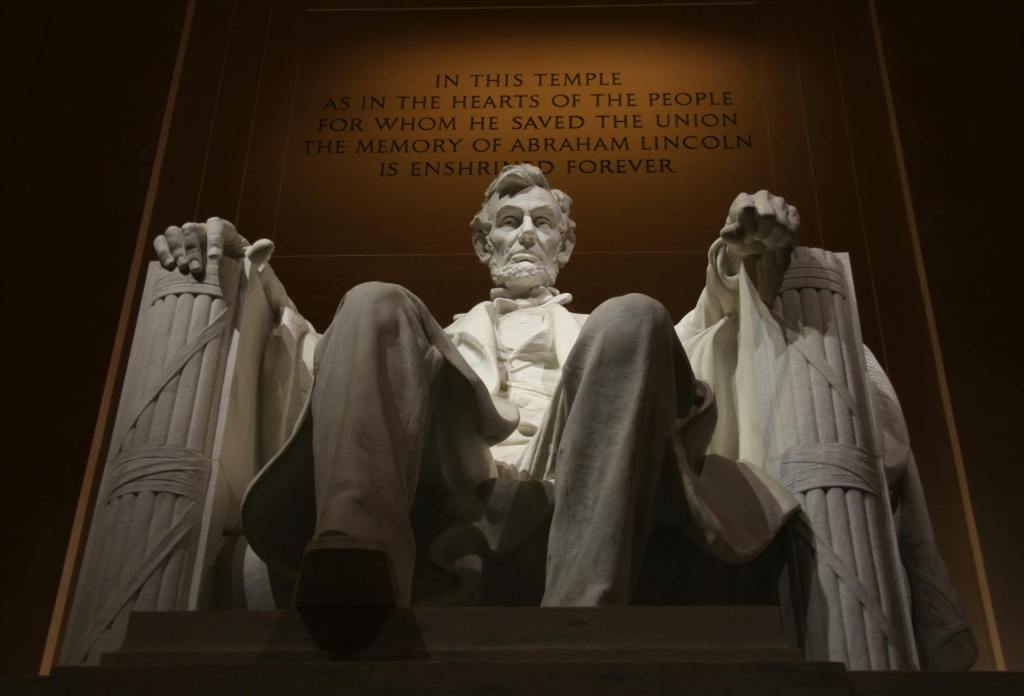
Was President Abraham Lincoln Gay or Bisexual? Does It Matter?
The question of Abraham Lincoln’s sexuality, highlighted in the recent documentary Lover of Men, is both a provocative and controversial topic that has been debated among historians for years. The documentary suggests Lincoln may have had close, possibly romantic, relationships with men, including Joshua Speed, Billy Greene, David Derickson, and Elmer Ellsworth. While some view this as an attempt to rewrite history with a queer lens, the historical evidence remains inconclusive.
Historical Context and Relationships
In the 1800s, it was not uncommon for men to share beds due to limited accommodations, a practice not always linked to sexual behavior. However, Lincoln’s continued intimate friendships, even beyond typical societal norms, have led some to speculate about his sexual orientation. His affectionate letters, particularly to Joshua Speed, and accounts of sharing beds with other men suggest a deep emotional connection. Historians, though, are divided, with some viewing these relationships through a lens of close friendship rather than romantic involvement.
Precedents of Same-Sex Relationships in the 1800s
The period was marked by significant taboos against homosexuality, yet notable figures such as James Buchanan, Walt Whitman, and Charity Bryant openly had or hinted at same-sex relationships. This context suggests that if Lincoln did have same-sex attractions, he wouldn’t have been alone. However, such relationships were often kept hidden due to legal and social repercussions.
Suggestions for Further Study
For historians seeking to deepen their understanding of Abraham Lincoln’s personal life, further investigation into the lives of Joshua Speed, Billy Greene, David Derickson, and Elmer Ellsworth could provide valuable insights. By exploring whether these men had similar relationships with other male companions, historians might uncover patterns that either strengthen or weaken the argument for Lincoln’s same-sex attractions. Additionally, examining tertiary individuals connected to these men could reveal indirect evidence, potentially reshaping our understanding of Lincoln’s private world and the social dynamics of his time.
Modern Interpretations and Reactions
Modern perspectives often read Lincoln’s relationships in the context of today’s understanding of sexuality. The debate over his possible bisexuality is less about tarnishing his legacy and more about acknowledging the complexity of historical figures. Critics argue that such discussions are driven by political agendas, while supporters view it as reclaiming suppressed aspects of history.
Does It Matter?
Ultimately, Lincoln’s impact as a leader is unchanged by the nature of his personal relationships. The ongoing interest in this subject reveals our desire to connect with historical figures on a more personal level, understanding them as multifaceted individuals rather than untouchable icons. Whether Lincoln was bisexual, gay, or simply shared deep, platonic bonds with other men, his legacy remains that of a courageous and transformative leader.
Conclusion
The truth about Lincoln’s sexuality remains elusive, with evidence supporting multiple interpretations. What is clear, however, is that history is complex, and our understanding of past figures often evolves with new perspectives. The mystery surrounding Lincoln’s private life adds depth to his character, but it doesn’t alter the monumental achievements of his public life.
For me, Lincoln’s sexuality is simply a historical mystery that doesn’t alter his impact on the country. We can’t be 100% certain about anything in history, and I’m skeptical of anyone who claims complete certainty. Humility is key—99% certainty is more realistic. If I had to speculate, I’d say it’s a 50/50 chance either way, with no clear evidence leaning definitively toward one conclusion. If pressed, I might slightly lean toward the possibility of some same-sex attraction, perhaps 45/55 in favor.
Reflection
- What does the debate over Lincoln’s sexuality reveal about our modern values and how we interpret historical figures?
- Does knowing the personal lives of historical leaders change our perception of their public accomplishments, and should it?
Resources
- Was Abraham Lincoln gay? A new documentary suggests he was a ‘lover of men’
- Charity and Sylvia: A Same-Sex Marriage in Early America by Rachel Hope Cleves
- A Queer History of the United States by Michael Bronski
- Review: ‘Lover of Men’ casts Abraham Lincoln in a lavender light by David Lewis September 4, 2024
- The True Friendship That Saved Abraham Lincoln’s Life by Charles B. Strozier, The Conversation February 16, 2017
- “We are Lincoln Men”: Abraham Lincoln and His Friends, by David Herbert Donald review by Robert S. Eckley, Journal of the Abraham Lincoln Association, Volume 25, Issue 2, Summer 2004, pp. 71-81
- The Lehrman Institute Presents: Abraham Lincoln’s Health, Milton H. Shutes, Lincoln and the Doctors, Pioneer Press, 1933
- Lover of Men: The Untold History of Abraham Lincoln (IMDB)
- Interview (Associated Press) https://youtu.be/nWSsdSFlpio?si=OyxMqgIoSIAFJV0Q

 Treasures of the Elysian Fields
Leave a comment