

In my latest read, “The Great Omission” by Dallas Willard, I’ve uncovered a transformative perspective on what it truly means to follow Christ. Willard compellingly argues that modern Christianity often prioritizes orthodoxy—correct beliefs—over orthopraxy—the correct practice of those beliefs. Through his eyes, we see that being a disciple of Jesus, or a ‘little Christ,’ isn’t just about absorbing doctrine but actively engaging in the making of disciples. This insight strikes at the heart of what many feel the church of today is missing, and it’s a revelation that has deeply resonated with me. Let’s delve into how this profound idea challenges us to rethink our faith in action.
The Acolyte
I recently watched “Star Wars: The Acolyte,” a compelling narrative set in the Old Republic era that explores the dynamics of mentorship by focusing on the role of a follower. The series reminded me of terms like pupil, acolyte, padawan, follower, disciple, and student, emphasizing how our lives are shaped by those we choose to follow. Interestingly, I was reading Dallas Willard’s work while watching the series, which felt like a serendipitous alignment of themes. In “The Acolyte,” choosing a master is depicted as a pivotal decision that can define one’s destiny. As Christians, however, we follow Christ, not a flawed human. Christ, a figure directly from God, provides us with a self-sacrificing purpose. Who better to help us realize our full potential than the one who created us? By following Christ, we can discover our purpose, embrace our true nature—not our sinful one, but our new nature—and fully unleash our potential.
Lead By Example
Becoming a disciple of Christ fundamentally means becoming like Christ, a transformation that begins from the inside out, guided by the Holy Spirit. This journey of discipleship is not primarily about making direct changes to the world; rather, it’s about personal transformation. As we allow the agape love of God to reshape us, this divine love begins to manifest in our actions and interactions. This transformation is profound and visible; it’s through exhibiting this unconditional love that we naturally draw others to Christ.
The change we bring to the world and to the church doesn’t stem from coercion or attempts to enforce Christianity through laws or cultural shifts. Instead, it occurs through our example—living out the love we receive from God. This approach aligns with the insights shared in the concluding section of Dallas Willard’s book, where he reflects on Trillium’s discussion about the influence of Christians. Just as Jesus taught in John’s gospel, “By this everyone will know that you are my disciples, if you love one another,” Willard emphasizes that our most powerful tool for change is the example we set by embodying God’s love in every aspect of our lives.
No Coercion
The principle of leading by example stands in sharp contrast to the idea of a coercion-based Christian hegemony. This concept resonates deeply with the arguments presented in N.T. Wright’s recent book, “Jesus and the Powers.” Wright challenges Christians to rethink their role in civic life, advocating for a pursuit of the common good rather than striving for Christian dominance. This approach aligns closely with the themes discussed by Dallas Willard, emphasizing transformation through personal example over imposing one’s beliefs on others.
Both Wright and Willard underscore a transformative way of living that influences society subtly but profoundly. By embodying Christ’s teachings and focusing on collective well-being, Christians can effect change that is both meaningful and lasting, fostering an environment where spiritual growth and societal welfare are interlinked. This method of gentle influence, rooted in the example set by Jesus, encourages a more inclusive and compassionate approach to living out one’s faith in the public sphere.
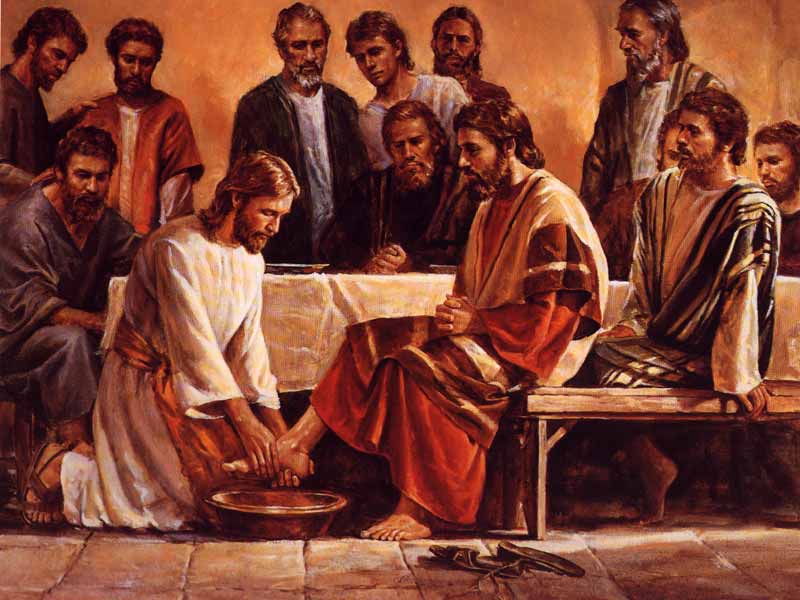
A Note on True Love
Love, by its very nature, is inherently non-coercive. You cannot manipulate someone into loving you, nor can you impose love upon someone. When behavior is forced, it ceases to be an act of love and becomes something else entirely; it is certainly not a gift given of free will, which is the essence of true love. Love must be freely given and freely received, allowing for the possibility that it might not be reciprocated. This fundamental freedom to choose is what defines genuine love.
Applying this understanding to our spiritual and social lives, we recognize that loving God and loving our neighbors means we cannot—and should not—coerce or force anyone to love God or us. While it’s true that all government action has a coercive element, this arises because, in a world where people are free, some will inevitably choose actions that are harmful to others. This reality necessitates the establishment of laws to maintain order and protect the common good.
However, in the context of faith and personal relationships, coercion has no place. To love as God loves means to offer love without strings attached and without an agenda, trusting in the transformative power of love given freely. This approach respects the autonomy and dignity of each person, aligning with the broader Christian principle that love should be a beacon that draws people in, not a force that compels them against their will.
“No such thing as bad student, only bad teacher. Teacher say, student do.” Mr. Miyagi
Making Disciples
In the journey of making disciples, we are called to emulate Christ’s approach, often characterized as servant leadership. This method emphasizes practice over mere doctrinal understanding, not to undermine the importance of doctrine, but to highlight that true discipleship is demonstrated through action. Dallas Willard articulates this beautifully in his book, where he shares insightful reflections on the nature of discipleship and the process of becoming a disciple. His discussions provide clarity on the call to make disciples of all people, distinctly pointing out that this does not mean converting others through coercion or force, but rather through embodying and exemplifying God’s transformative love.
Willard’s perspective resonates deeply with my own experiences and recent reflections, particularly in light of my personal prayers for a stronger relationship with my children and a more authentic expression of my faith. This serendipitous encounter with his work came at a pivotal moment, as I realized that my prior understanding of Christianity had been somewhat superficial—what Willard might describe as ‘nominal.’ This term characterizes many modern Christians who identify with the faith in name but lack a transformational practice of it, a trend prevalent in many churches I’ve observed.
N.T. Wright also explores the divide between belief and practice in his book, “Jesus and the Powers,” where he addresses the split within churches that prioritize orthodoxy over orthopraxy, or vice versa. While Wright doesn’t specifically use the terms ‘orthodoxy’ or ‘orthopraxy,’ he describes the Progressive church as focusing on compassion rather than doctrine, which mirrors my own observations of the gap between belief and practice. Wright advocates for a harmonious approach, arguing that genuine faith necessitates a fusion of accurate belief and appropriate action. This concept resonated with me, reinforcing that true discipleship is not just about adhering to sound doctrine but also about adopting practices that manifest God’s love.
Reflecting on these insights has led me to reconsider my own role as a parent and a Christian. Perhaps my earlier approach to discipleship was too focused on orthodoxy, neglecting the vital aspect of orthopraxy. As I continue to explore these themes, I am reminded of the profound impact our example can have on others, especially on those closest to us like our children. By striving to live as a genuine example of Christ’s teachings—being a pupil, an acolyte, or a ‘little Christ’—I hope to guide them not just through words, but through a life vividly marked by the love and grace of God.
The Modern Church’s Shortfall
Willard critiques the modern church for often reducing Christianity to a mere profession of faith rather than a transformative way of life. This reductionism leads to what he calls the “Great Omission”—the failure to make disciples. He argues that many churches focus on conversion but neglect the crucial task of nurturing these converts into mature, disciplined followers of Jesus.
This oversight results in a superficial Christianity that lacks depth and substance. The challenge for the church today is to return to the biblical model of discipleship, where the emphasis is on holistic transformation through a committed relationship with Jesus and the community of believers.
Practical Steps for Rediscovery
To address this omission, Willard proposes several practical steps:
- Intentional Training: Churches should prioritize training programs that focus on spiritual disciplines, such as prayer, fasting, and studying the scriptures. These practices cultivate a deeper relationship with Jesus and foster spiritual growth.
- Community Engagement: Discipleship should be a communal effort. Churches need to create environments where believers can engage in mutual learning, support, and accountability. This can be achieved through small groups, mentoring relationships, and communal worship.
- Emphasis on Transformation: The goal of discipleship is not just knowledge acquisition but life transformation. Churches should encourage believers to apply the teachings of Jesus in their daily lives, leading to tangible changes in behavior, relationships, and decision-making.
- Holistic Approach: Discipleship encompasses every aspect of life. Churches should address the spiritual, emotional, social, and physical dimensions of discipleship, helping believers to develop a well-rounded and integrated faith.
Summary of The Great Omission
Dallas Willard’s reflections in “The Great Omission” serve as a wake-up call for the modern church. They urge us to move beyond superficial expressions of faith and to embrace the deep, transformative journey of discipleship. By realigning our practices with the teachings of Jesus and fostering a communal approach to spiritual growth, we can rediscover the true essence of discipleship and its profound impact on our lives and communities.
The challenge is clear: to bridge the gap between belief and practice, and to cultivate a faith that not only professes but also profoundly lives out the teachings of Jesus. As we undertake this journey, let us be inspired by Willard’s call to restore the heart of discipleship in our personal lives and within our church communities.
My Action Plan
Reflecting on my recent readings, including Dallas Willard’s insights on discipleship, I’ve crafted an action plan to deepen my personal and spiritual growth. A key question has emerged: who is aiding my learning and development? My men’s group plays a significant role in this area, constantly challenging my assumptions and in turn, I encourage them to view issues from different perspectives. However, I recognize a gap in my role as a mentor. This is an area where I feel I could improve, as I strongly believe in the notion that “when the teacher is ready, the student will appear.” Perhaps my readiness or openness to mentorship has been lacking, not out of disregard but simply because I hadn’t been actively considering it.
In addition to fostering mentoring relationships, I plan to enhance my meditation practices. Inspired by J.P. Moreland’s advice in “Finding Quiet,” on meditation, which emphasizes the importance of solitude and self-compassion when distracted, I see great value in refining this discipline. His suggestions to gently refocus when the mind wanders are techniques I aim to incorporate more diligently into my routine.
Moreover, one particular practice mentioned in Willard’s book struck a chord with me: the act of praying before events, asking God what He would have me do. This practice has already proven its worth, significantly improving my mindset and performance at work. It was particularly evident one day when, after praying for guidance, I experienced one of my best days at work. Encouraged by this outcome, I am committed to making this a regular practice, hoping it will continually align my actions with greater purpose and clarity.
This focused approach, taking one step at a time, will hopefully not only enhance my personal growth but also allow me to contribute more effectively to the growth of others around me. As I navigate this path, I am reminded of the transformative power of intentional practice and the profound impact it can have on both personal and communal levels.
Reflections
- Who are your mentors, and how do they challenge and enrich your understanding? Reflect on the relationships in your life that contribute to your personal and spiritual growth. Consider reaching out to a mentor or joining a group that aligns with your aspirations to deepen these connections.
- What practices or disciplines, like meditation or prayer, could you integrate or enhance in your daily routine to better reflect your values and beliefs? Identify one practice to focus on in the coming weeks and commit to integrating it consistently into your life to see its transformative impact.
- In what ways could you take on a mentoring role to positively influence others around you? Think about the knowledge and experiences you have that could benefit someone else. Plan a simple step you could take to begin mentoring or offering guidance, perhaps starting within your existing networks or community.

 Treasures of the Elysian Fields
Leave a comment