
My Childs Post:
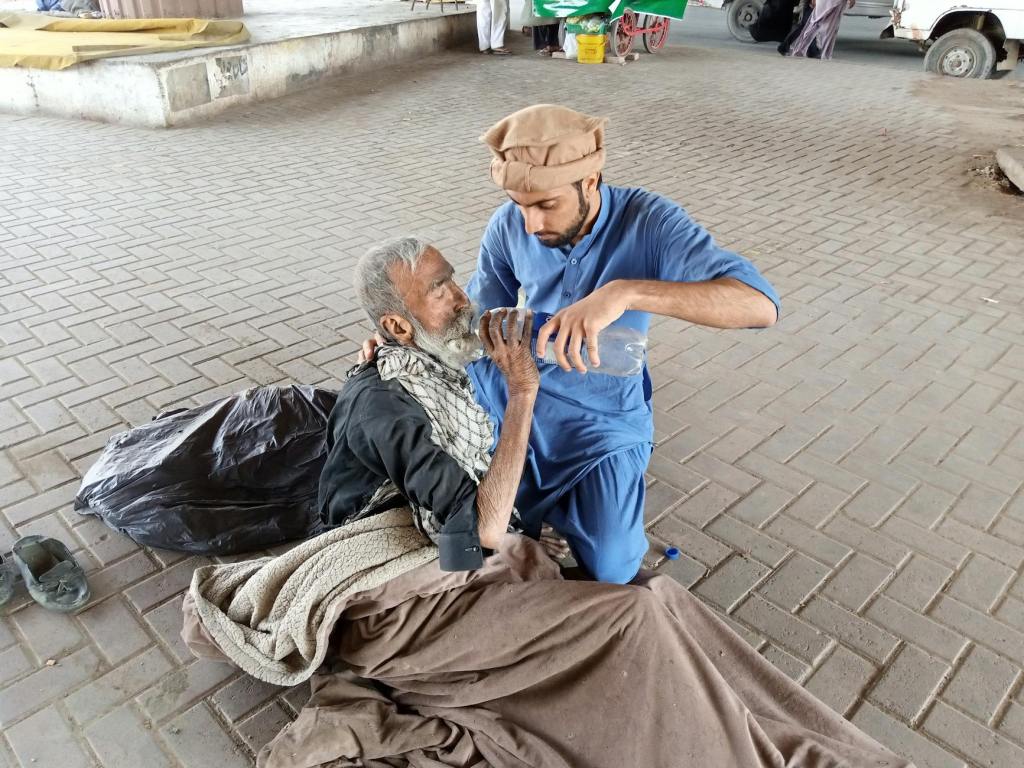
Meme: Homelessness is a failure of the rich, not a failure of the poor.

My Comment
I am not sure this applies to all situations, but in some cases, yes. In cases where mental illness is the issue or drug abuse, I am not sure.
Their Comment
Of course not all, nothing is ever 100%. But it’s a hell of a lot more true than this idea that homeless people did it to themselves. Most homeless people are disabled. Our society failed them.
Reflection
Multiple studies underscore the intricate and multifaceted nature of homelessness, illustrating that it is a systemic issue necessitating comprehensive solutions. Identified causes include a lack of affordable housing, limited access to healthcare (including mental health services), drug addiction, and unemployment. Some studies distinguish poverty and low wages as separate factors. These causes are often interconnected; for instance, many individuals struggling with drug addiction are unable to maintain employment. This raises the question: when compiling and analyzing statistics, should the primary reason for homelessness be categorized as poverty, unemployment, or drug addiction? If a study does not account for all contributing factors, it might suggest that the root cause of homelessness is the one listed. Consequently, drug addiction and mental health issues might be closer to the root cause.
Michael Shellenberger, in his book San Fransicko: Why Progressives Ruin Cities, argues that the fundamental issue is not a lack of housing or funding for social programs. Instead, he posits that an ideology labeling certain individuals as victims entitled to destructive behaviors undermines the values essential for maintaining cities and civilization. Before dismissing him as a right-wing extremist, it is worth noting that Shellenberger was a progressive Democrat who, after observing failed policies firsthand, now identifies as an independent. He provides an insider’s perspective on how these policies have contributed to the homelessness crisis in major cities.
I don’t want to gloss over a crucial point for society: certain values are essential for promoting a healthy society and maintaining cities and civilization. This perspective emphasizes the collective good. However, there is also a tension with individual freedoms, such as the freedom to act in ways that may be detrimental to society. These detriments include impacts on the healthcare system, cleanup costs, increases in disease, and crime. The cost of these actions is not borne by the homeless but by taxpayers, who bear the brunt of the expenses. The freedoms of the few impose costs on the many. There will always be a balance between the needs of the few and the needs of the many in any society.
The Financial Burden of Homelessness: How Much Are Taxpayers Paying?
The cost of addressing homelessness is staggering, particularly for taxpayers in major cities like San Francisco and New York. To understand the financial impact, let’s take a closer look at the numbers.
According to the 2024 Point-in-Time (PIT) Count, San Francisco had 8,323 people experiencing homelessness, with 3,969 of them staying in shelters. For the fiscal year 2021–22, San Francisco’s homelessness budget was $1.1 billion. However, the city forecasts that the cost will skyrocket to nearly $3.6 billion in the current fiscal year.
Breaking this down, the per-person cost in San Francisco is approximately $432,400 per year. This astonishing figure raises the question: could we solve homelessness more efficiently by simply providing homes for these individuals? Theoretically, buying homes for the homeless in one year could be more cost-effective and would potentially save money in the long run.
New York City also faces a significant financial burden. For the upcoming fiscal year, the budget dedicated to homelessness is $2.4 billion. The Coalition for the Homeless reported that in April 2024, 131,940 people slept in NYC shelters each night. Thousands more were unsheltered in public spaces, and over 200,000 individuals slept temporarily doubled-up in the homes of others. These numbers highlight the disproportionate census data of homelessness in New York compared to San Francisco. (Seems as if New York is over reporting.)
The financial data from these two cities illustrate the immense costs associated with homelessness. These expenditures include emergency shelter operations, healthcare, cleanup, and social services. The burden on taxpayers is substantial, and it prompts a critical question: are current approaches to homelessness effective, or is it time to explore alternative solutions that might be more sustainable and humane?
For more detailed statistics and information, you can visit the San Francisco government’s scorecards on safety nets and homelessness here, and the NYC open data on homelessness here. Additionally, the Coalition for the Homeless provides a comprehensive overview of homelessness in New York City here.
Is Homelessness a Failure of the Rich?
A meme asserts that homelessness is a failure of the rich, not the poor. This raises an important question: Is it truly the fault of the wealthy?
As evidenced by numerous studies, homelessness is a complex and multifaceted issue. Attempting to attribute it solely to the actions or inactions of the rich oversimplifies the problem and does an injustice to the complexity of the issue.
Defining “the Rich”
Who are the rich, anyway? Are we talking about mega-millionaires and billionaires alone? How exactly are they responsible? While it is true that those with significant means should ideally contribute to societal welfare, whether this should be done through coercion or voluntary action is a matter of debate. This balance between individual freedoms and the collective good is crucial. Forcing the wealthy to contribute against their will raises ethical concerns. If we were to apply this logic across all areas of life, it would lead to a slippery slope. For instance, should we force people to stop using illegal drugs for the good of society?
Maintaining Freedom Without Coercion
Authoritarian approaches, even if intended for societal benefit, risk infringing on personal freedoms. Authoritarians might support coercive measures when it suits their interests, but they would likely resist if the same measures were applied to them. Coercion removes the ability to help others out of genuine compassion. Voluntary aid, a free-will offering, aligns with the kind of love that religious teachings, such as those of Jesus, emphasize.
History has shown us the dangers of coercion. Communist regimes, which often relied on force to achieve their goals, resulted in significant loss of life and numerous human rights violations. It is clear that you cannot support freedom while simultaneously enforcing compliance through coercion. It simply doesn’t work.
The Question of Fair Share
Some argue that the rich do not pay their fair share of taxes, and there is evidence to support this claim. However, the meme implies that the rich are the direct cause of homelessness, which is a different assertion. What constitutes a fair share is itself a complex question. Any tax scheme must be just and equitable for all. If principles of fairness are applied universally, would they still hold up in every situation? The likelihood is that the wealthy might not be contributing their fair share, but this does not necessarily make them the root cause of homelessness.
Voluntary vs. Forced Giving
Another claim is that without being forced, the rich will not give. While this might be true in some cases, it is essential to recognize that freedom includes the freedom to act irresponsibly. Just as a drug addict has the freedom to engage in destructive behaviors, the wealthy have the freedom to choose how they use their resources. Freedom comes with responsibility, and while some people will not act responsibly, taking away freedoms is not the solution. Historical examples, such as Stalin’s regime with its work camps, prisons, and executions, illustrate the dire consequences of removing personal freedoms.

While it is tempting to place blame on the rich for homelessness, doing so oversimplifies a deeply complex issue. Solutions should focus on addressing the multifaceted causes of homelessness, promoting voluntary contributions from all sectors of society, and ensuring that efforts to help are rooted in compassion rather than coercion. This approach maintains the delicate balance between individual freedoms and the collective good.
In Collectivist Cultures
“With great wealth comes great responsibility” is a concept deeply ingrained in collectivist cultures, where the rich are expected to be charitable and contribute to the well-being of their community. In these societies, failing to be generous brings dishonor not only to the individual but also to their family. This dishonor can have significant social repercussions, reinforcing the importance of philanthropy and communal support. Unfortunately, in individualistic cultures, the impact of dishonor is less pronounced, and the sense of responsibility that accompanies great wealth may not be as strongly felt. As a result, the expectation for the wealthy to support their community is often diminished, highlighting a cultural divide in attitudes toward wealth and social responsibility.
My Final Thoughts on Homelessness
I feel a personal sense of inadequacy when it comes to addressing the homeless situation. Frankly, I don’t always know how to contribute meaningfully. On a small scale, I give at church, volunteer and donate at a local food bank, serve food to the homeless, and give money to beggars on the street. Just a few weeks ago, for instance, I had an experience that left a lasting impression on me.
I was at a gas station, filling up my work truck. Our company has strict rules about our conduct in uniform or in company vehicles—anything that might look like buying or selling drugs is a punishable offense. This gas station is in a rough part of town, where three coworkers were mugged a few months ago. The station even has signs discouraging giving to panhandlers. A man approached me and asked for money. I initially told him I didn’t have cash; at the time, I wasn’t sure if I did. He explained that he wasn’t going to use it for anything nefarious and just needed a few dollars for gas to make it to his court date. After he left, I checked and realized I had cash, so I sought him out and gave him $20. I was trying to listen to what God would have me do, and I felt it would be a blessing to him. So, I help when I can.
There isn’t much I can do on a large scale. The housing crisis across the country is something I cannot solve, and I’m not even sure how it can be solved. Those are big-picture issues that seem beyond my reach. Perhaps I am not called to fix those big-picture problems but to do my part when the need arises and I have the means to help.
Regarding economic systems, I believe that capitalism—though not a fully free market without regulations—has done more to elevate human flourishing than any other form of economy or government. Homelessness is tragic, and it is important to clarify that it is tragic anywhere for anyone. We should do everything we can to alleviate it. That said, the homeless here are often better off and represent a smaller percentage of the population compared to places without a free market. In other countries, where there is no middle class, there are often stark divides between the extremely rich and the extremely poor. When China adopted some capitalist principles, it created the largest growth in the middle class in the world and immense wealth. Historically speaking, humanity is flourishing at a higher level than ever before.

Of course, this doesn’t mean we should sit back and coast; there is still much work to be done. I look forward to a day when no one is homeless. We aren’t there yet, but I believe that each small act of kindness contributes to the larger effort of making the world a better place.

 Treasures of the Elysian Fields
Leave a comment