

In a previous post, I mentioned that I would describe the Demarcation Problem in science.
Bottom line upfront, the demarcation problem of science is drawing a line between what is and is not science. It refers to the challenge of distinguishing between science and non-science. This problem addresses the criteria that can be used to separate scientific theories and methods from those that do not meet the standards of scientific inquiry. This is much more difficult than you think. Philosophers of Science seek to define the boundaries that separate legitimate scientific inquiry from pseudoscience, metaphysics, or other forms of knowledge that do not adhere to the scientific method. This problem is not merely academic; it impacts public policy, education, and the credibility of scientific disciplines.
One of the most influential attempts to solve this problem was proposed by philosopher Karl Popper, who introduced the criterion of falsifiability. According to Popper, for a theory to be considered scientific, it must be testable and refutable. This means that there should be possible observations or experiments that could show the theory to be false.
However, falsifiability is not the only criterion discussed in the demarcation problem. Other philosophers have proposed different criteria, such as verifiability (the ability to be empirically confirmed), Kuhn’s concept of paradigms, and Lakatos’s idea of research programs.
The demarcation problem remains a topic of ongoing philosophical debate, as no single criterion has been universally accepted as sufficient to clearly demarcate science from non-science. The challenge is to develop criteria that are flexible enough to accommodate scientific progress yet robust enough to exclude pseudoscientific claims.
Hard or Soft Science
You might have heard people refer to hard and soft sciences without realizing that this distinction relates to the demarcation problem. If you’ve watched The Big Bang Theory and heard Sheldon rant about the differences between soft and hard sciences, you’re already have passing familiarity with the concept. The distinction between hard and soft sciences will provide an interesting example of the demarcation problem.
Hard Sciences
Hard sciences, such as physics, chemistry, and biology, are characterized by:
- Empirical Rigor: They rely heavily on quantitative data and measurable outcomes.
- Controlled Experiments: These sciences often use controlled laboratory experiments to test hypotheses.
- Predictability and Replicability: Results are generally predictable and can be replicated by other researchers under the same conditions.
- Mathematical Models: They frequently employ mathematical models to describe and predict natural phenomena.
Soft Sciences
Soft sciences, such as psychology, sociology, and anthropology, are characterized by:
- Qualitative Data: They often rely on qualitative data, including observations, interviews, and case studies.
- Complex Variables: These sciences deal with complex variables that are difficult to control and measure precisely.
- Context-Dependent Findings: Results can be context-dependent and may not always be easily replicated.
- Theoretical Frameworks: They use theoretical frameworks to interpret data, which can vary among researchers.
Ongoing Debate
The distinction between hard and soft sciences illustrates the broader debate on the demarcation problem:
- Criteria of Science: The criteria used to evaluate hard sciences (e.g., falsifiability, empirical rigor) are often more straightforward than those for soft sciences, leading to debates about the scientific status of the latter.
- Philosophical Perspectives: Some philosophers argue that the complexity and variability of soft sciences do not diminish their scientific value but rather highlight the need for different methodologies and criteria.
- Epistemological Challenges: Both hard and soft sciences face epistemological challenges, but the nature and resolution of these challenges differ, contributing to the ongoing discussion about what qualifies as science.
In conclusion, defining science too broadly risks undermining the epistemological foundation of more rigorous sciences, potentially allowing mere speculation to be misclassified as science. This dilution of scientific rigor can diminish the credibility of established scientific disciplines, as the term “science” is highly esteemed for its methodological precision and reliability. Consequently, fields like sociology may be rebranded as social sciences or even politics into political science, all in an effort to gain greater respect and legitimacy (Street Cred), illustrating the competitive drive to align with the esteemed standards of scientific inquiry. Therefore, maintaining clear and stringent criteria for what constitutes science is essential to preserving its epistemological integrity and public trust.
Pseudoscientific Claims
One of my significant pet peeves is the proliferation of pseudoscientific claims in documentaries available on the internet and broadcast networks. These programs often present speculative theories as established facts, thereby misleading viewers and diminishing the public’s understanding of science and critical thinking. A recent example in Egyptology underscores this issue profoundly.
Egyptologists recently discovered structures near the pyramids at Giza, leading some to claim definitively that these pyramids were not built by slaves. The basis for this claim was the perceived quality of the housing, which they argued was too good for slaves. This assertion, however, reveals a lack of academic humility and fails to account for numerous plausible alternative explanations.
While it is valid to hypothesize that pyramid builders were not slaves, presenting this as an unequivocal conclusion is misleading. The structures could have been accommodations for taskmasters or overseers, with slaves possibly housed in less permanent structures such as tents. These buildings might have been intended for visiting officials or used in various administrative capacities. Furthermore, the definition of ‘slave’ is complex and varies historically and culturally. Were these workers akin to 18th and 19th-century slaves, or were they closer to indentured servants? The archaeological evidence does not conclusively support one interpretation over others.
This kind of premature conclusion is unfortunately pervasive in many documentaries. Producers often favor sensationalism over scholarly rigor, prioritizing captivating narratives that attract viewership at the expense of accurate representation of the scientific process. The result is a public misinformed about the tentative nature of scientific knowledge, the importance of multiple working hypotheses, and the humility required in scientific inquiry.
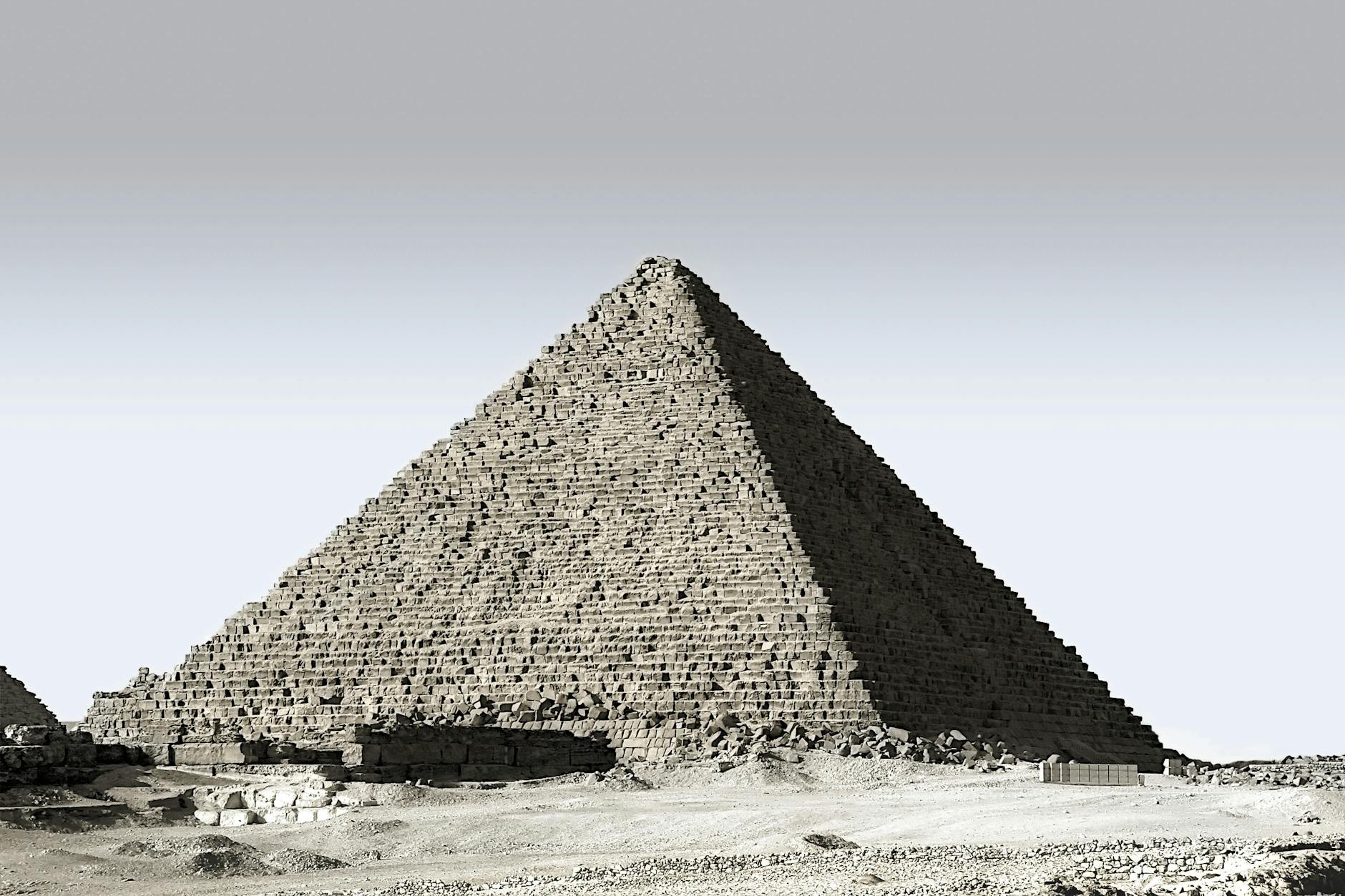
The problem extends beyond Egyptology. Documentaries across various disciplines frequently fail to present the complexities and uncertainties inherent in scientific research. They often overlook the broader context of findings, disregarding alternative hypotheses and the nuanced understanding that characterizes genuine scientific investigation.
For instance, in the case of the Giza structures, a more responsible documentary would emphasize that while the new findings suggest the possibility that not all pyramid builders were slaves, this remains an educated guess. It would highlight the need for further research and exploration, acknowledging the various factors that could influence the interpretation of the evidence.
Matt Ridley in his book The Red Queen: Sex and the Evolution of Human Nature, gives an applicable example.
“The trouble is, all these results are also predicted by rival theories just as plausibly… One scientist gives the analogy of somebody trying to decide what makes his driveway wet: rain, lawn sprinklers, or flooding from the local river. It is no good turning on the sprinkler and observing that it wets the drive or watching rain fall and seeing that it wets the drive. To conclude anything from such observations would be to fall into the trap that philosophers call “the fallacy of affirming the consequent.” Because sprinklers can wet the drive does not prove that they did wet the drive.”
The prevalence of pseudoscientific claims in documentaries is a serious issue that undermines public understanding of science. It is essential for content creators to adopt a more balanced and humble approach, presenting scientific findings with the necessary context and acknowledging the limits of current knowledge. Only then can we foster a more scientifically literate and critical-thinking society.

 Treasures of the Elysian Fields
Leave a comment