

The Problem of Viewing History Through a Narrow Lens
Blind Men and an Elephant
A group of blind men heard that a strange animal, called an elephant, had been brought to the town, but none of them were aware of its shape and form. Out of curiosity, they said: “We must inspect and know it by touch, of which we are capable”. So, they sought it out, and when they found it they groped about it. The first person, whose hand landed on the trunk, said, “This being is like a thick snake”. For another one whose hand reached its ear, it seemed like a kind of fan. As for another person, whose hand was upon its leg, said, the elephant is a pillar like a tree-trunk. The blind man who placed his hand upon its side said the elephant, “is a wall”. Another who felt its tail, described it as a rope. The last felt its tusk, stating the elephant is that which is hard, smooth and like a spear. https://en.wikipedia.org/wiki/Blind_men_and_an_elephant
History is like an elephant, and we are like the blind people trying to describe it, each of us grasping only a part of the whole and thus forming incomplete and often conflicting interpretations.
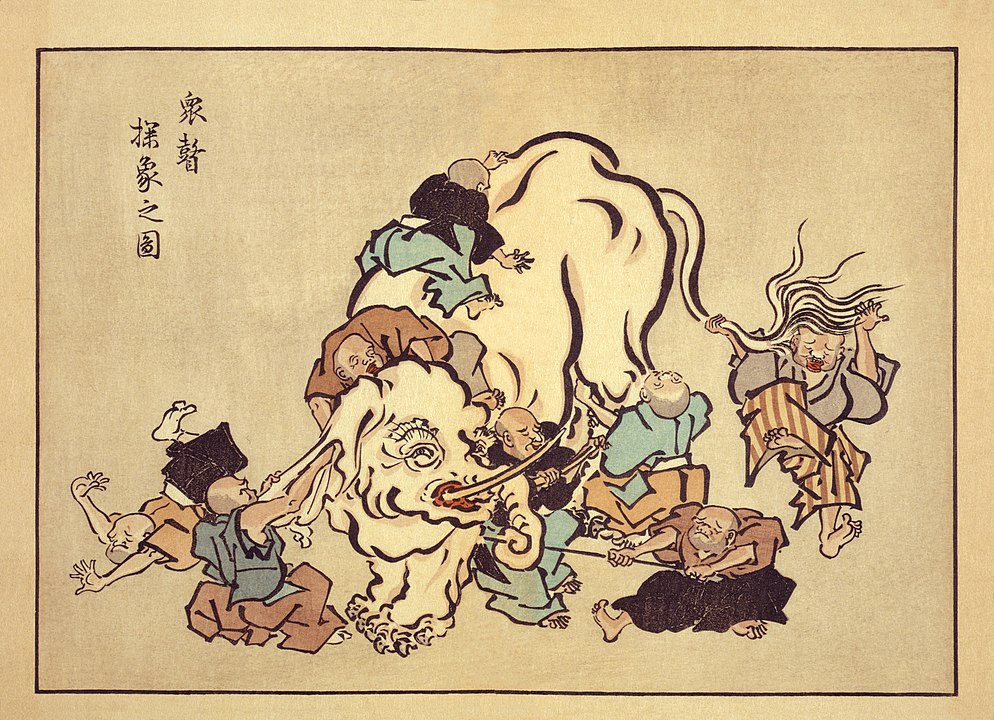
Philosophy of History today is often taught from a particular and singular point of view that simplifies the immense complexity of historical events and contexts. Many people, like the blind men in the elephant metaphor, are unaware that they are interpreting history through a specific ideological lens, which shapes their understanding and perception of the past. This narrow view of history, driven by our illusions and limited perspectives, reveals as much about ourselves as it does about the people and events of the past. The question we must address is how to look back at history accurately and fairly.
A Narrow Historical View
The prevalent Philosophy of History today is often framed through the lens of oppression. This perspective, which has its roots in Europe in the 19th century, is relatively new but has significantly influenced how we interpret historical events and human nature. To understand this ideology, it is worth briefly reviewing its historical foundations and key contributors. Several influential thinkers have contributed to the narrow lens through which we often view history. Philosophers like Friedrich Nietzsche (1844–1900), Karl Marx (1818–1883), and scientists like Charles Darwin (1809–1882), have shaped our understanding of human nature and historical development in profound ways.
Friedrich Nietzsche was known for his grim atheism and his view of life as a perpetual power struggle. He urged humanity to transcend its basic nature and strive to become the Übermensch (overman), a concept that emphasizes the potential for individuals to overcome societal constraints and redefine their existence. Nietzsche’s philosophy highlights the dynamics of power and conflict, contributing to a narrative where history is seen as a series of struggles for dominance.
Karl Marx saw industrial production and capitalism as transformative forces that reshaped society and human relations. He viewed human nature as plastic and malleable, constantly shaped by economic conditions and social relations. Marx’s materialist conception of history frames historical development as a story of economic oppression, with capitalists cast as oppressors and the working class as victims. This view laid the groundwork for a victimhood mentality that persists in various interpretations of history today.
Charles Darwin further influenced this perspective by blurring the lines between human and animal nature, suggesting that humans are products of evolutionary processes with no predetermined destiny. This view undermines the idea of a fixed human nature and supports the notion that humans are constantly evolving and subject to the pressures of their environment.
Building on these foundations, Sigmund Freud (1856–1939) expanded the concept of oppression to include sexual dominance. Freud’s theory that happiness is closely tied to sexual fulfillment led to a redefinition of personal identity based on sexual desires. This shift in understanding has led to contemporary readings of history through the lens of sexual oppression, intertwining with economic oppression, and targeting patriarchal and capitalist power structures.
On the foundations of Nietzsche, Marx, Darwin, and Freud we are now viewing history through the lenses of oppression and victimhood. While this perspective can illuminate certain aspects of historical events, it can also be limiting and distorting. By focusing primarily on narratives of oppression, we risk oversimplifying the complex dynamics of historical developments and reducing the rich tapestry of human experience to a binary framework of oppressors and victims.
Thia Euro centric view of history is based on 19th-century European thought. While this lens has its merits, it also has significant limitations, calling for a more nuanced and comprehensive approach to understanding our past. Oversimplification of history is a disservice that greatly impacts accuracy, as it fails to capture the complex and multifaceted nature of past events and human experiences.
Consequences of a Narrow Historical View
Bias and Misinterpretation
Viewing history through a single ideological lens is akin to the blind men describing the elephant; each one’s perspective is limited to the part they touch, leading to incomplete and biased interpretations. History is inherently complex and multifaceted, much like the elephant that is simultaneously like a snake, a fan, a tree trunk, a wall, a rope, and a spear, depending on which part is touched. When we limit our view to one filter, we oversimplify historical events and contexts, failing to capture their full complexity. This narrow interpretation distorts our understanding, much like the blind men’s fragmented descriptions fail to convey the true nature of the elephant.
Exclusion of Diverse Perspectives
Human nature drives us to create narratives that align with our ideologies, leading to an oversimplification of complex social interactions. In doing so, we impose our contemporary motives and perspectives on historical figures, as if they viewed the world through the same lens we do today. This is a form of bigotry against the dead, where we weaponize history to serve our present purposes, ignoring the rich diversity of past experiences and viewpoints. Just as each blind man’s limited perspective excluded the others’ experiences, our narrow historical narratives exclude diverse perspectives, leading to a fragmented and biased view of the past.
Impacts on Modern Society
Narrow historical views significantly influence current societal attitudes and policies. The tyranny of the present involves applying our contemporary ideologies to interpret past events, leading to erroneous assumptions about the motivations of historical figures. This myopic view can cause us to believe that current events are unprecedentedly bad, ignoring the cyclical nature of history and past challenges and successes. For example, our progress today—such as the abolition of slavery and market regulations to prevent predatory tactics—is built on the actions and decisions of historical figures. By understanding history in its full complexity, rather than through a singular lens, we can appreciate the contributions of the past and better navigate the present and future.
Oversimplifying history by viewing it through a single ideological lens not only biases our interpretations but also excludes diverse perspectives and impacts modern societal attitudes and policies. Just as the blind men’s limited descriptions of the elephant failed to capture its true nature, our narrow historical narratives fail to encompass the full richness and complexity of the past.
Broadening the Lens
Just as the blind men each touched only a part of the elephant and thus described it incompletely, we too must broaden our lens to capture the full complexity of history.
Incorporating Multiple Perspectives
When people reject our narrative, it often indicates that they are viewing history through a different ideological lens. Recognizing this, we should acknowledge that history is far too complex to be comprehended through a single, narrow perspective. History is the sum of all past human behavior, which varies greatly among individuals and cultures. By emphasizing diverse perspectives in historical study—including voices from different cultures, classes, genders, and social groups—we enrich our understanding. Each perspective, like each blind man’s touch, contributes to a more complete and nuanced picture of history.
Viewing History Through the Lens of Ideas
One often underexplored approach is to view history through the evolution of ideas and ideologies. Understanding how ideas emerge, grow, and impact society offers a comprehensive view of historical development. This approach, akin to meme theory, acknowledges that our prevailing ideologies shape our interpretation of history. By tracing the development of ideas over time, we can see how they influence and are influenced by historical events and social changes, much like how each part of the elephant’s body is interconnected and affects the whole.
Interdisciplinary Approaches
To fully understand history, we must study it alongside other disciplines such as sociology, anthropology, and economics. These fields provide valuable insights into the motives and behaviors of people, helping us to interpret historical events more accurately. For instance, economic history can illuminate the causes and impacts of events like the Industrial Revolution. Social structures, such as collectivism versus individualism, also play a crucial role in shaping historical narratives. Just as understanding the elephant requires knowledge of its biology, understanding history requires an interdisciplinary approach to grasp its full complexity.

Global History
A global approach to history considers the interconnectedness of different regions and cultures. By examining the interactions between different parts of the world, we can appreciate the complexity of ancient and modern societies. Social structures like collectivism and individualism are particularly important to understand when studying ancient cultures. Just as the elephant’s various parts work together to form a complete animal, the interconnectedness of different cultures and regions forms the complex tapestry of global history.
By broadening our lens and incorporating multiple perspectives, viewing history through the lens of ideas, employing interdisciplinary approaches, and adopting a global perspective, we move beyond the limited view of the blind men and begin to understand the true nature of history in all its complexity. If the blind men had communicated and shared their individual experiences, they could have combined their perspectives to form a more comprehensive understanding of the elephant. By integrating the descriptions of a snake-like trunk, a fan-like ear, a tree-trunk leg, a wall-like side, a rope-like tail, and a spear-like tusk, they could have realized that the elephant is a large and multifaceted creature. This collaborative effort would have allowed them to move beyond their narrow, individual views and appreciate the complexity and full nature of the elephant. While their combined perspectives may not have provided a perfect picture of the elephant, it would have been far closer to the truth than their limited individual views.
Breaking the Tyranny of the Present
Resisting Superficial Information
Just as the blind men initially relied on their limited tactile impressions to describe the elephant, we often rely on superficial information like tweets and clickbait headlines to form our understanding of history. However, to truly grasp the complexity of historical events, we must move beyond these superficial sources and seek deeper historical context and thoughtful reflection. Judging past people by our current standards is an example of the tyranny of the present. We must remember that future generations will likely view our present ideologies with the same critical eyes we cast on the past.
Embracing a Hermeneutic of Understanding
Adopting an interpretive approach that seeks understanding rather than suspicion allows us to appreciate the broader context of human events, much like the blind men combining their perspectives to better understand the elephant. Recognizing the complexity and multifaceted nature of history encourages a more nuanced perspective. By considering multiple viewpoints and the context in which historical events occurred, we can develop a richer and more accurate understanding of the past.
Recognizing Providence
Understanding that historical events are part of a larger narrative can provide hope and perspective even in challenging times. For Christians, history is seen as part of God’s redemptive process with the world, driving us toward a more perfect world.
“There is no longer Jew or Gentile, slave or free, male and female. For you are all one in Christ Jesus.” Gal 3:28 (NLT)
History and Progress
Viewing history solely through the lens of oppression and victimhood fails to account for significant milestones such as the abolition of slavery, the achievement of women’s suffrage, the advancement of LGBTQ rights, reductions in poverty, and the development of hospitals, science, and technology. This narrow perspective cannot explain these transformative progressions, as it focuses exclusively on the negative aspects of human history without acknowledging the positive strides and achievements. These advancements are clear evidence of humanity’s capacity for growth, reform, and improvement. The end of systemic injustices and the rise of egalitarian movements demonstrate that historical change is complex and multifaceted, encompassing both struggle and triumph. Therefore, a view confined to oppression and victimhood is incomplete and unable to provide a full picture of history’s breadth and depth.
Seeing oppression everywhere misses the actual advancements humanity has achieved. Our understanding of history, like the blind men’s evolving concept of the elephant, grows and becomes more refined over time. The goal is not to deny the existence of oppression but to balance it with recognition of progress. This perspective is echoed in the U.S. Constitution’s preamble, which emphasizes the pursuit of a “more perfect Union.” This illustrates that perfection is not achieved immediately but is a progressive endeavor.
“We the People of the United States, in Order to form a more perfect Union, establish Justice, insure domestic Tranquility, provide for the common defense, promote the general Welfare, and secure the Blessings of Liberty to ourselves and our Posterity, do ordain and establish this Constitution for the United States of America.” Constitution for the United States of America
By breaking free from the tyranny of the present, where we impose our current views on history, and instead embracing a deeper understanding and recognizing the broader narrative of progress, we can develop a more balanced and comprehensive view of history. Interestingly, imposing our present ideology on the past can be seen as a form of oppression against those in history.
Conclusion
A lack of historical perspective can lead to the belief that current events are unprecedentedly bad, ignoring the many challenges and successes of the past. We stand where we are today because of the efforts of the men and women of history. Significant progress has been made, such as the abolition of slavery and the regulation of markets to prevent predatory tactics. We are beginning to realize Paul’s egalitarian statement: “There is no longer Jew or Gentile, slave or free, male and female. For you are all one in Christ Jesus” (Galatians 3:28). While there is still much work to be done, progress is evident.
The elephant and the blind men metaphor illustrates this well. Imagine being blindfolded and touching only one part of an elephant; it would be difficult to describe the animal accurately. Similarly, reading one page of a thousand-page book and judging the entire story based on that single page, or judging an entire race by the actions of one person, is clearly flawed. We understand these limitations in other contexts, so why do we accept them in history?
History is complex and messy, and we often do not have access to people’s true motives. We should not assume the motives of people in the past based on our present-day perspectives. Embracing this complexity means understanding that we can only make tentative claims about why things happened the way they did. To gain a comprehensive understanding of history, we must avoid oversimplifying it to fit our current ideologies.
Call to Action
To truly understand and appreciate the complexity of history, we must move beyond simplistic and narrow perspectives. I encourage you to approach historical study with an open mind, seeking out diverse sources and viewpoints. Engage with history not just as a series of events but as a tapestry woven from the experiences and actions of countless individuals across different times and cultures. Challenge yourself to see beyond the dominant narratives and consider the broader context and underlying causes of historical events.
Take the time to delve into interdisciplinary studies, incorporating insights from sociology, anthropology, and economics to enrich your understanding of the past. Recognize the progress humanity has made, while also acknowledging the ongoing struggles and challenges. By doing so, we can develop a more balanced and comprehensive view of history, one that respects the complexity and richness of our shared human experience.
Remember, history is not just about learning what happened; it’s about understanding why it happened and how it shapes our present and future. Embrace the full picture, just as the blind men needed to share their insights to understand the elephant. Let us strive for a deeper, more nuanced understanding of history that goes beyond mere ideological narratives.
Reflection
- How do you think our current societal values and ideologies influence the way we interpret historical events? Can you think of an example where this has led to a biased understanding of the past?
- In what ways can incorporating diverse perspectives and interdisciplinary approaches enhance our understanding of history? Have you encountered any historical accounts that benefited from such a broad perspective?
- Do you believe it is possible to view history completely objectively, or is some degree of bias inevitable? How can we work towards a more balanced and comprehensive interpretation of historical events?
Resources
- Unraveling the Mindset of Victimhood, Scott Barry Kaufman, Scientific American, June 29, 2020,
- “The Rise and Triumph of the Modern Self: Cultural Amnesia, Expressive Individualism, and the Road to Sexual Revolution” by Carl R. Trueman. Nov 10, 2020
- Friedrich Nietzsche: Philosophy of History, Anthony K. Jensen, Internet Encyclopedia of Philosophy
- “Survivals and New Arrivals” by Hilaire Belloc. 1929
- “A People’s History of the United States” by Howard Zinn Nov 17, 2015
- “Orientalism” by Edward Said Dec 31, 2010
- “History: A Very Short Introduction” by John H. Arnold Jun 8, 2021 https://amzn.to/4dQbvUK
- The United States Constitution

 Treasures of the Elysian Fields
Leave a comment