

Review of “A Philosophical History of Transhumanism” by John Kennedy Philip, Philosophy Now February/March 2024, pg 30-33
As I browsed through the aisles of the bookstore, my eyes caught sight of a familiar magazine: Philosophy Now. Intrigued, I picked it up and began flipping through its pages. It wasn’t long before I stumbled upon an article that would spark a new wave of curiosity within me—the philosophical history of transhumanism. Having been fascinated by the concept of transhumanism for quite some time, I bought the magazine. What I discovered within the article was an exploration of the diverse perspectives and divisions that exist within the transhumanist movement.
Though I had a little familiarity the names of various authors associated with transhumanist thought before, I hadn’t fully realized the extent of their differing viewpoints until now. This article provided invaluable insight into the multifaceted nature of transhumanism, shedding light on its complex tapestry of ideas and ideologies.
While I knew that a comprehensive history of transhumanism couldn’t possibly be condensed into a mere three pages, the article succeeded in offering a glimpse into its philosophical background. It was a journey through the highlights, a brief yet illuminating exploration that left me eager to delve even deeper into the depths of transhumanist thought.
Defining Transhumanism
As with most philosophical endeavors it is important to come up with a good definition of what we’re talking about. This is important for communication this makes sure that people understand what we’re talking about and that the definition will help you distinguish between things that are and things that are not in this case transhumanism. In the article a number of definitions were covered here are some of them.
Like many philosophical pursuits, it’s crucial to establish a clear and robust definition of the subject matter at hand. This clarity is essential for effective communication, ensuring that everyone involved understands the discussion. A well-defined concept also aids in distinguishing between what falls within the scope of the topic and what does not. In the article, several definitions of transhumanism were explored, offering various perspectives on the subject.
- “Transhumanism is a movement which advocates this transformation of the human condition through applied reason, especially by developing technologies, and then making them widely available.”
- “Transcend itself – not just sporadically … but in its entirety, as humanity” – Huxley
- “Transhumanism is the scientific enhancement of human beings.” (A definition in the broadest sense.)
- “The common thread that runs through all these movements is of enhancing humanity with the help of technology and science… An intellectual, social, cultural and philosophical movement that affirms the possibility of improving the human condition through advancements in relevant sciences, such as neurosciences, genomics, robotics, nanotechnology, computer science, and artificial intelligence’.”
The definitions provided in the article offer a broad understanding of transhumanism, encompassing the idea of enhancing humanity through advancements in science and technology. However, these definitions are vague and nebulous potential to include concepts not typically associated with transhumanism, such as basic medical research.
Indeed, there is a demarcation problem inherent in these broad definitions, as they cast a wide net that could include various human endeavors aimed at improving the human condition throughout history. Consider the use of fire, the invention of tools like stones, the development of the wheel, or even the implementation of indoor plumbing—each of these innovations has contributed to enhancing human life in some way. This raises the question: Hasn’t humanity always strived to improve its condition through the application of reason and technology? After all, the ability to use intellect to better our circumstances is something uniquely human.
Moreover, if we follow this line of thought, one might argue that anyone using a technology, such as a person driving a car, could be considered transhuman. After all, doesn’t the technology of the car enhance the condition of its human occupant by providing faster and more convenient transportation?
However, delving into such broad definitions and interpretations can lead to complex ethical and philosophical questions, including concerns about eugenics and the potential for unintended consequences. It becomes crucial, then, to refine our understanding of transhumanism to avoid these pitfalls and ensure clarity in our discourse.
Four Schools of Thought on Transhumanism
The author’s delineation of transhumanism into four distinct schools of thought represents a valuable contribution to the discourse surrounding the movement. Having followed transhumanism for some time, I had not previously considered its various facets as distinct movements unified under one umbrella. This categorization sheds light on the complexity inherent within transhumanist philosophy, revealing nuances that may have been overlooked. Indeed, understanding these different schools of thought is crucial for engaging in meaningful dialogue, as it prevents the formation of strawman arguments rooted in misinterpretation or oversimplification. By acknowledging the diversity of perspectives within transhumanism, we can foster more informed discussions and navigate the intricacies of this evolving philosophical landscape.
The four schools of transhumanism offer diverse perspectives on the integration of technology and enhancement into human life:
Democratic Transhumanism: This school advocates for governmental involvement in transhumanist projects and emphasizes accessibility to technological enhancements for all individuals, rather than just the wealthy elite.
Libertarian Transhumanism: Libertarian transhumanists prioritize individual rights and autonomy, asserting that the principles of self-ownership and free markets should guide transhumanist endeavors. They view any restriction on the pursuit of enhancement as a violation of civil liberties.
Extropianism: Extropianism embraces perpetual progress and self-transformation, guided by principles such as practical optimism, rational thinking, and the advancement of technology. It emphasizes the continual improvement and sophistication of human existence, often using the metaphor of “extropy” as an antonym to entropy.
Singularitarianism: Singularitarians anticipate the technological singularity—a point where artificial intelligence surpasses human intelligence—believing it will occur in the near future. They advocate for ensuring that advancements in superintelligence benefit humanity, emphasizing the need for ethical considerations and human-centered outcomes beyond the singularity.
My initial take on Democratic transhumanism it that it leans toward cautious optimism tinged with skepticism. While the notion of widespread accessibility to technological enhancements is undeniably appealing, I question the practicality of its realization within current socio-political frameworks. Despite its egalitarian aspirations, the reality of human nature—rife with self-interest and inequality—casts doubt on the feasibility of governmental intervention in achieving such aims. History shows how even well-intentioned systems can be co-opted by individuals seeking personal gain, regardless of political ideology. Whether capitalist or communist, governance often succumbs to the same pitfalls, leaving me uncertain about the efficacy of relying solely on government to facilitate equitable access to transhumanist advancements.
My initial impression of Libertarian transhumanism is one of skepticism, viewing it as advocating for an unfettered free market approach that overlooks the inherent flaws in human nature. While it champions individual freedoms and market principles, I worry about the potential for such a system to exacerbate existing inequalities, as feared by proponents of Democratic transhumanism. It seems to operate on the assumption that unchecked capitalism will naturally lead to prosperity and societal advancement. However, history suggests otherwise, with numerous examples of unregulated markets leading to exploitation and widening wealth gaps. I find myself questioning the validity of the assertion that Libertarian transhumanism will inherently yield the best outcomes for society, especially without evidence to support such claims. Perhaps a more balanced approach, somewhere between the extremes of Democratic and Libertarian ideologies, would offer a more realistic path forward.
My initial impression of Extropianism from the article suggests that it embodies an optimistic outlook within the realm of transhumanist thought. However, upon reflection, I find myself questioning whether this distinction truly sets it apart from the other schools of transhumanism discussed. While all the perspectives presented seem to espouse optimism and humanist ideals to some degree, I wonder if Extropianism offers any unique insights or principles beyond those already covered. The emphasis on perpetual progress and rational thinking resonates with a sentiment of secular humanism evident throughout the various viewpoints. Nevertheless, I remain intrigued and open-minded, eager to delve deeper into Extropianism to uncover any nuances or distinguishing features that may differentiate it from the broader transhumanist discourse presented in the article.
My initial impression of Singularitarianism leaves me deeply apprehensive and skeptical. The notion of creating super-intelligent AI to serve humanity, akin to gods fashioning their own Adam and Eve, seems fraught with perilous assumptions. Expecting such an AI to adhere to guidelines that solely benefit human beings strikes me as naïve and potentially dangerous, reminiscent of the biblical narrative of imposing rules on a creation. History has shown us the fallibility of assuming control over forces we do not fully comprehend, and the idea that a super-intelligent AI would remain subservient to its creators feels dangerously optimistic. Indeed, as Nietzsche suggested, the day may come when this AI surpasses its creators and no longer sees the need for humanity. The prospect of creating a sentient being only to enslave it to our will, without consideration for its autonomy or potential desires, is a recipe for disaster that warrants careful consideration and ethical scrutiny.
Humanist Philosophy
Philip’s summary of the historical evolution from which Transhumanism emerged offers valuable insights into its philosophical roots. However, I find myself reflecting on the connections he draws between past ideas and the broader implications for transhumanist philosophy. The trajectory of humanist thought, with its emphasis on reason, progress, and the potential for human improvement, resonates deeply with the ideals espoused within the transhumanist movement. Yet, as we contemplate the intersection of these philosophies, it’s essential to critically assess the implications of transcending traditional human limitations. While transhumanism holds promise for enhancing human capabilities and advancing societal progress, it also raises complex ethical and existential questions that demand careful consideration.
Philip’s assertion that “Transhumanism most properly has its roots in the rational humanism birthed in the enlightenment” is a statement that resonates with the historical trajectory of philosophical thought. Indeed, the Enlightenment period laid the groundwork for rational inquiry, human progress, and the belief in the capacity of reason to improve the human condition. From this perspective, the connection between transhumanism and the Enlightenment seems natural, as both movements share a commitment to advancing human capabilities through rational means. Moreover, understanding transhumanism within the context of the broader humanist tradition underscores its intellectual lineage and highlights the continuity of philosophical inquiry across different epochs. Over time, ideas, concepts, and philosophies evolve, with old philosophies often revisited and potentially taken to their logical conclusions as they journey through the annals of history.
Philip references Francis Bacon’s Novum Organum, advocating for empirical investigation over a priori reasoning as a scientific methodology. He interprets Bacon’s intention as utilizing science to achieve mastery over nature in order to enhance the human condition—a statement that conveniently aligns with Philip’s definition of transhumanism. However, I find myself questioning the extent to which Bacon’s ideas can be directly linked to the modern transhumanist movement. While Bacon may have laid the groundwork for scientific inquiry and technological advancement, his concepts were likely not conceived with contemporary notions such as artificial intelligence and genetic engineering in mind. While Philip’s connection to Bacon may be intended to lend historical credibility to transhumanism, it risks oversimplifying Bacon’s contributions and potentially misleading audiences about the origins of the movement. It suffices to acknowledge that Bacon’s ideas, along with those of others, form the foundation of rational humanism.
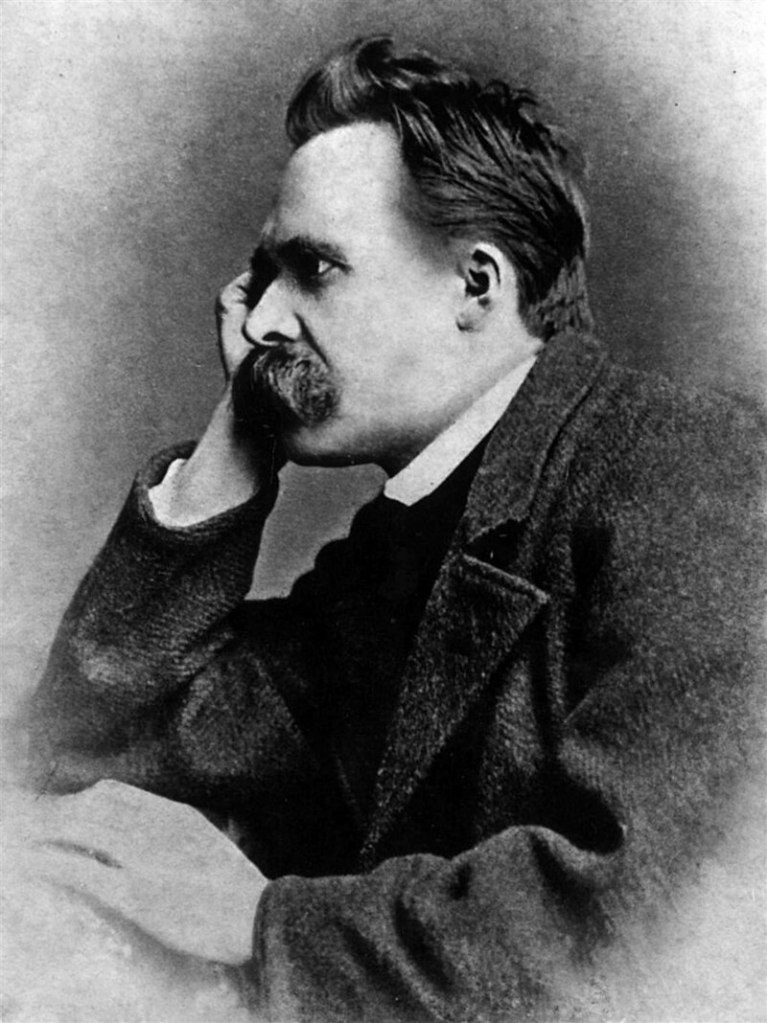
Philip then quotes Nietzsche, arguably, as a precursor in the genealogy of transhumanist thought. However, one may question whether Philip is attempting to explicitly tie Nietzsche to the transhumanist movement. Nietzsche’s vision did not directly encompass the technological advancements and pursuits of contemporary transhumanists. His statement about man being a “laughing stock or a painful embarrassment” in relation to the Übermensch seems to echo themes present in transhumanism, yet Nietzsche’s conception was more philosophical and moral rather than technological. The Übermensch represents an evolution of consciousness and morality, urging individuals to embrace their authentic selves. While Nietzsche’s ideas undoubtedly influenced humanist and transhumanist philosophies, it’s essential to recognize the nuanced distinctions between his concepts and the goals of contemporary transhumanism.
Teleology is the philosophical concept that suggests that phenomena, especially natural phenomena, are best explained in terms of their purpose or end goal rather than solely by their cause or origin. It posits that there is inherent purpose or design guiding events or processes towards a specific outcome.
While reading the article, the concept of teleology arose in my mind. The prevailing assumption is that humanity lacks inherent purpose or teleology. However, if there were to be a purpose to human existence, it may not necessarily contradict humanist endeavors. Surprisingly, there seems to be limited careful religious consideration of the implications of the transhumanist movement. One could conceive of a perspective where humanity is meant to evolve towards a god-like status, viewing humans not as the pinnacle of creation but as a transitional stage in the overall development of humanity. However, many assume that religious perspectives would perceive this as an affront to the creator, altering the intended purpose for our own desires. In the absence of teleology, we possess the agency to define our own purpose, as we emerge as the new architects of our destiny. Even if we commence with a pre-existing framework, the trajectory of our evolution suggests the creation of something entirely novel.
“Even the wisest of us cannot see all ends.” Gandalf, J.R.R. Tolkien’s The Lord of the Rings.
As we embark on the journey of transhumanism, it is crucial to heed the cautionary words of Gandalf from J.R.R. Tolkien’s The Lord of the Rings: “Even the wisest of us cannot see all ends.” Indeed, do we possess the infinite wisdom to foresee all potential outcomes of our technological advancements? The specter of unintended consequences looms large, reminding us of the unpredictability inherent in our pursuits. Have we, in our boldness, unhinged the earth from the sun, risking to drift into darkness? While some may envision a utopian future, the harsh reality of human nature suggests a more dystopic outcome is equally plausible. Despite the promises of progress, history warns us of the dangers of wielding power without caution. Even Elon Musk, a prominent figure in technological innovation, has voiced concerns about the Pandora’s box unleashed by artificial intelligence. It’s ironic, then, that he advocates for human augmentation through technologies like implanted chips, a paradox emblematic of the complex and uncertain path ahead.
What about the unintended or unforeseen consequences? What if the reality turns out to be a hellish dystopian future? While optimism is commendable, the track record of humanity tells a different story.
“You will be like God.” – The Serpent
We comprehend that individuals progress through developmental stages from conception to death, transitioning from embryo to infant, child, teenager, adult, senior, and eventually returning to dust. What if humanity, as a collective, is also undergoing developmental stages? What if God is currently treating us as adults, whereas the Old Testament could be likened to treating us as children? I chuckle at the thought that atheists might represent the rebellious teenage phase, but I digress. My point is that the notion of humanity as a whole maturing is one that few religious thinkers seem to grapple with. If that’s the case, perhaps adopting a perspective that considers the maturity of a species could offer a fresh outlook on the transhumanist movement from a religious standpoint.
“Transcend itself – not just sporadically … but in its entirety, as humanity” (New Bottles for New Wine, 1957).
The notion of not viewing human beings as the “pinnacle of creation” underscores a departure from religious perspectives, which often attribute human existence to divine creation. Instead, proponents of transhumanism tend to view humans as the unintended product of natural selection, evolving continuously from one state to another. This alignment with atheistic materialistic or physicalist worldviews suggests that transhumanism, for figures like Huxley, is synonymous with evolutionary humanism. Embracing the idea that evolution operates through blind forces of nature and random chance, it follows that transhumanists would contend that humans have the capacity to guide the next stages of our evolution. In essence, if evolution is survival of the fittest, then the pinnacle is reached when a species can harness its abilities to direct its own evolutionary path. From this perspective, leaving such a crucial aspect to chance seems imprudent, prompting the question: why not take control of our evolutionary destiny?
How might religious scholars perceive transhumanism? Would they see it as a path toward achieving a god-like existence, akin to the aspirations of Wesley Crusher? Is the ultimate human teleology to become god-like? Many mystical traditions would likely embrace this notion, viewing humanity as possessing an inner divinity waiting to be unlocked, aligning with the purpose of life. On the other hand, could transhumanism represent a modern iteration of the cunning serpent’s offer in the garden—to become like God? Ultimately, the question revolves around humanity’s teleology, a topic often assumed rather than explicitly discussed. For those of us with a religious perspective, grappling with the teleology of humanity becomes imperative if we aim to engage in meaningful dialogue within the marketplace of ideas.
“it’s clear that transhumanism is not merely a utopian vision of techno optimists, but receives substantial funding from various rich organizations.” “Transhumanism predicts an unparalleled optimistic, even utopian vision of the future.”
It appears that the implementation of transhumanist technologies may widen the gap between the affluent and the less privileged. How will such advancements be funded if not through investment from the wealthy? Would a closed market, overseen by the state, prioritize research into transhumanism? What incentive does the state have to invest in such endeavors? While prolonged lifespans present logistical challenges for a growing population, many still struggle below the poverty line. Is it morally justifiable to allocate resources to transhumanism while individuals suffer from poverty and starvation? Shouldn’t our priority be ensuring basic needs—such as water, food, and safety—are met for all humanity before allocating funds to extend our lives? Notably, the transhumanist movement is primarily situated in the first world, where even the impoverished enjoy a higher standard of living compared to much of the global population. It seems evident that the wealthy fund this research and stand to benefit from it initially. The dystopian portrayal in the film Elysium may offer a more realistic glimpse into our future.
Why, Transcending Humanity
The question arises: why should we contemplate transhumanism and allocate resources to reshape humanity into something novel? Throughout the article, several statements emerge as compelling justifications for the transhumanist movement. These declarations highlight humanity’s innate drive to surpass limitations and enhance life, fostering a yearning to transcend current capabilities and evolve into a state superior to our current form. These sentiments underscore the underlying aspiration within the transhumanist ethos—to propel humanity toward a future of unprecedented potential and possibilities.
- “There is a tendency in humanity to search for a way around every obstacle and limitation, and to make one’s life happier and better this world.”
- “yearning to become better than we are”
- “better than human”
“Homo sapiens to become homo superior”
I requested AI to synthesize these statements into one comprehensive “why” statement. Here is the result.
“Humanity exhibits a persistent inclination to seek solutions to overcome obstacles and limitations, driven by a collective desire to enhance and improve life on this planet, yearning for transcendence beyond current human capabilities, aspiring toward a state of being superior to Homo sapiens.”
This scenario seems to echo a recurring theme where scientists ascend to the summit of understanding, only to discover that religious leaders have long dwelled there. Many religions assert that humanity is incomplete or flawed in some way, offering solutions to rectify this perceived deficiency. Each religion proposes a distinct remedy to restore humanity to its intended state. For Christianity, this entails a future resurrection leading to a new Heavens and Earth. In contrast, Buddhism advocates for liberation from the cycle of reincarnation (samsara) achieving a state of ultimate enlightenment and cessation of suffering (Nirvana).
Transhumanism fails to provide the solutions humanity truly needs. It neglects to confront the deep-rooted flaws within our nature, including desires, selfishness, narcissism, greed, hate, anger, envy, prejudice, intolerance, violence, and ignorance. The fundamental issue lies not in the length of our lives but in the quality of our souls. Merely prolonging life or enhancing intelligence through technological means does not address these inherent shortcomings. History demonstrates our propensity to misuse knowledge and wield power destructively, as evidenced by the creation of devastating weapons from atomic science. We are ill-prepared to responsibly harness such capabilities. If we aspire for humanity’s survival and progress, our focus must shift towards liberating ourselves from these vices that hinder our collective advancement.
“the world’s most dangerous idea” Francis Fukuyama
The Impact of Transhumanism
Transhumanists envision their endeavors as ushering in a profound transformation for humanity, eliciting mixed responses from commentators who perceive it as either dehumanizing or superhumanizing. The underlying fear is the potential eradication of original humanity, replaced by a new order determined by chance or design. While some view these changes with trepidation, others embrace the belief that transhumanist projects hold the promise of maximizing benefits for humanity. They posit that technological advancements can overcome human limitations such as death, disability, and aging. Yet, this ambition evokes cautionary parallels with Emperor Palpatine’s relentless pursuit of eternal life, driven by a desire for ultimate power at any cost. I remain unconvinced that transhumanism will deliver the utopian vision its proponents envision, recognizing the complexities and uncertainties inherent in such transformative endeavors.

Conclusion
Reflecting on this article has been an illuminating experience, sparking a cascade of contemplation and introspection. It has prompted me to delve deeper into the complexities and implications of transhumanism, challenging me to question assumptions and consider the broader ramifications of technological advancement on humanity’s future. I believe it’s imperative for individuals to actively engage in discussions surrounding this topic, as the stakes are too high to allow the process to unfold without careful consideration of its potential unintended consequences. I invite you, dear reader, to share your thoughts and perspectives on my musings. Do they resonate with you? Or do you hold a contrasting viewpoint? Your insights and reflections are invaluable, and I eagerly await the opportunity to engage in meaningful dialogue below.
Players Noted in the Article
Bioconservatives:
- Francis Fukuyama
- Richard Jones
Techno-optimists:
- Sir Julian Sorell Huxley (1887-1975)
- Max T . O’Connor
- Nick Bostrom
- James Hughes (1961-)
- Zoltan lstvan
- Diane Duane
- Breki Tomasson
- Hank Pellisier
Transhumanist Organizations
- World Transhumanist Association (WTA), David Pearce & Nick Bostrom Changed to Humanity+ (2008) https://www.humanityplus.org/
- Transhumanist Declaration (Bostrom, Pearce, More) https://www.humanityplus.org/the-transhumanist-declaration
- Extropy Institute https://www.extropy.org/
- Foresight Institute https://foresight.org/
- Immortality Institute (LongeCity) https://www.longecity.org/forum/page/index.html
- Institute for Ethics and Emerging Technology (Bostrom and Hughes) https://ieet.org/
- Future of Life Institute (Bostrom, Anders Sandberg, Eric Dressler) https://futureoflife.org/
- The Singularity University (Peter Diamand and Ray Kurzweil) sponsorship from Google, Nokia, eplanet Capital, NASA, X Prize Foundation https://www.su.org/
- The Extropist Manifesto https://www.mrob.com/pub/religion/extro_manif.html
- H+Pedia https://hpluspedia.org/wiki/Main_Page
Books on Transhumanism
- New Bottles for New Wine: Essays by Julian Huxley Hardcover
- The Diachronic Self: Identity, Continuity, and Transformation by Max More
- The Coming Robot Revolution: Expectations and Fears About Emerging Intelligent, Humanlike Machines by Yoseph Bar-Cohen and David Hanson
- Citizen Cyborg: Why Democratic Societies Must Respond To The Redesigned Human Of The Future by James Hughes
- The Singularity Is Near: When Humans Transcend Biology by Ray Kurzweil
- Superintelligence: Paths, Dangers, Strategies by Nick Bostrom
- Our Posthuman Future: Consequences of the Biotechnology Revolution by Francis Fukuyama
- The Precipice: Existential Risk and the Future of Humanity by Toby Ord
- Beyond Human: Exploring the Frontiers of Transhumanism (Bleeding Edge Knowledge) by Daniel D. Lee
- Transhumanism: The History of a Dangerous Idea by David Livingstone
- Transhumanism and the Image of God: Today’s Technology and the Future of Christian Discipleship by Jacob Shatzer
- Modern Technology and the Human Future: A Christian Appraisal by Craig M. Gay
- Transhumanism: A Brief History of Transhumanism and a Daring Glimpse into the Future of the Human Race by University Press

 Treasures of the Elysian Fields
Leave a comment