
The Puritan movement within the Christian church holds significant importance in understanding the trajectory of societal development, particularly in the United States. Viewed through the lens of a social justice movement against the perceived abuses of monarchy in England, the Puritans’ ideals and sensibilities laid a foundational groundwork for the revolutionary fervor that ultimately culminated in the American Revolutionary War. Their legacy reverberates through the annals of history, shaping not only religious landscapes but also political ideologies and societal structures. In delving into the Puritan movement, one uncovers not just a religious phenomenon, but a catalyst for profound societal change with enduring repercussions.
The history of the Puritan movement is a fascinating study in the cyclical nature of religious reform and adaptation. From its inception in response to perceived doctrinal impurities within the Anglican Church to its eventual migration and legacy in the New World, the Puritans’ journey exemplifies the ebb and flow of religious fervor and institutional resistance. Through a lens of lifecycles, we can trace their fundamental goals, reactions to monarchy opposition, attempts at reform under parliamentary rule and Cromwell’s governance, and their ultimate response to persecution.

The Puritans emerged with a distinct vision: to purify the Anglican Church of what they perceived as lingering Catholic doctrines and practices. Grounded in a commitment to experiential faith and a return to biblical authority, their movement sought a revival and renewal of the church. Yet, under the Stuart monarchy, their aspirations faced increasing opposition, exacerbating tensions between the crown and Puritan adherents.
When the execution of a king led to Cromwell’s rise to power, the Puritans found a temporary ally in government. However, Cromwell’s restrictive laws, while initially aligned with Puritan principles, ultimately alienated the populace. The restoration of the Stuart monarchy marked a period of renewed persecution for the Puritans, as the Anglican Church regained its dominance, reverting to its episcopal form of governance.
Central to the Puritan ethos was a congregational style of church government, emphasizing the sovereignty of God’s word over monarchial authority. This stark contrast with Anglican tradition underscored the fundamental divide between the two factions.
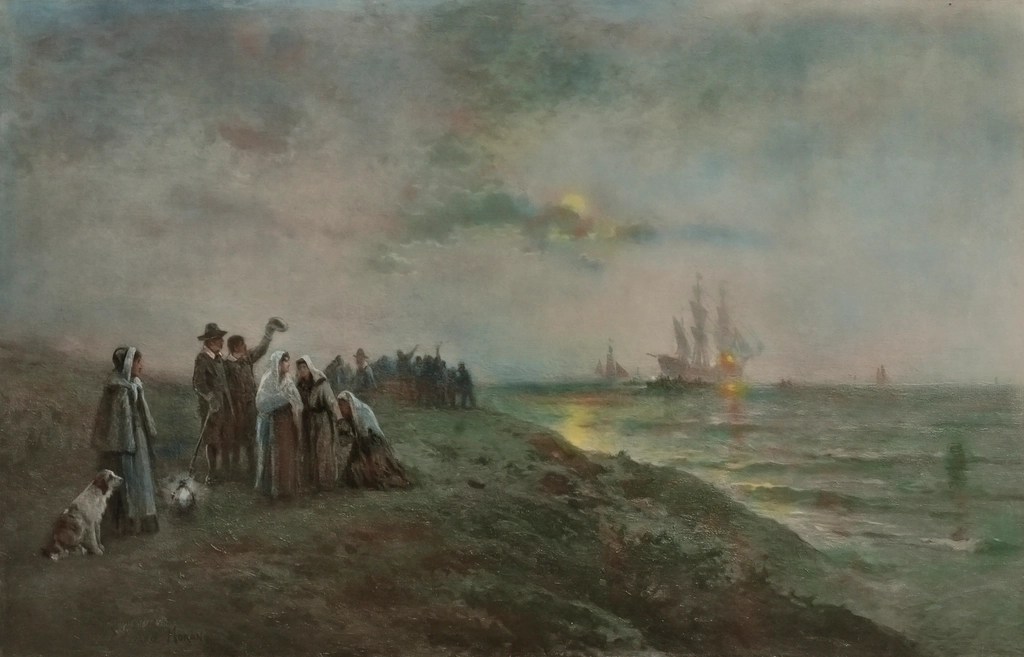
Despite their fervent efforts, the Puritans found little success within England’s political and religious landscape. Their final response was one of migration, seeking refuge in Holland and eventually the New World. In the latter, they envisioned a “City on the Hill,” a beacon of religious purity and community. Here, they flourished briefly before entering a period of decline and subsequent revival.
The legacy of the Puritans extends far beyond their immediate historical context. Their influence permeates the fabric of American society, shaping both the religious landscape and the very structure of governance. The principles of individual autonomy and religious freedom championed by the Puritans continue to resonate in the United States, underscoring the enduring impact of their movement.
In conclusion, the Puritan movement exemplifies the cyclical nature of religious reform, from its birth and growth to consolidation, persecution, and eventual migration. Though met with resistance and failure in their homeland, the Puritans left an indelible mark on the course of religious history, shaping the trajectory of nations and the ethos of generations to come.
Resources
Noll, Mark. Turning Points: Decisive Moments in the History of Christianity. Grand Rapids: Baker Book House, 1997.
Shelley, Bruce. Church History in Plain Language, rev. ed. Dallas, TX: Word Books, 1995.
Dowley, Tim. Introduction to the History of Christianity, rev. ed. Minneapolis: Augsburg Fortress, 1995.

 Treasures of the Elysian Fields
Leave a comment