
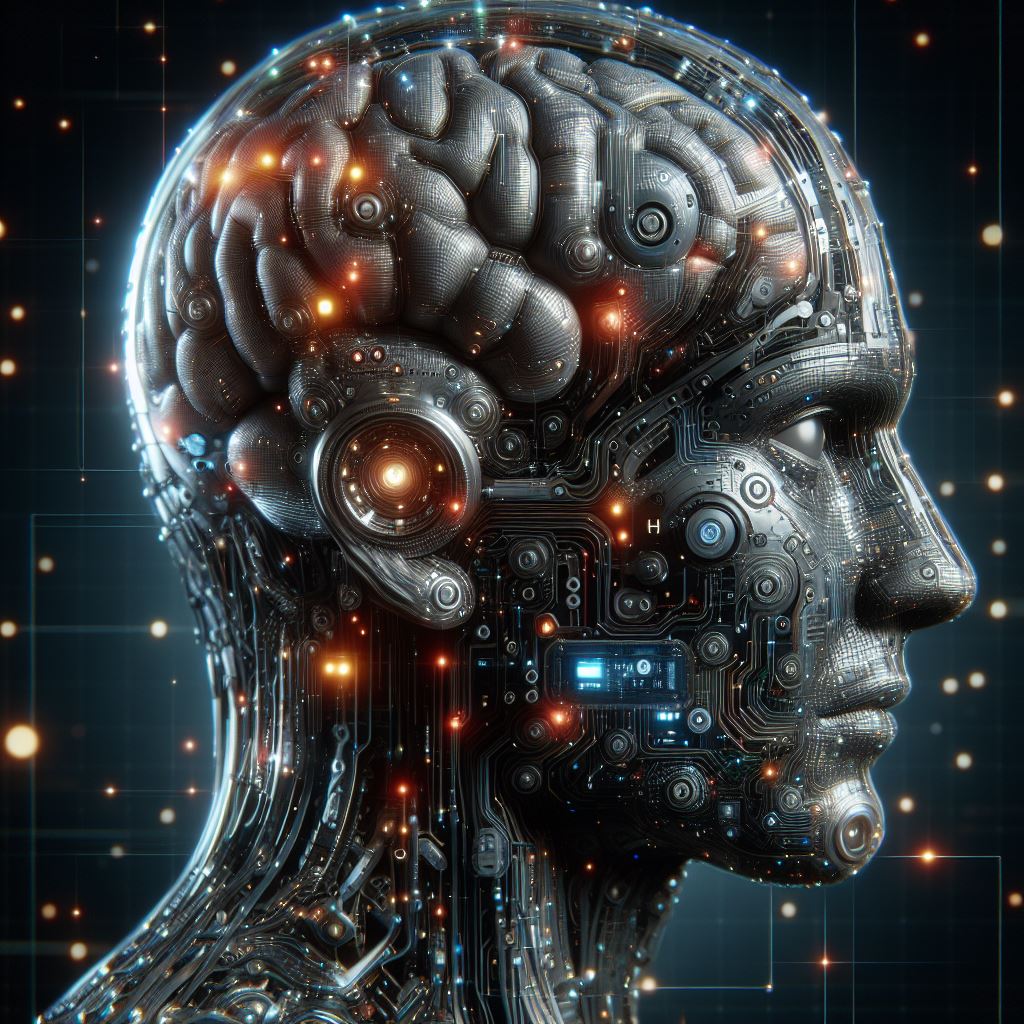
In this second installment of our exploration into the mind-body question, we delve into the intriguing realm of using computers as a potential model for understanding the intricate relationship between mind and body. While acknowledging the inherent limitations of such analogies, we seek to harness the power of illustration to shed light on this complex phenomenon. Join us as we embark on a journey of conceptual exploration, aiming to glean insights from the convergence of technology and philosophy.
| Follow my ongoing journey through the philosophy of mind and body—including the mysteries of consciousness—by exploring the related articles linked below. You’ll also find a complete reference list for further reading. |
| Articles | References |
Using Computers as a Model
Considering the mind-body issue often involves grappling with abstract concepts, employing metaphors can offer both clarity and complexity to our understanding. One compelling illustration to ponder is the analogy of using computers as a framework for comprehending the mind and body. In this analogy, we might conceptualize the mind and memories as data, the brain as software, and the body as hardware. This illustration can illuminate the intricate relationship between mental states and physical states, highlighting how thoughts and consciousness are processed and stored within the complex network of our neural architecture. However, as with any illustration, there are nuances and limitations to consider. While it may provide a helpful framework for understanding certain aspects of the mind-body relationship, it can also oversimplify the complexity of human consciousness and experience.
Expanding on this illustration, one intriguing implication arises when considering certain religious beliefs, such as the Christian concept of resurrection or the idea of reincarnation. If we view the mind as data and the body as hardware, then resurrection could be likened to transferring this data onto new hardware—a notion that resonates with the Christian idea of the soul being reunited with a glorified body in the afterlife. Similarly, reincarnation could be interpreted as the transfer of this data onto a different hardware configuration, allowing for the continuation of consciousness across multiple lifetimes.
However, while this illustration offers a thought-provoking lens through which to explore these concepts, it also invites critical reflection. Does reducing the complexities of consciousness to digital data risk oversimplifying the rich tapestry of human experience? How might this metaphor align with or challenge our understanding of identity, existence, and the nature of reality? By delving deeper into these questions, we can navigate the potential insights and limitations of using computers as a metaphor for understanding the mind-body relationship.
Using data or software as an illustration for the mind-body relationship offers a compelling analogy to contemplate. Consider a USB drive: regardless of the amount of data stored on it, the physical weight remains unchanged. Instead, alterations occur solely in the organization of matter, reflecting shifts in information rather than material substance. However, it’s crucial to acknowledge that software and data are ultimately composed of material elements, underscoring the inherent limitations of this analogy. While such illustrations can offer valuable insights, they only scratch the surface of the intricate interplay between mind and body.
The use of data or software as an illustration for the mind-body relationship raises intriguing questions about its utility and limitations. While the analogy offers a conceptual framework for understanding how information can exist independently of physical substance, it also underscores the inherent challenges in capturing the complexities of consciousness within such simplistic models. Moreover, the acknowledgment that software and data are ultimately composed of material elements reminds us of the inherent shortcomings of using computer analogies to elucidate the mysteries of the mind. As we contemplate the potential usefulness of this illustration, it prompts us to consider alternative approaches and metaphors that may offer deeper insights into the mind-body question. Perhaps exploring analogies from fields such as biology, physics, or even art could provide fresh perspectives on this age-old conundrum. Ultimately, the question of whether such illustrations are worth using depends on their ability to foster understanding and stimulate inquiry into the intricate relationship between mind and body.
Reflection
- How does the analogy of data or software as a model for the mind-body relationship resonate with your understanding of consciousness?
- Can you think of alternative illustrations or metaphors that might offer deeper insights into the complexities of the mind-body question?
- In what ways do you believe computer science and neuroscience could collaborate to further our understanding of consciousness?
- How do cultural or religious beliefs influence our perceptions of the mind-body relationship, and how might these perspectives shape our exploration of this topic?
- Reflecting on your own experiences, do you perceive consciousness as an emergent property of physical processes, or do you believe it transcends material existence?
Resources
- The Mind’s I: Fantasies and Reflections on Self and Soul edited by Douglas Hofstadter and Daniel Dennett
- Consciousness and Cognition Journal
- A First-of-Its-Kind Signal Was Detected in The Human Brain

 Treasures of the Elysian Fields
Leave a comment