

In the whimsical world of Futurama, Professor Farnsworth whimsically referred to the brain as a “5-pound meat Ouija board,” encapsulating both the mundane physicality and the mystifying potential of the human mind. While the exact quote may elude memory, its essence lingers as a provocative musing, igniting contemplation on the profound complexities of the mind-body issue. Rooted in philosophy, this enigmatic realm questions the nature of our existence: Do we possess an immaterial soul, distinct from our corporeal form? What defines consciousness, that nebulous spark that animates our being? As these inquiries echo through the corridors of thought, a new dimension emerges, beckoning the scrutiny of quantum physics. Could the intricacies of the quantum realm shed light on the mysteries that shroud the relationship between mind and body? With these inquiries as our compass, we embark on a journey of intellectual exploration, seeking not only answers but a deeper understanding of the very fabric of our existence.
| Follow my ongoing journey through the philosophy of mind and body—including the mysteries of consciousness—by exploring the related articles linked below. You’ll also find a complete reference list for further reading. |
| Articles | References |
Embarking on a philosophical expedition, I invite you to delve into the intricate landscapes of the mind-body issue alongside me. Our journey begins with a humble blog post, a mere introduction to the labyrinthine corridors of this profound inquiry. As we navigate the terrain, grappling with questions that have intrigued thinkers for centuries, I propose a collaborative odyssey, where your insights and perspectives enrich the discourse. Together, we shall traverse the dense thickets of philosophical inquiry, acknowledging the complexity inherent in every argument, and embracing the nuances that defy simple resolution. Indeed, this is no facile undertaking; the mind-body issue beckons with its myriad challenges and paradoxes. Yet, it is precisely in grappling with such complexity that the true rewards of intellectual exploration lie. Join me, for all journeys are more enjoyable with the camaraderie of fellow seekers, as we embark on this odyssey of the mind.
Invitation
I encourage you to join the conversation by sharing your thoughts, questions, and insights in the comments below or by sending me a direct message. Your contributions are invaluable in shaping the direction of our exploration and fostering a community of engaged thinkers. Whether you resonate with a particular viewpoint or offer a fresh perspective, your input enriches the dialogue and propels our journey forward. Together, let us ignite the spark of curiosity and embark on a collaborative quest for deeper understanding.
Foundation
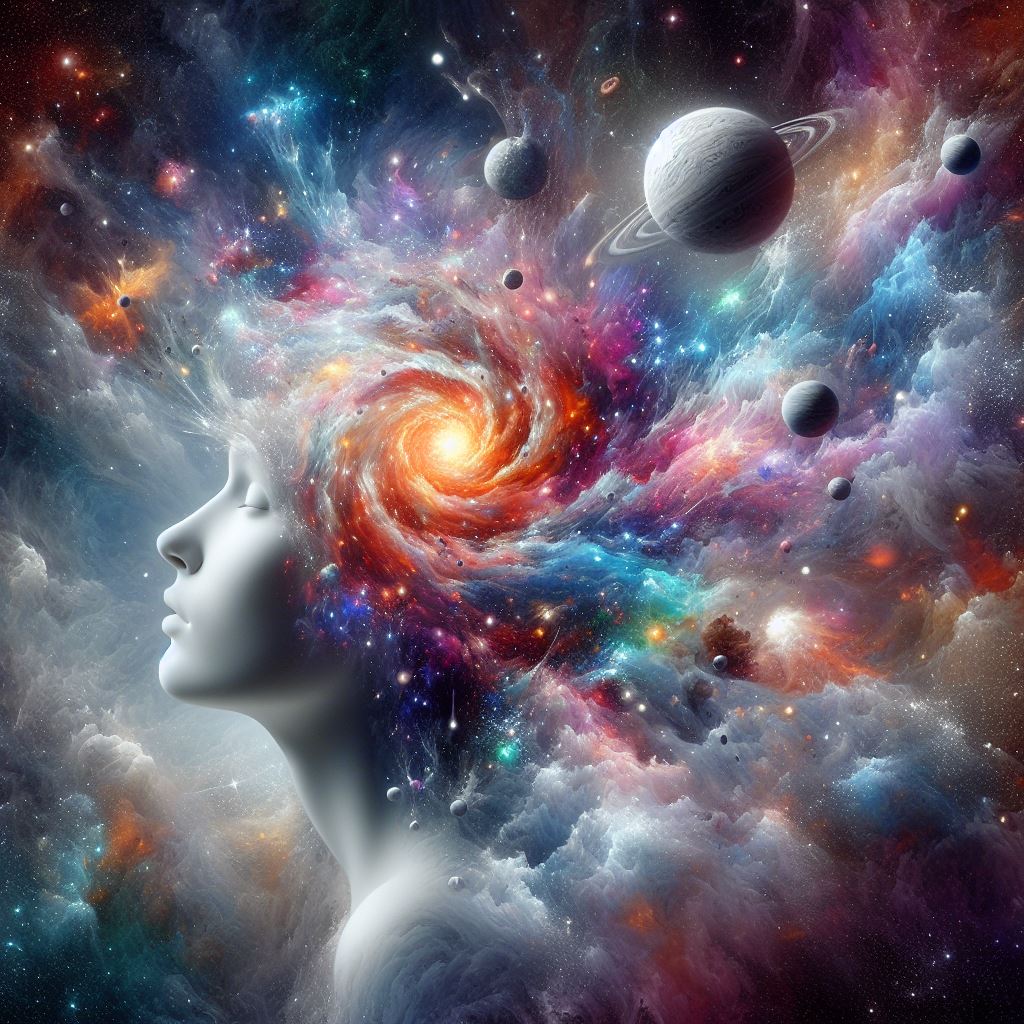
To embark on our exploration, let us first lay the groundwork by defining the mind-body issue. Often referred to as the mind-body problem or mind-body dualism, this foundational philosophical inquiry delves into the intricate relationship between the mind and the body, or, in broader terms, between mental phenomena and physical phenomena. At its core, the mind-body issue poses profound questions about the nature of consciousness, the existence of an immaterial soul, and the mechanisms through which mental states interact with the physical world. By grappling with this complex interplay, we unravel the threads that weave together our understanding of existence itself.
Views
At its core, the mind-body issue asks how mental states (such as thoughts, feelings, consciousness) are related to physical states (such as brain states, neural activity, bodily processes). The central question is whether the mind and body are distinct entities with separate properties (dualism), or if they are ultimately the same kind of thing (monism).
Dualism posits that the mind and body are two fundamentally different types of substances. This perspective raises questions about how these two distinct substances interact, known as the interaction problem. There are at least two views of dualism:
- Aristotelian and Thomist view of dualism (Aristotle & Thomas Aquinas): This view posits the soul’s substance has properties and contains the power of consciousness, In addition, the soul animates the body. According to this perspective, the absence of the soul renders the body a lifeless shell, devoid of consciousness and vitality.
- Cartesian view of dualism (René Descartes): According to this perspective, the soul houses and integrates our consciousness, yet it lacks the capacity to animate the body. Under this dualistic framework, it is conceivable for the body to sustain life even in the absence of a soul.
Monism, on the other hand, asserts that there is ultimately only one kind of substance, and everything, including mental states and physical states, can be explained in terms of this one substance. There are different varieties of monism, such as:
- Materialism/Physicalism: This view asserts that only physical matter exists and that mental phenomena can ultimately be explained in terms of physical processes. In other words, mental states are reducible to physical states.
- Idealism: This view posits that reality is fundamentally mental or spiritual in nature, and that physical reality is either dependent on or reducible to mental phenomena.
- Neutral Monism: This perspective suggests that there is a single substance that underlies both mental and physical phenomena, but it is neither purely mental nor purely physical.
It’s important to acknowledge that the ideas presented here are not exhaustive; rather, they represent a subset of perspectives within the expansive realm of the mind-body question. While we have explored dualism and various forms of monism, such as materialism, idealism, and neutral monism, there may indeed be additional theories and viewpoints awaiting discovery. The landscape of philosophical inquiry is vast and ever-evolving, with scholars and thinkers continuously proposing new insights and interpretations. Therefore, I encourage you to share any additional ideas or perspectives you may encounter, as they can enrich our collective understanding and foster a more comprehensive exploration of the mind-body issue.
I invite you to join the conversation. What are your thoughts on the nature of consciousness? Have you encountered any concepts or ideas that have resonated with you in the exploration of the mind and body? As we continue to navigate this complex terrain, your feedback and insights are invaluable. What other issues do you believe are worth exploring in this fascinating field of inquiry? I welcome your perspectives and look forward to engaging in further dialogue as we unravel the mysteries of the mind and body together.
More to Come
For readers eager to delve deeper into the captivating exploration of the mind-body question, look no further than the tag “mind-body.” This designated category will guide you to a series of posts meticulously crafted to unravel the complexities of consciousness, identity, and existence. Stay tuned for upcoming discussions on diverse topics such as the computer as a metaphor for the mind, the interplay between quantum physics and consciousness, the philosophical implications of physicalism on free will, and the profound insights gleaned from near-death experiences. Additionally, prepare to immerse yourself in thought-provoking reflections on panpsychism, Buddhist perspectives on the mind-body issue, the implications of artificial intelligence, and the tantalizing possibilities of transferring consciousness. With each post, we embark on a journey of discovery, inviting you to join the conversation and share your insights as we navigate the rich tapestry of the mind-body relationship.
Resources
The Substance of Consciousness: A Comprehensive Defense of Contemporary Substance Dualism by Brandon Rickabaugh & J. P. Moreland

 Treasures of the Elysian Fields
Leave a comment