

As a child, I was enamored with the worlds crafted by Isaac Asimov in his Foundation series and his tales of robotic intrigue in his Robot series. The way he wove together complex narratives with elements of science fiction and philosophy captivated my imagination and fueled my love for reading. So, you can imagine my excitement when, during a recent visit to the bookstore, I stumbled upon a new edition featuring some of Asimov’s classic short stories. What caught my eye, however, was the mention of “Nightfall,” his seminal work, being back in print.
The description of “Nightfall” on the book’s cover intrigued me—a story set on a planet with perpetual daylight, where darkness is an unknown phenomenon until a rare celestial event plunges the world into chaos and uncertainty. Without hesitation, I added the book to my collection, eager to revisit Asimov’s storytelling prowess and delve into the depths of his imagination once more.
Nightfall and Other Stories by Isaac Asimov
The thought experiment presented in “Nightfall,” where a society accustomed only to perpetual daylight is suddenly confronted with the concept of night, immediately captured my imagination. As I delved deeper into the story, I found myself pondering the profound implications of such a monumental societal shift. Asimov’s exploration of how individuals and civilizations grapple with the unknown resonated deeply with me, especially in light of recent societal upheavals. While the scale of change in “Nightfall” may seem extreme, the underlying themes of adaptation, fear of the unknown, and the fragility of societal norms feel incredibly relevant today. In an era marked by rapid technological advancements, cultural shifts, and global crises, the exploration of how humanity navigates uncertainty feels not only timely but essential for understanding our own place in an ever-changing world.
Isaac Asimov’s inspiration from Ralph Waldo Emerson’s quote, “If the stars should appear one night in a thousand years, how would men believe and adore, and preserve for many generations the remembrance of the city of God which had been shown!” is evident in his approach to “Nightfall.” While Emerson’s words evoke a sense of wonder and reverence for the celestial, Asimov takes this notion in a different direction, exploring the psychological and societal ramifications of an infrequent encounter with the night sky. In “Nightfall,” the inhabitants of Lagash experience a rare total eclipse once every 2049 years, a phenomenon that drives them to madness as they struggle to comprehend the darkness and the stars that accompany it. Asimov delves into not only how this knowledge is passed on to future generations but also the tragic loss of information due to the mental breakdowns suffered by those who witness the event, highlighting the fragility of human understanding in the face of the unknown.
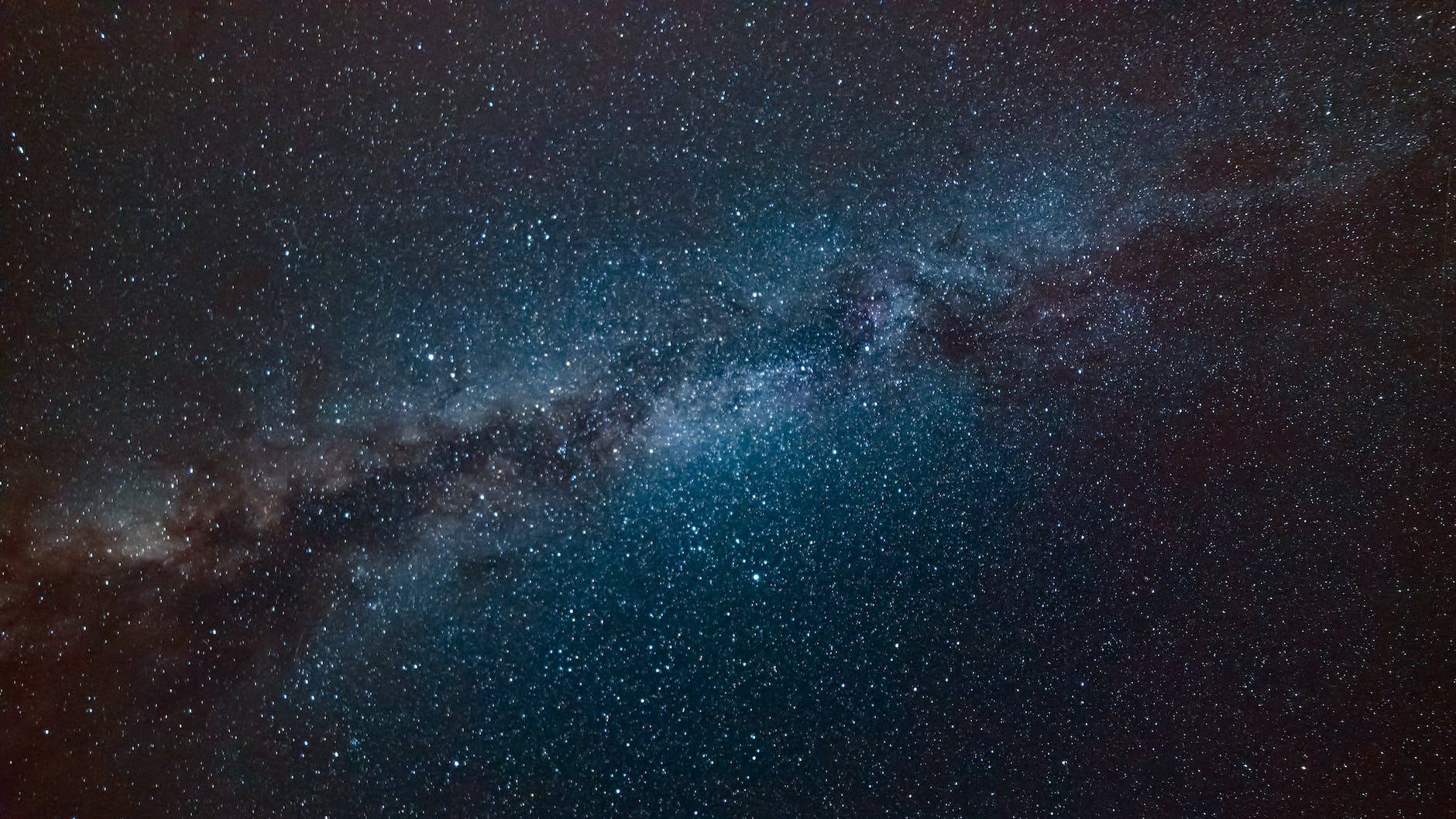
Themes
“Nightfall” by Isaac Asimov delves into a multitude of thought-provoking themes, each layer adding depth to the narrative. As readers journey through the story, they encounter the profound exploration of the limits of human understanding, where the characters grapple with the incomprehensible and the unknown. The symbolism of darkness serves as a powerful motif, representing not only the physical absence of light but also the depths of uncertainty and fear within the human psyche. Asimov deftly weaves together elements of science and religion, inviting contemplation on the intersections between the two and their influence on society. Additionally, the fragility of civilization is laid bare as the characters confront the chaos and breakdown that ensue with the arrival of darkness. Through these themes, “Nightfall” prompts reflection on the nature of knowledge, the trajectory of progress, and the resilience of the human spirit when confronted with the unfamiliar and the unforeseen.
Darkness
In “Nightfall,” darkness serves as a potent symbol, representing not only the absence of physical light but also the depths of ignorance and the unknown. Light and dark are utilized as a metaphor for knowledge, with the sudden arrival of darkness revealing mankind’s true nature. As the familiar light fades, individuals are stripped of their sense of direction and purpose, descending into madness and aimless brutality. This portrayal prompts a thought experiment on how major societal changes or revolutions can drive people to the brink of insanity. The story poses questions about how humans deal with paradigm shifts, highlighting the fragility of civilization in the face of the unfamiliar.
Expanding on this notion, one might consider alternative scenarios beyond “Nightfall.” For instance, what if the societal upheaval wasn’t triggered by an astronomical event, but rather by a modern-day crisis such as a pandemic? We’ve witnessed how major disruptions like the COVID-19 pandemic have led to widespread mental breakdowns, albeit without a complete collapse of society. People struggled to adapt, some facing significant challenges in coping with the changes, yet society as a whole managed to endure, albeit with scars.
This concept of societal resilience in the face of technological upheaval is particularly intriguing. Imagine a science fiction story where humanity suddenly loses access to the internet and advanced technology, throwing the world into chaos. With our increasing dependence on technology for communication, commerce, and even basic daily tasks, the potential for widespread mental breakdowns and societal collapse becomes alarmingly real. The narrative could explore how individuals grapple with the loss of familiar comforts and conveniences, and how society ultimately adapts—or fails to adapt—to this new reality. Such a story would serve as a stark reminder of the delicate balance between progress and dependence, and the potential consequences of a technological paradigm shift.
Science and Religion
In “Nightfall,” Isaac Asimov’s disdain for religious sentimentality is palpable, as he unabashedly portrays religion as a flawed and incomplete source of knowledge. Asimov makes no attempt to veil the caricature of the perceived war between science and religion, boldly labeling religious scriptures as “the confused incoherent babblings of half-mad morons.” Through his narrative, he challenges the validity of sacred scriptures and questions the motives behind religious beliefs. Even if religion were to hold knowledge of the stars, Asimov suggests it would be insufficient, emphasizing the superiority of scientific inquiry in providing genuine understanding and progress. For Asimov, science stands as the sole beacon of hope for the future, offering a path towards enlightenment and advancement that religion cannot match.
Today, the caricature of a war between science and religion has ingrained itself deeply into social imagery, often accepted as a given axiom without critical reflection. However, the reality is far more nuanced and complex than this oversimplified portrayal suggests. While acknowledging the presence of this trope, it’s important to recognize that a thorough exploration of the intricacies surrounding the relationship between science and religion is beyond the scope of this post. Nonetheless, highlighting the overt nod to this well-worn trope serves as a reminder of the broader cultural discourse and the need for a deeper examination of the complexities inherent in this dynamic interplay.
The question of why scientists in Asimov’s atheistic worldview would feel compelled to preserve their observations for future societies remains unanswered, leaving a notable gap in his narrative. From this perspective, where life is perceived as ultimately devoid of inherent meaning or purpose, the desire to pass on knowledge may seem futile. In a world where catastrophes are inevitable and life is viewed as no more than the result of natural processes, the significance of preserving knowledge for future generations becomes unclear. Some may argue that this desire reflects a subtle acknowledgment of a deeper purpose or meaning to life, perhaps hinting at the difficulty of fully divorcing oneself from the notion of transcendence or higher purpose. This apparent contradiction raises intriguing questions about the underlying motivations behind human actions and the existential dilemmas inherent in navigating a universe devoid of inherent meaning.
Despite the absence of a clear biological imperative or evolutionary advantage, the inclination of individuals to preserve information about the stars for future generations suggests a deeper, more transcendent purpose at play. While some may attribute this behavior to evolved herd instincts aimed at safeguarding the continuity of human knowledge, such explanations falter under scrutiny, as pointed out by an atheist friend who happens to be an evolutionary biologist. Our DNA does not possess foresight or act on potential futures, undermining the notion of inherent biological drives guiding our actions. Instead, the desire to pass on knowledge of the stars hints at a nod to transcendence—an acknowledgment of something beyond the purely materialistic and pragmatic aspects of existence. In grappling with questions of meaning and purpose, the impulse to preserve knowledge for future generations reflects a yearning for a greater significance beyond the confines of biological determinism.
Conclusion
Similar scenarios exploring the idea of people going mad or society collapsing have been depicted in popular culture, each offering a unique perspective on humanity’s response to upheaval. In the animated film “Wall-E,” we witness a post-apocalyptic Earth where humanity has abandoned the planet due to environmental degradation, becoming entirely dependent on technology and consumerism. Despite the bleak setting, the film maintains an optimistic outlook, portraying the resilience of the human spirit and the possibility of redemption through love and connection. Conversely, the animated series “South Park” takes a much darker and satirical approach, often depicting societal collapse and mass hysteria in response to various crises, with episodes like “South Park: Joining the Panderverse” illustrating the breakdown of social order and the descent into chaos becasue AI has displaced whitecollar jobs. These contrasting portrayals offer insightful commentary on human nature and the potential outcomes of societal upheaval, showcasing the spectrum of responses from hope to despair.
Reflection
- In “Nightfall,” the characters grapple with the sudden onset of darkness and its profound psychological effects. How does this narrative reflect real-world experiences of uncertainty and upheaval, such as those seen in times of natural disasters or societal crises?
- How does Asimov’s portrayal of the relationship between science and religion in “Nightfall” reflect broader societal attitudes towards these two realms of knowledge? Do you agree with his depiction, or do you think it oversimplifies the complexity of this relationship?
- Consider the parallels between “Nightfall” and other dystopian or post-apocalyptic works in literature and film. What recurring motifs or themes do you notice, and what do these stories reveal about human resilience, adaptability, and the search for meaning in the face of adversity?

 Treasures of the Elysian Fields
Leave a comment