

Delving into the archives of my academic journey, I unearthed a term paper penned in 2012 that explored the profound theme of pain and suffering within the human experience. This endeavor aimed to dissect the intricate layers of agony and ponder upon the diverse worldviews that sought to elucidate the origins and remedies for this ubiquitous aspect of existence. As I revisit these intellectual musings, I invite you to join me on a reflective journey, reexamining the timeless question of why we endure pain and how different perspectives offer solace or understanding in the face of life’s inevitable challenges. May this exploration prove insightful and resonate with those intrigued by the complexities of the human condition.
Introduction
There are many religions and many views of what life is like in the world today. Some of the differences in these views of the meaning and purpose of life make it difficult to find common ground in which a person can communicate with people who hold views that are different from our own. The cultural divide can be, especially, wide between Eastern and Western religions. Any common ground between these religions or philosophical systems becomes a bridge of understanding and aids in communication between people of different religions. Now, there is one universal experience for all humans and that is pain and suffering. The idea of pain and suffering is, universally, understood to be a part of life. This seems, to me, to be a great bridge between different religions, cultures or views of life.
In this paper, I plan to compare Buddhist and Christian worldviews on the question of pain and suffering. My hope is this will lead to great dialogue between Christians and Buddhists and, hopefully, will lead to great understanding of Buddhism for Christians and Christianity for Buddhists. I will describe the Buddhist worldview answers to the questions of pain and suffering, its source, and its solution. I will then describe the Christian worldview answers to the questions of pain and suffering, its source, and its solution. Finally, I will compare the two worldviews and see if I can draw out any similarities or differences.
Before we begin such a task as comparing two different worldviews,[1] it is important to remember that there is a danger of distorting or oversimplifying a worldview by unreflectively importing assumptions, frameworks, and biases.[2] This is especially true for Buddhism. As David Wong Professor of Philosophy at Duke University put it, “However, Buddhism may have especially challenging implications for Western ethics in its special emphasis on the elimination of suffering and on the way it explains suffering by referring to the human attachment to self as fixed ego entity.”[3] Because we have all seen and experienced pain and suffering in our lives, I think this is a worthwhile area of study. Challenges aside, there is much to be gained by this endeavor. If we do not explore the ‘possibility space’, how can we, truly, have an appreciation for the depth of the question of pain and suffering? I however, do see some similarities and some key differences. The question I find most useful is; which worldview has the best explanatory power for the world we live in?
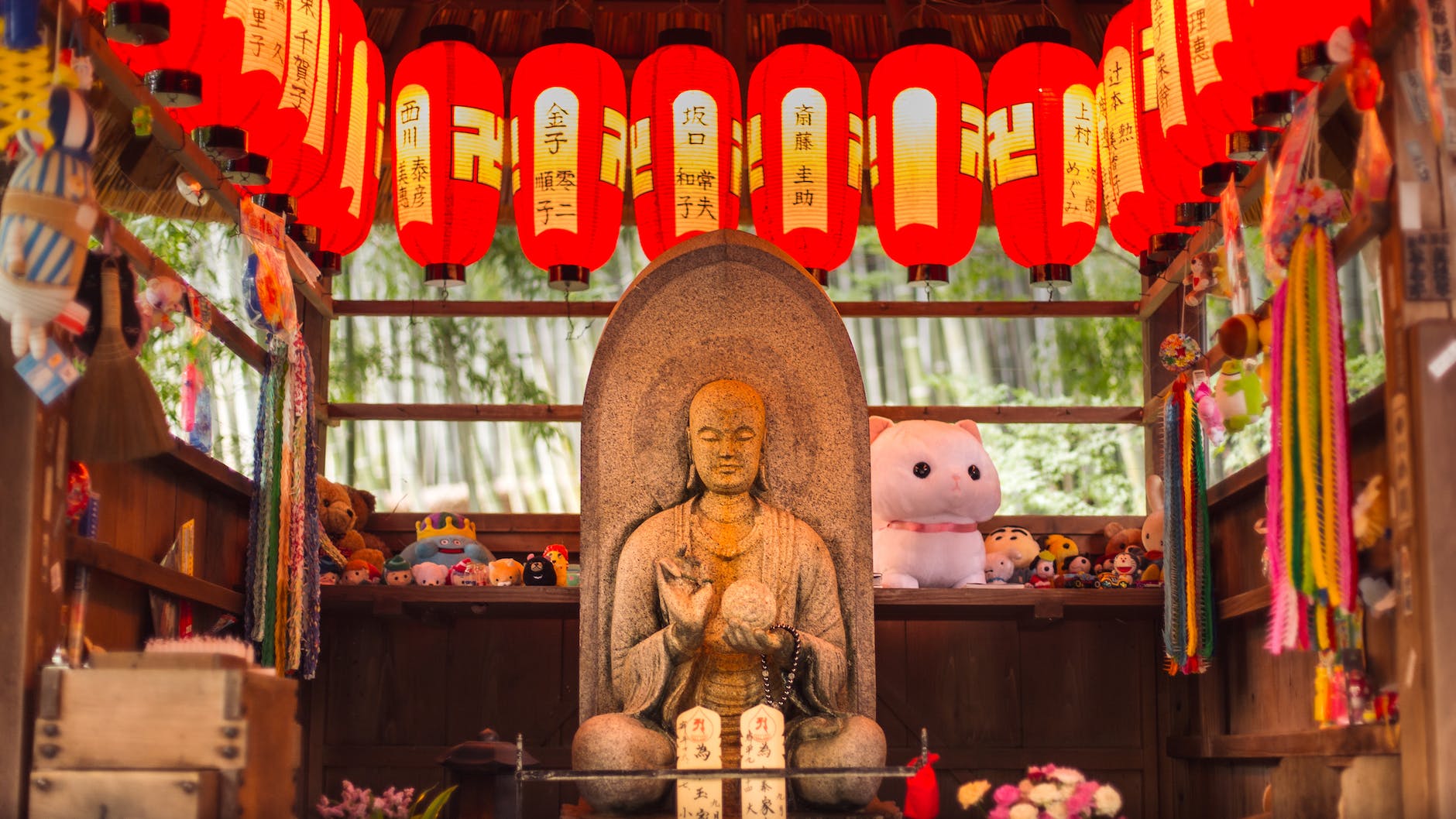
Buddhism and Pain and Suffering
Before I begin to explain how Buddhism views pain and suffering (dukkha), I first must note that there are many schools of thought within Buddhism and it is beyond the scope of this paper to call out all the nuances within Buddhism on this question. Second, it is important to understand that that the problem of pain and suffering in Buddhism is rooted in the teaching of karma (kamma) that is shared in various forms with other eastern religions such as Hinduism and Jainism. The concept of karma has also made its way to the west in various fashions and belief systems. Finally, please note that, in order to make the best representation of Buddhism, I have relied upon Buddhist authors. This will help develop an accurate picture of Buddhist thought.
Buddhism is a worldview of liberation from pain and suffering. In fact, Buddhism’s central teaching, the Four Noble Truths, is about pain and suffering. The Dalai Lama explains the Four Noble truths this way, “As most of you might know, these Four Truths are the truth of suffering, the truth of the origin of suffering, the truth of the cessation of suffering, and the truth of the path leading to this cessation.”[4]
The first of the Four Noble Truths tells us that pain and suffering exist. This is something that we sense in our lives. We know something is wrong, amiss or not in harmony. To compound the problem, we know there is a problem but we really don’t know what it is or what we should do about it.[5] The first Noble Truth, “The noble truth that is suffering”,[6] tells us that we long for something; we feel pain, loss and suffering. This ongoing and profound dissatisfaction is the first truth.[7] For Buddhism, ignorance is the root cause of our cyclic existence[8]. In the first Noble truth we have a realization of our problem. This realization begins our journey from ignorance to enlightenment or self-awakening.
The second Noble Truth, “The noble truth that is the arising of suffering,”[9] means that it is imperative for us to recognize that our dissatisfaction originates with us.[10] In Buddhism, evil or suffering is not something external to us;[11] it is in us and originates in us.
Our own ignorance…gives rise to attachment; an attitude that exaggerates the good qualities of people and things or superimposes good qualities that are not there and then clings to those people or things, thinking they will bring us real happiness. When things do not work out as we expected or wished they would, or when something interferes with our happiness, we become angry.[12]
It is our desire or attachment that originates in our mind that is the root cause of our pain and suffering. For Buddhists, the root cause is our own ignorant and undisciplined state of mind.[13]
The Third Noble Truth, “The noble truth that is the end of suffering,” recognizes there is a cessation of suffering. The Dalai Lama puts it this way: “The happiness we seek, a genuine lasting peace and happiness can be attained only through the purification of our minds. This is possible if we cut the root cause of all suffering and misery – our fundamental ignorance. This freedom from suffering.”
The Fourth Noble Truth is the path that we need to follow to end suffering. This path is called the Eightfold Path. The goal of the Eightfold path helps us to clarify our mind by developing insight into the true nature of phenomena (or reality) and to eradicate greed, aversion (hatred), and delusion. The Eightfold Path or eight factors are divided into three divisions as seen in the diagram below.
| Division | Eightfold Path |
| Wisdom | Right view |
| Right intention | |
| Ethical Conduct (Morality) | Right speech |
| Right action | |
| Right livelihood | |
| Concentration | Right effort |
| Right mindfulness | |
| Right concentration |
The Dalia Lama explains the three divisions in this way:
When we engage in the practice of morality, we lay the foundation for mental and spiritual development. When we engage in the complementary practice of concentration, we make the mind serviceable for and receptive to this higher purpose and prepare the mind for subsequent higher training in insight, or wisdom. …Then, on the basis of a very stable mind, you can generate genuine insight into the ultimate nature of reality.[14]
Our existence is a cycle of life, death, rebirth or reincarnation until we reach a state of true happiness called Nirvana (Nibbana). “This repetitious process goes on endlessly unless one arrives at ‘Right View’ and makes a firm resolve to follow the Noble Path which produces the ultimate happiness of Nibbana.”[15]
The cycle of rebirth is governed by the law of Karma (kamma). In the Western world, karma is often seen as a universal justice system or even as fate. However, this is a crude approximation of the law of karma. In Buddhism, there is no God to direct karma to reward some people and punish others. It is just cause and effect. Thich Nhat Hanh puts it this way, “Every time you produce a thought, that thought is a continuation. That thought will have effects on us, on our body, our mind, and on the world. The effect of that thought is our continuation. Producing a thought is the cause; the effect is how that thought impacts us and the world.”[16] As you can see, the seeds of karma start with our thoughts and those thoughts affect the world we live in. Hanh continues, “That thought will have an effect on our mental and physical health and on the health of the world. And that health, good or bad, is the fruit of the karma, the fruit of the thought.”[17]
Because Buddhism in concerned with our thoughts, it is important that the motivation of our actions is much more important than the actions themselves. Intention is the essence of the law of karma; it is the motivating force behind karma.[18] Our thoughts are the root of our actions and they are the root of greed, aversion (hatred), and delusion.
Our thoughts and actions will create karma. Karma is best understood as the law of cause and effect. In the west, we will often talk about good and bad karma; however, it is not that simple. In the terms of karma our actions are either kusala (skillful) or akusala (unskillful).[19] Kusala is often translated as “good”, but a better translation would be skillful, beneficial, wholesome or more precisely ‘that which removes affliction’. Akusala which is often translated as “evil” is better translated unskillful, unintelligent or more precisely ‘that which invites affliction’. Both kusala and akusala arise in the mind and then become eternalized by action.[20] In a way, the best understanding is kusala thoughts start a chain of cause and effect that move you away from pain and suffering and toward nirvana while akusala thoughts start a chain of cause and effect move you toward pain and suffering and away from nirvana.
In Buddhism, karma is a natural law that governs the cycle of rebirth. Ultimately, there is just action and reaction; cause and effect. Simply put, the law of cause and effect will govern how you progress toward or away from pain and suffering. People who understand this natural law of cause and effect are often called a “dhammic” person, which is often translated as “righteous”. Now, the result may seem like “reward” and “punishment” however, it is simply the fruit of our volitional actions.[21] “By oneself, indeed, is evil done; by oneself is one defiled. By oneself is evil left undone; by oneself, indeed, is one purified. Purity and impurity depend on oneself. No one purifies another.” (Dhammapada, chapter 12, verse 165)

Christianity and Pain and Suffering
Like Buddhism, the answer to why we have pain and suffering in the world varies amongst Christians. Volumes have been written on the differences between Christian understandings to this question. For this paper, however, I am limiting this to the most often cited answers.
To start with some background, a Christian person’s life is to love God. Freedom to love necessitates a choice. Man was created to have a choice to love and serve God; sin (evil) is a rejection of this. The choices we make not to love and serve God then are the source of our pain and suffering. This wrong choice then, is the source of the problem of pain and suffering for Christians.
Form the Christian point of view, pain and suffering is caused by evil; either directly or indirectly. Moral evil, or evil performed by other moral beings, would be direct evil. This evil is when another person causes the pain and suffering of another. Indirect evil is like natural evil. Natural evil is pain and suffering caused without volitional intent, such as an earthquake or tsunami. The Christian view is this evil is indirect in that its root cause is from the fall (initial choice) of mankind.
The Christian view of evil is that “evil does not just exist, it happens.”[22] Augustine, in Confessions, defined evil as “a privation of good, even to the point of complete non-entity.”[23] What this means is that “evil is not a being, thing, substance or entity…evil is real, but not a real thing.”[24] It is as if good was light and evil was darkness. Darkness is not a thing but, rather, it is the absence of light. In the same way, evil is the absence of true good. If evil is the source of pain and suffering, what is then the source of evil?
Because evil is the absence of good, the source of evil is our free will to choose evil over good. From the Christian view, God created man and woman and gave them a free will, or the ability to choose. Often, critics would counter with, why did God give them a choice if they could choose evil? The counter-question is how could anyone love if it were not possible not to love? How could people love God if they did not have a choice to not love? C. S. Lewis put it this way, “their freedom is simply that of making a single choice – of loving God more than self or the self more than God.”[25] Christian philosopher Alvin Plantinga sums up the situation this way, “to create creatures capable of moral good, therefore, He [God] must create creatures capable of moral evil; and He can’t give these creatures the freedom to perform evil and at the same time prevent them from doing so.”[26] Without this freedom to do evil we would no longer be human. Kreeft and Tacelli explain what would happen if we didn’t have freedom to choose, “free will is part of our essence. There can be no human being without it. The alternative to free will is not being a human but an animal or machine.”[27]
Pain and suffering then originate with our free will and our choices. However, freedom to choose is not the problem; the problem is when we choose the evil over the good, when we choose hate over love. With this freedom of choice we can choose to love. James Spiegel describes the benefits of our freedom this way, “The ultimate good for which such autonomy is a critical means in genuine loving relationships between persons, whether between humans or between God and humans.”[28] Without choice it would be impossible to understand or know love. “Even omnipotence could not have created a world in which there was genuine human freedom and yet no possibility of sin, for our freedom incudes the possibility of sin within its own meaning.”[29]
Christians will agree that just as it is logically impossible for God to create a square circle likewise, He cannot create the possibility of good and love without the possibility of evil and hatred. This seems like a difficult situation for God. God had to give us a freedom but that freedom means that we can choose poorly. However, God is not left in a difficult situation; He can use the evil in the world to bring about good. Spiegel observes, “There are greater moral goods to be achieved in this way than could ever be achieved by God’s simply giving them to us in creation.”[30] This may not make sense until you consider how you would learn forgiveness, a good, without having been wrong. Spiegel notes, “There are numerous moral virtues that cannot be achieved except by struggling against or in the midst of evil. These ‘second-order’ goods include patience, courage, sympathy, forgiveness, mercy, perseverance, overcoming temptation, and much greater versions of faith, hope, love and friendship.”[31] This view that God teaches us through our experiences is called soul-making.
The Christian view of pain and suffering includes the concept that we do not suffer alone, nor does God avoid pain and suffering for Himself. Kenneth Sample relates his experience with pain and suffering like this:
My experiences with suffering have caused me to appreciate even more the great historic Christian truth-claim that Jesus Christ took on human flesh in order to suffer with human beings and for us receptively on the cross. God, therefore, is acquainted with evil, pain, and suffering and has a greater good to accomplish through them.[32]
In the Christian view, God takes pain and suffering in the world, a necessary consequence for love, and uses it for good. C. S. Lewis sees this as a means for God to speak to us through or pain. “God whispers to us in our pleasures, speaks in our conscience, but shouts in our pain: it is His megaphone to rouse a deaf world.”[33] For C. S. Lewis, pain and suffering is a means to an end.
For Christians, there is an end to pain and suffering. The end does not come in this life, but in the life to come. However, in this life, Christians can start to view their life’s experiences from a new perspective. For Christians, the life we live now is but a temporary ‘boot camp’ where we learn valuable lessons like how to forgive and how to love. It is not until the boot camp is over do we truly appreciate the difficult and often painful lessons we learned. Christians often call this an eternal perspective, the view from outside of our current time and lives, looking in from our future homes. The future home for Christians is with God in heaven a state of liberation from pain and suffering.
For those who do not choose heaven, a gift from God, they will receive their desire as well. C. S. Lewis puts it this way, “They enjoy forever the horrible freedom they have demanded, and are therefore self-enslaved: just as the blessed, forever submitting to obedience, become through all eternity more and more free”[34] In summary, for Christians hell is liberation from God and heaven is liberation from pain and suffering.
Comparison of Buddhism and Christianity on Pain and Suffering
In researching this paper, I have found a number of similarities or bridges of understanding between the Buddhist and Christian worldviews. First, I noticed that both worldviews recognize that things are not the way they ought to be. They both understand that pain and suffering is not the ideal or true existence. For Buddhists, the ultimate end, Nirvana, is liberation of pain and suffering. Likewise for Christians, the ultimate end, heaven, is also liberation from pain and suffering.
Another similarity I found was in the concept that the source of our pain and suffering starts within us. I found it curious that many Buddhists believe Christians see evil as an external force.[35] The Christian view is, evil ultimately comes from us and any perceived external force of evil is coming from within other moral agents. It seems that Buddhism and Christianity both see that the source of pain and suffering in this life come from within us and from our choices.
In life, we seem to experience that our thoughts often lead to actions and those actions often cause pain and suffering. Both Buddhism and Christianity agree that much of the pain and suffering we experience in life come from thoughts that lead to actions. Those actions then cause us or others pain and suffering. I think that it is significant that Christianity and Buddhism, in concept, see us and our choices as one of the causes of pain and suffering.
We often experience pain and suffering that is not a result of another person or our choices. Often, people have pain and suffering from external natural events such as hurricanes, tsunamis, earthquakes, and other natural disasters. Thus, in life, it seems that all pain and suffering is a result of our choices; some pain and suffering seems to be, in one way or another, not related to our direct choices. According to the Pali Canon, there are overt and covert dangers. Overt dangers, which seem to equate to natural causes of pain and suffering, are not based upon people’s individual choices. Covert dangers are those that equate to choices made by the individual.[36] The Christian worldview recognizes the same phenomena and divides the source of pain and suffering into moral evil and natural evil.[37] Moral evil is rooted in the direct actions or inactions of ourselves or others. Natural evil is seen as the consequence of indirect moral evil.[38] This concept starts with the Bible’s account of how people chose to disobey God and then man and creation then entered into a fallen state.[39] This fall was a fall from the perfection in which it was created.
In these two worldviews, there are similarities and differences in pain and suffering that afflicts the seemingly innocent from events outside of their control. For Buddhism, these events are dangers that may lead you to have akusala thoughts. For Buddhism, it is important to not let bad things that happen to you control your thoughts and rob you of an inner happiness. Our reaction to negative events in our lives is seen in much the same light for the Christian worldview. Christian theologian Chuck Swindoll said it best:
The longer I live, the more I realize the impact of attitude on life. Attitude, to me, is more important than facts. It is more important than the past, the education, the money, than circumstances, than failure, than successes, than what other people think or say or do. It is more important than appearance, giftedness or skill. It will make or break a company… a church… a home. The remarkable thing is we have a choice everyday regarding the attitude we will embrace for that day. We cannot change our past… we cannot change the fact that people will act in a certain way. We cannot change the inevitable. The only thing we can do is play on the one string we have, and that is our attitude. I am convinced that life is 10% what happens to me and 90% of how I react to it. And so it is with you… we are in charge of our Attitudes.[40]
Where these two world views take a deep departure is in the solution or how we can reach an end to pain and suffering. Simply put, for the Buddhist, the end of suffering and pain comes from as the Dalai Lama puts it, “freedom and liberation can only be achieved when our fundamental ignorance, our habitual misapprehension of the nature of reality, is totally overcome.”[41] For Buddhists, overcoming ignorance is not an easy task. “You must bear in mind that the attainment of enlightenment is not an easy task. It requires time, will, and perseverance.”[42]
To summarize, when we engage in the practice of morality, we lay the foundation for mental and spiritual development. When we engage in the complementary practice of concentration, we make the mind serviceable for and receptive to this higher purpose and prepare the mind for subsequent higher training in insight, or wisdom. With the faculty of single-pointedness that arises from concentration, we are able to channel all of our attention and mental energy towards a chosen object. Then, on the basis of a very stable state of mind, you can generate genuine insight into the ultimate nature of reality.[43]
As you can see the, Buddhist solution is to clear our minds to allow ourselves to become enlightened. Herein lies the biggest difference between the Buddhist and Christian worldviews.
The Christian worldview differs in that it claims we cannot reach liberation from pain and suffering on our own. The Christian worldview claims that man has fallen and cannot do anything to regain what we have lost. God, therefore, had to provide a solution for man. God’s love was demonstrated when He became a man and took on our pain and suffering for us; to provide a way for us to choose, once again, to follow God and reciprocate His love. Ultimately, the Christian view rests on choice. A wrong choice lead to the evil, pain, and suffering we all currently experience. God has given us a type of second chance, however, unlike the Buddhist, view we don’t get endless “do-overs”. We have this life to make our choice. Either we chose to follow and love God and be with Him forever or we chose eternal separation from God.
Conclusion
What we see here with these two worldviews is a bit of agreement that pain and suffering are caused by us. We see that when our thoughts, choices and actions are out of sync with what they should be, we create pain and suffering. These worldviews even agree that our attitude and how we react to events in our lives plays an important role. Finally, both agree that our ultimate end, either Heaven or Nirvana, will be liberation from pain and suffering. I see these areas of commonality as a great opportunity to create dialogue between two very different worldviews. I think greater understanding for those with either worldview of the other worldview will benefit.
Where these worldviews disagree sharply is how one reaches that end. We all want an end to pain and suffering. Ultimately, we all must choose an answer to the question. Knowing how others find answers to life’s pain and suffering and being able to see which worldview has the best explanation for what we know from our experiences in life and in our hearts, becomes an opportunity for dialogue about how one finally solves the issue of pain and suffering.
Works Cited
Bhikkhu, Thanissaro. “The Four Noble Truths A Study Guide.” Access to Insight (1999). http://www.accesstoinsight.org/lib/study/truths.html (accessed May 3, 2012).
Chodron, Thubten. Buddhism for Beginners, Kindle edition (Ithaca, New York, Snow Lion Publications, 2001).
Encyclopedia of Buddhism Volume One ed. Robert E. Buswell (New York, Gale/Cengage Learning Macmillan, 2004).
Hagen, Steve. Buddhism Plain and Simple, Kindle edition (Tokyo, Broadway Books, 1998).
Hanh, Thich Nhat. The Heart of the Buddha’s Teaching: Transforming Suffering into Peace, Joy, and Liberation, (Broadway Books, 1999).
Hanh, Thich Nhat. Karma, Continuation, and the Noble Eightfold Path. Mindfulness Bell Magazine (August 5, 2005). http://www.mindfulnessbell.org/articles/karma1.php (accessed May, 20 2012).
His Holiness the Dalai Lama. The World of Tibetan Buddhism: An Overview of Its Philosophy and Practice, trans. Geshe Thupten Jinpa, Kindle edition (Boston, Wisdom Publications, 1995).
Kreeft, Peter and Tacelli, Ronald K. Handbook of Christian Apologetics, (Downers Grove, IL, InterVarsity Press, 1994).
Leighton, Taigen. Evil in Buddhism. Mountain Source Sangha (October 6, 2001). http://www.mtsource.org/talks/evil.htm (accessed May, 3 2012).
Lewis, C. S. The Problem of Pain, (London, Harper Collins Publishers, 1940).
O’Brien, Barbara. Evil, Karma and Buddhism, About.com. http://buddhism.about.com/od/basicbuddhistteachings/a/evil.htm (accessed May 3, 2012).
Payutto, Bhikkhu P. A. Good and Evil in Buddhism. UrbanDharma.org. http://www.urbandharma.org/udharma5/goodevil.html (accessed May 3, 2012).
Plantinga, Alvin. God, Freedom, and Evil (Grand Rapids, William B. Eerdmans Publishing Company, 2001).
Powell, Doug. Holman Quicksource Guide to Christian Apologetics, (Nashville, Holman Reference, 2006).
Ross, Hugh, Samples, Kenneth, et al. The Problem of Evil (Glendale CA, Reasons to Believe, 2004.), CD.
Samples, Kenneth R. 7 Truths That Changed the World. (Grand Rapids, BakerBooks, 2012).
Siderits, Mark. “Buddha.” Stanford Encyclopedia of Philosophy (Feb 17, 2011) http://plato.stanford.edu/entries/buddha/ (accessed May 3, 2012).
Spiegel, James S. “On Free Will and Soul Making, Complementary Approaches to the Problem of Evil,” Philisophia Christi vol. 13, no. 2 (2011): 405-413.
Sravaka, Arya. In English – A Dhamma metaphor from nature – Buddhism Buddhist Middle Path Kusala Akusala, YouTube.com (September 28, 2011). http://www.youtube.com/watch?v=1lWGHWnkbCY (accessed May 20, 2012).
Thera, K. Sri Dhammananda Maha. The Buddhist Concept of Heaven and Hell. BuddhaSasana. http://www.buddhanet.net/budsas/ebud/whatbudbeliev/303.htm (accessed May, 20 2012).
Viney, Donald. “Process Theism.” Stanford Encyclopedia of Philosophy (October 6, 2008). http://plato.stanford.edu/entries/process-theism/ (accessed May 3, 2012).
Watts, Alan. Buddhism And Christianity, YouTube. http://www.youtube.com/watch?v=eV7FLlRmuf0 (accessed May 19, 2012).
Wong, David. “Comparative Philosophy: Chinese and Western.” Stanford Encyclopedia of Philosophy (October 1, 2009). http://plato.stanford.edu/entries/comparphil-chiwes/ (accessed May 3, 2012).
End Notes
[1] Note here that I did not use the word “religion.” Alan Watts a British philosopher, best known for popularizing Eastern philosophy for a Western audience criticizes Westerners for calling Buddhism a religion and then trying to compare it to the Christian religion. While we may not be able to compare them as religions we can compare them as worldviews. Alan Watts, Buddhism And Christianity, YouTube. http://www.youtube.com/watch?v=eV7FLlRmuf0 (accessed May 19, 2012).
[2] David Wong. “Comparative Philosophy: Chinese and Western.” Stanford Encyclopedia of Philosophy (October 1, 2009). http://plato.stanford.edu/entries/comparphil-chiwes/ (accessed May 3, 2012).
[3] David Wong. “Comparative Philosophy: Chinese and Western.” Stanford Encyclopedia of Philosophy (October 1, 2009). http://plato.stanford.edu/entries/comparphil-chiwes/ (accessed May 3, 2012).
[4] His Holiness the Dalai Lama. The World of Tibetan Buddhism: An Overview of Its Philosophy and Practice, trans. Geshe Thupten Jinpa, Kindle edition (Boston, Wisdom Publications, 1995) location 220.
[5] Steve Hagen. Buddhism Plain and Simple, Kindle edition (Tokyo, Broadway Books, 1998) location 210.
[6] Encyclopedia of Buddhism Volume One ed. Robert E. Buswell (New York, Gale/Cengage Learning Macmillan, 2004) p. 296.
[7] Steve Hagen. Buddhism Plain and Simple, Kindle edition (Tokyo, Broadway Books, 1998) location 212.
[8] Thubten Chodron. Buddhism for Beginners, Kindle edition (Ithaca, New York, Snow Lion Publications, 2001) location 73.
[9] Encyclopedia of Buddhism Volume One ed. Robert E. Buswell (New York, Gale/Cengage Learning Macmillan, 2004) p. 296.
[10] Steve Hagen. Buddhism Plain and Simple, Kindle edition (Tokyo, Broadway Books, 1998) location 257.
[11] Taigen Leighton. Evil in Buddhism. Mountain Source Sangha (October 6, 2001). http://www.mtsource.org/talks/evil.htm (accessed May, 3 2012).
[12] Thubten Chodron. Buddhism for Beginners, Kindle edition (Ithaca, New York, Snow Lion Publications, 2001) location 75.
[13] His Holiness the Dalai Lama. The World of Tibetan Buddhism: An Overview of Its Philosophy and Practice, trans. Geshe Thupten Jinpa, Kindle edition (Boston, Wisdom Publications, 1995) location 240.
[14] His Holiness the Dalai Lama. The World of Tibetan Buddhism: An Overview of Its Philosophy and Practice, trans. Geshe Thupten Jinpa, Kindle edition (Boston, Wisdom Publications, 1995) location 294-296.
[15] K. Sri Dhammananda Maha Thera. The Buddhist Concept of Heaven and Hell. BuddhaSasana. http://www.buddhanet.net/budsas/ebud/whatbudbeliev/303.htm (accessed May, 20 2012).
[16] Thich Nhat Hanh. Karma, Continuation, and the Noble Eightfold Path. Mindfulness Bell Magazine (August 5, 2005). http://www.mindfulnessbell.org/articles/karma1.php (accessed May, 20 2012).
[17] Thich Nhat Hanh. Karma, Continuation, and the Noble Eightfold Path. Mindfulness Bell Magazine (August 5, 2005). http://www.mindfulnessbell.org/articles/karma1.php (accessed May, 20 2012).
[18] Bhikkhu P. A. Payutto. Good and Evil in Buddhism. UrbanDharma.org. http://www.urbandharma.org/udharma5/goodevil.html (accessed May 3, 2012).
[19] Bhikkhu P. A. Payutto. Good and Evil in Buddhism. UrbanDharma.org. http://www.urbandharma.org/udharma5/goodevil.html (accessed May 3, 2012).
[20] Bhikkhu P. A. Payutto. Good and Evil in Buddhism. UrbanDharma.org. http://www.urbandharma.org/udharma5/goodevil.html (accessed May 3, 2012).
[21] Barbara O’Brien. Evil, Karma and Buddhism, About.com. http://buddhism.about.com/od/basicbuddhistteachings/a/evil.htm (accessed May 3, 2012).
[22] Peter Kreeft and Ronald K. Tacelli. Handbook of Christian Apologetics, (Downers Grove, IL, InterVarsity Press, 1994) p. 126.
[23] Doug Powell. Holman Quicksource Guide to Christian Apologetics, (Nashville, Holman Reference, 2006) p. 334.
[24] Peter Kreeft and Ronald K. Tacelli. Handbook of Christian Apologetics, (Downers Grove, IL, InterVarsity Press, 1994) p. 132-33.
[25] C. S. Lewis. The Problem of Pain, (London, Harper Collins Publishers, 1940) p. 20.
[26] Alvin Plantinga. God, Freedom, and Evil (Grand Rapids, William B. Eerdmans Publishing Company, 2001) Kindle Locations 342-343.
[27] Peter Kreeft and Ronald K. Tacelli. Handbook of Christian Apologetics, (Downers Grove, IL, InterVarsity Press, 1994) p. 138.
[28] James S. Spiegel. “On Free Will and Soul Making, Complementary Approaches to the Problem of Evil,” Philisophia Christi vol. 13, no. 2 (2011): 407.
[29] Peter Kreeft and Ronald K. Tacelli. Handbook of Christian Apologetics, (Downers Grove, IL, InterVarsity Press, 1994) p. 138.
[30] James S. Spiegel. “On Free Will and Soul Making, Complementary Approaches to the Problem of Evil,” Philisophia Christi vol. 13, no. 2 (2011): 407.
[31] James S. Spiegel. “On Free Will and Soul Making, Complementary Approaches to the Problem of Evil,” Philisophia Christi vol. 13, no. 2 (2011): 407.
[32] Kenneth R. Samples. 7 Truths That Changed the World. (Grand Rapids, BakerBooks, 2012) p. 193.
[33] C. S. Lewis. The Problem of Pain, (London, Harper Collins Publishers, 1940) p. 90-91.
[34] C. S. Lewis. The Problem of Pain, (London, Harper Collins Publishers, 1940) p. 130.
[35] Taigen Leighton. Evil in Buddhism. Mountain Source Sangha (October 6, 2001). http://www.mtsource.org/talks/evil.htm (accessed May, 3 2012).
[36] Bhikkhu P. A. Payutto. Good and Evil in Buddhism. UrbanDharma.org. http://www.urbandharma.org/udharma5/goodevil.html (accessed May 3, 2012).
[37] Note that not all Christians want to call natural evil as evil. Some reserve the term evil only for moral actions or inactions. I use the term natural evil here based upon common understanding and usage.
[38] Walter A. Elwell, ed. Evangelical Dictionary of Theology. (Grand Rapids, Baker Books, 1994) p. 384.
[39] Or the initial choice of Adam and Eve.
[40] This quote was taken from one of Chuck Swindoll’s books. I can’t seem to locate my copy to properly reference however, this is a well know quote of his.
[41] His Holiness the Dalai Lama. The World of Tibetan Buddhism: An Overview of Its Philosophy and Practice, trans. Geshe Thupten Jinpa, Kindle edition (Boston, Wisdom Publications, 1995) Kindle Location 158-9.
[42] His Holiness the Dalai Lama. The World of Tibetan Buddhism: An Overview of Its Philosophy and Practice, trans. Geshe Thupten Jinpa, Kindle edition (Boston, Wisdom Publications, 1995) Kindle Locations 204-205.
[43] His Holiness the Dalai Lama. The World of Tibetan Buddhism: An Overview of Its Philosophy and Practice, trans. Geshe Thupten Jinpa, Kindle edition (Boston, Wisdom Publications, 1995) Kindle Locations 293-297.

 Treasures of the Elysian Fields
Leave a comment